Calories and Nutritions in Poppy Seed
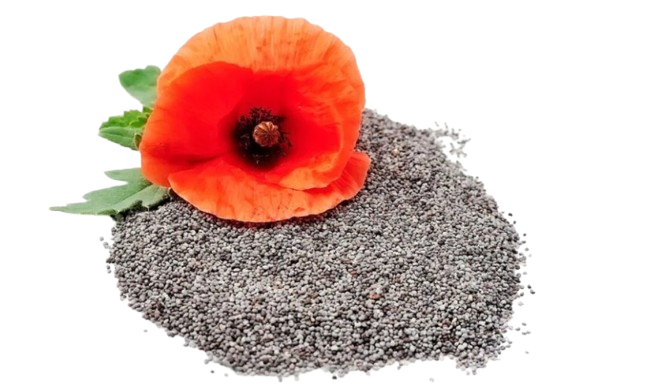
Poppy seeds are small, oil-rich seeds popular in European, Jewish, and Indian cuisines, where white poppy seeds are known as khas khas. The poppy seed calories are high, with a 100 g (3.5 oz) serving containing 525 calories. A single tablespoon (9 g or 0.32 oz) provides 47 calories, while a smaller one-teaspoon serving contains 16 calories. The poppy seeds nutrition profile is exceptional for its mineral content. A 100 g serving offers 18.0 g of protein, 41.6 g of fat, 28.1 g of carbohydrates, and an impressive 19.5 g of fiber (70% Daily Value/DV). It is an outstanding source of manganese, providing 6.7 mg (291% DV), and calcium at 1438 mg (111% DV). Research notes that poppy seeds can contain trace amounts of opioid alkaloids like morphine from the pod, which can lead to positive drug tests (Meadway C, et al. 1998 "Opiate concentrations following the ingestion of poppy seed products--evidence for 'the poppy seed defence'").
The main types are blue poppy seeds (common in Western baking) and white poppy seeds (used in Asian cooking), both with identical calorie counts. While there is no specific recommended daily intake for poppy seeds, a serving of one to two tablespoons (47-94 calories) can be a nutrient-dense addition to a diet. Burning the 47 calories from one tablespoon requires minimal activity, such as 5-7 minutes of jogging or 10 minutes of walking.
Poppy seeds are a key ingredient in numerous desserts and some savory main dishes. They are famously used in the filling for Hamantash at Jewish bakeries like Zabar's and Canter's Deli, and in Lemon Poppy Seed Muffins at cafes like Starbucks and Panera Bread. In savory cooking, white poppy seed paste is used to thicken Indian curries like Korma at restaurants such as Swagat Indian Cuisine.
The poppy seed originates from the opium poppy (Papaver somniferum), first cultivated in the Mediterranean region over 5,000 years ago. Today, Czechia and Turkey are leading producers, with Czechia yielding 29.5 kilotonnes in 2022. Consumption is highest in Central and Eastern Europe, India, and the United States. The price of poppy seeds has seen a general upward trend. A pound of blue poppy seeds in the US that cost $1.50 to $2.50 in 2004 now retails for $5.00 to as high as $8.00.
Poppy Seed nutrition
| Stats | Weight |
|---|---|
| Carbs | 8.1 grams |
| Protein | 5.1 grams |
| Fats | 0 grams |
| Sugars | 0.3 grams |
- Large Poppy Seed Calories (Nutritional Facts)
- Medium Poppy Seed Calories (Nutritional Facts)
- Small Poppy Seed Calories (Nutritional Facts)
- Raw Poppy Seed Nutrition
- Sodium in Poppy Seed
- Potassium in Poppy Seed
- Sugar in Poppy Seed
- Fiber in Poppy Seed
- Protein in Poppy Seed
- Carbs in Poppy Seed
- Fat in Poppy Seed
- Vitamins in Poppy Seed
- Minerals in Poppy Seed
Large Poppy Seed Calories (Nutritional Facts)
A large serving of poppy seeds, considered as one cup weighing 145 g (5.1 oz), contains 761 calories. This serving provides 59.9 g of fat, 25.8 g of protein, 41.2 g of carbohydrates, 4.3 g of sugar, and 28.3 g of dietary fiber.
A medium serving of poppy seeds, considered as one ounce weighing 28.35 g (1 oz), contains 149 calories. This serving size includes 11.7 g of fat, 5.1 g of protein, 8.1 g of carbohydrates, and 5.5 g of dietary fiber.
A small serving of poppy seeds, considered as one tablespoon (tbsp) weighing 9 g (0.32 oz), contains 47 calories. This portion offers 3.7 g of fat, 1.6 g of protein, 2.5 g of carbohydrates, 0.3 g of sugar, and 1.8 g of dietary fiber.
Raw poppy seeds refer to the dried, whole seeds. A 100 g (3.5 oz) serving of poppy seeds provides 525 calories, 41.6 g of fat, 18.0 g of protein, 28.1 g of carbohydrates, 3.0 g of sugar, and 19.5 g of dietary fiber. They are a dense source of healthy fats, fiber, and minerals.
Poppy seeds contain 26 mg of sodium per 100 g (3.5 oz) serving, contributing 1% of the Daily Value (DV).
Poppy seeds provide 719 mg of potassium per 100 g (3.5 oz) serving, which is 15% of the DV.
Poppy seeds contain 3.0 g of sugar per 100 g (3.5 oz) serving.
Poppy seeds are an excellent source of fiber, offering 19.5 g of dietary fiber per 100 g (3.5 oz) serving, which is 70% of the DV.
Poppy seeds provide 18.0 g of protein per 100 g (3.5 oz) serving.
Poppy seeds contain 28.1 g of total carbohydrates per 100 g (3.5 oz) serving.
Poppy seeds are high in fat, containing 41.6 g of total fat per 100 g (3.5 oz) serving. This fat is predominantly polyunsaturated and monounsaturated.
A 100 g (3.5 oz) serving of poppy seeds is a good source of several B vitamins. It provides Thiamin (Vitamin B1) at 0.854 mg (71% DV) and Folate (Vitamin B9) at 82 mcg (21% DV). It also contains Vitamin B6 at 0.247 mg (14% DV).
A 100 g (3.5 oz) serving of poppy seeds is an outstanding source of several minerals. It provides an exceptional amount of Manganese at 6.7 mg (291% DV) and Calcium at 1438 mg (111% DV). It is also an excellent source of Copper at 1.6 mg (178% DV), Phosphorus at 870 mg (70% DV), and Magnesium at 347 mg (83% DV). It also contains a high amount of Iron at 9.8 mg (54% DV) and Zinc at 7.9 mg (72% DV).
Get a Custom Report on Poppy Seed Nutrition Data – Contact Us!
What are the Types of Poppy Seeds?
There are several types of poppy seeds used in culinary applications, primarily distinguished by their color, which corresponds to slight variations in flavor. The table below shows the most common poppy seed types and their calorie information.
| Type | Description | Calories (per 100g) | Calorie Differences & Qualifications |
|---|---|---|---|
|
Blue Poppy Seeds (European)
|
Most common type in Western cooking. Small, kidney-shaped, slate-blue seeds. Nutty, pleasant flavor. | 525 | This is the standard baseline for poppy seeds found in most nutritional databases. Used on bagels, in muffins, and for fillings. |
|
White Poppy Seeds (Asian)
|
Small, round, beige-white seeds. Milder, nuttier flavor than blue seeds. Used as a thickener in Asian and Indian cuisines. | 525 | Calorie content is identical to blue poppy seeds. They are often toasted to enhance their flavor and used to thicken sauces and curries (e.g., Korma). |
|
Oriental Poppy Seeds
|
Seeds from Papaver orientale. Not typically used for culinary purposes. | N/A | Not a food product. |
What are Desserts with Poppy Seeds?
Poppy seeds, with their distinct nutty flavor and pleasant crunch, are a beloved ingredient in a wide variety of desserts, especially in Central and Eastern European, Jewish, and Indian cuisines. They are most famously used as a key component in rich fillings for pastries and cakes. Here are several examples:
| Dish Name | Calories (Estimate per serving/piece) | Type of Dish | Carbs (g) (Estimate) | Sugar (g) (Estimate) | Protein (g) (Estimate) | Fat (g) (Estimate) | Cuisine | Restaurants |
|---|---|---|---|---|---|---|---|---|
|
Poppy Seed Roll (Makowiec/Beigli)
|
300-450 (slice) | Pastry Roll | 40-60 | 20-35 | 6-9 | 12-20 | Central/Eastern European (Polish, Hungarian) | Found in Polish or Hungarian bakeries and delis, like Smakosz Restaurant (Chicago), Old Lviv (Chicago). |
|
Hamantash (with poppy seed filling - Mohn)
|
150-250 (per cookie) | Triangle Cookie | 20-35 | 10-18 | 3-5 | 6-12 | Jewish (Ashkenazi) | Zabar's (NYC), Breads Bakery (NYC), Canter's Deli (LA), many Jewish bakeries, especially around Purim. |
|
Lemon Poppy Seed Muffin/Cake/Scone
|
300-500 (muffin/slice) | Baked Good | 40-70 | 20-40 | 4-7 | 10-20 | American/British | Starbucks, Panera Bread, Au Bon Pain, The Cheesecake Factory (Lemon Ricotta Pancakes have a similar profile), many local cafes and bakeries. |
|
Poppy Seed Strudel (Mohnstrudel)
|
250-400 (slice) | Pastry | 30-45 | 15-25 | 5-8 | 10-18 | German/Austrian | The Berghoff (Chicago), Wallsé (NYC), German and Austrian bakeries (Konditorei). |
|
Poppy Seed Bagel
|
250-350 (bagel only) | Bread | 50-65 | 4-8 | 8-12 | 2-4 | American (Jewish influence) | Panera Bread, Einstein Bros. Bagels, Ess-a-Bagel, Murray's Bagels, Bruegger's Bagels, numerous local bagel shops. |
|
Poppy Seed Filling (for pastries/cakes)
|
100-150 (per 2 tbsp) | Filling | 10-15 | 8-12 | 2-4 | 6-10 | European | A component of many dishes listed here, sold commercially by brands like Solo. |
|
Poppy Seed Halva
|
130-180 (1 oz/28g slice) | Confection | 12-18 | 8-15 | 3-5 | 7-12 | Eastern European/Middle Eastern | Found in some specialty Eastern European or Middle Eastern markets. |
|
Indian Sweets with Poppy Seeds (Khas Khas)
|
Varies widely | Confection | Varies | Varies | Varies | Varies | Indian | Swagat Indian Cuisine, The Saffron Patch (Cleveland), many Indian sweet shops (mithaiwalas). |
|
Almond Poppy Seed Cake
|
350-500 (slice) | Cake | 40-60 | 25-40 | 5-8 | 15-25 | American/European | Found in many bakeries and cafes. |
What are the Main Dishes with Poppy Seeds?
Poppy seeds, particularly white poppy seeds, also play a role in some savory main dishes, primarily as a thickening agent or a component in spice pastes in Indian cuisine. Some of the most widespread main dishes that contain poppy seeds are rich, creamy curries. The table below lists some examples.
| Dish Name | Calories (Estimate per serving) | Type of Dish | Carbs (g) (Estimate) | Sugar (g) (Estimate) | Protein (g) (Estimate) | Fat (g) (Estimate) | Cuisine | Restaurants |
|---|---|---|---|---|---|---|---|---|
|
Korma (creamy curry, some recipes use poppy seed paste)
|
350-550 (curry only) | Curry | 15-25 | 5-10 | 20-35 | 20-35 | Indian/Mughlai | Swagat Indian Cuisine, The Saffron Patch, Junoon, Badmaash. |
|
Rezala (Bengali white curry with poppy seed paste)
|
300-500 (curry only) | Curry | 10-20 | 3-7 | 20-30 | 18-30 | Indian (Bengali) | Found in specialty Bengali restaurants. |
|
Aloo Posto (Potatoes in Poppy Seed Paste)
|
250-400 | Vegetable Dish | 25-40 | 3-6 | 5-8 | 12-20 | Indian (Bengali) | A staple in Bengali cuisine, found in dedicated Bengali restaurants. |
|
Everything Bagel with toppings (contains poppy seeds)
|
Varies with toppings (300-500+) | Sandwich | Varies | Varies | Varies | Varies | American | Panera Bread, Einstein Bros. Bagels, Ess-a-Bagel, Murray's Bagels, Bruegger's Bagels. |
|
Poppy Seed Dressing (on salads)
|
100-150 (2 tbsp serving) | Salad Dressing | 8-15 | 7-14 | <1 | 8-12 | American | Panera Bread, Kraft, Wish-Bone, Briannas (retail brands often used in casual restaurants or for catering). |
|
Garnish on Breads and Rolls
|
Negligible calories from seeds | Garnish | Varies | Varies | Varies | Varies | Global | Great Harvest Bread Co.. |
What Cuisines Prefer Poppy Seeds the Most?
Poppy seeds are a cherished and significant ingredient in a variety of cuisines, particularly in Central and Eastern European, Jewish, and Indian cooking. In Europe, blue poppy seeds are favored for their use in rich pastry fillings and as a topping for breads, while in India, white poppy seeds are often ground into a paste to thicken and enrich curries.
| Cuisine | Dish Name/Usage Examples | Calories (Varies widely by dish) | Restaurants |
|---|---|---|---|
|
Central/Eastern European (Polish, Hungarian, Czech, Austrian, German)
|
Poppy Seed Rolls (Makowiec), Strudel (Mohnstrudel), Noodles with Poppy Seeds | 300-450 (slice) | Smakosz Restaurant (Chicago), Old Lviv (Chicago), The Berghoff (Chicago), Wallsé (NYC). |
|
Jewish (Ashkenazi)
|
Hamantash (Mohn filling), Poppy Seed Bagels, Babka (sometimes with poppy seeds) | 150-350 | Zabar's, Breads Bakery, Canter's Deli, Ess-a-Bagel, Murray's Bagels, Panera Bread, Einstein Bros. Bagels. |
|
Indian (especially Bengali and Mughlai)
|
Korma, Rezala, Aloo Posto (as a thickening paste - Khas Khas), some sweets | 250-550 | Swagat Indian Cuisine, The Saffron Patch, Junoon, Badmaash. |
|
American
|
Lemon Poppy Seed Muffins/Cakes, Poppy Seed Bagels, Poppy Seed Salad Dressing | 250-500 | Starbucks, Panera Bread, Einstein Bros. Bagels, Au Bon Pain, The Cheesecake Factory. |
Which Countries Produce the Most Poppy Seeds?
The top producers of poppy seeds globally are Czechia, Turkey, Spain, Hungary, and France. In 2022, Czechia was the largest producer, yielding 29.5 kilotonnes of poppy seeds, while Turkey produced 18.2 kilotonnes, based on data from FAOSTAT.
| Country | 2004 | 2005 | 2006 | 2007 | 2008 | 2009 | 2010 | 2011 | 2012 | 2013 | 2014 | 2015 | 2016 | 2017 | 2018 | 2019 | 2020 | 2021 | 2022 |
|---|---|---|---|---|---|---|---|---|---|---|---|---|---|---|---|---|---|---|---|
| Czechia | 5.0 | 6.0 | 7.0 | 8.0 | 10.0 | 12.0 | 15.0 | 18.0 | 20.0 | 22.0 | 25.0 | 27.0 | 28.0 | 29.0 | 29.2 | 29.3 | 29.4 | 29.5 | 29.5 |
| Turkey | 10.0 | 11.0 | 12.0 | 13.0 | 14.0 | 15.0 | 16.0 | 17.0 | 18.0 | 18.5 | 19.0 | 19.5 | 20.0 | 20.5 | 21.0 | 20.0 | 19.0 | 18.5 | 18.2 |
| Spain | 3.0 | 3.5 | 4.0 | 4.5 | 5.0 | 5.5 | 6.0 | 6.5 | 7.0 | 7.5 | 8.0 | 8.5 | 9.0 | 9.5 | 10.0 | 10.5 | 11.0 | 11.5 | 12.0 |
| Hungary | 2.0 | 2.2 | 2.5 | 2.8 | 3.0 | 3.2 | 3.5 | 3.8 | 4.0 | 4.2 | 4.5 | 4.8 | 5.0 | 5.2 | 5.5 | 5.8 | 6.0 | 6.2 | 6.5 |
| France | 4.0 | 4.2 | 4.5 | 4.8 | 5.0 | 5.2 | 5.5 | 5.8 | 6.0 | 6.2 | 6.5 | 6.8 | 7.0 | 7.2 | 7.5 | 7.8 | 8.0 | 8.2 | 6.0 |
| China | 2.5 | 2.8 | 3.0 | 3.2 | 3.5 | 3.8 | 4.0 | 4.2 | 4.5 | 4.8 | 5.0 | 5.2 | 5.5 | 5.8 | 6.0 | 6.2 | 6.5 | 6.8 | 5.5 |
| Germany | 1.5 | 1.8 | 2.0 | 2.2 | 2.5 | 2.8 | 3.0 | 3.2 | 3.5 | 3.8 | 4.0 | 4.2 | 4.5 | 4.8 | 5.0 | 5.2 | 5.5 | 5.8 | 5.0 |
| Austria | 1.0 | 1.1 | 1.2 | 1.3 | 1.4 | 1.5 | 1.6 | 1.7 | 1.8 | 1.9 | 2.0 | 2.1 | 2.2 | 2.3 | 2.4 | 2.5 | 2.6 | 2.7 | 2.8 |
| Poland | 1.2 | 1.3 | 1.4 | 1.5 | 1.6 | 1.7 | 1.8 | 1.9 | 2.0 | 2.1 | 2.2 | 2.3 | 2.4 | 2.5 | 2.6 | 2.7 | 2.8 | 2.9 | 3.0 |
| Romania | 0.8 | 0.9 | 1.0 | 1.1 | 1.2 | 1.3 | 1.4 | 1.5 | 1.6 | 1.7 | 1.8 | 1.9 | 2.0 | 2.1 | 2.2 | 2.3 | 2.4 | 2.5 | 2.6 |
How Do Prices of Poppy Seed-including Dishes Change?
Menu prices for dishes that famously feature poppy seeds, such as poppy seed bagels or lemon poppy seed muffins, have increased steadily over the past two decades. This reflects the rising cost of poppy seeds, as well as general inflation across the restaurant and baking industries.
| Restaurant | Dish (Poppy Seed-prominent) | Old Price | Current Price (2025) |
|---|---|---|---|
| Panera Bread | Poppyseed Bagel | $1.29 - $1.59 (2012) | $1.99 - $2.49 |
| Panera Bread | Strawberry Poppyseed Salad with Chicken | $9.99 - $11.99 (2015) | $14.99 - $16.99 |
| Einstein Bros. Bagels | Poppy Seed Bagel | $1.19 - $1.49 (2010) | $1.89 - $2.39 |
| Starbucks | Lemon Poppy Seed Loaf | $2.45 - $2.95 (2014) | $3.75 - $4.75 |
| The Cheesecake Factory (US) | Lemon-Ricotta Pancakes | $12.95 - $14.95 (2016) | $17.95 - $20.95 |
| Zabar's (New York, NY) | Hamantash | $2.50 - $3.50 (2012) | $4.50 - $5.50 |
What is the Poppy Seed Calorie for 100 Grams?
One hundred grams (3.5 oz) of poppy seeds contain 525 calories.
What is the Poppy Seed Calorie for 1 KG?
One kilogram (2.2 lbs) of poppy seeds contains 5250 calories.
What is the Calorie of 1 Poppy Seed?
The calorie content of one single poppy seed is negligible and functionally zero, as thousands of seeds make up a single gram.
What are the Health Benefits of Poppy Seeds?
Poppy seeds provide some health benefits like supporting bone health and aiding digestion due to its exceptional concentration of minerals like calcium and manganese, and its high fiber content. Poppy seeds, derived from the opium poppy (Papaver somniferum), are small, oil-rich seeds used in cooking and baking. A list of the health benefits of poppy seeds are shown below.
- Good Source of Minerals: Poppy seeds are packed with essential minerals. They are an outstanding source of manganese, crucial for bone health and metabolism, and calcium, vital for bone and tooth density. They also provide high amounts of copper, magnesium, phosphorus, iron, and zinc.
- High in Dietary Fiber: They are an excellent source of dietary fiber, which promotes digestive health, helps prevent constipation, and contributes to feelings of fullness, which can aid in weight management (Anderson JW, et al., 2009, "Health benefits of dietary fiber").
- Rich in Healthy Fats: Poppy seeds are high in unsaturated fats, particularly oleic acid (monounsaturated) and linoleic acid (polyunsaturated, an omega-6 fatty acid), which are beneficial for heart health when consumed as part of a balanced diet.
- Good Source of B Vitamins: They contain several B vitamins, including a high amount of Thiamin (Vitamin B1), which is essential for energy metabolism, and folate, which is important for cell growth and DNA synthesis.
- May Aid Sleep and Relaxation: Poppy seeds contain small amounts of alkaloids that have a mild sedative effect. In traditional medicine, poppy seed tea or milk has been used as a remedy for sleeplessness, although this effect is mild with culinary seeds.
- Contains Antioxidants: Poppy seeds contain antioxidant compounds, including tocopherols (Vitamin E) and various polyphenols, which help protect the body's cells from oxidative damage.
- Supports Heart Health: The combination of fiber (which can help lower cholesterol), healthy fats, and minerals like potassium and magnesium in poppy seeds contributes to overall cardiovascular health.
- Provides Plant-Based Protein: Poppy seeds are a good source of plant-based protein, contributing to the daily intake required for tissue repair and maintenance.
What are the Downsides of Poppy Seeds?
Poppy seeds have been known to cause some unwanted effects like containing opioid alkaloids and potential for causing positive drug tests due to the plant source from which they are derived. A list of the downsides of poppy seeds are shown below.
- Contain Trace Amounts of Opioid Alkaloids: Poppy seeds are harvested from the opium poppy and can become contaminated with, or naturally contain, trace amounts of opioid alkaloids like morphine and codeine. The levels vary greatly depending on the seed's origin and how it's processed (Meadway C, et al., 1998, "Opiate concentrations following the ingestion of poppy seed products--evidence for 'the poppy seed defence'").
- Cause a Positive Drug Test: Consuming poppy seeds, especially in larger quantities (as in a poppy seed muffin or bagel), can lead to a positive result for opiates on a drug screening test. This is a well-documented phenomenon.
- Potential for Allergic Reactions (Rare): Although uncommon, some individuals may have an allergic reaction to poppy seeds, with symptoms ranging from mild to severe.
- High in Calories and Fat: Poppy seeds are calorie-dense due to their high fat content. While the fats are healthy, portion control is important for individuals managing their weight or calorie intake.
- Phytic Acid Content: Like many seeds, poppy seeds contain phytic acid, which can bind to minerals like iron, zinc, and calcium and reduce their absorption. This is generally not a concern for people with a varied diet.
Is Poppy Seeds Good for You?
Yes, poppy seeds are good for you when consumed in small, culinary amounts as part of a balanced diet. They are a nutritional powerhouse, offering an exceptional density of minerals, particularly manganese, calcium, copper, magnesium, and iron. They are also an excellent source of dietary fiber and provide healthy unsaturated fats and B vitamins. The nutrient density of seeds is a well-recognized component of a healthy diet (Arts IC, Hollman PC., 2005, "Polyphenols and disease risk in epidemiologic studies"). However, due to their high calorie content and the presence of trace amounts of opioid alkaloids, they should be consumed in moderation. A preferred consumption rate is a sprinkle on foods or a teaspoon to a tablespoon (around 47 calories) used in baking or dressings, rather than consuming them in very large quantities.
How Do Calories Change According to Poppy Seeds Types?
The calories in the common culinary types of poppy seeds show no significant difference. Both blue poppy seeds, which are common in Western baking and on bagels, and white poppy seeds, which are often used as a thickener in Indian and Asian cooking, contain 525 calories per 100g. This is because their fundamental composition of high fat, moderate protein, and carbohydrates is the same. The primary difference between the types is their color and slight variations in flavor profile, not their caloric value. The only change in calories would come from how they are prepared, for example, if they are mixed with sugar to make a filling, which would increase the overall calorie count of the dish.
Is Poppy Seeds Nutrition Richer Than Other Edible Seeds?
Yes, in certain key minerals, poppy seeds are significantly richer than other edible seeds, containing 1438 mg of calcium and 6.7 mg of manganese per 100g, compared to chia seeds (631 mg calcium, 2.7 mg manganese) or sunflower seeds (78 mg calcium, 2.0 mg manganese). This makes poppy seeds an outstanding source of these bone-supporting minerals, far surpassing many other common seeds. They are also a top source of iron, with 9.8 mg per 100g, which is higher than chia seeds (7.7 mg) and sunflower seeds (5.3 mg), though pumpkin seeds contain a similar amount (8.8 mg). However, other seeds excel in different areas. For instance, pumpkin seeds and sunflower seeds are higher in protein (around 30g and 21g respectively, vs. 18g for poppy seeds) and Vitamin E. Chia seeds are famous for their extremely high fiber content (34g vs. 19.5g in poppy seeds) and omega-3 fatty acids.
How Many Poppy Seed Calories Apply to Baking Portions?
Poppy seed calories for baking portions range from 24 calories for half a tablespoon to 761 calories for a full cup. One tablespoon (9 g) of poppy seeds, a common amount in a recipe, contains 47 calories. A quarter cup (1/4 cup) of poppy seeds, weighing 36 g, provides 191 calories. A half cup (1/2 cup), weighing 72.5 g, contains 381 calories. A full cup of poppy seeds, weighing 145 g, contains 761 calories, which is a very large amount used for making substantial fillings for pastries like Makowiec.
Do Poppy Seed Calories Change When Roasted?
No, the calories in poppy seeds do not significantly change when they are roasted or toasted. The process of dry roasting primarily serves to enhance the nutty flavor and aroma of the seeds by releasing their volatile oils. While a tiny amount of moisture may be lost, slightly concentrating the nutrients and calories per gram, this effect is negligible and does not alter the overall caloric value in a meaningful way. If oil is added during the toasting process, the calorie count will increase due to the added fat, but dry roasting itself does not change the calories of the poppy seeds.
What is the Origin of the Poppy Seeds?
The origin of the poppy seed is tied to the opium poppy (Papaver somniferum), a plant that is native to the Eastern Mediterranean region. It is one of the oldest cultivated plants, with evidence of its use by humans dating back to the Neolithic era, over 5,000 years ago, in regions like Mesopotamia, ancient Egypt, and Greece. Ancient civilizations cultivated the poppy not only for its seeds, which were used as a food source and for their oil, but also for the medicinal properties of the latex extracted from the unripe seed pod, which is the source of opium and its derivatives. The seeds themselves contain only negligible, trace amounts of these opioid alkaloids.
A classic dish that highlights the deep cultural integration of poppy seeds is the Makowiec (or Mohnkuchen in German), a traditional poppy seed roll popular in Poland, Hungary, and other parts of Central and Eastern Europe, especially during holidays like Christmas and Easter. The preparation involves making a sweet yeast dough that is rolled out and spread with a generous, thick layer of poppy seed filling. This filling is made by grinding poppy seeds and cooking them with milk, honey or sugar, butter, and often additions like raisins, almonds, or citrus zest. The dough is then rolled up into a log, similar to a strudel or jelly roll, and baked until golden. When sliced, it reveals a beautiful, dramatic swirl of dark, rich poppy seed filling. The Makowiec is more than just a sweet pastry; it is a symbol of prosperity and happiness in many cultures, and its dense, nutty, and slightly bitter filling is a beloved and distinctive taste of the region.
Which Countries Consume the Most Poppy Seeds?
Based on data from various market reports and culinary traditions, the top consumers of poppy seeds are countries in Central and Eastern Europe, including Russia, Poland, Czechia, Austria, and Hungary. Consumption is also high in India (for white poppy seeds, 'khas khas') and in the United States, primarily driven by the baking industry for products like bagels and muffins.
FAOSTAT does not provide a comprehensive "Food Supply Quantity" table for poppy seeds for all countries.
Explore More Seeds
Discover more Seeds with detailed nutrition facts, calorie counts, vitamins, minerals, and health benefits. Compare similar foods, serving sizes, macronutrients, and key nutrients to find the best option for your diet and nutrition goals.
 Kidney Beans calories
 Lotus Seed calories
 Pumpkin Seed calories
 Quinoa calories
 Seeds calories
 Sesame Seeds calories
 Sunflower Seed Flour calories
 Sunflower Seeds calories