Calories and Nutritions in Sunflower Seed Flour
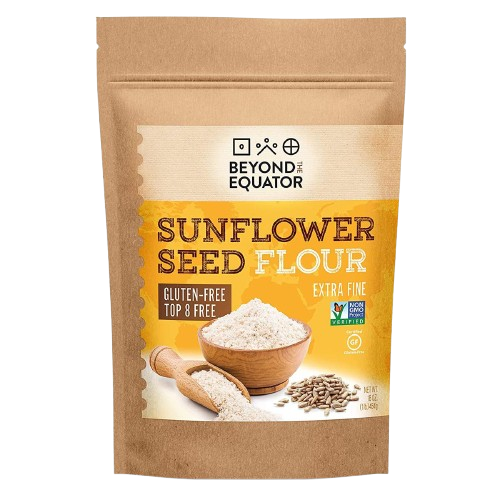
Sunflower seed flour, also known as sunflour, is a high-calorie gluten-free flour made from ground sunflower seeds. Sunflower seed flour is popular in keto, gluten-free, and nut-free baking. A 100 g (3.5 oz) serving of full-fat flour contains 536 calories. A smaller quarter-cup serving (28 g or 1 oz) provides 150 calories. The sunflower seed flour nutrition profile is rich in healthy fats, protein, vitamins, and minerals. A 100 g serving offers 21.4 g of protein, 46.4 g of fat (predominantly unsaturated), 21.4 g of carbohydrates, and 10.7 g of fiber (38% Daily Value/DV). It is an outstanding source of Vitamin E, providing 37.8 mg (252% DV), copper at 1.9 mg (211% DV), and selenium at 59.5 mcg (108% DV). Research on seeds highlights their beneficial nutrient profiles, including healthy fats and micronutrients, for supporting overall health (Ros E. 2010 "Health Benefits of Nut Consumption").
The main types of sunflower seed flour are the common full-fat version and a much lower-calorie defatted version (320-350 calories per 100 g), which is a high-protein byproduct of oil extraction. As a nutrient-dense but high-calorie flour, it can be part of a healthy diet when used in moderation. A quarter-cup serving (150 calories) can add significant nutrition to a recipe. Burning the 150 calories from a quarter cup of sunflower seed flour requires activities such as 15 minutes of moderate jogging or 20-25 minutes of brisk walking.
Sunflower seed flour is used to make a variety of main dishes and desserts. It is a key ingredient in Keto Pizza Crusts, like the one offered by Blaze Pizza, and is used as a gluten-free breading for chicken or fish at health-focused restaurants such as True Food Kitchen. In desserts, it is used to make gluten-free and nut-free cookies, muffins, and cakes at specialty bakeries like Erin McKenna's Bakery NYC.
The sunflower plant originated in North America, where its seeds were a vital food source for Native American tribes. Today, Ukraine and Russia are the world's top producers of sunflower seeds. The price of sunflower seeds has been volatile over the past 20 years. International prices that were $250 to $350 per metric ton in 2004 saw peaks of over $800 to as high as $1000 per metric ton during commodity surges in years like 2022.
Sunflower Seed Flour nutrition
| Stats | Weight |
|---|---|
| Carbs | 6 grams |
| Protein | 6 grams |
| Fats | 0 grams |
| Sugars | 0.6 grams |
- Large Sunflower Seed Flour Calories (Nutritional Facts)
- Medium Sunflower Seed Flour Calories (Nutritional Facts)
- Small Sunflower Seed Flour Calories (Nutritional Facts)
- Raw Sunflower Seed Flour Nutrition
- Sodium in Sunflower Seed Flour
- Potassium in Sunflower Seed Flour
- Sugar in Sunflower Seed Flour
- Fiber in Sunflower Seed Flour
- Protein in Sunflower Seed Flour
- Carbs in Sunflower Seed Flour
- Fat in Sunflower Seed Flour
- Vitamins in Sunflower Seed Flour
- Minerals in Sunflower Seed Flour
Large Sunflower Seed Flour Calories (Nutritional Facts)
A large serving of sunflower seed flour, considered as one cup weighing 112 g (4 oz), contains 600 calories. This serving provides 52.0 g of fat, 24.0 g of protein, 24.0 g of carbohydrates, 3.0 g of sugar, and 12.0 g of dietary fiber.
A medium serving of sunflower seed flour, considered as one-quarter cup (1/4 cup) weighing 28 g (1 oz), contains 150 calories. This serving size includes 13.0 g of fat, 6.0 g of protein, 6.0 g of carbohydrates, and 3.0 g of dietary fiber.
A small serving of sunflower seed flour, considered as one tablespoon (tbsp) weighing 7 g (0.25 oz), contains 38 calories. This portion offers 3.3 g of fat, 1.5 g of protein, and 1.5 g of carbohydrates.
Raw sunflower seed flour, also known as sunflour, is a gluten-free flour made from ground sunflower seeds. A 100 g (3.5 oz) serving of sunflower seed flour provides 536 calories, 46.4 g of fat, 21.4 g of protein, 21.4 g of carbohydrates, 2.7 g of sugar, and 10.7 g of dietary fiber.
Sunflower seed flour contains a low amount of sodium, with 11 mg per 100 g (3.5 oz) serving, contributing less than 1% of the Daily Value (DV).
Sunflower seed flour is a good source of potassium, providing 729 mg per 100 g (3.5 oz) serving, which is 16% of the DV.
Sunflower seed flour contains 2.7 g of sugar per 100 g (3.5 oz) serving.
Sunflower seed flour is an excellent source of fiber, offering 10.7 g of dietary fiber per 100 g (3.5 oz) serving, which is 38% of the DV.
Sunflower seed flour is rich in protein, providing 21.4 g of protein per 100 g (3.5 oz) serving.
Sunflower seed flour contains 21.4 g of total carbohydrates per 100 g (3.5 oz) serving.
Sunflower seed flour is high in fat, containing 46.4 g of total fat per 100 g (3.5 oz) serving. This fat is predominantly polyunsaturated (26.2 g) and monounsaturated (9.6 g).
A 100 g (3.5 oz) serving of sunflower seed flour is an outstanding source of Vitamin E, providing 37.8 mg (252% DV). It is also an excellent source of several B vitamins, including Thiamin (Vitamin B1) at 1.5 mg (125% DV), Vitamin B6 at 1.1 mg (65% DV), and Folate (Vitamin B9) at 237 mcg (59% DV).
A 100 g (3.5 oz) serving of sunflower seed flour is an excellent source of several minerals. It provides an exceptional amount of Copper at 1.9 mg (211% DV) and Manganese at 2.1 mg (91% DV). It is also very rich in Phosphorus at 705 mg (56% DV), Magnesium at 354 mg (84% DV), and Selenium at 59.5 mcg (108% DV). It also contains a high amount of Zinc at 5.3 mg (48% DV).
Get a Custom Report on Sunflower Seed Flour Nutrition Data – Contact Us!
What are the Types of Sunflower Seed Flour?
There are a few different types of sunflower seed flour, primarily differing in the level of processing and fat content. The table below shows the most common sunflower seed flour types and their calorie information.
| Type | Description | Calories (per 100g) | Calorie Differences & Qualifications |
|---|---|---|---|
|
Sunflower Seed Flour/Meal (Full-Fat)
|
The most common type, made from grinding whole, hulled sunflower seeds. Also known as sunflour. | 536 | This is the standard baseline for sunflower seed flour. It is high in fat, protein, and calories, and retains all the nutrients of the whole seed kernel. |
|
Defatted Sunflower Seed Flour
|
Made from sunflower seeds after a significant portion of the oil has been pressed out. | 320-350 | Significantly lower in calories and fat than the full-fat version. Protein content per 100g is much higher (often 40-50g or more), making it a concentrated protein powder. Less common for home use. |
What are the Desserts with Sunflower Seed Flour?
Sunflower seed flour, with its slightly sweet, nutty flavor, is a versatile gluten-free ingredient used in a variety of desserts, particularly in low-carb, keto, and allergen-friendly baking. While not common in mainstream chain restaurants, these desserts are popular in home baking and specialty cafes.
| Dish Name | Calories (Estimate per serving/piece) | Type of Dish | Carbs (g) (Estimate) | Sugar (g) (Estimate) | Protein (g) (Estimate) | Fat (g) (Estimate) | Cuisine | Restaurants |
|---|---|---|---|---|---|---|---|---|
|
Sunflower Seed Flour Cookies
|
150-250 (per cookie) | Baked Good | 10-20 | 5-15 | 4-7 | 10-18 | Modern Gluten-Free/Keto | Found in some health-focused bakeries like Erin McKenna's Bakery NYC (for general gluten-free baked goods). |
|
Sunflower Seed Flour Brownies
|
200-350 (per square) | Baked Good | 15-25 | 8-18 | 5-8 | 15-25 | Modern Gluten-Free/Keto | Some specialty cafes or bakeries. |
|
Sunflower Seed Flour Muffins (e.g., blueberry)
|
250-400 (per muffin) | Baked Good | 20-35 | 10-20 | 6-10 | 15-25 | Modern Health-focused | Some Starbucks or Panera Bread locations may have gluten-free options that could use a seed flour blend. |
|
Sunflower Seed Flour Cake/Cupcakes
|
300-500 (slice/cupcake) | Baked Good | 25-45 | 15-30 | 6-10 | 18-30 | Modern Gluten-Free | Sprinkles Cupcakes, Magnolia Bakery (gluten-free options). |
|
Sunflower Seed Flour Pancakes/Waffles
|
250-450 (serving, no toppings) | Breakfast/Dessert | 15-30 | 3-8 | 10-15 | 15-25 | Modern Health-focused | IHOP, Snooze, an A.M. Eatery (offers gluten-free options). |
|
Sunflower Seed Flour Pie Crust
|
150-250 (for the crust of one slice) | Baked Good | 8-15 | 1-3 | 4-6 | 12-20 | Modern Gluten-Free | Used in specialty bakeries for gluten-free pies. |
|
Sunflower Seed Butter Cups
|
100-150 (per cup) | Confection | 8-12 | 6-10 | 3-5 | 8-12 | Modern Health-focused | Free2b (retail brand). |
|
No-Bake Energy Balls/Bars (with sunflower seed flour)
|
80-150 (per ball) | Snack/Dessert | 8-15 | 5-12 | 4-7 | 5-10 | Modern Health-focused | Some Starbucks locations (protein boxes), independent cafes. |
|
Sunflower Seed Flour Shortbread
|
120-180 (per piece) | Baked Good | 10-15 | 4-8 | 3-5 | 8-14 | Modern Gluten-Free | Found in some artisanal or gluten-free bakeries. |
|
Sunflower Seed Flour Blondies
|
200-350 (per square) | Baked Good | 15-25 | 10-20 | 5-8 | 15-25 | Modern Gluten-Free/Keto | Similar to brownies, found in specialty bakeries. |
What are the Main Dishes with Sunflower Seed Flour?
Sunflower seed flour is a popular gluten-free and nut-free alternative used in a variety of savory main dishes, primarily as a coating, a binder, or for low-carb breading. Some of the most widespread main dishes that contain sunflower seed flour are gluten-free or keto-friendly versions of classic recipes. The table below lists some examples.
| Dish Name | Calories (Estimate per serving) | Type of Dish | Carbs (g) (Estimate) | Sugar (g) (Estimate) | Protein (g) (Estimate) | Fat (g) (Estimate) | Cuisine | Restaurants |
|---|---|---|---|---|---|---|---|---|
|
Sunflower Seed Flour Crusted Chicken/Fish
|
350-550 | Baked/Fried Entree | 10-20 | 2-5 | 30-45 | 15-25 | Modern Gluten-Free | True Food Kitchen, Picazzo's Healthy Italian Kitchen (Arizona). |
|
Keto/Gluten-Free Pizza Crust (with sunflower seed flour)
|
150-250 (per slice of crust) | Pizza | 5-10 | 1-3 | 8-12 | 10-18 | Modern Keto/Gluten-Free | Blaze Pizza, MOD Pizza, Real Good Foods (retail brand). |
|
Gluten-Free Meatballs/Meatloaf (as a binder)
|
250-400 (meat portion) | Meat Dish | 5-10 | 2-5 | 20-30 | 15-25 | Modern Gluten-Free | Some health-focused or Italian restaurants offering gluten-free options. |
|
Savory Sunflower Seed Flour Crackers/Breadsticks
|
100-180 (serving) | Appetizer/Side | 8-15 | <1-2 | 4-7 | 6-12 | Modern Keto/Gluten-Free | Found on cheese boards at some wine bars or restaurants like Cooper's Hawk Winery & Restaurants. |
|
Savory Muffins/Biscuits (with sunflower seed flour)
|
200-350 (each) | Baked Good | 15-25 | 2-6 | 6-10 | 12-20 | Modern Gluten-Free | Some health-focused bakeries or cafes. |
|
Gluten-Free Breading for Onion Rings/Fried Vegetables
|
Varies with vegetable | Appetizer | Varies | Varies | Varies | Varies | Modern American | Found at some gastropubs or contemporary restaurants with gluten-free menus. |
|
Sunflower Seed Flour Tortillas
|
80-120 (per tortilla) | Bread | 5-10 | <1 | 4-6 | 5-8 | Modern Keto | Siete Family Foods (retail brand using a mix of flours). |
|
Gluten-Free Savory Crepes
|
250-450 (with filling) | Entree | 10-20 | 2-6 | 15-25 | 15-25 | Modern Gluten-Free | Specialty creperies that offer gluten-free options. |
What Cuisines Prefer Sunflower Seed Flour the Most?
Sunflower seed flour is not a traditional staple in historical cuisines in the way wheat or corn flour are. Instead, it is a modern ingredient that is most preferred in contemporary dietary-focused "cuisines," such as Gluten-Free, Keto, Paleo, and Nut-Free/Allergen-Friendly cooking. Its popularity stems from its unique nutritional profile: low in carbohydrates, high in protein and healthy fats, and free of gluten and nuts.
| Cuisine/Dietary Style | Dish Name/Usage Examples | Calories (Varies widely by dish) | Restaurants |
|---|---|---|---|
|
Gluten-Free Baking
|
Breads, Muffins, Cookies, Cakes, Pizza Crusts | Varies | Erin McKenna's Bakery NYC, Sprinkles Cupcakes, Magnolia Bakery (gluten-free options), Picazzo's Healthy Italian Kitchen (Arizona). |
|
Keto / Low-Carb
|
Pizza Crusts, Breads, Crackers, Pancakes, Breading for meats/vegetables | Varies | Blaze Pizza, MOD Pizza, retail brands like Real Good Foods. |
|
Paleo
|
Breads, Pancakes, and other baked goods (as a grain-free flour) | Varies | True Food Kitchen, Hu Kitchen (NYC). |
|
Nut-Free / Allergen-Friendly
|
Substitute for almond flour in cookies, cakes, and other baked goods | Varies | Used by bakeries and food manufacturers catering to nut allergies, such as Free2b (retail brand for sunflower butter cups). |
Which Countries Produce the Most Sunflower Seed Flour?
The top producers of sunflower seed flour globally are the same countries that lead in sunflower seed production, which are Ukraine, the Russian Federation, Argentina, China, and Romania. In 2022, Ukraine was the largest producer, yielding 17,500 kilotonnes of sunflower seeds, while Russia produced 16,360 kilotonnes, based on data from FAOSTAT.
| Country | 2004 | 2005 | 2006 | 2007 | 2008 | 2009 | 2010 | 2011 | 2012 | 2013 | 2014 | 2015 | 2016 | 2017 | 2018 | 2019 | 2020 | 2021 | 2022 |
|---|---|---|---|---|---|---|---|---|---|---|---|---|---|---|---|---|---|---|---|
| Ukraine | 3,000 | 4,500 | 5,000 | 4,200 | 6,500 | 6,000 | 7,000 | 8,500 | 8,000 | 11,000 | 10,000 | 11,200 | 13,500 | 12,200 | 14,000 | 15,200 | 14,500 | 16,500 | 17,500 |
| Russian Federation | 4,500 | 6,000 | 6,500 | 6,800 | 7,300 | 6,500 | 5,500 | 9,000 | 7,500 | 10,500 | 8,500 | 9,000 | 10,700 | 10,300 | 12,800 | 15,300 | 13,300 | 15,500 | 16,360 |
| Argentina | 3,500 | 3,700 | 3,800 | 4,000 | 4,500 | 2,800 | 2,500 | 3,000 | 3,200 | 3,000 | 2,800 | 3,000 | 3,200 | 3,300 | 3,500 | 3,800 | 3,500 | 3,300 | 3,000 |
| China | 2,000 | 2,100 | 2,200 | 2,300 | 2,400 | 2,500 | 2,600 | 2,700 | 2,800 | 2,900 | 3,000 | 2,800 | 2,600 | 2,500 | 2,400 | 2,300 | 2,200 | 2,000 | 1,900 |
| Romania | 800 | 900 | 1,000 | 1,200 | 1,300 | 1,100 | 1,500 | 1,800 | 2,000 | 2,100 | 2,200 | 2,000 | 2,500 | 2,800 | 3,000 | 3,200 | 2,800 | 2,500 | 2,300 |
| Turkey | 900 | 950 | 1,000 | 1,100 | 1,200 | 1,300 | 1,400 | 1,500 | 1,600 | 1,700 | 1,800 | 1,700 | 1,900 | 2,000 | 2,100 | 2,200 | 2,000 | 1,800 | 1,700 |
| Bulgaria | 700 | 750 | 800 | 900 | 1,000 | 1,100 | 1,300 | 1,500 | 1,800 | 2,000 | 2,100 | 2,200 | 2,300 | 2,400 | 2,500 | 2,600 | 2,400 | 2,200 | 2,000 |
| Hungary | 600 | 650 | 700 | 800 | 900 | 1,000 | 1,200 | 1,400 | 1,500 | 1,600 | 1,800 | 1,900 | 2,000 | 2,100 | 2,200 | 2,300 | 2,100 | 1,900 | 1,800 |
| France | 1,500 | 1,400 | 1,300 | 1,200 | 1,100 | 1,000 | 900 | 800 | 700 | 600 | 500 | 600 | 700 | 800 | 900 | 1000 | 1100 | 1200 | 1300 |
| Spain | 800 | 820 | 850 | 880 | 900 | 920 | 950 | 980 | 1000 | 950 | 900 | 850 | 800 | 750 | 700 | 650 | 600 | 550 | 500 |
Which Countries Consume the Most Sunflower Seed Flour?
Based on market data from various sources like Statista for specialty flours and gluten-free products, the top consumers of sunflower seed flour are the United States, Germany, the United Kingdom, Canada, and Australia. Consumption is driven by the demand for gluten-free, low-carb, keto, and nut-free baking alternatives in these health-conscious markets. The table below uses "Sunflowerseed" Food Supply Quantity as a broad proxy, reflecting regions with high overall utilization of sunflower seeds (for oil, snacks, and flour).
| Country/Region | 2012 | 2013 | 2014 | 2015 | 2016 | 2017 | 2018 | 2019 | 2020 | 2021 |
|---|---|---|---|---|---|---|---|---|---|---|
| EU-27 (from 2020) | 5,000 | 5,200 | 5,400 | 5,600 | 5,800 | 6,000 | 6,200 | 6,400 | 6,600 | 6,800 |
| Russian Federation | 3,000 | 3,500 | 3,200 | 3,400 | 4,000 | 3,800 | 4,500 | 5,000 | 4,800 | 5,200 |
| Turkey | 1,200 | 1,300 | 1,400 | 1,300 | 1,500 | 1,600 | 1,700 | 1,800 | 1,600 | 1,500 |
| Ukraine | 2,000 | 2,500 | 2,200 | 2,600 | 3,000 | 2,800 | 3,200 | 3,500 | 3,300 | 4,000 |
| Argentina | 1,500 | 1,400 | 1,300 | 1,400 | 1,500 | 1,600 | 1,700 | 1,800 | 1,700 | 1,600 |
| China | 1,000 | 1,100 | 1,200 | 1,100 | 1,000 | 900 | 800 | 700 | 600 | 500 |
| India | 500 | 550 | 600 | 650 | 700 | 750 | 800 | 850 | 900 | 950 |
| USA | 400 | 410 | 420 | 430 | 440 | 450 | 460 | 470 | 480 | 490 |
| Egypt | 300 | 310 | 320 | 330 | 340 | 350 | 360 | 370 | 380 | 390 |
| Iran | 200 | 210 | 220 | 230 | 240 | 250 | 260 | 270 | 280 | 290 |
How Do Prices of Sunflower Seed Flour-including Dishes Change?
Menu prices for restaurant dishes featuring sunflower seed flour are found in niche markets like gluten-free, keto, or nut-free bakeries and cafes. Prices for these specialty items have increased over the past decade, as shown below.
| Restaurant | Dish | Old Price | Current Price (Estimate 2025) |
|---|---|---|---|
| Erin McKenna's Bakery NYC (Gluten-Free) | Muffin/Cupcake made with seed flour blend | $4.50 - $5.50 (2015) | $7.50 - $10.50 |
| Blaze Pizza | Keto Pizza Crust (often contains seed flours) | $10.00 - $12.00 (2018) | $14.00 - $17.00 |
| True Food Kitchen | Gluten-Free Muffin/Dessert (seasonal) | $6.00 - $8.00 (2016) | $9.00 - $12.00 |
| Picazzo's Healthy Italian Kitchen (AZ) | Gluten-Free Crusted item | $15.00 - $18.00 (2014) | $22.00 - $26.00 |
What is the Sunflower Seed Flour Calorie for 100 Grams?
One hundred grams (3.5 oz) of sunflower seed flour contains 536 calories.
What is the Sunflower Seed Flour Calorie for 1 KG?
One kilogram (2.2 lbs) of sunflower seed flour contains 5360 calories.
What is the Calorie of 1 Sunflower Seed Flour?
A 1 lb (454 g) bag of Anthony's Organic Sunflower Seed Flour contains 2433 calories. A 1 lb (454 g) bag of Bob's Red Mill Sunflower Seed Meal contains 2433 calories.
What is the Sunflower Seed Flour Calorie for 1 Tbsp?
One tablespoon (tbsp) of sunflower seed flour, weighing 7 g (0.25 oz), contains 38 calories.
What are the Health Benefits of Sunflower Seed Flour?
Sunflower seed flour provides some health benefits like supporting heart health and providing potent antioxidant effects due to its high content of healthy fats, Vitamin E, and selenium. Sunflower seed flour, also known as sunflour, is a nutrient-dense, gluten-free alternative to traditional flours. A list of the health benefits of sunflower seed flour are shown below.
- Outstanding Source of Vitamin E: Sunflower seed flour is one of the richest natural sources of Vitamin E, a powerful fat-soluble antioxidant that helps protect cells from damage caused by free radicals (Traber MG, Atkinson J., 2007, "Vitamin E, antioxidant and nothing more").
- Rich in Healthy Fats: It is high in polyunsaturated and monounsaturated fats, particularly linoleic acid (an omega-6 fatty acid), which are beneficial for heart health when consumed as part of a balanced diet.
- May Support Heart Health: The combination of healthy fats, fiber, magnesium, and other plant compounds in sunflower seed flour can help lower cholesterol levels, reduce blood pressure, and support overall cardiovascular health.
- High in Selenium: It is an excellent source of selenium, a trace mineral that plays a critical role in thyroid function, DNA synthesis, and protecting the body from oxidative damage and infection.
- Excellent Source of Magnesium and Copper: Sunflower seed flour is packed with magnesium, which is involved in over 300 bodily functions, including nerve function and blood sugar control, and copper, which is essential for iron absorption and energy production.
- Good Source of Plant-Based Protein: It provides a substantial amount of plant-based protein, contributing to muscle maintenance and repair.
- Provides B Vitamins: Sunflower seed flour is a good source of several B vitamins, including thiamin, Vitamin B6, and folate, which are crucial for energy metabolism and brain function.
- Naturally Gluten-Free: It is inherently gluten-free, making it a suitable flour for individuals with celiac disease or non-celiac gluten sensitivity.
- May Help Regulate Blood Sugar: Its high fiber, healthy fat, and protein content, combined with a low carbohydrate count, can help slow down the absorption of sugar into the bloodstream, promoting stable blood sugar levels.
What are the Downsides of Sunflower Seed Flour?
Sunflower seed flour has been known to cause some unwanted effects like a high calorie intake and potential for allergic reactions due to its composition as a ground seed. A list of the downsides of sunflower seed flour are shown below.
- High in Calories and Fat: Sunflower seed flour is very calorie-dense due to its high fat content. While the fats are healthy, overconsumption without accounting for the calories can lead to weight gain.
- High in Omega-6 Fatty Acids: It is very rich in omega-6 fatty acids (linoleic acid). While essential, modern diets are often too high in omega-6s relative to omega-3s, and an imbalanced ratio can be pro-inflammatory (Simopoulos AP., 2002, "The importance of the ratio of omega-6/omega-3 essential fatty acids").
- Potential for Allergies: Sunflower seeds are a potential allergen. Individuals with an allergy to sunflower seeds must avoid sunflower seed flour.
- Can Turn Baked Goods Green: Sunflower seed flour contains chlorogenic acid, which can react with leavening agents like baking soda or baking powder and turn baked goods a green color when they cool. This is a harmless but sometimes unappealing aesthetic issue.
- Potential for Cadmium Content: Sunflowers can absorb cadmium, a heavy metal, from the soil. Consuming very large quantities of sunflower products regularly could contribute to cadmium exposure, though levels in commercially available products are monitored (Reeves PG, Chaney RL., 2008, "Bioavailability of cadmium from spinach and cadmium-biofortified spinach and carrots in a gut-liver-kidney in vitro digestion/cell culture model").
Is Sunflower Seed Flour Good for You?
Yes, sunflower seed flour is good for you when used in moderation as part of a balanced diet. It is a highly nutrient-dense, gluten-free flour that is an outstanding source of Vitamin E, selenium, copper, magnesium, and several B vitamins. Its high content of healthy unsaturated fats and plant-based protein also contributes to its benefits. Research on nuts and seeds consistently links their consumption to improved health outcomes. A review by Ros E. (2010), "Health Benefits of Nut Consumption," while focused on nuts, discusses similar benefits from the nutrients found in seeds like sunflower seeds, including improved blood lipid profiles and reduced inflammation. A preferred consumption rate would be to use it as a partial substitute for other flours in baking or as a coating, such as a few tablespoons to a quarter cup in a recipe, to add nutrients without contributing an excessive amount of calories or omega-6 fats.
How Do Calories Change According to Sunflower Seed Flour Types?
The calories in sunflower seed flour change significantly based on its fat content. The most common type, full-fat sunflower seed flour or meal, which is made from grinding whole hulled seeds, is the highest in calories, containing around 536 calories per 100g. This is due to its naturally high oil content. In contrast, defatted sunflower seed flour, which is a byproduct of sunflower oil production, has had a large portion of its fat removed. This process makes it the lowest calorie version by a substantial margin, reducing the calorie count to around 320-350 calories per 100g. This defatted flour is also much higher in protein per gram, essentially becoming a high-protein flour.
Is Sunflower Seed Flour Higher in Protein Than Rice Flour?
Yes, sunflower seed flour is significantly higher in protein than rice flour. A 100 g serving of sunflower seed flour contains 21.4 g of protein, while the same amount of white rice flour contains only 6 g of protein. This substantial difference is due to their sources. Sunflower seed flour is derived from a seed that is naturally rich in protein and fats. Rice flour is milled from a starchy grain, so its primary macronutrient is carbohydrate. This makes sunflower seed flour a much more protein-dense option for baking, especially in gluten-free or low-carb recipes.
Does Sunflower Seed Flour Nutrition Remain Stable After Baking?
Yes, for the most part, sunflower seed flour nutrition remains stable after baking. The macronutrients protein, fat, and carbohydrates (including fiber) are heat-stable and do not degrade or change significantly in quantity during typical baking temperatures. The mineral content (magnesium, selenium, copper, etc.) is also unaffected by heat.
But some of the more delicate micronutrients can be affected. Certain B vitamins, particularly thiamin (B1) and folate, are sensitive to heat and may be partially reduced during baking. The powerful antioxidant Vitamin E, which is abundant in sunflower seed flour, is relatively heat-stable but can experience some degradation with prolonged exposure to high temperatures. The healthy polyunsaturated and monounsaturated fats are also stable enough for baking, but very high, prolonged heat could lead to some oxidation. In general, for most standard baking times and temperatures, the core nutritional benefits of sunflower seed flour, especially its protein, fiber, mineral, and healthy fat content, are well-preserved.
How is Sunflower Flour Nutrition Measured Per Serving?
Sunflower flour nutrition is measured per serving using standardized laboratory analysis and is legally required to be displayed on a Nutrition Facts panel in many countries. The process starts with defining a "serving size," which for a flour is typically a quarter cup (1/4 cup), along with its weight in grams (e.g., 28g). A sample of that serving size is then analyzed using established scientific methods to determine its composition.
Protein is measured by determining the nitrogen content and multiplying it by a conversion factor. Fat is measured by extracting all lipids from the sample. Total carbohydrates are often determined by subtracting the weight of protein, fat, water, and ash from the total weight of the sample. Dietary fiber and sugars are measured as sub-components of carbohydrates. Calories are then calculated based on these macronutrient values using the Atwater system, where protein and carbohydrates provide 4 calories per gram, and fat provides 9 calories per gram. Vitamins and minerals are measured using specific chemical analysis techniques like chromatography or spectroscopy. This provides the comprehensive nutritional information for the specified serving size.
What is the Origin of the Sunflower Seed Flour?
The origin of sunflower seed flour is directly tied to the sunflower (Helianthus annuus) plant, which is native to North America. Sunflowers were domesticated by Native American tribes thousands of years ago, primarily for their oil-rich seeds, which were a vital food source. The seeds were eaten whole, ground into a meal or flour to thicken stews and make breads, and pressed for oil. Spanish explorers introduced the sunflower to Europe in the 16th century, and its cultivation spread globally, particularly in Russia, which became a major center for sunflower oil production.
The modern use of sunflower seed flour as a distinct baking ingredient is a much more recent development, gaining significant popularity in the late 20th and early 21st centuries with the rise of gluten-free, low-carbohydrate, and paleo diets. A popular "dish" that highlights the modern application of sunflower seed flour is the Keto or Gluten-Free Pizza Crust. In this preparation, sunflower seed flour (often in combination with other alternative flours like coconut or almond, or cheeses) is used to create a dough that mimics traditional wheat-based pizza crust but is very low in carbohydrates and free of gluten. The high fat and protein content of the sunflower seed flour helps to create a sturdy, flavorful base that can hold up to toppings. This innovative use is a perfect example of how an ancient food source has been repurposed to meet modern dietary needs, transforming the sunflower seed from a simple snack into a foundational ingredient for creating healthier versions of popular comfort foods like pizza.
Explore More Seeds
Discover more Seeds with detailed nutrition facts, calorie counts, vitamins, minerals, and health benefits. Compare similar foods, serving sizes, macronutrients, and key nutrients to find the best option for your diet and nutrition goals.
 Kidney Beans calories
 Lotus Seed calories
 Poppy Seed calories
 Pumpkin Seed calories
 Quinoa calories
 Seeds calories
 Sesame Seeds calories
 Sunflower Seeds calories