Calories and Nutritions in Sunflower Seeds
The calories in sunflower seeds are significant due to their high healthy fat content, with a 100g (3.5 oz) serving of raw, shelled sunflower seed kernels containing 584 calories. A one-ounce (28g) serving provides 165 calories, and a quarter-cup (34g, 1.2 oz) has 199 calories. Sunflower seeds nutrition facts reveal that a 100g portion of raw kernels is packed with 20.8g of protein (42% Daily Value), 51.5g fat (66% DV, mostly unsaturated), 20g carbohydrates (7% DV), and 8.6g of dietary fiber (31% DV), alongside Vitamin E (234% DV) and selenium (96% DV). Studies suggest that consumption of nuts and seeds, like sunflower seeds, is associated with improved diet quality and positive impacts on cardiovascular health markers (Ros, E., 2010, "Health Benefits of Nut Consumption").
Sunflower seeds calories remain quite consistent between raw (584 per 100g), dry-roasted (582 per 100g), and oil-roasted (596 per 100g) kernels, with the main types being oilseed (for oil production) and non-oilseed/confectionery (for snacking). Ukraine and Russia are leading global producers, with significant consumption also in these regions, the EU, and Argentina. The price of sunflower seeds has shown an upward trend with volatility over the past 20 years, with U.S. farm prices for oil-type seeds rising from $0.10 to $0.15 in 2004 to $0.20 to $0.35 in 2023-2024.
Sunflower seeds are commonly added to salads at restaurants like Panera Bread or Sweetgreen, incorporated into multi-grain breads, and used in granola bars by brands such as Nature Valley. A typical recommended daily serving is one ounce (28.35g) or about a quarter cup of shelled kernels, providing 165-199 calories. Burning the 165 calories from an ounce of sunflower seeds requires activities like 15-20 minutes of jogging, 20-25 minutes of brisk walking, or about 25 minutes of cycling at a moderate pace.
Sunflower Seeds nutrition
| Stats | Weight |
|---|---|
| Carbs | 24.5 grams |
| Protein | 18.9 grams |
| Fats | 48.4 grams |
| Sugars | 0 grams |
- Shelled Sunflower Seeds Calories (Nutritional Facts)
- Roasted Sunflower Seeds Calories (Nutritional Facts)
- Sunflower Kernels Calories (Nutritional Facts)
- Raw Sunflower Seeds Nutrition
- Sodium in Sunflower Seeds
- Potassium in Sunflower Seeds
- Sugar in Sunflower Seeds
- Fiber in Sunflower Seeds
- Protein in Sunflower Seeds
- Carbs in Sunflower Seeds
- Fat in Sunflower Seeds
- Vitamins in Sunflower Seeds
- Minerals in Sunflower Seeds
Shelled Sunflower Seeds Calories (Nutritional Facts)
A 100g (3.5 oz) serving of shelled raw sunflower seeds contains 584 calories. One ounce (28.35g, 1 oz) of shelled, raw sunflower seed kernels provides 165 calories. A quarter-cup (34g, 1.2 oz) of shelled, raw sunflower seed kernels has 199 calories. Shelled, raw sunflower seed kernels (100g) contain 20.8g of protein, 20g of carbohydrates, and 51.5g of total fat.
A 100g (3.5 oz) serving of dry-roasted sunflower seed kernels (unsalted) contains 582 calories. One ounce (28.35g, 1 oz) of dry-roasted sunflower seed kernels provides 165 calories. A 100g (3.5 oz) serving of oil-roasted sunflower seed kernels (unsalted) contains 596 calories. Dry-roasted sunflower seed kernels (100g) contain 19.3g of protein, 24.1g of carbohydrates, and 50g of total fat. Oil-roasted sunflower seed kernels (100g) contain 17.2g of protein, 28.7g of carbohydrates, and 49.6g of total fat.
Sunflower kernels are the shelled edible part of the sunflower seed. A 100g (3.5 oz) serving of raw sunflower kernels contains 584 calories. One tablespoon (9g, 0.32 oz) of raw sunflower kernels provides 53 calories. Raw sunflower kernels (100g) contain 20.8g of protein, 20g of carbohydrates, and 51.5g of total fat.
A 100g (3.5 oz) serving of raw, shelled sunflower seed kernels provides 584 calories. This portion also contains 20.8g of protein, 20g of total carbohydrates (including 8.6g of dietary fiber), and 51.5g of total fat.
Raw, unsalted sunflower seed kernels contain 9mg of sodium per 100g (0% DV). Dry-roasted, salted sunflower seed kernels (100g) provide 615mg of sodium (27% DV). Oil-roasted, salted sunflower seed kernels (100g) contain 540mg of sodium (23% DV). Unsalted roasted sunflower kernels have sodium levels similar to raw kernels.
Raw sunflower seed kernels provide 645mg of potassium per 100g (14% DV). Dry-roasted sunflower seed kernels (100g) contain 460mg of potassium (10% DV). Oil-roasted sunflower seed kernels (100g) provide 452mg of potassium (10% DV).
Raw sunflower seed kernels contain 2.6g of total sugars per 100g. Dry-roasted sunflower seed kernels (100g) contain 2.7g of total sugars. Oil-roasted sunflower seed kernels (100g) provide 2.5g of total sugars.
Raw sunflower seed kernels provide 8.6g of dietary fiber per 100g (31% DV). Dry-roasted sunflower seed kernels (100g) offer 11.1g of dietary fiber (40% DV). Oil-roasted sunflower seed kernels (100g) contain 8.7g of dietary fiber (31% DV).
Raw sunflower seed kernels contain 20.8g of protein per 100g (42% DV). Dry-roasted sunflower seed kernels (100g) provide 19.3g of protein (39% DV). Oil-roasted sunflower seed kernels (100g) offer 17.2g of protein (34% DV).
Raw sunflower seed kernels have 20g of total carbohydrates per 100g (7% DV). Dry-roasted sunflower seed kernels (100g) contain 24.1g of total carbohydrates (9% DV). Oil-roasted sunflower seed kernels (100g) provide 28.7g of total carbohydrates (10% DV).
Raw sunflower seed kernels contain 51.5g of total fat per 100g (66% DV), which includes 4.5g of saturated fat, 18.5g of monounsaturated fat, and 23.1g of polyunsaturated fat. Dry-roasted sunflower seed kernels (100g) provide 50g of total fat (64% DV), with 4.6g of saturated fat. Oil-roasted sunflower seed kernels (100g) offer 49.6g of total fat (64% DV), with 5.2g of saturated fat.
A 100g (3.5 oz) serving of raw sunflower seed kernels is an excellent source of Vitamin E (alpha-tocopherol), providing 35.17mg (234% DV), and Thiamin (Vitamin B1) at 1.48mg (123% DV). It is also a good source of Vitamin B6 at 1.345mg (79% DV), Folate (Vitamin B9) at 227µg (57% DV), and Niacin (Vitamin B3) at 8.335mg (52% DV). Dry-roasted sunflower kernels (100g) also provide high amounts of Vitamin E at 26.1mg (174% DV) and Thiamin at 0.095mg (8% DV), with other B vitamins present in good amounts.
A 100g (3.5 oz) serving of raw sunflower seed kernels is an excellent source of Copper, providing 1.83mg (203% DV), Magnesium at 325mg (77% DV), Manganese at 1.95mg (85% DV), Phosphorus at 660mg (94% DV), and Selenium at 53µg (96% DV). It is also a good source of Zinc at 5mg (45% DV) and Iron at 5.25mg (29% DV). Dry-roasted sunflower kernels (100g) are also rich in these minerals, for instance, providing Magnesium at 129mg (31% DV) and Phosphorus at 1155mg (165% DV).
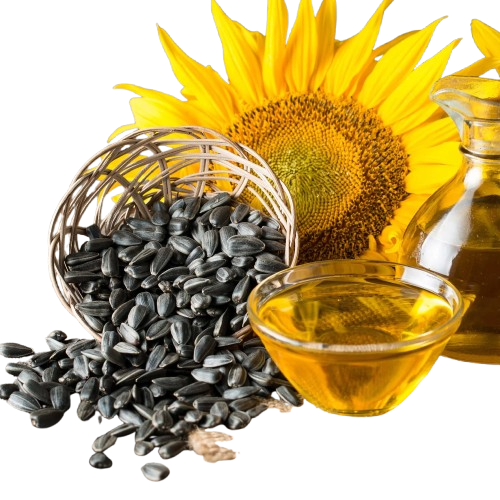
Get a Custom Report on Sunflower Seeds Nutrition Data – Contact Us!
What are the Types of Sunflower Seeds?
There are two main types of sunflower seeds based on their use: oilseed and non-oilseed (confectionery). Within these, variations exist in shell characteristics and kernel size. The table below shows common forms in which sunflower seeds are consumed and their calorie information.
| Type | Description | Calories (per 100g kernels, unless specified) | Calorie Qualifications |
|---|---|---|---|
|
Raw Sunflower Seed Kernels (Shelled)
|
The edible, de-hulled seed. | 584 | High in calories due to fat content. This is the baseline for shelled seeds. |
|
Dry-Roasted Sunflower Seed Kernels
|
Kernels roasted without oil. Can be salted or unsalted. | 582 (unsalted) | Very similar in calories to raw kernels; slight moisture loss concentrates nutrients. |
|
Oil-Roasted Sunflower Seed Kernels
|
Kernels roasted in oil. Can be salted or unsalted. | 596 (unsalted) | Slightly higher in calories than dry-roasted due to some oil absorption. |
|
In-Shell Sunflower Seeds (Confectionery Type)
|
Larger seeds with black and white striped shells, typically eaten as a snack by cracking the shell. | Edible kernel: 584 (raw basis) | Calorie content refers to the kernel inside. Shell is not eaten. |
|
Sprouted Sunflower Seeds
|
Kernels that have been allowed to germinate. | Lower, varies (~300-400, less concentrated) | Germination process changes nutrient composition and can reduce overall calorie density due to increased water and some starch conversion. |
|
Sunflower Seed Butter
|
Ground roasted sunflower seed kernels, similar to peanut butter. | 590-620 | Calorie-dense, similar to whole roasted seeds, may have added oil or sugar depending on brand. |
What are the Main Dishes with Sunflower Seeds?
Sunflower seeds are most commonly used as a garnish, an ingredient in salads, or as part of bread and trail mixes rather than being the central component of main dishes. Some of the most widespread main dishes that incorporate sunflower seeds include certain types of salads where they add crunch and nutrition, or as a coating for fish or chicken. The table below lists dishes where sunflower seeds can play a notable role, along with estimated nutritional information for the sunflower seed component or its contribution to the dish, and examples of restaurants. Nutrient values for the entire dish will vary greatly.
| Dish Name | Calories (Sunflower Seed Component per serving) | Type of Sunflower Seed Used | Carbs (g) (Seeds) | Sugar (g) (Seeds) | Protein (g) (Seeds) | Fat (g) (Seeds) | Cuisine | Restaurants |
|---|---|---|---|---|---|---|---|---|
|
Green Salads with Sunflower Seeds (e.g., House Salad, Caesar with seeds)
|
80-160 (for 1-2 tbsp seeds) | Raw or Roasted Kernels | 2-4 | <1 | 2-4 | 7-14 | American, Contemporary | Panera Bread (some salads), Sweetgreen, Tender Greens, Applebee's (some salads), Chopt Creative Salad Co. |
|
Broccoli Salad with Sunflower Seeds
|
80-160 (for 1-2 tbsp seeds) | Raw or Roasted Kernels | 2-4 | <1 | 2-4 | 7-14 | American (Potluck/Deli) | Deli sections of grocery stores like Whole Foods, Kroger; often homemade |
|
Chicken Salad with Grapes and Sunflower Seeds
|
80-160 (for 1-2 tbsp seeds) | Raw or Roasted Kernels | 2-4 | <1 | 2-4 | 7-14 | American Deli-style | Jason's Deli (some variations), McAlister's Deli (some variations), local delis |
|
Sunflower Seed Crusted Chicken or Fish
|
100-200 (for crust component) | Ground or Chopped Kernels | 3-6 | <1-2 | 3-5 | 8-16 | Contemporary American | Some upscale casual or contemporary American restaurants may feature such dishes |
|
Multi-Grain Bread or Rolls with Sunflower Seeds
|
30-60 (for seeds in/on 1 slice/roll) | Whole Kernels | 1-2 | <0.5 | 1-2 | 2-4 | European, American | Great Harvest Bread Co., Panera Bread (some breads), grocery store bakeries |
|
Granola or Muesli with Sunflower Seeds
|
80-160 (for 1-2 tbsp seeds in serving) | Raw Kernels | 2-4 | <1 | 2-4 | 7-14 | American, European Breakfast | Starbucks (some oatmeal toppings), Jamba Juice (some bowls), health food cafes |
|
Veggie Burgers (some recipes include sunflower seeds)
|
40-80 (for seeds in 1 patty) | Ground or Whole Kernels | 1-3 | <1 | 1-3 | 3-7 | Vegetarian/Vegan | Veggie Grill (some varieties), Amy's Kitchen (frozen retail), specific vegetarian restaurants |
|
Trail Mix (as a component, often eaten as a substantial snack/light meal)
|
Varies greatly | Raw or Roasted Kernels | Varies | Varies | Varies | Varies | American Snack | Sold pre-packaged by brands like Planters, Nature Valley, or in bulk bins at Whole Foods, Sprouts |
|
Pesto (some variations use sunflower seeds instead of pine nuts)
|
40-80 (for seeds in 2 tbsp pesto) | Raw Kernels | <1-2 | <0.5 | 1-3 | 3.5-7 | Italian-inspired, Vegan | Some vegan restaurants or specialty pesto brands |
What are Desserts with Sunflower Seeds?
Sunflower seeds and sunflower seed butter can be incorporated into a variety of desserts, offering a nutty flavor and textural contrast. They are often found in cookies, bars, candies, and as toppings.
| Dish Name | Calories (per serving) | Type of Sunflower Seed Used | Carbs (g) | Sugar (g) | Protein (g) | Fat (g) | Cuisine | Restaurants |
|---|---|---|---|---|---|---|---|---|
|
Sunflower Seed Butter Cookies
|
100-180 (per cookie) | Sunflower Seed Butter, Kernels | 10-20 | 8-15 | 2-4 | 6-12 | American, Allergy-friendly | Often homemade or from specialty allergy-friendly bakeries/brands (e.g., SunButter - brand) |
|
Chocolate Sunflower Seed Bark/Clusters
|
150-250 (1 oz/28g) | Roasted Kernels | 10-18 | 8-15 | 3-5 | 10-18 | American Confectionery | Health food stores, specialty chocolatiers, homemade |
|
Granola Bars with Sunflower Seeds
|
150-250 (per bar) | Raw or Roasted Kernels | 20-35 | 10-18 | 3-7 | 8-15 | American Snack | Nature Valley (some varieties), Kind Bars (some varieties), Clif Bar (some varieties) |
|
Sunflower Seed Brittle
|
120-180 (1 oz/28g) | Roasted Kernels | 15-25 | 12-20 | 2-4 | 6-10 | American Confectionery | Specialty candy shops, often homemade |
|
Muffins or Quick Breads with Sunflower Seeds
|
200-400 (per muffin/slice) | Raw or Roasted Kernels | 30-50 | 15-25 | 4-7 | 8-18 | American Bakery | Local bakeries, Starbucks (some multi-grain muffins), Au Bon Pain |
|
Sunflower Seed Butter Cups (like peanut butter cups)
|
80-120 (per cup) | Sunflower Seed Butter | 8-12 | 7-10 | 2-3 | 5-8 | American Confectionery | Brands like Free2b (allergy-friendly), Trader Joe's (seasonal) |
|
Trail Mix Cookies (with sunflower seeds)
|
150-220 (per cookie) | Kernels | 18-28 | 10-18 | 2-5 | 8-14 | American Bakery | Local bakeries, homemade |
What Cuisines Prefer Sunflower Seeds the Most?
Sunflower seeds are enjoyed globally, but certain cuisines incorporate them more prominently, either as snacks, in baked goods, or as a textural and nutritional addition to salads and other dishes. Eastern European and Russian cuisines have a long tradition of consuming sunflower seeds (often called "semki") as a popular snack. German and Scandinavian cuisines often feature them in multi-grain breads. In North America, they are widely used in salads, trail mixes, and as sunflower seed butter.
| Cuisine | Dish Name | Calories (Seed Component) | Restaurants |
|---|---|---|---|
|
Eastern European/Russian
|
Roasted In-Shell Sunflower Seeds (Semki - snack) | Varies (snack) | Sold in markets and stores in these regions; less of a restaurant dish, more a cultural snack |
|
German/Scandinavian
|
Multi-Grain Breads with Sunflower Seeds | 30-60 (in slice) | Bakeries specializing in European breads, e.g., local German or Scandinavian bakeries |
|
American
|
Salads with Sunflower Seed Topping | 80-160 (topping) | Panera Bread, Sweetgreen, Tender Greens, Applebee's, Chopt Creative Salad Co. |
|
American
|
Trail Mixes | Varies | Sold pre-packaged (Planters, Nature Valley), bulk bins at Whole Foods, Sprouts |
|
American (Health Food)
|
Sunflower Seed Butter as spread/ingredient | 180-200 (2 tbsp) | Health food stores (brand: SunButter), used in recipes at vegan/allergy-friendly cafes |
|
American (Bakery)
|
Muffins/Granola Bars with Sunflower Seeds | Varies | Starbucks, Nature Valley, local bakeries |
Which Countries Produce the Most Sunflower Seeds?
The top producers of sunflower seeds globally are Ukraine, Russia, Argentina, China, and Romania, along with several other European Union countries. In 2022, Ukraine and Russia were leading producers, though production can be significantly impacted by geopolitical events and weather. The Food and Agriculture Organization of the United Nations (FAO) provides comprehensive data for "Sunflower seed" production. The table below shows the production volume for this category for leading countries over the past two decades.
| Country | 2004 | 2005 | 2006 | 2007 | 2008 | 2009 | 2010 | 2011 | 2012 | 2013 | 2014 | 2015 | 2016 | 2017 | 2018 | 2019 | 2020 | 2021 | 2022 | 2023 (Est.) |
|---|---|---|---|---|---|---|---|---|---|---|---|---|---|---|---|---|---|---|---|---|
| Ukraine | 3,050 | 4,700 | 5,300 | 4,200 | 6,500 | 6,350 | 6,800 | 8,700 | 8,390 | 11,050 | 10,130 | 11,170 | 13,630 | 12,240 | 14,170 | 15,250 | 13,060 | 16,380 | 11,320 | 12,500 |
| Russia | 4,850 | 6,450 | 6,750 | 5,650 | 7,350 | 6,430 | 5,340 | 9,030 | 7,990 | 10,560 | 9,030 | 10,310 | 10,700 | 10,480 | 12,760 | 15,380 | 13,320 | 15,660 | 16,380 | 16,500 |
| Argentina | 3,400 | 3,600 | 3,100 | 2,800 | 2,500 | 2,200 | 2,450 | 3,400 | 3,100 | 2,850 | 2,350 | 2,970 | 3,100 | 3,550 | 3,620 | 3,340 | 3,580 | 3,750 | 3,950 | 4,050 |
| China | 2,200 | 2,150 | 2,050 | 1,900 | 2,050 | 2,100 | 2,250 | 2,300 | 2,400 | 2,450 | 2,500 | 2,380 | 2,420 | 2,570 | 2,600 | 2,630 | 2,350 | 2,400 | 2,450 | 2,480 |
| Romania | 800 | 1,200 | 1,350 | 1,050 | 1,300 | 1,150 | 1,860 | 1,970 | 1,550 | 2,150 | 1,750 | 1,980 | 2,050 | 2,920 | 2,850 | 3,050 | 2,180 | 2,650 | 2,400 | 2,500 |
| European Union | 5,500 | 6,000 | 5,800 | 4,500 | 6,200 | 5,700 | 7,000 | 8,500 | 7,800 | 9,200 | 8,800 | 8,600 | 9,000 | 9,800 | 9,500 | 9,600 | 8,300 | 9,300 | 8,900 | 9,100 |
Which Countries Consume the Most Sunflower Seeds?
According to data from FAOSTAT regarding food supply (which reflects apparent consumption, accounting for production, trade, and stock changes), countries that are major producers of sunflower seeds are also major consumers, and these include Russia, Ukraine, European Union countries (as a bloc), Argentina, and Turkey. Sunflower seeds are consumed as snacks (in-shell or kernels), used in bakery products, salads, and a significant portion is processed into sunflower oil and meal.
| Country/Region | 2004 | 2005 | 2006 | 2007 | 2008 | 2009 | 2010 | 2011 | 2012 | 2013 | 2014 | 2015 | 2016 | 2017 | 2018 | 2019 | 2020 | 2021 |
|---|---|---|---|---|---|---|---|---|---|---|---|---|---|---|---|---|---|---|
| Russia | 3,500 | 4,800 | 5,000 | 4,000 | 5,500 | 4,800 | 4,000 | 7,000 | 6,200 | 8,500 | 7,200 | 8,300 | 8,600 | 8,400 | 10,500 | 12,800 | 11,000 | 13,000 |
| Ukraine | 1,800 | 3,200 | 3,700 | 2,800 | 4,800 | 4,600 | 5,000 | 6,500 | 6,200 | 8,800 | 8,000 | 8,900 | 11,000 | 9,800 | 11,500 | 12,500 | 10,500 | 13,500 |
| European Union | 6,000 | 6,500 | 6,300 | 5,000 | 6,800 | 6,300 | 7,600 | 9,200 | 8,500 | 9,900 | 9,500 | 9,300 | 9,700 | 10,500 | 10,200 | 10,300 | 9,000 | 10,000 |
| Argentina | 800 | 900 | 700 | 600 | 500 | 450 | 500 | 800 | 700 | 650 | 500 | 700 | 750 | 900 | 950 | 850 | 920 | 980 |
| Turkey | 900 | 950 | 1,000 | 1,100 | 1,150 | 1,200 | 1,250 | 1,300 | 1,350 | 1,400 | 1,450 | 1,500 | 1,550 | 1,600 | 1,650 | 1,700 | 1,750 | 1,800 |
| China | 2,100 | 2,050 | 1,950 | 1,800 | 1,950 | 2,000 | 2,150 | 2,200 | 2,300 | 2,350 | 2,400 | 2,280 | 2,320 | 2,470 | 2,500 | 2,530 | 2,250 | 2,300 |
How Do Prices of Sunflower Seeds-including Dishes Change?
The prices of restaurant dishes or retail products that feature sunflower seeds as a notable ingredient (such as salads with sunflower seed toppings, multi-grain breads, granola bars, or sunflower seed butter) have increased over the past 20 years. This is due to the rising cost of ingredients (including sunflower seeds), packaging, labor, and general operating expenses for food manufacturers and restaurants. Below is a comparison of estimated prices for representative items where sunflower seeds are a component.
| Establishment | Dish | Old Price (2004-2008) | Current Price (2024-2025) |
|---|---|---|---|
| Panera Bread | Salad with Sunflower Seed Topping | $6.99 - $8.99 (Full Salad) | $10.99 - $14.99 (Full Salad) |
| Whole Foods | Bag of Roasted Salted Sunflower Kernels | $2.50 - $4.00 | $4.00 - $6.50 |
| Nature Valley | Granola Bar with Sunflower Seeds (Box of 6-12) | $2.79 - $3.99 | $3.99 - $5.99 |
| Health Food Store | Jar of Sunflower Seed Butter (16 oz) | $3.50 - $5.00 | $5.00 - $8.00 |
| Bakery Store | Multi-Grain Bread Loaf with Sunflower Seeds | $3.00 - $4.50 | $4.50 - $6.50 |
| Salad Bar | Price per pound for salad bar items | $5.99 - $7.99 /lb | $8.99 - $12.99 /lb |
How Does the Price of Sunflower Seeds Change for the Last 20 Years?
The price of sunflower seeds, based on data from sources like the USDA National Agricultural Statistics Service (NASS) for U.S. farm prices and international commodity market reports (from the International Sunflower Association or major commodity traders), has exhibited significant volatility and a general upward trend over the last 20 years. In 2003-2004, U.S. average farm prices for oil-type sunflower seeds were in the range of $0.10 to $0.15 per pound. By 2022-2023, average farm prices were in the $0.20 to $0.35 per pound range, with confectionery-type sunflower seeds (larger, for snacking) commanding a premium. Prices have seen sharp peaks during this period, sometimes exceeding $0.40 or $0.50 per pound at the farm gate during times of global shortages or high demand for vegetable oils. The lowest prices for sunflower seeds were observed in years with large global harvests and high stock levels. Price range factors are numerous including weather conditions in major producing regions (Ukraine, Russia, Argentina, EU, USA), planted acreage, global demand for sunflower oil (a primary product) and sunflower meal (for animal feed), geopolitical events, trade policies, and currency fluctuations.
| Year | Price |
|---|---|
| 2004 | $0.13 |
| 2005 | $0.14 |
| 2006 | $0.15 |
| 2007 | $0.17 |
| 2008 | $0.21 |
| 2009 | $0.18 |
| 2010 | $0.2 |
| 2011 | $0.26 |
| 2012 | $0.3 |
| 2013 | $0.27 |
| 2014 | $0.25 |
| 2015 | $0.22 |
| 2016 | $0.24 |
| 2017 | $0.23 |
| 2018 | $0.2 |
| 2019 | $0.21 |
| 2020 | $0.26 |
| 2021 | $0.31 |
| 2022 | $0.38 |
| 2023 | $0.35 |
| 2024 | $0.34 |
What is the Sunflower Seeds Calorie for 100g?
A 100g (3.5 oz) serving of raw, shelled sunflower seed kernels contains 584 calories. A 100g (3.5 oz) serving of dry-roasted, unsalted sunflower seed kernels provides 582 calories. A 100g (3.5 oz) serving of oil-roasted, unsalted sunflower seed kernels has 596 calories.
What is the Sunflower Seeds Calorie for 1/4 Cup?
One quarter-cup of raw, shelled sunflower seed kernels (34g, 1.2 oz) contains 199 calories. One quarter-cup of dry-roasted, unsalted sunflower seed kernels (34g, 1.2 oz) provides 198 calories. One quarter-cup of oil-roasted, unsalted sunflower seed kernels (31g, 1.09 oz) has 185 calories.
What is the Calorie of 1 Tbsp Sunflower Seeds?
One tablespoon (9g, 0.32 oz) of raw, shelled sunflower seed kernels contains 53 calories. One tablespoon (9g, 0.32 oz) of dry-roasted, unsalted sunflower seed kernels provides 52 calories. One tablespoon (9g, 0.32 oz) of oil-roasted, unsalted sunflower seed kernels has 54 calories.
What are the Health Benefits of Sunflower Seeds?
Sunflower seeds provide some health benefits like supporting heart health and reducing inflammation due to its rich content of healthy fats, Vitamin E, selenium, and other beneficial compounds. A list of the health benefits of sunflower seeds are shown below:
- Rich in Vitamin E: Sunflower seeds are an excellent source of Vitamin E, a powerful antioxidant that helps protect cells from damage caused by free radicals, supporting skin health and immune function. (Traber, M.G., 2014, "Vitamin E").
- Good Source of Healthy Fats: They contain beneficial monounsaturated and polyunsaturated fats, including linoleic acid. These fats can help reduce LDL (bad) cholesterol levels and support overall heart health. (Mensink, R.P., et al., 2003, "Effects of dietary fatty acids and carbohydrates on the ratio of serum total to HDL cholesterol and on serum lipids and apolipoproteins: a meta-analysis of 60 controlled trials").
- Provide Important Minerals: Sunflower seeds are packed with minerals like magnesium, which is crucial for nerve function, blood sugar control, and blood pressure regulation; selenium, another potent antioxidant; phosphorus, vital for bone health; and copper and manganese, involved in various enzymatic processes.
- May Help Lower Blood Pressure: The magnesium content in sunflower seeds may contribute to lowering blood pressure. Some compounds in sunflower seeds may also inhibit an enzyme that causes blood vessels to constrict. (Houston, M.C., 2011, "The role of magnesium in hypertension and cardiovascular disease").
- May Support Healthy Blood Sugar Levels: The fiber, protein, and healthy fats in sunflower seeds can help slow down sugar absorption and promote more stable blood sugar levels. Magnesium also plays a role in insulin sensitivity. (Villegas, R., et al., 2008, "Vegetable but not animal protein intake is associated with reduced risk of type 2 diabetes in women").
- Contain Phytosterols: Sunflower seeds contain phytosterols, plant compounds that can help reduce cholesterol absorption from the diet, further contributing to heart health. (Ostlund, R.E. Jr., 2002, "Phytosterols in human nutrition").
- Source of Protein and Fiber: They provide a good amount of plant-based protein and dietary fiber, which contribute to satiety, aid in digestion, and support muscle maintenance.
- May Reduce Inflammation: The Vitamin E, flavonoids, and other plant compounds in sunflower seeds have anti-inflammatory properties, which may help reduce chronic inflammation linked to various diseases. (Galland, L., 2010, "Diet and inflammation").
- Supports Bone Health: The magnesium and phosphorus content in sunflower seeds are essential for building and maintaining strong bones.
- Rich in B Vitamins: Sunflower seeds contain several B vitamins, including thiamin, Vitamin B6, and folate, which are important for energy production, brain function, and cell metabolism.
- May Improve Skin Health: The Vitamin E and essential fatty acids in sunflower seeds can contribute to healthy, moisturized skin.
What are the Downsides of Sunflower Seeds?
Sunflower seeds have been known to cause some unwanted effects like high calorie intake if overconsumed and potential issues with added sodium in processed varieties due to their nutritional density and common preparations. A list of the downsides of sunflower seeds are shown below:
- High in Calories: Sunflower seeds are calorie-dense due to their high fat content. While these are mostly healthy fats, consuming large quantities can lead to excessive calorie intake and potential weight gain if not balanced within an overall diet.
- High Sodium Content (Salted Varieties): Many commercially available sunflower seeds are roasted and salted, which can significantly increase sodium intake. High sodium consumption is linked to elevated blood pressure and increased risk of heart disease. (He, F.J. & MacGregor, G.A., 2009, "A comprehensive review on salt and health and current experience of worldwide salt reduction programmes").
- Potential for Cadmium Accumulation: Sunflowers can absorb cadmium, a heavy metal, from the soil. Consuming very large quantities of sunflower seeds regularly over a long period could potentially lead to cadmium exposure, although levels in typical consumption are generally considered safe. (Reeves, P.G. & Chaney, R.L., 2008, "Bioavailability of cadmium to rats from crops grown on cadmium-contaminated soil").
- Choking Hazard (In-Shell Seeds for Young Children): In-shell sunflower seeds can be a choking hazard for young children if not shelled properly.
- Added Oils in Some Roasted Varieties: Some sunflower seeds are oil-roasted, which can add extra calories and potentially less healthy types of fats if specific oils are used, compared to dry-roasted versions.
- Phytic Acid Content: Like many seeds and nuts, sunflower seeds contain phytic acid, which can bind to certain minerals (iron, zinc, calcium) and slightly reduce their absorption from the same meal. This is generally not a concern for individuals eating a varied and balanced diet. (Schlemmer, U., et al., 2009, "Phytate in foods and significance for humans: Food sources, intake, processing, bioavailability, protective role and analysis").
Are Sunflower Seeds Good for You?
Yes, sunflower seeds are good for you when consumed in moderation as part of a balanced diet. They are nutrient-dense, providing an excellent source of Vitamin E, healthy fats (monounsaturated and polyunsaturated), protein, fiber, and important minerals like selenium, magnesium, and copper. These nutrients contribute to various health benefits, including supporting heart health by improving cholesterol levels, reducing inflammation, and promoting antioxidant activity within the body (Ros, E., 2010, "Health Benefits of Nut Consumption"). The combination of fiber, protein, and healthy fats in sunflower seeds also helps promote satiety, which can be beneficial for weight management. (Mattes, R.D., et al., 2008, "Impact of Peanuts and Tree Nuts on Body Weight and Healthy Weight Loss in Adults"). Choosing unsalted and dry-roasted or raw varieties is preferable to minimize excess sodium and potentially unhealthy added fats from oil roasting.
How to Eat Sunflower Seeds?
Sunflower seeds can be eaten in various ways. The best way to eat sunflower seeds often involves consuming them raw or dry-roasted and unsalted to maximize their health benefits. You can eat shelled sunflower kernels directly as a snack. They can also be added to salads for a crunchy texture, mixed into yogurt or oatmeal, blended into smoothies, or incorporated into trail mixes. Sunflower seed butter is another popular option, used similarly to peanut butter. If eating in-shell seeds, crack the shell with your teeth, eat the kernel, and discard the shell. The benefits of eating sunflower seeds are best obtained when they are part of a varied diet.
As to how much sunflower seeds to eat daily, a common recommended serving size is one ounce (28.35g) or about a quarter cup of shelled kernels, which provides a good balance of nutrients without excessive calories.
How Do Calories Change According to Sunflower Seed Types?
The calorie content of sunflower seeds is primarily dictated by their high fat content, and thus remains relatively consistent across different forms of the kernel itself, whether raw, dry-roasted, or oil-roasted. Raw sunflower seed kernels contain 584 calories per 100g. Dry-roasted kernels are very similar, with 582 calories per 100g, as the process mainly removes a small amount of moisture, slightly concentrating the nutrients. Oil-roasted sunflower seed kernels are a bit higher, around 596 calories per 100g, due to the absorption of some oil during the roasting process. In-shell sunflower seeds, when considering the edible kernel, have the same caloric value as raw kernels on a per-weight basis of the kernel. The most significant variation in calorie density would be seen with sprouted sunflower seeds, which would have a lower calorie count per 100g compared to dry kernels because the sprouting process increases water content and alters the macronutrient composition, making them less calorie-dense by weight. Sunflower seed butter is also very calorie-dense, similar to whole roasted seeds, typically ranging from 590 to 620 calories per 100g, depending on whether additional oil or sugar is added.
What is the Origin of Sunflower Seeds?
The sunflower (Helianthus annuus) is native to North America, with evidence suggesting its cultivation by Native American tribes as far back as 3000 BC, primarily in what is now the southwestern United States and Mexico. These indigenous populations utilized nearly all parts of the sunflower plant: the seeds were eaten raw, roasted, ground into flour for bread, or pressed for oil; the stalks were used for building materials; and the flowers held ceremonial and medicinal significance. Sunflowers and their seeds were a vital food source, providing protein, fats, and other nutrients.
Spanish explorers encountered cultivated sunflowers in the Americas in the 16th century and introduced them to Europe. Initially, they were grown primarily as ornamental plants in European gardens due to their large, striking flowers. It wasn't until the 18th century in Russia that sunflowers began to be cultivated on a large scale for their oil-rich seeds. Peter the Great is credited with promoting sunflower cultivation in Russia after encountering them in Holland. The Russian Orthodox Church's Lenten dietary restrictions, which forbade most oily foods but did not specifically mention sunflower oil, further spurred its popularity and large-scale production there. Eventually, improved varieties for oil production were developed in Russia and later reintroduced to North America in the late 19th century by Russian immigrants, leading to the establishment of the modern sunflower seed and oil industry in the United States and Canada. A popular and simple way sunflower seeds have been enjoyed for centuries, especially in Eastern Europe, is simply roasted in their shells and eaten as a common snack, cracking the shell with the teeth to extract the kernel, a tradition known as eating "semki."
Explore More Seeds
Discover more Seeds with detailed nutrition facts, calorie counts, vitamins, minerals, and health benefits. Compare similar foods, serving sizes, macronutrients, and key nutrients to find the best option for your diet and nutrition goals.
 Kidney Beans calories
 Lotus Seed calories
 Poppy Seed calories
 Pumpkin Seed calories
 Quinoa calories
 Seeds calories
 Sesame Seeds calories
 Sunflower Seed Flour calories