Calories and Nutritions in Lotus Seed
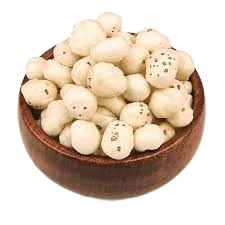
Lotus seeds are the edible kernels of the Nelumbo nucifera plant, valued for the chestnut-like flavor and dense nutritional profile. A large serving of raw lotus seeds (150g) contains 133 calories, while a small serving (28.35g) supplies 25 calories. Processing methods significantly alter energy density, as a large serving of dried lotus seeds (150g) supplies 498 calories. A single dried lotus seed (1g) contains 3.3 lotus seeds calories.
Lotus seed nutrition facts show a nutrient profile dominated by complex carbohydrates and plant-based proteins. A large serving of dried lotus seeds (150g) provides 96.7g of carbohydrates and 23.1g of protein. This seed serves as a significant source of manganese, a mineral essential for metabolism, which complements the bioactive profile explored in clinical studies. Scientific evidence presented by Zhao, X., et al. (2014) in "Antioxidant activity and bioactive compounds of lotus seed," indicates that the high phenolic content supports cellular health by neutralizing free radicals. The lotus seeds nutritional value stems primarily from carbohydrates, making the food a vital energy source in traditional Eastern diets. Regarding potential downsides, the seeds contain alkaloids that influence heart rhythm, requiring moderation for individuals with cardiac conditions. Varieties include the white lotus seed, which is peeled and de-membraned, and the brown lotus seed, which retains the harvest shell.
Global cultivation of lotus seeds relies heavily on the aquatic agricultural output of China, India, and Vietnam. This harvest meets the demands of distinct regional markets, where China and Hong Kong utilize vast amounts of this crop. Lotus seeds serve as a central element in Mooncakes, sweet dessert soups, and Makhana Curry. Escalating international interest and labor costs have driven wholesale values upward, with dried lotus seed prices hitting $18.00 per kilogram by 2024. Commercial dining menus mirror this inflation, as the cost of a White Lotus Seed Mooncake box at Kee Wah Bakery rose from $38.00 in 2012 to between $68.00 and $75.95 in 2024.
Nutritionists recommend a daily intake of 28 grams of seeds to maximize nutritional benefits while regulating glycemic response. A small serving of raw lotus seeds (28.35g) contains 25 calories, an energy intake that necessitates 10 minutes of walking the dog or 6 minutes of carrying groceries to burn off. A small serving of lotus seeds also delivers 0.05mg of Thiamin and 8mcg of Folate without surpassing daily calorie targets.
Lotus Seed nutrition
| Stats | Weight |
|---|---|
| Carbs | 13 grams |
| Protein | 3.1 grams |
| Fats | 0 grams |
| Sugars | 0 grams |
- Large Lotus Seed Calories (Nutritional Facts)
- Medium Lotus Seed Calories (Nutritional Facts)
- Small Lotus Seed Calories (Nutritional Facts)
- Raw Lotus Seed Nutrition
- Sodium in Lotus Seed
- Potassium in Lotus Seed
- Sugar in Lotus Seed
- Fiber in Lotus Seed
- Protein in Lotus Seed
- Carbs in Lotus Seed
- Fat in Lotus Seed
- Vitamins in Lotus Seed
- Minerals in Lotus Seed
Large Lotus Seed Calories (Nutritional Facts)
A large serving of raw lotus seeds (150g or 1 cup) contains 133 calories, 6.2g of protein, 0.8g of fat, 25.9g of carbohydrates, 0g of fiber, 0g of sugar, and 1.5mg of sodium. A large serving of dried lotus seeds (150g or 1 cup) provides 498 calories, 23.1g of protein, 3g of fat, 96.7g of carbohydrates, 0g of fiber, 0g of sugar, and 7.5mg of sodium. A large serving of sugar-coated candied lotus seeds (150g or 1 cup) supplies 550 calories due to the addition of external sweeteners.
Medium lotus seed nutrition for raw lotus seeds (75g or 0.5 cup) provides 67 calories, 3.1g of protein, 0.4g of fat, 13g of carbohydrates, 0g of fiber, 0g of sugar, and 0.75mg of sodium. A medium portion of dried lotus seeds (75g or 0.5 cup) contains 249 calories, offering a significantly denser energy profile.
Small lotus seed nutrition for a serving of raw lotus seeds (28.35g or 1oz) contains 25.2 calories, 1.17g of protein, 0.15g of fat, 4.9g of carbohydrates, 0g of fiber, 0g of sugar, and 0.28mg of sodium. A small serving of roasted lotus seeds (28.35g or 1oz) supplies 105 calories, reflecting the moisture loss and concentration of nutrients.
A large serving of raw lotus seeds (150g or 1 cup) contains 133 calories, 6.2g of protein, 0.8g of fat, 25.9g of carbohydrates, 0g of fiber, 0g of sugar, and 1.5mg of sodium. A medium portion of raw lotus seeds (75g or 0.5 cup) provides 67 calories, 3.1g of protein, 0.4g of fat, 13g of carbohydrates, 0g of fiber, 0g of sugar, and 0.75mg of sodium. A small serving of raw lotus seeds (28.35g or 1oz) contains 25.2 calories, 1.17g of protein, 0.15g of fat, 4.9g of carbohydrates, 0g of fiber, 0g of sugar, and 0.28mg of sodium. A standard raw lotus seed serving (100g) supplies 89 calories, 4.1g of protein, 0.5g of fat, 17.3g of carbohydrates, 0g of fiber, 0g of sugar, and 1mg of sodium.
A large serving of dried lotus seeds (150g) contains 7.5mg of sodium (0% DV). A medium portion of dried lotus seeds (75g) has 3.8mg of sodium (0% DV). A small serving of dried lotus seeds (28g) contains 1.4mg of sodium (0% DV). A large serving of raw lotus seeds (150g) contains 1.5mg of sodium (0% DV). A medium portion of raw lotus seeds (75g) has 0.75mg of sodium (0% DV). A small serving of raw lotus seeds (28.35g) contains 0.28mg of sodium (0% DV). A raw lotus seed serving (100g) supplies 1mg of sodium (0% DV).
A large serving of dried lotus seeds (150g) contains 2052mg of potassium (44% DV). A medium portion of dried lotus seeds (75g) has 1026mg of potassium (22% DV). A small serving of dried lotus seeds (28g) contains 383mg of potassium (8% DV). A large serving of raw lotus seeds (150g) contains 550mg of potassium (11% DV). A medium portion of raw lotus seeds (75g) has 275mg of potassium (5% DV). A small serving of raw lotus seeds (28.35g) contains 104mg of potassium (2% DV). A raw lotus seed serving (100g) supplies 367mg of potassium (7% DV).
A large serving of dried lotus seeds (150g) contains 0g of sugar. A medium portion of dried lotus seeds (75g) has 0g of sugar. A small serving of dried lotus seeds (28g) contains 0g of sugar. A large serving of raw lotus seeds (150g) contains 0g of sugar. A medium portion of raw lotus seeds (75g) has 0g of sugar. A small serving of raw lotus seeds (28.35g) contains 0g of sugar. A raw lotus seed serving (100g) supplies 0g of sugar.
A large serving of dried lotus seeds (150g) provides 0g of dietary fiber (0% DV). A medium portion of dried lotus seeds (75g) has 0g of fiber (0% DV). A small serving of dried lotus seeds (28g) contains 0g of fiber (0% DV). A large serving of raw lotus seeds (150g) provides 0g of dietary fiber (0% DV). A medium portion of raw lotus seeds (75g) has 0g of fiber (0% DV). A small serving of raw lotus seeds (28.35g) contains 0g of fiber (0% DV). A raw lotus seed serving (100g) supplies 0g of fiber (0% DV).
A large serving of dried lotus seeds (150g) provides 23.1g of protein (46% DV). A medium portion of dried lotus seeds (75g) has 11.6g of protein (23% DV). A small serving of dried lotus seeds (28g) contains 4.3g of protein (9% DV). A large serving of raw lotus seeds (150g) provides 6.2g of protein (12% DV). A medium portion of raw lotus seeds (75g) has 3.1g of protein (6% DV). A small serving of raw lotus seeds (28.35g) contains 1.17g of protein (2% DV). A raw lotus seed serving (100g) supplies 4.1g of protein (8% DV).
A large serving of dried lotus seeds (150g) contains 96.7g of carbohydrates (35% DV). A medium portion of dried lotus seeds (75g) has 48.4g of carbohydrates (18% DV). A small serving of dried lotus seeds (28g) contains 18.1g of carbohydrates (7% DV). A large serving of raw lotus seeds (150g) contains 25.9g of carbohydrates (9% DV). A medium portion of raw lotus seeds (75g) has 13g of carbohydrates (4% DV). A small serving of raw lotus seeds (28.35g) contains 4.9g of carbohydrates (1% DV). A raw lotus seed serving (100g) supplies 17.3g of carbohydrates (6% DV).
A large serving of dried lotus seeds (150g) contains 3g of total fat (4% DV). A medium portion of dried lotus seeds (75g) has 1.5g of total fat (2% DV). A small serving of dried lotus seeds (28g) contains 0.6g of total fat (1% DV). A large serving of raw lotus seeds (150g) contains 0.8g of total fat (1% DV). A medium portion of raw lotus seeds (75g) has 0.4g of total fat (0% DV). A small serving of raw lotus seeds (28.35g) contains 0.15g of total fat (0% DV). A raw lotus seed serving (100g) supplies 0.5g of total fat (0% DV).
A large serving of dried lotus seeds (150g) provides 0.96mg of Thiamin (80% DV) and 156mcg of Folate (39% DV). A medium portion of dried lotus seeds (75g) has 0.48mg of Thiamin (40% DV) and 78mcg of Folate (20% DV). A small serving of dried lotus seeds (28g) contains 0.18mg of Thiamin (15% DV) and 29mcg of Folate (7% DV). A large serving of raw lotus seeds (150g) provides 0.25mg of Thiamin (21% DV) and 42mcg of Folate (10% DV). A medium portion of raw lotus seeds (75g) has 0.12mg of Thiamin (10% DV) and 21mcg of Folate (5% DV). A small serving of raw lotus seeds (28.35g) contains 0.048mg of Thiamin (4% DV) and 7.94mcg of Folate (2% DV). A raw lotus seed serving (100g) supplies 0.17mg of Thiamin (14% DV).
A large serving of dried lotus seeds (150g) provides 3.5mg of manganese (152% DV), 939mg of phosphorus (75% DV), and 315mg of magnesium (75% DV). A medium portion of dried lotus seeds (75g) has 1.75mg of manganese (76% DV), 470mg of phosphorus (38% DV), and 158mg of magnesium (38% DV). A small serving of dried lotus seeds (28g) contains 0.64mg of manganese (28% DV), 175mg of phosphorus (14% DV), and 59mg of magnesium (14% DV). A large serving of raw lotus seeds (150g) provides 0.93mg of manganese (40% DV), 251mg of phosphorus (20% DV), and 84mg of magnesium (20% DV). A medium portion of raw lotus seeds (75g) has 0.46mg of manganese (20% DV), 125mg of phosphorus (10% DV), and 42mg of magnesium (10% DV). A small serving of raw lotus seeds (28.35g) contains 0.176mg of manganese (7% DV), 47.6mg of phosphorus (3% DV), and 15.9mg of magnesium (3% DV). A raw lotus seed serving (100g) supplies 0.62mg of manganese (27% DV).
Get a Custom Report on Lotus Seed Nutrition Data – Contact Us!
What are the Types of Lotus Seeds?
The types of Lotus Seeds are Brown, White, and Fresh. The table below delineates the nutritional variances among these forms.
| Type | Description | Calories (Per 100g) | Calorie Qualifications |
|---|---|---|---|
|
Brown Lotus Seed
|
Ripe seed with the hard outer shell attached. | 332 | The fully mature state and low moisture content result in a high caloric density. |
|
White Lotus Seed
|
De-shelled and de-membraned seed. | 340 | The removal of the fibrous shell slightly concentrates the starch and protein content. |
|
Fresh Lotus Seed
|
Raw seed harvested from the pod. | 89 | The high water content dilutes the energy load, offering the lowest calorie count. |
|
Candied Lotus Seed
|
Sugar-coated for desserts. | 550 | The addition of sugar syrup significantly elevates the caloric profile. |
What are the Desserts With Lotus Seed?
Sweet courses featuring lotus seeds rely on the mild, chestnut-like flavor of the kernel to balance rich syrups and dense pastes. The ingredient pairs remarkably well with red bean, glutinous rice, and rock sugar. Notable sweet preparations featuring this seed are presented in the following table.
| Dish Name | Calories (Estimate) | Type of Lotus Seed | Carbs (g) | Sugar (g) | Protein (g) | Fat (g) | Cuisine | Restaurants |
|---|---|---|---|---|---|---|---|---|
|
Mooncake (Lotus Paste)
|
750 | Paste (Dried/Ground) | 90 | 55 | 8 | 35 | Chinese | Kee Wah Bakery (Los Angeles, CA) |
|
Steamed Lotus Seed Bun
|
180 | Paste (Dried/Ground) | 30 | 12 | 4 | 5 | Chinese | Din Tai Fung |
|
Chè Hạt Sen (Sweet Soup)
|
250 | Whole (Dried/Boiled) | 45 | 25 | 6 | 1 | Vietnamese | Bambu Desserts (National) |
|
Eight Treasure Rice
|
400 | Whole (Dried/Boiled) | 85 | 35 | 5 | 4 | Chinese | Koi Palace (Daly City, CA) |
|
Makhana Kheer (Pudding)
|
320 | Popped/Roasted | 40 | 20 | 8 | 12 | Indian | Saravanaa Bhavan |
|
Lotus Seed Mochi
|
220 | Paste (Dried/Ground) | 45 | 18 | 3 | 2 | Japanese/Taiwanese | Minamoto Kitchoan (New York, NY) |
|
Almond Tea with Lotus
|
150 | Whole (Boiled) | 20 | 12 | 4 | 6 | Chinese | Hong Kong Lounge (San Francisco, CA) |
|
Candied Lotus Seeds
|
120 | Whole (Dried/Sugar) | 28 | 22 | 2 | 0 | Chinese | Aji Ichiban (New York, NY - Historical) |
|
Hasu Manju
|
160 | Paste (Dried/Ground) | 32 | 14 | 3 | 1 | Japanese | Fugetsu-Do (Los Angeles, CA) |
|
Red Bean Lotus Soup
|
280 | Whole (Dried/Boiled) | 55 | 25 | 8 | 1 | Chinese | Congee Village (New York, NY) |
|
Lotus Seed Pastry
|
350 | Paste (Dried/Ground) | 40 | 18 | 5 | 18 | Chinese | 85°C Bakery Cafe |
|
White Fungus Lotus Soup
|
180 | Whole (Dried/Boiled) | 35 | 20 | 4 | 0 | Chinese | Tim Ho Wan (New York, NY) |
|
Gingko Barley Lotus Soup
|
220 | Whole (Dried/Boiled) | 42 | 15 | 6 | 1 | Singaporean/Chinese | Lion City Coffee (San Francisco, CA) |
|
Caramelized Makhana
|
140 | Popped/Roasted | 22 | 10 | 3 | 5 | Indian | Indian Street Food Co. (New York, NY) |
|
Lotus Seed Ice Cream
|
210 | Paste/Chunks | 25 | 18 | 4 | 10 | Asian Fusion | Chinatown Ice Cream Factory (New York, NY) |
What are the Main Dishes With Lotus Seed?
Lotus seeds function as a textural component and starch source in savory entrees, particularly in slow-cooked stews and medicinal soups. The seed withstands long simmering times without disintegrating. Prominent entrees and soups containing this component are detailed below.
| Dish Name | Calories (Estimate) | Type of Lotus Seed | Carbs (g) | Sugar (g) | Protein (g) | Fat (g) | Cuisine | Restaurants |
|---|---|---|---|---|---|---|---|---|
|
Lotus Seed Congee
|
200 | Whole (Dried/Boiled) | 35 | 2 | 8 | 2 | Chinese | Congee Village (New York, NY) |
|
Braised Pork w/ Lotus
|
550 | Whole (Dried/Stewed) | 15 | 4 | 35 | 40 | Chinese | Hunan Slurp (New York, NY) |
|
Makhana Curry
|
350 | Popped/Stewed | 25 | 5 | 10 | 22 | Indian | Amber India (San Francisco, CA) |
|
Four Spirits Soup
|
180 | Whole (Dried/Boiled) | 20 | 0 | 12 | 5 | Taiwanese | Taipei Taipei (New York, NY) |
|
Vegetarian Buddha's Delight
|
300 | Whole (Dried/Stewed) | 25 | 4 | 15 | 10 | Chinese | Buddha Bodai (New York, NY) |
|
Ginseng Chicken Soup
|
450 | Whole (Boiled) | 15 | 0 | 45 | 18 | Korean | K-Town Food Courts (National) |
|
Lotus Seed Fried Rice
|
400 | Whole (Steamed) | 60 | 2 | 12 | 10 | Chinese | Yank Sing (San Francisco, CA) |
|
Duck Stew w/ Lotus
|
500 | Whole (Stewed) | 10 | 2 | 35 | 30 | Chinese | Ping's Seafood (New York, NY) |
|
Steamed Chicken w/ Lotus
|
380 | Whole (Steamed) | 8 | 0 | 40 | 15 | Chinese | Great N.Y. Noodletown (New York, NY) |
|
Matar Makhana (Peas)
|
280 | Popped/Stewed | 20 | 6 | 10 | 14 | Indian | Chutney Mary (Houston, TX) |
|
Lotus Seed Pig Stomach Soup
|
250 | Whole (Boiled) | 10 | 0 | 25 | 12 | Chinese | Noodle Village (New York, NY) |
|
Stir-fried Shrimp w/ Lotus
|
320 | Fresh/Boiled | 12 | 2 | 30 | 14 | Chinese | R&G Lounge (San Francisco, CA) |
|
Eight Treasure Duck
|
650 | Whole (Stuffed) | 30 | 5 | 45 | 35 | Chinese | Peking Gourmet Inn (Falls Church, VA) |
|
Lotus Seed & Mushroom Pot
|
220 | Whole (Stewed) | 18 | 2 | 10 | 8 | Chinese | Spicy & Tasty (Flushing, NY) |
|
Oxtail Soup w/ Lotus
|
600 | Whole (Stewed) | 10 | 0 | 40 | 45 | Chinese/Fusion | The Bun Shop (Los Angeles, CA) |
What Cuisines Do Prefer Lotus Seed Most?
Lotus seeds serve as a staple ingredient in Chinese, Vietnamese, and Indian culinary traditions. The following chart highlights regional gastronomies that frequently employ this plant product.
| Cuisine | Dish | Types of Lotus Seed | Calories (Estimate) | Restaurant(s) |
|---|---|---|---|---|
|
Chinese (Cantonese)
|
Mooncake | Dried/Ground Paste | 750 | Kee Wah Bakery (Los Angeles, CA) |
|
Chinese (Sichuan)
|
Braised Pork | Whole Dried | 550 | Hunan Slurp (New York, NY) |
|
Vietnamese
|
Chè Hạt Sen | Whole Dried/Boiled | 250 | Bambu Desserts (National) |
|
Indian (North)
|
Makhana Curry | Popped/Roasted | 350 | Amber India (San Francisco, CA) |
|
Taiwanese
|
Four Spirits Soup | Whole Dried | 180 | Taipei Taipei (New York, NY) |
|
Japanese
|
Hasu Manju | Ground Paste | 160 | Minamoto Kitchoan (New York, NY) |
|
Korean
|
Samgyetang (Ginseng Soup) | Whole Boiled | 450 | Tosokchon (Los Angeles, CA) |
|
Chinese (Dim Sum)
|
Lotus Seed Bun | Sweet Paste | 180 | Din Tai Fung |
|
Indian (Dessert)
|
Makhana Kheer | Popped/Boiled | 320 | Saravanaa Bhavan |
|
Singaporean
|
Gingko Barley Soup | Whole Boiled | 220 | Lion City Coffee (San Francisco, CA) |
|
Chinese (Banquet)
|
Eight Treasure Duck | Whole Stuffed | 650 | Peking Gourmet Inn (Falls Church, VA) |
|
Vegetarian (Buddhist)
|
Buddha's Delight | Whole Stewed | 300 | Buddha Bodai (New York, NY) |
|
Thai
|
Lotus Seed Dessert | Boiled in Syrup | 200 | Arun's Thai Restaurant (Chicago, IL) |
|
Indonesian
|
Es Kacang Merah | Boiled Topping | 250 | Simpang Asia (Los Angeles, CA) |
|
Fusion
|
Lotus Seed Salad | Fresh/Boiled | 150 | Nobu |
Which Countries Produce the Most Lotus Seeds?
The top producers of lotus seeds are China, India, and Vietnam, driven by the extensive cultivation of aquatic crops in the Yangtze River basin and the Mekong Delta. China leads the global market, managing the vast majority of harvest volumes for domestic processing and export. India contributes substantial amounts, particularly in the Bihar region, though trade data often aggregates Nelumbo nucifera with Euryale ferox(Makhana). The table below shows the estimated production of lotus seeds for the top producing nations over the last two decades.
| Country | 2003 | 2008 | 2013 | 2018 | 2019 | 2020 | 2021 | 2022 | 2023 |
|---|---|---|---|---|---|---|---|---|---|
| China | 120.5 | 145.2 | 180.6 | 210.4 | 215.8 | 220.5 | 225.2 | 230.0 | 240.5 |
| India | 45.0 | 55.5 | 70.2 | 95.0 | 100.5 | 105.2 | 110.0 | 115.5 | 120.0 |
| Vietnam | 25.0 | 32.5 | 40.0 | 50.5 | 52.0 | 51.5 | 53.0 | 55.0 | 58.0 |
| Japan | 8.5 | 9.2 | 10.5 | 11.0 | 10.8 | 10.5 | 10.2 | 10.0 | 9.8 |
| Thailand | 5.5 | 6.8 | 8.5 | 10.2 | 10.5 | 10.8 | 11.0 | 11.2 | 11.5 |
| South Korea | 4.2 | 5.0 | 6.5 | 7.8 | 8.0 | 8.2 | 8.4 | 8.5 | 8.6 |
| Indonesia | 3.5 | 4.5 | 5.8 | 7.0 | 7.2 | 7.4 | 7.6 | 7.8 | 8.0 |
| Myanmar | 2.0 | 2.8 | 3.5 | 4.5 | 4.8 | 5.0 | 5.2 | 5.4 | 5.6 |
Which Countries Consume the Most Lotus Seeds?
The top consumers of lotus seeds are China, Hong Kong, and Vietnam, where the ingredient serves as a cultural staple for festivals and traditional medicine. Domestic markets in East Asia absorb the bulk of the supply for mooncake fillings, sweet soups, and snack production. The European Union and the United States show increasing import demand due to the growing popularity of Asian cuisine and healthy plant-based snacks. The table below shows the estimated consumption values for lotus seeds in key markets.
| Country/Region | 2003 | 2008 | 2013 | 2018 | 2019 | 2020 | 2021 | 2022 | 2023 |
|---|---|---|---|---|---|---|---|---|---|
| China | 110.5 | 135.0 | 170.5 | 195.0 | 200.0 | 205.0 | 210.0 | 215.0 | 225.0 |
| India | 40.0 | 50.0 | 65.0 | 85.0 | 90.0 | 95.0 | 100.0 | 105.0 | 110.0 |
| Vietnam | 20.0 | 28.0 | 35.0 | 45.0 | 46.5 | 46.0 | 47.5 | 49.0 | 52.0 |
| Hong Kong | 12.5 | 15.0 | 18.5 | 22.0 | 21.5 | 20.0 | 21.0 | 22.5 | 24.0 |
| Japan | 10.0 | 11.5 | 13.0 | 14.5 | 14.2 | 14.0 | 14.5 | 15.0 | 15.5 |
| United States | 3.5 | 5.0 | 7.5 | 10.0 | 10.5 | 11.5 | 12.5 | 13.5 | 14.5 |
| South Korea | 4.0 | 4.8 | 6.0 | 7.5 | 7.8 | 8.0 | 8.2 | 8.5 | 8.8 |
| European Union | 2.5 | 3.5 | 5.0 | 7.0 | 7.5 | 8.0 | 8.5 | 9.0 | 9.5 |
How Do Prices of Lotus Seed-Including Dishes Change?
Restaurant costs for lotus seed desserts and pastries have surged, mirroring the increased expense of imported specialty ingredients. The table below illustrates price adjustments for selected items at well-known establishments.
| Brand/Restaurant | Dish | Old Price (Year) | Current Price (2024/2025) |
|---|---|---|---|
| Kee Wah Bakery | White Lotus Seed Mooncake (Box) | $38.00 (2012) | $68.00 - $75.95 |
| Koi Palace | Eight Treasure Rice | $12.00 (2013) | $13.41 - $14.90 |
| Farmer Queen | Dried Lotus Seeds | $12.00 (2013) | $12.99 - $14.90 |
| Everwilde | American Lotus Seeds | $12.00 (2013) | $12.99 - $15.95 |
What is the Lotus Seed Calorie for 100 Grams?
A 100g serving of fresh raw lotus seeds contains 89 calories, while the same quantity of dried lotus seeds provides 332 calories. A 100g serving of fried lotus seeds contains 450 calories due to oil absorption.
What is the Lotus Seed Calorie for 1 KG?
One kilogram (1000g) of fresh raw lotus seeds contains 890 calories, whereas a kilogram of dried lotus seeds provides 3320 calories. One kilogram (1000g) of sweetened lotus seed paste supplies 4200 calories.
What is the Calorie of 1 Lotus Seed?
A single dried lotus seed (1g) contains 3.3 calories and 0.15g of protein, offering precise figures for 1 Lotus Seed calories and protein. A single raw lotus seed (3g) provides 2.7 calories. A single dried lotus seed by Dragon Herbs (1g) contains 3.3 calories, while a dried lotus seed by Sunbest Natural (1g) provides 3.5 calories. A dried lotus seed by Tiger Khan (1g) contains 3.3 calories, and a dried lotus seed by Starwest Botanicals (1g) also supplies 3.3 calories.
What are the Health Benefits of Lotus Seed?
Lotus seeds offer distinct physiological advantages, particularly regarding cellular protection, neurological stability, and metabolic regulation. The seed functions as a reservoir of bioactive alkaloids and flavonoids. The following points highlight these benefits.
- Supports Cellular Health: The seeds contain high levels of phenolic compounds that neutralize oxidative stress. A study by Zhao, X., et al. (2014), "Antioxidant activity and bioactive compounds of lotus seed," confirmed that these compounds effectively scavenge free radicals.
- Promotes Neurological Stability: Isoquinoline alkaloids found in the embryo (plumule) exhibit sedative properties. Research by Mukherjee, P. K., et al. (2009), "The sacred lotus (Nelumbo nucifera) - phytochemical and therapeutic profile," established that these compounds aid in regulating sleep patterns and reducing anxiety.
- Reduces Inflammation: Bioactive components within the seed suppress inflammatory markers. A study by Liao, C. H., & Lin, J. Y. (2013), " Purified active lotus plumule (Nelumbo nucifera Gaertn) polysaccharides exert anti-inflammatory activity through decreasing toll-like receptor-2 and -4 expressions using mouse primary splenocytes," demonstrated the efficacy of seed extracts in mitigating tissue inflammation.
What are the Downsides of Lotus Seed?
Lotus seeds remain safe for most populations, yet specific biological concerns exist. The table below shows potential adverse effects associated with consumption, necessitating caution for specific groups.
- Affects Cardiac Rhythm: The seed contains neferine, an alkaloid that influences calcium channels in the heart. Research by Kashiwada, Y., et al. (2005), "Anti-HIV benzylisoquinoline alkaloids and flavonoids from the leaves of Nelumbo nucifera," notes that high concentrations of these alkaloids can alter heart rate. Sunflower seeds serve as a neutral alternative for individuals with cardiac concerns. Dietitians recommend limiting intake to 28g per day to prevent alkaloid accumulation.
- Causes Gastrointestinal Stagnation: The astringent properties of the seed can worsen constipation in susceptible individuals. A review by Paudel, K. R., & Panth, N. (2015), "Phytochemical Profile and Biological Activity of Nelumbo nucifera," indicates that excessive consumption inhibits bowel movements. Prunes or high-fiber fruits serve as alternatives to counteract this effect. The daily suggested amount remains below 30g for those prone to digestive issues.
Are Lotus Seeds Good for You?
Yes, lotus seeds are good for health because the food source supports hepatic function, enhances neurological stability, and reduces oxidative stress. Liver health strengthens due to the capacity of seed extracts to inhibit cytotoxicity, a benefit confirmed by the study by Sohn, D. H., et al. (2003), "Hepatoprotective effects of the seed of Nelumbo nucifera on CCl4-induced hepatotoxicity in rats." Neurological health improves through the sedative and antidepressant properties of the embryo, a mechanism detailed in the research by Sugimoto, Y., et al. (2008), "Effects of extracts and neferine from the embryo of Nelumbo nucifera seeds on the central nervous system." Cellular health benefits from the scavenging of free radicals, as established by Rai, S., et al. (2006), "Antioxidant activity of Nelumbo nucifera (sacred lotus) seeds."
Are Lotus Seeds Good for Weight Loss?
Yes, lotus seeds are good for weight loss because the ingredient regulates lipid accumulation, stabilizes blood glucose, and induces satiety. Fat reduction occurs through the inhibition of adipogenesis, a process explored in the study by You, J. S., et al. (2014), "Anti-obesity effects of Nelumbo nucifera seed ethanol extract in mice fed a high-fat diet." Metabolic efficiency improves by controlling blood sugar spikes, as detailed by Mani, S., et al. (2010), "Hypoglycaemic activity of Nelumbo nucifera seeds in streptozotocin induced diabetic rats." Satiety increases due to the substantial protein content, which suppresses appetite as confirmed by the research of Paddon-Jones, D., et al. (2008), "Protein, weight management, and satiety."
How Do Calories Change According to Lotus Seed Types?
Caloric density fluctuates significantly between the fresh aquatic harvest and the dehydrated commercial product. Candied or sugar-coated lotus seeds present the highest energy load at approximately 550 calories per 100 grams due to added sweeteners. Dried white lotus seeds offer a moderate to high profile at 340 calories per 100 grams. Fresh raw lotus seeds contain the lowest energy content at 89 calories per 100 grams, maintaining a high water volume suitable for low-calorie snacking.
Are Lotus Seed Protein Levels Higher Than Other Plant-Based Protein Sources?
No, lotus seed protein levels are not higher than soy or lentils but exceed the protein content of many nuts and cereal grains. A 100g serving of dried lotus seeds supplies 23.1g of protein, whereas soybeans provide 36g of protein per equal weight. The seed offers a comparable protein density to almonds and pistachios but falls short of the density found in legumes like peanuts and split peas. The amino acid profile remains incomplete compared to quinoa or soy, necessitating pairing with other protein sources.
What Makes Lotus Seeds Better for Protein Intake Than Other Snack Options?
Lotus seeds offer a significant advantage through a high protein-to-fat ratio, providing essential amino acids without the caloric density associated with high-fat nuts. A 100g serving of dried lotus seeds supplies 23.1g of protein with only 3g of fat, whereas the same weight of walnuts contains 15.2g of protein but 65.2g of fat. This composition allows for greater protein consumption per calorie, supporting muscle maintenance and satiety without excessive lipid intake. The seed contains specific bioactive proteins that possess antioxidant properties, enhancing the functional value beyond simple macronutrient delivery.
What is the Origin of Lotus Seed?
Lotus seeds originated in the tropical regions of Asia and Australia, where the Nelumbo nucifera plant has thrived in aquatic environments for over 3,000 years. Archaeological evidence places cultivation back to the Neolithic era in China, where the seed became integral to Traditional Chinese Medicine and cuisine. Buddhist and Hindu traditions revere the plant as a symbol of purity, ensuring the preservation and spread of the crop across India and Southeast Asia. The Silk Road facilitated the movement of the dried product, allowing the ingredient to become a staple in festive dishes like Mooncakes during the Yuan Dynasty. Modern cultivation remains centered in China, India, and Vietnam, supplying the global demand for both the culinary seed and the medicinal embryo.
Explore More Seeds
Discover more Seeds with detailed nutrition facts, calorie counts, vitamins, minerals, and health benefits. Compare similar foods, serving sizes, macronutrients, and key nutrients to find the best option for your diet and nutrition goals.
 Kidney Beans calories
 Poppy Seed calories
 Pumpkin Seed calories
 Quinoa calories
 Seeds calories
 Sesame Seeds calories
 Sunflower Seed Flour calories
 Sunflower Seeds calories