Calories and Nutritions in Maple Syrup
Maple syrup calories are derived from its high sugar content, with a 100g (3.5 oz) serving of pure maple syrup containing 260 calories. A single tablespoon (20g, 0.71 oz) provides 52 calories, while a quarter-cup (80g, 2.82 oz) offers around 200-220 calories depending on the brand. The maple syrup nutrition facts indicate that a 100g portion is composed of 67g of carbohydrates (24% Daily Value/DV), almost entirely sugars (60.9g), with 0g of protein and negligible fat (0.06g). It is also a good source of manganese (2.9mg, 126% DV per 100g) zinc (1.47mg, 13% DV), and various antioxidants. Research has identified unique phenolic compounds in maple syrup, such as quebecol, which may possess health-promoting properties (Li, L. & Seeram, N.P., 2011, "Quebecol, a novel phenolic compound isolated from Canadian maple syrup").
The nutrition facts of maple syrup show consistent calorie profiles across different grades (Golden Delicate, Amber Rich, Dark Robust, Very Dark Strong), all having 260 calories per 100g, as the grading relates to color and flavor intensity rather than sugar concentration. Originating from the sap of maple trees in Northeastern North America, maple syrup production is dominated by Canada (Quebec) and the United States (Vermont, New York). The price of pure maple syrup has increased over the past 20 years, with a 12-16 fl oz (355-473ml) retail container in the U.S. rising from $6.00 - $10.00 back in 2003/2004 to $8.00 - $15.00 in 2023/2024.
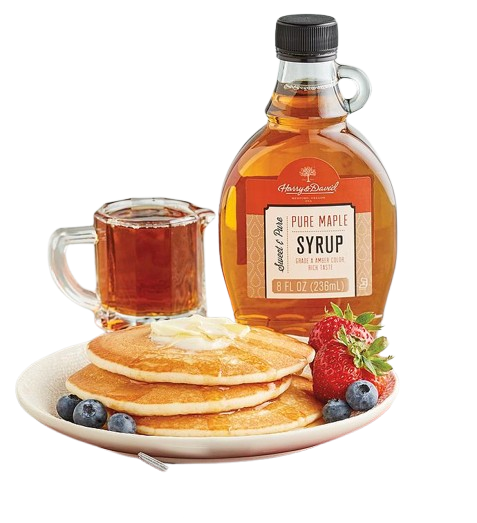
Maple syrup is famously served with pancakes and waffles at breakfast establishments like IHOP and Cracker Barrel, and is used in desserts like maple pecan pie or as a glaze for main dishes such as maple-glazed salmon often found at restaurants like Bonefish Grill. A serving size of one to two tablespoons (52-104 calories) is a common portion. Burning the 52 calories from one tablespoon of maple syrup might require about 5-7 minutes of jogging, 7-10 minutes of brisk walking, or 8-12 minutes of cycling.
Maple Syrup nutrition
| Stats | Weight |
|---|---|
| Carbs | 27 grams |
| Protein | 0 grams |
| Fats | 0 grams |
| Sugars | 26 grams |
- Pure (Real) Maple Syrup Calories (Nutritional Facts)
- Raw Maple Syrup Nutrition
- Sodium in Maple Syrup
- Potassium in Maple Syrup
- Sugar in Maple Syrup
- Fiber in Maple Syrup
- Protein in Maple Syrup
- Carbs in Maple Syrup
- Fat in Maple Syrup
- Vitamins in Maple Syrup
- Minerals in Maple Syrup
Pure (Real) Maple Syrup Calories (Nutritional Facts)
A 100g (3.5 oz) serving of pure maple syrup contains 260 calories. One tablespoon (20g, 0.71 oz) of pure maple syrup provides 52 calories. A quarter-cup (84g, 2.96 oz) of pure maple syrup has 218 calories. A two-tablespoon (60ml or 80g, 2.82 oz) serving of Coombs Family Farms Organic Maple Syrup Grade A Dark Robust contains 220 calories. A quarter-cup (60ml or 80g) serving of Kirkland Signature 100% Pure Maple Syrup Grade A Amber Rich provides 220 calories. Maple Grove Farms 100% Pure Maple Syrup (60ml or 80g) contains 200 calories per serving. Pure maple syrup (100g) contains 0g of protein, 67g of carbohydrates (all sugars), and 0g of fat.
A 100g (3.5 oz) serving of pure maple syrup (such as that from Butternut Mountain Farm or Crown Maple) contains 260 calories, 0g protein, 67g carbohydrates (all sugars), 0g fat, and various minerals. The term "raw" might sometimes be used by artisanal producers to imply minimal filtration or a specific traditional process, but the core nutritional values of calories and macronutrients from the sugars remain the same as other pure maple syrups.
Pure maple syrup contains a small amount of sodium, with 6mg of sodium per 100g (0% DV). One tablespoon (20g, 0.71 oz) of pure maple syrup provides 1.2mg of sodium (0% DV). Some brands like Kirkland Signature list 0mg of sodium per 60ml (80g) serving.
Pure maple syrup provides 212mg of potassium per 100g (5% DV). One tablespoon (20g, 0.71 oz) of pure maple syrup contains 42.4mg of potassium (1% DV). A quarter-cup (80g) serving of Coombs Family Farms Organic Maple Syrup provides 170mg of potassium (4% DV).
Pure maple syrup is primarily composed of sugars, containing 60.9g of total sugars per 100g. One tablespoon (20g, 0.71 oz) of pure maple syrup has 12.2g of sugar. A quarter-cup (80g) serving of Kirkland Signature 100% Pure Maple Syrup contains 53g of total sugars. The primary sugar in maple syrup is sucrose.
Pure maple syrup contains 0g of dietary fiber per 100g. One tablespoon (20g, 0.71 oz) of pure maple syrup also provides 0g of dietary fiber.
Pure maple syrup contains a negligible amount of protein, with 0.04g per 100g (0% DV). One tablespoon (20g, 0.71 oz) of pure maple syrup provides less than 0.1g of protein.
Pure maple syrup has 67g of total carbohydrates per 100g (24% DV), almost entirely from sugars. One tablespoon (20g, 0.71 oz) of pure maple syrup contains 13.4g of total carbohydrates (5% DV).
Pure maple syrup contains a very small amount of fat, with 0.06g of total fat per 100g (0% DV). One tablespoon (20g, 0.71 oz) of pure maple syrup provides less than 0.1g of total fat. Many brands list 0g of fat per serving due to rounding.
A 100g (3.5 oz) serving of pure maple syrup is a good source of Riboflavin (Vitamin B2), providing 0.13mg (10% DV). It contains smaller amounts of other B vitamins like Thiamin (Vitamin B1) at 0.066mg (6% DV). It is not a significant source of Vitamin A, C, D, E, or K.
A 100g (3.5 oz) serving of pure maple syrup is an excellent source of Manganese, providing 2.9mg (126% DV). It is also a good source of Zinc at 1.47mg (13% DV) and Calcium at 102mg (10% DV). It contains Iron at 0.11mg (1% DV) and Magnesium at 21mg (5% DV).
Get a Custom Report on Maple Syrup Nutrition Data – Contact Us!
What are the Types of Maple Syrup?
There are several different types of pure maple syrup, primarily distinguished by their color and flavor intensity, which are determined by when the sap is harvested during the sugaring season. These are often categorized by a grading system (which has been updated in recent years for more uniformity between Canada and the US). The calorie content is very similar across these grades as they are all concentrated sugar solutions. The table below shows the common types/grades of pure maple syrup and their calorie information.
| Type (Grade) | Description | Calories (per 100g) | Calorie Qualifications |
|---|---|---|---|
|
Golden Color, Delicate Taste (Formerly Grade A Light Amber/Fancy)
|
Harvested earliest in the season. Light, golden color, mild, delicate maple flavor. | 260 | Standard calorie count for pure maple syrup. Primarily sucrose. |
|
Amber Color, Rich Taste (Formerly Grade A Medium Amber/Dark Amber)
|
Harvested mid-season. Amber color, more pronounced, rich maple flavor. Most common for table use. | 260 | Standard calorie count for pure maple syrup. |
|
Dark Color, Robust Taste (Formerly Grade B/Grade A Dark Amber)
|
Harvested later in the season. Dark brown color, strong, robust, more caramel-like maple flavor. Often used for cooking/baking. | 260 | Standard calorie count for pure maple syrup. May have slightly more minerals/antioxidants. |
|
Very Dark Color, Strong Taste (Formerly Grade C/Commercial Grade)
|
Harvested latest in the season. Very dark, almost molasses-like color, very strong, intense maple flavor. Primarily for food processing. | 260 | Standard calorie count for pure maple syrup. Highest in minerals/antioxidants. |
What are the Main Dishes with Maple Syrup?
Some of the most widespread main dishes that incorporate maple syrup include glazed salmon, maple-mustard chicken, and barbecue ribs with a maple-based sauce. It adds a unique sweetness and depth that complements pork, poultry, fish, and roasted vegetables. The table below lists diverse main dishes featuring maple syrup:
| Dish Name | Calories (per serving) | Type of Maple Syrup Used (Often Dark/Amber) | Carbs (g) | Sugar (g) (incl. maple) | Protein (g) | Fat (g) | Cuisine | Restaurants |
|---|---|---|---|---|---|---|---|---|
|
Maple-Glazed Salmon
|
350-550 | Dark Robust, Amber Rich | 15-25 | 12-20 | 30-40 | 15-25 | American, Canadian | Bonefish Grill (seasonal), Seasons 52, Red Lobster (some glazed options) |
|
Maple-Mustard Glazed Chicken or Pork Tenderloin
|
400-600 | Dark Robust, Amber Rich | 18-30 | 15-25 | 35-50 | 15-25 | American, European | Cracker Barrel (seasonal), various contemporary American restaurants |
|
Barbecue Ribs with Maple Glaze
|
600-900 (half rack) | Dark Robust | 40-60 | 30-45 | 30-45 | 25-40 | American BBQ | Famous Dave's (some specialty glazes), local BBQ joints |
|
Maple-Brined Turkey or Pork Chops
|
300-500 (meat only) | Dark Robust (in brine) | 5-10 | 4-8 | 35-50 | 10-20 | American (Holiday/Seasonal) | Restaurants with seasonal holiday menus, e.g., some offerings at The Capital Grille |
|
Roasted Root Vegetables with Maple Glaze (e.g., carrots, sweet potatoes, Brussels sprouts)
|
200-350 (side dish) | Dark Robust, Amber Rich | 30-45 | 15-25 | 3-6 | 8-15 | American, Canadian | Many contemporary American restaurants, e.g., True Food Kitchen |
|
Maple-Glazed Ham
|
200-350 (3 oz serving) | Dark Robust | 10-18 | 8-15 | 18-25 | 8-15 | American (Holiday) | HoneyBaked Ham (some glazes incorporate maple notes), Boston Market (seasonal) |
|
Maple Baked Beans
|
250-400 (1 cup) | Dark Robust | 45-60 | 20-30 | 8-12 | 3-8 | American (New England) | Often homemade; some diners or BBQ places in New England |
|
Candied Bacon with Maple Syrup
|
150-250 (2-3 slices) | Dark Robust | 8-15 | 7-12 | 5-8 | 10-18 | American (Brunch) | First Watch (Million Dollar Bacon), Snooze, an A.M. Eatery |
|
Maple Vinaigrette for Salads (e.g., with pecans & goat cheese)
|
100-180 (2 tbsp dressing) | Amber Rich, Dark Robust | 8-15 | 7-12 | <1 | 8-15 | American, Canadian | Panera Bread (seasonal salads), various cafes and restaurants with house-made dressings |
|
Maple-Sweetened Chili or Stew
|
400-600 (bowl) | Dark Robust | 35-50 | 10-18 | 20-30 | 15-25 | American Fusion | Some gastropubs or restaurants with creative comfort food |
|
Maple-Glazed Duck Breast
|
450-700 | Dark Robust | 15-25 | 12-20 | 30-40 | 20-35 | French-inspired, Contemporary | Upscale contemporary American or French restaurants |
What are the Desserts with Maple Syrup?
Pure maple syrup is a beloved natural sweetener in a wide array of desserts, prized for its unique, rich, and complex flavor that goes far beyond simple sweetness. It's a star in breakfast treats, baked goods, candies, and frozen desserts.
| Dish Name | Calories (per serving) | Type of Maple Syrup Used (Often Amber/Dark) | Carbs (g) | Sugar (g) (incl. maple) | Protein (g) | Fat (g) | Cuisine | Restaurants/Brands |
|---|---|---|---|---|---|---|---|---|
|
Pancakes/Waffles with Maple Syrup
|
300-600+ (plus syrup) | Amber Rich, Dark Robust | 50-80+ | 20-40+ (from syrup & batter) | 5-10 | 8-18 | American, Canadian | IHOP, Denny's, Cracker Barrel, Waffle House, local breakfast diners |
|
Maple Pecan Pie
|
450-650 (slice) | Dark Robust, Amber Rich | 50-70 | 35-50 | 4-7 | 20-35 | American (Southern/New England) | Marie Callender's (seasonal), Perkins Restaurant & Bakery, local bakeries |
|
Maple Walnut Ice Cream
|
200-350 (1/2 cup) | Dark Robust, Amber Rich | 20-30 | 18-28 | 3-5 | 10-18 | American | Ben & Jerry's (seasonal), Baskin-Robbins (seasonal), local artisanal ice cream shops |
|
Maple Sugar Candy/Maple Cream
|
80-120 (small piece/tbsp) | All grades (Very Dark for strong flavor) | 20-30 | 18-28 | 0 | 0 | Canadian, New England | Specialty maple product shops, e.g., Coombs Family Farms, Butternut Mountain Farm (retail) |
|
Maple Syrup on Oatmeal/Porridge
|
50-100 (1-2 tbsp syrup) | Amber Rich, Dark Robust | 13-26 | 12-24 | Varies | Varies | American, International | Quaker Oats (for home prep), McDonald's (oatmeal often has maple flavoring) |
|
Maple-Glazed Doughnuts/Scones
|
250-450 (piece) | Dark Robust, Amber Rich | 35-55 | 15-25 | 3-6 | 10-20 | American, European | Krispy Kreme (seasonal), Dunkin' (seasonal), local bakeries |
|
Maple Bread Pudding
|
400-600 (serving) | Dark Robust | 50-70 | 30-45 | 6-10 | 15-25 | American, Canadian | Some contemporary American restaurants or those specializing in comfort food desserts |
|
Maple Mousse or Panna Cotta
|
250-400 | Amber Rich, Dark Robust | 25-40 | 20-30 | 3-6 | 12-20 | Modern European/American | Fine dining restaurants with creative dessert menus |
|
Maple Fudge
|
100-150 (small piece) | Dark Robust | 20-28 | 18-25 | <1 | 2-5 | American, Canadian | Fudge shops in tourist areas, especially New England and Canada |
|
Crème brûlée with Maple Sugar Crust
|
350-500 | Maple Sugar (from syrup) | 30-45 | 25-35 | 5-8 | 20-30 | French-inspired, Canadian | Upscale restaurants with a focus on local or seasonal ingredients |
What Cuisines Prefer Maple Syrup the Most?
Maple syrup is most famously and extensively preferred in North American cuisines, particularly in Canada (where the maple leaf is a national symbol and it's a major export) and the Northeastern United States (especially New England and New York State), where sugar maple trees are abundant. These regions have a long history of maple syrup production and a deep cultural connection to it. The table below highlights cuisines and dishes that prominently feature maple syrup.
| Cuisine | Dish Name | Calories (per serving) | Restaurants |
|---|---|---|---|
|
Canadian
|
Pancakes/Waffles with Maple Syrup | 300-600+ (plus syrup) | IHOP (often offers it), Denny's (offers it), Cora (Canadian breakfast chain), local diners |
|
Canadian
|
Maple Baked Beans | 250-400 (1 cup) | Often homemade, some Quebecois or traditional Canadian restaurants |
|
Canadian
|
Tire d'érable (Maple Taffy on Snow) | Varies | Sugar shacks ("cabanes à sucre") in Quebec and Eastern Canada |
|
American (New England)
|
Pancakes/Waffles with Maple Syrup | 300-600+ (plus syrup) | Cracker Barrel, local diners and breakfast spots throughout New England |
|
American (New England)
|
Maple Walnut Ice Cream | 200-350 (1/2 cup) | Ben & Jerry's (Vermont origin), local New England ice cream parlors |
|
American (Vermont)
|
Grade A Vermont Maple Syrup (as a product) | N/A | Sold widely, e.g., Butternut Mountain Farm, Coombs Family Farms |
|
American (General/Breakfast)
|
Oatmeal with Maple Syrup | Varies (plus syrup) | McDonald's (Fruit & Maple Oatmeal), home preparation |
|
American (Contemporary/Seasonal)
|
Maple-Glazed Salmon or Pork | 350-600 | Bonefish Grill (seasonal), Seasons 52 |
|
American (BBQ)
|
Some BBQ Sauces or Glazes with Maple | Varies | Famous Dave's (some specialty glazes) |
Which Countries Produce the Most Maple Syrup?
The top producers of maple syrup globally are overwhelmingly concentrated in North America, with Canada being the dominant producer, followed by the United States. Within Canada, the province of Quebec is responsible for the vast majority of global maple syrup production. In the United States, Vermont is the largest producing state, followed by New York and Maine. The table below shows the production volume for this category for these key countries.
| Country | 2004 | 2005 | 2006 | 2007 | 2008 | 2009 | 2010 | 2011 | 2012 | 2013 | 2014 | 2015 | 2016 | 2017 | 2018 | 2019 | 2020 | 2021 | 2022 | 2023 (Est.) |
|---|---|---|---|---|---|---|---|---|---|---|---|---|---|---|---|---|---|---|---|---|
| Canada | 32.5 | 30.1 | 35.2 | 40.5 | 26.8 | 42.1 | 38.0 | 45.8 | 37.0 | 55.6 | 40.0 | 47.3 | 56.2 | 61.8 | 48.7 | 63.7 | 72.9 | 59.1 | 67.0 | 60.5 |
| USA | 6.5 | 6.8 | 7.0 | 7.2 | 7.5 | 7.8 | 8.5 | 10.1 | 9.5 | 12.5 | 11.8 | 14.1 | 16.0 | 16.5 | 15.8 | 17.2 | 19.5 | 17.8 | 19.8 | 18.2 |
Which Countries Consume the Most Maple Syrup?
Based on production, export/import data (UN Comtrade for HS Code 170220), and market reports, the United States is the largest consumer of maple syrup by total volume, relying on both domestic production and significant imports from Canada. Canada itself is also a major consumer, with high per capita rates, especially in Quebec. Other notable consumer countries, primarily through imports, include Japan, Germany, the United Kingdom, and Australia, where maple syrup is valued as a specialty sweetener.
| Country | 2004 | 2005 | 2006 | 2007 | 2008 | 2009 | 2010 | 2011 | 2012 | 2013 | 2014 | 2015 | 2016 | 2017 | 2018 | 2019 | 2020 | 2021 |
|---|---|---|---|---|---|---|---|---|---|---|---|---|---|---|---|---|---|---|
| USA | 20.0 | 21.0 | 22.5 | 24.0 | 23.0 | 25.0 | 26.0 | 28.0 | 27.0 | 30.0 | 29.0 | 31.0 | 33.0 | 35.0 | 33.0 | 35.0 | 38.0 | 36.0 |
| Canada | 8.0 | 7.5 | 8.5 | 9.0 | 7.0 | 9.5 | 8.8 | 10.0 | 8.5 | 11.0 | 9.0 | 10.0 | 11.0 | 12.0 | 10.0 | 12.5 | 14.0 | 12.0 |
| Japan | 2.5 | 2.6 | 2.7 | 2.8 | 2.7 | 2.8 | 2.9 | 3.0 | 2.9 | 3.0 | 3.1 | 3.2 | 3.3 | 3.4 | 3.3 | 3.4 | 3.5 | 3.3 |
| Germany | 1.5 | 1.6 | 1.7 | 1.8 | 1.9 | 1.8 | 1.9 | 2.0 | 2.1 | 2.2 | 2.3 | 2.4 | 2.5 | 2.6 | 2.7 | 2.8 | 2.9 | 2.8 |
| United Kingdom | 1.0 | 1.1 | 1.2 | 1.3 | 1.4 | 1.3 | 1.4 | 1.5 | 1.6 | 1.7 | 1.8 | 1.9 | 2.0 | 2.1 | 2.2 | 2.3 | 2.4 | 2.3 |
| Australia | 0.8 | 0.9 | 1.0 | 1.1 | 1.2 | 1.1 | 1.2 | 1.3 | 1.4 | 1.5 | 1.6 | 1.7 | 1.8 | 1.9 | 2.0 | 2.1 | 2.2 | 2.1 |
How Does Prices of Maple Syrup-including Dishes Change?
The prices of restaurant dishes that heavily feature pure maple syrup, such as pancakes, waffles, and French toast have gone up in the past 20 years. This is due to the rising cost of pure maple syrup itself (which is a premium sweetener), increases in the prices of other key ingredients (flour, eggs, dairy, fruits, meats), and higher restaurant operating costs, including labor, rent, and energy. Below is a comparison of prices for representative menu items where pure maple syrup is a defining component.
| Restaurant Chain/Type | Dish | Old Price (2004-2008) | Estimated Current Price (2024-2025) (Dish + Expectation/Cost of Pure Maple Syrup) |
|---|---|---|---|
| IHOP | Pancakes | Base Dish: $5.99 - $8.99; Pure Maple Upcharge: $1.00 - $2.00 | Base Dish: $9.99 - $13.99; Pure Maple Upcharge: $2.00 - $4.00 |
| Cracker Barrel | Pancakes with 100% Pure Natural Syrup | $6.49 - $8.49 | $10.49 - $14.49 |
| First Watch | Specialty Pancakes/French Toast with Pure Maple Syrup | $8.00 - $11.00 | $13.00 - $18.00 |
| Local Upscale Brunch Spot | Brioche French Toast with Berries & Pure Maple Syrup | $10.00 - $15.00 | $16.00 - $24.00 |
| Restaurants with Maple-Glazed Salmon/Chicken | Maple-Glazed Entrée | $15.99 - $20.99 | $23.99 - $32.99 |
| Fine Dining (Seasonal Menu) | Dessert featuring Maple Syrup | $8.00 - $12.00 | $13.00 - $19.00 |
What is the Maple Syrup Calorie for 100g?
A 100g (3.5 oz) serving of pure maple syrup contains 260 calories.
What is the Maple Syrup Calorie for 1/2 Cup?
One half-cup (168g, 5.93 oz, if using a standard US cup measure for syrup where 1 tbsp = 21g density) of pure maple syrup contains 437 calories. Many brands like Kirkland Signature list a 1/4 cup (60ml or 80g) serving as 220 calories, so a 1/2 cup (120ml or 160g) serving would contain 440 calories.
What is the Maple Syrup Calorie for 1/4 Cup?
One quarter-cup (84g, 2.96 oz, if using a standard US cup measure for syrup where 1 tbsp = 21g density) of pure maple syrup contains 218 calories. A quarter-cup (60ml or 80g) serving as listed by brands like Coombs Family Farms or Kirkland Signature contains 200-220 calories.
What is the Maple Syrup Calorie for 1 Tablespoon?
One tablespoon (20g, 0.71 oz, USDA data) of pure maple syrup contains 52 calories. One tablespoon (15ml or 20g, as often listed on brand labels like Escuminac) of pure maple syrup typically contains 50-55 calories.
What are the Health Benefits of Maple Syrup?
Pure maple syrup provides some health benefits like offering a source of antioxidants and essential minerals due to its unique composition derived from maple tree sap. A list of the health benefits of pure maple syrup, when consumed in moderation, are shown below:
- Contains Antioxidants: Pure maple syrup contains various antioxidant compounds, including phenolics and flavonoids, which can help protect the body's cells from damage caused by free radicals. Darker grades of maple syrup generally contain higher levels of these beneficial compounds. (Li, L. & Seeram, N.P., 2011, "Quebecol, a novel phenolic compound isolated from Canadian maple syrup").
- Provides Essential Minerals: It is a natural source of several important minerals, notably manganese, which is crucial for enzyme function and nutrient metabolism, and zinc, which supports immune function and wound healing. It also contains potassium and calcium. (Stuckel, J.G. & Low, N.H., 1996, "The chemical composition of 80 pure maple syrup samples produced in North America").
- Natural Sweetener Alternative: As an unrefined sweetener, pure maple syrup offers a more natural alternative to highly processed sugars like white granulated sugar or high-fructose corn syrup, and it imparts a unique flavor.
- Lower Glycemic Index Than Some Sweeteners: Pure maple syrup has a glycemic index (GI) of around 54, which is lower than that of table sugar (sucrose, GI around 65) or corn syrup. Foods with a lower GI cause a slower, more moderate rise in blood sugar levels. (Atkinson, F.S., et al., 2008, "International Tables of Glycemic Index and Glycemic Load Values: 2008").
- May Possess Anti-inflammatory Properties: Some of the phenolic compounds found in maple syrup have demonstrated anti-inflammatory activities in laboratory studies, though more research is needed to confirm these effects in humans through dietary consumption. (González-Sarrías, A., et al., 2013, "Antioxidant and anti-inflammatory activities of a maple syrup extract rich in ginnalins").
- Contains Abscisic Acid: Maple syrup contains abscisic acid, a phytohormone that may enhance insulin sensitivity, which could be beneficial for blood sugar regulation, although this is an area of ongoing research. (Sirois, A.J., et al., 2016, "Abscisic acid is a natural bioactive component of maple syrup").
What are the Downsides of Maple Syrup?
Maple syrup has been known to cause some unwanted effects like contributing to high sugar intake and being calorie-dense due to its nature as a concentrated sugar solution. A list of the downsides of maple syrup are shown below:
- High in Sugar: Pure maple syrup is primarily composed of sugar, mainly sucrose. Excessive consumption of added sugars from any source, including maple syrup, can contribute to weight gain, an increased risk of type 2 diabetes, heart disease, dental caries, and other metabolic issues. (Malik, V.S., et al., 2010, "Sugar-Sweetened Beverages, Obesity, Type 2 Diabetes Mellitus, and Cardiovascular Disease Risk").
- Calorie-Dense: Due to its high sugar content, maple syrup is calorie-dense. One tablespoon contains over 50 calories. Overconsumption can easily lead to excessive calorie intake if not used sparingly.
- Can Cause Blood Sugar Spikes (though lower GI than sugar): While it has a lower glycemic index than table sugar, maple syrup will still raise blood sugar levels. Individuals with diabetes or insulin resistance need to be particularly mindful of their intake and factor it into their carbohydrate counting.
- Cost: Pure maple syrup is generally more expensive than refined sugars or artificial pancake syrups due to the labor-intensive process of harvesting sap and producing the syrup.
- Potential for Misleading "Health Halo": While it contains some beneficial compounds, it is still a sugar and should be treated as such. The presence of antioxidants and minerals does not negate the fact that its primary component is sugar, and it should not be consumed liberally under the guise of being a "health food."
Is Maple Syrup Better Than Sugar?
Yes, pure maple syrup offers some nutritional advantages over refined white sugar, but it is still a concentrated sweetener that should be consumed in moderation. Maple syrup is less processed than white sugar and retains some beneficial antioxidants and minerals, such as manganese and zinc, which are absent in refined sugar. (Stuckel, J.G. & Low, N.H., 1996, "The chemical composition of 80 pure maple syrup samples produced in North America"). It also has a slightly lower glycemic index (around 54) compared to table sugar (around 65), meaning it may cause a somewhat slower rise in blood sugar. (Atkinson, F.S., et al., 2008, "International Tables of Glycemic Index and Glycemic Load Values: 2008"). However, both maple syrup and table sugar are primarily composed of sucrose and contribute significant calories from sugar. The American Heart Association recommends limiting added sugars, and this applies to all types, including maple syrup; for most American women, no more than 100 calories per day (6 tsp or 24g), and for men, no more than 150 calories per day (9 tsp or 36g). (Johnson, R.K., et al., 2009, "Dietary sugars intake and cardiovascular health: a scientific statement from the American Heart Association"). Therefore, while maple syrup has a slight edge due to its mineral and antioxidant content, it is not a "free pass" to consume unlimited amounts and should be used sparingly like any other sweetener.
Is Maple Syrup Good for You?
Yes, pure maple syrup can be a better choice than refined sugar or artificial sweeteners when used in moderation. But it is not inherently something that should be consumed in large quantities. It is a natural sweetener that provides some beneficial antioxidants and minerals like manganese and zinc, which are not found in refined white sugar. (Phillips, K.M., et al., 2011, "Mineral element composition of maple syrup"). Its lower glycemic index compared to table sugar may also result in a slightly more moderate impact on blood sugar levels. (Das, S.N., et al., 2008, "Glycemic Index of Canadian Maple Syrup"). However, pure maple syrup is still very high in sugar (mainly sucrose) and calories. Excessive intake of any added sugar contributes to health risks like weight gain, type 2 diabetes, and heart disease. The World Health Organization strongly recommends reducing the intake of free sugars throughout the lifecourse, ideally to less than 5% of total energy intake for additional health benefits, though up to 10% is a conditional recommendation. (World Health Organization, 2015, "Guideline: Sugars intake for adults and children"). Therefore, if used, it should be in small amounts as an alternative sweetener, not as a significant nutritional contributor.
Is Pure Maple Syrup Healthy?
Yes, pure maple syrup can be considered a healthier alternative to refined sugar or artificial syrups when used sparingly. But it is not a "healthy food" in itself. Its primary component is sugar (sucrose), and it is calorie-dense. Excessive consumption can lead to the same health issues associated with high sugar intake, such as an increased risk of obesity, type 2 diabetes, and heart disease. However, unlike refined white sugar which provides empty calories, pure maple syrup does contain some beneficial compounds. It is a source of antioxidants and minerals like manganese and zinc. (Li, L. & Seeram, N.P., 2011, "Quebecol, a novel phenolic compound isolated from Canadian maple syrup"). Darker grades of maple syrup tend to have higher concentrations of these beneficial compounds. Some research has also pointed to the presence of unique polyphenols in maple syrup with potential anti-inflammatory and anti-cancer properties, though these studies are often in vitro or in animal models, and the amounts needed for significant effects in humans through dietary syrup intake are likely very high. (González-Sarrías, A., et al., 2013, "Antioxidant and anti-inflammatory activities of a maple syrup extract rich in ginnalins"). Pure maple syrup is bad for you when consumed in large quantities due to its high sugar content. Overconsumption negates any potential benefits from its trace minerals and antioxidants by contributing to excessive calorie intake and the risks associated with high sugar diets. (Te Morenga, L.A., et al., 2013, "Dietary sugars and body weight: systematic review and meta-analyses of randomised controlled trials and cohort studies").
What Makes Pure Maple Syrup Better Than Artificial Syrups?
Pure maple syrup is better than artificial syrups primarily because it is a natural, unrefined sweetener containing beneficial antioxidants and minerals, whereas artificial syrups are highly processed products composed mainly of high-fructose corn syrup, artificial flavors, colors, and preservatives, offering little to no nutritional value beyond empty calories.
Pure maple syrup is made by simply boiling down the sap of maple trees, a process that concentrates the natural sugars but also retains some of the tree's inherent minerals like manganese and zinc, and various antioxidant compounds, including unique phenolics like quebecol. The pure maple syrup benefits include these micronutrients and a more complex flavor profile. In contrast, artificial pancake syrups are typically made from corn syrup and/or high-fructose corn syrup, with added artificial butter and maple flavorings, caramel color, and preservatives like sodium benzoate. They lack the vitamins, minerals, and antioxidants found in pure maple syrup and often contribute a higher glycemic load due to their composition. While pure maple syrup is still high in sugar, its natural origin and the presence of these additional beneficial compounds make it a nutritionally superior choice to completely artificial, highly processed syrups.
How Do Calories Change According to Maple Syrup Types?
The calorie content of pure maple syrup shows virtually no change according to its different grades (Golden Delicate, Amber Rich, Dark Robust, Very Dark Strong). All grades of pure maple syrup contain 260 calories per 100g. This consistency is because all pure maple syrup is primarily a solution of sucrose (and small amounts of fructose and glucose) concentrated from maple sap to a specific density (around 66-67% sugar content by weight, or 66 degrees Brix). The grading system reflects differences in color, flavor intensity, and the timing of sap collection during the season, which influences the concentration of certain flavor compounds and micronutrients (darker grades generally have more). However, these minor compositional differences do not significantly impact the overall sugar concentration or the total caloric value per unit weight. Therefore, whether you choose a light, delicate syrup or a dark, robust one, the calories consumed per serving will be the same. The only "maple syrup" that would have a significantly different calorie count would be artificial "maple-flavored" syrups, which can vary based on their specific ingredients (often lower in calories if made with artificial sweeteners, but also lacking any of pure maple syrup's benefits).
Does Boiling Maple Syrup Affect Its Macros?
No, simply boiling pure maple syrup further does not fundamentally change its macronutrient composition (grams of carbohydrate/sugar per original gram of syrup), but it does concentrate it. Maple syrup is already made by boiling maple sap to remove water and concentrate the sugars. If you boil maple syrup more, you are primarily evaporating more water. This makes the syrup thicker and the sugars (and therefore calories and carbohydrates) more concentrated per unit of volume or weight of the resulting thicker syrup. The original amount of sugar in the portion you started with remains the same, it just occupies less space.
When is Maple Syrup a Good Substitute for Sugar?
Maple syrup can be a good substitute for granulated white sugar or other refined liquid sweeteners in many recipes, particularly when its distinct flavor is desired and a liquid sweetener is appropriate. It is a good substitute in situations where flavor enhancement is needed since its unique, rich, and complex flavor can enhance baked goods (like cookies, muffins, cakes), glazes for meats, sauces, and beverages in a way that plain sugar cannot.
What is the Origin of Maple Syrup?
The origin of maple syrup production is rooted in the indigenous cultures of Northeastern North America, long before European colonization. Native American tribes, including the Algonquin, Iroquois, and Ojibwa, had discovered how to tap maple trees (primarily the sugar maple, Acer saccharum) for their sap and boil it down to create a concentrated sweet syrup and sugar. They used it as an important food source, for flavoring, and as a trade item. The process was often a communal activity in early spring when the sap flows.
European settlers learned the techniques of maple sugaring from the Native Americans in the 17th century. They adopted and adapted these methods, eventually using iron kettles for more efficient boiling and developing more systematic tapping techniques. Maple syrup and maple sugar became important local sweeteners for colonists, especially in regions where imported cane sugar was expensive or unavailable. A classic and iconic dish that highlights the traditional use of maple syrup is "Pancakes with Maple Syrup." While pancakes themselves have diverse origins, their pairing with locally produced maple syrup became a quintessential North American breakfast tradition, particularly in Canada and the New England region of the United States. This combination celebrates the unique flavor of the maple tree's sap, transformed through a simple process of concentration into a rich, amber liquid that has become a symbol of these regions' culinary heritage.
Explore More Condiments & Sauces
Discover more Condiments & Sauces with detailed nutrition facts, calorie counts, vitamins, minerals, and health benefits. Compare similar foods, serving sizes, macronutrients, and key nutrients to find the best option for your diet and nutrition goals.
 Agave calories
 Aioli calories
 Apple Butter calories
 Avocado Oil calories
 Baking Powder calories
 Balsamic Vinaigrette calories
 Barbeque Sauce calories
 Bearnaise Sauce calories
 Blue Cheese Dressing calories
 Brown Rice Syrup calories
 Caesar Dressing calories
 Canola Oil calories