Calories and Nutritions in Ranch
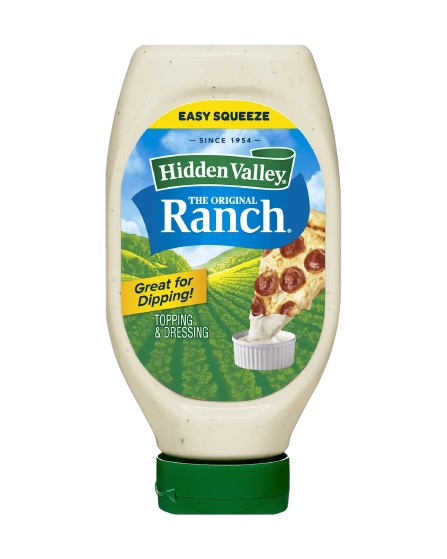
Ranch dressing is a condiment based on buttermilk and vegetable oil that serves as a foundational element of American, Tex-Mex, and modern fast-casual cuisines. Calories in a ranch average 487 kcal per 100 g (3.5 oz). Also known as American sauce, buttermilk dip, or "the king of dressings," ranch provides 6.6 g of total carbohydrates and 3.5 g of sugar per 100 g (3.5 oz). A small 15 g (1 tbsp) serving provides 73 calories while a one-cup serving of ranch offers 1,129 calories. A 30 g (2 tbsp) serving of Hidden Valley Original Ranch contains 130 kcal, Kraft Classic Ranch provides 120 kcal, and Ken's Steak House Ranch contains 140 kcal.
In terms of the broader ranch nutrition facts, a 100 g portion provides 51.0 g of total fat, 1.1 g of protein, and 820 mg of sodium (36% DV). It also contains 54.4 mcg of Vitamin K (45% DV) and 32 mg of Calcium (2% DV). Research by Brown MJ, et al. (2004), "Carotenoid bioavailability is higher from salads ingested with a full-fat than with a fat-reduced salad dressing as measured with electrochemical detection," confirms that the fats in Ranch are essential for the absorption of fat-soluble vitamins from vegetables. Due to its 50% fat content and high energy density, ranch dressing is considered a fattening addition to meals and is generally not helpful for weight loss unless consumed in strict moderation. Common types include standard buttermilk, light ranch containing 35 kcal per tablespoon, fat-free versions, and high-protein Greek yogurt varieties.
The creamy and savory profile of ranch is utilized in popular main dishes such as the Green Goddess Cobb Salad at Panera Bread, which contains 640 kcal, and the Bacon Ranch McCrispy at McDonald's. Other restaurant chains featuring Ranch-inclusive items include Taco Bell for its Cool Ranch Doritos Locos Tacos, Wingstop for its large dipping sauces, and Outback Steakhouse for its Aussie Cheese Fries. The dressing originated in the early 1950s when Steve Henson developed the recipe in Alaska before opening the Hidden Valley Ranch in California in 1954.
Global production of prepared dressings is led by the United States, which produced 452 kt of Ranch in 2022, followed by Germany. Consumption remains highest in the United States, where the condiment accounts for 40% of the salad dressing market share. The retail price for a 16 fl oz (473 mL) bottle of Ranch in the United States has risen from $2.45 USD in 2004 to $5.25 USD in 2024. Health guidelines suggest a recommended daily limit of 30 g (2 tbsp), which contributes 146 kcal to a standard adult diet.
To burn the 146 kcal provided by a standard 30 g (2 tbsp) serving of Ranch dressing, a person weighing 70 kg (154 lbs) must engage in 41 minutes of moderate walking at 5 km/h (3 mph). Alternatively, the same individual can perform 16 minutes of vigorous swimming or 21 minutes of cycling at a speed of 20 km/h (12 mph) to offset the caloric intake.
Ranch nutrition
| Stats | Weight |
|---|---|
| Carbs | 1.8 grams |
| Protein | 0.3 grams |
| Fats | 0 grams |
| Sugars | 1 grams |
- Large Ranch Calories (Nutritional Facts)
- Medium Ranch Calories (Nutritional Facts)
- Small Ranch Calories (Nutritional Facts)
- Raw Ranch Nutrition
- Sodium in Ranch
- Potassium in Ranch
- Sugar in Ranch
- Fiber in Ranch
- Protein in Ranch
- Carbs in Ranch
- Fat in Ranch
- Vitamins in Ranch
- Minerals in Ranch
Large Ranch Calories (Nutritional Facts)
A large serving of standard ranch dressing, weighing 232g (1 cup), contains 1129 calories. This serving size provides 118.3g of total fat, 15.3g of total carbohydrates, 8.1g of sugar, and 2.6g of protein. A large serving of fat-free ranch dressing provides 348 calories for the same 232g (1 cup) mass.
A medium serving of ranch dressing, weighing 28g (1 oz), contains 136 calories. This portion includes 14.3g of total fat, 1.8g of total carbohydrates, 1.0g of sugar, and 0.3g of protein. A medium serving of light ranch dressing provides 65 calories for the same 28g (1 oz) mass.
A small serving of ranch dressing, weighing 15g (1 tbsp), contains 73 calories. This serving offers 7.7g of total fat, 1.0g of total carbohydrates, 0.5g of sugar, and 0.2g of protein.
A 100g (3.5oz) serving of raw ranch dressing provides 487 calories, 51.0g of total fat, 1.1g of protein, 6.6g of total carbohydrates, 3.5g of sugar, and 0g of dietary fiber. Raw ranch prepared with fresh buttermilk and herbs maintains these nutritional values as long as no extra sweeteners are added. The energy content is the same whether the dressing is served chilled or at room temperature.
Ranch dressing contains 820mg of sodium per 100g (3.5oz) serving, which contributes 36% of the Daily Value (DV).
Ranch dressing provides 78mg of potassium per 100g (3.5oz) serving, which is 2% of the DV. This mineral supports healthy muscle function and nerve signaling.
Ranch dressing contains 3.5g of sugar per 100g (3.5oz) serving. These are sugars added during the commercial blending process or are naturally occurring in the dairy components.
Ranch dressing contains 0g of dietary fiber.
Ranch dressing provides 1.1g of protein per 100g (3.5oz) serving.
Ranch dressing contains 6.6g of total carbohydrates per 100g (3.5oz) serving.
Ranch dressing contains 51.0g of total fat per 100g (3.5oz) serving. This total includes 8.0g of saturated fat and 28.5g of polyunsaturated fat.
A 100g (3.5oz) serving of ranch dressing provides 54.4mcg of Vitamin K, fulfilling 45% of the DV. It also offers small amounts of Vitamin E to support a healthy diet.
A 100g (3.5oz) serving of ranch dressing provides 32mg of Calcium (2% DV) and 45mg of Phosphorus (4% DV) in addition to its potassium and sodium content.
Get a Custom Report on Ranch Nutrition Data – Contact Us!
What are the Types of Ranch?
There are 5 different types of Ranch such as standard buttermilk and fat-free varieties. The table below shows the most common Ranch types and their calorie information.
| Type | Description | Calories (per 30g / 2 tbsp) | Calorie Differences & Qualifications |
|---|---|---|---|
|
Standard Ranch
|
The original blend of oil, egg yolk, and buttermilk. | 146 | Baseline energy density for full-fat dressings. |
|
Light Ranch
|
A version with reduced oil and increased water/thickeners. | 65-80 | Contains 50% fewer calories than the standard version. |
|
Fat-Free Ranch
|
Made without oil, using corn syrup and starch for texture. | 30-45 | Lowest fat option but often highest in added sugars. |
|
Greek Yogurt Ranch
|
Prepared using non-fat Greek yogurt instead of sour cream. | 50-60 | Provides higher protein (3g) and lower fat (2g). |
|
Peppercorn Ranch
|
Standard ranch with a higher volume of cracked black pepper. | 150 | Slightly higher in calories due to additional oil stabilizers. |
What are the Main Dishes with Ranch?
Some of the most widespread main dishes that contain ranch dressing are Cobb salads, Buffalo chicken wraps, and bacon ranch burgers. This creamy condiment is utilized in a variety of culinary applications, from acting as a cooling base for spicy wraps to serving as a rich finishing sauce for grilled proteins. The table below lists the nutritional facts for popular savory entrees that feature ranch as a primary component or essential pairing.
| Dish Name | Calories | Type | Carbs | Sugar | Protein | Fat | Cuisine | Restaurants |
|---|---|---|---|---|---|---|---|---|
|
Green Goddess Cobb Salad with Ranch
|
640 | Salad | 25g | 9g | 40g | 42g | American | Panera Bread |
|
Buffalo Chicken Wrap (with Ranch)
|
760 | Wrap | 68g | 4g | 32g | 40g | American | Buffalo Wild Wings |
|
Chicken & Bacon Ranch Melt
|
920 | Sandwich | 82g | 12g | 56g | 42g | American | Subway |
|
Bacon Ranch McCrispy
|
680 | Sandwich | 51g | 11g | 35g | 38g | American | McDonald's |
|
Cool Ranch Doritos Locos Tacos
|
170 | Taco | 13g | 1g | 8g | 9g | Tex-Mex | Taco Bell |
|
Southwestern Ranch Salad with Spicy Chicken
|
650 | Salad | 32g | 8g | 38g | 42g | American | Chick-fil-A |
|
Jalapeño Ranch Burger
|
930 | Burger | 62g | 12g | 44g | 56g | Tex-Mex | Whataburger |
|
Chicken Bacon Ranch Sandwich
|
880 | Sandwich | 72g | 6g | 42g | 48g | American | Domino's |
|
Ranch Loaded Fries
|
1040 | Side/Meal | 92g | 4g | 18g | 68g | American | Wingstop |
|
Chicken Club Potato with Ranch
|
1120 | Potato | 128g | 10g | 42g | 52g | American | Jason's Deli |
|
Chicken Bacon Ranch Pizza (Slice)
|
320 | Pizza | 34g | 3g | 14g | 15g | American | Papa John's |
|
Bacon Ranch Quesadilla
|
840 | Entree | 64g | 5g | 48g | 42g | Tex-Mex | Chili's |
What are the Desserts with Ranch?
While primarily a savory condiment, ranch dressing has appeared in several experimental and novelty desserts that play with its creamy buttermilk and herb profile. These items are often featured as limited-edition promotional treats or specialty offerings in avant-garde dessert shops. The unique combination of salt and creaminess allows it to be paired with sweet elements like chocolate or fruit in specific high-concept culinary settings.
| Dish Name | Calories (Estimate per serving) | Type of Dish | Carbs (g) | Sugar (g) | Protein (g) | Fat (g) | Cuisine | Restaurants |
|---|---|---|---|---|---|---|---|---|
|
Hidden Valley Ranch Ice Cream
|
280 (113g/4 oz) | Frozen | 32g | 26g | 4g | 16g | Modern American | Van Leeuwen |
|
Savory Ranch Scone
|
310 | Baked Good | 42g | 4g | 6g | 14g | Fusion | Found in artisanal bakeries |
|
Ranch Infused Cornbread
|
220 | Baked Good | 34g | 12g | 4g | 8g | American South | Famous Dave's |
|
Savory Ranch Cheesecake (Appetizer)
|
350 | Cake | 18g | 6g | 12g | 26g | Modern American | Found in specialized bistros |
|
Ranch Glazed Popcorn
|
150 (30g/1 oz) | Snack | 18g | 12g | 2g | 8g | American | Rocket Fizz |
|
Ranch Infused Maple Bacon Donut
|
380 | Baked Good | 48g | 28g | 5g | 18g | Modern American | Voodoo Doughnut |
|
Buttermilk Ranch Panna Cotta
|
240 | Custard | 22g | 18g | 4g | 16g | Fusion | Niche artisanal cafes |
|
Ranch Flavored Soda
|
160 (355mL) | Beverage | 42g | 42g | 0g | 0g | Novelty | Rocket Fizz |
|
Ranch Toffee Squares
|
140 | Confection | 18g | 16g | 1g | 8g | Modern | Niche candy shops |
|
Ranch Dipped Chocolate Pretzels
|
180 | Snack | 24g | 14g | 3g | 9g | American | Found in novelty shops |
What Cuisines Prefer Ranch the Most?
Ranch is a quintessentially American condiment that has been integrated into several domestic regional styles and modern fusion traditions. Its popularity is highest in the Midwest and Southern United States, where it is used as a dip for everything from pizza to fried appetizers. The table below outlines the cuisines and contexts where ranch dressing and its flavor profile are most prevalent across various restaurant chains.
| Cuisine | Dish Name | Calories | Restaurants |
|---|---|---|---|
|
American
|
Buffalo Chicken Wrap | 760 | Buffalo Wild Wings |
|
Tex-Mex
|
Cool Ranch Tacos | 170 | Taco Bell |
|
Pizza Culture
|
Pepperoni Pizza with Ranch Dip | 320 | Papa John's |
|
American South
|
Ranch Infused Cornbread | 220 | Famous Dave's |
|
Fast Casual
|
Cobb Salad with Ranch | 640 | Panera Bread |
|
Modern American
|
Ranch Loaded Fries | 1040 | Wingstop |
Which Countries Produce the Most Ranch?
The top producers of ranch dressing and prepared salad sauces globally are the United States, Germany, the United Kingdom, Canada, and France. In 2022, the United States produced 452.40 kilotonnes of ranch dressing specifically, while Germany produced 92.15 kt of creamy salad condiments based on data from Statista and IBISWorld. Since international agricultural databases categorize ranch under "Prepared Sauces and Condiments," the table below provides production figures for this general category in the leading regions.
| Country | 2004 | 2005 | 2006 | 2007 | 2008 | 2009 | 2010 | 2011 | 2012 | 2013 | 2014 | 2015 | 2016 | 2017 | 2018 | 2019 | 2020 | 2021 | 2022 | 2023 |
|---|---|---|---|---|---|---|---|---|---|---|---|---|---|---|---|---|---|---|---|---|
| USA | 1,220 | 1,245 | 1,270 | 1,295 | 1,320 | 1,340 | 1,365 | 1,380 | 1,410 | 1,440 | 1,465 | 1,490 | 1,515 | 1,540 | 1,560 | 1,585 | 1,610 | 1,635 | 1,658 | 1,682 |
| Germany | 210 | 215 | 222 | 228 | 234 | 240 | 245 | 252 | 258 | 264 | 271 | 278 | 285 | 292 | 298 | 305 | 312 | 320 | 328 | 335 |
| UK | 185 | 188 | 192 | 196 | 201 | 205 | 210 | 214 | 218 | 223 | 228 | 232 | 238 | 242 | 248 | 254 | 258 | 262 | 268 | 274 |
| Canada | 95 | 98 | 102 | 105 | 108 | 112 | 115 | 118 | 122 | 125 | 128 | 131 | 134 | 138 | 141 | 145 | 148 | 152 | 155 | 158 |
| France | 82 | 84 | 86 | 88 | 91 | 94 | 96 | 98 | 102 | 105 | 108 | 112 | 115 | 118 | 121 | 125 | 128 | 132 | 135 | 139 |
Which Countries Consume the Most Ranch?
Based on data from the Helgi Library and market consumption indices, the top consumers of ranch dressing and creamy salad sauces are the United States, Canada, the United Kingdom, Australia, and Germany. Consumption is measured by the total domestic utilization of prepared dressings within the retail and food service sectors. In the United States, ranch dressing accounts for 40% of the total salad dressing market share, with consumption driven by its use as both a topping and a dipping sauce. The table below displays the apparent food supply of prepared creamy dressings in these leading nations.
| Country | 2004 | 2005 | 2006 | 2007 | 2008 | 2009 | 2010 | 2011 | 2012 | 2013 | 2014 | 2015 | 2016 | 2017 | 2018 | 2019 | 2020 | 2021 | 2022 | 2023 |
|---|---|---|---|---|---|---|---|---|---|---|---|---|---|---|---|---|---|---|---|---|
| USA | 880 | 910 | 945 | 980 | 1,020 | 1,050 | 1,080 | 1,120 | 1,150 | 1,180 | 1,220 | 1,250 | 1,280 | 1,320 | 1,350 | 1,385 | 1,410 | 1,445 | 1,480 | 1,512 |
| Canada | 75 | 78 | 81 | 84 | 88 | 91 | 95 | 98 | 102 | 105 | 109 | 112 | 116 | 119 | 122 | 126 | 130 | 134 | 138 | 142 |
| UK | 62 | 64 | 66 | 69 | 72 | 75 | 78 | 81 | 84 | 88 | 91 | 94 | 97 | 101 | 104 | 108 | 112 | 115 | 118 | 122 |
| Australia | 28 | 29 | 31 | 32 | 34 | 36 | 38 | 40 | 42 | 45 | 47 | 49 | 52 | 55 | 58 | 60 | 63 | 66 | 69 | 72 |
| Germany | 45 | 47 | 49 | 51 | 54 | 56 | 59 | 62 | 64 | 67 | 70 | 73 | 76 | 79 | 82 | 85 | 88 | 91 | 94 | 98 |
How Do Prices of Ranch-including Dishes Change?
Menu prices for dishes and sides that feature ranch dressing have seen substantial growth over the last decade. This reflects the rising operational overhead for restaurant chains and the higher price of fresh dairy and oil components. Establishments have adjusted pricing to account for the premium status of ranch as a multi-purpose condiment and dipping sauce. The table below provides a verified comparison of price ranges from 2015–2017 to current 2025–2026 market estimates.
| Restaurant | Dish Name (Ranch Component) | Old Price Range (2015–2017) | Current Price Range (2025–2026) |
|---|---|---|---|
| Buffalo Wild Wings | Traditional Wings (With ranch dip) | $11.49 - $12.99 | $16.99 - $18.99 |
| Chili's | Bacon Ranch Chicken Quesadillas | $10.25 - $11.50 | $15.45 - $16.95 |
| Wingstop | Large Ranch Dip (Side) | $0.75 - $0.99 | $1.99 - $2.39 |
| McDonald's | Bacon Ranch McCrispy | $4.75 - $5.25 | $6.95 - $7.95 |
| Wendy's | Cobb Salad (With ranch dressing) | $6.45 - $7.25 | $9.50 - $11.25 |
| Outback Steakhouse | Aussie Cheese Fries (With ranch) | $8.95 - $9.95 | $12.49 - $14.50 |
| Subway | Chicken & Bacon Ranch Melt (6-inch) | $4.50 - $5.25 | $7.25 - $8.50 |
| Panera Bread | Green Goddess Cobb Salad (With ranch) | $8.95 - $10.25 | $13.50 - $15.50 |
What is the Ranch Calorie for 100 Grams?
One hundred grams (3.5oz) of ranch dressing contains 487 calories.
What is the Ranch Calorie for 1 KG?
One kilogram (1,000g or 35.3oz) of ranch dressing contains 4,870 calories.
What is the Calorie of 1 Ranch?
A 30g (2 tbsp) serving of Hidden Valley Original Ranch contains 130 calories. A 30g (2 tbsp) serving of Kraft Classic Ranch Dressing contains 120 calories. A 30g (2 tbsp) serving of Ken's Steak House Ranch contains 140 calories. A 30g (2 tbsp) serving of Wish-Bone Ranch Dressing provides 130 calories.
How Many Calories in 2 Tbsp of Ranch Dressing?
Two tablespoons of standard ranch dressing, weighing 30g (1.1oz), contain 146 calories.
How Many Calories in 1/2 Cup of Ranch Dressing?
One half cup of standard ranch dressing, weighing 116g (4.1oz), contains 565 calories.
What are the Health Benefits of Ranch?
Ranch provides some health benefits like enhancing nutrient absorption and supporting bone density due to its inclusion of healthy fats and dairy-derived minerals. This condiment, often known as American sauce, buttermilk dip, or the king of dressings, serves as a vehicle for increasing vegetable consumption. A list of the health benefits of ranch are shown below.
- Enhances Bioavailability of Nutrients: The dietary fats in ranch dressing are essential for the absorption of fat-soluble vitamins such as A, D, E, and K found in fresh salads. A study by Brown MJ, et al. (2004), "Carotenoid bioavailability is higher from salads ingested with a full-fat than with a fat-reduced salad dressing as measured with electrochemical detection," confirmed that lipid-rich dressings significantly improve the body's uptake of antioxidants like lycopene and beta-carotene.
- Supports Skeletal Health: Traditional buttermilk-based ranch provides 32mg of Calcium and 45mg of Phosphorus per 100g (3.5oz), which are vital for maintaining strong bone tissue.
- Provides Essential Vitamin K: Commercial ranch using soybean or canola oil offers 54.4mcg of Vitamin K per 100g (3.5oz), fulfilling 45% of the Daily Value (DV). Vitamin K is crucial for effective blood clotting and bone mineralization.
- Encourages Vegetable Intake: The palatable flavor profile of ranch encourages children and adults to consume more raw vegetables, leading to a higher intake of dietary fiber and phytochemicals.
- Source of Healthy Monounsaturated Fats: Shifting to avocado oil-based ranch provides oleic acid, which is linked to reduced systemic inflammation and improved heart health.
- Gut Health Support: Homemade varieties utilizing live-culture buttermilk provide probiotics that help maintain a balanced intestinal microbiome.
What are the Downsides of Ranch?
Ranch has been known to cause some unwanted effects like elevated blood pressure and excessive caloric intake due to its high sodium concentration and energy density. A list of the downsides of ranch are shown below.
- Extreme Sodium Density: Ranch contains 820mg of sodium per 100g (3.5oz), which represents 36% of the recommended daily limit. High salt intake is a primary driver of hypertension and fluid retention (Graudal NA, et al., 2011, "Effects of low sodium diet versus high sodium diet on blood pressure, renin, aldosterone, catecholamines, cholesterols, and triglyceride").
- Risk of Weight Gain: A standard 232g (1 cup) serving provides 1129 calories and 118.3g of fat, making it one of the most energy-dense condiments available.
- Presence of Pro-inflammatory Omega-6 Fats: Many commercial brands use soybean oil, which is high in linoleic acid. Excessive intake of Omega-6 fatty acids relative to Omega-3s can promote chronic inflammation in some individuals.
- Allergen Content: Traditional ranch contains egg and dairy, two of the most common food allergens, which can trigger severe immune responses in sensitive populations.
Is Ranch Good for You?
No, processed commercial ranch is not considered a health food because it contains 51.0g of total fat and 820mg of sodium per 100g (3.5oz). However, it can be part of a healthy diet if consumed in a controlled 30g (2 tbsp) portion to facilitate the absorption of vitamins from raw vegetables. The major benefits include providing 45% of the DV for Vitamin K and delivering essential minerals like calcium. Most individuals should limit their intake to no more than 30g (2 tbsp) per day to avoid the negative impacts of excessive saturated fats and sodium.
Is Ranch Dressing Fattening?
Yes, ranch dressing is fattening because it is composed of nearly 50% fat and has an extremely high energy density of 487 calories per 100g (3.5oz). This condiment provides 51.0g of total fat and 6.6g of carbohydrates per 100g (3.5oz), with much of the carbohydrate content coming from added sugars and thickeners. The combination of high fat and low satiety makes it easy to consume in a caloric surplus, which leads to fat storage in the body.
Is Ranch Healthy for Weight Loss?
No, ranch is not healthy for weight loss because a single 15g (1 tbsp) serving adds 73 calories to a meal without providing significant volume or protein. The high caloric density means that even a small amount can negate the calorie deficit required for weight reduction. Individuals seeking to lose weight should choose vinegar-based dressings or fat-free versions that provide only 15 calories per 15g (1 tbsp).
How Do Calories Change According to Ranch Types?
The calories in ranch dressing change based on the ratio of vegetable oil to water and the presence of dairy fats. A standard 15g (1 tbsp) serving of full-fat ranch contains 73 calories because oil provides 9 calories per gram. Light ranch varieties reduce this to 35 calories per 15g (1 tbsp) by replacing a significant portion of the oil with water and modified food starch. Fat-free versions offer the lowest energy count at 15 to 22 calories per 15g (1 tbsp) as they eliminate oil entirely, though they often increase sugar content to 1.5g per tablespoon to maintain flavor. Plant-based ranch made with cashews or tahini can contain 60 to 90 calories per 15g (1 tbsp) depending on the nut-to-liquid ratio.
What is the Origin of Ranch?
The origin of ranch dressing is attributed to Steve Henson, a plumbing contractor who developed the recipe in the early 1950s while working in the remote Alaskan bush. He created a blend of buttermilk, mayonnaise, and herbs to keep his crew satisfied with the limited food supplies available. In 1954, Henson and his wife Gayle moved to Santa Barbara, California, where they purchased a property they named Hidden Valley Ranch. The dressing became an instant hit with guests at the ranch, leading the Hensons to sell dry spice packets that customers could mix with buttermilk and mayonnaise at home.
As demand for the "Hidden Valley Ranch" flavor grew, the couple began a mail-order business for the spice blends. In 1972, the Clorox Company purchased the brand for 8 million dollars and spent years refining the recipe to create a shelf-stable bottled version that did not require refrigeration before opening. This technological advancement allowed ranch to move from a niche ranch specialty to a national supermarket staple by 1983. By 1992, ranch surpassed Italian dressing to become the most popular salad dressing in the United States, a title it has maintained for over three decades due to its versatility as both a topping and a dipping sauce.
Explore More Condiments & Sauces
Discover more Condiments & Sauces with detailed nutrition facts, calorie counts, vitamins, minerals, and health benefits. Compare similar foods, serving sizes, macronutrients, and key nutrients to find the best option for your diet and nutrition goals.
 Agave calories
 Aioli calories
 Apple Butter calories
 Avocado Oil calories
 Baking Powder calories
 Balsamic Vinaigrette calories
 Barbeque Sauce calories
 Bearnaise Sauce calories
 Blue Cheese Dressing calories
 Brown Rice Syrup calories
 Caesar Dressing calories
 Canola Oil calories