Calories and Nutritions in Relish
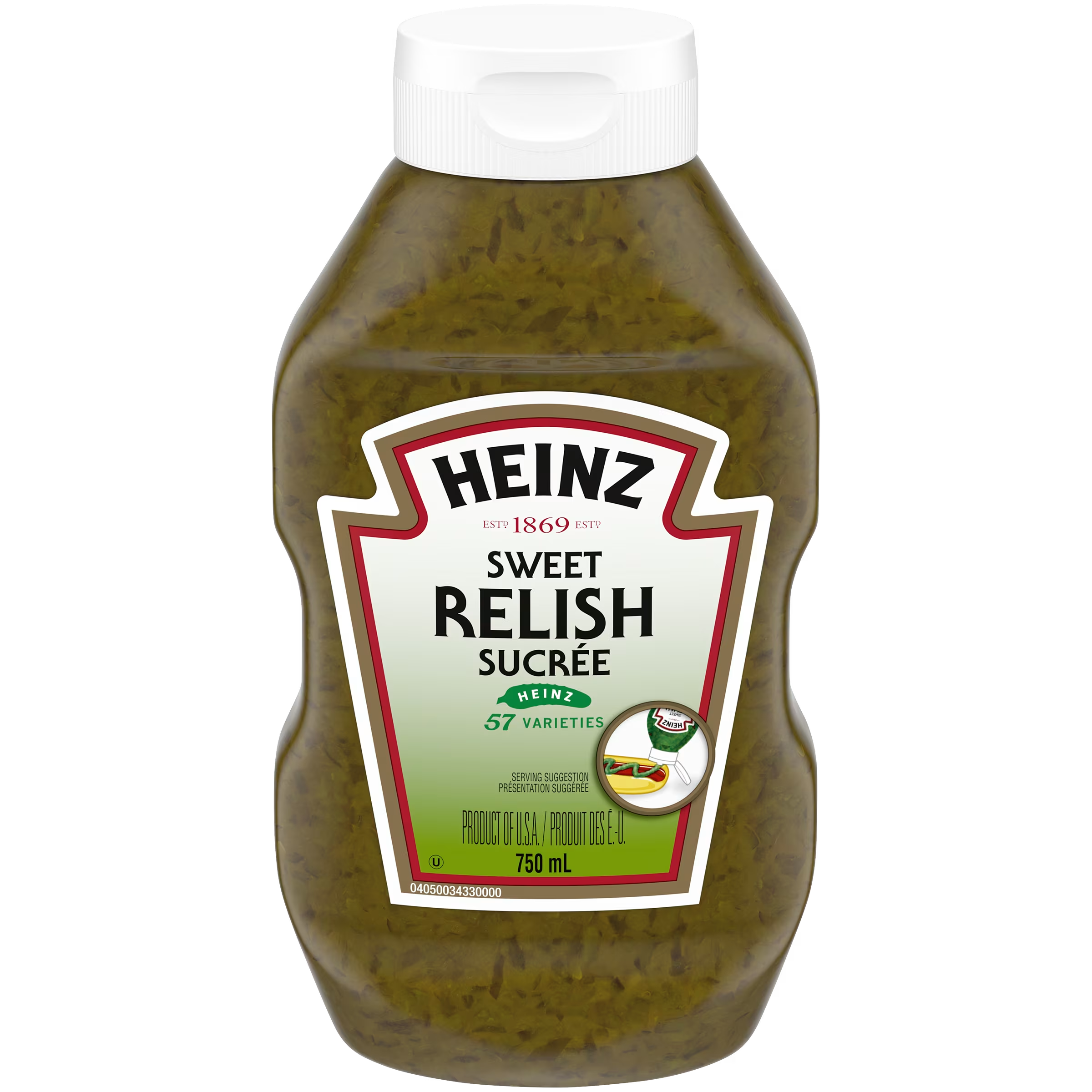
Relish is a preserved condiment prepared by chopping vegetables like cucumbers, and curing them with vinegar, sugar, and spices. The calories in relish vary based on the amount of sweetener used during the preservation process. A 260g serving of the sweet relish variety contains 338 calories, whereas a single tablespoon (15g) provides just 20 calories. Relish calories fluctuate based on the specific formulation, with Sweet Relish providing 130 calories per 100g, more than the 20 calories found in the standard Dill Relish.
An examination of sweet relish calories and nutrition facts reveals a profile high in carbohydrates and simple sugars, differing from the low-calorie savory versions. A single tablespoon (15g) offers 4.8g of total carbohydrates (2% DV) while containing 3.3g of sugar. The condiment is a source of minor micronutrients, delivering 0.3mg of Vitamin C and 0.1mg of iron. Studies highlight specific physiological impacts, such as the research by Johnston, C. S., et al. (2004), "Vinegar improves insulin sensitivity to a high-carbohydrate meal in subjects with insulin resistance or type 2 diabetes," which analyzes the impact of the acetic acid found in the vinegar base. Types include Sweet Relish, Dill Relish, and Hot Pepper Relish.
Due to the high sodium levels and added sugar in specific types of relish, such as the 240mg of sodium and 6.6g of sugar found in a medium portion (30g) of Sweet Relish, nutritionists advise limiting intake. A recommended daily limit is one tablespoon (15g) to control salt consumption. Burning the 20 pickle relish calories from this single sweet serving requires activities like 2 minutes of moderate jogging, 3 minutes of cycling, or 5 minutes of brisk walking.
Relish pairs with grilled meats and cold sandwiches. The dip is an essential accompaniment for the Chicago Style Hot Dog at Portillo's and serves as a primary topping for the Classic Hamburger at Shake Shack. This blend also complements items like the Potato Salad at Whole Foods Market Deli. The preparation originated in India as chutney before British colonization introduced the concept to Europe, eventually leading to the commercial bottling of sweet pickle relish by H.J. Heinz in 1893. The cost of ingredients has shifted noticeably, with the Producer Price Index for canned fruits and vegetables rising from 132.8 in 2003 to 308.8 in 2024, while retail prices for a standard jar rose from $1.49 to $2.99 over a similar period.
Relish nutrition
| Stats | Weight |
|---|---|
| Carbs | 9.6 grams |
| Protein | 0.2 grams |
| Fats | 0 grams |
| Sugars | 6.6 grams |
- Large Relish Calories (Nutritional Facts)
- Medium Relish Calories (Nutritional Facts)
- Small Relish Calories (Nutritional Facts)
- Sweet Relish Calories (Nutritional Facts)
- Pickle Relish Calories (Nutritional Facts)
- Raw Relish Nutrition
- Sodium in Relish
- Potassium in Relish
- Sugar in Relish
- Fiber in Relish
- Protein in Relish
- Carbs in Relish
- Fat in Relish
- Vitamins in Relish
- Minerals in Relish
Large Relish Calories (Nutritional Facts)
A large serving of Sweet Relish (260g or 1 cup) contains 338 calories, 1.8g of protein (4% DV), 1g of fat (1% DV), 83.2g of carbohydrates (30% DV), 2.6g of fiber (9% DV), 57.2g of sugar, and 2080mg of sodium (90% DV). A large serving of Dill Relish (260g or 1 cup) provides 52 calories, 1.6g of protein (3% DV), 0.5g of fat (1% DV), 13g of carbohydrates (5% DV), 2.6g of fiber (9% DV), 2.6g of sugar, and 3120mg of sodium (136% DV).
A medium portion of Sweet Relish (30g) provides 39 calories, 0.2g of protein (0% DV), 0.1g of fat (0% DV), 9.6g of carbohydrates (3% DV), 0.3g of fiber (1% DV), 6.6g of sugar, and 240mg of sodium (10% DV). A medium portion of Dill Relish (30g) supplies 6 calories, 0.2g of protein (0% DV), 0.1g of fat (0% DV), 1.5g of carbohydrates (1% DV), 0.3g of fiber (1% DV), 0.3g of sugar, and 360mg of sodium (16% DV).
A small serving of Sweet Relish (15g or 1 tbsp) contains 20 calories, 0.1g of protein (0% DV), 0.06g of fat (0% DV), 4.8g of carbohydrates (2% DV), 0.15g of fiber (1% DV), 3.3g of sugar, and 120mg of sodium (5% DV). A small serving of Dill Relish (15g or 1 tbsp) provides 3 calories, 0.1g of protein (0% DV), 0.03g of fat (0% DV), 0.8g of carbohydrates (0% DV), 0.15g of fiber (1% DV), 0.15g of sugar, and 180mg of sodium (8% DV).
A standard serving of Sweet Relish (15g or 1 tbsp) provides 20 calories, 0.1g of protein (0% DV), 0.06g of fat (0% DV), 4.8g of carbohydrates (2% DV), 0.15g of fiber (1% DV), 3.3g of sugar, and 120mg of sodium (5% DV). A larger quantity of Sweet Relish (100g) contains 130 calories, 0.7g of protein (1% DV), 0.4g of fat (1% DV), 32g of carbohydrates (12% DV), 1g of fiber (4% DV), 22g of sugar, and 800mg of sodium (35% DV).
A standard serving of Dill Pickle Relish (15g or 1 tbsp) provides 3 calories, 0.1g of protein (0% DV), 0.03g of fat (0% DV), 0.8g of carbohydrates (0% DV), 0.15g of fiber (1% DV), 0.15g of sugar, and 180mg of sodium (8% DV). A larger quantity of Dill Pickle Relish (100g) contains 20 calories, 0.6g of protein (1% DV), 0.2g of fat (0% DV), 5g of carbohydrates (2% DV), 1g of fiber (4% DV), 1g of sugar, and 1200mg of sodium (52% DV).
A single tablespoon of Sweet Relish (15g) contains 20 calories, 0.11g of protein (0% DV), 0.06g of total fat (0% DV), 4.8g of total carbohydrate (2% DV), 0.15g of dietary fiber (1% DV), 3.3g of total sugars, and 120mg of sodium (5% DV). The composition provides 0.3mg of Vitamin C (0% DV), 0.05mg of Vitamin E (0% DV), 0.1mg of iron (1% DV), 2mg of calcium (0% DV), and 10mg of potassium (0% DV).
A large serving of Sweet Relish (260g or 1 cup) contains 2080mg of sodium (90% DV), while a large serving of Dill Relish (260g or 1 cup) provides 3120mg of sodium (136% DV). A medium portion of Sweet Relish (30g) has 240mg of sodium (10% DV), whereas a medium portion of Dill Relish (30g) supplies 360mg of sodium (16% DV). A small serving of Sweet Relish (15g or 1 tbsp) contains 120mg of sodium (5% DV), and a small serving of Dill Relish (15g or 1 tbsp) provides 180mg of sodium (8% DV).
A large serving of Sweet Relish (260g or 1 cup) provides 173mg of potassium (4% DV), while a large serving of Dill Relish (260g or 1 cup) contains 260mg of potassium (6% DV). A medium portion of Sweet Relish (30g) has 20mg of potassium (0% DV), whereas a medium portion of Dill Relish (30g) supplies 30mg of potassium (1% DV). A small serving of Sweet Relish (15g or 1 tbsp) contains 10mg of potassium (0% DV), and a small serving of Dill Relish (15g or 1 tbsp) provides 15mg of potassium (0% DV).
A large serving of Sweet Relish (260g or 1 cup) contains 57.2g of sugar, while a large serving of Dill Relish (260g or 1 cup) provides 2.6g of sugar. A medium portion of Sweet Relish (30g) has 6.6g of sugar, whereas a medium portion of Dill Relish (30g) supplies 0.3g of sugar. A small serving of Sweet Relish (15g or 1 tbsp) contains 3.3g of sugar, and a small serving of Dill Relish (15g or 1 tbsp) provides 0.15g of sugar.
A large serving of Sweet Relish (260g or 1 cup) provides 2.6g of dietary fiber (9% DV), while a large serving of Dill Relish (260g or 1 cup) contains 2.6g of fiber (9% DV). A medium portion of Sweet Relish (30g) has 0.3g of fiber (1% DV), whereas a medium portion of Dill Relish (30g) supplies 0.3g of fiber (1% DV). A small serving of Sweet Relish (15g or 1 tbsp) contains 0.15g of fiber (1% DV), and a small serving of Dill Relish (15g or 1 tbsp) provides 0.15g of fiber (1% DV).
A large serving of Sweet Relish (260g or 1 cup) provides 1.8g of protein (4% DV), while a large serving of Dill Relish (260g or 1 cup) contains 1.6g of protein (3% DV). A medium portion of Sweet Relish (30g) has 0.2g of protein (0% DV), whereas a medium portion of Dill Relish (30g) supplies 0.2g of protein (0% DV). A small serving of Sweet Relish (15g or 1 tbsp) contains 0.1g of protein (0% DV), and a small serving of Dill Relish (15g or 1 tbsp) provides 0.1g of protein (0% DV).
A large serving of Sweet Relish (260g or 1 cup) contains 83.2g of carbohydrates (30% DV), while a large serving of Dill Relish (260g or 1 cup) provides 13g of carbohydrates (5% DV). A medium portion of Sweet Relish (30g) has 9.6g of carbohydrates (3% DV), whereas a medium portion of Dill Relish (30g) supplies 1.5g of carbohydrates (1% DV). A small serving of Sweet Relish (15g or 1 tbsp) contains 4.8g of carbohydrates (2% DV), and a small serving of Dill Relish (15g or 1 tbsp) provides 0.8g of carbohydrates (0% DV).
A large serving of Sweet Relish (260g or 1 cup) contains 1g of total fat (1% DV), while a large serving of Dill Relish (260g or 1 cup) provides 0.5g of total fat (1% DV). A medium portion of Sweet Relish (30g) has 0.1g of total fat (0% DV), whereas a medium portion of Dill Relish (30g) supplies 0.06g of total fat (0% DV). A small serving of Sweet Relish (15g or 1 tbsp) contains 0.06g of total fat (0% DV), and a small serving of Dill Relish (15g or 1 tbsp) provides 0.03g of total fat (0% DV).
A large serving of Sweet Relish (260g or 1 cup) provides 5.2mg of Vitamin C (6% DV) and 62µg of Vitamin A (7% DV). A large serving of Dill Relish (260g or 1 cup) contains 5.2mg of Vitamin C (6% DV) and 130µg of Vitamin A (14% DV). A medium portion of Sweet Relish (30g) has 0.6mg of Vitamin C (1% DV), whereas a medium portion of Dill Relish (30g) supplies 0.6mg of Vitamin C (1% DV). A small serving of Sweet Relish (15g or 1 tbsp) contains 0.3mg of Vitamin C (0% DV), and a small serving of Dill Relish (15g or 1 tbsp) provides 0.3mg of Vitamin C (0% DV).
A large serving of Sweet Relish (260g or 1 cup) provides 1.8mg of iron (10% DV) and 34mg of calcium (3% DV). A large serving of Dill Relish (260g or 1 cup) contains 2.6mg of iron (14% DV) and 78mg of calcium (6% DV). A medium portion of Sweet Relish (30g) has 0.2mg of iron (1% DV), whereas a medium portion of Dill Relish (30g) supplies 0.3mg of iron (2% DV). A small serving of Sweet Relish (15g or 1 tbsp) contains 0.1mg of iron (1% DV), and a small serving of Dill Relish (15g or 1 tbsp) provides 0.15mg of iron (1% DV).
Get a Custom Report on Relish Nutrition Data – Contact Us!
What are the Types of Relish?
The types of Relish include Sweet Relish, Dill Relish, and Hot Pepper Relish. The table below outlines the nutritional differences.
| Type | Description | Calories (Per 100g) | Calorie Qualifications |
|---|---|---|---|
|
Sweet Relish
|
Pickled cucumbers mixed with vinegar and high amounts of sugar or corn syrup. | 130 | The high sugar content results in a significant energy density compared to savory versions. |
|
Dill Relish
|
Pickled cucumbers cured with dill weed, vinegar, and salt without added sweeteners. | 20 | The lack of added sugar keeps the caloric load minimal, consisting mostly of cucumber fiber. |
|
Hot Pepper Relish
|
A blend of chopped hot peppers, vinegar, and spices, often with moderate sugar. | 50 | The inclusion of peppers and a smaller amount of sugar creates a moderate caloric profile. |
What are the Desserts With Relish?
Relish functions occasionally as a sweet accompaniment in the form of fruit preserves or spiced pickles within baking. Vintage recipes incorporate sweet pickle relish into spice cakes to add moisture and texture. Modern culinary applications utilize fruit-based relishes to balance the richness of cheesecakes and pastries. The list below enumerates sweet dishes and pastries that utilize this condiment.
| Dish Name | Calories | Type of Relish | Carbs (g) | Sugar (g) | Protein (g) | Fat (g) | Cuisine | Restaurants |
|---|---|---|---|---|---|---|---|---|
|
Sweet Pickle Cake
|
320 | Sweet Pickle Relish | 48 | 28 | 3 | 12 | Southern American | Cracker Barrel |
|
Cranberry Relish Side
|
110 | Cranberry Orange Relish | 28 | 24 | 0 | 0 | American | Boston Market |
|
Cheesecake with Berry Relish
|
450 | Strawberry Relish | 38 | 25 | 7 | 28 | American | The Cheesecake Factory (National) |
|
Fried Brie
|
340 | Apricot Relish | 18 | 12 | 12 | 24 | French-American | The Melting Pot |
|
Lemon Tart
|
290 | Raspberry Relish | 35 | 18 | 4 | 14 | French | La Madeleine |
|
Apple Crisp
|
310 | Cranberry Relish | 52 | 30 | 2 | 10 | American | Marie Callender's |
|
Grilled Pineapple
|
140 | Mint Relish | 34 | 28 | 1 | 0 | Brazilian | Fogo de Chão |
|
Yogurt Parfait
|
220 | Mixed Berry Relish | 38 | 22 | 8 | 4 | American | Panera Bread |
|
Mango Sticky Rice
|
450 | Sweet Mango Relish | 85 | 35 | 6 | 10 | Thai | Thai Basil |
|
Cheese Blintzes
|
360 | Cherry Relish | 42 | 24 | 12 | 14 | Jewish-American | IHOP |
|
Belgian Waffles
|
410 | Peach Relish | 55 | 22 | 8 | 16 | American | Waffle House |
|
Pound Cake
|
280 | Orange Relish | 36 | 20 | 3 | 14 | American | Corner Bakery Cafe |
|
Chocolate Cake
|
480 | Cherry Relish | 65 | 40 | 5 | 22 | American | Maggiano's Little Italy |
|
Panna Cotta
|
250 | Passion Fruit Relish | 22 | 18 | 4 | 15 | Italian | Carrabba's Italian Grill |
|
Cheese Danish
|
320 | Fruit Relish | 38 | 16 | 6 | 16 | American | Starbucks |
What are the Main Dishes With Relish?
Relish serves as a fundamental topping for cured meats and sandwiches across American and European gastronomies. The acidity cuts through the fat of sausages and mayonnaise-based salads to enhance the flavor profile. The list below details distinct savory recipes that incorporate this ingredient.
| Dish Name | Calories | Type of Relish | Carbs (g) | Sugar (g) | Protein (g) | Fat (g) | Cuisine | Restaurants |
|---|---|---|---|---|---|---|---|---|
|
Chicago Style Hot Dog
|
290 | Neon Green Sweet Relish | 28 | 6 | 10 | 16 | American | Portillo's |
|
Classic Hamburger
|
350 | Sweet Pickle Relish | 32 | 5 | 18 | 15 | American | Shake Shack |
|
Fried Fish Platter
|
520 | Tartar Sauce (Dill Relish) | 45 | 2 | 24 | 28 | American | Long John Silver's |
|
Potato Salad
|
210 | Sweet Pickle Relish | 22 | 8 | 3 | 12 | American | Whole Foods Market Deli (National) |
|
Deviled Eggs
|
140 | Sweet Pickle Relish | 2 | 2 | 6 | 10 | Southern American | Lucille's Smokehouse BBQ (Western US) |
|
Tuna Salad Sandwich
|
480 | Sweet Pickle Relish | 42 | 6 | 22 | 24 | American | Jimmy John's |
|
Chicken Salad Sandwich
|
510 | Sweet Pickle Relish | 38 | 5 | 24 | 28 | American | Chicken Salad Chick |
|
Bratwurst
|
380 | Sauerkraut/Relish | 28 | 4 | 14 | 22 | German-American | Dog Haus |
|
Reuben Sandwich
|
620 | Thousand Island (Relish) | 48 | 6 | 32 | 34 | Jewish-American | Arby's |
|
Crab Cakes
|
310 | Remoulade (Relish Base) | 12 | 2 | 22 | 20 | American | Legal Sea Foods |
|
Fried Clams
|
450 | Tartar Sauce (Dill Relish) | 35 | 2 | 18 | 26 | American | Friendly's |
|
Egg Salad Sandwich
|
340 | Dill Pickle Relish | 28 | 3 | 14 | 18 | American | Potbelly Sandwich Shop (National) |
|
Corn Dog
|
280 | Sweet Relish | 32 | 8 | 8 | 14 | American | Sonic Drive-In |
|
Roast Beef Sandwich
|
360 | Horseradish Relish | 34 | 4 | 24 | 12 | American | Lion's Choice |
|
Shrimp Po' Boy
|
580 | Remoulade (Relish Base) | 65 | 4 | 22 | 26 | Cajun | Popeyes Louisiana Kitchen (National) |
What Cuisines Prefer Relish the Most?
Relish is a staple in Western and South Asian food cultures where preservation remains key. American cuisine utilizes the condiment for fast food, while British traditions employ the mixture for cold plates. The table below outlines the specific culinary traditions that utilize this dip.
| Cuisine | Dish | Types of Relish | Calories (Estimate) | Restaurant(s) |
|---|---|---|---|---|
|
American Fast Food
|
Hot Dog | Sweet Green Relish | 290 | Nathan's Famous |
|
Southern US Cuisine
|
Pinto Beans | Chow Chow (Cabbage Relish) | 180 | Cracker Barrel |
|
British Cuisine
|
Ploughman's Lunch | Piccalilli (Mustard Relish) | 450 | The British Banker's Club (California) |
|
German Cuisine
|
Bratwurst | Curry Relish | 380 | Hofbräuhaus (National) |
|
Jewish Deli Cuisine
|
Pastrami Sandwich | Half-Sour Pickle Relish | 550 | Katz's Delicatessen (New York, NY) |
|
Canadian Cuisine
|
Hamburger | Sweet Relish | 350 | Tim Hortons |
|
Pennsylvania Dutch
|
Roast Pork | Corn Relish | 420 | Shady Maple Smorgasbord (Pennsylvania) |
|
Cajun Cuisine
|
Fried Catfish | Remoulade (Relish Base) | 520 | Pappadeaux Seafood Kitchen |
|
New England Cuisine
|
Lobster Roll | Celery Relish | 480 | Luke's Lobster |
|
Tex-Mex Cuisine
|
Tacos | Salsa Verde (Tomatillo Relish) | 210 | Taco Bell |
|
Indian Cuisine
|
Samosa | Mango Chutney (Fruit Relish) | 260 | Curry Up Now |
|
Korean Cuisine
|
Bibimbap | Cucumber Kimchi (Spicy Relish) | 550 | Bonchon Chicken (International) |
|
Mediterranean
|
Falafel | Torshi (Vegetable Relish) | 380 | The Halal Guys |
|
Caribbean Cuisine
|
Jerk Chicken | Scotch Bonnet Relish | 420 | Bahama Breeze |
|
Balkan Cuisine
|
Cevapi | Ajvar (Pepper Relish) | 450 | Aroma Espresso Bar (International) |
Which Countries Produce the Most Relish?
The top producers of Cucumbers and Gherkins, which are the primary ingredients for relish, include China, Turkey, and Russia. China maintains the highest output globally due to extensive greenhouse cultivation and massive domestic demand. Turkey and Russia follow by supplying significant volumes of pickled produce to European and Asian markets. The United States and Mexico also contribute measurable volumes to the global supply chain, though US production has declined recently. The table below shows the production volume of cucumbers and gherkins in million metric tonnes for the leading nations over the last two decades.
| Country | 2003 | 2008 | 2013 | 2018 | 2019 | 2020 | 2021 | 2022 |
|---|---|---|---|---|---|---|---|---|
| China | 28.1 | 40.5 | 54.3 | 67.6 | 70.3 | 72.9 | 74.8 | 77.3 |
| Turkey | 1.7 | 1.8 | 1.8 | 1.9 | 1.9 | 1.9 | 1.9 | 1.9 |
| Russia | 1.5 | 1.3 | 1.1 | 1.6 | 1.6 | 1.7 | 1.6 | 1.6 |
| Mexico | 0.4 | 0.5 | 0.6 | 1.1 | 1.2 | 1.2 | 1.0 | 1.1 |
| Uzbekistan | 0.3 | 0.5 | 0.7 | 0.9 | 0.9 | 0.8 | 0.9 | 0.9 |
| Ukraine | 0.6 | 0.8 | 1.0 | 1.0 | 1.0 | 1.0 | 1.1 | 0.8 |
| United States | 1.0 | 0.9 | 0.7 | 0.7 | 0.7 | 0.6 | 0.6 | 0.6 |
| Spain | 0.5 | 0.6 | 0.7 | 0.6 | 0.7 | 0.8 | 0.7 | 0.8 |
Which Countries Consume the Most Relish?
The top consumers of Cucumbers and Gherkins, which constitute the base of Relish, are China, Russia, and the United States. China absorbs a vast quantity of the harvest for fresh consumption and local pickling traditions. The United States and Russia utilize the crop heavily for processed pickle jars and relish condiments found in fast food and retail sectors. Germany and Turkey represent growing markets for pickled vegetable products. The table below shows the domestic food consumption of cucumbers and gherkins in thousand metric tonnes for key markets over the last two decades.
| Country | 2003 | 2008 | 2013 | 2018 | 2019 | 2020 | 2021 | 2022 |
|---|---|---|---|---|---|---|---|---|
| China | 27,500 | 39,800 | 53,500 | 66,800 | 69,500 | 72,000 | 74,000 | 76,500 |
| Russia | 1,600 | 1,500 | 1,400 | 1,750 | 1,800 | 1,850 | 1,700 | 1,650 |
| United States | 1,450 | 1,350 | 1,200 | 1,500 | 1,550 | 1,600 | 1,620 | 1,640 |
| Turkey | 1,650 | 1,700 | 1,750 | 1,850 | 1,880 | 1,860 | 1,890 | 1,900 |
| Ukraine | 600 | 800 | 950 | 980 | 1,000 | 1,010 | 1,050 | 800 |
| Germany | 500 | 520 | 550 | 580 | 590 | 600 | 610 | 620 |
| Poland | 400 | 450 | 500 | 560 | 587 | 590 | 595 | 600 |
| Mexico | 350 | 400 | 500 | 800 | 850 | 900 | 800 | 850 |
How Do Prices of Relish-Including Dishes Change?
Restaurant costs for dishes accompanied by relish increased due to rising labor and ingredient expenses. The table below illustrates price adjustments for selected items at well-known establishments.
| Brand/Restaurant | Dish | Old Price (Year) | Current Price (2024/2025) |
|---|---|---|---|
| Portillo's | Hot Dog (Regular) | $2.65 (2010) | $3.89 - $6.39 |
| Shake Shack | ShackBurger | $4.95 (2011) | $8.49 - $10.09 |
| Sonic Drive-In | Corn Dog | $1.00 (2010) | $2.79 - $2.99 |
| Nathan's Famous | Hot Dog | $3.50 (2015) | $5.99 - $6.99 |
What is the Relish Calorie for 100 Grams?
A 100g serving of Sweet Relish provides 130 calories, while a 100g serving of Dill Relish supplies 20 calories.
What is the Relish Calorie for 1 KG?
One kilogram (1000g) of Sweet Relish supplies 1300 calories, whereas one kilogram (1000g) of Dill Relish provides 200 calories.
What is the Calorie of 1 Relish?
A single tablespoon of Sweet Relish (15g) contains 20 calories, while a single tablespoon of Dill Relish (15g) provides 3 calories. A single fast-food packet of Sweet Relish (9g) supplies 12 calories, whereas a single packet of Dill Relish (9g) provides 2 calories. Retail brands offer distinct energy profiles, as a serving of Heinz Sweet Relish (15g) contains 20 calories. A serving of Mt. Olive Sweet Relish (15g) provides 20 calories, whereas a serving of Vlasic Homestyle Sweet Relish (15g) supplies 20 calories. A serving of Wickles Wicked Pickle Relish (15g) contains 25 calories due to the added sugar and spice blend. A serving of Woodstock Organic Sweet Relish (15g) provides 20 calories, while a serving of Bubbies Kosher Dill Relish (15g) supplies 0 calories. A serving of Vienna Beef Chicago Style Relish (15g) contains 15 calories.
What are the Health Benefits of Relish?
Relish functions as a concentrated source of cucumber-derived phytonutrients and vinegar-based acetic acid, supporting various physiological systems when consumed in moderation. The acidic profile aids in glycemic regulation and provides essential vitamins.
- Enhances Glycemic Control: The vinegar content contains acetic acid, a compound that improves insulin sensitivity and lowers blood sugar responses after meals. A study by Johnston, C. S., et al. (2004), "Vinegar improves insulin sensitivity to a high-carbohydrate meal in subjects with insulin resistance or type 2 diabetes," confirmed that consuming acetic acid significantly attenuates postprandial glucose levels.
- Provides Antioxidant Support: The cucumber base offers beta-carotene and flavonoids, which function as antioxidants to neutralize free radicals. Research by Mukherjee, P. K., et al. (2013), "Phytochemical and therapeutic potential of cucumber," established that cucumber extracts possess significant free radical scavenging activity that protects cells from oxidative stress.
- Supports Blood Clotting: The condiment delivers Vitamin K, a nutrient essential for the synthesis of proteins required for blood coagulation. A study by Booth, S. L. (2009), "Roles for Vitamin K beyond Coagulation," noted that adequate Vitamin K intake correlates with proper hemostasis and bone metabolism.
What are the Downsides of Relish?
Relish poses risks regarding sodium content and added sugars when consumed in excess. Nutritionists advise limiting intake to one tablespoon (15g) per day and choosing Dill Relish as a lower-sugar alternative to mitigate potential risks.
- Elevates Blood Pressure: Excessive intake raises sodium levels due to the salt used in the pickling brine. Research by Sacks, F. M., et al. (2001), "Effects on Blood Pressure of Reduced Dietary Sodium and the DASH Diet," found that lowering sodium intake significantly reduces systolic and diastolic blood pressure.
- Promotes Weight Gain: The high sugar content in sweet varieties leads to a surplus of caloric energy that the body stores as fat. A study by Malik, V. S., et al. (2013), "Sugar-sweetened beverages and weight gain in children and adults: a systematic review and meta-analysis," identified a positive correlation between sugar intake and weight gain.
- Erodes Tooth Enamel: The high acidity from the vinegar softens dental enamel, making teeth susceptible to erosion. Research by Lussi, A., et al. (2006), "Dental erosion: from diagnosis to therapy," demonstrated that frequent consumption of acidic foods contributes to the loss of dental hard tissue.
Is Relish Good for You?
Yes, relish is good for health because the ingredients provide essential vitamins and organic acids that support cardiovascular stability, digestive efficiency, and bone density. Cardiovascular health benefits from the presence of antioxidants which reduce oxidative stress as explored by Mukherjee, P. K., et al. (2013), "Phytochemical and therapeutic potential of cucumber." Digestive health strengthens through the action of acetic acid which aids in gastric emptying and blood sugar modulation as confirmed by Johnston, C. S., et al. (2004), "Vinegar improves insulin sensitivity to a high-carbohydrate meal in subjects with insulin resistance or type 2 diabetes." Bone density improves due to the delivery of Vitamin K needed for bone mineralization as detailed in the study by Booth, S. L. (2009), "Roles for Vitamin K beyond Coagulation."
Is Relish Healthy in a Balanced Diet?
Yes, relish is a viable component of a balanced diet when consumed in strict moderation, specifically limited to one tablespoon (15g) daily. The acetic acid in the vinegar enhances satiety and reduces the glycemic load of a meal. Research by Ostman, E., et al. (2005), "Vinegar supplementation lowers glucose and insulin responses and increases satiety after a bread meal in healthy subjects," indicated that vinegar inclusion leads to lower blood glucose and insulin responses. The cucumber content contributes to hydration. A study by Popkin, B. M., et al. (2010), "Water, hydration, and health," showed that water-rich vegetables play a role in maintaining total body water. The condiment also increases meal palatability without adding fat. Research by Drewnowski, A. (1997), "Taste preferences and food intake," confirmed that adding flavorful condiments improves dietary compliance and satisfaction.
How Do Calories Change According to Relish Types?
Energy values in relish change based on the concentration of added sweeteners and the primary vegetable base. Sweet Relish contains the highest energy load per 100g due to the substantial addition of sugar or high-fructose corn syrup during the preservation process. Hot Pepper Relish offers a moderate profile as the recipe typically utilizes less sweetener than the sweet variety but more than the dill version. Dill Relish provides the lowest caloric density per serving because the formulation relies on salt, vinegar, and dill for flavor rather than caloric carbohydrates.
What is the Origin of Relish?
The concept of relish originated from the necessity to preserve vegetables for winter consumption using vinegar and sugar. The term derives from the Old French word "reles," meaning "remainder" or "leftover." Early versions appeared in India as chutneys before British colonization introduced the technique to Europe. The modern sweet pickle relish gained prominence in the United States during the late 19th century. H.J. Heinz introduced the commercially bottled version at the 1893 Chicago World's Fair. The product became a standard accompaniment to the newly popularized hot dog and hamburger in the early 20th century.
Explore More Condiments & Sauces
Discover more Condiments & Sauces with detailed nutrition facts, calorie counts, vitamins, minerals, and health benefits. Compare similar foods, serving sizes, macronutrients, and key nutrients to find the best option for your diet and nutrition goals.
 Agave calories
 Aioli calories
 Apple Butter calories
 Avocado Oil calories
 Baking Powder calories
 Balsamic Vinaigrette calories
 Barbeque Sauce calories
 Bearnaise Sauce calories
 Blue Cheese Dressing calories
 Brown Rice Syrup calories
 Caesar Dressing calories
 Canola Oil calories