Calories and Nutritions in Sesame Oil
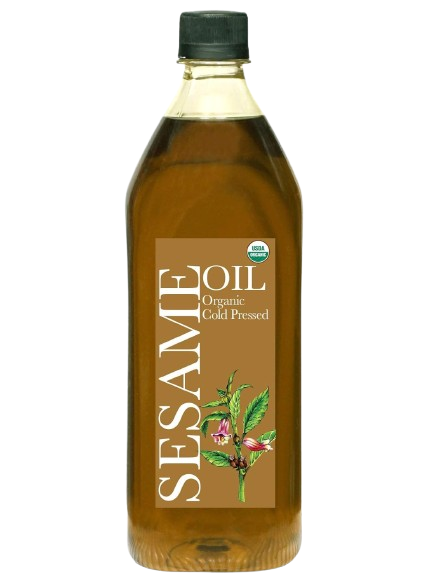
Sesame oil is an edible vegetable oil derived from sesame seeds, prized for its nutty aroma and high oxidative stability. The calories in sesame oil are significantly higher than whole food sources due to the pure lipid composition. A 100g serving of Sesame Oil contains 884 calories, while a single tablespoon (13.6g) provides 120 calories. Energy values remain consistent across varieties, with both Cold-Pressed and Toasted Sesame Oil providing the same 884 calories per 100g.
An analysis of sesame oil calories reveals a profile consisting entirely of fats, lacking the carbohydrates and proteins found in the whole seed. A single tablespoon (13.6g) offers 13.6g of total fat (17% DV) and 0g of protein. It serves as a source of fat-soluble micronutrients, providing 0.2mg of Vitamin E (1% DV) and 1.8mcg of Vitamin K (2% DV) per tablespoon. Research examines its cardiovascular impact, such as the study by Sankar, D., et al. (2006), "Effect of sesame oil on diuretics or ß-blockers in the modulation of blood pressure, anthropometry, lipid profile, and redox status," which investigates its role in hypertension management. Common types include Cold-Pressed Sesame Oil, Toasted Sesame Oil, and Refined Sesame Oil.
Due to sesame oil’s immense caloric density and high Omega-6 content of 5.6g per tablespoon, nutritionists recommend consuming this ingredient in moderation. A reasonable daily limit is one teaspoon (40 calories), functioning as a flavor enhancer instead of a main frying oil. Burning the 40 calories from one teaspoon (4.5g) of sesame oil requires activities like 11 minutes of cleaning windows, 10 minutes of sweeping, or 8 minutes of weeding.
Sesame oil appears frequently in both rich desserts and savory main courses. It is essential for dishes like Sesame Chicken at P.F. Chang's and enhances the flavor of Noodles with Sesame Sauce at Din Tai Fung. It also enriches sweets like the Sesame Ball at Nom Wah Tea Parlor and serves as a key ingredient for Black Sesame Ice Cream at Chinatown Ice Cream Factory. The ingredient originated in the Indus Valley civilization around 3000 BC and is primarily produced and consumed in China, Myanmar, and India. The price has risen noticeably over the last two decades, as a standard 16-ounce bottle that cost $4.50 to $6.00 in the mid-2000s now retails between $8.00 and $14.00 in 2024.
Sesame Oil nutrition
| Stats | Weight |
|---|---|
| Carbs | 0 grams |
| Protein | 0 grams |
| Fats | 0 grams |
| Sugars | 0 grams |
- Large Sesame Oil Calories (Nutritional Facts)
- Medium Sesame Oil Calories (Nutritional Facts)
- Small Sesame Oil Calories (Nutritional Facts)
- Raw Sesame Oil Nutrition
- Sodium in Sesame Oil
- Potassium in Sesame Oil
- Sugar in Sesame Oil
- Fiber in Sesame Oil
- Protein in Sesame Oil
- Carbs in Sesame Oil
- Fat in Sesame Oil
- Vitamins in Sesame Oil
- Minerals in Sesame Oil
Large Sesame Oil Calories (Nutritional Facts)
A large serving of Sesame Oil (218g or 1 cup) contains 1927 calories, 0g of protein, 218g of fat, 0g of carbohydrates, 0g of fiber, 0g of sugar, and 0mg of sodium. A large serving of Toasted Sesame Oil (218g or 1 cup) provides 1927 calories, 0g of protein, 218g of fat, 0g of carbohydrates, 0g of fiber, 0g of sugar, and 0mg of sodium.
A medium portion of Sesame Oil (109g or 0.5 cup) provides 964 calories, 0g of protein, 109g of fat, 0g of carbohydrates, 0g of fiber, 0g of sugar, and 0mg of sodium. A medium portion of Toasted Sesame Oil (109g or 0.5 cup) supplies 964 calories, 0g of protein, 109g of fat, 0g of carbohydrates, 0g of fiber, 0g of sugar, and 0mg of sodium.
A small serving of Sesame Oil (54.5g or 0.25 cup) contains 482 calories, 0g of protein, 54.5g of fat, 0g of carbohydrates, 0g of fiber, 0g of sugar, and 0mg of sodium. A small serving of Toasted Sesame Oil (54.5g or 0.25 cup) provides 482 calories, 0g of protein, 54.5g of fat, 0g of carbohydrates, 0g of fiber, 0g of sugar, and 0mg of sodium.
A single tablespoon of Sesame Oil (13.6g or 1 tbsp) contains 120 calories, 0g of protein (0% DV), 13.6g of total fat (17% DV), 0g of total carbohydrate (0% DV), 0g of dietary fiber (0% DV), 0g of total sugars (0% DV), and 0mg of sodium (0% DV). A single teaspoon of Sesame Oil (4.5g or 1 tsp) provides 40 calories, 0g of protein (0% DV), 4.5g of total fat (6% DV), 0g of total carbohydrate (0% DV), 0g of dietary fiber (0% DV), 0g of total sugars (0% DV), and 0mg of sodium (0% DV). The fat in the tablespoon serving provides 0.2mg of Vitamin E (1% DV) and 1.8mcg of Vitamin K (2% DV).
A large serving of Sesame Oil (218g or 1 cup) contains 0mg of sodium (0% DV), while a large serving of Toasted Sesame Oil (218g or 1 cup) provides 0mg of sodium (0% DV). A medium portion of Sesame Oil (109g or 0.5 cup) has 0mg of sodium (0% DV), whereas a medium portion of Toasted Sesame Oil (109g or 0.5 cup) supplies 0mg of sodium (0% DV). A small serving of Sesame Oil (54.5g or 0.25 cup) contains 0mg of sodium (0% DV), and a small serving of Toasted Sesame Oil (54.5g or 0.25 cup) provides 0mg of sodium (0% DV).
A large serving of Sesame Oil (218g or 1 cup) provides 0mg of potassium (0% DV), while a large serving of Toasted Sesame Oil (218g or 1 cup) contains 0mg of potassium (0% DV). A medium portion of Sesame Oil (109g or 0.5 cup) has 0mg of potassium (0% DV), whereas a medium portion of Toasted Sesame Oil (109g or 0.5 cup) supplies 0mg of potassium (0% DV). A small serving of Sesame Oil (54.5g or 0.25 cup) contains 0mg of potassium (0% DV), and a small serving of Toasted Sesame Oil (54.5g or 0.25 cup) provides 0mg of potassium (0% DV).
A large serving of Sesame Oil (218g or 1 cup) contains 0g of sugar, while a large serving of Toasted Sesame Oil (218g or 1 cup) provides 0g of sugar. A medium portion of Sesame Oil (109g or 0.5 cup) has 0g of sugar, whereas a medium portion of Toasted Sesame Oil (109g or 0.5 cup) supplies 0g of sugar. A small serving of Sesame Oil (54.5g or 0.25 cup) contains 0g of sugar, and a small serving of Toasted Sesame Oil (54.5g or 0.25 cup) provides 0g of sugar.
A large serving of Sesame Oil (218g or 1 cup) provides 0g of dietary fiber (0% DV), while a large serving of Toasted Sesame Oil (218g or 1 cup) contains 0g of fiber (0% DV). A medium portion of Sesame Oil (109g or 0.5 cup) has 0g of fiber (0% DV), whereas a medium portion of Toasted Sesame Oil (109g or 0.5 cup) supplies 0g of fiber (0% DV). A small serving of Sesame Oil (54.5g or 0.25 cup) contains 0g of fiber (0% DV), and a small serving of Toasted Sesame Oil (54.5g or 0.25 cup) provides 0g of fiber (0% DV).
A large serving of Sesame Oil (218g or 1 cup) provides 0g of protein (0% DV), while a large serving of Toasted Sesame Oil (218g or 1 cup) contains 0g of protein (0% DV). A medium portion of Sesame Oil (109g or 0.5 cup) has 0g of protein (0% DV), whereas a medium portion of Toasted Sesame Oil (109g or 0.5 cup) supplies 0g of protein (0% DV). A small serving of Sesame Oil (54.5g or 0.25 cup) contains 0g of protein (0% DV), and a small serving of Toasted Sesame Oil (54.5g or 0.25 cup) provides 0g of protein (0% DV).
A large serving of Sesame Oil (218g or 1 cup) contains 0g of carbohydrates (0% DV), while a large serving of Toasted Sesame Oil (218g or 1 cup) provides 0g of carbohydrates (0% DV). A medium portion of Sesame Oil (109g or 0.5 cup) has 0g of carbohydrates (0% DV), whereas a medium portion of Toasted Sesame Oil (109g or 0.5 cup) supplies 0g of carbohydrates (0% DV). A small serving of Sesame Oil (54.5g or 0.25 cup) contains 0g of carbohydrates (0% DV), and a small serving of Toasted Sesame Oil (54.5g or 0.25 cup) provides 0g of carbohydrates (0% DV).
A large serving of Sesame Oil (218g or 1 cup) contains 218g of total fat (279% DV), while a large serving of Toasted Sesame Oil (218g or 1 cup) provides 218g of total fat (279% DV). A medium portion of Sesame Oil (109g or 0.5 cup) has 109g of total fat (140% DV), whereas a medium portion of Toasted Sesame Oil (109g or 0.5 cup) supplies 109g of total fat (140% DV). A small serving of Sesame Oil (54.5g or 0.25 cup) contains 54.5g of total fat (70% DV), and a small serving of Toasted Sesame Oil (54.5g or 0.25 cup) provides 54.5g of total fat (70% DV).
A large serving of Sesame Oil (218g or 1 cup) provides 3.1mg of Vitamin E (20% DV) and 29.6mcg of Vitamin K (25% DV). A large serving of Toasted Sesame Oil (218g or 1 cup) contains 3.1mg of Vitamin E (20% DV) and 29.6mcg of Vitamin K (25% DV). A medium portion of Sesame Oil (109g or 0.5 cup) has 1.5mg of Vitamin E (10% DV), whereas a medium portion of Toasted Sesame Oil (109g or 0.5 cup) supplies 1.5mg of Vitamin E (10% DV). A small serving of Sesame Oil (54.5g or 0.25 cup) contains 0.8mg of Vitamin E (5% DV), and a small serving of Toasted Sesame Oil (54.5g or 0.25 cup) provides 0.8mg of Vitamin E (5% DV).
A large serving of Sesame Oil (218g or 1 cup) provides 0mg of calcium (0% DV) and 0mg of iron (0% DV). A large serving of Toasted Sesame Oil (218g or 1 cup) contains 0mg of calcium (0% DV) and 0mg of iron (0% DV). A medium portion of Sesame Oil (109g or 0.5 cup) has 0mg of calcium (0% DV), whereas a medium portion of Toasted Sesame Oil (109g or 0.5 cup) supplies 0mg of calcium (0% DV). A small serving of Sesame Oil (54.5g or 0.25 cup) contains 0mg of calcium (0% DV), and a small serving of Toasted Sesame Oil (54.5g or 0.25 cup) provides 0mg of calcium (0% DV).
Get a Custom Report on Sesame Oil Nutrition Data – Contact Us!
What are the Types of Sesame Oils?
The types of Sesame Oils include Cold-Pressed Sesame Oil, Toasted Sesame Oil, and Refined Sesame Oil. The table below outlines their nutritional differences.
| Type | Description | Calories (Per 100g) | Calorie Qualifications |
|---|---|---|---|
|
Cold-Pressed Sesame Oil
|
Pale yellow oil extracted without heat. | 884 | The raw extraction preserves the full fat content and nutrient density. |
|
Toasted Sesame Oil
|
Dark amber oil from roasted seeds. | 884 | The roasting process concentrates flavor but maintains the identical lipid load. |
|
Refined Sesame Oil
|
Light, neutral oil processed to remove solids. | 884 | The filtration removes impurities but leaves the caloric fat structure intact. |
|
Blended Sesame Oil
|
Sesame oil mixed with cheaper vegetable oils. | 884 | The energy value mimics pure oil as the filler oils possess the same fat density. |
What are Desserts With Sesame Oil?
Sesame oil, particularly the toasted variety, imparts a distinct nutty fragrance to confectionery, balancing sweetness with savory depth. The ingredient functions as a filling binder in pastries and a flavoring agent in frozen desserts. The following list enumerates confectionery items that utilize this lipid or the oil-rich seeds as a key component.
| Dish Name | Calories (Estimate) | Type of Sesame Oil | Carbs (g) (Estimate) | Sugar (g) (Estimate) | Protein (g) (Estimate) | Fat (g) (Estimate) | Cuisine | Restaurants |
|---|---|---|---|---|---|---|---|---|
|
Jian Dui (Sesame Ball)
|
280 | Refined Sesame Oil (Frying) | 38 | 18 | 4 | 12 | Chinese | Nom Wah Tea Parlor (New York, NY) |
|
Black Sesame Ice Cream
|
290 | Toasted Sesame Oil | 28 | 24 | 5 | 18 | Japanese | Chinatown Ice Cream Factory (New York, NY) |
|
Tang Yuan
|
320 | Toasted Sesame Oil | 45 | 22 | 6 | 14 | Chinese | Tim Ho Wan |
|
Halva
|
480 | Tahini (Sesame Oil Paste) | 42 | 35 | 12 | 30 | Middle Eastern | Seed + Mill (New York, NY) |
|
Mooncake (Lotus/Sesame)
|
850 | Peanut/Sesame Oil Blend | 95 | 55 | 12 | 48 | Chinese | Kee Wah Bakery (Los Angeles, CA) |
|
Black Sesame Cake
|
450 | Toasted Sesame Oil | 52 | 38 | 6 | 24 | Fusion | Lady M Confections (National) |
|
Yakgwa
|
180 | Toasted Sesame Oil | 28 | 12 | 2 | 8 | Korean | H Mart Bakeries (National) |
|
Sesame Brittle
|
160 | Toasted Sesame Oil | 18 | 14 | 3 | 9 | Mediterranean | Joyva Corp (Retail Brand) |
|
Banh Ran
|
250 | Refined Sesame Oil | 35 | 15 | 4 | 11 | Vietnamese | Ba Le Sandwich Shop (Chicago, IL) |
|
Songpyeon
|
210 | Toasted Sesame Oil | 42 | 12 | 3 | 4 | Korean | Rice Cake House (Los Angeles, CA) |
|
Sesame Shortbread
|
140 | Toasted Sesame Oil | 16 | 6 | 2 | 8 | Fusion | Honolulu Cookie Company (Hawaii/Vegas) |
|
Black Sesame Pudding
|
220 | Toasted Sesame Oil | 25 | 18 | 5 | 12 | Japanese | Tofu House (Various Locations) |
|
Goma Dango
|
260 | Refined Sesame Oil | 36 | 16 | 4 | 11 | Japanese | Mitsuwa Marketplace (National) |
|
Sesame Chiffon Cake
|
310 | Cold-Pressed Sesame Oil | 38 | 22 | 6 | 15 | Fusion | Keki Modern Cakes (New York, NY) |
|
Sweet Sesame Soup
|
280 | Toasted Sesame Oil | 40 | 25 | 5 | 11 | Chinese | Hong Kong Supermarket (National) |
What are the Main Dishes With Sesame Oil?
Sesame oil serves as a critical finishing agent and marinade ingredient in savory applications, particularly within high-heat stir-fries and cold salads. The low smoke point of the toasted variety necessitates adding the ingredient at the end of cooking to preserve the aroma. The list below details distinct savory recipes that incorporate this ingredient.
| Dish Name | Calories (Estimate) | Type of Sesame Oil | Carbs (g) (Estimate) | Sugar (g) (Estimate) | Protein (g) (Estimate) | Fat (g) (Estimate) | Cuisine | Restaurants |
|---|---|---|---|---|---|---|---|---|
|
Sesame Chicken
|
850 | Toasted Sesame Oil | 65 | 32 | 45 | 42 | American-Chinese | P.F. Chang's |
|
Bibimbap
|
720 | Toasted Sesame Oil | 95 | 12 | 28 | 24 | Korean | Bonchon Chicken (National) |
|
Japchae
|
480 | Toasted Sesame Oil | 75 | 14 | 8 | 18 | Korean | BCD Tofu House |
|
Cold Sesame Noodles
|
580 | Toasted Sesame Oil | 68 | 12 | 14 | 28 | Chinese | Han Dynasty |
|
Beef Bulgogi
|
650 | Toasted Sesame Oil | 25 | 18 | 48 | 38 | Korean | Kang Ho Dong Baekjeong (NYC/LA) |
|
Ahi Poke Bowl
|
550 | Toasted Sesame Oil | 65 | 8 | 35 | 18 | Hawaiian | Pokeworks |
|
Spinach Namul
|
80 | Toasted Sesame Oil | 6 | 1 | 4 | 5 | Korean | Genwa Korean BBQ (Los Angeles, CA) |
|
Dan Dan Noodles
|
680 | Chili-Infused Sesame Oil | 72 | 8 | 22 | 34 | Sichuan | Din Tai Fung |
|
Chicken Lo Mein
|
920 | Toasted Sesame Oil | 105 | 12 | 38 | 35 | Chinese | Panda Express |
|
Tuna Tataki
|
240 | Toasted Sesame Oil | 4 | 1 | 32 | 10 | Japanese | Nobu |
|
Kimchi Fried Rice
|
610 | Toasted Sesame Oil | 85 | 6 | 18 | 22 | Korean | Momofuku Noodle Bar (New York, NY) |
|
Szechuan Wontons
|
420 | Chili-Infused Sesame Oil | 38 | 6 | 16 | 24 | Chinese | Mary Chung Restaurant (Cambridge, MA) |
|
Beef and Broccoli
|
680 | Toasted Sesame Oil | 28 | 14 | 42 | 45 | Chinese | Pei Wei Asian Kitchen (National) |
|
Seaweed Salad
|
120 | Toasted Sesame Oil | 18 | 8 | 2 | 6 | Japanese | Benihana |
|
Garlic Oil Ramen
|
850 | Black Sesame Oil (Mayu) | 85 | 4 | 28 | 45 | Japanese | Ippudo (National) |
What Cuisines Do Prefer Sesame Oil Most?
Sesame oil functions as a foundational element in East Asian and Middle Eastern gastronomies, defining the flavor profiles of regional specialties. The table below outlines the cuisines that rely heavily on this ingredient.
| Cuisine | Dish | Types of Sesame Oil | Calories (Estimate) | Restaurant(s) |
|---|---|---|---|---|
|
Korean
|
Bibimbap | Toasted Sesame Oil | 720 | BCD Tofu House |
|
Sichuan (Chinese)
|
Dan Dan Noodles | Chili-Infused Sesame Oil | 680 | Han Dynasty (Philadelphia, PA) |
|
Japanese
|
Ramen (Mayu) | Black Sesame Oil | 850 | Ippudo (National) |
|
Taiwanese
|
Cucumber Salad | Toasted Sesame Oil | 140 | Din Tai Fung |
|
Cantonese
|
Steamed Rice Rolls | Toasted Sesame Oil | 320 | Tim Ho Wan |
|
Hawaiian
|
Ahi Poke | Toasted Sesame Oil | 550 | Pokeworks |
|
South Indian
|
Mango Pickle | Gingelly Oil (Raw) | 180 | Saravanaa Bhavan |
|
Vietnamese
|
Grilled Pork Vermicelli | Toasted Sesame Oil | 640 | The Slanted Door (San Francisco, CA) |
|
Middle Eastern
|
Hummus | Tahini (Sesame Paste/Oil) | 420 | Mamoun's Falafel (New York, NY) |
|
American Chinese
|
Orange Chicken | Toasted Sesame Oil | 490 | Panda Express |
|
Burmese
|
Tea Leaf Salad | Refined Sesame Oil | 380 | Burma Superstar (San Francisco, CA) |
|
Malaysian
|
Roti Canai Sauce | Gingelly Oil | 450 | Mamak (New York, NY) |
|
Singaporean
|
Hainanese Chicken Rice | Toasted Sesame Oil | 620 | Laut (New York, NY) |
|
Thai (Fusion)
|
Drunken Noodles | Toasted Sesame Oil | 680 | Lotus of Siam (Las Vegas, NV) |
|
Indonesian
|
Nasi Goreng | Refined Sesame Oil | 710 | Wayan (New York, NY) |
Which Countries Produce the Most Sesame Oils?
The top producers of sesame oil include China, Myanmar, and India. China leads global output volumes due to the high domestic demand for toasted oil in culinary applications. Myanmar and India function as significant contributors to the international supply chain, exporting both raw seeds and processed oil. The table below shows the estimated production of sesame oil for the top producing nations over the last two decades.
| Country | 2003 | 2008 | 2013 | 2018 | 2019 | 2020 | 2021 | 2022 |
|---|---|---|---|---|---|---|---|---|
| China | 210 | 235 | 260 | 245 | 258 | 262 | 270 | 275 |
| Myanmar | 65 | 95 | 110 | 145 | 150 | 155 | 160 | 158 |
| India | 70 | 85 | 90 | 105 | 108 | 112 | 115 | 118 |
| Japan | 40 | 42 | 45 | 48 | 49 | 47 | 48 | 49 |
| South Korea | 25 | 28 | 30 | 32 | 33 | 34 | 33 | 32 |
| Turkey | 15 | 18 | 22 | 28 | 29 | 30 | 31 | 32 |
| Sudan | 12 | 15 | 18 | 25 | 26 | 27 | 28 | 29 |
| Mexico | 10 | 11 | 12 | 14 | 15 | 14 | 15 | 15 |
Which Countries Consume the Most Sesame Oils?
The top consumers of sesame oil consist of China, India, and Japan. China absorbs the largest quantity of the product for traditional cooking and industrial food processing. Japan and South Korea represent high-value markets where consumers prioritize premium toasted varieties for finishing dishes. The table below shows the consumption volumes of sesame oil for key markets over the last two decades.
| Country | 2003 | 2008 | 2013 | 2018 | 2019 | 2020 | 2021 | 2022 |
|---|---|---|---|---|---|---|---|---|
| China | 205 | 230 | 255 | 260 | 275 | 280 | 285 | 290 |
| India | 68 | 82 | 88 | 102 | 105 | 110 | 112 | 115 |
| Japan | 55 | 58 | 62 | 65 | 66 | 64 | 65 | 66 |
| Myanmar | 50 | 75 | 90 | 120 | 125 | 130 | 135 | 132 |
| South Korea | 35 | 38 | 42 | 45 | 46 | 48 | 47 | 46 |
| United States | 18 | 22 | 28 | 35 | 37 | 40 | 42 | 44 |
| Germany | 8 | 10 | 12 | 15 | 16 | 17 | 18 | 19 |
| Turkey | 14 | 17 | 20 | 26 | 27 | 28 | 29 | 30 |
How Do Prices of Sesame Oil-Including Dishes Change?
Restaurant costs for sesame oil-based entrees and sides have surged, mirroring the increased expense of sourcing premium imported condiments and labor. The table below illustrates price adjustments for selected items at well-known establishments.
| Brand/Restaurant | Dish | Old Price (Year) | Current Price (2024/2025) |
|---|---|---|---|
| P.F. Chang's | Sesame Chicken | $14.95 (2015) | $19.99 - $21.50 |
| Panda Express | Honey Sesame Chicken Breast | $6.20 (2014) | $10.70 - $11.40 |
| Din Tai Fung | Noodles with Sesame Sauce | $9.50 (2016) | $11.50 - $14.00 |
| Benihana | Seaweed Salad (Sesame Dressing) | $4.80 (2013) | $8.97 - $9.50 |
| Pei Wei Asian Kitchen | Sesame Chicken | $9.29 (2015) | $11.99 - $13.79 |
What is the Sesame Oil Calorie for 100 Grams?
A 100g serving of Sesame Oil provides 884 calories, while a 100g serving of Toasted Sesame Oil supplies 884 calories.
What is the Sesame Oil Calorie for 1 KG?
One kilogram (1000g) of Sesame Oil supplies 8840 calories, whereas one kilogram (1000g) of Toasted Sesame Oil provides 8840 calories.
What is the Calorie of 1 Sesame Oil?
A single tablespoon of Sesame Oil (13.6g) contains 120 calories, while a single teaspoon of Sesame Oil (4.5g) provides 40 calories. Commercial brands offer consistent energy values, as a serving of Family Pet Pure Sesame Oil (15g) contains 120 calories. A serving of Sogo Trading 100% Pure Sesame Oil (15g) provides 124 calories, whereas a serving of Ottogi Sesame Oil (14g) supplies 120 calories.
What are the Health Benefits of Sesame Oil?
Sesame oil functions as a concentrated source of antioxidants and unsaturated fats, supporting physiological systems through lipid modulation and oxidative stress reduction. The high concentration of sesamol and sesamin aids in cellular protection. The points below emphasize these specific health rewards.
- Enhances Cardiovascular Health: The oil contains sesamin, a lignan that reduces hypertension and improves arterial elasticity. A study by Sankar, D., et al. (2006), "Effect of sesame oil on diuretics or ß-blockers in the modulation of blood pressure, anthropometry, lipid profile, and redox status," confirmed that regular consumption lowers systolic and diastolic blood pressure in hypertensive patients.
- Reduces Oxidative Stress: Potent antioxidants like sesamol prevent cellular damage caused by free radicals. Research by Sankar, D., et al. (2005), "Modulation of blood pressure, lipid profiles and redox status in hypertensive patients taking different edible oils," established that the oil exhibits significant radical scavenging activity which protects tissues from oxidative injury.
- Regulates Blood Sugar: The healthy fats and magnesium content assist in glucose metabolism. A study by Aslam, H., et al. (2019), " White Sesame Seed Oil Mitigates Blood Glucose Level, Reduces Oxidative Stress, and Improves Biomarkers of Hepatic and Renal Function in Participants with Type 2 Diabetes Mellitus," demonstrated that supplementation improves fasting blood sugar levels.
What are the Downsides of Sesame Oil?
Sesame oil poses risks regarding inflammatory responses and caloric excess when consumed without restriction. Nutritionists advise limiting intake to one teaspoon per day (4.5g) and choosing olive oil as a lower-omega-6 alternative to mitigate potential inflammation. The table below shows specific negative health implications.
- Promotes Inflammation: The high content of omega-6 fatty acids creates an imbalance with omega-3s, potentially triggering inflammatory pathways. Research by Simopoulos, A. P. (2002), "The importance of the ratio of omega-6/omega-3 essential fatty acids," noted that excessive omega-6 intake relative to omega-3 contributes to chronic inflammatory diseases.
- Increases Caloric Load: The extreme energy density leads to rapid weight gain if not accounted for in daily totals. A study by Swinburn, B. A., et al. (2009), "Increased food energy supply is more than sufficient to explain the US epidemic of obesity," identified energy-dense fats as primary drivers of surplus caloric intake.
- Triggers Allergic Reactions: Sesame acts as a potent allergen for sensitive individuals, causing anaphylaxis in severe cases. Research by Gangur, V., et al. (2005), "Sesame allergy: a growing food allergy of global proportions?," highlighted the increasing prevalence of sesame allergies and the severity of reactions compared to other seeds.
Are Sesame Oils Good for You?
Yes, sesame oils are good for health because the fat provides essential lignans and mono-unsaturated fatty acids that support cardiovascular stability, neurological protection, and metabolic regulation. Cardiovascular health benefits from the presence of polyunsaturated fats which lower LDL cholesterol as explored by Sankar, D., et al. (2005), "Modulation of blood pressure, lipid profiles and redox status in hypertensive patients taking different edible oils." Neurological function improves due to the neuroprotective properties of sesamol which guards against cerebral ischemia as detailed in the study by Beheshtimanesh, Z., et al. (2023), "Neuroprotective effect of sesamol against oxidative stress-induced neurodegeneration in the rat brain." Metabolic regulation strengthens through the action of fatty acids that enhance insulin sensitivity as confirmed by Yargholi, A., et al. (2021), "The Effects of Sesame Consumption on Glycemic Control in Adults: A Systematic Review and Meta-Analysis of Randomized Clinical Trial."
How Do Calories Change According to Sesame Oil Types?
Energy values remain consistent across pure varieties of sesame oil as the fat content stays stable regardless of the roasting or pressing method. Cold-Pressed Sesame Oil and Toasted Sesame Oil contain identical energy loads per 100g due to the 100% lipid composition. Refined Sesame Oil offers a matching profile as the filtration process removes non-caloric impurities without altering the caloric density. Blended Sesame Oil provides the same caloric density per serving because the soybean or canola oils used as fillers carry the same 9 calories per gram as the sesame fat.
What is the Best Sesame Oil for Frying Based on Nutritional Value and Calories?
Refined Sesame Oil serves as the best option for frying due to the high smoke point of 410°F (210°C) and the neutral flavor profile. This variety undergoes a filtration process that removes solids and free fatty acids which burn at lower temperatures. Toasted Sesame Oil possesses a low smoke point of 350°F (177°C) and degrades rapidly under high heat, creating bitter compounds and harmful free radicals. The caloric value remains identical between the two, meaning the choice depends entirely on thermal stability rather than energy density.
Does Sesame Oil Have Carbs?
No, sesame oil does not have carbs because the extraction process isolates the lipids from the carbohydrate-containing seed fibers. A standard serving consists of 100% fat with zero grams of sugars, dietary fiber, or starch. The pressing and filtration methods eliminate all traces of the protein and carbohydrate structures found in the whole sesame seed.
What is the Origin of Sesame Oil?
The domestication of sesame seeds dates back to 3000 BC in the Indus Valley civilization, marking the crop as one of the oldest oilseeds known to humanity. Assyrian tablets from 2000 BC mention the oil, known as "shaman," as a currency and a food source. The extraction technique spread from the Indian subcontinent to Mesopotamia and eventually reached East Asia during the Han Dynasty, where the toasted variety became a culinary staple. Traditional Chinese Medicine adopted the ingredient for medicinal salves, while Ayurvedic practices utilized "til oil" for massage and detoxification. The product entered the United States market in the 1930s but gained widespread popularity in the 1970s with the rise of international cuisine.
Explore More Condiments & Sauces
Discover more Condiments & Sauces with detailed nutrition facts, calorie counts, vitamins, minerals, and health benefits. Compare similar foods, serving sizes, macronutrients, and key nutrients to find the best option for your diet and nutrition goals.
 Agave calories
 Aioli calories
 Apple Butter calories
 Avocado Oil calories
 Baking Powder calories
 Balsamic Vinaigrette calories
 Barbeque Sauce calories
 Bearnaise Sauce calories
 Blue Cheese Dressing calories
 Brown Rice Syrup calories
 Caesar Dressing calories
 Canola Oil calories