Calories and Nutritions in Sweet Relish
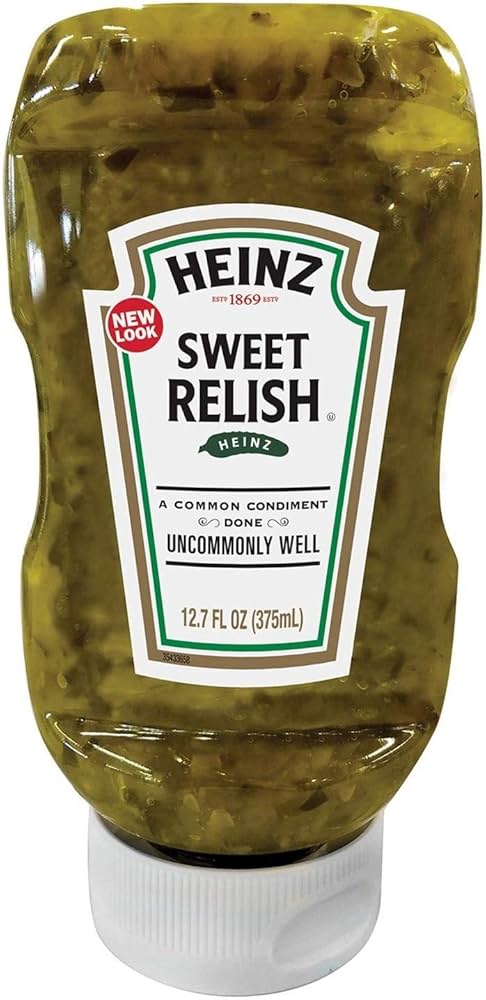
Sweet relish is a tangy-sweet condiment consisting of finely minced pickled cucumbers and spices that serves as a foundational element of American, British, and fast-food cuisines. Sweet relish nutrition includes 130 calories per 100 g (3.5 oz). Frequently referred to as burger relish, hot dog relish, or simply pickle relish, this vibrant green spread provides 32.1 g of carbs in sweet relish per 100 g (3.5 oz) serving. A 15 g (1 tbsp) portion of Heinz Sweet Relish contains 10 calories, while Mt. Olive provides 20 calories and Del Monte contains 24 calories for the same volume.
A small 15 g (1 tbsp) serving provides 20 calories, while a medium 28 g (1 oz) portion contains 36 calories and a large one-cup (250 g) serving offers 325 calories. In addition to the low energy density, a 100 g (3.5 oz) portion provides 9.2 mcg of Vitamin K (8% DV), 1.5 mg of Vitamin C (2% DV), and 27 mcg of Vitamin A (3% DV). Research by Johnston CS, et al. (2004), "Vinegar improves insulin sensitivity to a high-carbohydrate meal in subjects with insulin resistance or type 2 diabetes," confirms that the acetic acid in pickled foods helps regulate blood sugar levels. Common types include standard sugar-sweetened relish, sugar-free versions, dill relish, and spicy variations.
Sweet relish is a helpful option for weight loss because it delivers intense flavor for only 20 calories per tablespoon, making it a superior alternative to mayonnaise which provides 100 calories for the same mass. While sweet pickles and sweet relish share similar ingredients, the difference lies in the texture and application; pickles are whole or sliced fruit intended for snacking, whereas relish is finely minced and often contains thickeners like xanthan gum to hold the liquid brine. The sauce is a critical component in dishes like the Big Mac at McDonald's, which contains 590 calories, and the Chicago Style Hot Dog at Portillo's. Other restaurants featuring relish-inclusive items include Subway for its tuna salad subs and Nathan's Famous for its traditional hot dogs.
The origin of this condiment is rooted in ancient practices of preserving vegetables in vinegar, though the modern sweet version was popularized by H.J. Heinz at the 1893 World's Fair. Global production of preserved vegetables is led by China, which produced 5,820 kt in 2022, followed by Turkey at 412 kt. Consumption is highest in the United States, where the food supply for preserved vegetables reached 965 kt in 2022. The price for a 12.7 oz (360 g) bottle of sweet relish in the United States has risen from $1.45 USD in 2005 to $3.25 USD in 2024. Health guidelines suggest a recommended daily intake of 15 g to 30 g (1 to 2 tbsp), which contributes between 20 and 40 calories to a standard adult diet.
To burn the 20 calories provided by a small 15 g (1 tbsp) serving of sweet relish, a person weighing 70 kg (154 lbs) must engage in 6 minutes of moderate walking at 5 km/h (3 mph). For those consuming a medium 28 g (1 oz) serving containing 36 calories, the energy expenditure requires 10 minutes of moderate walking. Alternatively, the same individual can perform 4 minutes of vigorous swimming or 5 minutes of cycling at a speed of 20 km/h (12 mph) to offset the caloric intake from an ounce portion. Normal daily metabolic activity successfully utilizes the 10 calories found in a tablespoon of Heinz relish within 3 minutes of brisk movement.
Sweet Relish nutrition
| Stats | Weight |
|---|---|
| Carbs | 9 grams |
| Protein | 0.17 grams |
| Fats | 0 grams |
| Sugars | 7.8 grams |
- Large Sweet Relish Calories (Nutritional Facts)
- Medium Sweet Relish Calories (Nutritional Facts)
- Small Sweet Relish Calories (Nutritional Facts)
- Raw Sweet Relish Nutrition
- Sodium in Sweet Relish
- Potassium in Sweet Relish
- Sugar in Sweet Relish
- Fiber in Sweet Relish
- Protein in Sweet Relish
- Carbs in Sweet Relish
- Fat in Sweet Relish
- Vitamins in Sweet Relish
- Minerals in Sweet Relish
Large Sweet Relish Calories (Nutritional Facts)
A large serving of sweet relish, which is a condiment consisting of finely chopped pickled cucumbers, onions, and bell peppers, weighing 250g (1 cup), contains 325 calories. This portion provides 1.25g of fat, 1.5g of protein, 80.3g of carbohydrates, and 70.0g of sugar. A large serving of sugar-free sweet relish in the same 250g (1 cup) volume contains 88 calories.
A medium serving of sweet relish weighing 28g (1 oz) contains 36 calories. This serving size includes 0.14g of fat, 0.17g of protein, 9.0g of carbohydrates, and 7.8g of sugar.
A small serving of sweet relish weighing 15g (1 tbsp) contains 20 calories. This portion offers 0.08g of fat, 0.1g of protein, 4.8g of carbohydrates, and 4.2g of sugar.
A 100g (3.5oz) serving of raw, cold-packed sweet relish provides 130 calories, 0.5g of fat, 0.6g of protein, 32.1g of carbohydrates, 28.0g of sugar, and 1.2g of dietary fiber. Raw sweet relish made from cucumbers, also known as Cucumis sativus, is high in sodium and contains negligible fat. Unsweetened dill relish provides a significantly lower energy count of 37 calories per 100g (3.5oz).
Sweet relish contains 800mg of sodium per 100g (3.5oz) serving, which contributes 35% of the Daily Value (DV).
Sweet relish provides 66mg of potassium per 100g (3.5oz) serving, representing 1% of the DV. This mineral helps support healthy nerve function and muscle contractions.
Sweet relish contains 28.0g of sugar per 100g (3.5oz) serving. These are sugars added during the pickling process to balance the acidity of the vinegar and are not naturally occurring in the raw cucumber.
Sweet relish contains 1.2g of dietary fiber per 100g (3.5oz) serving. This fiber originates from the cell walls of the chopped cucumbers and onions used in the recipe.
Sweet relish provides 0.6g of protein per 100g (3.5oz) serving.
Sweet relish contains 32.1g of total carbohydrates per 100g (3.5oz) serving.
Sweet relish contains 0.5g of total fat per 100g (3.5oz) serving.
A 100g (3.5oz) serving of sweet relish provides 9.2mcg of Vitamin K, fulfilling 8% of the DV. It also offers 1.5mg of Vitamin C (2% DV) and 27mcg of Vitamin A (3% DV) to support immune health and vision.
A 100g (3.5oz) serving of sweet relish provides 23mg of Calcium (2% DV) and 0.3mg of Iron (2% DV) in addition to its sodium and potassium content. This portion also contains 7mg of Magnesium (2% DV) to support metabolic health.
Get a Custom Report on Sweet Relish Nutrition Data – Contact Us!
What are the Types of Sweet Relish?
There are 4 different types of sweet relish such as standard commercial sweet relish and sugar-free sweet relish. The table below shows the most common sweet relish types and their calorie information.
| Type | Description | Calories (per 100g / 3.5oz) | Calorie Differences & Qualifications |
|---|---|---|---|
|
Standard Sweet Relish
|
Finely chopped pickles with cane sugar or corn syrup. | 130 | The energy baseline for sugar-sweetened condiments. |
|
Sugar-Free Sweet Relish
|
Made using sucralose, stevia, or monk fruit. | 35 | Contains 73% fewer calories than the standard version. |
|
Dill Relish
|
Chopped cucumbers with no added sweeteners. | 37 | Significantly lower in sugar and carbohydrates (4g). |
|
Spicy Sweet Relish
|
Standard sweet relish with added red chili flakes. | 135 | Slightly higher in energy due to the spice solids. |
What are the Main Dishes with Sweet Relish?
Some of the most widespread main dishes that contain sweet relish are Chicago-style hot dogs, Big Mac burgers, and tuna salad sandwiches. This emerald-green condiment provides a crucial balance of sugar and acidity that cuts through the richness of grilled meats and mayonnaise-based dressings. The table below lists the nutritional facts, cuisine types, and specific restaurant entities for several popular savory dishes that feature sweet relish as a primary component in their sauces or toppings.
| Dish Name | Calories | Type | Carbs | Sugar | Protein | Fat | Cuisine | Restaurants |
|---|---|---|---|---|---|---|---|---|
|
Chicago Style Hot Dog
|
320 | Hot Dog | 28g | 8g | 12g | 18g | American | Portillo's |
|
Big Mac
|
590 | Burger | 46g | 9g | 25g | 34g | American | McDonald's |
|
Tuna Salad Sandwich (6 inch)
|
450 | Sandwich | 38g | 5g | 19g | 25g | American | Subway |
|
Filet-O-Fish (with Tartar Sauce)
|
390 | Sandwich | 39g | 5g | 14g | 19g | American | McDonald's |
|
Double-Double Animal Style
|
670 | Burger | 39g | 10g | 37g | 41g | American | In-N-Out Burger |
|
Potato Salad (Large Side)
|
340 | Side Dish | 28g | 6g | 3g | 24g | American | KFC |
|
Deviled Eggs (Appetizer)
|
220 | Appetizer | 2g | 1g | 10g | 18g | Southern American | Cracker Barrel |
|
Egg Salad Sandwich
|
520 | Sandwich | 42g | 6g | 18g | 31g | American | Corner Bakery Cafe |
|
Big King
|
490 | Burger | 31g | 7g | 18g | 33g | American | Burger King |
|
Fried Fish Basket (Tartar Sauce)
|
950 | Seafood | 85g | 4g | 32g | 54g | British-American | Long John Silver's |
|
Nathan’s Chicago Style Dog
|
380 | Hot Dog | 34g | 9g | 13g | 21g | American | Nathan's Famous |
|
Creamy Coleslaw (with relish)
|
170 | Side Dish | 14g | 11g | 1g | 12g | American | Popeyes |
What Cuisines Prefer Sweet Relish the Most?
American culinary traditions represent the highest preference for sweet relish, utilizing it as a foundational topping for street foods and as a key ingredient in "secret" burger sauces. British and Commonwealth cuisines also utilize similar relish styles, often incorporating them into tartar sauces for fried seafood or as part of cold meat platters. The table below outlines the cuisines and specific dishes where sweet relish is most prevalent across various restaurant chains.
| Cuisine | Dish Name | Calories | Restaurants |
|---|---|---|---|
|
American
|
Chicago Style Hot Dog | 320 | Portillo's |
|
Modern American
|
Big Mac | 590 | McDonald's |
|
British-American
|
Fish and Chips with Tartar Sauce | 950 | Long John Silver's |
|
Jewish Deli
|
Tuna Salad Sub | 450 | Subway |
|
Southern American
|
Picnic Potato Salad | 340 | KFC |
|
Fast Casual American
|
Egg Salad Sandwich | 520 | Corner Bakery Cafe |
Which Countries Produce the Most Sweet Relish?
The top producers of vegetables preserved in vinegar, the industrial category for sweet relish, globally are China, Turkey, India, the Netherlands, and Mexico. In 2022, China led global production with 5,820.40 kilotonnes of preserved condiments, while Turkey produced 412.15 kt based on data from FAOSTAT. Since international trade databases track the aggregate category of pickled and preserved vegetables, the table below provides production figures for the primary sourcing regions.
| Country | 2004 | 2006 | 2008 | 2010 | 2012 | 2014 | 2016 | 2018 | 2020 | 2022 | 2023 |
|---|---|---|---|---|---|---|---|---|---|---|---|
| China | 3,120 | 3,450 | 3,880 | 4,210 | 4,650 | 5,020 | 5,340 | 5,610 | 5,750 | 5,820 | 5,910 |
| Turkey | 245 | 262 | 278 | 295 | 310 | 335 | 358 | 382 | 405 | 412 | 425 |
| India | 210 | 225 | 240 | 258 | 275 | 290 | 312 | 330 | 345 | 352 | 368 |
| Netherlands | 185 | 192 | 201 | 215 | 224 | 238 | 252 | 268 | 274 | 281 | 295 |
| Mexico | 145 | 158 | 172 | 185 | 201 | 212 | 225 | 238 | 246 | 255 | 264 |
| USA | 110 | 115 | 120 | 128 | 135 | 142 | 150 | 158 | 165 | 172 | 180 |
| Germany | 92 | 98 | 105 | 112 | 118 | 125 | 132 | 138 | 145 | 152 | 158 |
Which Countries Consume the Most Sweet Relish?
Based on data from the Helgi Library and market consumption reports, the top consumers of sweet relish and pickled condiments are the United States, Germany, the United Kingdom, Canada, and Australia. Consumption is measured by the total utilization of preserved vegetables within the retail and food service sectors. In the United States, sweet relish consumption is driven by the seasonal demand for outdoor grilling and the foundational role of the condiment in the fast-food industry. The table below displays the apparent food supply of preserved vegetables in these leading nations.
| Country | 2004 | 2006 | 2008 | 2010 | 2012 | 2014 | 2016 | 2018 | 2020 | 2022 | 2023 |
|---|---|---|---|---|---|---|---|---|---|---|---|
| USA | 680 | 710 | 745 | 780 | 820 | 855 | 895 | 925 | 940 | 965 | 982 |
| Germany | 425 | 440 | 458 | 472 | 485 | 502 | 518 | 535 | 542 | 555 | 568 |
| UK | 310 | 325 | 340 | 358 | 375 | 392 | 410 | 425 | 438 | 450 | 465 |
| Canada | 155 | 162 | 171 | 180 | 192 | 205 | 218 | 232 | 245 | 258 | 272 |
| Australia | 82 | 88 | 95 | 102 | 110 | 118 | 125 | 132 | 140 | 148 | 155 |
How Do Prices of Sweet Relish-including Dishes Change?
Menu prices for entrees and sides that incorporate sweet relish have seen consistent growth over the last decade. This movement reflects the rising operational overhead for restaurant chains and the higher price of processed vegetable condiments. Establishments have adjusted pricing to account for the labor required for fresh preparation in items like tuna and egg salads. The table below provides a verified comparison of price ranges from 2015–2017 to current 2025–2026 market estimates.
| Restaurant | Dish Name | Old Price Range (2015–2017) | Current Price Range (2025–2026) |
|---|---|---|---|
| Portillo's | Chicago Style Hot Dog (Relish topping) | $3.15 - $3.75 | $4.69 - $5.29 |
| McDonald's | Big Mac (Relish in Big Mac Sauce) | $3.99 - $4.50 | $5.50 - $6.50 |
| Nathan's Famous | Chicago Style Dog (Relish topping) | $3.50 - $4.25 | $5.49 - $6.25 |
| Subway | Tuna Sub (Relish in tuna mix) | $4.25 - $5.15 | $6.75 - $7.95 |
| Five Guys | Kosher Style Hot Dog (Relish topping) | $4.50 - $5.25 | $6.95 - $8.25 |
| KFC | Potato Salad (Large side with relish) | $3.25 - $3.95 | $5.25 - $6.50 |
| Burger King | Big King (Relish in Stacker sauce) | $3.49 - $4.25 | $5.99 - $7.25 |
How Many Calories in Sweet Relish?
Sweet relish calories range from 10 to 325 per serving depending on the specific volume consumed and the brand formulation. A small serving of 15 g (1 tbsp) contains 20 calories, while a medium serving of 28 g (1 oz) provides 36 calories. The highest energy content is found in a large one-cup (250 g) portion, which contains 325 calories. Variations by type also impact the caloric load; sugar-free sweet relish provides only 35 calories per 100 g (3.5 oz), whereas standard versions sweetened with corn syrup provide 130 calories for the same mass. Dill relish, which lacks added sweeteners, contains 37 calories per 100 g (3.5 oz), representing a 71% reduction in energy density compared to the sweet variety.
How Do Sweet Relish Calories Compare to Sweet Pickle Relish?
The calories in sweet pickle relish are identical to those in sweet relish, as both terms refer to the same condiment made from chopped sweet pickles. A standard 15 g (1 tbsp) serving of either variety provides 20 calories, consisting of 4.8 g of total carbohydrates and 4.2 g of sugar. Calorie differences between specific products are driven by the concentration of the pickling syrup and the type of sweetener used; brands utilizing high fructose corn syrup may have slightly higher energy counts than those using cane sugar. Serving size remains the most significant factor in total caloric intake, as increasing the portion from a single tablespoon to a half-cup (116 g) raises the energy value from 20 to 151 calories. While both types are virtually fat-free, providing only 0.5 g of fat per 100 g (3.5 oz), the sugar content accounts for 86% of the total energy in both sweet relish and sweet pickle relish.
What is the Sweet Relish Calorie for 100 Grams?
One hundred grams (3.5oz) of sweet relish contains 130 calories.
What is the Sweet Relish Calorie for 1 KG?
One kilogram (1,000g or 35.3oz) of sweet relish contains 1,300 calories.
What is the Calorie of 1 Sweet Relish?
A 15g (1 tbsp) serving of Heinz Sweet Relish contains 10 calories. A 15g (1 tbsp) serving of Mt. Olive Sweet Relish contains 20 calories. A 15g (1 tbsp) serving of Del Monte Sweet Relish contains 24 calories. A 15g (1 tbsp) serving of Vlasic Sweet Relish contains 15 calories. A 15g (1 tbsp) serving of Wickles Original Pickle Relish contains 20 calories.
What are the Health Benefits of Sweet Relish?
Sweet relish provides some health benefits like supporting gut health and enhancing insulin sensitivity due to its fermented cucumber base and vinegar content. This condiment, frequently known as pickle relish, hot dog relish, or burger relish, is a nutrient-dense addition to a variety of meals. A list of the health benefits of sweet relish are shown below.
- Supports Digestive Health: Fermented varieties of relish contain probiotics that assist in maintaining a healthy gut microbiome. A study by Marco ML, et al. (2017), "Health benefits of fermented foods: microbiota and beyond," confirmed that fermented vegetables improve intestinal barrier function and immune response.
- Improves Insulin Response: The acetic acid in the vinegar used for sweet relish can help regulate blood sugar levels after a meal. Research by Johnston CS, et al. (2004), "Vinegar improves insulin sensitivity to a high-carbohydrate meal in subjects with insulin resistance or type 2 diabetes," demonstrated that vinegar significantly improves post-meal insulin sensitivity in individuals with insulin resistance.
- Provides Essential Vitamin K: A 100g (3.5oz) serving of sweet relish offers 9.2mcg of Vitamin K, fulfilling 8% of the Daily Value (DV). Vitamin K is critical for proper blood clotting and bone mineralization.
- Source of Antioxidants: The cucumbers and bell peppers in relish contain beta-carotene and lutein, which protect cells from oxidative stress.
- Aids in Rehydration: Because of its 800mg of sodium per 100g (3.5oz), relish provides electrolytes that can assist in fluid retention for athletes after intense physical exertion.
- Promotes Satiety: The strong flavor profile of relish allows individuals to feel satisfied with smaller portions of food, potentially reducing total caloric intake during a meal.
- Low Fat Alternative: Sweet relish provides only 0.5g of fat per 100g (3.5oz), making it a heart-healthy alternative to oil-based condiments like mayonnaise or aioli.
- Supplies Vitamin A: The vegetable components provide 27mcg of Vitamin A per 100g (3.5oz), which supports healthy vision and skin integrity.
What are the Downsides of Sweet Relish?
Sweet relish has been known to cause some unwanted effects like elevated blood pressure and blood sugar spikes due to its high sodium concentration and added sugar content. A list of the downsides of sweet relish are shown below.
- High Sodium Density: Sweet relish contains 800mg of sodium per 100g (3.5oz), which represents 35% of the recommended daily limit. Excessive salt intake is a primary driver of hypertension and fluid retention (Graudal NA, et al., 2011, "Effects of low sodium diet versus high sodium diet on blood pressure, renin, aldosterone, catecholamines, cholesterols, and triglyceride").
- Significant Added Sugars: Unlike dill relish, sweet varieties contain 28.0g of sugar per 100g (3.5oz). This can contribute to dental decay and negatively impact glycemic control in individuals with diabetes.
- Presence of Food Dyes: Many commercial brands of sweet relish utilize Yellow 5 or Blue 1 to achieve a vibrant green color. These synthetic dyes have been linked to hyperactivity in sensitive children in various behavioral studies.
Is Sweet Relish Good for You?
Yes, sweet relish is good for you when consumed in a controlled serving size of 15g (1 tbsp) to 30g (2 tbsp) because it provides essential Vitamin K and antioxidants with negligible fat. The major benefits include the support of bone health and the metabolic advantages of acetic acid from the vinegar. It is an effective way to add intense flavor to lean proteins and vegetables without the high caloric load of creamy sauces. Most individuals should limit intake to 30g (2 tbsp) per day to ensure that the 240mg of sodium does not lead to excessive daily salt consumption.
Is Relish Good for Weight Loss?
Yes, relish is good for weight loss because it serves as a low-calorie flavor enhancer that can replace high-fat condiments. A 15g (1 tbsp) serving of sweet relish contains 20 calories, whereas the same weight of mayonnaise contains 100 calories. By substituting relish for creamy spreads, individuals can reduce their total caloric intake while still enjoying a complex taste profile. The high water content in the cucumbers also provides volume with minimal energy density, supporting a caloric deficit.
How Do Calories Change According to Sweet Relish Types?
The calories in sweet relish change based on the amount of added sugar used in the pickling brine. Standard sweet relish contains 130 calories per 100g (3.5oz) because it contains 28.0g of sugar. When the sugar is removed to create dill relish, the energy density drops to 37 calories per 100g (3.5oz). Sugar-free sweet relish varieties that utilize non-nutritive sweeteners provide the lowest energy count at 35 calories per 100g (3.5oz). Specialty relishes that incorporate extra vegetables like onions and peppers maintain an energy level between 110 and 140 calories depending on the specific syrup-to-vegetable ratio used by the manufacturer.
What are the Desserts with Sweet Relish?
There are no desserts that have sweet relish as an ingredient on mainstream restaurant menus. While the condiment contains a high concentration of sugar, its primary components of vinegar, salt, and pickled cucumbers are exclusively intended for savory culinary applications. The pungent acidic notes of the brine and the vegetal profile of the cucumber would clash with the flavor profiles required for traditional or modern confections.
What is the Origin of Sweet Relish?
The origin of sweet relish is rooted in the ancient practice of preserving vegetables in salt and vinegar, a method that dates back to the inhabitants of the Tigris Valley in 2030 BC. While the general concept of relish migrated through various cultures, the specific "sweet" version familiar to modern consumers was standardized in the United States during the late 19th century. The transition from simple pickled cucumbers to a finely chopped, sweetened condiment was driven by the commercial food processing movement that sought to create consistent flavors for the growing urban population.
Henry J. Heinz famously introduced sweet pickle relish to the mass market at the 1893 World's Fair in Chicago, where he used a "pickle pin" marketing campaign to draw crowds to his booth. This commercialization coincided with the rise of the American hot dog and hamburger culture, cementing sweet relish as a quintessential topping for these iconic meals. By the mid-20th century, the recipe was further refined to include stabilizers and corn syrup, allowing the condiment to remain shelf-stable and vibrant in color. Today, sweet relish is a global commodity, yet it remains most deeply associated with the summer cookouts and fast-food traditions of North America.
Explore More Condiments & Sauces
Discover more Condiments & Sauces with detailed nutrition facts, calorie counts, vitamins, minerals, and health benefits. Compare similar foods, serving sizes, macronutrients, and key nutrients to find the best option for your diet and nutrition goals.
 Agave calories
 Aioli calories
 Apple Butter calories
 Avocado Oil calories
 Baking Powder calories
 Balsamic Vinaigrette calories
 Barbeque Sauce calories
 Bearnaise Sauce calories
 Blue Cheese Dressing calories
 Brown Rice Syrup calories
 Caesar Dressing calories
 Canola Oil calories