Calories and Nutritions in Tabasco Sauce
The calories in Tabasco sauce are remarkably low for many of its varieties, with Tabasco Original Red Pepper Sauce, Green Pepper Sauce, Habanero Sauce, and Scorpion Sauce all containing 0 calories per teaspoon (5ml). Other types like Tabasco Sriracha Sauce and Tabasco Chipotle Pepper Sauce provide 5 calories per teaspoon (5g or 5.7g, 0.18-0.2 oz). Tabasco hot sauce nutrition facts highlight its minimal contribution of macronutrients for most types, with the Tabasco Original Red Pepper Sauce containing 0g of fat (0% Daily Value/DV), 0g of carbohydrates (0% DV), 0g of protein (0% DV), and 35mg of sodium (2% DV) per teaspoon. The primary active compound in the peppers used, capsaicin, has been studied for various metabolic effects, although the concentration varies by pepper type. (Ludy, M.J., Moore, G.E., & Mattes, R.D., 2012, "The effects of capsaicin and capsiate on energy balance: critical review and meta-analyses of studies in humans").
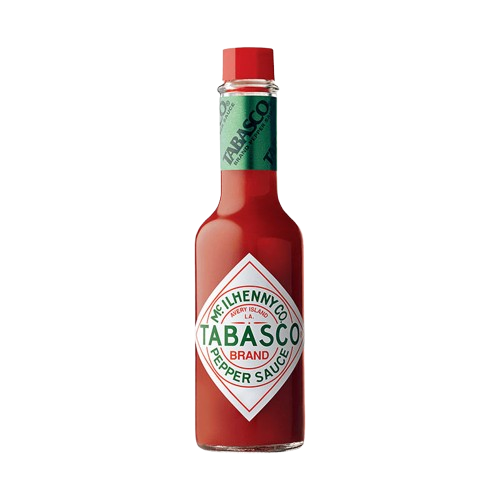
Tabasco sauce calories and overall nutritional profiles differ across its range, which includes Original Red, Green Pepper, Chipotle, Habanero, Scorpion, and Sriracha. The Tabasco brand pepper sauce is produced exclusively by the McIlhenny Company in Louisiana, USA. The price of a standard 2 fl oz bottle of Tabasco Original Red Pepper Sauce has increased over the last 20 years, from $1.50 to $2.50 in the early 2000s to $3.00 to $4.50 in 2024.
Tabasco sauce is a mainstay condiment for dishes like eggs, oysters, Gumbo, and Bloody Marys, served in restaurants such as IHOP, Acme Oyster House, and TGI Fridays. The recommended daily consumption is guided more by an individual's tolerance for spice and sodium intake rather than calorie restriction.
Tabasco Sauce nutrition
| Stats | Weight |
|---|---|
| Carbs | 0.2 grams |
| Protein | 0 grams |
| Fats | 0 grams |
| Sugars | 0 grams |
- Tabasco Sriracha Sauce Calories (Nutritional Facts)
- Tabasco Chipotle Pepper Sauce Calories (Nutritional Facts)
- Green Tabasco Pepper Sauce Calories (Nutritional Facts)
- Tabasco Habanero Pepper Sauce Calories (Nutritional Facts)
- Tabasco Scorpion Sauce Calories (Nutritional Facts)
- Sodium in Tabasco Sauce
- Potassium in Tabasco Sauce
- Sugar in Tabasco Sauce
- Fiber in Tabasco Sauce
- Protein in Tabasco Sauce
- Carbs in Tabasco Sauce
- Fat in Tabasco Sauce
- Vitamins in Tabasco Sauce
- Minerals in Tabasco Sauce
Tabasco Sriracha Sauce Calories (Nutritional Facts)
One teaspoon (5g, 0.18 oz) of Tabasco Sriracha Sauce contains 5 calories. A 100g (3.5 oz) serving of Tabasco Sriracha Sauce provides 100 calories. One tablespoon (15g, 0.53 oz) of Tabasco Sriracha Sauce has 15 calories.
One teaspoon (5ml or 5.7g, 0.2 oz) of Tabasco Chipotle Pepper Sauce contains 5 calories. A 100g (3.5 oz) serving of Tabasco Chipotle Pepper Sauce provides 88 calories. A 2 fl oz (57ml or 65g, 2.29 oz) bottle of Tabasco Chipotle Pepper Sauce contains 57 calories.
One teaspoon (5ml or 5.3g, 0.19 oz) of Tabasco Green Pepper Sauce contains 0 calories. A 100g (3.5 oz) serving of Tabasco Green Pepper Sauce provides 0 calories, as the caloric value is negligible in typical serving sizes and per 100g according to manufacturer data. A 2 fl oz (57ml or 60g, 2.12 oz) bottle of Tabasco Green Pepper Sauce contains 0 calories.
One teaspoon (5ml or 5.4g, 0.19 oz) of Tabasco Habanero Pepper Sauce contains 0 calories. A 100g (3.5 oz) serving of Tabasco Habanero Pepper Sauce provides 0 calories, reflecting its minimal caloric content. A 2 fl oz (57ml or 61g, 2.15 oz) bottle of Tabasco Habanero Pepper Sauce contains 0 calories.
One teaspoon (5ml or 5.5g, 0.19 oz) of Tabasco Scorpion Sauce contains 0 calories. A 100g (3.5 oz) serving of Tabasco Scorpion Sauce provides 0 calories, indicating its negligible caloric value. A 2 fl oz (57ml or 62g, 2.19 oz) bottle of Tabasco Scorpion Sauce contains 0 calories.
One teaspoon (5ml or 5g, 0.18 oz) of Tabasco Original Red Pepper Sauce contains 35mg of sodium (2% DV). A 100g (3.5 oz) serving of Tabasco Original Red Pepper Sauce has 700mg of sodium (30% DV). Tabasco Green Pepper Sauce contains 150mg of sodium per teaspoon (5ml) (6% DV) and 3000mg per 100g (130% DV). Tabasco Chipotle Pepper Sauce contains 115mg of sodium per teaspoon (5ml) (5% DV) and 2018mg per 100g (88% DV). Tabasco Sriracha Sauce contains 100mg of sodium per teaspoon (5g) (4% DV) and 2000mg per 100g (87% DV). Tabasco Habanero Pepper Sauce has 120mg of sodium per teaspoon (5ml) (5% DV) and 2222mg per 100g (97% DV). Tabasco Scorpion Sauce contains 100mg of sodium per teaspoon (5ml) (4% DV) and 1818mg per 100g (79% DV).
Tabasco Original Red Pepper Sauce contains a minimal amount of potassium, often listed as 0mg per teaspoon (5ml) (0% DV). A 100g (3.5 oz) serving of Tabasco Original Red Pepper Sauce provides a small amount of potassium, but it is not a significant source. Tabasco Green Pepper Sauce and Tabasco Habanero Pepper Sauce also contain negligible amounts of potassium per serving. Tabasco Chipotle Pepper Sauce lists 20mg of potassium per teaspoon (5ml) (0% DV) and 351mg per 100g (7% DV). Tabasco Sriracha Sauce contains 10mg of potassium per teaspoon (5g) (0% DV) and 200mg per 100g (4% DV).
Tabasco Original Red Pepper Sauce contains 0g of sugar per teaspoon (5ml) (0% DV). A 100g (3.5 oz) serving of Tabasco Original Red Pepper Sauce also contains 0g of sugar. Tabasco Green Pepper Sauce, Tabasco Habanero Pepper Sauce, and Tabasco Scorpion Sauce each contain 0g of sugar per teaspoon and per 100g. Tabasco Chipotle Pepper Sauce contains less than 1g of sugar per teaspoon (5ml) and 0g per 100g as per some nutritional panels. Tabasco Sriracha Sauce contains 1g of sugar per teaspoon (5g) and 20g of sugar per 100g.
Tabasco Original Red Pepper Sauce contains 0g of dietary fiber per teaspoon (5ml) (0% DV). A 100g (3.5 oz) serving of Tabasco Original Red Pepper Sauce also contains 0g of dietary fiber. Other varieties like Tabasco Green Pepper Sauce, Tabasco Habanero Pepper Sauce, Tabasco Scorpion Sauce, and Tabasco Chipotle Pepper Sauce also contain 0g of dietary fiber per serving and per 100g. Tabasco Sriracha Sauce contains 0g of fiber per teaspoon (5g) and 0g of fiber per 100g.
Tabasco Original Red Pepper Sauce contains 0g of protein per teaspoon (5ml) (0% DV). A 100g (3.5 oz) serving of Tabasco Original Red Pepper Sauce also contains 0g of protein. This is consistent across other Tabasco brand pepper sauces including the Green, Habanero, Scorpion, and Chipotle varieties, all listing 0g of protein per serving and per 100g. Tabasco Sriracha Sauce also contains 0g of protein per teaspoon (5g) and 0g of protein per 100g.
Tabasco Original Red Pepper Sauce contains 0g of total carbohydrates per teaspoon (5ml) (0% DV). A 100g (3.5 oz) serving of Tabasco Original Red Pepper Sauce also contains 0g of total carbohydrates. Tabasco Green Pepper Sauce, Tabasco Habanero Pepper Sauce, and Tabasco Scorpion Sauce each list 0g of total carbohydrates per serving and per 100g. Tabasco Chipotle Pepper Sauce contains 1g of total carbohydrates per teaspoon (5ml) (0% DV) and 17.5g per 100g (6% DV). Tabasco Sriracha Sauce contains 1g of total carbohydrates per teaspoon (5g) (0% DV) and 20g per 100g (7% DV).
Tabasco Original Red Pepper Sauce contains 0g of total fat per teaspoon (5ml) (0% DV). A 100g (3.5 oz) serving of Tabasco Original Red Pepper Sauce also contains 0g of total fat. This is true for all other core Tabasco brand pepper sauces including the Green, Habanero, Scorpion, Chipotle, and Sriracha varieties, which all report 0g of total fat per serving and per 100g.
Tabasco Original Red Pepper Sauce is not a significant source of most vitamins, with amounts being negligible or 0% DV per teaspoon for vitamins like Vitamin A, Vitamin C, Vitamin D, and B vitamins. This low vitamin content is characteristic of most Tabasco brand pepper sauces due to the small serving size and processing. Some chili peppers used in the sauces contain Vitamin C in their raw state, but the amount in the final processed sauce per serving is minimal.
The primary mineral present in notable quantities in Tabasco Original Red Pepper Sauce is sodium, with 35mg per teaspoon (5ml) (2% DV). Other minerals like calcium, iron, and potassium are present in negligible amounts, often 0% DV per serving. This mineral profile is similar across most Tabasco brand pepper sauces, with sodium being the most prominent mineral. For example, Tabasco Chipotle Pepper Sauce contains 115mg of sodium per teaspoon (5% DV) and Tabasco Sriracha Sauce has 100mg of sodium per teaspoon (4% DV).
Get a Custom Report on Tabasco Sauce Nutrition Data – Contact Us!
What are the Types of Tabasco Sauce?
McIlhenny Company produces a variety of Tabasco brand pepper sauces, each with a distinct flavor profile, heat level, and ingredients, which can influence their caloric content. The table below outlines some common types.
| Type | Description | Calories (per 1 tsp / ~5g) | Calorie Qualifications |
|---|---|---|---|
|
Tabasco Original Red Pepper Sauce
|
The iconic sauce made from tabasco peppers, vinegar, and salt, aged in oak barrels. | 0 | Virtually calorie-free. |
|
Tabasco Green Pepper Sauce
|
Milder, made with jalapeño peppers, vinegar, and salt. | 0 | Virtually calorie-free. |
|
Tabasco Chipotle Pepper Sauce
|
Made from smoked red jalapeño peppers, vinegar, water, salt, sugar, and spices. | 5 | Contains a small amount of sugar and other ingredients contributing to slight calorie content. |
|
Tabasco Habanero Pepper Sauce
|
A hotter sauce blending habanero peppers with mango, papaya, tamarind, banana, and spices. | 0 | Despite fruit ingredients, the serving size yields negligible calories. |
|
Tabasco Scorpion Sauce
|
The hottest Tabasco sauce, made with scorpion peppers, guava, pineapple, and a dash of Tabasco Original. | 0 | Extremely spicy; fruit content is minimal per serving to affect calories. |
|
Tabasco Sriracha Sauce
|
A thicker, sweeter, and garlicky chili sauce made with red chili peppers, sugar, garlic, vinegar, and salt. | 5 | Contains sugar and more solids, leading to a higher calorie count than traditional Tabasco. |
|
Tabasco Sweet & Spicy Sauce
|
A milder, sweet sauce with a touch of ginger and other Asian-inspired flavors. | 5-10 | Contains sugar and other flavoring ingredients contributing to calories. |
|
Tabasco Garlic Pepper Sauce
|
Blends three peppers (cayenne, Tabasco mash, red jalapeño) with garlic. | 0 | Virtually calorie-free. |
What are the Main Dishes with Tabasco Sauce?
Tabasco sauce, with its signature vinegary tang and peppery heat, is a highly versatile condiment used to enhance a wide variety of main dishes across numerous cuisines. It can be dashed onto finished plates, mixed into sauces, or used as an ingredient in marinades and dressings. The table below lists common main dishes where Tabasco sauce is frequently added:
| Dish Name | Calories (per serving) | Type of Tabasco Sauce Commonly Used | Carbs (g) | Sugar (g) | Protein (g) | Fat (g) | Cuisine | Restaurants |
|---|---|---|---|---|---|---|---|---|
|
Eggs (Scrambled, Omelettes, Fried)
|
150-400 | Original Red, Green | 1-10 | <1-2 | 12-25 | 10-25 | American, International | IHOP, Denny's, Waffle House, Cracker Barrel, local diners |
|
Bloody Mary (Cocktail)
|
120-200 | Original Red | 5-10 | 3-7 | 1-2 | 0-1 | International Cocktail | TGI Fridays, Chili's, Applebee's, most bars and brunch restaurants |
|
Oysters on the Half Shell
|
60-120 (6 oysters) | Original Red, Green | 4-8 | <1 | 6-10 | 2-4 | Seafood, American | Acme Oyster House, Legal Sea Foods, Grand Central Oyster Bar, various seafood spots |
|
Gumbo
|
350-600 | Original Red | 25-40 | 2-5 | 20-30 | 15-25 | Cajun/Creole | Popeyes (seasonal), local Cajun/Creole restaurants |
|
Jambalaya
|
450-700 | Original Red | 45-65 | 3-7 | 25-35 | 15-25 | Cajun/Creole | The Cheesecake Factory, Bubba Gump Shrimp Co., local Cajun/Creole restaurants |
|
Chili con Carne
|
400-650 | Original Red, Chipotle | 30-50 | 5-10 | 25-40 | 15-30 | Tex-Mex/American | Wendy's (seasonal), Chili's, Texas Roadhouse (seasonal) |
|
Tacos
|
150-350 (per taco) | Original Red, Green, Chipotle | 12-25 | 1-3 | 8-18 | 7-18 | Mexican/Tex-Mex | Taco Bell, Del Taco, Chipotle Mexican Grill (as an add-on by customer) |
|
Pizza
|
250-450 (per slice) | Original Red (by customer) | 30-50 | 3-7 | 10-18 | 8-18 | Italian-American | Pizza Hut, Domino's, Papa John's (customer added) |
|
Steak
|
400-800 | Original Red, Chipotle (by customer) | 0-5 | 0-1 | 40-60 | 20-50 | American Steakhouse | Outback Steakhouse, LongHorn Steakhouse, Texas Roadhouse (customer added) |
|
Fried Chicken
|
300-500 (per piece) | Original Red (by customer) | 10-20 | <1 | 20-30 | 15-25 | American (Southern) | KFC, Popeyes (customer added) |
|
Soup (various, e.g., Tomato, Black Bean)
|
150-350 | Original Red | 15-30 | 5-15 | 5-15 | 2-10 | American, International | Panera Bread, Hale and Hearty (customer added) |
|
Burgers
|
400-800 | Original Red, Chipotle (by customer) | 30-50 | 5-10 | 20-40 | 20-45 | American | McDonald's, Burger King, Wendy's (customer added) |
|
Macaroni and Cheese
|
400-700 | Original Red (by customer) | 40-60 | 5-10 | 15-25 | 20-35 | American Comfort Food | Panera Bread, Noodles & Company (customer added) |
|
Deviled Eggs
|
70-100 (per half) | Original Red (in filling or garnish) | <1-2 | <1 | 3-5 | 5-8 | American | Cracker Barrel (seasonal), various potluck-style eateries |
What are the Desserts with Tabasco Sauce?
The inclusion of Tabasco sauce in desserts is highly unconventional and rare, primarily done for novelty or to create a surprising "sweet and heat" flavor profile in very specific, often artisanal, creations. Its strong vinegar and pepper notes are not typical for traditional dessert applications.
| Dish Name | Calories (per serving) | Type of Tabasco Sauce Used | Carbs (g) | Sugar (g) | Protein (g) | Fat (g) | Cuisine | Restaurants |
|---|---|---|---|---|---|---|---|---|
|
Spicy Chocolate Truffles/Bark
|
150-250 (small piece) | Original Red (a few dashes) | 15-25 | 12-20 | 1-3 | 8-15 | Modern/Gourmet | Specialty chocolatiers or experimental pastry chefs (not widely available) |
|
Mango or Pineapple with a dash of Heat
|
80-150 | Original Red/Habanero (minimal) | 20-35 | 18-30 | <1-1 | <1 | Fusion/Experimental | Niche restaurants focusing on unique flavor pairings (very uncommon) |
|
Spicy Caramel or Toffee
|
100-180 (small piece) | Original Red (a few dashes) | 20-30 | 18-28 | <1 | 2-5 | Modern Confectionery | Boutique candy makers (extremely rare) |
What Cuisines Prefer Tabasco Sauce the Most?
Tabasco sauce, while originating in the American South, has achieved global popularity and is used across a multitude of cuisines to add a vinegary heat. It is particularly favored in Cajun and Creole cooking, as well as being a common table condiment in general American dining for a wide variety of dishes. The table below highlights cuisines that frequently incorporate or are complemented by Tabasco sauce.
| Cuisine | Dish Name | Calories (per serving) | Restaurants |
|---|---|---|---|
|
Cajun/Creole
|
Gumbo | 350-600 | Popeyes (seasonal), local Cajun/Creole specialty restaurants |
|
Cajun/Creole
|
Jambalaya | 450-700 | The Cheesecake Factory, Bubba Gump Shrimp Co., local Cajun/Creole restaurants |
|
Cajun/Creole
|
Étouffée (Crawfish/Shrimp) | 400-650 | Local Cajun/Creole specialty restaurants |
|
American (Southern)
|
Deviled Eggs | 70-100 (per half) | Cracker Barrel (seasonal), many Southern-style eateries |
|
American (General)
|
Eggs (Scrambled, Fried, Omelettes) | 150-400 | IHOP, Denny's, Waffle House, local diners |
|
American (General)
|
Soups & Stews (various) | 150-400 | Panera Bread (customer added), home-style restaurants |
|
Tex-Mex/Mexican-American
|
Chili con Carne | 400-650 | Wendy's (seasonal), Chili's |
|
Tex-Mex/Mexican-American
|
Tacos/Burritos (customer added) | Varies | Taco Bell, Chipotle Mexican Grill, Del Taco (customer added) |
|
International (Bar Food)
|
Bloody Mary Cocktail | 120-200 | TGI Fridays, Applebee's, most bars and brunch spots |
|
Seafood (Raw Bar)
|
Oysters on the Half Shell | 60-120 (6 oysters) | Acme Oyster House, Legal Sea Foods, upscale seafood restaurants |
Which Countries Produce the Most Tabasco Sauce?
Tabasco brand pepper sauce is a proprietary product manufactured exclusively by the McIlhenny Company on Avery Island, Louisiana, in the United States. While the tabasco peppers (Capsicum frutescens 'Tabasco') were originally grown entirely on Avery Island, due to demand, the company now sources peppers from various growers in Central and South America, and Africa, though the seeds still originate from Avery Island. However, all mashing, aging, and bottling of the final Tabasco sauce product occurs in Louisiana. We can look at the broader category of "Sauces; mixed condiments and seasonings" exported by the USA as an indicator of its role in global sauce production, which would include Tabasco sauce.
| Year | Export Value (Million USD) |
|---|---|
| 2004 | 1,177 |
| 2005 | 1,274 |
| 2006 | 1,403 |
| 2007 | 1,613 |
| 2008 | 1,786 |
| 2009 | 1,678 |
| 2010 | 1,842 |
| 2011 | 2,031 |
| 2012 | 2,126 |
| 2013 | 2,258 |
| 2014 | 2,345 |
| 2015 | 2,250 |
| 2016 | 2,230 |
| 2017 | 2,301 |
| 2018 | 2,450 |
| 2019 | 2,575 |
| 2020 | 2,734 |
| 2021 | 3,011 |
| 2022 | 3,330 |
| 2023 | 3,510 |
Which Countries Consume the Most Tabasco Sauce?
Tabasco sauce is distributed to over 195 countries and territories. Based on market presence, import data for the broader "Sauces; mixed condiments and seasonings" category (HS Code 2103), and brand reports, the United States is the largest single consumer market. Other significant consumer countries include Japan (reportedly one of the largest export markets for Tabasco), Canada, the United Kingdom, Germany, Mexico, and Australia, along with many other nations in Europe, Asia, and Latin America. The military (particularly the U.S. military) is also a very large consumer. Without specific brand consumption volumes, a table showing kilotonnes consumed per country is not feasible. The import values for the broader sauces category for key known markets for Tabasco can provide an indirect indication of demand.
| Country | 2004 | 2005 | 2006 | 2007 | 2008 | 2009 | 2010 | 2011 | 2012 | 2013 | 2014 | 2015 | 2016 | 2017 | 2018 | 2019 | 2020 | 2021 | 2022 | 2023 |
|---|---|---|---|---|---|---|---|---|---|---|---|---|---|---|---|---|---|---|---|---|
| USA | 650 | 710 | 780 | 890 | 980 | 920 | 1,050 | 1,180 | 1,250 | 1,340 | 1,420 | 1,400 | 1,430 | 1,500 | 1,620 | 1,700 | 1,780 | 2,050 | 2,350 | 2,500 |
| Japan | 250 | 270 | 300 | 340 | 380 | 360 | 400 | 450 | 480 | 510 | 540 | 520 | 530 | 560 | 590 | 620 | 650 | 730 | 800 | 840 |
| United Kingdom | 480 | 525 | 580 | 670 | 750 | 710 | 780 | 880 | 930 | 990 | 1,050 | 1,020 | 1,040 | 1,100 | 1,180 | 1,240 | 1,300 | 1,420 | 1,550 | 1,630 |
| Germany | 450 | 490 | 540 | 630 | 720 | 680 | 750 | 860 | 900 | 970 | 1,030 | 980 | 1,020 | 1,090 | 1,150 | 1,210 | 1,290 | 1,450 | 1,600 | 1,680 |
| Canada | 380 | 410 | 450 | 510 | 570 | 540 | 600 | 670 | 710 | 760 | 800 | 780 | 790 | 830 | 890 | 930 | 980 | 1,120 | 1,280 | 1,350 |
| Mexico | 120 | 135 | 150 | 170 | 190 | 180 | 210 | 240 | 260 | 280 | 300 | 290 | 300 | 320 | 340 | 360 | 380 | 430 | 490 | 520 |
| Australia | 150 | 170 | 190 | 220 | 250 | 240 | 280 | 320 | 350 | 380 | 400 | 380 | 390 | 420 | 450 | 480 | 510 | 580 | 650 | 690 |
How Do Prices of Tabasco Sauce-including Dishes Change?
The prices of restaurant dishes that commonly feature Tabasco sauce as an ingredient or as a tableside condiment have generally increased over the past 20 years. This rise is due to multiple factors including the modest increase in the cost of Tabasco sauce itself, and more substantially, increases in the prices of other primary ingredients (eggs, seafood, meats, vegetables), as well as significant escalations in labor, rent, and energy costs for restaurant operations. Below is a comparison of estimated prices for representative menu items where Tabasco sauce is often used.
| Restaurant Chain/Type | Dish | Estimated Old Price (2004-2008) | Estimated Current Price (2024-2025) |
|---|---|---|---|
| IHOP / Denny's | Two Egg Breakfast (customer adds Tabasco) | $5.99 - $7.99 | $9.99 - $13.99 |
| TGI Fridays / Applebee's | Bloody Mary (Cocktail with Tabasco) | $5.50 - $7.50 | $8.50 - $12.50 |
| Wendy's (Seasonal) | Chili (Small/Large) (customer adds Tabasco) | $1.69 - $2.99 | $2.99 - $4.59 |
| Various Diners | Scrambled Eggs or Omelette (customer adds Tabasco) | $6.50 - $8.50 | $10.50 - $14.50 |
How Does the Price of Tabasco Sauce Change for the Last 20 Years?
The price of Tabasco sauce has seen a gradual increase over the past 20 years. This is consistent with price trends for most branded food products and condiments. Information can be inferred from the Consumer Price Index (CPI) for "Sauces and gravies" or "Condiments" in major markets like the U.S. The U.S. CPI for Sauces and Gravies (Series ID: CUUR0000SEFG) increased from an index of around 198 in early 2004 to over 350 by early 2024 (Source: Federal Reserve Bank of St. Louis - FRED database). This indicates a substantial rise in average retail prices for this category. The lowest retail prices for a standard 2 fl oz bottle of Tabasco Original Red Pepper Sauce in the U.S. were generally in the $1.50 to $2.50 range in the early 2000s. In recent years (2022-2024), the same bottle typically retails for $3.00 to $4.50, or higher in some locations or for specialty Tabasco varieties. Price range factors include the cost of tabasco peppers (which can be affected by weather and crop yields), vinegar, salt, aging barrels, glass bottles, packaging, labor, and energy for production. Transportation and distribution costs also significantly influence the final price, especially for export markets. The McIlhenny Company's proprietary production process and strong brand recognition allow it some pricing power.
| Year | Price |
|---|---|
| 2005 | $1.6 |
| 2006 | $1.65 |
| 2007 | $1.7 |
| 2008 | $1.8 |
| 2009 | $1.85 |
| 2010 | $1.9 |
| 2011 | $2 |
| 2012 | $2.1 |
| 2013 | $2.2 |
| 2014 | $2.3 |
| 2015 | $2.4 |
| 2016 | $2.5 |
| 2017 | $2.6 |
| 2018 | $2.75 |
| 2019 | $2.9 |
| 2020 | $3.1 |
| 2021 | $3.3 |
| 2022 | $3.7 |
| 2023 | $4.1 |
| 2024 | $4.3 |
What is the Tabasco Sauce Calorie for 100 Grams?
A 100g (3.5 oz) serving of Tabasco Original Red Pepper Sauce contains 0 calories. A 100g (3.5 oz) serving of Tabasco Green Pepper Sauce provides 0 calories. A 100g (3.5 oz) serving of Tabasco Habanero Pepper Sauce contains 0 calories. A 100g (3.5 oz) serving of Tabasco Scorpion Sauce has 0 calories. A 100g (3.5 oz) serving of Tabasco Chipotle Pepper Sauce contains 88 calories. A 100g (3.5 oz) serving of Tabasco Sriracha Sauce provides 100 calories.
What is the Tabasco Sauce Calorie for 1 KG?
One kilogram (1000g, 35.27 oz) of Tabasco Original Red Pepper Sauce contains 0 calories. One kilogram (1000g, 35.27 oz) of Tabasco Green Pepper Sauce provides 0 calories. One kilogram (1000g, 35.27 oz) of Tabasco Habanero Pepper Sauce contains 0 calories. One kilogram (1000g, 35.27 oz) of Tabasco Scorpion Sauce has 0 calories. One kilogram (1000g, 35.27 oz) of Tabasco Chipotle Pepper Sauce contains 880 calories. One kilogram (1000g, 35.27 oz) of Tabasco Sriracha Sauce provides 1000 calories.
What is the Calorie of 1 Tabasco Sauce?
The calorie content of one retail bottle of Tabasco sauce varies by the sauce type and bottle size. A 2 fl oz (57ml or 57g, 2 oz) bottle of Tabasco Original Red Pepper Sauce contains 0 calories. A 2 fl oz (57ml or 60g, 2.12 oz) bottle of Tabasco Green Pepper Sauce contains 0 calories. A 2 fl oz (57ml or 61g, 2.15 oz) bottle of Tabasco Habanero Pepper Sauce contains 0 calories. A 2 fl oz (57ml or 62g, 2.19 oz) bottle of Tabasco Scorpion Sauce contains 0 calories. A 2 fl oz (57ml or 65g, 2.29 oz) bottle of Tabasco Chipotle Pepper Sauce contains 57 calories. A 10 oz (283g, 9.98 oz) bottle of Tabasco Sriracha Sauce contains 283 calories.
What are the Health Benefits of Tabasco Sauce?
Tabasco sauce, primarily through its chili pepper content and the active compound capsaicin, offers certain health benefits like boosting metabolism, when consumed as part of a balanced diet. The potential benefits of Tabasco Sauce are listed below:
- May Boost Metabolism: Capsaicin, the component responsible for the heat in peppers, has been shown in some studies to modestly increase metabolism and promote fat burning by increasing thermogenesis. (Whiting, S., et al., 2012, "Capsaicinoids and capsinoids. A potential role for weight management? A systematic review of the evidence").
- Source of Antioxidants: Chili peppers used in Tabasco sauce contain antioxidants, such as Vitamin C (though levels may be reduced in the final processed sauce) and various carotenoids. These antioxidants help combat oxidative stress in the body. (Reboul, E., 2013, "Absorption of vitamin E and carotenoids by the enterocyte: The search for transporter proteins").
- May Have Anti-inflammatory Properties: Some research suggests that capsaicin possesses anti-inflammatory effects, which could contribute to reducing inflammation in the body. (Rosa, A., et al., 2005, "Capsaicin and anandamide inhibit Caco-2 cell proliferation by an TRPV1-independent pathway").
- Potential for Pain Relief: Capsaicin is known for its analgesic properties and is used topically for pain relief. While consuming it in sauce form is different, some systemic effects on pain perception have been explored. (Mason, L., et al., 2004, "Systematic review of topical capsaicin for the treatment of chronic pain").
- Low in Calories and Fat: Most varieties of Tabasco sauce (like the Original Red, Green, Habanero, Scorpion) are virtually calorie-free and contain no fat, making them a way to add significant flavor to foods without adding substantial calories.
What are the Downsides of Tabasco Sauce?
Tabasco sauce can add flavor without many calories, but there are some potential downsides to consider such as its high sodium content. The full list of drawbacks for Tabasco sauce consumption as listed below:
- High Sodium Content: Tabasco sauces contain a significant amount of sodium per serving. For example, Tabasco Original Red Pepper Sauce has 35mg of sodium per teaspoon (2% DV). Some other varieties, like the Green Pepper Sauce, can have up to 150mg per teaspoon (6% DV). High sodium intake is linked to increased blood pressure and risk of cardiovascular disease. (World Health Organization, 2020, "Salt reduction").
- Can Cause Digestive Discomfort: The capsaicin in Tabasco sauce can irritate the digestive system in some individuals, leading to symptoms like a burning sensation in the mouth or stomach, heartburn, acid reflux, and diarrhea, particularly for those not used to spicy foods or those with sensitive stomachs. (Szolcsányi, J., 2004, "Forty years in capsaicin research for sensory pharmacology and physiology").
- May Aggravate Certain Medical Conditions: Individuals with conditions like Irritable Bowel Syndrome (IBS) or Gastroesophageal Reflux Disease (GERD) may find that spicy foods like Tabasco sauce exacerbate their symptoms.
- Acidity: Tabasco sauce is made with vinegar, making it an acidic condiment. Frequent consumption of acidic foods can potentially contribute to dental erosion over time.
Is Tabasco Sauce Good for You?
Yes, many Tabasco brand pepper sauces (Original Red, Green, Habanero, Scorpion) are calorie-free and contain no fat or sugar, which can be beneficial for flavoring food without adding significant caloric load. The capsaicin from the peppers may offer some metabolic and anti-inflammatory benefits. (Varghese, S., et al., 2017, "Chili peppers, capsaicin, and good health: separating fact from fiction"). But the primary downside is the sodium content, which can be high, especially if used liberally. For individuals sensitive to spicy foods or with certain digestive conditions, Tabasco sauce can cause discomfort. (Gonlachanvit, S., et al., 2009, "Capsaicin-sensitive sensory nerves and the academic-stress-induced exaggeration of visceral perception in healthy volunteers"). In moderation, as a flavor enhancer, it can be part of a healthy diet for most people, but it should not be considered a "health food" due to its sodium content and potential for irritation.
Is Tabasco Sauce Vegan?
Yes, most Tabasco brand pepper sauces are vegan. The core ingredients in the original Tabasco sauce are tabasco peppers, vinegar, and salt. These ingredients are plant-based or mineral-based and do not involve animal-derived products or by-products. The company has also confirmed that its manufacturing processes for these core sauces do not involve animal ingredients. Some specialty or co-branded products might require individual verification, but the classic Tabasco pepper sauces are suitable for a vegan diet.
How Do Calories Change According to Tabasco Sauce Types?
The calorie content of Tabasco brand sauces varies significantly based on their specific ingredients, particularly the presence of sugars or more substantial vegetable/fruit purees. The traditional, vinegar-based pepper sauces like Tabasco Original Red Pepper Sauce, Tabasco Green Pepper Sauce, Tabasco Habanero Pepper Sauce, and Tabasco Scorpion Sauce are virtually calorie-free, containing 0 calories per teaspoon serving. This is because their primary ingredients—peppers, vinegar, and salt—contribute negligible calories in the small quantities used per serving. In contrast, sauces like Tabasco Chipotle Pepper Sauce (5 calories per teaspoon) and Tabasco Sriracha Sauce (5 calories per teaspoon) have a higher caloric value. The Tabasco Chipotle sauce contains some sugar and more pepper solids, while the Tabasco Sriracha Sauce has a significant sugar content, making it sweeter and more calorie-dense compared to the original varieties. The highest calorie options among the Tabasco line are generally those with added sugars or thicker consistencies due to more non-pepper ingredients, such as the Sriracha or Sweet & Spicy versions.
What are Tabasco Sauce Ingredients?
The primary ingredient in the classic Tabasco Original Red Pepper Sauce is tabasco peppers. These peppers are mashed and then aged in oak barrels for up to three years. After aging, vinegar is added to the pepper mash; this provides the characteristic tanginess of the sauce and also acts as a preservative, contributing to its shelf stability. Finally, a small amount of salt is incorporated into the mixture; salt enhances the overall flavor profile of the sauce and helps to balance the intense heat of the tabasco peppers. Other Tabasco varieties will have additional ingredients such as different types of peppers, fruits, garlic, or sugar to create their unique flavors.
What is the Tabasco Scoville Level?
The original Tabasco Red Pepper Sauce has a Scoville Heat Unit (SHU) range of 2,500 to 5,000 SHU. The Tabasco Scoville scale rating for other varieties differs: Tabasco Green Pepper Sauce is milder at 600 to 1,200 SHU. Tabasco Chipotle Pepper Sauce is 1,500 to 2,500 SHU. Tabasco Garlic Pepper Sauce ranges from 1,200 to 2,400 SHU. The Tabasco Habanero Pepper Sauce is significantly hotter, over 7,000 SHU. The Tabasco Scorpion Sauce is their hottest, with a rating that can exceed 20,000 SHU (some report it closer to 50,000 SHU, but it varies). The Tabasco Scoville units indicate the concentration of capsaicinoids, the compounds that create the sensation of heat in chili peppers.
What is the Origin of the Tabasco Sauce?
Tabasco sauce was created by Edmund McIlhenny in the mid-19th century on Avery Island, Louisiana. McIlhenny, a former banker, began experimenting with fermenting and aging crushed tabasco peppers (Capsicum frutescens var. tabasco) after the American Civil War. He mixed the aged pepper mash with salt (mined from Avery Island's own salt dome) and high-quality vinegar, then strained it and bottled the resulting fiery sauce. The first commercial batch was sold in 1868, initially in small cologne-type bottles with sprinkler fitments. The name "Tabasco" is believed to be of Mexican Indian origin, meaning "place where the soil is humid" or "place of coral or oyster shell." McIlhenny's unique process of aging the pepper mash in oak barrels for up to three years contributes significantly to the sauce's distinctive flavor and is a practice continued by the McIlhenny Company to this day, still on Avery Island.
An interesting piece of trivia related to its early distribution is that McIlhenny initially gave away many bottles to food wholesalers and restaurants. The sauce's popularity grew by word-of-mouth and its reputation for adding a unique zest to foods. It quickly became a staple in Southern Louisiana cooking, particularly in iconic dishes like gumbo and jambalaya, where just a few dashes can significantly enhance the overall flavor profile, adding a sharp, vinegary heat that cuts through richness and brightens other ingredients. The distinctive small bottle with its green and red label became recognized worldwide.
Explore More Condiments & Sauces
Discover more Condiments & Sauces with detailed nutrition facts, calorie counts, vitamins, minerals, and health benefits. Compare similar foods, serving sizes, macronutrients, and key nutrients to find the best option for your diet and nutrition goals.
 Agave calories
 Aioli calories
 Apple Butter calories
 Avocado Oil calories
 Baking Powder calories
 Balsamic Vinaigrette calories
 Barbeque Sauce calories
 Bearnaise Sauce calories
 Blue Cheese Dressing calories
 Brown Rice Syrup calories
 Caesar Dressing calories
 Canola Oil calories