Calories and Nutritions in Veggie Chips
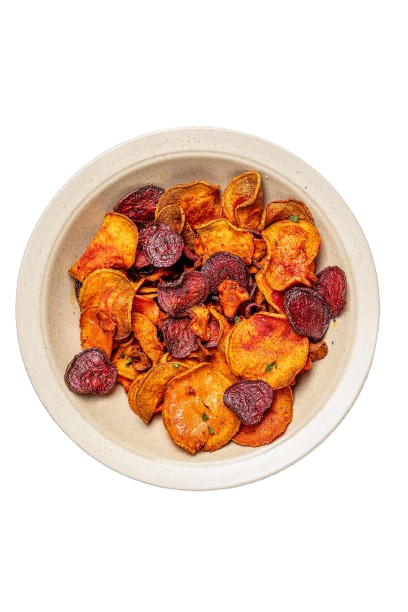
Veggie chips are savory snacks made from sliced root vegetables or extruded vegetable powders. Calories in veggie chips vary by portion size, with a small serving (28g or 1oz) containing 139 calories. Veggie chips calories increase with size, as a medium serving (57g or 2oz) has 282 calories and a large serving (85g or 3oz) provides 421 calories. A single serving of Terra Original Chips (28g or 1oz) has 150 calories, while a serving of Sensible Portions Garden Veggie Straws (28g or 1oz) provides 130 calories. A standard 100g portion of veggie chips contains 495 calories, while a single veggie chip (2g) contains 10 calories.
An analysis of the veggie chips nutrition facts reveals a food high in fat and carbohydrates, with a large serving (85g or 3oz) providing 4g of protein (8% DV), 22.6g of fat (29% DV), and 50.3g of carbohydrates (18% DV), including 256.7mg of sodium. The production method dictates the nutrient density, and freeze-dried vegetable crisps are the lowest in calories at 350 calories per 100g because the process removes water without adding oil. Whole sliced root vegetables contain more fiber compared to traditional potato chips due to the retention of fibrous skins. The vegetables provide phytochemicals, and a study by Slavin, J. L., & Lloyd, B. (2012) highlights that plant-derived compounds contribute to reducing oxidative stress.
Global availability relies on root vegetable production, with top producers like China yielding 47 million tonnes of sweet potatoes in 2022. The United States imported over $3.5 billion in prepared vegetable snacks during the same year. This savory snack serves as a crunchy element in at least 15 distinct dessert preparations, such as Chocolate Covered Veggie Chips, and as a side dish in 15 different culinary traditions, including American fast-casual sandwiches and burgers. Economic factors have driven costs upward. A standard bag of premium root chips rose from under $3.00 in the early 2000s to over $5.50 after 2020. Menu prices reflect this trend, as a bag of Terra Exotic Vegetable Chips at Au Bon Pain moved from $1.49 to between $1.58 and $2.69, while an Ahi Poke dish with Taro Chips at BJ's Restaurant climbed from $10.95 to between $14.95 and $18.49.
Due to the frying process, veggie chips are not considered a healthy snack by nutrition experts because the additives negate the benefits of the raw vegetables. Health authorities like the American Heart Association recommend limiting foods high in sodium and saturated fat, and a large serving of veggie chips contains 256.7mg of sodium and 22.6g of fat. Experts advise limiting intake to one small bag (139 calories) on an infrequent basis. Burning off the 139 calories found in a single small serving requires an energy expenditure equivalent to 14 minutes of running or 18 minutes of swimming.
Veggie Chips nutrition
| Stats | Weight |
|---|---|
| Carbs | 33.7 grams |
| Protein | 2.7 grams |
| Fats | 0 grams |
| Sugars | 3.9 grams |
- Large Veggie Chips Calories (Nutritional Facts)
- Medium Veggie Chips Calories (Nutritional Facts)
- Small Veggie Chips Calories (Nutritional Facts)
- Raw Veggie Chips Nutrition
- Sodium in Veggie Chips
- Potassium in Veggie Chips
- Sugar in Veggie Chips
- Fiber in Veggie Chips
- Protein in Veggie Chips
- Carbs in Veggie Chips
- Fat in Veggie Chips
- Vitamins in Veggie Chips
- Minerals in Veggie Chips
Large Veggie Chips Calories (Nutritional Facts)
A large single serving bag of veggie chips (85g or 3oz) contains 421 calories, 4g of protein, 22.6g of fat, 50.3g of carbohydrates, 6.6g of fiber, 5.9g of sugar, and 256.7mg of sodium.
A medium single serving bag of veggie chips (57g or 2oz) provides 282 calories, 2.7g of protein, 15.1g of fat, 33.7g of carbohydrates, 4.4g of fiber, 3.9g of sugar, and 172.1mg of sodium.
A small single serving bag of veggie chips (28g or 1oz) contains 139 calories, 1.3g of protein, 7.4g of fat, 16.6g of carbohydrates, 2.2g of fiber, 1.9g of sugar, and 84.6mg of sodium.
Veggie chips are a cooked product made by frying or baking sliced vegetables, so the nutritional profile differs from the raw vegetable state due to the addition of oil and the removal of water content.
A large single serving bag of veggie chips (85g) contains 256.7mg of sodium (11% DV). A medium single serving bag (57g) has 172.1mg of sodium (7% DV). A small single serving bag (28g) contains 84.6mg of sodium (4% DV). A single veggie chip (2g) contains 6mg of sodium (0% DV), while a 100-calorie package (20g) has 60.4mg of sodium (3% DV).
A large single serving bag of veggie chips (85g) contains 894.2mg of potassium (19% DV). A medium single serving bag (57g) has 599.6mg of potassium (13% DV). A small single serving bag (28g) contains 294.6mg of potassium (6% DV). A single veggie chip (2g) contains 21mg of potassium (0% DV), and a 100-calorie package (20g) contains 210.4mg of potassium (4% DV).
A large single serving bag of veggie chips (85g) contains 5.9g of sugar (12% DV). A medium single serving bag (57g) has 3.9g of sugar (8% DV). A small single serving bag (28g) contains 1.9g of sugar (4% DV). A single veggie chip (2g) contains 0.14g of sugar (0% DV), whereas a 100-calorie package (20g) contains 1.4g of sugar (3% DV).
A large single serving bag of veggie chips (85g) provides 6.6g of dietary fiber (24% DV). A medium single serving bag (57g) has 4.4g of fiber (16% DV). A small single serving bag (28g) contains 2.2g of fiber (8% DV). A single veggie chip (2g) provides 0.16g of fiber (1% DV), and a 100-calorie package (20g) provides 1.6g of fiber (6% DV).
A large single serving bag of veggie chips (85g) provides 4g of protein (8% DV). A medium single serving bag (57g) has 2.7g of protein (5% DV). A small single serving bag (28g) contains 1.3g of protein (3% DV). A single veggie chip (2g) contains 0.09g of protein (0% DV), while a 100-calorie package (20g) contains 0.94g of protein (2% DV).
A large single serving bag of veggie chips (85g) contains 50.3g of carbohydrates (18% DV). A medium single serving bag (57g) has 33.7g of carbohydrates (12% DV). A small single serving bag (28g) contains 16.6g of carbohydrates (6% DV). A single veggie chip (2g) contains 1.2g of carbohydrates (0% DV), and a 100-calorie package (20g) contains 11.8g of carbohydrates (4% DV).
A large single serving bag of veggie chips (85g) contains 22.6g of total fat (29% DV). A medium single serving bag (57g) has 15.1g of total fat (19% DV). A small single serving bag (28g) contains 7.4g of total fat (10% DV). A single veggie chip (2g) contains 0.53g of total fat (1% DV), whereas a 100-calorie package (20g) contains 5.3g of total fat (7% DV).
A large single serving bag of veggie chips (85g) provides 7.2mg of Vitamin C (8% DV). A medium single serving bag (57g) provides 4.8mg of Vitamin C (5% DV). A small single serving bag (28g) provides 2.4mg of Vitamin C (3% DV). A single veggie chip (2g) provides 0.17mg of Vitamin C (0% DV), and a 100-calorie package (20g) provides 1.7mg of Vitamin C (2% DV).
A large single serving bag of veggie chips (85g) provides 1.4mg of iron (8% DV) and 56.1mg of calcium (4% DV). A medium single serving bag (57g) provides 0.91mg of iron (5% DV) and 37.6mg of calcium (3% DV). A small single serving bag (28g) provides 0.45mg of iron (2% DV) and 18.5mg of calcium (1% DV). A single veggie chip (2g) provides 0.03mg of iron (0% DV) and 1.3mg of calcium (0% DV), while a 100-calorie package (20g) provides 0.32mg of iron (2% DV) and 13.2mg of calcium (1% DV).
Get a Custom Report on Veggie Chips Nutrition Data – Contact Us!
What are the Types of Veggie Chips?
The types of veggie chips are Sliced Root Chips, Extruded Veggie Straws, Kale Chips, and Freeze-Dried Crisps. These variations are distinguished by the processing method and the primary ingredients, which results in different caloric densities and textures. The following chart categorizes these popular snack varieties.
| Type | Description | Calories (per 100g) | Calorie Qualifications |
|---|---|---|---|
|
Sliced Root Chips
|
Thin slices of whole vegetables like sweet potato, beet, and taro, deep-fried in oil. | 535 | The absorption of oil during deep-frying results in the highest calorie density. |
|
Extruded Veggie Straws
|
Made from potato starch and vegetable powders, puffed and fried. | 464 | The airy structure creates a lower weight per volume, but the starch base keeps calories high. |
|
Kale Chips
|
Whole kale leaves coated in a dressing (often nut-based) and baked or dehydrated. | 500 | The dense coating of nuts, seeds, and oil contributes significantly to the calorie count. |
|
Freeze-Dried Crisps
|
Whole vegetables with water removed via sublimation, without added oil. | 350 | The absence of frying oil results in the lowest calorie density among the types. |
What are Desserts With Veggie Chips?
Veggie chips occasionally appear in the dessert category, primarily as a crunchy, salty element in sweet-and-savory combinations or as chocolate-coated confections. The table below lists desserts that incorporate vegetable chips or straws.
| Dish Name | Calories (Estimate per serving) | Type of Dessert | Carbs (g) (Estimate) | Sugar (g) (Estimate) | Protein (g) (Estimate) | Fat (g) (Estimate) | Cuisine | Restaurants |
|---|---|---|---|---|---|---|---|---|
|
Chocolate Covered Veggie Chips
|
350 | Confection | 40 | 25 | 3 | 20 | American | Jacques Torres Chocolate |
|
Compost Cookie (with chips)
|
280 | Cookie | 35 | 20 | 3 | 14 | American | Milk Bar |
|
Taro Chip Frozen Yogurt Topping
|
200 | Topping/Side | 30 | 15 | 2 | 8 | Asian Fusion | Red Mango |
|
Sweet Potato Chip Cupcake
|
400 | Cake | 50 | 35 | 4 | 20 | American | Sprinkles Cupcakes |
|
Maple Parsnip Chip Sundae
|
550 | Sundae | 70 | 50 | 6 | 25 | Modern American | Farm-to-Table Bistros |
|
Chocolate Fondue with Chip Dippers
|
450 | Fondue | 55 | 40 | 4 | 22 | Swiss/American | The Melting Pot |
|
Salted Caramel & Chip Shake
|
600 | Beverage | 80 | 65 | 10 | 25 | American | Sonic Drive-In |
|
Beet Chip Brownie
|
350 | Brownie | 45 | 30 | 4 | 18 | Health/Fusion | Whole Foods Market Bakery |
|
Apple Chip & Caramel Dip
|
250 | Fruit/Dip | 40 | 30 | 2 | 8 | American | Applebee's |
|
Taro Boba Tea with Chip Garnish
|
350 | Beverage | 60 | 40 | 2 | 10 | Taiwanese | Kung Fu Tea |
|
Veggie Straw Marshmallow Treat
|
200 | Bar | 30 | 15 | 1 | 8 | American | Starbucks |
|
Cinnamon Spiced Sweet Potato Chips
|
220 | Snack/Dessert | 30 | 10 | 2 | 10 | American | Panera Bread |
|
Yogurt Parfait with Veggie Crunch
|
300 | Parfait | 45 | 25 | 10 | 8 | American | Au Bon Pain |
|
Chocolate Drizzled Popcorn & Chips
|
280 | Snack Mix | 35 | 15 | 3 | 14 | American | AMC Theatres |
|
Pumpkin Spice Dip with Chips
|
300 | Dip | 35 | 20 | 2 | 16 | American | Trader Joe's (Ready-to-Eat) |
What are the Main Dishes With Veggie Chips?
Veggie chips primarily serve as a side dish or a crunchy topping for savory entrees rather than the central ingredient. The table below displays common meal pairings and dishes utilizing veggie chips.
| Dish Name | Calories (Estimate per serving) | Type of Dish | Carbs (g) (Estimate) | Sugar (g) (Estimate) | Protein (g) (Estimate) | Fat (g) (Estimate) | Cuisine | Restaurants |
|---|---|---|---|---|---|---|---|---|
|
Turkey Sandwich with Veggie Chips
|
650 | Sandwich/Side | 60 | 8 | 30 | 25 | American | Panera Bread |
|
Tuna Poke Bowl with Taro Chips
|
550 | Bowl | 50 | 10 | 25 | 20 | Hawaiian/Fusion | Yard House |
|
Veggie Burger with Chip Side
|
700 | Burger/Side | 75 | 12 | 20 | 30 | American | Red Robin |
|
Chicken Salad with Chip Scoop
|
450 | Salad | 25 | 6 | 25 | 30 | American | Jason's Deli |
|
Tomato Soup with Veggie Straws
|
300 | Soup/Side | 40 | 12 | 8 | 10 | American | Au Bon Pain |
|
Club Sandwich with Root Chips
|
800 | Sandwich/Side | 70 | 10 | 35 | 40 | American | McAlister's Deli |
|
Hummus Plate with Veggie Chips
|
400 | Appetizer | 35 | 5 | 12 | 22 | Mediterranean | Zoe's Kitchen |
|
Grilled Cheese with Veggie Chips
|
600 | Sandwich/Side | 50 | 6 | 18 | 35 | American | Melt Shop |
|
Ahi Tuna Nachos (Wonton/Taro)
|
500 | Appetizer | 40 | 8 | 20 | 25 | Fusion | Bj's Restaurant & Brewhouse |
|
Wrap with Veggie Straws Side
|
550 | Wrap/Side | 55 | 6 | 20 | 25 | American | Tropical Smoothie Cafe |
|
Beet Salad with Chip Garnish
|
350 | Salad | 25 | 15 | 8 | 22 | Modern American | Cheesecake Factory |
|
Fish and Chips (Root Veg Variation)
|
900 | Entree | 80 | 10 | 25 | 50 | British/American | Bonefish Grill |
|
Vegan Bowl with Sweet Potato Chips
|
500 | Bowl | 60 | 12 | 15 | 18 | Vegan | Veggie Grill |
|
Roast Beef Sandwich with Chips
|
750 | Sandwich/Side | 55 | 5 | 30 | 35 | American | Arby's |
|
Spinach Dip with Veggie Chips
|
600 | Appetizer | 30 | 4 | 12 | 45 | American | Houston's |
What Cuisines Prefer Veggie Chips the Most?
Veggie chips function as a modern snack food and garnish across various culinary traditions, particularly those emphasizing health-conscious or fusion elements. The table below details the cuisines that frequently incorporate this item.
| Cuisine | Dish | Types of Veggie Chips | Calories (Estimate) | Restaurant(s) |
|---|---|---|---|---|
|
American (Fast Casual)
|
Sandwich Side | Veggie Straws/Root Chips | 130-150 | Panera Bread |
|
Hawaiian
|
Poke Bowl Topping | Taro/Sweet Potato | 100-150 | Poke Bar |
|
Californian
|
Salad Garnish | Beet/Carrot Chips | 80-120 | Sweetgreen |
|
Japanese (Fusion)
|
Tuna Tartare Garnish | Lotus Root/Taro | 100-150 | Nobu |
|
Vegan/Vegetarian
|
Hummus Dippers | Mixed Root Chips | 150-200 | Veggie Grill |
|
Modern American
|
Bar Snack | Mixed Root Chips | 150-200 | Yard House |
|
Mediterranean (Fusion)
|
Dip Accompaniment | Sweet Potato/Beet | 150-200 | Cava |
|
British (Modern)
|
Parsnip Crisps | Parsnip | 150-200 | Pret A Manger |
|
Airline/Travel
|
In-Flight Snack | Mixed Root Chips | 130-150 | JetBlue (Terra Chips) |
|
School/Cafeteria
|
Lunch Side | Veggie Straws | 130 | Sodexo Cafeterias |
|
French (Bistro)
|
Steak Tartare Garnish | Potato/Root Chips | 100-150 | Mon Ami Gabi |
|
Taiwanese
|
Tea Snack | Sweet Potato/Taro | 150-200 | 85°C Bakery Cafe |
|
Latin American (Fusion)
|
Plantain/Yuca Chip Side | Yuca/Plantain | 150-200 | Pollo Tropical |
|
Caribbean
|
Jerk Chicken Side | Plantain/Sweet Potato | 150-250 | Bahama Breeze |
|
Australian (Cafe)
|
Avo Toast Topping | Beet/Kale Chips | 100-150 | Bluestone Lane |
Which Countries Produce the Most Veggie Chips?
The top producers of sweet potatoes and root vegetables, which are the main components of veggie chips, are China, Malawi, and Tanzania. Specific global production data for finished processed veggie chips is not tracked as a separate category. The table below shows the production quantity of sweet potatoes in key countries.
| Country | 2003 | 2008 | 2013 | 2018 | 2019 | 2020 | 2021 | 2022 |
|---|---|---|---|---|---|---|---|---|
| China | 78,000,000 | 75,000,000 | 73,000,000 | 53,000,000 | 52,000,000 | 49,000,000 | 48,000,000 | 47,000,000 |
| Malawi | 1,800,000 | 2,500,000 | 3,800,000 | 5,500,000 | 5,800,000 | 6,200,000 | 6,500,000 | 7,000,000 |
| Tanzania | 1,000,000 | 1,400,000 | 3,200,000 | 4,000,000 | 4,200,000 | 4,400,000 | 4,600,000 | 4,800,000 |
| Nigeria | 2,800,000 | 3,300,000 | 3,500,000 | 4,000,000 | 4,100,000 | 3,900,000 | 3,800,000 | 3,700,000 |
| United States | 700,000 | 850,000 | 1,100,000 | 1,200,000 | 1,400,000 | 1,500,000 | 1,600,000 | 1,700,000 |
Which Countries Consume the Most Veggie Chips?
The top consumers of savory vegetable snacks based on import volumes are the United States, Japan, and the United Kingdom. Consumption data for veggie chips is best represented by import values for the broader category of prepared or preserved vegetables, which includes chips and crisps. The table below shows import values for this category in key markets.
| Country | 2003 | 2008 | 2013 | 2018 | 2019 | 2020 | 2021 | 2022 |
|---|---|---|---|---|---|---|---|---|
| United States | 900,000 | 1,400,000 | 1,900,000 | 2,500,000 | 2,600,000 | 2,700,000 | 3,100,000 | 3,500,000 |
| Japan | 800,000 | 1,100,000 | 1,300,000 | 1,500,000 | 1,550,000 | 1,500,000 | 1,600,000 | 1,700,000 |
| United Kingdom | 600,000 | 900,000 | 1,100,000 | 1,300,000 | 1,350,000 | 1,400,000 | 1,500,000 | 1,600,000 |
| Germany | 500,000 | 800,000 | 1,000,000 | 1,200,000 | 1,250,000 | 1,300,000 | 1,400,000 | 1,500,000 |
| France | 400,000 | 600,000 | 800,000 | 950,000 | 1,000,000 | 1,050,000 | 1,150,000 | 1,250,000 |
How Do Prices of Veggie Chips-Including Dishes Change?
The cost of veggie chips, specifically root vegetable and kale varieties, on fast-casual and restaurant menus has risen over the past ten years. This increase stems from higher wholesale costs for specialty vegetables like taro and parsnips, as well as increased packaging and labor expenses. This upward price trend is evident on the menus of well-known food service chains.
| Restaurant | Dish | Old Price (Year) | Current Price (2024/2025) |
|---|---|---|---|
| Au Bon Pain | Terra Exotic Vegetable Chips (Bag) | $1.49 (2013) | $1.58 - $2.69 |
| BJ's Restaurant | Ahi Poke (with Taro Chips) | $10.95 (2015) | $14.95 - $18.49 |
| JetBlue (EatUp) | Pick-Me-Up Box (with Veggie Chips) | $6.00 (2014) | $9.00 - $10.00 |
What is the Veggie Chips Calorie for 100 Grams?
A 100g serving of veggie chips contains 495 calories.
What is the Veggie Chips Calorie for 1 KG?
One kilogram (1000g) of veggie chips contains 4,950 calories.
What is the Calorie of 1 Veggie Chips?
A single veggie chip (2g) contains 10 calories, while a 100-calorie package (20g) provides 99 calories.
What are the Health Benefits of Veggie Chips?
The nutritional value of veggie chips depends heavily on the production method and the specific vegetables utilized. A summary of these positive attributes is outlined below.
- Provides Dietary Fiber: The use of whole root vegetables like sweet potatoes, beets, and parsnips retains a portion of the plant's natural fiber content, which aids in digestion. A review by Anderson, J. W., et al. (2009), "Health benefits of dietary fiber," confirms that consuming fiber-rich foods supports gastrointestinal health and helps regulate blood sugar levels.
- Contains Antioxidants: The pigments in colorful vegetables, such as the beta-carotene in sweet potatoes or betalains in beets, offer antioxidant properties even after processing. A study by Slavin, J. L., & Lloyd, B. (2012), "Health benefits of fruits and vegetables," highlights that phytochemicals found in plant foods contribute to reducing oxidative stress and inflammation.
- Source of Potassium: Root vegetables are naturally high in potassium, a mineral that remains present in the finished chip product. A study by Weaver, C. M. (2013), "Potassium and health," indicates that adequate potassium intake is crucial for maintaining proper muscle function and offsetting the effects of sodium on blood pressure.
What are the Downsides of Veggie Chips?
The snack's manufacturing process often involves deep-frying and heavy seasoning, presenting specific health liabilities. An analysis of these dietary concerns is presented here.
- High Sodium Content: Manufacturers add significant amounts of salt to enhance the flavor of the dried vegetables, leading to excessive sodium consumption. A comprehensive review by He, F. J., & MacGregor, G. A. (2010), "Reducing population salt intake worldwide: from evidence to implementation," links high dietary sodium intake to elevated blood pressure and an increased risk of cardiovascular disease. A healthier alternative is raw vegetable sticks served with hummus. A suggested amount is to limit consumption to one small handful (28g) on an infrequent basis.
- Formation of Acrylamide: The process of frying starchy vegetables at high temperatures results in the formation of acrylamide, a potential carcinogen. A study by Lineback, D. R., et al. (2012), "Acrylamide in foods: a review of the science and future considerations," notes that root vegetable chips can contain higher levels of acrylamide compared to other foods due to the presence of specific amino acids and sugars.
Are Veggie Chips Good for You?
No, veggie chips are not a healthy food because the industrial processing removes water while adding excessive calories and salt, creating a product with low satiety and high energy density. The snack's impact on cardiovascular health is detrimental. The consumption of ultra-processed foods is linked to higher risks of cardiovascular events. A prospective cohort study by Srour, B., et al. (2019), "Ultra-processed food intake and risk of cardiovascular disease," found a direct association between an increased proportion of ultra-processed foods in the diet and higher risks of cardiovascular and cerebrovascular diseases. For metabolic health, the combination of refined starch and fat disrupts appetite regulation. A review by Monteiro, C. A., et al. (2011), "Increasing consumption of ultra-processed foods and likely impact on human health," highlights that these products are engineered to be hyper-palatable and habit-forming, leading to excessive energy intake and metabolic disorders. For cellular health, the high-temperature frying of root vegetables creates harmful chemical compounds. A systematic review by Virk-Baker, M. K., et al. (2014), "Dietary Acrylamide and Human Cancer: A Systematic Review of Literature," discusses the potential risks associated with acrylamide, a chemical formed when starchy vegetables are fried at high temperatures, which is present in significant levels in root vegetable chips.
Are Veggie Chips Considered a Healthy Snack?
No, veggie chips are not considered a healthy snack by nutrition experts due to the "health halo" effect that disguises a nutrient profile similar to standard potato chips. The perception of these products as "healthy" leads to overconsumption. A study by Wansink, B., & Chandon, P. (2006), "Can 'Low-Fat' Nutrition Labels Lead to Obesity?," found that consumers tend to eat significantly more of a snack food when the packaging implies health benefits, effectively doubling the calorie intake. Furthermore, the processing level classifies many veggie chips as ultra-processed foods. A randomized controlled trial by Hall, K. D., et al. (2019), "Ultra-Processed Diets Cause Excess Calorie Intake and Weight Gain," demonstrated that diets high in ultra-processed foods lead to increased energy intake and weight gain compared to unprocessed diets. The nutrient density is also compromised compared to the raw source. A study by Rickman, J. C., et al. (2007), "Nutritional comparison of fresh, frozen and canned fruits and vegetables," suggests that heavy thermal processing can degrade heat-sensitive vitamins like Vitamin C. A suggested consumption rate is to treat the item as a treat rather than a vegetable serving, limiting intake to once a week.
How Do Calories Change According to Veggie Chips Types?
The cooking method and the addition of oil determine the calorie count of a veggie chip variety. Sliced root chips have the highest calorie value at 535 calories per 100 grams, a consequence of the deep-frying process where the vegetable absorbs a significant amount of oil. Freeze-dried crisps contain the lowest calorie value at 350 calories per 100 grams, representing a version prepared without added fats. Extruded veggie straws fall in the middle, with the airy texture masking a high carbohydrate and fat density derived from refined starches and frying oil. The presence of nut-based coatings on kale chips can also elevate the caloric density to levels comparable to fried options.
Which Type of Veggie Chips is the Lowest in Calories?
Freeze-dried vegetable crisps are the lowest in calories because the production method removes water without adding fat. A standard serving of freeze-dried peas or corn relies solely on the caloric content of the vegetable itself, whereas fried varieties absorb oil, which more than doubles the energy density. A comparison of nutritional labels reveals that freeze-dried options contain 30% to 40% fewer calories per gram than deep-fried counterparts.
Do Veggie Chips Contain More Fiber Compared to Traditional Chips?
Yes, veggie chips made from whole sliced root vegetables contain more fiber compared to traditional potato chips. A standard serving of mixed root chips provides 3 to 4 grams of fiber, derived from the fibrous skins and flesh of beets, parsnips, and sweet potatoes. In contrast, a serving of regular potato chips provides 1 gram of fiber, as the white potato used is often peeled and contains less inherent fiber than the root vegetables used in mixed blends. However, extruded veggie straws contain minimal fiber, comparable to standard potato chips, due to the use of refined starches.
What is the Origin of Veggie Chips?
The history of veggie chips traces back to the culinary innovation of the 1990s in New York City. Chefs Dana Sinkler and Alexander Dzieduszycki developed a method to fry exotic root vegetables like taro, parsnip, and yuca to create a colorful, gourmet alternative to the standard potato chip. This creation launched under the brand name Terra Chips in 1990, transforming the snack aisle by introducing diverse textures and flavors. The concept expanded rapidly as health-conscious consumers sought alternatives to corn and potato snacks, leading to the development of extruded "veggie straws" and mass-market root vegetable blends by major food corporations. The product category now encompasses freeze-dried varieties and baked options, reflecting a continuous evolution in food processing technology.
Explore More Snacks
Discover more Snacks with detailed nutrition facts, calorie counts, vitamins, minerals, and health benefits. Compare similar foods, serving sizes, macronutrients, and key nutrients to find the best option for your diet and nutrition goals.
 Apple Chips calories
 Banana Chips calories
 Chips calories
 Corn Nuts calories
 Crackers calories
 Granola Bar calories
 Kale Chips calories
 Nachos calories
 Pita Chips calories
 Plantain Chips calories
 Pop Chips calories
 Popcorn calories