Calories and Nutritions in Wasabi Peas
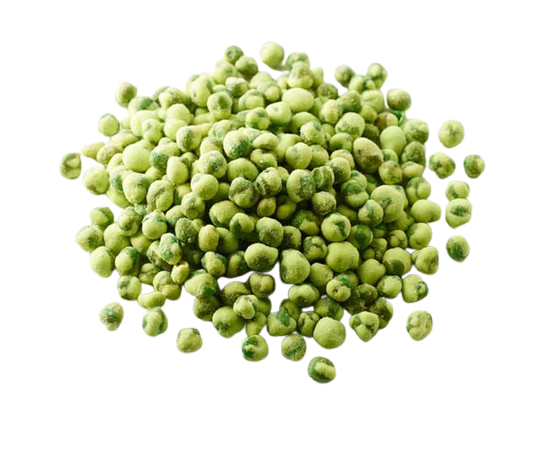
Dried wasabi peas are a snack food made from roasted or fried peas. The wasabi peas calories for a 100g serving of dried wasabi peas are 431 calories while a small one-ounce serving (28g) has 120 calories. A one-ounce serving of Hapi Wasabi Peas or Trader Joe's Wasabi Peas contains 130 calories.
The wasabi peas nutrition profile is notable for being a source of plant-based protein and fiber, with a one-ounce serving providing 3.4g of fiber (12% DV). A study confirmed that pulses like peas are nutrient-dense foods that can play a role in healthy diets (Dahl, W. J., et al., 2012). While the protein and fiber can promote satiety, aiding in weight management, the snack's high carbohydrate content makes wasabi peas unsuitable for a ketogenic diet. Major health benefits come from this nutrient density, including a supply of iron and potassium. A one-ounce serving delivers 6% of the DV for iron and 3% of the DV for potassium, supporting oxygen transport and electrolyte balance.
The dry peas used to make the snack are primarily sourced from top-producing countries like Canada and the Russian Federation, with major consumer markets in Japan and the United States. Reflecting rising ingredient and production costs, the price for wasabi peas has gradually increased over the past two decades, with a 5-ounce bag in the U.S. climbing from $2.29 in 2010 to nearly $3.50 in recent years.
A popular snack in both Asian and American markets, wasabi peas are commonly enjoyed on their own, added to snack mixes, or served with drinks. A sensible consumption amount is a one-ounce serving (28g). This portion contains 120 calories and requires an equivalent of 12 minutes of running or 15 minutes of swimming to burn.
Wasabi Peas nutrition
| Stats | Weight |
|---|---|
| Carbs | 17 grams |
| Protein | 5 grams |
| Fats | 0 grams |
| Sugars | 2 grams |
- Large Wasabi Peas Calories (Nutritional Facts)
- Medium Wasabi Peas Calories (Nutritional Facts)
- Small Wasabi Peas Calories (Nutritional Facts)
- Dried Wasabi Peas Calories (Nutritional Facts)
- Raw Wasabi Peas Nutrition
- Sodium in Wasabi Peas
- Potassium in Wasabi Peas
- Sugar in Wasabi Peas
- Fiber in Wasabi Peas
- Protein in Wasabi Peas
- Carbs in Wasabi Peas
- Fat in Wasabi Peas
- Vitamins in Wasabi Peas
- Minerals in Wasabi Peas
Large Wasabi Peas Calories (Nutritional Facts)
A large serving of wasabi peas, equivalent to one cup (130g), has 560 calories, 20g of protein, 10g of fat, 96g of carbohydrates, 16g of fiber, 12g of sugar, and 680mg of sodium.
A medium half-cup serving of wasabi peas (65g) contains 280 calories, 10g of protein, 5g of fat, 48g of carbohydrates, 8g of fiber, 6g of sugar, and 340mg of sodium. A medium 100g (3.5oz) serving of wasabi peas provides 431 calories, 15.4g of protein, 7.7g of fat, 73.8g of carbohydrates, 12.3g of fiber, 9.2g of sugar, and 523mg of sodium.
A small serving of wasabi peas, or one ounce (28g), contains 120 calories, 4.3g of protein, 2.2g of fat, 21g of carbohydrates, 3.4g of fiber, 2.6g of sugar, and 146mg of sodium. A smaller one-tablespoon serving (8g) of wasabi peas has 34 calories, 1.2g of protein, 0.6g of fat, 5.9g of carbohydrates, 1g of fiber, 0.7g of sugar, and 42mg of sodium.
Dried wasabi peas are the standard form of this snack. A 100g serving of dried wasabi peas contains 431 calories, 15.4g of protein, 7.7g of fat, 73.8g of carbohydrates, 12.3g of fiber, 9.2g of sugar, and 523mg of sodium. A one-cup serving (130g) of dried wasabi peas offers 560 calories, 20g of protein, 10g of fat, 96g of carbohydrates, 16g of fiber, 12g of sugar, and 680mg of sodium.
Wasabi peas are not consumed raw. They are made from dried peas that are roasted or fried and coated. The nutritional information provided is for the finished, dried snack product.
A large one-cup serving (130g) of wasabi peas contains 680mg of sodium (30% DV). A medium half-cup serving (65g) of wasabi peas has 340mg of sodium (15% DV). A medium 100g serving of wasabi peas contains 523mg of sodium (23% DV). A small one-ounce serving (28g) of wasabi peas has 146mg of sodium (6% DV).
A large one-cup serving (130g) of wasabi peas contains 754mg of potassium (16% DV). A medium half-cup serving (65g) of wasabi peas has 377mg of potassium (8% DV). A medium 100g serving of wasabi peas contains 580mg of potassium (12% DV). A small one-ounce serving (28g) of wasabi peas has 162mg of potassium (3% DV).
A large one-cup serving (130g) of wasabi peas contains 12g of sugar. A medium half-cup serving (65g) of wasabi peas has 6g of sugar. A medium 100g serving of wasabi peas contains 9.2g of sugar. A small one-ounce serving (28g) of wasabi peas has 2.6g of sugar.
A large one-cup serving (130g) of wasabi peas contains 16g of fiber (57% DV). A medium half-cup serving (65g) of wasabi peas has 8g of fiber (29% DV). A medium 100g serving of wasabi peas contains 12.3g of fiber (44% DV). A small one-ounce serving (28g) of wasabi peas has 3.4g of fiber (12% DV).
A large one-cup serving (130g) of wasabi peas contains 20g of protein (40% DV). A medium half-cup serving (65g) of wasabi peas has 10g of protein (20% DV). A medium 100g serving of wasabi peas contains 15.4g of protein (31% DV). A small one-ounce serving (28g) of wasabi peas has 4.3g of protein (9% DV).
A large one-cup serving (130g) of wasabi peas contains 96g of carbohydrates (35% DV). A medium half-cup serving (65g) of wasabi peas has 48g of carbohydrates (17% DV). A medium 100g serving of wasabi peas contains 73.8g of carbohydrates (27% DV). A small one-ounce serving (28g) of wasabi peas has 21g of carbohydrates (8% DV).
A large one-cup serving (130g) of wasabi peas contains 10g of total fat (13% DV). A medium half-cup serving (65g) of wasabi peas has 5g of total fat (6% DV). A medium 100g serving of wasabi peas contains 7.7g of total fat (10% DV). A small one-ounce serving (28g) of wasabi peas has 2.2g of total fat (3% DV).
A large one-cup serving (130g) of wasabi peas provides Vitamin A (20% DV) and Vitamin C (2% DV). A medium 100g serving of wasabi peas provides Vitamin A (15% DV) and Vitamin C (2% DV). A small one-ounce serving (28g) of wasabi peas provides Vitamin A (4% DV).
A large one-cup serving (130g) of wasabi peas provides Iron (30% DV) and Calcium (8% DV). A medium 100g serving of wasabi peas provides Iron (23% DV) and Calcium (6% DV). A small one-ounce serving (28g) of wasabi peas provides Iron (6% DV) and Calcium (2% DV).
Get a Custom Report on Wasabi Peas Nutrition Data – Contact Us!
What are the Types of Wasabi Peas?
The types of wasabi peas are roasted wasabi, and fried wasabi. The table below outlines the features of these common types.
| Type | Description | Calories (per 100g) | Calorie Qualifications |
|---|---|---|---|
|
Roasted Wasabi Peas
|
Dried green peas that are roasted in an oven and then coated with a wasabi-flavored mixture. | 420 | Roasting uses dry heat, resulting in a lower fat and calorie content compared to fried versions. |
|
Fried Wasabi Peas
|
Dried green peas that are deep-fried in oil and then coated with a wasabi-flavored mixture. | 450 | The frying process adds a significant amount of fat, which increases the overall calorie count. |
What are the Main Dishes With Wasabi Peas?
Wasabi peas are primarily consumed as a standalone snack and are not a common ingredient in main dishes. The peas can be crushed and used as a crunchy, spicy topping for salads, noodle dishes, or fish to add texture and flavor. The table below presents a selection of dishes where wasabi peas can be used as a garnish.
| Dish Name | Calories (Estimate per serving, with garnish) | Type of Wasabi Peas | Carps (g) (Estimate) | Sugar (g) (Estimate) | Protein (g) (Estimate) | Fat (g) (Estimate) | Cuisine | Restaurants |
|---|---|---|---|---|---|---|---|---|
|
Tuna Poke Bowl with Crushed Wasabi Peas
|
580 | Roasted or Fried | 55 | 10 | 30 | 28 | Hawaiian/Japanese Fusion | Sweetfin (restaurant chain) |
|
Asian Noodle Salad with Wasabi Pea Garnish
|
490 | Roasted | 60 | 12 | 15 | 20 | Pan-Asian | Wagamama |
|
Seared Ahi Tuna with Wasabi Pea Crust
|
520 | Roasted | 25 | 4 | 45 | 28 | New American | Roy's Restaurant (restaurant chain) |
|
Spicy Edamame with Wasabi Pea Dust
|
310 | Roasted | 20 | 6 | 18 | 18 | Japanese-American | P.F. Chang's |
|
California Roll with Wasabi Pea Topping
|
350 | Roasted | 45 | 8 | 10 | 12 | Japanese-American | Nobu |
What Cuisines Do Prefer Wasabi Peas Most?
From Japanese pubs to American snack aisles, wasabi peas are a popular item in several food cultures. The culinary styles that prominently feature wasabi peas is shown in the table below.
| Cuisine | Dish/Use | Types of Wasabi Peas Used | Calories (Estimate) | Restaurant(s) |
|---|---|---|---|---|
|
Japanese
|
Otsumami (Snack with drinks) | Roasted, Fried | 130 per oz | Izakaya Hachi (Torrance, CA) |
|
American Snack Food
|
Standalone Snack, Trail Mixes | Roasted, Fried | 130 per oz | Trader Joe's (retail grocery) |
|
Pan-Asian Fusion
|
Garnish for Salads/Noodles | Roasted | Varies | Wagamama |
|
Hawaiian Fusion
|
Topping for Poke Bowls | Roasted, Fried | Varies | Aloha Poke Co. |
|
Bar/Pub Culture
|
Bar Snack | Fried | 130 per oz | Yard House |
Which Countries Produce the Most Wasabi Peas?
The top producers of dry peas, which are the main component of wasabi peas, are Canada, the Russian Federation, and China. Global production data for the finished snack product is not tracked in the same comprehensive way as the raw agricultural commodity. The table below shows the production quantity of dry peas in key countries.
| Country | 2013 | 2016 | 2018 | 2019 | 2020 | 2021 | 2022 |
|---|---|---|---|---|---|---|---|
| Canada | 3,892,500 | 4,832,800 | 3,581,500 | 4,233,600 | 4,594,000 | 2,258,000 | 3,420,000 |
| Russian Federation | 1,733,560 | 2,298,450 | 2,336,780 | 2,296,870 | 2,741,000 | 3,176,000 | 3,617,000 |
| China | 1,550,000 | 1,600,000 | 1,450,000 | 1,400,000 | 1,350,000 | 1,300,000 | 1,250,000 |
| United States | 745,840 | 1,114,920 | 693,540 | 978,410 | 1,008,350 | 660,420 | 985,000 |
| India | 880,000 | 910,000 | 950,000 | 930,000 | 900,000 | 880,000 | 850,000 |
| France | 458,000 | 580,000 | 510,000 | 550,000 | 530,000 | 490,000 | 520,000 |
Which Countries Consume the Most Wasabi Peas?
The top consumers of wasabi peas are Japan, the United States, and other countries in Asia and Europe where the snack has gained popularity. Consumption data for a specific snack product like wasabi peas is best represented by import and market size data for savory snacks. The table below shows the import value of prepared foods obtained by the swelling or roasting of cereals or cereal products, a category that includes snacks like wasabi peas.
| Country | 2018 | 2019 | 2020 | 2021 | 2022 |
|---|---|---|---|---|---|
| United States | 2,540,000 | 2,650,000 | 2,800,000 | 3,100,000 | 3,400,000 |
| Germany | 1,200,000 | 1,250,000 | 1,300,000 | 1,400,000 | 1,500,000 |
| United Kingdom | 950,000 | 980,000 | 1,020,000 | 1,100,000 | 1,180,000 |
| Canada | 880,000 | 910,000 | 950,000 | 1,050,000 | 1,150,000 |
| France | 750,000 | 780,000 | 810,000 | 880,000 | 950,000 |
| Japan | 620,000 | 640,000 | 660,000 | 700,000 | 740,000 |
How Do Prices of Wasabi Peas-Including Dishes Change?
The prices on restaurant menus for dishes that use wasabi peas as a garnish have climbed over the past ten years, a movement that mirrors rising food costs and overall operational expenses. Fusion and New American restaurants that use wasabi peas for a crunchy, spicy topping show these price adjustments on menus.
| Restaurant | Dish | Old Price (Year) | Current Price (2025) |
|---|---|---|---|
| Roy's Restaurant | Seared Ahi Tuna (with wasabi pea element) | $35.00 (2016) | $49.00 - $52.00 |
| P.F. Chang's | Ahi Tuna Tataki (garnish may vary) | $13.50 (2017) | $18.99 - $20.50 |
| Sweetfin | Build-Your-Own Poke Bowl (Wasabi Peas Topping) | $11.95 (2018) | $16.95 - $20.75 |
| Wagamama | Asian Salad (garnish may vary) | $12.00 (2017) | $15.50 - $19.00 |
| Nobu | Yellowtail Jalapeño (custom garnish) | $24.00 (2014) | $36.00 - $40.00 |
What is the Wasabi Peas Calorie for 100 Grams?
A 100 gram serving of wasabi peas has 431 calories.
What is the Wasabi Peas Calorie for 1 KG?
One kilogram (1000g) of wasabi peas contains 4310 calories.
What is the Calorie of 1 Wasabi Peas?
The calorie of one serving of wasabi peas varies by brand. A one-ounce serving (28g) of Hapi Wasabi Peas contains 130 calories. A one-ounce serving (28g) of Trader Joe's Wasabi Peas has 130 calories. A 30g serving of World Market Wasabi Peas contains 130 calories.
What are the Health Benefits of Wasabi Peas?
The consumption of wasabi peas is linked to several health advantages, supported by scientific evidence. A breakdown of the principal health advantages is provided below.
- Provides Plant-Based Protein and Fiber: Wasabi peas are made from dried peas, a food recognized for its high content of plant-based protein and dietary fiber. Protein is essential for building and repairing tissues, while fiber aids in digestion and promotes a feeling of fullness. A study by Dahl, W. J., et al. (2012), "Review of the health benefits of peas (Pisum sativum L.)," details the significant contribution of peas to dietary protein and fiber intake.
- Source of Micronutrients: Wasabi peas supply essential micronutrients, including iron. Iron is a critical component of hemoglobin, the protein in red blood cells responsible for carrying oxygen throughout the body. A review by Abbaspour, N., et al. (2014), "Review on iron and its importance for human health," explains the vital role of dietary iron in preventing anemia and supporting energy metabolism.
What are the Downsides of Wasabi Peas?
While wasabi peas can be a flavorful snack, a few potential considerations should be noted. A summary of these potential considerations is presented below.
- High in Sodium: Wasabi peas are a savory snack and are high in sodium. A single one-ounce serving can contain over 140mg of sodium. High sodium intake is a major risk factor for developing high blood pressure and cardiovascular disease. A global study by Mozaffarian, D., et al. (2014), "Global sodium consumption and death from cardiovascular causes," confirmed a direct link between high sodium consumption and an increased risk of death from cardiovascular events. An alternative with lower sodium is unsalted, roasted edamame. A daily suggested amount is a one-ounce serving.
- Often Contains Artificial Ingredients: Many commercially available wasabi peas contain artificial colors, such as Yellow 5 and Blue 1, to achieve a vibrant green appearance. Some products also use artificial flavors or corn syrup. A review by Kobylewski, S., & Jacobson, M. F. (2010), "Food dyes: A rainbow of risks," for the Center for Science in the Public Interest, discusses potential health concerns linked to synthetic food dyes. An alternative is to make wasabi peas at home using natural ingredients.
Are Wasabi Peas Good for You?
No, wasabi peas are not inherently a good food choice, because the snack is a processed food that is high in sodium and often contains artificial ingredients. The base ingredient, peas, offers benefits for digestive health through fiber content, which promotes regular bowel movements, a benefit confirmed in a position paper by Dahl, W. J., & Stewart, M. L. (2015), "Health Implications of Dietary Fiber." The wasabi coating contains isothiocyanates, which have been studied for their potential antimicrobial and anti-inflammatory effects. The peas also provide some plant-based protein, which is important for muscle maintenance. A study by Marinangeli, C. P. F., & Curran, J. (2015), "The role of pulses in the diet," highlights the nutritional contribution of pulses like peas. The high sodium content, processing, and potential for artificial additives in many commercial wasabi peas outweigh the nutritional benefits of the peas themselves, making the snack something to be consumed in moderation.
Are Wasabi Peas Good for Weight Loss?
No, wasabi peas are not good for weight loss. While the peas themselves contain protein and fiber, which can promote satiety, the snack is calorie-dense and high in sodium. The high sodium content can lead to water retention, which can mask weight loss and increase bloating. The processing and added ingredients, such as oils and starches, increase the overall calorie count, making wasabi peas easy to overeat. To utilize the benefits of peas for weight loss, a better approach is to consume plain, steamed, or roasted peas without the added sodium and fat.
Are Wasabi Peas Keto?
No, wasabi peas are not keto-friendly. The ketogenic diet is a very low-carbohydrate, high-fat diet that requires limiting carb intake to around 20-50 grams per day to induce a state of ketosis. Wasabi peas are made from peas, which are legumes, and are coated in a starch-based mixture. A small one-ounce serving of wasabi peas contains over 20 grams of net carbohydrates, which would consume nearly the entire daily carb allotment for a person on a strict keto diet. Knowing this is important for anyone following a ketogenic diet, as consuming wasabi peas would prevent or disrupt ketosis.
How Many Wasabi Peas Should You Eat in a Day?
A suggested serving size for wasabi peas is one ounce, which is about a small handful. This portion size allows for enjoying the snack's flavor and crunch in moderation while keeping the intake of calories, sodium, and carbohydrates at a reasonable level. Sticking to a single one-ounce serving helps to prevent overconsumption of the high-sodium and calorie-dense snack, making the food an occasional treat rather than a daily staple.
How Does Calorie Change According to Wasabi Peas Types?
The specific cooking method determines the caloric value of wasabi peas. Fried wasabi peas have the highest calorie count, with around 450 calories per 100g. The deep-frying process involves submerging the peas in oil, which they absorb, increasing the fat and total calorie content. Roasted wasabi peas have a lower calorie count, at around 420 calories per 100g. The roasting process uses dry heat and requires little to no oil, resulting in a leaner final product.
What are the Desserts With Wasabi Peas?
Wasabi peas are a savory snack and are not used as an ingredient in dessert preparations. The pungent, spicy, and salty flavor profile of wasabi peas does not lend the product to sweet dishes.
What is the Origin of Wasabi Peas?
The origin of wasabi peas is in Japan, where the snack is known as "wasabi mame." The product was developed as a popular "otsumami," a type of snack food intended to be eaten alongside alcoholic beverages like beer and sake. The concept combines two traditional Japanese ingredients: green peas and wasabi. Dried green peas are roasted or fried to create a crunchy texture, and then coated with a mixture that includes salt, sugar, and wasabi flavoring. While authentic wasabi is derived from the grated rhizome of the Wasabia japonica plant, most mass-produced wasabi peas use a combination of horseradish, mustard, and green food coloring to mimic the flavor and appearance. The snack gained international popularity in the late 20th century and is now a common item in snack aisles around the world.
Explore More Snacks
Discover more Snacks with detailed nutrition facts, calorie counts, vitamins, minerals, and health benefits. Compare similar foods, serving sizes, macronutrients, and key nutrients to find the best option for your diet and nutrition goals.
 Apple Chips calories
 Banana Chips calories
 Chips calories
 Corn Nuts calories
 Crackers calories
 Granola Bar calories
 Kale Chips calories
 Nachos calories
 Pita Chips calories
 Plantain Chips calories
 Pop Chips calories
 Popcorn calories