Calories and Nutritions in Asiago Cheese
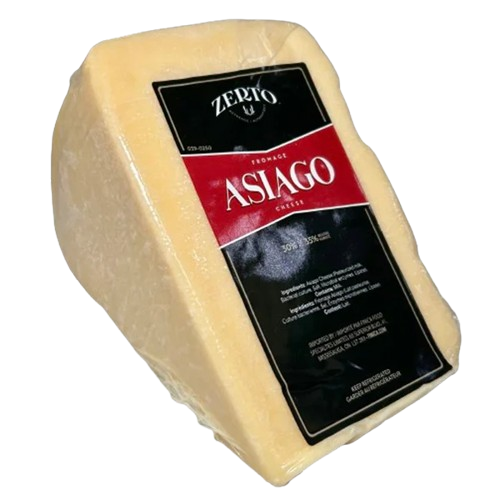
Asiago is a versatile cow's milk cheese from Italy that is popular in Italian and American cuisines. The calories in asiago cheese are high, with a 100 g (3.5 oz) serving of aged Asiago containing 400 calories, while a one-ounce (28.35 g) serving provides 113 calories. A serving of one cup of shredded asiago cheese (113 g or 4 oz) contains 452 calories. The asiago cheese nutrition profile is rich in protein and calcium. A 100 g serving offers 30 g of protein, 30 g of fat (of which 19.6 g is saturated), and 4 g of carbohydrates. It is an outstanding source of calcium, delivering 1143 mg (88% DV), and is also rich in phosphorus (57% DV) and Vitamin B12 (58% DV). Research on fermented dairy products like cheese highlights their role in providing bioavailable nutrients essential for bone health (Gueguen L, Pointillart A. 2000 "The Bioavailability of Dietary Calcium").
The main types of Asiago are "Pressato" (fresh, semi-soft) and "d'Allevo" (aged, hard), with the aged version being more calorie-dense. A healthy intake of hard cheese like Asiago is one to two ounces per day. A one-ounce serving (113 calories) can fit into a balanced diet, contributing significantly to protein and calcium needs. Burning the 113 calories from an ounce of Asiago requires activities such as 10-15 minutes of moderate jogging or 15-20 minutes of brisk walking.
Asiago cheese is a key ingredient in many popular main dishes and is not typically used in desserts. It is famously baked onto the Asiago Bagel at chains like Panera Bread and Einstein Bros. Bagels. It is also a featured cheese in pasta dishes, such as the Asiago Tortelloni Alfredo at Olive Garden, and is a popular topping for salads and pizzas at restaurants like California Pizza Kitchen.
The cheese originated over a thousand years ago on the Asiago Plateau in Northern Italy. Italy remains the exclusive producer of authentic PDO Asiago, with the United States and Canada being top export markets. The price of this premium cheese has risen steadily. A pound of aged Asiago in the US that cost $9.00 to $12.00 in 2004 now retails for $14.00 to as high as $20.00.
Asiago Cheese nutrition
| Stats | Weight |
|---|---|
| Carbs | 1.1 grams |
| Protein | 8.5 grams |
| Fats | 0 grams |
| Sugars | 0 grams |
- Large Asiago Cheese Calories (Nutritional Facts)
- Medium Asiago Cheese Calories (Nutritional Facts)
- Small Asiago Cheese Calories (Nutritional Facts)
- Shredded Asiago Cheese Calories (Nutritional Facts)
- Raw Asiago Cheese Nutrition
- Sodium in Asiago Cheese
- Potassium in Asiago Cheese
- Sugar in Asiago Cheese
- Fiber in Asiago Cheese
- Protein in Asiago Cheese
- Carbs in Asiago Cheese
- Fat in Asiago Cheese
- Vitamins in Asiago Cheese
- Minerals in Asiago Cheese
Large Asiago Cheese Calories (Nutritional Facts)
A large serving of Asiago cheese, considered as one cup of shredded cheese weighing 113 g (4 oz), contains 452 calories. This serving provides 34.0 g of fat, 34.0 g of protein, 4.5 g of carbohydrates, and 0 g of sugar or fiber.
A medium serving of Asiago cheese, considered as one ounce weighing 28.35 g (1 oz), contains 113 calories. This serving size includes 8.5 g of fat, 8.5 g of protein, and 1.1 g of carbohydrates.
A small serving of Asiago cheese, considered as a 1-inch cube weighing 17 g (0.6 oz), contains 68 calories. This portion offers 5.1 g of fat, 5.1 g of protein, and 0.7 g of carbohydrates.
One tablespoon (tbsp) of shredded Asiago cheese, weighing 5 g (0.18 oz), contains 20 calories. This serving provides 1.5 g of fat, 1.5 g of protein, and 0.2 g of carbohydrates.
Raw Asiago cheese refers to the cheese in its standard, cured, unheated state. A 100 g (3.5 oz) serving of Asiago cheese provides 400 calories, 30.0 g of fat, 30.0 g of protein, 4.0 g of carbohydrates, and 0 g of sugar or fiber. It is a hard, aged cheese made from cow's milk.
Asiago cheese is high in sodium, containing 1107 mg per 100 g (3.5 oz) serving, which contributes 48% of the Daily Value (DV).
Asiago cheese provides 143 mg of potassium per 100 g (3.5 oz) serving, which is 3% of the DV.
Asiago cheese contains 0 g of sugar.
Asiago cheese, being a dairy product, contains 0 g of dietary fiber.
Asiago cheese is very high in protein, providing 30.0 g of protein per 100 g (3.5 oz) serving.
Asiago cheese contains 4.0 g of total carbohydrates per 100 g (3.5 oz) serving.
Asiago cheese is high in fat, containing 30.0 g of total fat per 100 g (3.5 oz) serving. This includes 19.6 g of saturated fat.
A 100 g (3.5 oz) serving of Asiago cheese is a rich source of several vitamins. It provides Vitamin A at 214 mcg RAE (24% DV) and Vitamin B12 at 1.4 mcg (58% DV).
A 100 g (3.5 oz) serving of Asiago cheese is an outstanding source of several minerals. It provides an exceptional amount of Calcium at 1143 mg (88% DV) and Phosphorus at 714 mg (57% DV). It is also a good source of Zinc, providing 3.6 mg (33% DV).
Get a Custom Report on Asiago Cheese Nutrition Data – Contact Us!
What are the Types of Asiago Cheese?
There are two main types of Asiago cheese, both of which are protected by a PDO (Protected Designation of Origin). These types are distinguished by their production method and aging period, which results in vastly different textures and flavors. The table below shows the two official Asiago types and their calorie information.
| Type | Description | Calories (per 100g) | Calorie Differences & Qualifications |
|---|---|---|---|
|
Fresh Asiago (Asiago Pressato)
|
Aged for 20-40 days. Made with whole milk. It is semi-soft, smooth, and has a mild, milky, and sweet flavor. | ~360-380 | Lower in calories than aged Asiago due to its higher moisture content and slightly lower fat concentration. It has a softer, more elastic texture. |
|
Aged Asiago (Asiago d'Allevo)
|
Aged for a minimum of 3 months up to 2 years or more. Made with partially skimmed milk. It is a hard, crumbly cheese. | 400 | Higher in calories due to lower moisture and a higher concentration of fat and protein. It has a sharper, nuttier, more savory flavor that intensifies with age (Mezzano, Vecchio, Stravecchio). |
What are the Desserts with Asiago Cheese?
Asiago cheese, with its nutty and savory flavor profile that can range from mild to sharp, is not a common ingredient in sweet desserts. It is most often featured as part of a savory dessert course, such as a cheese plate, paired with complementary fruits and sweeteners.
| Dish Name | Calories (Estimate per serving/piece) | Type of Dish | Carbs (g) (Estimate) | Sugar (g) (Estimate) | Protein (g) (Estimate) | Fat (g) (Estimate) | Cuisine | Restaurants |
|---|---|---|---|---|---|---|---|---|
|
Asiago Cheese Plate (with fruits, nuts, honey)
|
300-500 (serving) | Cheese Course | 20-35 | 15-30 | 10-15 | 18-30 | Italian/American | The Capital Grille, Morton's The Steakhouse, Fleming's Prime Steakhouse & Wine Bar, Murray's Cheese Bar (NYC), Eataly. |
|
Baked Asiago with Honey and Thyme
|
250-400 (serving) | Appetizer/Dessert | 10-18 | 8-15 | 10-15 | 15-25 | Modern American | Found in some wine bars and contemporary restaurants. |
|
Pears or Apples with Shaved Asiago
|
150-250 (serving) | Fruit & Cheese Course | 20-30 | 18-28 | 8-12 | 5-10 | Italian/American | Often found on appetizer or dessert menus in upscale restaurants. |
|
Savory Asiago Cheesecake (with fruit compote)
|
350-550 (slice) | Baked Dessert | 20-30 | 10-20 | 12-18 | 25-35 | Modern American | Could be found on menus at contemporary restaurants specializing in cheese. |
What are the Main Dishes with Asiago Cheese?
Asiago cheese, with its versatile flavor ranging from mild and milky (fresh) to sharp and nutty (aged), is a popular ingredient in a wide variety of main dishes, particularly in Italian-American and American casual dining. Some of the most widespread main dishes that contain Asiago are bagels, breads, and pasta dishes. The table below lists some popular examples.
| Dish Name | Calories (Estimate per serving) | Type of Dish | Carbs (g) (Estimate) | Sugar (g) (Estimate) | Protein (g) (Estimate) | Fat (g) (Estimate) | Cuisine | Restaurants |
|---|---|---|---|---|---|---|---|---|
|
Asiago Bagel
|
300-350 (bagel only) | Bread | 55-65 | 3-6 | 12-15 | 3-6 | American | Panera Bread, Einstein Bros. Bagels, Bruegger's Bagels, many local bagel shops. |
|
Pasta with Asiago Cream Sauce (e.g., Asiago Chicken Pasta)
|
700-1000+ | Pasta Entree | 70-100 | 5-15 | 30-50 | 35-55 | Italian-American | The Cheesecake Factory, Olive Garden, Applebee's. |
|
Asiago Bread/Rolls
|
150-250 (per piece) | Bread | 20-30 | 1-3 | 6-9 | 5-10 | American | Panera Bread, Great Harvest Bread Co. |
|
Salad with Shaved/Shredded Asiago
|
Varies widely by salad | Salad Topping | Varies | Varies | Varies | Varies | American/Italian | Panera Bread, Tender Greens, Sweetgreen, The Cheesecake Factory, many restaurants offer it as a topping. |
|
Asiago Crusted Chicken/Fish
|
400-600 | Entree | 10-20 | 2-5 | 40-60 | 20-35 | Modern American | Found on menus at some casual or contemporary American restaurants. |
|
Macaroni and Cheese with Asiago
|
500-800 | Pasta Entree | 50-70 | 5-10 | 20-30 | 25-40 | American | Noodles & Company, The Cheesecake Factory (as part of a multi-cheese blend). |
|
Flatbread/Pizza with Asiago
|
250-400 (per slice/small flatbread) | Flatbread/Pizza | 25-40 | 3-7 | 10-15 | 10-18 | Italian-American | California Pizza Kitchen, MOD Pizza, Blaze Pizza. |
|
Omelette/Frittata with Asiago
|
350-550 | Breakfast | 5-15 | 3-7 | 20-30 | 25-40 | American | First Watch, Snooze, an A.M. Eatery (as a cheese option in build-your-own omelettes). |
|
Soup Topped with Asiago (e.g., French Onion, Tomato)
|
Varies with soup | Garnish | Varies | Varies | Varies | Varies | American/French | Panera Bread. |
|
Charcuterie or Cheese Board
|
Varies with other items | Appetizer | Varies | Varies | Varies | Varies | European/American | The Capital Grille, Fleming's Prime Steakhouse & Wine Bar, Cooper's Hawk Winery & Restaurants, Eataly, Murray's Cheese Bar (NYC). |
What Cuisines Prefer Asiago Cheese the Most?
Asiago cheese is a product of Italian cuisine, where it is a cherished and versatile ingredient with a protected PDO status. Its popularity has grown immensely, making it a staple in Italian-American cooking and a favorite in contemporary American cuisine, particularly in bakeries, cafes, and casual dining restaurants.
| Cuisine | Dish Name/Usage Examples | Calories (Varies widely by dish) | Restaurants |
|---|---|---|---|
|
Italian
|
Eaten as a table cheese, grated on pasta/risotto, in polenta, on pizza | Varies | Eataly, Osteria Mozza (LA), and other authentic Italian restaurants. |
|
American / Italian-American
|
Asiago Bagels, Pastas with Asiago Cream Sauce, Salads, Breads, Sandwiches | Varies | Panera Bread, Einstein Bros. Bagels, The Cheesecake Factory, Olive Garden, Applebee's, California Pizza Kitchen, Noodles & Company, numerous delis and cafes. |
Which Countries Produce the Most Asiago Cheese?
The top producer of authentic Asiago cheese is exclusively Italy, as it holds a Protected Designation of Origin (PDO) status. The top producers of the broader category of cow's milk cheese globally are the United States, Germany, France, and Italy. In 2022, Italy produced an estimated 1,650 kilotonnes of cow's milk cheese, based on data from various dairy industry reports and FAOSTAT. The table below shows production figures for "Cheese, whole cow milk" as the direct category for Asiago's raw material, for key producing countries.
| Country | 2004 | 2005 | 2006 | 2007 | 2008 | 2009 | 2010 | 2011 | 2012 | 2013 | 2014 | 2015 | 2016 | 2017 | 2018 | 2019 | 2020 | 2021 | 2022 |
|---|---|---|---|---|---|---|---|---|---|---|---|---|---|---|---|---|---|---|---|
| USA | 4,000 | 4,100 | 4,200 | 4,300 | 4,400 | 4,500 | 4,600 | 4,700 | 4,800 | 4,900 | 5,000 | 5,100 | 5,200 | 5,300 | 5,400 | 5,500 | 5,600 | 5,700 | 5,800 |
| Germany | 1,800 | 1,850 | 1,900 | 1,950 | 2,000 | 2,050 | 2,100 | 2,150 | 2,200 | 2,250 | 2,300 | 2,350 | 2,400 | 2,450 | 2,500 | 2,550 | 2,600 | 2,650 | 2,700 |
| France | 1,700 | 1,720 | 1,750 | 1,780 | 1,800 | 1,820 | 1,850 | 1,880 | 1,900 | 1,920 | 1,950 | 1,980 | 2,000 | 2,020 | 2,050 | 2,080 | 2,100 | 2,120 | 2,150 |
| Italy | 1,200 | 1,220 | 1,250 | 1,280 | 1,300 | 1,320 | 1,350 | 1,380 | 1,400 | 1,420 | 1,450 | 1,480 | 1,500 | 1,520 | 1,550 | 1,580 | 1,600 | 1,620 | 1,650 |
| Netherlands | 700 | 710 | 720 | 730 | 740 | 750 | 760 | 770 | 780 | 790 | 800 | 810 | 820 | 830 | 840 | 850 | 860 | 870 | 880 |
| Poland | 500 | 520 | 540 | 560 | 580 | 600 | 620 | 640 | 660 | 680 | 700 | 720 | 740 | 760 | 780 | 800 | 820 | 840 | 860 |
| Brazil | 400 | 420 | 440 | 460 | 480 | 500 | 520 | 540 | 560 | 580 | 600 | 620 | 640 | 660 | 680 | 700 | 720 | 740 | 760 |
| Egypt | 300 | 310 | 320 | 330 | 340 | 350 | 360 | 370 | 380 | 390 | 400 | 410 | 420 | 430 | 440 | 450 | 460 | 470 | 480 |
| Argentina | 450 | 460 | 470 | 480 | 490 | 500 | 510 | 520 | 530 | 540 | 550 | 560 | 570 | 580 | 590 | 600 | 610 | 620 | 630 |
| Canada | 350 | 355 | 360 | 365 | 370 | 375 | 380 | 385 | 390 | 395 | 400 | 405 | 410 | 415 | 420 | 425 | 430 | 435 | 440 |
Which Countries Consume the Most Asiago Cheese?
Based on import data and market reports from sources like the Asiago Cheese Consortium and Statista, the top consumers of Asiago cheese are Italy, the United States, Canada, Germany, and Switzerland. Consumption is highest in its home country, but its popularity as a versatile Italian cheese has led to significant consumption in North America and Europe. Since FAOSTAT does not provide a specific "Food Supply Quantity" table for Asiago, the table below uses "Cheese" (all types) apparent consumption as a broad proxy for overall cheese intake in key consuming countries.
| Country/Region | 2012 | 2013 | 2014 | 2015 | 2016 | 2017 | 2018 | 2019 | 2020 | 2021 |
|---|---|---|---|---|---|---|---|---|---|---|
| EU-27 (from 2020) | 9,000 | 9,100 | 9,200 | 9,300 | 9,400 | 9,500 | 9,600 | 9,700 | 9,800 | 9,900 |
| USA | 5,000 | 5,100 | 5,200 | 5,300 | 5,400 | 5,500 | 5,600 | 5,700 | 5,800 | 5,900 |
| Brazil | 1,000 | 1,050 | 1,100 | 1,150 | 1,200 | 1,250 | 1,300 | 1,350 | 1,400 | 1,450 |
| Russian Federation | 1,200 | 1,250 | 1,100 | 1,000 | 1,050 | 1,100 | 1,150 | 1,200 | 1,250 | 1,300 |
| Canada | 400 | 410 | 420 | 430 | 440 | 450 | 460 | 470 | 480 | 490 |
| Mexico | 300 | 310 | 320 | 330 | 340 | 350 | 360 | 370 | 380 | 390 |
| Australia | 250 | 255 | 260 | 265 | 270 | 275 | 280 | 285 | 290 | 295 |
| Argentina | 450 | 460 | 470 | 480 | 490 | 500 | 510 | 520 | 530 | 540 |
| Japan | 200 | 205 | 210 | 215 | 220 | 225 | 230 | 235 | 240 | 245 |
| United Kingdom | 700 | 710 | 720 | 730 | 740 | 750 | 760 | 770 | 780 | 790 |
How Do Prices of Asiago Cheese-including Dishes Change?
Restaurant menu prices for dishes featuring Asiago cheese, such as Asiago bagels or pastas, have increased significantly over the past two decades. This is driven by the rising cost of the cheese itself, along with general inflation in the restaurant industry.
| Restaurant | Dish (Asiago-prominent) | Old Price | Current Price (Estimate 2025) |
|---|---|---|---|
| Panera Bread | Asiago Bagel | $1.29 - $1.59 (2012) | $1.99 - $2.49 |
| Panera Bread | Fuji Apple Salad with Chicken | $8.99 - $10.99 (2015) | $11.99 - $15.99 |
| Olive Garden | Asiago Tortelloni Alfredo with Grilled Chicken | $17.99 - $19.99 (2016) | $24.99 - $27.99 |
| Noodles & Company | Pasta with Asiago (e.g., in Penne Rosa) | $7.50 - $8.50 (2014) | $10.50 - $12.50 |
| The Cheesecake Factory | Four Cheese Pasta (includes Asiago blend) | $16.95 - $18.95 (2014) | $23.95 - $26.95 |
What is the Asiago Cheese Calorie for 100 Grams?
One hundred grams (3.5 oz) of Asiago cheese contains 400 calories.
What is the Asiago Cheese Calorie for 1 KG?
One kilogram (2.2 lbs) of Asiago cheese contains 4000 calories.
What is the Calorie of 1 Asiago Cheese?
The calorie content of "1 Asiago Cheese" refers to one whole wheel, which varies in size. A whole wheel of Asiago d'Allevo can weigh between 9 kg to 12 kg (20-26 lbs). A 10 kg (22 lb) wheel of Asiago cheese contains 40,000 calories.
How Many Calories are in a Slice of Asiago Cheese?
The calories in one slice of Asiago cheese depend on its thickness and the brand. One slice (21 g or 0.75 oz) of Sargento Sliced Asiago Cheese contains 80 calories. A slice (20 g) of Boar's Head Asiago Cheese provides 71 calories. A slice (24 g) of Frigo Cheese Heads Swirls with Asiago and Cheddar contains 80 calories.
What are the Health Benefits of Asiago Cheese?
Asiago cheese provides some health benefits like promoting strong bones and providing high-quality protein due to its exceptional concentration of calcium and essential amino acids. As a hard, aged cheese, it offers a dense source of several vital nutrients. A list of the health benefits of Asiago cheese are shown below.
- Outstanding Source of Calcium: Asiago cheese is incredibly rich in calcium, a mineral essential for building and maintaining strong bones and teeth, supporting nerve transmission, and muscle function. Dairy products are a primary source of bioavailable calcium (Gueguen L, Pointillart A., 2000, "The Bioavailability of Dietary Calcium").
- Very High in High-Quality Protein: It is a concentrated source of complete protein, containing all the essential amino acids the body needs for tissue repair, muscle synthesis, and producing enzymes.
- Rich in Phosphorus: The cheese contains a high amount of phosphorus, which works synergistically with calcium to support bone and tooth density and plays a key role in energy metabolism.
- Good Source of Vitamin B12: Asiago is an excellent source of Vitamin B12, which is crucial for red blood cell formation, proper neurological function, and DNA synthesis.
- Provides Zinc: It is a good source of zinc, a mineral that is vital for a strong immune system, wound healing, and cell division.
- Contains Healthy Fats (in moderation): The fat in Asiago cheese includes conjugated linoleic acid (CLA), a fatty acid found in dairy from grass-fed cows (in some artisanal Asiago) that has been studied for various potential health benefits.
- Lower in Lactose: The aging process of hard cheeses like Asiago breaks down much of the lactose, making it more easily digestible for many individuals with lactose intolerance compared to fresh milk or soft cheeses.
- Provides Vitamin A and Selenium: It contains a good amount of fat-soluble Vitamin A, important for vision and immune health, and is also a source of selenium, a trace mineral with antioxidant properties.
What are the Downsides of Asiago Cheese?
Asiago cheese has been known to cause some unwanted effects like contributing to high blood pressure and increased saturated fat intake due to its high sodium and fat content. A list of the downsides of Asiago cheese are shown below.
- High in Sodium: Asiago is a very salty cheese. A 100g serving can contain over 1100 mg of sodium, which is a significant portion of the daily recommended limit. High sodium intake is a major risk factor for high blood pressure and cardiovascular disease (He FJ, MacGregor GA., 2009, "A comprehensive review on salt and health and current experience of worldwide salt reduction programmes").
- High in Saturated Fat: It is high in saturated fat. Diets high in saturated fat can contribute to elevated LDL ("bad") cholesterol levels, which is a risk factor for heart disease.
- High in Calories: Due to its low moisture and high concentration of fat and protein, Asiago is a very calorie-dense food. Uncontrolled portions can contribute to a calorie surplus and potential weight gain.
- Contains Dairy Allergens: As a cow's milk cheese, Asiago contains dairy proteins like casein and whey, which will cause allergic reactions in individuals with a milk allergy.
- High in Tyramine: As an aged cheese, Asiago contains tyramine. This compound can trigger migraines in sensitive individuals and can cause a dangerous hypertensive crisis in people taking monoamine oxidase inhibitors (MAOIs).
Is Asiago Cheese Good for You?
Yes, Asiago cheese can be good for you when consumed in moderation as a flavor-enhancing ingredient. It is a highly nutrient-dense food, providing an exceptional amount of calcium, phosphorus, high-quality protein, and essential micronutrients like zinc and Vitamin B12. The benefits of fermented dairy products for delivering bioavailable nutrients are well-established. However, these substantial benefits must be balanced against its high content of sodium, saturated fat, and calories. A review by Tunick MH and Van Hekken DL (2014), "Dairy Products and Health: Recent Insights," discusses the complex nutrient matrix of cheese and its effects on health. A preferred consumption rate for a salty, hard cheese like Asiago is a small serving, such as one ounce (28g) or a tablespoon of grated cheese, used to add flavor and a significant nutritional boost to meals without contributing an excessive amount of sodium or fat.
How Do Calories Change According to Asiago Cheese Types?
The calories in Asiago cheese change significantly based on its aging process. Fresh Asiago (Asiago Pressato), which is aged for a short period, has a higher moisture content and a softer texture, making it the lower calorie of the two main types, with around 360-380 calories per 100g. In contrast, Aged Asiago (Asiago d'Allevo) is a hard cheese that loses a significant amount of water during its long aging period of three months to over two years. This process concentrates its fat and protein, resulting in a much higher calorie density. Aged Asiago is the highest calorie type, containing around 400 calories per 100g.
Is Sodium in Asiago Cheese Higher Than Parmesan?
No, the sodium in Asiago cheese is generally lower than in Parmesan cheese (Parmigiano-Reggiano). A 100 g serving of Asiago cheese contains around 1107 mg of sodium, while a 100 g serving of Parmesan cheese contains 1500 mg to 1800 mg of sodium. Both cheeses are salty and hard but the production and brining process for Parmesan results in a higher final sodium content. This makes Asiago a comparatively lower-sodium choice between the two for those monitoring their salt intake.
What is the Origin of the Asiago Cheese?
The origin of Asiago cheese dates back over a thousand years to the Asiago Plateau in the alpine region of northeastern Italy, from which it takes its name. Originally, the cheese was made from sheep's milk, as sheep were more common in the mountainous terrain. Around the 16th century, cattle farming became more prevalent in the region, and cow's milk began to be used, leading to the Asiago cheese we are familiar with today. This long history and specific geographical origin are protected by the European Union's Protected Designation of Origin (PDO) status, which dictates that authentic "Asiago" can only be produced in a specific area of the Veneto and Trentino regions of Italy.
A dish that highlights the modern popularity of Asiago, particularly in the United States, is the Asiago Bagel. This is not a traditional Italian dish but an American creation that became immensely popular in the 1990s and 2000s, largely through its introduction and promotion by bakery-cafe chains. The preparation involves a standard bagel dough that is topped with a generous amount of shredded or grated Asiago cheese before baking. As the bagel bakes, the cheese melts, browns, and becomes intensely savory, nutty, and slightly crispy, creating a flavorful crust that infuses the entire bagel. The Asiago bagel is a perfect example of how a traditional, artisanal European product was adapted and incorporated into a quintessential American food item, creating a new and beloved flavor combination that is now a staple in bagel shops across the country
Explore More Dairy
Discover more Dairy with detailed nutrition facts, calorie counts, vitamins, minerals, and health benefits. Compare similar foods, serving sizes, macronutrients, and key nutrients to find the best option for your diet and nutrition goals.
 Blue Cheese calories
 Brie Cheese calories
 Butter calories
 Buttermilk calories
 Camembert calories
 Cheddar calories
 Cheese calories
 Chocolate Milk calories
 Clarified Butter calories
 Clotted Cream calories
 Condensed Milk calories
 Cotija Cheese calories