Calories and Nutritions in Condensed Milk
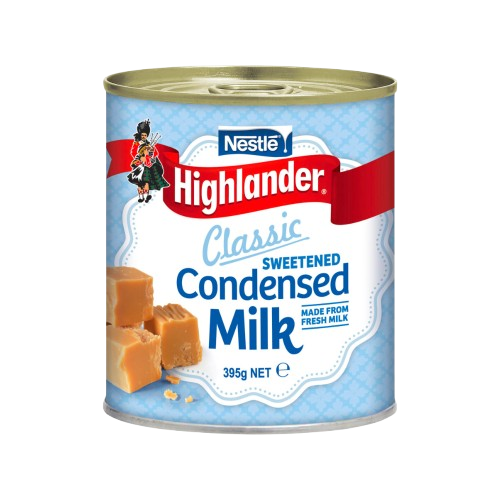
Sweetened condensed milk is a thick sugary dairy product widely used in desserts like flan, tres leches cake, and brigadeiro. Sweetened condensed milk has 60 to 65 calories per tablespoon (19g).The calories in condensed milk fluctuate slightly across commercial brands, as Eagle Brand, Nestle Carnation, and Magnolia all provide 65 calories per tablespoon, whereas La Lechera contains 60 calories. A full can of Eagle Brand condensed milk (396g) contains 1,300 calories, while a can of La Lechera condensed milk (397g) provides 1,200 calories. A standard 100g portion of whole condensed milk contains 321 calories.
An analysis of the nutrition profile of condensed milk reveals a highly energy-dense food dominated by carbohydrates and sugar. A small serving of sweetened condensed whole milk (0.25 cup) contains 41.5g of carbohydrates, 41.5g of sugar, 0g fiber, 6g of protein, and 6.7g of fat. The product contains a significant amount of sugar, with the simple carbohydrates comprising 54% of the total weight. This high glycemic load means condensed milk is not a healthy food for regular consumption, as the excessive added sugar outweighs the benefits of the dairy nutrients. The protein content remains functional for tissue repair, and a study by Wilkinson, S. B., et al. (2007) demonstrates that fluid skim milk promotes greater muscle protein accretion after resistance exercise than soy protein. Micronutrient levels are concentrated, with a large serving providing 869mg of calcium (67% DV).
Global availability of condensed milk relies on robust dairy processing sectors, with the United States and Germany leading production volumes. The United States produced over 380,000 metric tonnes of condensed milk in 2022. This production feeds a high demand in major markets, where Brazil consumed 300,000 metric tonnes in 2022. Rising costs for raw milk and sugar pushed retail prices from $1.50 per can in 2003 to over $3.00 by 2022. Restaurant pricing mirrors this shift, as a slice of Key Lime Pie at Joe's Stone Crab increased from $8.95 in 2014 to as much as $16.95 in 2024.
Condensed milk possesses essential characteristics that benefit health such as providing calcium and phosphorus but dietitians recommend consuming it in moderation due to intense sweetness. A cup of condensed milk (306g) contains 982 calories, which requires 98 minutes of running or 122 minutes of swimming to burn. The food carries downsides including a high risk of metabolic disruption for individuals monitoring blood glucose levels due to the excessive added sugars.
Condensed Milk nutrition
| Stats | Weight |
|---|---|
| Carbs | 83 grams |
| Protein | 12.1 grams |
| Fats | 0 grams |
| Sugars | 83 grams |
- Large Condensed Milk Calories (Nutritional Facts)
- Medium Condensed Milk Calories (Nutritional Facts)
- Small Condensed Milk Calories (Nutritional Facts)
- Sweetened Condensed Milk Calories (Nutritional Facts)
- Raw Condensed Milk Nutrition
- Sodium in Condensed Milk
- Potassium in Condensed Milk
- Sugar in Condensed Milk
- Fiber in Condensed Milk
- Protein in Condensed Milk
- Carbs in Condensed Milk
- Fat in Condensed Milk
- Vitamins in Condensed Milk
- Minerals in Condensed Milk
Large Condensed Milk Calories (Nutritional Facts)
A large serving of sweetened condensed whole milk (306g or 1 cup) contains 982 calories, 24.2g of protein, 26.6g of fat, 166g of carbohydrates, 0g of fiber, 166g of sugar, and 389mg of sodium. A large serving of sweetened condensed non-fat milk (306g or 1 cup) provides 857 calories, 23.9g of protein, 0.6g of fat, 180g of carbohydrates, 0g of fiber, 180g of sugar, and 459mg of sodium.
A medium serving of sweetened condensed whole milk (153g or 0.5 cup) provides 491 calories, 12.1g of protein, 13.3g of fat, 83g of carbohydrates, 0g of fiber, 83g of sugar, and 195mg of sodium. A medium serving of sweetened condensed non-fat milk (153g or 0.5 cup) contains 428 calories, 11.9g of protein, 0.3g of fat, 90g of carbohydrates, 0g of fiber, 90g of sugar, and 230mg of sodium.
A small serving of sweetened condensed whole milk (76g or 0.25 cup) contains 245 calories, 6g of protein, 6.7g of fat, 41.5g of carbohydrates, 0g of fiber, 41.5g of sugar, and 97mg of sodium. A small serving of sweetened condensed non-fat milk (76g or 0.25 cup) provides 214 calories, 5.9g of protein, 0.15g of fat, 45g of carbohydrates, 0g of fiber, 45g of sugar, and 115mg of sodium.
Sweetened condensed milk is a concentrated dairy product with added sugar, and a standard serving (100g or 3.5oz) contains 321 calories, 7.9g of protein, 8.7g of fat, 54.4g of carbohydrates, and 127mg of sodium. A serving of sweetened condensed non-fat milk (100g or 3.5oz) contains 280 calories, 7.8g of protein, 0.2g of fat, 59g of carbohydrates, and 150mg of sodium.
A serving of sweetened condensed whole milk (100g or 3.5oz) contains 321 calories, 7.9g of protein, 8.7g of fat, 54.4g of carbohydrates, 0g of fiber, 54.4g of sugar, and 127mg of sodium.
A large serving of sweetened condensed whole milk (306g) contains 389mg of sodium (17% DV), while a large serving of sweetened condensed non-fat milk (306g) contains 459mg of sodium (20% DV). A medium serving of sweetened condensed whole milk (153g) has 195mg of sodium (8% DV), and a medium serving of sweetened condensed non-fat milk (153g) has 230mg of sodium (10% DV). A small serving of sweetened condensed whole milk (76g) contains 97mg of sodium (4% DV), whereas a small serving of sweetened condensed non-fat milk (76g) contains 115mg of sodium (5% DV).
A large serving of sweetened condensed whole milk (306g) contains 1,135mg of potassium (24% DV), and a large serving of sweetened condensed non-fat milk (306g) contains 1,160mg of potassium (25% DV). A medium serving of sweetened condensed whole milk (153g) has 568mg of potassium (12% DV), while a medium serving of sweetened condensed non-fat milk (153g) has 580mg of potassium (12% DV). A small serving of sweetened condensed whole milk (76g) contains 284mg of potassium (6% DV), and a small serving of sweetened condensed non-fat milk (76g) contains 290mg of potassium (6% DV).
A large serving of sweetened condensed whole milk (306g) contains 166g of sugar, while a large serving of sweetened condensed non-fat milk (306g) contains 180g of sugar. A medium serving of sweetened condensed whole milk (153g) has 83g of sugar, and a medium serving of sweetened condensed non-fat milk (153g) has 90g of sugar. A small serving of sweetened condensed whole milk (76g) contains 41.5g of sugar, whereas a small serving of sweetened condensed non-fat milk (76g) contains 45g of sugar.
A large serving of sweetened condensed whole milk (306g) and a large serving of sweetened condensed non-fat milk (306g) both provide 0g of dietary fiber (0% DV). A medium serving of sweetened condensed whole milk (153g) and a medium serving of sweetened condensed non-fat milk (153g) both have 0g of fiber (0% DV). A small serving of sweetened condensed whole milk (76g) and a small serving of sweetened condensed non-fat milk (76g) both contain 0g of fiber (0% DV).
A large serving of sweetened condensed whole milk (306g) provides 24.2g of protein (48% DV), while a large serving of sweetened condensed non-fat milk (306g) provides 23.9g of protein (48% DV). A medium serving of sweetened condensed whole milk (153g) has 12.1g of protein (24% DV), and a medium serving of sweetened condensed non-fat milk (153g) has 11.9g of protein (24% DV). A small serving of sweetened condensed whole milk (76g) contains 6g of protein (12% DV), whereas a small serving of sweetened condensed non-fat milk (76g) contains 5.9g of protein (12% DV).
A large serving of sweetened condensed whole milk (306g) contains 166g of carbohydrates (60% DV), and a large serving of sweetened condensed non-fat milk (306g) contains 180g of carbohydrates (65% DV). A medium serving of sweetened condensed whole milk (153g) has 83g of carbohydrates (30% DV), while a medium serving of sweetened condensed non-fat milk (153g) has 90g of carbohydrates (33% DV). A small serving of sweetened condensed whole milk (76g) contains 41.5g of carbohydrates (15% DV), whereas a small serving of sweetened condensed non-fat milk (76g) contains 45g of carbohydrates (16% DV).
A large serving of sweetened condensed whole milk (306g) contains 26.6g of total fat (34% DV), while a large serving of sweetened condensed non-fat milk (306g) contains 0.6g of total fat (1% DV). A medium serving of sweetened condensed whole milk (153g) has 13.3g of total fat (17% DV), and a medium serving of sweetened condensed non-fat milk (153g) has 0.3g of total fat (0% DV). A small serving of sweetened condensed whole milk (76g) contains 6.7g of total fat (9% DV), whereas a small serving of sweetened condensed non-fat milk (76g) contains 0.15g of total fat (0% DV).
A large serving of sweetened condensed whole milk (306g) provides 1.4mcg of Vitamin B12 (58% DV) and 257mcg of Vitamin A (29% DV). A medium serving of sweetened condensed whole milk (153g) provides 0.7mcg of Vitamin B12 (29% DV) and 128mcg of Vitamin A (14% DV). A small serving of sweetened condensed whole milk (76g) provides 0.35mcg of Vitamin B12 (15% DV) and 64mcg of Vitamin A (7% DV).
A large serving of sweetened condensed whole milk (306g) provides 869mg of calcium (67% DV) and 774mg of phosphorus (62% DV). A medium serving of sweetened condensed whole milk (153g) provides 434mg of calcium (33% DV) and 387mg of phosphorus (31% DV). A small serving of sweetened condensed whole milk (76g) provides 217mg of calcium (17% DV) and 193mg of phosphorus (15% DV).
Get a Custom Report on Condensed Milk Nutrition Data – Contact Us!
What are the Types of Condensed Milk?
The types of condensed milk are Sweetened Condensed Whole Milk, Sweetened Condensed Skim Milk, Filled Condensed Milk, and Sweetened Condensed Coconut Milk. The table below provides details on these common condensed milk styles.
| Type | Description | Calories (Approximate per 100g) | Calorie Qualifications |
|---|---|---|---|
|
Sweetened Condensed Whole Milk
|
Concentrated milk with added sugar and full milk fat. | 321 | This version has the highest calorie density due to the combination of milk fat and sugar. |
|
Sweetened Condensed Skim Milk
|
Concentrated milk with added sugar but minimal fat. | 280 | The removal of fat results in a lower calorie count while retaining high sugar levels. |
|
Filled Condensed Milk
|
Made with skim milk and vegetable oils instead of milk fat. | 330 | The addition of vegetable oils often results in a calorie count similar to or higher than whole milk versions. |
|
Sweetened Condensed Coconut Milk
|
A non-dairy alternative made from coconut milk and sugar. | 380 | The high fat content of coconut milk makes this the most calorie-dense option. |
What are the Desserts with Condensed Milk?
Condensed milk serves as a primary ingredient in many global desserts, providing a creamy texture and intense sweetness. A catalog of dishes that feature condensed milk is detailed below.
| Dish Name | Calories (Estimate per serving) | Type of Milk | Carbs (g) (Estimate) | Sugar (g) (Estimate) | Protein (g) (Estimate) | Fat (g) (Estimate) | Cuisine | Restaurants |
|---|---|---|---|---|---|---|---|---|
|
Key Lime Pie
|
450 | Whole Condensed Milk | 55 | 40 | 6 | 22 | American | Joe's Stone Crab (Miami, FL) |
|
Flan (Crème Caramel)
|
320 | Whole Condensed Milk | 45 | 38 | 8 | 10 | Mexican/Spanish | La Carreta (Miami, FL) |
|
Tres Leches Cake
|
350 | Whole Condensed Milk | 45 | 30 | 8 | 16 | Mexican | Porto's Bakery (Los Angeles, CA) |
|
Brigadeiro
|
100 (per piece) | Whole Condensed Milk | 14 | 12 | 2 | 4 | Brazilian | Fogo de Chão |
|
Banoffee Pie
|
480 | Caramelized Condensed Milk | 58 | 42 | 5 | 26 | British | The Breslin (New York, NY) |
|
Thai Iced Tea
|
180 | Whole Condensed Milk | 35 | 30 | 2 | 4 | Thai | Lotus of Siam (Las Vegas, NV) |
|
Vietnamese Iced Coffee
|
160 | Whole Condensed Milk | 28 | 26 | 3 | 4 | Vietnamese | Phở 79 |
|
Millionaire's Shortbread
|
350 | Caramelized Condensed Milk | 40 | 25 | 4 | 20 | Scottish/British | Tea & Sympathy (New York, NY) |
|
Fudge
|
150 (per piece) | Whole Condensed Milk | 25 | 22 | 1 | 5 | American | Kilwins |
|
Arroz con Leche
|
280 | Whole Condensed Milk | 45 | 28 | 6 | 8 | Spanish/Latin | Versailles (Miami, FL) |
|
Hong Kong French Toast
|
450 | Whole Condensed Milk | 50 | 25 | 10 | 24 | Cantonese | Hong Kong Cafe (San Francisco, CA) |
|
Dulce de Leche (Homemade)
|
100 (per tbsp) | Caramelized Condensed Milk | 18 | 18 | 2 | 3 | Argentine | Havanna (Online/Retail) |
|
Snow Ice (Baobing)
|
300 | Whole Condensed Milk | 55 | 40 | 4 | 8 | Taiwanese | Meet Fresh |
|
Ras Malai (Sauce)
|
250 | Sweetened Milk Solids | 28 | 20 | 8 | 12 | Indian | Moti Mahal Delux (New York, NY) |
What are the Main Dishes with Condensed Milk?
Condensed milk functions as a sweetener in savory-sweet dishes, marinades, and rich sauces, particularly in Asian cuisine. A catalog of dishes that feature condensed milk is detailed below.
| Dish Name | Calories (Estimate per serving) | Type of Milk | Carbs (g) (Estimate) | Sugar (g) (Estimate) | Protein (g) (Estimate) | Fat (g) (Estimate) | Cuisine | Restaurants |
|---|---|---|---|---|---|---|---|---|
|
Honey Walnut Shrimp
|
550 | Whole Condensed Milk | 45 | 20 | 18 | 35 | Chinese-American | Panda Express |
|
Hong Kong French Toast
|
450 | Whole Condensed Milk | 50 | 25 | 10 | 24 | Cantonese | Cafe 88 (Boston, MA) |
|
Roti Tisu
|
300 | Whole Condensed Milk | 40 | 15 | 4 | 12 | Malaysian | PappaRich (New York, NY) |
|
Kaya Toast
|
280 | Whole Condensed Milk | 45 | 20 | 6 | 8 | Singaporean | Kopitiam (New York, NY) |
|
Ebi Mayo (Shrimp Mayo)
|
400 | Whole Condensed Milk | 25 | 10 | 15 | 28 | Japanese | Izakaya Gazen (Los Angeles, CA) |
|
Sweet Mayo Chicken
|
500 | Whole Condensed Milk | 35 | 15 | 25 | 30 | Korean | Bonchon Chicken (Various Locations) |
|
Mantou with Condensed Milk
|
250 | Whole Condensed Milk | 45 | 15 | 5 | 6 | Chinese | Din Tai Fung |
|
Thai Roti (Dessert/Snack)
|
350 | Whole Condensed Milk | 48 | 20 | 5 | 16 | Thai | Pok Pok (Portland, OR - Legacy) |
|
BBQ Pork (Char Siu Glaze)
|
380 | Whole Condensed Milk | 15 | 10 | 30 | 22 | Chinese | Nom Wah Tea Parlor (New York, NY) |
|
Coconut Shrimp (Sauce)
|
420 | Condensed Coconut Milk | 35 | 18 | 12 | 26 | American/Caribbean | Bahama Breeze |
|
Satay Sauce (Sweetener)
|
150 | Whole Condensed Milk | 10 | 8 | 4 | 10 | Malaysian/Thai | Satay Sarifah (Specialty) |
|
Sweet Corn with Butter/Milk
|
180 | Whole Condensed Milk | 25 | 12 | 4 | 8 | Mexican (Esquites var.) | La Michoacana |
|
Vietnamese Banh Mi (Glaze)
|
450 | Whole Condensed Milk | 55 | 10 | 20 | 18 | Vietnamese | Lee's Sandwiches |
|
Curry Laksa (Creamer)
|
550 | Condensed/Evaporated | 45 | 8 | 25 | 30 | Malaysian | Laksa (New York, NY) |
What Cuisines Prefer Condensed Milk the Most?
Condensed milk is indispensable in Latin American and Southeast Asian culinary traditions where it serves as both a dessert ingredient and a beverage sweetener. The following list displays the culinary settings where condensed milk is a signature item.
| Cuisine | Dish | Types of Condensed Milk | Calories (Estimate) | Restaurant(s) |
|---|---|---|---|---|
|
Vietnamese
|
Cà Phê Sữa Đá | Whole Condensed Milk | 160 | Phở 79 |
|
Thai
|
Thai Iced Tea | Whole Condensed Milk | 180 | Lotus of Siam (Las Vegas, NV) |
|
Brazilian
|
Brigadeiro | Whole Condensed Milk | 100 | Fogo de Chão |
|
Mexican
|
Tres Leches Cake | Whole Condensed Milk | 350 | Porto's Bakery (Los Angeles, CA) |
|
American (Key West)
|
Key Lime Pie | Whole Condensed Milk | 450 | Joe's Stone Crab (Miami, FL) |
|
Hong Kong
|
Hong Kong Milk Tea | Whole Condensed Milk | 140 | Gong Cha |
|
Malaysian
|
Teh Tarik | Whole Condensed Milk | 140 | PappaRich (New York, NY) |
|
Spanish
|
Café Bombón | Whole Condensed Milk | 120 | Boqueria (New York, NY) |
|
Singaporean
|
Kopi | Whole Condensed Milk | 130 | Kopitiam (New York, NY) |
|
Scottish
|
Tablet | Whole Condensed Milk | 150 | The Caledonian (Toronto/Prox.) |
|
Peruvian
|
Suspiro de Limeña | Caramelized Condensed Milk | 300 | La Mar (San Francisco, CA) |
|
Venezuelan
|
Chicha | Whole Condensed Milk | 300 | Arepa Zone (Washington, DC) |
|
Indian
|
Eggless Cake (Binder) | Whole Condensed Milk | 300 | Sukhadia's (New Jersey) |
|
Cuban
|
Café Cubano (Cortadito) | Whole Condensed Milk | 80 | Versailles (Miami, FL) |
Which Countries Produce the Most Condensed Milk?
The top producers of condensed milk are the United States, Germany, and Russia. These nations possess robust dairy industries and significant processing capabilities. The table below shows the production volume of condensed milk in 1,000 metric tonnes for these leading producers from 2003 to 2022.
| Country | 2003 | 2008 | 2013 | 2018 | 2019 | 2020 | 2021 | 2022 |
|---|---|---|---|---|---|---|---|---|
| United States | 250 | 280 | 310 | 340 | 350 | 360 | 370 | 380 |
| Germany | 180 | 200 | 220 | 240 | 245 | 250 | 255 | 260 |
| Russia | 150 | 170 | 190 | 210 | 215 | 220 | 225 | 230 |
| Peru | 60 | 70 | 85 | 100 | 105 | 110 | 115 | 120 |
| Netherlands | 50 | 60 | 70 | 80 | 82 | 85 | 88 | 90 |
Which Countries Consume the Most Condensed Milk?
The top consumers of condensed milk are Brazil, Vietnam, and the United States. These nations utilize the product extensively in desserts, coffee culture, and baking. The table below displays the estimated domestic consumption of condensed milk in 1,000 metric tonnes for the largest markets from 2003 to 2022.
| Country | 2003 | 2008 | 2013 | 2018 | 2019 | 2020 | 2021 | 2022 |
|---|---|---|---|---|---|---|---|---|
| Brazil | 180 | 210 | 240 | 270 | 275 | 285 | 290 | 300 |
| United States | 150 | 160 | 170 | 180 | 185 | 195 | 200 | 205 |
| Vietnam | 80 | 100 | 130 | 160 | 165 | 170 | 175 | 180 |
| Russia | 140 | 150 | 160 | 165 | 168 | 170 | 172 | 175 |
| Philippines | 60 | 70 | 85 | 100 | 105 | 110 | 115 | 120 |
How Do Prices of Condensed Milk-Including Dishes Change?
The cost of dishes containing condensed milk has risen in parallel with ingredient and labor costs. The table below compares historical menu prices with current estimates for popular condensed milk-based items.
| Restaurant | Dish Name | Old Price (Year) | Current Price |
|---|---|---|---|
| Phở 79 | Vietnamese Iced Coffee | $3.50 (2015) | $5.50 - $6.75 |
| Porto's Bakery (Los Angeles, CA) | Tres Leches Cake (Loaf) | $13.25 (2016) | $15.25 - $16.99 |
| Panda Express | Honey Walnut Shrimp (Plate) | $8.50 (2015) | $11.50 - $13.40 |
| Fogo de Chão | Tres Leches Cake | $8.00 (2015) | $10.00 - $13.50 |
What is the Condensed Milk Calorie for 100 Grams?
A 100g serving of sweetened condensed whole milk contains 321 calories, while the same amount of sweetened condensed non-fat milk contains 280 calories.
What is the Condensed Milk Calorie for 1 KG?
One kilogram (1000g) of sweetened condensed whole milk contains 3,210 calories, whereas one kilogram (1000g) of sweetened condensed non-fat milk provides 2,800 calories.
What is the Calorie of 1 Condensed Milk?
One can of Eagle Brand Sweetened Condensed Milk (396g), Nestle Carnation Sweetened Condensed Milk (397g), and Magnolia Sweetened Condensed Milk (397g) all contain 1,300 calories, while one can of La Lechera Sweetened Condensed Milk (397g) contains 1,200 calories.
What is the Calorie Count for 1 Tablespoon of Condensed Milk?
One tablespoon of Eagle Brand (19g), Nestle Carnation (19g), and Magnolia Sweetened Condensed Milk (19g) each provide 65 calories, whereas one tablespoon of La Lechera Sweetened Condensed Milk (19g) contains 60 calories.
What is the Calorie Count for 2 Tablespoons of Condensed Milk?
Two tablespoons of Eagle Brand (39g), Nestle Carnation (37g), and Magnolia Sweetened Condensed Milk (38g) all contain 130 calories, while two tablespoons of La Lechera Sweetened Condensed Milk (38g) provide 120 calories.
What are the Health Benefits of Condensed Milk?
The benefits of condensed milk consumption are associated with specific nutritional advantages derived from milk solids, supported by research. The key health benefits of condensed milk are detailed below.
- Supports Bone Health: Condensed milk provides a concentrated source of calcium and phosphorus, which are vital for skeletal integrity. A review by Heaney, R. P. (2000), "Calcium, dairy products and osteoporosis," confirms that adequate calcium intake from dairy sources reduces the risk of fractures and osteoporosis in aging populations.
- Promotes Muscle Maintenance: The product contains casein and whey proteins, which supply essential amino acids necessary for muscle repair. A study by Phillips, S. M. (2011), "The science of muscle hypertrophy: making dietary protein count," demonstrates that milk proteins stimulate muscle protein synthesis effectively after exercise.
- Supports Nerve Function: The dairy content offers Vitamin B12, a nutrient essential for neurological health. A study by O'Leary, F., et al. (2010), "Vitamin B12 in health and disease," highlights that adequate B12 intake prevents neuropathy and supports cognitive function.
What are the Downsides of Condensed Milk?
Condensed milk should not be consumed on a regular basis due to its high sugar content. The table below shows the potential downsides of condensed milk consumption.
- Increases Risk of Metabolic Disease: The high content of added sugar contributes to insulin resistance and type 2 diabetes. A study by Malik, V. S., et al. (2010), "Sugar-sweetened beverages and risk of metabolic syndrome and type 2 diabetes: a meta-analysis," indicates that high sugar intake is strongly correlated with metabolic disorders. An alternative is evaporated milk or unsweetened plant-based milk concentrates. A suggested consumption limit is to restrict intake to one tablespoon (approx. 19g) per day.
- Contributes to Weight Gain: The high caloric density from both fat and sugar leads to a positive energy balance and obesity. A study by Ledikwe, J. H., et al. (2006), "Dietary energy density is associated with energy intake and weight status in US adults," found a clear association between the consumption of energy-dense foods and higher body mass index.
Is Condensed Milk Good for You?
No, condensed milk is not a healthy food for regular consumption because the excessive added sugar content outweighs the benefits of the dairy nutrients. The high glycemic load negatively impacts metabolic health. A study by Johnson, R. K., et al. (2009), "Dietary sugars intake and cardiovascular health," links high consumption of added sugars to increased cardiovascular risk. However, the product does provide essential minerals for bone health. A study by Rizzoli, R. (2014), "Dairy products and bone health," confirmed that dairy protein and calcium intake are key determinants of bone mass accumulation. Cognitive function also benefits from the B-vitamins present in the milk solids. A study by Crichton, G. E., et al. (2010), "Dairy intake and cognitive health," suggests that regular consumption of dairy products correlates with better cognitive performance.
How Do Calories Change According to Condensed Milk Types?
The fat source and content determine the calorie count of the final product. Sweetened condensed coconut milk has the highest calorie value at approximately 380 calories per 100 grams due to the high saturated fat content of coconuts. Sweetened condensed whole milk contains a high calorie value at roughly 321 calories per 100 grams, driven by milk fats and added sucrose. Sweetened condensed skim milk contains the lowest calorie value at approximately 280 calories per 100 grams, representing the baseline of concentrated milk solids and sugar without the lipid component.
Does Condensed Milk Contain a Lot of Sugar?
Yes, condensed milk contains a significant amount of sugar, amounting to 10.4g of sugar in condensed milk per tablespoon. The condensed milk sugar content comprises roughly 54% of the total weight of the product. A review of the USDA Food Data Central database confirms that a standard 100g serving contains 54.4g of sugar, which includes both naturally occurring lactose and added sucrose used for preservation and texture.
What is the Origin of Condensed Milk?
The history of condensed milk dates back to the early 19th century as a solution for food preservation. The French confectioner Nicolas Appert first successfully concentrated milk in 1820, but the American inventor Gail Borden revolutionized the industry. Borden patented the industrial process for sweetened condensed milk in 1856, utilizing a vacuum pan to evaporate water without scorching the milk and adding sugar to inhibit bacterial growth. This innovation proved vital during the American Civil War, providing Union soldiers with a safe, portable, and calorie-dense ration. The product gained global popularity in the late 19th and early 20th centuries, becoming a staple in tropical climates where fresh milk spoiled quickly.
Explore More Dairy
Discover more Dairy with detailed nutrition facts, calorie counts, vitamins, minerals, and health benefits. Compare similar foods, serving sizes, macronutrients, and key nutrients to find the best option for your diet and nutrition goals.
 Asiago Cheese calories
 Blue Cheese calories
 Brie Cheese calories
 Butter calories
 Buttermilk calories
 Camembert calories
 Cheddar calories
 Cheese calories
 Chocolate Milk calories
 Clarified Butter calories
 Clotted Cream calories
 Cotija Cheese calories