Calories and Nutritions in Beetroot
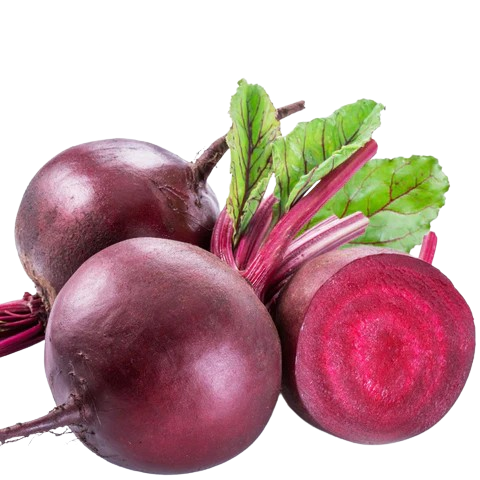
The calories in beetroot vary based on size and preparation. A medium raw beetroot 82 g (2.9 oz) contains 35 calories, while a large 150 g (5.3 oz) raw beetroot provides 65 calories. Beetroot nutrition content includes fiber, folate, and manganese. A 100 g (3.5 oz) serving of raw beetroot provides 43 calories, 1.6 g protein, 0.2 g fat, 9.6 g carbohydrates, 6.8 g sugar, 2.8 g fiber (10% Daily Value), 109 mcg folate (27% DV), and 0.329 mg manganese (14% DV). Research highlights beetroot's dietary nitrates, which convert to nitric oxide, known to improve blood flow and lower blood pressure (Siervo M, et al., 2013). Beets nutrition facts show it also contains Vitamin C and potassium.
Common beetroot types include red, golden, and Chioggia, all showing similar beets nutritional value and calorie counts when fresh. Pickled beetroot calories are higher, 65-75 calories per 100 g, due to added sugar. Global production of root and tuber crops, including beetroots, is led by China and India, with China producing 415,000 kilotonnes in 2022. Beetroot prices for fresh varieties have generally risen over the past 20 years, influenced by agricultural input costs and inflation, with retail prices in the US often ranging from $2 to $4 per pound for fresh beets.
Beetroot is an ingredient in many dishes like Borscht at Veselka (NYC) and roasted beet salads at Seasons 52. It even appears in desserts such as chocolate beetroot cake. Burning the 35 calories from a medium raw beetroot is equivalent to a few minutes of light activity such as walking.
Beetroot nutrition
| Stats | Weight |
|---|---|
| Carbs | 10 grams |
| Protein | 1.6 grams |
| Fats | 0 grams |
| Sugars | 7 grams |
- Large Beetroot Calories (Nutritional Facts)
- Medium Beetroot Calories (Nutritional Facts)
- Small Beetroot Calories (Nutritional Facts)
- Raw Beetroot Nutrition
- Sodium in Beetroot
- Potassium in Beetroot
- Sugar in Beetroot
- Fiber in Beetroot
- Iron in Beetroot
- Protein in Beetroot
- Carbs in Beetroot
- Fat in Beetroot
- Vitamins in Beetroot
- Minerals in Beetroot
Large Beetroot Calories (Nutritional Facts)
One large raw beetroot, weighing 150 g (5.3 oz), contains 65 calories. This serving provides 0.3 g of fat, 2.4 g of protein, 14.4 g of carbohydrates, 10.4 g of sugar, and 4.2 g of dietary fiber. Cooked large beetroot (150 g) contains 66 calories, 0.3 g of fat, 2.5 g of protein, 15 g of carbohydrates, 12 g of sugar, and 3.0 g of fiber.
One medium raw beetroot, weighing 82 g (2.9 oz), contains 35 calories. This serving size includes 0.1 g of fat, 1.3 g of protein, 7.8 g of carbohydrates, 5.6 g of sugar, and 2.3 g of dietary fiber. Cooked medium beetroot (82 g) contains 36 calories, 0.1 g of fat, 1.4 g of protein, 8.2 g of carbohydrates, 6.6 g of sugar, and 1.6 g of fiber.
One small raw beetroot, weighing 50 g (1.8 oz), contains 22 calories. This portion offers 0.1 g of fat, 0.8 g of protein, 4.8 g of carbohydrates, 3.4 g of sugar, and 1.4 g of dietary fiber. Cooked small beetroot (50 g) contains 22 calories, 0.1 g of fat, 0.8 g of protein, 5.0 g of carbohydrates, 4.0 g of sugar, and 1.0 g of fiber.
Raw beetroot is a source of several nutrients. A 100 g (3.5 oz) serving of raw beetroot provides 43 calories, 0.2 g of fat, 1.6 g of protein, 9.6 g of carbohydrates, 6.8 g of sugar, and 2.8 g of dietary fiber. Raw beetroot also offers folate and manganese.
Raw beetroot contains 78 mg of sodium per 100 g (3.5 oz) serving, contributing 3% of the Daily Value (DV). Cooked beetroot contains 58 mg of sodium per 100 g.
Raw beetroot provides 325 mg of potassium per 100 g (3.5 oz) serving, which is 7% of the DV. Cooked beetroot contains 305 mg of potassium per 100 g.
Raw beetroot contains 6.8 g of sugar per 100 g (3.5 oz) serving. Cooked beetroot contains 8.0 g of sugar per 100 g.
Raw beetroot offers 2.8 g of dietary fiber per 100 g (3.5 oz) serving, which is 10% of the DV. Cooked beetroot provides 2.0 g of fiber per 100 g.
Raw beetroot contains 0.8 mg of iron per 100 g (3.5 oz) serving, contributing 4% of the DV. Cooked beetroot contains 0.79 mg of iron per 100 g.
Raw beetroot provides 1.6 g of protein per 100 g (3.5 oz) serving. Cooked beetroot contains 1.7 g of protein per 100 g.
Raw beetroot contains 9.6 g of total carbohydrates per 100 g (3.5 oz) serving. Cooked beetroot contains 10.0 g of carbohydrates per 100 g.
Raw beetroot contains 0.2 g of total fat per 100 g (3.5 oz) serving. Cooked beetroot contains 0.2 g of total fat per 100 g.
A 100 g (3.5 oz) serving of raw beetroot is a source of Folate (Vitamin B9), providing 109 mcg (27% DV). It also contains Vitamin C at 4.9 mg (5% DV) and Vitamin B6 at 0.067 mg (4% DV). Cooking beetroot can reduce the content of some water-soluble vitamins; boiled beetroot (100 g) provides 27 mcg of Folate (7% DV) and 3.6 mg of Vitamin C (4% DV).
A 100 g (3.5 oz) serving of raw beetroot provides Manganese at 0.329 mg (14% DV). It also contains Magnesium at 23 mg (5% DV) and Phosphorus at 40 mg (3% DV). Cooked beetroot (100 g) provides 0.326 mg of Manganese (14% DV).
Get a Custom Report on Beetroot Nutrition Data – Contact Us!
What are the Types of Beetroot?
The most common type of beetroot is the red beetroot, but other varieties exist. Beetroots are sold fresh, cooked (steamed/vacuum-packed), pickled, or juiced. The different types of beetroot are shown in the following table:
| Type | Description | Calories (per 100g, raw unless stated) | Calorie Differences & Qualifications |
|---|---|---|---|
|
Red Beetroot
|
Most common type, deep red/purple flesh and skin. Earthy, sweet flavor. | 43 | Standard calorie baseline for beetroot. Cooked (boiled) red beetroot contains 44 calories per 100g. |
|
Golden Beetroot
|
Yellow to orange flesh, milder and sweeter flavor than red beetroot. | 43-45 | Similar calorie content to red beetroot. Nutrient profile is also similar, though pigment composition differs (lacks red betacyanins, has yellow betaxanthins). |
|
Chioggia Beetroot
|
Italian heirloom, distinctive red and white striped flesh. Mild, sweet flavor. | 40-43 | Calorie content is very similar to red beetroot. The striped pattern becomes less distinct when cooked. |
|
White Beetroot
|
White flesh, very mild flavor, sometimes described as less earthy. | 40-43 | Similar calorie content to other varieties. Lacks the betalain pigments found in red and golden beets. |
|
Pickled Beetroot
|
Beetroot preserved in vinegar, sugar, and spices. | 65-75 | Higher in calories than fresh/cooked beetroot due to added sugar in the pickling liquid. Sodium content is also significantly higher. |
|
Canned Beetroot
|
Cooked beetroot preserved in water or brine. | 30-35 (in water, drained) | Generally lower in calories than fresh if canned in water without added sugar. Brine versions will have higher sodium. |
What are the Main Dishes with Beetroot?
Beetroot's earthy sweetness and vibrant color lend themselves to a variety of main dishes across different culinary traditions. While often a side or salad component, it can also be a star ingredient, as shown in the examples below:
| Dish Name | Calories (Estimate per serving) | Carbs (g) | Sugar (g) | Protein (g) | Fat (g) | Cuisine | Restaurants |
|---|---|---|---|---|---|---|---|
|
Borscht (Beetroot Soup)
|
150-300 (without sour cream) | 20-40 | 10-20 | 5-10 | 2-8 | Eastern European | Veselka (NYC), Russian Tea Room (NYC) |
|
Roasted Beetroot & Goat Cheese Salad
|
350-550 | 25-40 | 15-25 | 10-15 | 20-35 | American/European | Seasons 52, Panera Bread (seasonal/similar salads), The Cheesecake Factory |
|
Beetroot Risotto
|
400-600 | 50-70 | 8-15 | 10-18 | 15-25 | Italian/Modern | Some upscale Italian restaurants or contemporary eateries feature this seasonally. |
|
Beetroot Burger (Veggie Burger)
|
300-500 (patty + bun) | 40-60 | 8-15 | 10-20 | 10-20 | Modern Vegetarian | Bareburger, vegetarian/vegan restaurants (by CHLOE. has offered beet burgers). |
|
Beetroot Cured Salmon (Gravlax style)
|
150-250 (3 oz serving) | 2-5 | 1-3 | 18-25 | 8-15 | Scandinavian/Modern | Russ & Daughters (NYC) for general cured fish. |
|
Beetroot & Lentil Shepherd's Pie (Veg)
|
400-600 | 50-70 | 10-20 | 15-25 | 10-20 | Modern Vegetarian | Less common in chains, more likely in specialized vegetarian/vegan restaurants or gastropubs offering vegetarian options. |
|
Pickled Beetroot (as part of a Ploughman's Lunch or Deli Plate)
|
50-80 (for beets) | 10-15 | 8-12 | 1-2 | <1 | British/American | Many pubs in the UK serving Ploughman's Lunch (Fuller's Pubs, Greene King Pubs) |
|
Beetroot Carpaccio
|
100-200 | 10-20 | 8-15 | 2-5 | 5-15 | Italian/Modern | Often found as an appetizer in contemporary Italian or New American restaurants. |
What are the Desserts with Beetroot?
Beetroot's natural sweetness and vibrant color have led to its innovative use in desserts, often paired with chocolate or spices. Here are a few examples:
| Dish Name | Calories (Estimate per serving) | Carbs (g) | Sugar (g) | Protein (g) | Fat (g) | Cuisine | Restaurants |
|---|---|---|---|---|---|---|---|
|
Chocolate Beetroot Cake
|
350-550 (slice) | 40-60 | 25-40 | 4-7 | 18-30 | Modern/American | Occasionally at Whole Foods Market bakery |
|
Beetroot Brownies
|
200-350 (square) | 25-40 | 15-25 | 3-5 | 10-20 | Modern/American | Similar to the cake, found in some specialty bakeries or health-conscious dessert menus. |
|
Beetroot & Ginger Sorbet/Ice Cream
|
100-180 (scoop) | 20-35 | 18-30 | <1-2 | <1-5 | Modern/Artisanal | More likely found in artisanal ice cream shops like Salt & Straw (known for unique flavors) or upscale restaurants with innovative dessert menus. |
What Cuisines Prefer Beetroot the Most?
Beetroot is a versatile vegetable embraced by numerous cuisines globally, particularly prominent in Eastern European, Russian, and Scandinavian dishes, and increasingly popular in modern Western vegetarian and health-conscious cooking. The table below highlights some key cuisines and their characteristic beetroot dishes:
| Cuisine | Dish Name | Calories (Estimate per serving) | Restaurants |
|---|---|---|---|
|
Eastern European / Russian
|
Borscht, Vinegret (Beetroot Salad) | 150-300 (Borscht) | Veselka (NYC), Russian Tea Room (NYC), Kachka (Portland, OR), numerous authentic Eastern European restaurants in cities with large diasporas. |
|
Scandinavian
|
Pickled Beetroot, Rosolli (Beetroot Salad) | 50-150 (as side/salad component) | Aquavit (NYC - upscale Scandinavian), Smorgas Chef (NYC - historically), IKEA restaurants (often feature pickled beetroot). |
|
British
|
Pickled Beetroot, Roasted Beetroot | 50-150 (as side) | Commonly found in pub fare (e.g., with Ploughman's Lunch at Fuller's Pubs, Greene King Pubs), gastropubs. |
|
American (Modern/Health-focused)
|
Roasted Beet Salads, Beet Juices/Smoothies, Beet Burgers | 100-550 (varies widely) | Seasons 52, True Food Kitchen, Sweetgreen, Bareburger, Juice Generation, Pressed Juicery. |
|
Mediterranean/Middle Eastern
|
Beetroot Dips (e.g., with tahini), Cooked Beet Salads | 100-250 (dip/salad) | Restaurants like Zaytinya (Washington D.C.), Shaya (New Orleans), many local Mediterranean and Middle Eastern eateries. |
Which Countries Produce the Most Beetroots?
Beetroot production is significant in several countries, with temperate climates including the Russian Federation, European Union nations (France, Germany, Poland), the United States, and Turkey. The table below shows "Roots and Tubers, Total" which encompasses potatoes, sweet potatoes, cassava, yams, and other root crops, including beetroots:
| Country/Region | 2004 | 2005 | 2006 | 2007 | 2008 | 2009 | 2010 | 2011 | 2012 | 2013 | 2014 | 2015 | 2016 | 2017 | 2018 | 2019 | 2020 | 2021 | 2022 |
|---|---|---|---|---|---|---|---|---|---|---|---|---|---|---|---|---|---|---|---|
| China | 325,000 | 330,000 | 335,000 | 340,000 | 345,000 | 350,000 | 355,000 | 360,000 | 365,000 | 370,000 | 375,000 | 380,000 | 385,000 | 390,000 | 395,000 | 400,000 | 405,000 | 410,000 | 415,000 |
| India | 100,000 | 105,000 | 110,000 | 115,000 | 120,000 | 125,000 | 130,000 | 135,000 | 140,000 | 145,000 | 150,000 | 155,000 | 160,000 | 165,000 | 170,000 | 175,000 | 180,000 | 185,000 | 190,000 |
| Nigeria | 80,000 | 85,000 | 90,000 | 95,000 | 100,000 | 105,000 | 110,000 | 115,000 | 120,000 | 125,000 | 130,000 | 135,000 | 140,000 | 145,000 | 150,000 | 155,000 | 160,000 | 165,000 | 170,000 |
| Russian Federation | 40,000 | 42,000 | 45,000 | 43,000 | 38,000 | 40,000 | 30,000 | 38,000 | 39,000 | 38,000 | 40,000 | 42,000 | 38,000 | 39,000 | 32,000 | 31,000 | 28,000 | 27,000 | 27,500 |
| USA | 35,000 | 34,000 | 35,000 | 34,500 | 35,000 | 34,000 | 34,500 | 33,500 | 34,000 | 35,000 | 35,500 | 35,000 | 35,500 | 35,000 | 36,000 | 35,000 | 35,500 | 34,000 | 33,500 |
| EU-27 (from 2020) | 60,000 | 61,000 | 60,000 | 62,000 | 60,000 | 58,000 | 57,000 | 60,000 | 58,000 | 57,000 | 60,000 | 58,000 | 58,000 | 60,000 | 55,000 | 57,000 | 60,000 | 59,000 | 58,000 |
| Ukraine | 25,000 | 26,000 | 25,500 | 25,000 | 27,000 | 26,000 | 24,000 | 30,000 | 29,000 | 28,000 | 30,000 | 27,000 | 28,000 | 28,500 | 29,000 | 26,500 | 27,000 | 27,500 | 23,000 |
| Indonesia | 20,000 | 21,000 | 22,000 | 23,000 | 24,000 | 25,000 | 26,000 | 27,000 | 28,000 | 29,000 | 30,000 | 31,000 | 32,000 | 33,000 | 34,000 | 35,000 | 36,000 | 37,000 | 38,000 |
| Brazil | 28,000 | 29,000 | 30,000 | 31,000 | 32,000 | 33,000 | 34,000 | 35,000 | 36,000 | 37,000 | 38,000 | 37,500 | 37,000 | 37,000 | 37,500 | 38,000 | 39,000 | 40,000 | 41,000 |
| Bangladesh | 5,000 | 5,500 | 6,000 | 6,500 | 7,000 | 8,000 | 9,500 | 10,000 | 10,500 | 11,000 | 11,500 | 12,000 | 12,500 | 13,500 | 14,000 | 14,500 | 15,000 | 15,500 | 16,000 |
Which Countries Consume the Most Beetroots?
Per capita consumption of beetroots is higher in Eastern European and Scandinavian countries due to traditional dishes. Tracking beetroot consumption in these countries is difficult, however, the table below shows top vegetable consuming countries:
| Country/Region | 2004 | 2005 | 2006 | 2007 | 2008 | 2009 | 2010 | 2011 | 2012 | 2013 | 2014 | 2015 | 2016 | 2017 | 2018 | 2019 | 2020 | 2021 |
|---|---|---|---|---|---|---|---|---|---|---|---|---|---|---|---|---|---|---|
| China | 450,000 | 465,000 | 480,000 | 495,000 | 510,000 | 525,000 | 540,000 | 555,000 | 570,000 | 585,000 | 600,000 | 615,000 | 630,000 | 645,000 | 660,000 | 675,000 | 690,000 | 705,000 |
| India | 100,000 | 105,000 | 110,000 | 115,000 | 120,000 | 125,000 | 130,000 | 135,000 | 140,000 | 145,000 | 150,000 | 155,000 | 160,000 | 165,000 | 170,000 | 175,000 | 180,000 | 185,000 |
| USA | 38,000 | 38,500 | 39,000 | 39,500 | 39,800 | 40,000 | 40,200 | 40,500 | 40,800 | 41,000 | 41,200 | 41,500 | 41,800 | 42,000 | 42,200 | 42,500 | 42,800 | 43,000 |
| EU-27 (from 2020) | 55,000 | 55,500 | 56,000 | 56,500 | 57,000 | 57,500 | 58,000 | 58,500 | 59,000 | 59,500 | 60,000 | 60,500 | 61,000 | 61,500 | 62,000 | 62,500 | 63,000 | 63,500 |
| Turkey | 20,000 | 20,500 | 21,000 | 21,500 | 22,000 | 22,500 | 23,000 | 23,500 | 24,000 | 24,500 | 25,000 | 25,500 | 26,000 | 26,500 | 27,000 | 27,500 | 28,000 | 28,500 |
| Russian Federation | 15,000 | 15,200 | 15,400 | 15,600 | 15,800 | 16,000 | 15,500 | 15,800 | 16,000 | 16,200 | 16,400 | 16,600 | 16,200 | 16,400 | 16,000 | 16,200 | 15,800 | 16,000 |
| Egypt | 12,000 | 12,500 | 13,000 | 13,500 | 14,000 | 14,500 | 15,000 | 15,500 | 16,000 | 16,500 | 17,000 | 17,500 | 18,000 | 18,500 | 19,000 | 19,500 | 20,000 | 20,500 |
| Brazil | 13,000 | 13,500 | 14,000 | 14,500 | 15,000 | 15,500 | 16,000 | 16,500 | 17,000 | 17,500 | 18,000 | 18,200 | 18,400 | 18,600 | 18,800 | 19,000 | 19,200 | 19,400 |
| Mexico | 10,000 | 10,300 | 10,600 | 10,900 | 11,200 | 11,500 | 11,800 | 12,100 | 12,400 | 12,700 | 13,000 | 13,300 | 13,600 | 13,900 | 14,200 | 14,500 | 14,800 | 15,100 |
| Iran | 9,000 | 9,300 | 9,600 | 9,900 | 10,200 | 10,500 | 10,800 | 11,100 | 11,400 | 11,700 | 12,000 | 12,300 | 12,600 | 12,900 | 13,200 | 13,500 | 13,800 | 14,100 |
How Do Prices of Beetroot-including Dishes Change?
Menu prices for dishes featuring beetroot, such as Borscht or roasted beet salads, have increased over the past two decades. This trend mirrors overall increases in restaurant operating costs, including the cost of beetroot and other ingredients, labor, rent, and energy. The table below provides estimated price changes for some beetroot-inclusive dishes at various US restaurants:
| Restaurant/Type | Dish | Old Price | Current Price (2025) |
|---|---|---|---|
| Veselka (NYC - Eastern European) | Cup of Borscht | $4.75 (2010) | $6.00 to $7.00 |
| Seasons 52 | Roasted Beet & Goat Cheese Salad | $9.00 - $11.00 (2012) | $14.00 - $17.00 |
| Panera Bread | Seasonal Salad with Beets | $7.50 - $9.00 (2015) | $11.00 - $13.00 |
| The Cheesecake Factory | Beet and Avocado Salad | $8.00 to $10.00 (2014) | $12.95 |
How Does the Price of Beetroot Change for the Last 20 Years?
The price of fresh beetroots, like many agricultural commodities, has experienced fluctuations over the last 20 years, with a general upward trend. Prices for fresh vegetables, including beetroot, are influenced by seasonal availability, weather conditions affecting harvests, fuel and transportation costs, labor costs, and overall demand. Higher prices often occur during off-seasons or after poor harvests. Lower prices can be seen during peak harvest seasons with abundant supply. Over the past two decades, rising input costs for farmers (fertilizer, energy) and general inflation have contributed to an overall increase in the retail price of beetroots.
| Year | Price |
|---|---|
| 2005 | $1.1 |
| 2006 | $1.15 |
| 2007 | $1.2 |
| 2008 | $1.25 |
| 2009 | $1.3 |
| 2010 | $1.35 |
| 2011 | $1.4 |
| 2012 | $1.45 |
| 2013 | $1.55 |
| 2014 | $1.65 |
| 2015 | $1.75 |
| 2016 | $1.85 |
| 2017 | $1.95 |
| 2018 | $2.05 |
| 2019 | $2.15 |
| 2020 | $2.25 |
| 2021 | $2.4 |
| 2022 | $2.55 |
| 2023 | $2.7 |
| 2024 | $2.85 |
What is the Beetroot Calorie for 100 Grams?
One hundred grams (3.5 oz) of raw beetroot contains 43 calories. One hundred grams of cooked, boiled beetroot contains 44 calories.
What is the Beetroot Calorie for 1 KG?
One kilogram (2.2 lbs) of raw beetroot contains 430 calories. One kilogram of cooked, boiled beetroot contains 440 calories.
What is the Calorie of 1 Beetroot?
One medium raw beetroot (82 g or 2.9 oz) contains 35 calories, while one medium cooked beetroot (82 g) contains 36 calories.
What are the Health Benefits of Beetroot?
Beetroot is a root vegetable packed with essential nutrients that offer several health benefits, as listed below:
- Rich in Nitrates for Blood Pressure Management: Beetroot contains high levels of dietary nitrates, which the body converts into nitric oxide. Nitric oxide helps relax and dilate blood vessels, leading to lower blood pressure. A meta-analysis by Siervo M, et al. (2013), titled "Inorganic nitrate and beetroot juice supplementation reduces blood pressure in adults: a systematic review and meta-analysis," found that beetroot juice supplementation significantly reduced systolic and diastolic blood pressure.
- May Improve Athletic Performance: The nitrates in beetroot can enhance exercise performance by improving oxygen use and endurance. A study by Lansley KE, et al. (2011), "Dietary nitrate supplementation reduces the O2 cost of low-intensity exercise and enhances tolerance to high-intensity exercise in humans," demonstrated that dietary nitrate from beetroot juice reduced the oxygen cost of exercise and improved high-intensity exercise tolerance.
- Anti-inflammatory Properties: Beetroot contains pigments called betalains, which have shown anti-inflammatory effects. Chronic inflammation is linked to various diseases, and compounds in beetroot may help mitigate this. Research by Clifford T, et al. (2015), "The potential benefits of red beetroot supplementation in health and disease," reviews the antioxidant and anti-inflammatory effects of beetroot.
- Good Source of Fiber: Beetroot is a good source of dietary fiber, which is beneficial for digestive health. Fiber helps promote regular bowel movements, prevents constipation, and may reduce the risk of chronic diseases like heart disease and type 2 diabetes.
- Rich in Vitamins and Minerals: Beetroot provides essential vitamins and minerals, including folate (important for DNA synthesis and cell growth), manganese (involved in bone formation and metabolism), potassium (helps regulate fluid balance and nerve signals), and Vitamin C (an antioxidant that supports the immune system).
- May Support Brain Health: The nitric oxide produced from beetroot nitrates may also improve blood flow to the brain, potentially benefiting cognitive function, particularly in older adults. A study by Presley TD, et al. (2011), "Acute effect of a high nitrate diet on brain perfusion in older adults," suggested that dietary nitrate could improve regional brain perfusion in older adults in critical areas for executive functioning.
- Contains Antioxidants: Beyond betalains, beetroot contains other antioxidants that help combat oxidative stress in the body. Oxidative stress is implicated in aging and various chronic diseases.
- May Support Liver Health: Preliminary studies suggest that beetroot extract may have a protective effect on the liver, potentially due to its antioxidant properties. For instance, a study by Vali L, et al. (2007), "Liver-protecting effects of table beet (Beta vulgaris var. rubra) during ischemia-reperfusion," showed protective effects in an animal model, though more human research is needed.
What are the Downsides of Beetroot?
Beetroot is generally healthy, but there are a few potential downsides to consider, as listed below:
- Beeturia (Red or Pink Urine/Stools): Consuming beetroot can cause beeturia, a harmless condition where urine or stools appear red or pink. This is due to the betalain pigments and affects a percentage of the population, sometimes related to iron status (Watts AR, et al., 1993, "Beeturia and the biological fate of beetroot pigments").
- Oxalates and Kidney Stones: Beetroot is high in oxalates, which can contribute to the formation of kidney stones in susceptible individuals. People with a history of calcium oxalate kidney stones are often advised to limit their intake of high-oxalate foods.
- Potential for Digestive Discomfort: The fiber content in beetroot, while generally beneficial, might cause gas, bloating, or stomach upset in some individuals, especially those not accustomed to a high-fiber diet or those with irritable bowel syndrome (IBS).
- May Interact with Certain Medications: Due to its effect on blood pressure, individuals taking medication for hypertension should monitor their blood pressure if significantly increasing beetroot intake, as it might potentiate the medication's effects.
Is Beetroot Good for You?
Yes, beetroot is considered good for you due to its rich nutritional profile and array of bioactive compounds. It is low in calories and fat but dense in vitamins, minerals, fiber, and potent antioxidants, particularly betalains and nitrates. The dietary nitrates in beetroot have been extensively studied for their ability to improve blood flow, lower blood pressure, and enhance athletic performance. A study by Kapil V, et al. (2015), "Dietary nitrate provides sustained blood pressure lowering in hypertensive patients: a randomized, phase 2, double-blind, placebo-controlled study," highlighted the sustained blood pressure-lowering effects of dietary nitrate in hypertensive patients. Furthermore, the antioxidants and anti-inflammatory compounds in beetroot may contribute to reducing the risk of chronic diseases.
How Do Calories Change According to Beetroot Types?
The calorie content of beetroot remains relatively consistent across different fresh color varieties like red, golden, Chioggia, and white beetroot, generally ranging from 40 to 45 calories per 100g when raw. The primary calorie change occurs with processing or preparation methods. Pickled beetroot has a higher calorie count, typically 65-75 calories per 100g, due to the addition of sugar in the pickling solution. Canned beetroot, if packed in water and drained, can be slightly lower in calories, around 30-35 calories per 100g, compared to fresh, due to some leaching of natural sugars into the canning liquid. Cooked (boiled) beetroot has a calorie content very similar to raw, around 44 calories per 100g.
Is Beet a Fruit or a Vegetable?
Beetroot is botanically classified as a vegetable. The term beet or beetroot refers to the taproot portion of the beet plant, Beta vulgaris. This plant is a root vegetable, similar to carrots or parsnips, where the primary edible part grows underground.
Beetroot is a commonly used ingredient in various preparations, utilized for its earthy flavor and vibrant color. Despite its relatively sweet taste compared to some other root vegetables, the confusion about whether it is a fruit or a vegetable sometimes arises. But from a botanical and culinary standpoint, the beet vegetable is firmly categorized as a vegetable. The edible leaves of the beet plant, known as beet greens, are also consumed as a leafy green vegetabl
What is the Origin of the Beetroot?
The wild ancestor of the beetroot, the sea beet (Beta vulgaris subsp. maritima), is believed to have originated in the Mediterranean region, growing along coastlines from Britain to India. Ancient civilizations like the Greeks and Romans primarily cultivated beets for their leaves (chard), using the roots for medicinal purposes. It wasn't until Roman times that the root itself began to be appreciated more for culinary use, with evidence of its cultivation for food. Through the Middle Ages, beetroot cultivation spread across Europe, and different varieties, including the familiar swollen red root, were developed. By the 16th century, the red beetroot was a common garden vegetable in many parts of Europe.
One interesting and iconic dish with beetroot is Borscht, a sour soup with beetroot as a key ingredient, central to Eastern European cuisines, particularly Ukrainian, Russian, Polish, and Romanian. The origins of Borscht are ancient and debated, with Ukraine often cited as its homeland. Early forms of Borscht were made from fermented hogweed stems, giving it a sour taste. Over centuries, the recipe evolved, incorporating various vegetables, and eventually, beetroot became the defining ingredient giving the soup its characteristic vibrant red color and earthy sweetness. There are countless regional variations of Borscht, some served hot, others cold, some meat-based, others vegetarian.
Explore More Vegetables
Discover more Vegetables with detailed nutrition facts, calorie counts, vitamins, minerals, and health benefits. Compare similar foods, serving sizes, macronutrients, and key nutrients to find the best option for your diet and nutrition goals.
 Artichoke calories
 Arugula calories
 Asparagus calories
 Bell Pepper calories
 Broccoli calories
 Brussels Sprouts calories
 Cabbage calories
 Caesar Salad calories
 Carrot calories
 Cassava Root calories
 Cauliflower calories
 Celery calories