Calories and Nutritions in Caesar Salad
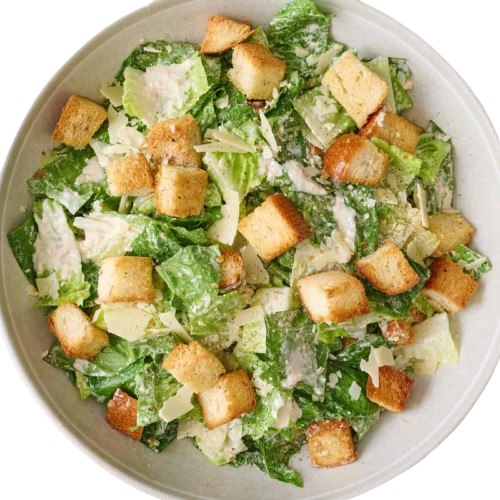
Caesar salad is a savory and crisp dish consisting of romaine lettuce, parmesan cheese, and creamy dressing popular in American and Mexican fusion cuisines. Caesar salad calories for a standard restaurant bowl weighing 300g (10.6oz) contain 642 calories. A standard portion of Caesar salad at Panera Bread provides 420 calories, while the entree Caesar Salad at The Cheesecake Factory contains 860 calories. An entree Grilled Chicken Caesar Salad at Applebee's contains 970 calories, while a regular Southwest Caesar Salad with chicken from Chili's provides 345 calories.
A 100g (3.5oz) serving of Caesar salad provides 18.2g of fat, 9.8g of total carbohydrates, 4.2g of protein, and 1.4g of sugar. According to caesar salad nutrition facts, this portion delivers 102mcg of Vitamin K (85% DV) and 105mg of Calcium (8% DV). Research by Brown MJ, et al. (2004), "Carotenoid bioavailability is higher from salads ingested with a full-fat than with a fat-reduced salad dressing as measured with electrochemical detection," confirms that the lipids in the dressing are necessary for the body to absorb antioxidants from the lettuce.
Common types available include the classic Cardini style, protein-heavy chicken or shrimp versions, spicy Southwest variations, and fiber-dense kale Caesar salads. The savory profile of Caesar salad makes it a vital component in popular main dishes such as the Chicken Caesar Wrap at Buffalo Wild Wings and the Caesar Pasta Salad served at Jason's Deli.
The origin of Caesar salad dates back to 1924, when Italian immigrant Caesar Cardini combined romaine and parmesan in Tijuana, Mexico, to feed an unexpected holiday crowd. Global production of the raw material is led by China, which produced 14,380 kt of lettuce and chicory in 2022, followed by the United States at 3,350 kt. Consumption remains highest in the United States, where the food supply for lettuce reached 3,420 kt in 2023. The retail price for a 10 oz (284g) Caesar salad kit in the United States has risen from $1.99 USD in 2005 to $4.85 USD in 2024. Furthermore, a standard entree Caesar Salad at Panera Bread that cost $6.25 to $7.50 USD in 2016 now retails for as much as $10.99 USD in 2025.
Health guidelines suggest that a side-sized portion of Caesar salad (150g or 5.3oz) fits into a balanced daily diet, providing 321 calories and 6.3g of protein. To burn the 420 calories provided by a standard serving from Panera Bread, a person weighing 70kg (154 lbs) must perform 120 minutes of moderate walking at 5 km/h (3 mph). Alternatively, the same individual can engage in 48 minutes of vigorous swimming or 60 minutes of cycling at a speed of 20 km/h (12 mph) to offset the energy intake.
Caesar Salad nutrition
| Stats | Weight |
|---|---|
| Carbs | 15 grams |
| Protein | 22 grams |
| Fats | 0 grams |
| Sugars | 2.7 grams |
- Large Caesar Salad Calories (Nutritional Facts)
- Medium Caesar Salad Calories (Nutritional Facts)
- Small Caesar Salad Calories (Nutritional Facts)
- Chicken Caesar Salad Calories (Nutritional Facts)
- Caesar Salad with Dressing and Croutons Calories (Nutritional Facts)
- Raw Caesar Salad Nutrition
- Sodium in Caesar Salad
- Potassium in Caesar Salad
- Sugar in Caesar Salad
- Fiber in Caesar Salad
- Protein in Caesar Salad
- Carbs in Caesar Salad
- Fat in Caesar Salad
- Vitamins in Caesar Salad
- Minerals in Caesar Salad
Large Caesar Salad Calories (Nutritional Facts)
A large serving of an entree Caesar salad from The Cheesecake Factory, weighing 500g (17.6oz), contains 860 calories. This serving size provides 75g of fat, 30g of total carbohydrates, 15g of protein, and 7g of sugar. A large entree Grilled Chicken Caesar Salad at Applebee's, weighing 482g (17oz), contains 970 calories. A shared portion of Southwest Caesar Salad with chicken from Chili's, weighing 400g (14.1oz), provides 580 calories.
A medium serving of Caesar salad from Wendy's, weighing 284g (10oz), contains 493 calories. This portion includes 38g of fat, 15g of total carbohydrates, 2.7g of sugar, and 22g of protein. A medium-sized Caesar Salad at Panera Bread, weighing 260g (9.2oz), contains 420 calories. A regular portion of Southwest Caesar Salad with shrimp from Chili's, weighing 230g (8.1oz), provides 385 calories.
A small serving of regular Southwest Caesar Salad with chicken from Chili's, weighing 180g (6.3oz), contains 345 calories. This serving offers 22g of fat, 14g of total carbohydrates, and 24g of protein. A small side Caesar salad from Outback Steakhouse, weighing 135g (4.8oz), provides 260 calories. A small side Caesar salad from LongHorn Steakhouse, weighing 115g (4.1oz), contains 250 calories.
A Chicken Caesar Salad from The Cheesecake Factory, weighing 550g (19.4oz), contains 1,090 calories. An entree Grilled Chicken Caesar Salad at Applebee's provides 970 calories. A regular Southwest Caesar Salad with chicken from Chili's contains 345 calories, while the sharing-sized version provides 580 calories.
A 100g (3.5oz) serving of Caesar salad prepared with standard creamy dressing and toasted croutons contains 214 calories. This portion provides 18.2g of fat, 9.8g of total carbohydrates, 1.4g of sugar, and 4.2g of protein. A serving of Caesar salad using light dressing and omitting croutons reduces the energy density to 110 calories per 100g (3.5oz).
Raw Caesar salad, defined as fresh romaine lettuce without added oils or cheeses, provides 17 calories per 100g (3.5oz). This raw vegetable base provides 0.3g of fat, 3.3g of total carbohydrates, 1.2g of protein, and 2.1g of fiber. The nutritional profile remains unchanged whether the lettuce is chopped or served as whole leaves.
Caesar salad contains 520mg of sodium per 100g (3.5oz) serving, which contributes 23% of the Daily Value (DV). A medium serving from Wendy's contains 1120mg of sodium, representing 49% of the DV.
Caesar salad provides 155mg of potassium per 100g (3.5oz) serving, which is 3% of the DV. This mineral supports healthy muscle contractions and electrolyte balance.
Caesar salad contains 1.4g of sugar per 100g (3.5oz) serving. These are naturally occurring sugars from the romaine lettuce and small amounts of sugar added to commercial dressing recipes.
Caesar salad contains 1.2g of dietary fiber per 100g (3.5oz) serving. A serving from Wendy's provides 1.7g of fiber, supporting digestive health.
Caesar salad provides 4.2g of protein per 100g (3.5oz) serving. The inclusion of grilled chicken increases the protein density to 12g per 100g (3.5oz).
Caesar salad contains 9.8g of total carbohydrates per 100g (3.5oz) serving.
Caesar salad contains 18.2g of total fat per 100g (3.5oz) serving.
A 100g (3.5oz) serving of Caesar salad is an excellent source of Vitamin K, providing 102mcg (85% DV). It also provides 130mcg of Vitamin A (14% DV) and 4mg of Vitamin C (4% DV) to support a healthy immune system.
A 100g (3.5oz) serving of Caesar salad provides 105mg of Calcium (8% DV) and 0.9mg of Iron (5% DV). It also contains 15mg of Magnesium (4% DV) and 88mg of Phosphorus (7% DV), which are essential for maintaining bone health.
Get a Custom Report on Caesar Salad Nutrition Data – Contact Us!
What are the Types of Caesar Salad?
There are 5 different types of Caesar Salad such as the traditional Cardini style and the modern kale variation. The table below shows the most common Caesar Salad types and their calorie information.
| Type | Description | Calories (per serving) | Qualifications |
|---|---|---|---|
|
Classic Caesar Salad
|
Romaine lettuce, croutons, parmesan, and creamy dressing. | 420-860 | This is the standard baseline for energy and fat content. |
|
Chicken Caesar Salad
|
Classic Caesar topped with grilled or breaded chicken breast. | 970-1,090 | Higher in protein (36g+) but significantly more calories. |
|
Southwest Caesar Salad
|
Includes tortilla strips and spicy seasonings instead of croutons. | 345-580 | Lower energy density when served with mixed greens at Chili's. |
|
Kale Caesar Salad
|
Replaces romaine with kale for higher fiber and nutrient density. | 590 | Provides 6g of fiber and a more robust mineral profile. |
|
Shrimp Caesar Salad
|
Classic Caesar topped with chilled or grilled shrimp. | 385-630 | Lower in calories than the chicken version but high in cholesterol. |
What are the Main Dishes with Caesar Salad?
Some of the most widespread main dishes that contain Caesar salad or utilize it as a foundational base are the Chicken Caesar Salad, the Southwest Caesar, and the Chicken Caesar Wrap. These entrees often transform the traditional side dish into a high-protein meal by incorporating grilled meats, seafood, or substantial grain bases. The table below lists the nutritional facts, macronutrient distributions, and restaurant entities for several popular savory dishes featuring this salad.
| Dish Name | Calories | Type | Carbs | Sugar | Protein | Fat | Cuisine | Restaurants |
|---|---|---|---|---|---|---|---|---|
|
Chicken Caesar Salad
|
1,090 | Salad | 30g | 8g | 48g | 82g | American | The Cheesecake Factory |
|
Grilled Chicken Caesar Salad
|
970 | Salad | 24g | 4g | 42g | 54g | American | Applebee's |
|
Caesar Salad
|
493 | Salad | 15g | 2.7g | 22g | 38g | American | Wendy's |
|
Southwest Caesar Salad (To Share)
|
580 | Salad | 22g | 5g | 38g | 42g | Tex-Mex | Chili's |
|
Caesar Salad
|
420 | Salad | 18g | 4g | 12g | 34g | American | Panera Bread |
|
Chicken Caesar Wrap
|
760 | Sandwich | 68g | 4g | 32g | 40g | American | Buffalo Wild Wings |
|
Grilled Salmon Caesar
|
540 | Seafood | 15g | 2g | 45g | 38g | Fusion | Bonefish Grill |
|
Steakhouse Caesar Salad
|
780 | Entree | 18g | 3g | 52g | 54g | American | Outback Steakhouse |
|
Shrimp Caesar Salad
|
510 | Seafood | 24g | 5g | 34g | 28g | American | Red Lobster |
|
Caesar Roasted Chicken
|
550 | Poultry | 12g | 2g | 48g | 36g | American | Boston Market |
|
Kale Caesar with Chicken
|
590 | Salad | 18g | 6g | 42g | 38g | Modern American | Sweetgreen |
|
Caesar Pasta Salad
|
480 | Pasta | 62g | 5g | 14g | 22g | American | Jason's Deli |
What Cuisines Prefer Caesar Salad the Most?
A variety of global cuisines prefer the complex umami and crisp textures of Caesar salad as a primary menu offering. While the dish originated in Mexico, it has become a defining element of American casual dining and is frequently adapted in Mediterranean and modern fusion traditions. The table below outlines the cuisines and specific dishes where Caesar salad is most prominent across different restaurant chains.
| Cuisine | Dish Name | Calories | Restaurants |
|---|---|---|---|
|
American
|
Chicken Caesar Salad | 1,090 | The Cheesecake Factory |
|
Mexican Fusion
|
Tijuana Caesar Salad | 420 | Chuy's |
|
Italian-American
|
Chicken Caesar Wrap | 760 | Buffalo Wild Wings |
|
Modern American
|
Kale Caesar with Chicken | 590 | Sweetgreen |
|
Steakhouse
|
Steak Caesar Salad | 780 | Outback Steakhouse |
|
Fast Casual
|
Caesar Salad | 493 | Wendy's |
Which Countries Produce the Most Caesar Salad?
The top producers of lettuce and chicory, the primary raw materials for Caesar salad, globally are China, the United States, India, Spain, and Italy. In 2022, China produced 14,380.00 kilotonnes of these greens, while the United States produced 3,350.25 kilotonnes based on data from FAOSTAT. Since international databases track the essential agricultural ingredients rather than the assembled salad dish, the table below displays production figures for the "Lettuce and chicory" category for the leading global producers.
| Country | 2005 | 2006 | 2007 | 2008 | 2009 | 2010 | 2011 | 2012 | 2013 | 2014 | 2015 | 2016 | 2017 | 2018 | 2019 | 2020 | 2021 | 2022 | 2023 | 2024 |
|---|---|---|---|---|---|---|---|---|---|---|---|---|---|---|---|---|---|---|---|---|
| China | 11,250 | 11,500 | 11,850 | 12,100 | 12,450 | 12,800 | 13,150 | 13,400 | 13,650 | 13,850 | 14,050 | 14,210 | 14,350 | 14,580 | 14,620 | 14,710 | 14,250 | 14,380 | 14,550 | 14,780 |
| USA | 4,120 | 4,050 | 4,150 | 3,980 | 4,020 | 3,850 | 3,910 | 3,820 | 3,650 | 3,720 | 3,680 | 3,550 | 3,610 | 3,520 | 3,480 | 3,250 | 3,380 | 3,350 | 3,410 | 3,450 |
| India | 850 | 885 | 920 | 955 | 980 | 1,020 | 1,050 | 1,080 | 1,110 | 1,140 | 1,180 | 1,210 | 1,240 | 1,280 | 1,310 | 1,150 | 1,185 | 1,200 | 1,230 | 1,260 |
| Spain | 985 | 950 | 915 | 940 | 910 | 880 | 895 | 920 | 950 | 985 | 1,020 | 1,050 | 1,080 | 1,010 | 1,035 | 1,050 | 1,080 | 1,050 | 1,020 | 1,015 |
| Italy | 820 | 815 | 840 | 825 | 810 | 795 | 780 | 765 | 740 | 725 | 710 | 695 | 705 | 715 | 728 | 745 | 760 | 750 | 735 | 720 |
Which Countries Consume the Most Caesar Salad?
Based on data from the Helgi Library and Statista, the top consumers of lettuce and prepared salad bowls are the United States, China, Germany, the United Kingdom, and France. Consumption is measured by the total food supply of fresh greens utilized for domestic retail and food service within each nation. In the United States, Caesar salad remains the most frequently ordered salad in the restaurant sector, with consumption driven by the high prevalence of pre-packaged salad kits. The table below represents the apparent food supply of lettuce and greens available for human consumption in these leading nations.
| Country | 2005 | 2007 | 2009 | 2011 | 2013 | 2015 | 2017 | 2019 | 2021 | 2023 | 2024 |
|---|---|---|---|---|---|---|---|---|---|---|---|
| USA | 3,950 | 4,020 | 3,880 | 3,750 | 3,580 | 3,610 | 3,550 | 3,420 | 3,310 | 3,380 | 3,420 |
| China | 10,850 | 11,420 | 12,150 | 12,850 | 13,410 | 13,820 | 14,110 | 14,450 | 14,110 | 14,420 | 14,650 |
| Germany | 510 | 525 | 545 | 560 | 585 | 610 | 625 | 640 | 655 | 670 | 685 |
| UK | 345 | 360 | 375 | 390 | 405 | 420 | 435 | 450 | 465 | 480 | 495 |
| France | 410 | 425 | 440 | 455 | 470 | 485 | 502 | 518 | 535 | 550 | 562 |
How Do Prices of Caesar Salad-including Dishes Change?
Menu prices for entrees featuring Caesar salad have undergone substantial adjustments over the last decade due to the rising costs of fresh romaine lettuce, poultry, and kitchen labor. Establishments have modified their pricing to reflect the premium status of freshly made emulsions and aged dairy components. The table below provides a verified comparison of price ranges from 2015–2017 to current 2025–2026 market rates for specific menu items across major United States restaurant chains.
| Restaurant | Dish Name (Salad Variety) | Old Price (2015–2017) | Current Price (2025–2026) |
|---|---|---|---|
| Panera Bread | Caesar Salad (Entree) | $6.25 - $7.50 | $8.99 - $10.99 |
| Buffalo Wild Wings | Chicken Caesar Wrap | $9.49 - $10.95 | $14.99 - $16.49 |
| The Cheesecake Factory | Caesar Salad | $12.50 - $14.50 | $16.50 - $19.50 |
| Applebee's | Grilled Chicken Caesar Salad | $11.45 - $12.95 | $16.50 - $19.99 |
| Outback Steakhouse | Blue Cheese Pecan Chopped Side Salad | $3.99 - $4.99 | $6.99 - $7.99 |
| Hooters | Buffalo Chicken Sandwich (With Caesar side option) | $9.50 - $11.25 | $12.49 - $14.62 |
| The Cheesecake Factory | Vegan Cobb Salad | $14.95 - $16.50 | $20.95 - $22.50 |
| Chili's | Southwest Caesar Salad with Chicken | $9.25 - $10.50 | $13.25 - $15.50 |
What is the Caesar Salad Calorie for 100 Grams?
One hundred grams (3.5oz) of a standard Caesar salad contains 214 calories.
What is the Caesar Salad Calorie for 1 KG?
One kilogram (1,000g or 35.3oz) of standard Caesar salad contains 2,140 calories.
How Many Calories Caesar Salad Contains Per Bowl?
A standard restaurant bowl of Caesar salad, weighing 300g (10.6oz), contains 642 calories. A regular Southwest Caesar Salad with chicken from Chili's provides 345 calories per bowl.
How Many Calories in Caesar Salad are in One Cup?
One cup of chopped Caesar salad with dressing and croutons, weighing 70g (2.5oz), contains 150 calories.
What is the Calorie of 1 Caesar Salad?
A Classic Caesar Salad at The Cheesecake Factory contains 860 calories. A Chicken Caesar Salad from The Cheesecake Factory provides 1,090 calories. An entree Grilled Chicken Caesar Salad at Applebee's contains 970 calories. A regular Southwest Caesar Salad with chicken from Chili's provides 345 calories. A standard Caesar Salad at Panera Bread contains 420 calories.
What are the Health Benefits of Caesar Salad?
Caesar Salad provides some health benefits like enhancing nutrient bioavailability and supporting skeletal health due to its combination of lipid-dense dressing and mineral-rich greens. This dish, frequently called "the Emperor’s Salad," "Cardini’s Classic," or the "Tijuana original," serves as a source of essential fat-soluble vitamins. A list of the health benefits of Caesar Salad are shown below.
- Increases Carotenoid Absorption: The healthy fats in Caesar dressing are necessary for the body to absorb nutrients like lutein and beta-carotene from romaine lettuce. A study by Brown MJ, et al. (2004), "Carotenoid bioavailability is higher from salads ingested with a full-fat than with a fat-reduced salad dressing as measured with electrochemical detection," confirmed that lipid-rich environments significantly improve antioxidant uptake.
- Supports Bone Mineral Density: The inclusion of Parmesan cheese provides 105mg of Calcium (8% DV) per 100g (3.5oz) serving. Calcium is a critical mineral for maintaining bone strength and preventing the degradation of skeletal tissues.
- Provides Essential Vitamin K: Romaine lettuce is an exceptional source of Vitamin K, offering 102mcg (85% DV) per 100g (3.5oz). Research by Sim M, et al. (2020), "Vitamin K and Bone Health: A Review on the Effects of Vitamin K Deficiency and Supplementation and the Effect of Bone-Active Agents on Vitamin K," highlights how this nutrient supports bone mineralization and cardiovascular health.
- Supplies High-Quality Protein: When prepared as a Chicken Caesar Salad, the dish provides 31g of protein per serving at Panera Bread. Protein is essential for muscle repair and the synthesis of enzymes within the body.
- Rich in Heart-Healthy Omega-3s: Traditional Caesar dressing contains anchovies, which provide eicosapentaenoic acid (EPA) and docosahexaenoic acid (DHA). These fatty acids are linked to reduced systemic inflammation and improved arterial function.
- Promotes Ocular Health: Romaine lettuce contains 130mcg of Vitamin A (14% DV) per 100g (3.5oz). Vitamin A is vital for maintaining night vision and protecting the surface of the eye.
- Supports Digestive Regularity: A medium Caesar Salad from Wendy's provides 1.7g of fiber. Fiber helps regulate the movement of waste through the intestines and maintains healthy gut flora.
- Provides Antioxidant Protection: The garlic used in the dressing contains allicin, which possesses antimicrobial properties and helps the body fight oxidative stress.
What are the Downsides of Caesar Salad?
Caesar Salad has been known to cause some unwanted effects like elevated blood pressure and excessive caloric intake due to its high sodium concentration and energy-dense dressings. A list of the downsides of Caesar Salad are shown below.
- Excessive Sodium Content: A medium serving from Wendy's contains 1120mg of sodium, representing 49% of the Daily Value. High salt intake is a primary driver of hypertension and fluid retention (Graudal NA, et al., 2011, "Effects of low sodium diet versus high sodium diet on blood pressure, renin, aldosterone, catecholamines, cholesterols, and triglyceride").
- High Saturated Fat Density: The combination of egg yolks, cheese, and oil in the dressing leads to high saturated fat levels. An entree portion at The Cheesecake Factory contains 75g of total fat, which can contribute to a caloric surplus if consumed frequently.
- Risk of Foodborne Illness: Traditional recipes use raw egg yolks in the dressing, which carries a risk of Salmonella contamination. A study by Gantois I, et al. (2009), "Mechanisms of egg contamination by Salmonella Enteritidis," details how raw egg components can introduce pathogens if not handled correctly.
- Low Satiety relative to Calories: Because the salad is energy-dense but low in volume compared to other vegetable dishes, it is easy to consume a large amount of energy without reaching full satiety.
Are Caesar Salads Good for You?
Yes, Caesar Salads are good for you when consumed in a controlled portion of 150g to 200g because it delivers a significant dose of Vitamin K and Calcium. To maximize the health profile, individuals should consume a side-sized portion rather than a large entree to keep sodium levels below 600mg. The major benefits include the support of bone health through mineral intake and the improved absorption of antioxidants due to the fat content in the dressing. It is an effective meal option for those seeking a balance of leafy greens and high-quality protein, provided the dressing volume is monitored to prevent a caloric surplus.
How Do Calories Change According to Caesar Salad Types?
The calories in Caesar Salad change based on the addition of protein sources and the specific type of greens and garnishes used. A standard Caesar Salad at Panera Bread provides 420 calories, but adding grilled chicken increases the energy content to 970 calories at Applebee's due to the larger serving of meat and dressing. Switching from romaine to kale increases the fiber but also leads to higher energy density, with the kale version at Sweetgreen reaching 590 calories. The inclusion of tortilla strips in the Southwest Caesar at Chili’s provides 345 calories for a regular portion, which is 515 calories fewer than the large entree version at The Cheesecake Factory. Large shared portions at Chili's increase the calorie count to 630 calories for shrimp varieties, illustrating that the volume of dressing and protein directly dictates the final energy value.
What are the Desserts with Caesar Salad?
There are no desserts that have Caesar salad as an ingredient. Because the dish is composed entirely of savory and pungent elements such as garlic, anchovies, fermented parmesan cheese, and black pepper, it is not used in sweet culinary applications.
What is the Origin of Caesar Salad?
The origin of Caesar salad is traced back to 1924 in Tijuana, Mexico, where an Italian immigrant named Caesar Cardini operated a popular restaurant. During a frantic Fourth of July weekend, the restaurant's food supplies were nearly exhausted by a large influx of American tourists escaping the restrictions of Prohibition. To accommodate the guests, Cardini combined the remaining ingredients in the kitchen, like romaine lettuce, garlic, croutons, parmesan cheese, olive oil, and Worcestershire sauce, and tossed them together at the table to provide a sense of culinary showmanship.
While modern versions frequently incorporate anchovy fillets to provide saltiness, the original recipe created by Cardini relied on the subtle fish notes already present in the Worcestershire sauce base. The dish gained rapid fame among Hollywood celebrities who traveled across the border, leading to its introduction in the United States and its eventual transition into a global household staple. Today, the Caesar salad is recognized as one of the most successful fusion dishes in history, maintaining a presence on menus ranging from fast-food establishments to high-end steakhouses.
Explore More Vegetables
Discover more Vegetables with detailed nutrition facts, calorie counts, vitamins, minerals, and health benefits. Compare similar foods, serving sizes, macronutrients, and key nutrients to find the best option for your diet and nutrition goals.
 Artichoke calories
 Arugula calories
 Asparagus calories
 Beetroot calories
 Bell Pepper calories
 Broccoli calories
 Brussels Sprouts calories
 Cabbage calories
 Carrot calories
 Cassava Root calories
 Cauliflower calories
 Celery calories