Calories and Nutritions in Brussels Sprouts
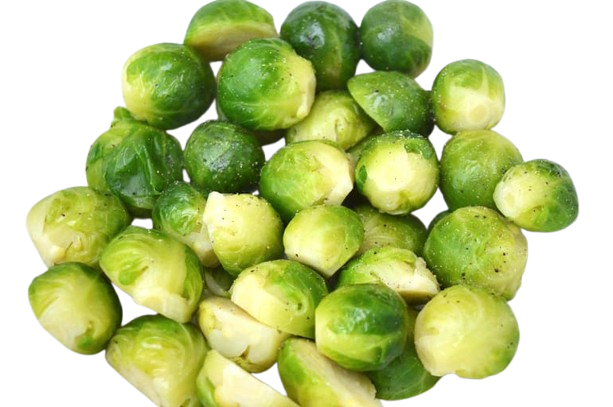
Brussels sprouts are a low-calorie food. The calories in Brussels sprouts range from 38 calories for 1 cup, to 43 calories for a 100g serving. A single medium raw Brussels sprout (20g) contains 8 calories. Brussels sprouts nutrition information for a 100g serving include 177µg Vitamin K (147% DV), 85mg Vitamin C (94% DV), and 3.8g fiber (14% DV). This nutritious vegetable also offers 3.8g of dietary fiber per 100g (14% DV). Research indicates cruciferous vegetables like Brussels sprouts contain glucosinolates, compounds that may offer protective health benefits (Verhoeven DT, Goldbohm RA, et al. 1996).
Common types are mainly green, though purple varieties exist, all sharing similar low Brussels sprouts calories. Major global producers of Brussels sprouts include countries in Europe like the Netherlands and the UK, along with the United States, particularly California. Consumption is highest in these producing regions. Prices for fresh Brussels sprouts in the US have seen an upward trend, often retailing for $3 to $5 per pound.
Brussels sprouts are frequently served roasted, often with bacon and balsamic glaze, as seen on menus at restaurants like The Cheesecake Factory and Yard House. A standard serving of Brussels sprouts is one cup raw (88g) or one half-cup cooked (78g), providing 38-56 calories. Burning the 45 calories from consuming a cup of raw Brussels sprouts can be achieved with light activities such as 6-8 minutes of walking or 4-5 minutes of cycling at a moderate pace.
Brussels Sprouts nutrition
| Stats | Weight |
|---|---|
| Carbs | 8.95 grams |
| Protein | 3.38 grams |
| Fats | 0.3 grams |
| Sugars | 2.2 grams |
- 1 Cup Brussels Sprouts Calories (Nutritional Facts)
- Raw Brussels Sprouts Nutrition
- Sodium in Brussels Sprouts
- Potassium in Brussels Sprouts
- Sugar in Brussels Sprouts
- Fiber in Brussels Sprouts
- Protein in Brussels Sprouts
- Carbs in Brussels Sprouts
- Fat in Brussels Sprouts
- Vitamins in Brussels Sprouts
- Minerals in Brussels Sprouts
1 Cup Brussels Sprouts Calories (Nutritional Facts)
One cup of raw Brussels sprouts (88g or 3.1 oz) contains 38 calories, 0.3g of fat, 3.0g of protein, and 7.9g of carbohydrates. One cup of cooked, boiled Brussels sprouts (156g or 5.5 oz) contains 56 calories, 0.8g of fat, 4.0g of protein, and 11.2g of carbohydrates.
A 100g (3.53 oz) serving of raw Brussels sprouts contains 43 calories, 0.3g of fat, 3.4g of protein, and 8.9g of carbohydrates.
Brussels sprouts are naturally low in sodium. A 100g serving of raw Brussels sprouts contains 25mg of sodium (1% DV). One cup of raw Brussels sprouts (88g) contains 22mg of sodium (1% DV).
Brussels sprouts are a good source of potassium. A 100g serving of raw Brussels sprouts provides 389mg of potassium (8% DV). One cup of raw Brussels sprouts (88g) provides 342mg of potassium (7% DV).
Brussels sprouts contain natural sugars. A 100g serving of raw Brussels sprouts has 2.2g of sugar. One cup of raw Brussels sprouts (88g) has 1.9g of sugar.
Brussels sprouts are an excellent source of dietary fiber. A 100g serving of raw Brussels sprouts provides 3.8g of fiber (14% DV). One cup of raw Brussels sprouts (88g) provides 3.3g of fiber (12% DV).
Brussels sprouts contain a notable amount of protein for a vegetable. A 100g serving of raw Brussels sprouts has 3.4g of protein. One cup of raw Brussels sprouts (88g) has 3.0g of protein.
Brussels sprouts contain carbohydrates, mainly from fiber and natural sugars. A 100g serving of raw Brussels sprouts contains 8.9g of carbohydrates. One cup of raw Brussels sprouts (88g) contains 7.9g of carbohydrates.
Brussels sprouts are very low in fat. A 100g serving of raw Brussels sprouts contains 0.3g of fat. One cup of raw Brussels sprouts (88g) contains 0.3g of fat.
Brussels sprouts are exceptionally rich in Vitamin K and Vitamin C, and a good source of Folate and Vitamin B6. A 100g serving of raw Brussels sprouts provides Vitamin K (177µg, 147% DV), Vitamin C (85mg, 94% DV), Folate (61µg DFE, 15% DV), and Vitamin B6 (0.2mg, 12% DV). They also contain Vitamin A (38µg RAE, 4% DV). Cooking methods like boiling can reduce levels of water-soluble vitamins like Vitamin C and Folate.
A 100g serving of raw Brussels sprouts provides important minerals including Manganese (0.3mg, 13% DV), Iron (1.4mg, 8% DV), Phosphorus (69mg, 6% DV), and Magnesium (23mg, 5% DV), in addition to potassium and sodium.
Get a Custom Report on Brussels Sprouts Nutrition Data – Contact Us!
What are the Types of Brussels Sprouts?
Most Brussels sprouts sold commercially are green, but there are different cultivars that might vary slightly in size, time to maturity, or subtle flavor notes. Color is the main visual differentiator, as shown in the following table:
| Type | Description | Calories (per 100g, raw) | Calorie Differences & Qualifications |
|---|---|---|---|
|
Green Brussels Sprouts
|
The most common type, small, round, and green, resembling miniature cabbages. Firm texture, slightly bitter to nutty flavor. | 43 | Standard low-calorie, nutrient-dense profile. Rich in Vitamin K, C, fiber, and glucosinolates. |
|
Purple (or Red) Brussels Sprouts
|
Have a reddish-purple hue due to the presence of anthocyanins, a type of antioxidant. Flavor is often slightly milder/sweeter. | 40-45 | Similar calorie count to green varieties. The purple color indicates a higher concentration of anthocyanins, offering additional antioxidant benefits. |
|
Kalettes® (Flower Sprouts)
|
A hybrid vegetable, a cross between kale and Brussels sprouts. Ruffled leaves, looks like a tiny open flower. | 40-50 | Calories similar to Brussels sprouts. Combines the nutty flavor of Brussels sprouts with the milder taste of kale. Nutrient profile reflects both parent vegetables. |
What are the Main Dishes with Brussels Sprouts?
Brussels sprouts are most commonly served as a side dish but can be integral to main courses, especially when roasted, or incorporated into larger vegetable medleys or grain bowls. The table below lists several dishes with Brussels sprouts:
| Dish Name | Calories (Estimate per serving) | Type of Brussels Sprouts Prep | Carbs (g) | Sugar (g) | Protein (g) | Fat (g) | Cuisine | Restaurants |
|---|---|---|---|---|---|---|---|---|
|
Roasted Brussels Sprouts (Side Dish)
|
150-300 | Roasted | 15-25 | 4-8 | 5-10 | 8-20 | American/European | The Cheesecake Factory (Crispy Brussels Sprouts appetizer), Seasons 52, Yard House, many steakhouses & New American restaurants. |
|
Brussels Sprouts with Bacon & Balsamic Glaze
|
200-400 | Roasted/Sautéed | 18-30 | 8-15 | 8-15 | 12-25 | American | Common on menus at gastropubs and contemporary American restaurants (e.g., First Watch - seasonal/regional) |
|
Shaved Brussels Sprouts Salad
|
250-450 | Raw, Shaved | 20-35 | 5-10 | 6-12 | 15-30 | American/Italian | Panera Bread (seasonal salads sometimes feature), True Food Kitchen, various upscale casual & health-focused eateries. |
|
Brussels Sprouts Hash (with egg/protein)
|
350-550 | Sautéed/Roasted, Chopped | 25-40 | 5-10 | 15-25 | 18-30 | American (Brunch) | Snooze A.M. Eatery (seasonal hash options), local brunch spots. |
|
Pasta with Roasted Brussels Sprouts
|
450-700 | Roasted | 50-70 | 6-12 | 15-25 | 18-30 | Italian-American | Less common in large chains, more a feature in smaller Italian restaurants or modern American eateries with pasta dishes. |
|
Grain Bowl with Brussels Sprouts
|
400-600 | Roasted/Steamed | 50-70 | 8-15 | 15-25 | 15-25 | Modern American/Health-focused | Sweetgreen (seasonal/customizable bowls), CoreLife Eatery, other build-your-own bowl concepts. |
|
Sheet Pan Dinner with Chicken/Sausage & Brussels Sprouts
|
500-800 | Roasted | 30-50 | 8-15 | 30-50 | 25-45 | American | More a home-cooking concept but reflects how Brussels sprouts are incorporated into full meals. |
What Cuisines Prefer Brussels Sprouts the Most?
Brussels sprouts are used more often in Northern European cuisines, particularly British, Belgian, and Dutch, and modern American cuisine. The table below highlights some cuisines where Brussels sprouts are commonly consumed:
| Cuisine | Dish Name | Calories (Estimate per serving) | Restaurants |
|---|---|---|---|
|
American (Modern)
|
Roasted Brussels Sprouts | 150-300 (Side) | The Cheesecake Factory, Seasons 52, Yard House, many New American restaurants |
|
American
|
Brussels Sprouts with Bacon | 200-400 (Side) | First Watch (seasonal), gastropubs, contemporary American eateries |
|
British
|
Steamed/Boiled Brussels Sprouts (Traditional side with roasts) | 60-100 (Side) | Traditional British pubs and restaurants (often part of a Sunday Roast) |
|
Belgian/Dutch
|
Sautéed Brussels Sprouts (often with lardons/onions) | 150-300 (Side) | European bistros, restaurants featuring Belgian or Dutch cuisine. |
|
Italian-American
|
Pasta with Roasted Brussels Sprouts | 450-700 | Some contemporary Italian-American restaurants. |
Which Countries Produce the Most Brussels Sprouts?
Global production of Brussels sprouts is concentrated in Europe and North America. The Netherlands has historically been a very significant producer, along with the United Kingdom, Germany, Belgium, and the United States (primarily California and New York). The table below shows the top available producers of Brussels Sprouts from 2004 to 2022 in kilotonnes (kt).
| Country | 2004 | 2005 | 2006 | 2007 | 2008 | 2009 | 2010 | 2011 | 2012 | 2013 | 2014 | 2015 | 2016 | 2017 | 2018 | 2019 | 2020 | 2021 | 2022 |
|---|---|---|---|---|---|---|---|---|---|---|---|---|---|---|---|---|---|---|---|
| Netherlands | 95* | 90* | 85* | 80* | 75* | 70* | 83 | 85 | 80 | 78 | 75 | 70 | 65 | 60* | 58* | 55* | 53* | 50* | 48* |
| United Kingdom | 80* | 75* | 70* | 65* | 60* | 55* | 60 | 62 | 58 | 55 | 53 | 50 | 48 | 45* | 43* | 40* | 38* | 35* | 33* |
| USA | 32 | 30 | 33 | 34 | 35 | 36 | 37 | 38 | 39 | 40 | 41 | 42 | 43 | 38 | 39 | 40 | 35 | 36 | 34* |
| Germany | 50* | 48* | 45* | 42* | 40* | 38* | 45 | 43 | 40 | 38 | 36 | 34 | 32 | 30* | 28* | 26* | 25* | 24* | 23* |
| Belgium | 40* | 38* | 35* | 32* | 30* | 28* | 30 | 28 | 26 | 25 | 24 | 23 | 22 | 20* | 19* | 18* | 17* | 16* | 15* |
| Mexico | 15* | 18* | 20* | 22* | 25* | 28* | 30* | 32* | 35* | 40* | 45* | 50* | 55* | 60* | 62* | 65* | 68* | 70* | 72* |
| France | 30* | 28* | 26* | 24* | 22* | 20* | 22 | 21 | 20 | 19 | 18 | 17 | 16 | 15* | 14* | 13* | 12* | 11* | 10* |
| Poland | 10* | 12* | 14* | 16* | 18* | 20* | 22* | 24* | 26* | 28* | 30* | 32* | 34* | 35* | 36* | 37* | 38* | 39* | 40* |
Which Countries Consume the Most Brussels Sprouts?
Consumption of Brussels sprouts is highest in European countries, including the United Kingdom, the Netherlands, Belgium, and Germany. North America, especially the United States and Canada, also has significant consumption, which has increased in recent years due to growing popularity. The table below shows estimated food supply quantity for Brussels Sprouts in selected countries from 2004 to 2021 in kilotonnes (kt).
| Country | 2004 | 2005 | 2006 | 2007 | 2008 | 2009 | 2010 | 2011 | 2012 | 2013 | 2014 | 2015 | 2016 | 2017 | 2018 | 2019 | 2020 | 2021 |
|---|---|---|---|---|---|---|---|---|---|---|---|---|---|---|---|---|---|---|
| United Kingdom | 75* | 70* | 68* | 63* | 58* | 53* | 58* | 60* | 56* | 53* | 51* | 48* | 46* | 43* | 41* | 38* | 36* | 34* |
| Netherlands | 70* | 68* | 65* | 62* | 60* | 58* | 60* | 62* | 58* | 56* | 54* | 52* | 50* | 48* | 46* | 44* | 42* | 40* |
| USA | 30* | 28* | 31* | 32* | 33* | 34* | 35* | 36* | 37* | 38* | 39* | 40* | 41* | 36* | 37* | 38* | 33* | 34* |
| Germany | 45* | 43* | 41* | 39* | 37* | 35* | 40* | 38* | 36* | 34* | 33* | 31* | 30* | 28* | 26* | 24* | 23* | 22* |
| Belgium | 35* | 33* | 31* | 29* | 27* | 25* | 27* | 26* | 24* | 23* | 22* | 21* | 20* | 19* | 18* | 17* | 16* | 15* |
| Canada | 10* | 11* | 12* | 12* | 13* | 14* | 15* | 15* | 16* | 16* | 17* | 18* | 18* | 17* | 17* | 18* | 17* | 17* |
| France | 28* | 26* | 24* | 22* | 20* | 18* | 20* | 19* | 18* | 17* | 16* | 15* | 14* | 13* | 12* | 11* | 10* | 9* |
How Do Prices of Brussels Sprouts-including Dishes Change?
The rising cost of fresh Brussels sprouts, along with general increases in other ingredients, labor, and restaurant operational expenses, has led to higher menu prices for Brussels sprout-including dishes. A price comparison table illustrating how the pricing of common Brussels sprouts dishes has changed is provided below:
| Restaurant | Dish | Old Price | Current Price (2025) |
|---|---|---|---|
| The Cheesecake Factory | Crispy Brussels Sprouts (Appetizer/Side) | $7.95 - $9.95 (2012) | $12.95 - $14.95 |
| Yard House | Roasted Brussels Sprouts (often w/ additions) | $8.00 - $10.00 (2014) | $11.49 - $13.00 |
| Seasons 52 | Caramelized Brussels Sprouts (Side) | $5.00 - $7.00 (2010) | $7.00 - $10.00 |
| First Watch | Brussels Sprouts Hash (Seasonal/Regional) | $9.00 - $11.00 (2015) | $11.00 - $16.00 |
How Does the Price of Brussels Sprouts Change for the Last 20 Years?
The price of Brussels sprouts in the United States has seen a general upward trend over the past 20 years, with notable fluctuations. Retail prices per pound were often in the $2.00 to $3.00 in the early to mid-2000s. Today, with the growing popularity of brussels sprouts, prices can range from $3.00 to $5.00 per pound or higher, especially for pre-trimmed or stalk-on sprouts. The lowest prices are seen during peak domestic harvest seasons (fall and winter). The highest prices often occur during off-seasons when supply relies more on imports (from Mexico).
| Year | Price |
|---|---|
| 2005 | $2.2 |
| 2006 | $2.3 |
| 2007 | $2.4 |
| 2008 | $2.5 |
| 2009 | $2.6 |
| 2010 | $2.7 |
| 2011 | $2.85 |
| 2012 | $3 |
| 2013 | $3.1 |
| 2014 | $3.2 |
| 2015 | $3.3 |
| 2016 | $3.4 |
| 2017 | $3.5 |
| 2018 | $3.6 |
| 2019 | $3.75 |
| 2020 | $3.9 |
| 2021 | $4.1 |
| 2022 | $4.3 |
| 2023 | $4.5 |
| 2024 | $4.7 |
What is the Brussels Sprouts Calorie for 100 Grams?
100 grams of raw Brussels sprouts contain 43 calories. 100 grams of boiled Brussels sprouts contain 36 calories.
What is the Brussels Sprouts Calorie for 1 KG?
One kilogram (1000g) of raw Brussels sprouts contains 430 calories. One kilogram of boiled Brussels sprouts contains 360 calories.
What is the Calorie of 1 Brussels sprout?
The calorie content of one Brussels sprout depends on its size. One medium raw Brussels sprout (19-21g) contains 8-9 calories. One large raw Brussels sprout (30g) contains 13 calories.
What are the Health Benefits of Brussels Sprouts?
Brussels sprouts are nutrient-dense cruciferous vegetables offering a wide array of health benefits due to their impressive nutritional composition. The health benefits of brussels sprouts include:
- Exceptionally Rich in Vitamin K: Brussels sprouts are one of the best dietary sources of Vitamin K, which is crucial for blood clotting and plays a vital role in bone health by helping to regulate calcium. (National Institutes of Health, Office of Dietary Supplements. Vitamin K Fact Sheet for Health Professionals)
- Excellent Source of Vitamin C: They are packed with Vitamin C, a powerful antioxidant that boosts the immune system, promotes collagen synthesis for healthy skin, and aids in the absorption of iron. (National Institutes of Health, Office of Dietary Supplements. Vitamin C Fact Sheet for Health Professionals)
- High in Dietary Fiber: Brussels sprouts provide a significant amount of fiber, which supports digestive health by promoting bowel regularity, preventing constipation, and feeding beneficial gut bacteria. Fiber also helps with blood sugar control and satiety. (Anderson JW, Baird P, et al. 2009. Health benefits of dietary fiber)
- Contain Glucosinolates with Potential Anti-Cancer Properties: Like other cruciferous vegetables, Brussels sprouts are rich in glucosinolates, which break down into biologically active compounds like isothiocyanates (e.g., sulforaphane). These compounds have been extensively studied for their potential to inhibit cancer development and progression. (Verhoeven DT, Goldbohm RA, et al. 1996. Epidemiological studies on brassica vegetables and cancer risk)
- Rich in Antioxidants: Beyond Vitamin C and glucosinolate-derived compounds, Brussels sprouts contain other antioxidants like kaempferol, which can help reduce oxidative stress and inflammation, protecting against chronic diseases. (Park CH, Kim YS, et al. 2011. Kaempferol, a dietary flavonoid, is a novel blocker of chemokine receptor CXCR4)
- Good Source of Folate: They provide folate (Vitamin B9), essential for DNA synthesis and repair, cell division, and red blood cell formation. Adequate folate intake is particularly important during pregnancy to prevent neural tube defects. (National Institutes of Health, Office of Dietary Supplements. Folate Fact Sheet for Health Professionals)
- May Support Heart Health: The fiber, potassium, and antioxidant compounds in Brussels sprouts can contribute to cardiovascular health by helping to lower blood pressure, reduce LDL cholesterol, and decrease inflammation. (Joshipura KJ, Hu FB, et al. 2001. The effect of fruit and vegetable intake on risk for coronary heart disease)
- Aid in Blood Sugar Control: The fiber content in Brussels sprouts helps slow down the absorption of sugar into the bloodstream, which can aid in maintaining stable blood sugar levels. (Weickert MO, Pfeiffer AFH. 2018. Impact of dietary fiber on gut microbiota in host health and disease)
What are the Downsides of Brussels Sprouts?
Brussels sprouts can have some downsides for certain individuals:
- May Cause Gas and Bloating: Brussels sprouts contain raffinose, a complex sugar that humans lack the enzyme to fully break down in the small intestine. When raffinose reaches the large intestine, bacteria ferment it, producing gas that can lead to bloating, flatulence, and abdominal discomfort, especially in individuals with sensitive digestive systems or when consumed in large quantities. (Barrett JS, Gibson PR. 2012. Fermentable oligosaccharides, disaccharides, monosaccharides and polyols (FODMAPs) and nonallergic food intolerance: FODMAPs or food chemicals?)
- Contain Goitrogens (for those with thyroid issues): As cruciferous vegetables, Brussels sprouts contain goitrogens, which can interfere with thyroid hormone production, particularly in individuals with iodine deficiency or pre-existing thyroid conditions. However, this effect is primarily a concern with very high, raw intake; cooking usually reduces goitrogen levels significantly, and for most people with normal thyroid function and adequate iodine intake, moderate consumption is not an issue. (Fenwick GR, Heaney RK, Mullin WJ. 1983. Glucosinolates and their breakdown products in food and food plants)
- Potential for Interactions with Blood Thinners (High Vitamin K): Due to their exceptionally high Vitamin K content, individuals taking anticoagulant medications like warfarin (Coumadin) need to maintain a consistent intake of Brussels sprouts and other Vitamin K-rich foods. Sudden large increases or decreases in Vitamin K intake can affect the medication's efficacy. Consultation with a healthcare provider is essential. (National Institutes of Health, Office of Dietary Supplements. Vitamin K Fact Sheet for Health Professionals)
Do Brussels Sprouts Make You Gassy?
Yes, Brussels sprouts can make you gassy since they contain raffinose, a type of complex carbohydrate (oligosaccharide) that the human small intestine cannot fully digest due to the lack of a specific enzyme called alpha-galactosidase. When undigested raffinose passes into the large intestine, it is fermented by gut bacteria. This fermentation process produces gases like hydrogen, methane, and carbon dioxide as byproducts (Suarez FL, et al. 1998. Breathtaking results: a study to determine the relationship between flatulence and other clinical manifestations). The accumulation of these gases can lead to increased flatulence and sometimes bloating or abdominal discomfort, especially in individuals who are not used to consuming high-fiber foods or have sensitive digestive systems. Cooking Brussels sprouts thoroughly can sometimes make them slightly easier to digest, but the raffinose content remains.
Are Brussels Sprouts Good for You?
Yes, Brussels sprouts are very good for you. They are a nutritional powerhouse, exceptionally rich in Vitamin K for bone health and blood clotting, and Vitamin C, a potent antioxidant supporting immune function. They are loaded with dietary fiber, crucial for digestive health and blood sugar regulation, and contain unique sulfur-containing compounds called glucosinolates, which have been linked to anti-cancer properties and detoxification support (Zhang Y, Talalay P. 1994. Anticarcinogenic activities of organic isothiocyanates: chemistry and mechanisms). Brussels sprouts also provide folate, potassium, and other antioxidants, contributing to overall health, including heart health and reduced inflammation. While they can cause gas in some individuals and require consideration for those on blood thinners due to high Vitamin K, their impressive nutrient density and array of health-promoting compounds make them an excellent addition to a balanced diet for most people.
How Do Calories Change According to Brussels Sprouts Types?
The calorie content of different types of Brussels sprouts, such as standard green and less common purple varieties, is very similar, ranging from 40 to 45 calories per 100g raw. Kalettes®, a hybrid of kale and Brussels sprouts, also fall within this low-calorie range, containing 40 to 50 calories per 100g. The primary nutritional distinctions between green and purple Brussels sprouts lie in their phytonutrient content, particularly the anthocyanins responsible for the purple color, rather than significant differences in their base calories, protein, fat, or carbohydrate content. All types remain low-calorie, nutrient-dense vegetables.
What are the Desserts with Brussels Sprouts?
Brussels sprouts are almost exclusively used in savory dishes due to their distinct, slightly bitter, and cabbage-like flavor. There are no known traditional or mainstream desserts that feature Brussels sprouts as a primary ingredient.
What is the Serving Size for Brussels Sprouts?
A standard serving of Brussels sprouts is one cup of raw Brussels sprouts, which weighs 88g (3.1 oz), or one half-cup of cooked Brussels sprouts, which weighs 78g (2.75 oz). In terms of pieces, one cup of raw Brussels sprouts contains 5 to 7 medium-sized sprouts. The USDA MyPlate guidelines consider one cup of raw or cooked vegetables, or two cups of raw leafy greens, as a one-cup equivalent from the vegetable group. This serving provides a good amount of fiber, Vitamin K, and Vitamin C.
What is the Origin of the Brussels Sprouts?
The origin of Brussels sprouts (Brassica oleracea var. gemmifera) is believed to be in ancient Rome, though the modern form we recognize today was likely cultivated in the region of Brussels, Belgium, as early as the 13th century, which is where they derive their name. They are part of the same species as cabbage, broccoli, kale, and cauliflower. Their cultivation spread throughout Northern Europe in the 16th century and they were later introduced to the Americas by European settlers.
A popular dish showcasing Brussels sprouts is Roasted Brussels Sprouts with Balsamic Glaze and Bacon. In the late 20th and early 21st centuries, chefs began roasting them at high heat to achieve a crispy exterior and caramelized sweetness, often pairing them with rich, savory ingredients like bacon and the tangy sweetness of a balsamic reduction. This preparation method dramatically improved their appeal, transforming them from an often-disliked boiled vegetable into a trendy and flavorful dish found on many gastropub and contemporary American restaurant menus.
Explore More Vegetables
Discover more Vegetables with detailed nutrition facts, calorie counts, vitamins, minerals, and health benefits. Compare similar foods, serving sizes, macronutrients, and key nutrients to find the best option for your diet and nutrition goals.
 Artichoke calories
 Arugula calories
 Asparagus calories
 Beetroot calories
 Bell Pepper calories
 Broccoli calories
 Cabbage calories
 Caesar Salad calories
 Carrot calories
 Cassava Root calories
 Cauliflower calories
 Celery calories