Calories and Nutritions in Cassava Root
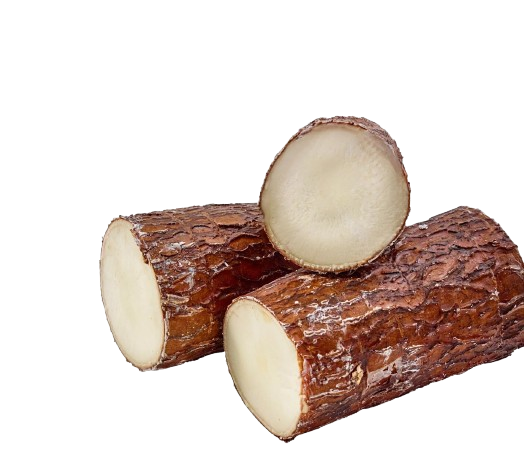
Cassava root is a starchy tuberous vegetable characterized by a thick fibrous bark and white flesh. A single small raw cassava root (150g) contains 240 calories, while a large raw root (500g) provides 800 calories. Cooking methods drastically alter the energy density, as a large serving of fried cassava (100g) contains 280 calories due to oil absorption, whereas a large serving of steamed cassava (100g) provides only 160 calories. Baked cassava (100g) has 170 calories, while a 100g portion of raw cassava root offers 160 calories, and a cup of raw cubed cassava (206g) contains 330 calories. A serving of Goya Frozen Yuca (85g) provides 120 calories, while a serving of Iberia Frozen Cassava (100g) contains 160 calories.
An examination of cassava root nutrition facts reveals a food defined by a high carbohydrate content and significant Vitamin C, with a large raw serving (500g) delivering 190g of carbohydrates and 103mg of Vitamin C. Cooking techniques modify the nutrient profile significantly, as the calorie density shifts from 160 calories per 100g for raw cassava to 280 calories for a fried version, while the heat treatment is essential to reduce toxic cyanogenic glycosides. The tuber distinguishes itself through a high antioxidant profile, providing 20.6mg of Vitamin C (23% DV) and 0.19mg of manganese (8% DV) per 100g serving. The mineral content proves substantial as well, offering 80mg of calcium (6% DV), 1,355mg of potassium (29% DV), and 105mg of magnesium (25% DV) per large root, supporting immune defense and fluid regulation.
Cassava’s international presence depends on a massive tropical agricultural sector, with major producers like Nigeria yielding over 60 million tonnes of cassava annually. The United States requires a large volume of supply, importing over $65 million in cassava products in 2022. Within these regions, the root functions as a staple ingredient in at least three distinct regional cuisines, appearing in West African Fufu, Cuban Yuca con Mojo, and Brazilian Farofa. This consistent demand and rising agricultural costs are reflected in the retail pricing, with a single pound of fresh root climbing from under $0.79 in the early 2000s to over $1.49 after 2020. Menu prices mirror this economic shift, as a side of Yuca Fries at Versailles Restaurant moved from $4.50 in 2014 to between $6.95 and $7.95.
Considering the caloric value, cassava root is a beneficial food for regular consumption and is regarded as a vital energy source due to the substantial concentration of complex carbohydrates relative to the cost. Guidelines from organizations like the USDA recognize the value of starchy vegetables in providing sustained energy, and a single large serving provides over the daily requirement for Vitamin C. A suggested consumption rate is to include the vegetable in meals two to three times per week, though individuals must ensure thorough cooking to eliminate toxicity, as the 240 calories in a small portion require an energy expenditure equivalent to 24 minutes of running or 36 minutes of swimming.
Cassava Root nutrition
| Stats | Weight |
|---|---|
| Carbs | 114 grams |
| Protein | 4.2 grams |
| Fats | 0 grams |
| Sugars | 5.1 grams |
- Large Cassava Root Calories (Nutritional Facts)
- Medium Cassava Root Calories (Nutritional Facts)
- Small Cassava Root Calories (Nutritional Facts)
- Fried Cassava Root Calories (Nutritional Facts)
- Baked Cassava Root Calories (Nutritional Facts)
- Steamed Cassava Root Calories (Nutritional Facts)
- Raw Cassava Root Nutrition
- Sodium in Cassava Root
- Potassium in Cassava Root
- Sugar in Cassava Root
- Fiber in Cassava Root
- Protein in Cassava Root
- Carbs in Cassava Root
- Fat in Cassava Root
- Vitamins in Cassava Root
- Minerals in Cassava Root
Large Cassava Root Calories (Nutritional Facts)
A large raw cassava root (500g or 17.6oz) contains 800 calories, 7g of protein, 1.5g of fat, 190g of carbohydrates, 9g of fiber, 8.5g of sugar, and 70mg of sodium.
A medium raw cassava root (300g or 10.6oz) provides 480 calories, 4.2g of protein, 0.9g of fat, 114g of carbohydrates, 5.4g of fiber, 5.1g of sugar, and 42mg of sodium.
A small raw cassava root (150g or 5.3oz) contains 240 calories, 2.1g of protein, 0.45g of fat, 57g of carbohydrates, 2.7g of fiber, 2.55g of sugar, and 21mg of sodium.
A typical serving of fried cassava root (100g or 3.5oz) contains 280 calories, 1.5g of protein, 12g of fat, 45g of carbohydrates, 2g of fiber, 1.5g of sugar, and 150mg of sodium.
A typical serving of baked cassava root (100g or 3.5oz) contains 170 calories, 1.4g of protein, 0.3g of fat, 40g of carbohydrates, 2g of fiber, 1.8g of sugar, and 15mg of sodium.
A typical serving of steamed cassava root (100g or 3.5oz) contains 160 calories, 1.4g of protein, 0.3g of fat, 38g of carbohydrates, 1.8g of fiber, 1.7g of sugar, and 14mg of sodium.
Raw cassava root is a dense tuber that provides 160 calories per 100g serving, alongside 1.4g of protein and only 0.3g of fat. The fresh flesh contains 38g of carbohydrates, which includes 1.8g of dietary fiber and 1.7g of sugar. This nutrient-dense profile offers a high concentration of essential vitamins, delivering 20.6mg of Vitamin C (23% DV) and 0.19mg of Manganese (8% DV) per 100g serving. The vegetable also supplies 16mg of calcium (1% DV) and 271mg of potassium (6% DV), supporting bone health and fluid balance without contributing significant sodium.
A large raw cassava root (500g) contains 70mg of sodium (3% DV). A medium raw cassava root (300g) has 42mg of sodium (2% DV). A small raw cassava root (150g) contains 21mg of sodium (1% DV). A serving of fried cassava root (100g) contains 150mg of sodium (7% DV). A serving of baked cassava root (100g) has 15mg of sodium (1% DV). A serving of steamed cassava root (100g) contains 14mg of sodium (1% DV). A serving of raw cassava root (100g) contains 14mg of sodium (1% DV).
A large raw cassava root (500g) contains 1,355mg of potassium (29% DV). A medium raw cassava root (300g) has 813mg of potassium (17% DV). A small raw cassava root (150g) contains 406mg of potassium (9% DV). A serving of fried cassava root (100g) contains 300mg of potassium (6% DV). A serving of baked cassava root (100g) has 280mg of potassium (6% DV). A serving of steamed cassava root (100g) contains 271mg of potassium (6% DV). A serving of raw cassava root (100g) contains 271mg of potassium (6% DV).
A large raw cassava root (500g) contains 8.5g of sugar. A medium raw cassava root (300g) has 5.1g of sugar. A small raw cassava root (150g) contains 2.55g of sugar. A serving of fried cassava root (100g) contains 1.5g of sugar. A serving of baked cassava root (100g) has 1.8g of sugar. A serving of steamed cassava root (100g) contains 1.7g of sugar. A serving of raw cassava root (100g) contains 1.7g of sugar.
A large raw cassava root (500g) provides 9g of dietary fiber (32% DV). A medium raw cassava root (300g) has 5.4g of fiber (19% DV). A small raw cassava root (150g) contains 2.7g of fiber (10% DV). A serving of fried cassava root (100g) provides 2g of fiber (7% DV). A serving of baked cassava root (100g) has 2g of fiber (7% DV). A serving of steamed cassava root (100g) contains 1.8g of fiber (6% DV). A serving of raw cassava root (100g) contains 1.8g of fiber (6% DV).
A large raw cassava root (500g) provides 7g of protein (14% DV). A medium raw cassava root (300g) has 4.2g of protein (8% DV). A small raw cassava root (150g) contains 2.1g of protein (4% DV). A serving of fried cassava root (100g) provides 1.5g of protein (3% DV). A serving of baked cassava root (100g) has 1.4g of protein (3% DV). A serving of steamed cassava root (100g) contains 1.4g of protein (3% DV). A serving of raw cassava root (100g) contains 1.4g of protein (3% DV).
A large raw cassava root (500g) contains 190g of carbohydrates (69% DV). A medium raw cassava root (300g) has 114g of carbohydrates (41% DV). A small raw cassava root (150g) contains 57g of carbohydrates (21% DV). A serving of fried cassava root (100g) provides 45g of carbohydrates (16% DV). A serving of baked cassava root (100g) has 40g of carbohydrates (15% DV). A serving of steamed cassava root (100g) contains 38g of carbohydrates (14% DV). A serving of raw cassava root (100g) contains 38g of carbohydrates (14% DV).
A large raw cassava root (500g) contains 1.5g of total fat (2% DV). A medium raw cassava root (300g) has 0.9g of total fat (1% DV). A small raw cassava root (150g) contains 0.45g of total fat (1% DV). A serving of fried cassava root (100g) provides 12g of total fat (15% DV). A serving of baked cassava root (100g) has 0.3g of total fat (0% DV). A serving of steamed cassava root (100g) contains 0.3g of total fat (0% DV). A serving of raw cassava root (100g) contains 0.3g of total fat (0% DV).
A large raw cassava root (500g) provides 103mg of Vitamin C (114% DV), 0.4mg of Vitamin B6 (24% DV), and 135mcg of Folate (34% DV). A medium raw cassava root (300g) provides 61.8mg of Vitamin C (69% DV), 0.24mg of Vitamin B6 (14% DV), and 81mcg of Folate (20% DV). A small raw cassava root (150g) provides 30.9mg of Vitamin C (34% DV), 0.12mg of Vitamin B6 (7% DV), and 40.5mcg of Folate (10% DV). A serving of fried cassava root (100g) provides 15mg of Vitamin C (17% DV). A serving of baked cassava root (100g) has 18mg of Vitamin C (20% DV). A serving of steamed cassava root (100g) contains 19mg of Vitamin C (21% DV). A serving of raw cassava root (100g) contains 20.6mg of Vitamin C (23% DV).
A large raw cassava root (500g) provides 80mg of calcium (6% DV), 1.35mg of iron (8% DV), and 0.9mg of manganese (40% DV). A medium raw cassava root (300g) provides 48mg of calcium (4% DV), 0.81mg of iron (5% DV), and 0.54mg of manganese (24% DV). A small raw cassava root (150g) provides 24mg of calcium (2% DV), 0.4mg of iron (2% DV), and 0.27mg of manganese (12% DV). A serving of fried cassava root (100g) provides 18mg of calcium (1% DV). A serving of baked cassava root (100g) has 16mg of calcium (1% DV). A serving of steamed cassava root (100g) contains 16mg of calcium (1% DV). A serving of raw cassava root (100g) contains 16mg of calcium (1% DV).
Get a Custom Report on Cassava Root Nutrition Data – Contact Us!
What are the Types of Cassava Roots?
The types of cassava roots are Sweet Cassava and Bitter Cassava. These variations are distinguished by the concentration of cyanogenic glycosides and the intended culinary use. The table below differentiates these primary cassava varieties.
| Type | Description | Calories (Approximate per 100g) | Calorie Qualifications |
|---|---|---|---|
|
Sweet Cassava
|
A variety with lower cyanide levels, typically eaten as a fresh vegetable after boiling or frying. | 160 | The standard calorie count reflects the high starch content common to the species. |
|
Bitter Cassava
|
A variety with high cyanide levels, used primarily for industrial starch production or processed flour (fufu/tapioca). | 160 | The energy density remains consistent, though extensive processing is required to make the root edible. |
What are Desserts With Cassava Root?
Cassava root serves as a starchy base for dense cakes, puddings, and sweet snacks across Filipino, Caribbean, and Brazilian cuisines. The tuber's neutral flavor absorbs sweeteners and coconut milk effectively. The following collection identifies sweet dishes utilizing cassava root.
| Dish Name | Calories (Estimate per serving) | Type of Dessert | Carbs (g) (Estimate) | Sugar (g) (Estimate) | Protein (g) (Estimate) | Fat (g) (Estimate) | Cuisine | Restaurants |
|---|---|---|---|---|---|---|---|---|
|
Cassava Cake (Bibingkang Kamoteng Kahoy)
|
350 | Cake | 55 | 30 | 4 | 12 | Filipino | Goldilocks |
|
Cassava Pone
|
320 | Pudding/Cake | 50 | 25 | 3 | 10 | Caribbean | Golden Krust |
|
Bolo de Mandioca (Mané Pelado)
|
280 | Cake | 45 | 20 | 5 | 8 | Brazilian | Emporium Brasil (New York, NY) |
|
Nilupak (Mashed Cassava)
|
250 | Sweet Snack | 40 | 15 | 2 | 8 | Filipino | Grill 21 (New York, NY) |
|
Sweet Cassava with Coconut Sauce
|
220 | Pudding | 35 | 18 | 2 | 6 | Thai | Jitlada (Los Angeles, CA) |
|
Suman Cassava
|
200 | Steamed Cake | 38 | 12 | 1 | 4 | Filipino | Natin (Los Angeles, CA) |
|
Kueh Bingka Ubi
|
260 | Cake | 42 | 22 | 3 | 8 | Malaysian/Singaporean | Satay House (Various Locations) |
|
Cassava Coconut Cookies
|
180 | Cookie | 25 | 10 | 2 | 8 | Fusion | Milk Bar |
|
Tapioca Pudding (Cassava Starch)
|
150 | Pudding | 28 | 15 | 4 | 3 | American | Kozy Shack (Retail Brand) |
|
Turon de Cassava
|
210 | Fried Dessert | 30 | 12 | 1 | 8 | Filipino | Max's Restaurant (Various Locations) |
What are the Main Dishes With Cassava Root?
Cassava root serves as a primary carbohydrate source in savory stews, side dishes, and doughs across African, Latin American, and Asian cuisines. The vegetable's starchiness acts as a filling staple similar to potatoes. A registry of savory entrees incorporating cassava root is presented below.
| Dish Name | Calories (Estimate per serving) | Type of Dish | Carbs (g) (Estimate) | Sugar (g) (Estimate) | Protein (g) (Estimate) | Fat (g) (Estimate) | Cuisine | Restaurants |
|---|---|---|---|---|---|---|---|---|
|
Yuca con Mojo
|
250 | Side Main | 45 | 2 | 2 | 8 | Cuban | Versailles Restaurant (Miami, FL) |
|
Fufu (with Soup)
|
450 | Swallow/Entree | 80 | 3 | 12 | 10 | West African | Buka (Brooklyn, NY) |
|
Casabe (Cassava Bread)
|
120 | Bread | 28 | 0 | 1 | 0 | Caribbean | Dominican Cravings (Various Locations) |
|
Yuca Fries (Fried Cassava)
|
320 | Side Dish | 45 | 2 | 2 | 14 | Latin American | Pollo Tropical |
|
Sancocho (Stew with Yuca)
|
400 | Stew | 35 | 4 | 25 | 15 | Colombian/Dominican | Puerto Viejo (Brooklyn, NY) |
|
Coxinha (Cassava Dough Variation)
|
350 | Fried Snack | 30 | 2 | 12 | 18 | Brazilian | Plataforma (New York, NY) |
|
Tapioca Crepe (Beiju)
|
220 | Wrap/Main | 50 | 0 | 1 | 1 | Brazilian | Tap NYC (New York, NY) |
|
Mogo (Fried Cassava with Chili)
|
380 | Appetizer | 55 | 4 | 3 | 16 | Indian/African | Saravana Bhavan (Various Locations) |
|
Pastel de Mandioca
|
300 | Fried Pastry | 35 | 2 | 8 | 14 | Brazilian | Berimbau (New York, NY) |
|
Boiled Yuca with Onions
|
180 | Side Dish | 40 | 2 | 2 | 1 | Puerto Rican | La Fonda Boricua (New York, NY) |
What Cuisines Prefer Cassava Root the Most?
Cassava root functions as a foundational staple in West African, Latin American (Caribbean and South American), and Southeast Asian culinary traditions. The chart below identifies the specific food cultures where cassava root serves as a key ingredient.
| Cuisine | Dish | Types of Cassava Used | Calories (Estimate) | Restaurant |
|---|---|---|---|---|
|
Cuban
|
Yuca con Mojo | Boiled Sweet Cassava | 250 | Versailles Restaurant (Miami, FL) |
|
Nigerian
|
Fufu | Fermented Cassava Mash | 300 | Buka (Brooklyn, NY) |
|
Brazilian
|
Farofa | Toasted Cassava Flour | 150 | Fogo de Chão |
|
Filipino
|
Cassava Cake | Grated Sweet Cassava | 350 | Goldilocks |
|
Colombian
|
Sancocho | Fresh Sweet Cassava | 400 | Bogota Latin Bistro (Brooklyn, NY) |
|
Dominican
|
Mangu de Yuca | Boiled Mashed Cassava | 280 | El Malecon (New York, NY) |
|
Thai
|
Chuem (Syrup Cassava) | Boiled Sweet Cassava | 220 | SriPraPhai (New York, NY) |
|
Peruvian
|
Yuca Frita | Fried Sweet Cassava | 320 | Pio Pio (New York, NY) |
|
Ghanaian
|
Banku (Variation) | Fermented Cassava Dough | 300 | Accra Restaurant (Bronx, NY) |
|
Indonesian
|
Singkong Goreng | Fried Sweet Cassava | 280 | Simpang Asia (Los Angeles, CA) |
Which Countries Produce the Most Cassava Roots?
The top producers of cassava root are Nigeria, the Democratic Republic of the Congo, and Thailand. The plant grows abundantly in tropical climates, where local agricultural systems rely on the tuber for both domestic consumption and industrial starch export. The table below shows the production quantity of cassava in key countries.
| Country | 2003 | 2008 | 2013 | 2018 | 2019 | 2020 | 2021 | 2022 |
|---|---|---|---|---|---|---|---|---|
| Nigeria | 36,000,000 | 44,000,000 | 47,000,000 | 59,000,000 | 59,100,000 | 60,000,000 | 60,800,000 | 61,000,000 |
| DR Congo | 14,000,000 | 15,000,000 | 14,500,000 | 30,000,000 | 40,000,000 | 41,000,000 | 42,000,000 | 43,000,000 |
| Thailand | 19,000,000 | 25,000,000 | 30,000,000 | 31,000,000 | 31,500,000 | 29,000,000 | 30,000,000 | 31,000,000 |
| Ghana | 10,000,000 | 11,000,000 | 15,000,000 | 20,000,000 | 22,000,000 | 21,800,000 | 22,500,000 | 23,000,000 |
| Brazil | 22,000,000 | 26,000,000 | 21,000,000 | 17,000,000 | 17,500,000 | 18,000,000 | 18,100,000 | 18,200,000 |
Which Countries Consume the Most Cassava Roots?
The top consumers of cassava root are Nigeria, Brazil, and Indonesia. Consumption is highest in regions where the vegetable is a traditional staple for Fufu, Farofa, and other daily dishes. The table below shows import values for cassava and cassava products in key markets, reflecting the trade of this commodity.
| Country | 2003 | 2008 | 2013 | 2018 | 2019 | 2020 | 2021 | 2022 |
|---|---|---|---|---|---|---|---|---|
| China | 200,000 | 500,000 | 1,200,000 | 1,500,000 | 1,400,000 | 1,300,000 | 1,600,000 | 1,800,000 |
| United States | 25,000 | 40,000 | 50,000 | 60,000 | 62,000 | 65,000 | 70,000 | 75,000 |
| Thailand | 10,000 | 20,000 | 150,000 | 300,000 | 350,000 | 400,000 | 450,000 | 500,000 |
| Vietnam | 5,000 | 15,000 | 100,000 | 200,000 | 250,000 | 300,000 | 350,000 | 400,000 |
| Netherlands | 30,000 | 50,000 | 60,000 | 70,000 | 75,000 | 80,000 | 85,000 | 90,000 |
How Do Prices of Cassava Root-Including Dishes Change?
The table below illustrates the price evolution for specific restaurant offerings for menu items with cassava root as an ingredient.
| Brand/Restaurant | Dish | Old Price (Year) | Current Price (2024/2025) |
|---|---|---|---|
| Versailles Restaurant (Miami, FL) | Yuca Frita (Side) | $4.50 (2014) | $6.50 to $7.50 |
| Goldilocks | Cassava Cake (Slice) | $12.50 (2013) | $14.00 - $15.29 |
| Pio Pio (New York, NY) | Fried Cassava (Yuca Frita) | $5.00 (2012) | $8.00 - $9.00 |
| Havana Central (New York, NY) | Yuca Mash | $6.00 (2013) | $8.35 - $10.50 |
| El Malecon (New York, NY) | Cassava (Boiled) | $4.00 (2015) | $6.00 - $10.00 |
| El Malecon (New York, NY) | Cassava (Fried) | $4.00 (2015) | $6.00 - $10.00 |
| Bahama Breeze | Yuca Cheese Sticks | $8.99 (2016) | $9.49 - $15.50 |
What is the Cassava Root Calorie for 100 Grams?
A 100g serving of raw cassava root contains 160 calories. A 100g serving of fried cassava root contains 280 calories. A 100g serving of baked cassava root contains 170 calories. A 100g serving of steamed cassava root contains 160 calories.
What is the Cassava Root Calorie for 1 KG?
One kilogram (1000g) of raw cassava root contains 1,600 calories. One kilogram (1000g) of fried cassava root contains 2,800 calories. One kilogram (1000g) of baked cassava root contains 1,700 calories. One kilogram (1000g) of steamed cassava root contains 1,600 calories.
What is the Calorie of 1 Cassava Root?
One small raw cassava root (150g) contains 240 calories. One medium raw cassava root (300g) contains 480 calories. One large raw cassava root (500g) contains 800 calories. Commercial varieties vary slightly, as a serving of Goya Frozen Yuca (85g) provides 120 calories, while a serving of Iberia Frozen Cassava (100g) contains 160 calories.
What are the Health Benefits of Cassava Root?
The nutritional value of cassava root is defined by the high concentration of resistant starch, Vitamin C, and complex carbohydrates found in the tuber. A summary of these positive effects is detailed here.
- Supports Digestive Health: The root serves as a significant source of resistant starch, which functions as a prebiotic to feed beneficial gut bacteria. A study by Nugent, A. P. (2005), "Health properties of resistant starch," confirmed that resistant starch improves colonic health and may reduce the risk of inflammatory bowel diseases.
- Boosts Immune System: The vegetable provides a high density of Vitamin C, which functions as an antioxidant to strengthen the immune defense. A review by Carr, A. C., & Maggini, S. (2017), "Vitamin C and Immune Function," highlighted that Vitamin C supports various cellular functions of both the innate and adaptive immune systems.
- Provides Sustained Energy: The root contains complex carbohydrates that digest slowly, providing a steady release of glucose into the bloodstream. A study by Eleazu, C. O. (2016), "The concept of low glycemic index and glycemic load foods as panacea for type 2 diabetes mellitus," noted that complex carbohydrate sources like cassava can support metabolic control when prepared correctly.
What are the Downsides of Cassava Root?
The vegetable's chemical composition presents specific health risks related to toxicity if prepared incorrectly and high caloric density. The list below outlines the specific risks linked to eating cassava root.
- Cyanogenic Glycoside Toxicity: The raw root contains linamarin and lotaustralin, which release cyanide if the tuber is eaten raw or improperly processed. A study by Nzwalo, H., & Cliff, J. (2011), "Konzo: from poverty to molecular mechanisms," detailed that insufficient processing of bitter cassava can lead to Konzo, a paralytic disease caused by cyanide poisoning. A safer alternative is sweet potatoes or yams, which do not contain cyanogenic glycosides. A suggested daily amount is to ensure the root is peeled, soaked, and thoroughly cooked before consumption to eliminate toxicity.
Are Cassava Roots Good for You?
Yes, cassava roots are good for health because the vegetable offers a dense profile of complex carbohydrates, Vitamin C, and manganese that supports multiple physiological systems. The high potassium and magnesium content supports heart health by helping to regulate blood pressure and fluid balance, as noted in the research by Weaver, C. M. (2013), "Potassium and health." The presence of resistant starch supports digestive health by facilitating bowel regularity and feeding gut flora, a benefit highlighted by Nugent, A. P. (2005), "Health properties of resistant starch." The vegetable also aids in immune defense due to the high Vitamin C content. A study by Carr, A. C., & Maggini, S. (2017), "Vitamin C and Immune Function," found that the vitamin accumulates in phagocytic cells and enhances microbial killing.
How Does Calorie Change According to Cassava Root Types?
The calorie count remains consistent across the different types of cassava root. A serving of Sweet Cassava contains 160 calories per 100 grams, representing the baseline for the fresh vegetable. Bitter Cassava contains a nearly identical value at 160 calories per 100 grams, as the difference lies in the toxicity level rather than the macronutrient density. The processing required for Bitter Cassava, such as fermentation or drying, may alter the final caloric density of the resulting flour or product, but the raw root maintains a similar profile.
What is the Origin of Cassava Root?
The history of cassava root traces back to South America, specifically the southern border of the Amazon basin in Brazil. The plant Manihot esculenta was domesticated by indigenous peoples thousands of years ago. Portuguese traders introduced the crop to Africa in the 16th century, where the tuber became a critical food security crop due to the plant's drought tolerance and ability to grow in poor soils. The vegetable spread to Asia through Spanish trade routes to the Philippines. Cassava now serves as a primary calorie source for over 800 million people worldwide, particularly in tropical regions.
Explore More Vegetables
Discover more Vegetables with detailed nutrition facts, calorie counts, vitamins, minerals, and health benefits. Compare similar foods, serving sizes, macronutrients, and key nutrients to find the best option for your diet and nutrition goals.
 Artichoke calories
 Arugula calories
 Asparagus calories
 Beetroot calories
 Bell Pepper calories
 Broccoli calories
 Brussels Sprouts calories
 Cabbage calories
 Caesar Salad calories
 Carrot calories
 Cauliflower calories
 Celery calories