Calories and Nutritions in Chicken Breast
Chicken breast is a premier lean poultry cut, valued for its low calorie count and high protein density. The chicken breast calories are dependent on size and cooking method. A small 3-ounce (85g) roasted skinless breast has 140 calories, a medium 5-ounce (142g) portion contains 234 calories, and a large 7-ounce (198g) breast has 327 calories. Including the skin increases the count, a medium roasted breast with skin has 281 calories. Frying adds substantially more calories, with a medium fried chicken breast (meat only) containing 320 calories, and a medium fried battered breast with skin offering 368 calories. A single raw boneless, skinless breast (272g) contains 326 calories. The chicken macros for a 100g baked, skinless portion include 31g of protein (62% DV), 3.6g of fat (5% DV), 0g of carbohydrates, 85mg of cholesterol (28% DV), and 74mg of sodium (3% DV).
The chicken breast nutrition profile is dominated by high-quality protein, providing 31g per 100g baked serving. A review established that consistent intake of high-quality protein is a key factor for optimizing muscle protein synthesis (Schoenfeld, B. J., & Aragon, A. A., 2018). Major health benefits arise from this nutrient density, including a rich supply of phosphorus and B vitamins. A 100g baked serving offers 258mg of phosphorus (21% DV) to aid bone health and contains 12.2mg of niacin (76% DV) for energy metabolism.
Widespread culinary applications for chicken breast encompass raw, baked, steamed, and fried methods, with nations like the United States and China dominating world output. The cost for consumers has climbed consistently over the past two decades, seeing the typical retail price for boneless, skinless breast move from below $3.20 per pound in the early 2000s to above $4.50 per pound in 2022.
Chicken breast serves as a core component for menu items such as the Chicken Parmesan at The Olive Garden and Chicken Fajitas at Chili's. A good serving size is one medium baked skinless chicken breast (150 grams) containing 248 calories, a caloric value equivalent to 25 minutes of swimming or 20 minutes of high-impact aerobics.
Chicken Breast nutrition
| Stats | Weight |
|---|---|
| Carbs | 0 grams |
| Protein | 22.5 grams |
| Fats | 1.93 grams |
| Sugars | 0 grams |
- Baked Chicken Breast Calories (Nutritional Facts)
- Steamed Chicken Breast Calories (Nutritional Facts)
- Large Chicken Breast Calories (Nutritional Facts)
- Medium Chicken Breast Calories (Nutritional Facts)
- Small Chicken Breast Calories (Nutritional Facts)
- Raw Chicken Breast Nutrition
- Sodium in Chicken Breast
- Potassium in Chicken Breast
- Sugar in Chicken Breast
- Fiber in Chicken Breast
- Protein in Chicken Breast
- Carbs in Chicken Breast
- Fat in Chicken Breast
- Vitamins in Chicken Breast
- Minerals in Chicken Breast
Baked Chicken Breast Calories (Nutritional Facts)
A 4 ounce (113g) serving of baked boneless, skinless chicken breast contains 187 calories, 35g of protein, 4g of fat, 0g of carbohydrates, 96mg of cholesterol, 84mg of sodium, and 0g of sugar. A 4 ounce serving of baked chicken breast with skin contains 225 calories, 34g of protein, 9g of fat, 0g of carbohydrates, 95mg of cholesterol, 82mg of sodium, and 0g of sugar.
A 140g serving of steamed boneless, skinless chicken breast contains 211 calories, 41g of protein, 4g of fat, 0g of carbohydrates, 108mg of cholesterol, 88mg of sodium, and 0g of sugar.
A large 7 ounce (198g) roasted skinless chicken breast contains 327 calories, 61.3g of protein, 7g of fat, 0g of carbohydrates, 168mg of cholesterol, 147mg of sodium, and 0g of sugar. A large 7 ounce roasted chicken breast with skin contains 394 calories, 59.5g of protein, 15.8g of fat, 0g of carbohydrates, 166mg of cholesterol, 144mg of sodium, and 0g of sugar. A large fried chicken breast (meat only) contains 480 calories, 86.4g of protein, 12.3g of fat, and 1.2g of carbohydrates. A large fried battered chicken breast with skin (7oz) contains 516 calories, 49g of protein, 26.1g of fat, 17.7g of carbohydrates, 168mg of cholesterol, 546mg of sodium, and 0g of sugar.
A medium 5 ounce (142g) roasted skinless chicken breast contains 234 calories, 43.8g of protein, 5g of fat, 0g of carbohydrates, 120mg of cholesterol, 105mg of sodium, and 0g of sugar. A medium 5 ounce roasted chicken breast with skin contains 281 calories, 42.5g of protein, 11.3g of fat, 0g of carbohydrates, 119mg of cholesterol, 103mg of sodium, and 0g of sugar. A medium fried chicken breast (meat only) contains 320 calories, 57.6g of protein, 8.2g of fat, and 0.8g of carbohydrates. A medium fried battered chicken breast with skin (5oz) contains 368 calories, 35g of protein, 18.7g of fat, 12.7g of carbohydrates, 120mg of cholesterol, 390mg of sodium, and 0g of sugar.
A small 3 ounce (85g) roasted skinless chicken breast contains 140 calories, 26.3g of protein, 3g of fat, 0g of carbohydrates, 72mg of cholesterol, 63mg of sodium, and 0g of sugar. A small 3 ounce roasted chicken breast with skin contains 169 calories, 25.5g of protein, 6.8g of fat, 0g of carbohydrates, 71mg of cholesterol, 62mg of sodium, and 0g of sugar. A small fried chicken breast (meat only) contains 160 calories, 28.8g of protein, 4.1g of fat, and 0.4g of carbohydrates. A small fried battered chicken breast with skin (3oz) contains 221 calories, 21g of protein, 11.2g of fat, 7.6g of carbohydrates, 72mg of cholesterol, 234mg of sodium, and 0g of sugar.
One raw boneless, skinless chicken breast (272g) contains 326 calories, 61.2g of protein, 7.1g of fat, 0g of carbohydrates, 198.6mg of cholesterol, 122.4mg of sodium, and 0g of sugar. A 4 ounce raw boneless, skinless chicken breast contains 110 calories, 27g of protein, 1g of fat, 0g of carbohydrates, 80mg of cholesterol, 45mg of sodium, and 0g of sugar.
A baked skinless breast (4oz) contains 84mg of sodium, and a baked breast with skin (4oz) has 82mg. A steamed skinless breast (140g) contains 88mg of sodium. A large roasted skinless breast (7oz) contains 147mg of sodium, a large roasted breast with skin has 144mg, a large fried breast (meat only) has 204mg, and a large fried battered breast with skin has 546mg. A medium roasted skinless breast (5oz) contains 105mg of sodium, a medium roasted breast with skin has 103mg, a medium fried breast (meat only) has 136mg, and a medium fried battered breast with skin has 390mg. A small roasted skinless breast (3oz) contains 63mg of sodium, a small roasted breast with skin has 62mg, a small fried breast (meat only) has 68mg, and a small fried battered breast with skin has 234mg. One raw skinless breast (272g) contains 122.4mg of sodium, and a 4oz raw skinless breast has 45mg.
A baked skinless breast (4oz) contains 334mg of potassium, and a baked breast with skin (4oz) has 360mg. A steamed skinless breast (140g) contains 262mg of potassium. A large roasted skinless breast (7oz) contains 585mg of potassium, a large roasted breast with skin has 630mg, a large fried breast (meat only) has 711mg, and a large fried battered breast with skin has 399mg. A medium roasted skinless breast (5oz) contains 418mg of potassium, a medium roasted breast with skin has 450mg, a medium fried breast (meat only) has 474mg, and a medium fried battered breast with skin has 285mg. A small roasted skinless breast (3oz) contains 251mg of potassium, a small roasted breast with skin has 270mg, a small fried breast (meat only) has 237mg, and a small fried battered breast with skin has 171mg. One raw skinless breast (272g) contains 908.5mg of potassium, and a 4oz raw skinless breast has 370mg.
A baked skinless breast (4oz) contains 0g of sugar. A baked breast with skin (4oz) contains 0g of sugar. A steamed skinless breast (140g) contains 0g of sugar. A large roasted skinless breast (7oz) contains 0g of sugar. A large roasted breast with skin contains 0g of sugar. A large fried breast (meat only) contains 0g of sugar. A large fried battered breast with skin contains 0g of sugar. A medium roasted skinless breast (5oz) contains 0g of sugar. A medium roasted breast with skin contains 0g of sugar. A medium fried breast (meat only) contains 0g of sugar. A medium fried battered breast with skin contains 0g of sugar. A small roasted skinless breast (3oz) contains 0g of sugar. A small roasted breast with skin contains 0g of sugar. A small fried breast (meat only) contains 0g of sugar. A small fried battered breast with skin contains 0g of sugar. One raw skinless breast (272g) contains 0g of sugar. A 4oz raw skinless breast contains 0g of sugar.
A baked skinless breast (4oz) contains 0g of fiber. A baked breast with skin (4oz) contains 0g of fiber. A steamed skinless breast (140g) contains 0g of fiber. A large roasted skinless breast (7oz) contains 0g of fiber. A large roasted breast with skin contains 0g of fiber. A large fried breast (meat only) contains 0g of fiber. A large fried battered breast with skin has 0.7g of fiber. A medium roasted skinless breast (5oz) contains 0g of fiber. A medium roasted breast with skin contains 0g of fiber. A medium fried breast (meat only) contains 0g of fiber. A medium fried battered breast with skin has 0.5g of fiber. A small roasted skinless breast (3oz) contains 0g of fiber. A small roasted breast with skin contains 0g of fiber. A small fried breast (meat only) contains 0g of fiber. A small fried battered breast with skin has 0.3g of fiber. One raw skinless breast (272g) contains 0g of fiber. A 4oz raw skinless breast contains 0g of fiber.
A baked skinless breast (4oz) provides 35g of protein (70% DV), and a baked breast with skin provides 34g (68% DV). A steamed skinless breast (140g) provides 41g of protein (82% DV). A large roasted skinless breast (7oz) provides 61.3g of protein (123% DV), a large roasted breast with skin provides 59.5g (119% DV), a large fried breast (meat only) provides 86.4g (173% DV), and a large fried battered breast with skin provides 49g (98% DV). A medium roasted skinless breast (5oz) provides 43.8g of protein (88% DV), a medium roasted breast with skin provides 42.5g (85% DV), a medium fried breast (meat only) provides 57.6g (115% DV), and a medium fried battered breast with skin provides 35g (70% DV). A small roasted skinless breast (3oz) provides 26.3g of protein (53% DV), a small roasted breast with skin provides 25.5g (51% DV), a small fried breast (meat only) provides 28.8g (58% DV), and a small fried battered breast with skin provides 21g (42% DV). One raw skinless breast (272g) provides 61.2g of protein (122% DV), and a 4oz raw skinless breast provides 27g (54% DV).
A baked skinless breast (4oz) contains 0g of carbohydrates (0% DV). A baked breast with skin (4oz) contains 0g of carbohydrates (0% DV). A steamed skinless breast (140g) contains 0g of carbohydrates (0% DV). A large roasted skinless breast (7oz) contains 0g of carbohydrates (0% DV), a large roasted breast with skin contains 0g (0% DV), a large fried breast (meat only) contains 1.2g (0% DV), and a large fried battered breast with skin contains 17.7g (6% DV). A medium roasted skinless breast (5oz) contains 0g of carbohydrates (0% DV), a medium roasted breast with skin contains 0g (0% DV), a medium fried breast (meat only) contains 0.8g (0% DV), and a medium fried battered breast with skin contains 12.7g (5% DV). A small roasted skinless breast (3oz) contains 0g of carbohydrates (0% DV), a small roasted breast with skin contains 0g (0% DV), a small fried breast (meat only) contains 0.4g (0% DV), and a small fried battered breast with skin contains 7.6g (3% DV). One raw skinless breast (272g) contains 0g of carbohydrates (0% DV). A 4oz raw skinless breast contains 0g of carbohydrates (0% DV).
A baked skinless breast (4oz) contains 4g of total fat (5% DV), and a baked breast with skin contains 9g (12% DV). A steamed skinless breast (140g) contains 4g of total fat (5% DV). A large roasted skinless breast (7oz) contains 7g of total fat (9% DV), a large roasted breast with skin contains 15.8g (20% DV), a large fried breast (meat only) contains 12.3g (16% DV), and a large fried battered breast with skin contains 26.1g (33% DV). A medium roasted skinless breast (5oz) contains 5g of total fat (6% DV), a medium roasted breast with skin contains 11.3g (14% DV), a medium fried breast (meat only) contains 8.2g (11% DV), and a medium fried battered breast with skin contains 18.7g (24% DV). A small roasted skinless breast (3oz) contains 3g of total fat (4% DV), a small roasted breast with skin contains 6.8g (9% DV), a small fried breast (meat only) contains 4.1g (5% DV), and a small fried battered breast with skin contains 11.2g (14% DV). One raw skinless breast (272g) contains 7.1g of total fat (9% DV), and a 4oz raw skinless breast contains 1g (1% DV).
A steamed skinless breast (140g) provides 12mg of Niacin (74% DV) and 0.5mg of Vitamin B6 (36% DV). A large roasted skinless breast (7oz) provides 0mcg of Vitamin D (0% DV), a large roasted breast with skin provides 0mcg (0% DV), a large fried breast (meat only) provides 0.3mcg (2% DV), and a large fried battered breast with skin provides 0.3mcg (2% DV). A medium roasted skinless breast (5oz) provides 0mcg of Vitamin D (0% DV), a medium roasted breast with skin provides 0mcg (0% DV), a medium fried breast (meat only) provides 0.2mcg (1% DV), and a medium fried battered breast with skin provides 0.2mcg (1% DV). A small roasted skinless breast (3oz) provides 0mcg of Vitamin D (0% DV), a small roasted breast with skin provides 0mcg (0% DV), a small fried breast (meat only) provides 0.1mcg (1% DV), and a small fried battered breast with skin provides 0.1mcg (1% DV). A baked skinless breast (4oz) provides 0mcg of Vitamin D (0% DV).
A steamed skinless breast (140g) contains 1mg of iron (15% DV) and 31mcg of selenium (57% DV). A large roasted skinless breast (7oz) contains 1.9mg of iron (11% DV), a large roasted breast with skin contains 0.3mg (2% DV), a large fried breast (meat only) contains 2.7mg (15% DV), and a large fried battered breast with skin contains 4.2mg (23% DV). A medium roasted skinless breast (5oz) contains 1.4mg of iron (8% DV), a medium roasted breast with skin contains 0.3mg (2% DV), a medium fried breast (meat only) contains 1.8mg (10% DV), and a medium fried battered breast with skin contains 3mg (17% DV). A small roasted skinless breast (3oz) contains 0.8mg of iron (4% DV), a small roasted breast with skin contains 0.2mg (1% DV), a small fried breast (meat only) contains 0.9mg (5% DV), and a small fried battered breast with skin contains 1.8mg (10% DV). A baked skinless breast (4oz) contains 1.1mg of iron (6% DV). A baked breast with skin contains 0.2mg of iron (1% DV).
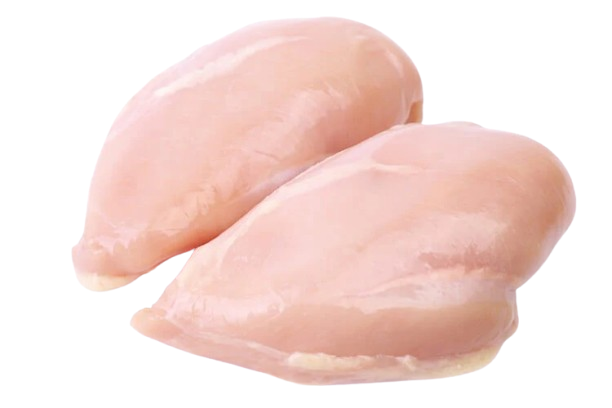
Get a Custom Report on Chicken Breast Nutrition Data – Contact Us!
What are the Types of Chicken Breasts?
Chicken breast types are defined by the presence of skin and bone, and by the cooking method, which alters the final texture and nutritional values. The main preparations are Raw, Roasted, and Fried. The table below shows the features of these common forms.
| Type | Description | Calories (Approximate per 100g) | Calorie Qualifications |
|---|---|---|---|
|
Raw, Skinless, Boneless
|
Uncooked, trimmed breast meat. The leanest form and base for healthy preparations. | 120 | The lowest calorie count, representing pure lean muscle before cooking. |
|
Roasted, Skinless, Boneless
|
Breast meat cooked with dry heat. A very lean cooked option. | 165 | Cooking concentrates protein and reduces water, slightly increasing calorie density over raw. |
|
Roasted, with Skin
|
Breast meat cooked with the skin on, which crisps and adds flavor. | 197 | The skin adds a significant amount of fat, making this a more calorie-dense option than skinless. |
|
Fried, Battered, with Skin
|
Breast meat coated in batter and deep-fried in oil. | 260 | The frying process and batter add substantial calories from absorbed oil and carbohydrates, making this the highest calorie type. |
What are the Main Dishes With Chicken Breast?
Chicken breast is one of the most versatile and widely consumed proteins globally, featured in countless main dishes. The table below details main dishes that use chicken breast.
| Dish Name | Calories (Estimate per serving) | Type of Chicken Breast | Carbs (g) (Estimate) | Sugar (g) (Estimate) | Protein (g) (Estimate) | Fat (g) (Estimate) | Cuisine | Restaurants |
|---|---|---|---|---|---|---|---|---|
|
Grilled Chicken Breast
|
450 | Grilled | 5 | 2 | 60 | 20 | American | Hillstone (restaurant chain) |
|
Chicken Parmesan
|
850 | Fried, Breaded | 50 | 15 | 65 | 45 | Italian-American | The Olive Garden (restaurant chain) |
|
Chicken Caesar Salad
|
650 | Grilled | 20 | 5 | 50 | 40 | American | California Pizza Kitchen |
|
Chicken Alfredo
|
1200 | Sautéed | 80 | 8 | 60 | 70 | Italian-American | Maggiano's Little Italy |
|
Chicken Fajitas
|
750 (with tortillas) | Grilled | 60 | 10 | 55 | 35 | Tex-Mex | Chili's Grill & Bar (restaurant chain) |
|
Chicken Piccata
|
680 | Sautéed | 15 | 5 | 58 | 42 | Italian-American | Carrabba's Italian Grill |
|
Chicken Marsala
|
720 | Sautéed | 20 | 10 | 60 | 40 | Italian-American | Buca di Beppo |
|
Chicken Sandwich (Fried)
|
700 | Fried, Breaded | 55 | 8 | 40 | 40 | American | Chick-fil-A |
|
Chicken Katsu
|
800 | Fried, Breaded | 60 | 10 | 50 | 45 | Japanese | Wagamama |
|
Cobb Salad with Chicken
|
700 | Grilled | 15 | 8 | 55 | 48 | American | The Brown Derby (Disney World, FL) |
What Cuisines Prefer Chicken Breast the Most?
Chicken breast is a globally popular cut, but American, Italian-American, and modern Asian cuisines frequently feature lean meat in a variety of dishes. The table below shows cuisines that make prominent use of chicken breast.
| Cuisine | Dish | Types of Chicken Breast Used | Calories (Estimate) | Restaurant(s) |
|---|---|---|---|---|
|
American
|
Grilled Chicken Sandwich | Grilled | 500-700 | Houston's |
|
Italian-American
|
Chicken Parmesan | Fried, Breaded | 800-1100 | Carbone (New York, NY) |
|
Tex-Mex
|
Chicken Fajitas | Grilled | 700-900 | On The Border |
|
Chinese-American
|
General Tso's Chicken | Fried | 700-1000 | Panda Express |
|
Japanese
|
Chicken Katsu Curry | Fried, Breaded | 900-1200 | Go Go Curry! |
|
Indian
|
Chicken Tikka | Grilled (Tandoor) | 450-600 | Tamarind (New York, NY) |
|
French
|
Chicken Cordon Bleu | Sautéed, Stuffed | 850-1100 | Mon Ami Gabi (Las Vegas, NV) |
|
Greek
|
Chicken Souvlaki | Grilled | 500-650 | Avra Madison Estiatorio (New York, NY) |
|
Thai
|
Chicken Satay | Grilled | 400-550 | Lotus of Siam (Las Vegas, NV) |
Which Countries Produce the Most Chicken Breasts?
The top producers of chicken meat, the source of chicken breasts, are the United States, China, and Brazil. Specific global production data for "chicken breasts" is not tracked separately from the broader "chicken meat" category. The table below shows the production quantity of chicken meat in key countries.
| Country | 2003 | 2008 | 2013 | 2018 | 2019 | 2020 | 2021 | 2022 |
|---|---|---|---|---|---|---|---|---|
| United States | 15,278,000 | 16,654,000 | 17,351,000 | 19,568,000 | 20,174,000 | 20,430,000 | 20,625,000 | 21,050,000 |
| China | 9,150,000 | 10,950,000 | 12,680,000 | 14,150,000 | 14,600,000 | 15,100,000 | 15,400,000 | 15,700,000 |
| Brazil | 7,635,000 | 10,030,000 | 12,308,000 | 13,785,000 | 13,845,000 | 14,155,000 | 14,500,000 | 14,850,000 |
| Russian Federation | 1,060,000 | 2,180,000 | 3,090,000 | 4,280,000 | 4,520,000 | 4,730,000 | 4,780,000 | 4,850,000 |
| India | 1,480,000 | 2,450,000 | 3,440,000 | 3,900,000 | 4,100,000 | 4,250,000 | 4,350,000 | 4,450,000 |
Which Countries Consume the Most Chicken Breasts?
The top consumers of chicken meat, which includes chicken breasts, are the United States and China. Per capita consumption of chicken is highest in countries like the United States, Brazil, and Australia, where lean protein is a dietary staple. Consumption data is best represented by domestic disappearance, a measure that accounts for production, imports, and exports.
| Country | 2013 | 2015 | 2017 | 2019 | 2020 | 2021 | 2022 |
|---|---|---|---|---|---|---|---|
| United States | 15,100,000 | 15,800,000 | 16,500,000 | 17,200,000 | 17,500,000 | 17,800,000 | 18,100,000 |
| China | 12,500,000 | 12,800,000 | 13,200,000 | 14,400,000 | 14,900,000 | 15,200,000 | 15,500,000 |
| Brazil | 9,100,000 | 9,500,000 | 9,800,000 | 10,100,000 | 10,400,000 | 10,700,000 | 11,000,000 |
| India | 3,400,000 | 3,600,000 | 3,800,000 | 4,050,000 | 4,200,000 | 4,300,000 | 4,400,000 |
| Russian Federation | 3,050,000 | 3,250,000 | 3,450,000 | 4,450,000 | 4,650,000 | 4,700,000 | 4,750,000 |
How Do Prices of Chicken Breast-Including Dishes Change?
Menu costs for dishes that feature chicken breast have climbed over the last decade, reflecting higher wholesale poultry prices and greater expenses for labor and restaurant operations. Casual dining and fast-casual chains show these price adjustments on menus.
| Restaurant | Dish | Old Price (Year) | Current Price (2024/2025) |
|---|---|---|---|
| The Olive Garden | Chicken Parmigiana | $15.99 (2016) | $20.79 - $22.49 |
| Chili's Grill & Bar | Chicken Fajitas | $13.79 (2015) | $19.69 - $21.49 |
| The Cheesecake Factory | Chicken Piccata | $12.95 (2017) | $17.95 - $26.50 |
| Chick-fil-A | Chicken Sandwich Combo | $5.99 (2015) | $6.99 - $10.25 |
What is the Chicken Breast Calorie for 100 Grams?
A 100g serving of baked boneless, skinless chicken breast contains 165 calories, while a steamed breast has 151 calories, a roasted breast with skin has 197 calories, a fried battered breast with skin has 260 calories, a fried breast (meat only) has 219 calories, and a raw skinless breast contains 120 calories.
What is the Chicken Breast Calorie for 1 KG?
One kilogram (1000g) of baked boneless, skinless chicken breast contains 1650 calories, a kilogram of steamed breast has 1510 calories, a kilogram of roasted breast with skin has 1970 calories, a kilogram of fried battered breast with skin has 2600 calories, a kilogram of fried breast (meat only) has 2190 calories, and a kilogram of raw skinless breast contains 1200 calories.
What is the Calorie of 1 Chicken Breast?
One medium roasted boneless, skinless chicken breast (5oz) contains 234 calories, while a Tyson raw boneless skinless breast (4oz) has 110 calories, a Perdue raw boneless skinless breast (4oz) has 110 calories, and a Foster Farms raw boneless skinless breast (4oz) has 120 calories.
What are the Health Benefits of Chicken Breast?
Chicken breast delivers a powerful combination of lean protein and essential nutrients that support fundamental aspects of human health, including muscle development and metabolic regulation. The primary advantages of eating chicken breast are detailed below.
- Promotes Lean Muscle Mass. Chicken breast is exceptionally rich in high-quality protein, supplying all the essential amino acids required for the body to build and repair muscle tissue. This makes the food highly effective for supporting muscle growth and preserving lean mass, especially when combined with exercise. A review by Schoenfeld, B. J., & Aragon, A. A. (2018), "How much protein can the body use in a single meal for muscle-building? Implications for daily protein distribution," established that consistent intake of high-quality protein is a key factor for optimizing muscle protein synthesis.
- Supports Strong Bones. Chicken breast provides a good source of phosphorus, a mineral that is a critical structural component of bones and teeth. Phosphorus works in conjunction with calcium to maintain bone density and skeletal strength. A study by Takeda, E., et al. (2012), "The regulation and function of phosphate in the human body," confirmed the essential role of dietary phosphorus in bone mineralization and structural integrity.
- Aids in Weight Management. The high protein content in chicken breast can increase feelings of fullness, or satiety, which helps to reduce overall calorie intake. Protein has a higher thermic effect of food compared to fats and carbohydrates, meaning the body uses more energy to digest the nutrient. Research by Weigle, D. S., et al. (2005), "A high-protein diet induces sustained reductions in appetite, ad libitum caloric intake, and body weight despite compensatory changes in diurnal plasma leptin and ghrelin concentrations," demonstrated that high-protein diets can effectively suppress appetite and support weight loss.
What are the Downsides of Chicken Breast?
Chicken breast is a lean protein source but certain preparation methods and concerns about modern farming practices can present potential health drawbacks. Possible health risks connected to eating chicken breast are listed below.
- High Sodium in Processed Varieties. Pre-cooked, marinated, or breaded chicken breasts can contain very high levels of sodium, used for flavor and preservation. A single serving of some processed chicken products can contribute a large portion of the recommended daily sodium limit. High sodium intake is a well-documented cause of high blood pressure. A study by Mozaffarian, D., et al. (2014), "Global sodium consumption and death from cardiovascular causes," confirmed the link between excess sodium consumption and an increased risk of death from cardiovascular disease. An alternative with lower sodium is plain, unseasoned chicken breast cooked at home. A daily suggested amount is one medium breast to manage sodium intake.
- Potential for Dryness and Overcooking. The low-fat content of skinless chicken breast makes the meat prone to becoming dry and tough if overcooked. This can lead to less enjoyable meals and may encourage the use of high-calorie sauces or marinades to add moisture and flavor. A study on cooking methods by Tornberg, E. (2005), "Effects of heat on meat proteins – Implications on structure and quality of meat products," explains how heat affects muscle proteins, causing them to shrink and expel water, which leads to dryness in lean cuts. An alternative with more moisture is a skinless chicken thigh. A suggested cooking method is brining or poaching to retain moisture.
Is Chicken Breast Good for You?
Yes, chicken breast is a good food choice when incorporated into a balanced eating plan, because the meat is a premier source of lean protein and vital nutrients. The nutritional composition supports heart health by being low in fat and saturated fat, which helps manage cholesterol levels. A scientific advisory from the American Heart Association by Sacks, F. M., et al. (2017), "Dietary Fats and Cardiovascular Disease," recommended lean protein sources as part of a heart-healthy diet. The nutrient profile also supports brain health. The presence of choline and B vitamins like Niacin is important for cognitive function, memory, and the synthesis of neurotransmitters, as outlined in a study by Poly, C., et al. (2011), "The relation of dietary choline to cognitive performance and white-matter hyperintensity in the Framingham Offspring Cohort." The high protein content aids metabolic health. Protein is essential for building all cells and tissues, and a high-protein diet can boost metabolism and increase satiety, as detailed in research by Paddon-Jones, D., & Rasmussen, B. B. (2009), "Dietary protein recommendations and the prevention of sarcopenia."
How Do Calories Change According to Chicken Breast Types?
The caloric value of a chicken breast changes dramatically based on the presence of skin and the cooking method. The lowest calorie count is found in a Raw, Skinless, Boneless Chicken Breast, which contains 120 calories per 100 grams. This represents the leanest possible form of the meat. The highest calorie count belongs to a Fried, Battered Chicken Breast with Skin, which has 260 calories per 100 grams. This large increase is due to the absorption of cooking oil and the addition of a carbohydrate-based coating. A Roasted Chicken Breast with Skin contains 197 calories per 100 grams, as the skin adds a significant amount of fat. When the skin is removed and the breast is roasted, the calorie count drops to 165 calories per 100 grams.
What are the Desserts With Chicken Breast?
Chicken breast is a savory food not used as an ingredient for desserts. The flavor of chicken is unsuitable for sweet dishes. Culinary traditions sometimes pair chicken breast with sweet glazes or sauces in savory main courses.
What is the Origin of Chicken Breast?
The rise of the chicken breast to culinary dominance is a modern phenomenon, directly linked to 20th-century health trends and the industrialization of poultry. Although chickens have been part of the human diet for millennia, the bird was almost always cooked whole. The practice of butchering chickens into individual parts for retail sale became common in the United States after World War II. In the 1970s and 1980s, a growing public focus on low-fat diets created immense demand for lean protein sources. The skinless, boneless chicken breast, with a very low fat content, was perfectly positioned to meet this demand. Food marketers and health professionals promoted the cut as a healthy alternative to red meat. This shift in consumer preference transformed the chicken breast from one of the least valued parts of the chicken to the most expensive and sought-after cut, a status the meat maintains today.
Explore More Meat
Discover more Meat with detailed nutrition facts, calorie counts, vitamins, minerals, and health benefits. Compare similar foods, serving sizes, macronutrients, and key nutrients to find the best option for your diet and nutrition goals.
 Bacon calories
 Beef calories
 Beef Brisket calories
 Beef Chuck calories
 Beef Jerky calories
 Beef Liver calories
 Beef Short Ribs calories
 Beef Tenderloin calories
 Beef Tongue calories
 Bison calories
 Buffalo Meat calories
 Chicken calories