Calories and Nutritions in Duck Breast
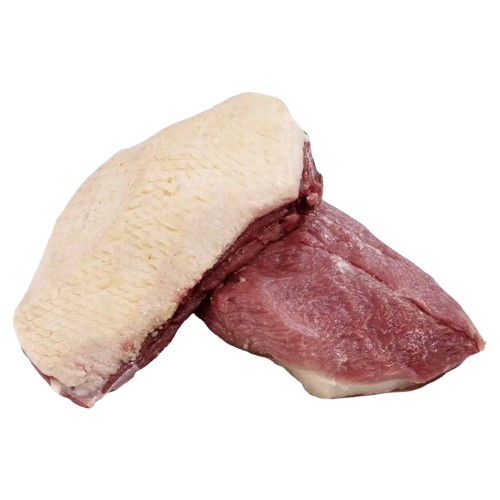
Duck breast is high in calories and fat content especially when served with skin. A 50g serving of smoked duck breast contains 90 calories, while a 180g roasted portion has 330 calories. The calories in a duck breast vary with portion size, a small roasted breast (85g) has 270 calories, a medium one (170g) contains 540 calories, and a large breast (227g) contains 720 calories. The duck breast macros for a 100g roasted duck breast portion with skin contains 337 calories, and include 19g of protein (38% DV), 28.4g of fat (36% DV), 0g of carbohydrates, and 118mg of cholesterol (39% DV). A Luv-a Duck fresh duck breast contains 391 calories, a Braemoor fillet has 330 calories, and a Lac Brome Lake boneless breast has 110 calories.
The duck breast nutrition profile shows a high concentration of protein, providing 19g per 100g serving with skin. A study established that regular intake of high-quality protein is fundamental for optimizing muscle protein synthesis (Schoenfeld, B. J., & Aragon, A. A., 2018). Major health benefits come from this nutrient profile, including a rich supply of iron and selenium. A 100g serving delivers 3.8mg of iron (21% DV) and 28.1mcg of selenium (51% DV), supporting blood health and cellular protection.
Common preparations for duck breast include Raw, Roasted, Smoked, and Pan-Seared, with top duck meat producers like China and France leading global supply. The price of duck breast has climbed over the last 20 years, with the average retail cost for boneless breast rising from under $9.00 per pound to over $20.00 per pound in 2022.
Duck breast is a centerpiece in dishes like Duck Magret at Raoul's and Duck Breast à l'Orange at Le Diplomate. A sensible recommendation for consumption is one small roasted breast (113 grams). A 113-gram serving provides 381 calories. The energy from this portion can be expended through 38 minutes of swimming or 30 minutes of stationary cycling.
Duck Breast nutrition
| Stats | Weight |
|---|---|
| Carbs | 0 grams |
| Protein | 19 grams |
| Fats | 0 grams |
| Sugars | 0 grams |
- Smoked Duck Breast Calories (Nutritional Facts)
- Roasted Duck Breast Calories (Nutritional Facts)
- Large Duck Breast Calories (Nutritional Facts)
- Medium Duck Breast Calories (Nutritional Facts)
- Small Duck Breast Calories (Nutritional Facts)
- Duck Breast Calories with Skin (Nutritional Facts)
- Raw Duck Breast Nutrition
- Sodium in Duck Breast
- Potassium in Duck Breast
- Sugar in Duck Breast
- Fiber in Duck Breast
- Protein in Duck Breast
- Carbs in Duck Breast
- Fat in Duck Breast
- Vitamins in Duck Breast
- Minerals in Duck Breast
Smoked Duck Breast Calories (Nutritional Facts)
A 50g serving of smoked duck breast contains 90 calories, 8g of protein, 6g of fat, 1g of carbohydrates, 55mg of cholesterol, and 312mg of sodium.
A 180g serving of roasted duck breast contains 330 calories, 18.2g of fat, 5g of carbohydrates, and 1g of total sugars.
A large 8 ounce (227g) duck breast contains 720 calories, 40g of protein, 61.4g of fat, 3g of carbohydrates, 200mg of cholesterol, and 1441mg of sodium.
A medium 6 ounce (170g) duck breast contains 540 calories, 30g of protein, 46g of fat, 2g of carbohydrates, 150mg of cholesterol, and 1081mg of sodium.
A small 3 ounce (85g) duck breast contains 270 calories, 15g of protein, 23g of fat, 1g of carbohydrates, 75mg of cholesterol, and 540mg of sodium.
A 112g serving of duck breast with skin contains 370 calories, 17g of protein, 33g of fat, 0g of carbohydrates, 55mg of cholesterol, and 50mg of sodium.
One raw, skinless duck breast (166g) contains 204 calories, 33g of protein, 7.1g of fat, 0g of carbohydrates, 128mg of cholesterol, and 95mg of sodium.
A large duck breast (227g) contains 1441mg of sodium. A medium duck breast (170g) contains 1081mg of sodium, and a small duck breast (85g) contains 540mg of sodium. A 50g serving of smoked duck breast contains 312mg of sodium, while a 180g serving of roasted duck breast has 149mg. A 112g serving of duck breast with skin contains 50mg of sodium. One raw, skinless duck breast (166g) contains 95mg of sodium.
A 180g serving of roasted duck breast contains 522mg of potassium. A 112g serving of duck breast with skin contains 280mg of potassium. One raw, skinless duck breast (166g) contains 445mg of potassium. A 50g serving of smoked duck breast contains 141mg of potassium.
A large duck breast (227g) contains 0g of sugar. A medium duck breast (170g) contains 0g of sugar, and a small duck breast (85g) contains 0g of sugar. A 50g serving of smoked duck breast contains 0g of sugar. A 180g serving of roasted duck breast contains 1g of sugar. A 112g serving of duck breast with skin contains 0g of sugar. One raw, skinless duck breast (166g) contains 0g of sugar.
A large duck breast (227g) contains 0g of fiber. A medium duck breast (170g) contains 0g of fiber, and a small duck breast (85g) contains 0g of fiber. A 50g serving of smoked duck breast contains 0g of fiber. A 180g serving of roasted duck breast contains 0g of fiber. A 112g serving of duck breast with skin contains 1g of fiber. One raw, skinless duck breast (166g) contains 0g of fiber.
A large duck breast (227g) provides 40g of protein (80% DV). A medium duck breast (170g) provides 30g of protein (60% DV), and a small duck breast (85g) provides 15g of protein (30% DV). A 50g serving of smoked duck breast provides 8g of protein (16% DV), while a 180g serving of roasted duck breast provides 34.2g of protein (68% DV). A 112g serving of duck breast with skin provides 17g of protein (34% DV). One raw, skinless duck breast (166g) provides 33g of protein (66% DV).
A large duck breast (227g) contains 3g of carbohydrates (1% DV). A medium duck breast (170g) contains 2g of carbohydrates (1% DV), and a small duck breast (85g) contains 1g of carbohydrates (0% DV). A 50g serving of smoked duck breast contains 1g of carbohydrates (0% DV), while a 180g serving of roasted duck breast contains 5g of carbohydrates (2% DV). A 112g serving of duck breast with skin contains 0g of carbohydrates (0% DV). One raw, skinless duck breast (166g) contains 0g of carbohydrates (0% DV).
A large duck breast (227g) contains 61.4g of total fat (79% DV). A medium duck breast (170g) contains 46g of total fat (59% DV), and a small duck breast (85g) contains 23g of total fat (30% DV). A 50g serving of smoked duck breast contains 6g of total fat (8% DV), while a 180g serving of roasted duck breast contains 18.2g of total fat (23% DV). A 112g serving of duck breast with skin contains 33g of total fat (42% DV). One raw, skinless duck breast (166g) contains 7.1g of total fat (9% DV).
One raw, skinless duck breast (166g) provides 1.26mcg of Vitamin B12 (53% DV), 1.05mg of Vitamin B6 (62% DV), 5.7mg of Niacin (36% DV), 0.51mg of Riboflavin (40% DV), and 0.69mg of Thiamin (58% DV). A 180g serving of roasted duck breast provides 12.2mg of Niacin (76% DV). A 112g serving of duck breast with skin provides 90mcg of Vitamin A (10% DV). A 50g serving of smoked duck breast provides 0.09mg of Thiamin (8% DV).
One raw, skinless duck breast (166g) contains 7.5mg of iron (42% DV), 23mcg of selenium (42% DV), and 1.2mg of zinc (11% DV). A large duck breast (227g) contains 9.6mg of iron (53% DV). A 180g serving of roasted duck breast contains 6.8mg of iron (38% DV) and 50.6mcg of selenium (92% DV). A 112g serving of duck breast with skin contains 2.7mg of iron (15% DV). A 50g serving of smoked duck breast contains 1.1mg of iron (6% DV).
Get a Custom Report on Duck Breast Nutrition Data – Contact Us!
What are the Types of Duck Breasts?
The types of duck breasts are primarily defined by the preparation method and whether the skin is included, which alters the final nutritional values. The main preparations are Raw (with skin), Roasted (with skin), and Skinless. The following table outlines the features of these common forms.
| Type | Description | Calories (Approximate per 100g) | Calorie Qualifications |
|---|---|---|---|
|
Raw Duck Breast with Skin
|
Uncooked duck breast with the fat cap intact. The starting point for most recipes. | 404 | The highest calorie count, representing the breast before any fat is rendered out through cooking. |
|
Roasted Duck Breast with Skin
|
Duck breast cooked with dry heat, rendering a large portion of the fat and crisping the skin. | 337 | Cooking reduces the overall fat and water content, leading to a lower calorie count per gram than the raw version with skin. |
|
Skinless Duck Breast
|
Duck breast with the skin and fat cap removed, either before or after cooking. | 123 (raw) | The leanest option, with a calorie count that is substantially lower due to the removal of the high-fat skin. |
|
Smoked Duck Breast
|
Duck breast that has been cured and cooked with smoke. | 180 | The curing and smoking process results in a lower calorie count, as the product is lean and contains less fat than a roasted breast with skin. |
What are the Main Dishes With Duck Breast?
Duck breast is a prized cut of meat featured in elegant main courses, known for a deep flavor and a satisfying texture when cooked correctly. Main dishes that use duck breast are outlined in the table below.
| Dish Name | Calories (Estimate) | Type of Duck Breast | Carbs (g) (Estimate) | Sugar (g) (Estimate) | Protein (g) (Estimate) | Fat (g) (Estimate) | Cuisine | Restaurants |
|---|---|---|---|---|---|---|---|---|
|
Pan-Seared Duck Breast
|
700 | Seared | 15 | 5 | 48 | 50 | French | Balthazar (New York, NY) |
|
Roasted Duck Breast
|
720 | Roasted | 10 | 4 | 46 | 54 | French Bistro | Mon Ami Gabi (Las Vegas, NV) |
|
Smoked Duck Breast Salad
|
550 | Smoked | 25 | 15 | 35 | 35 | Modern American | The Musket Room (New York, NY) |
|
Duck Magret
|
750 | Seared | 12 | 4 | 50 | 55 | French | Raoul's (New York, NY) |
|
Peking Duck
|
850 (per serving) | Roasted | 40 | 10 | 55 | 58 | Chinese | Peking Gourmet Inn (Falls Church, VA) |
|
Duck Breast with Green Peppercorn Sauce
|
780 | Seared | 20 | 6 | 47 | 56 | French | Le Diplomate (Washington, D.C.) |
|
Duck Breast Prosciutto
|
450 (per serving) | Cured | 5 | 2 | 30 | 35 | Italian | L'Artusi (New York, NY) |
|
Tea-Smoked Duck Breast
|
680 | Smoked | 10 | 3 | 45 | 50 | Chinese | Hakkasan (Las Vegas, NV) |
|
Duck Breast Ramen
|
800 | Seared | 70 | 8 | 40 | 45 | Japanese | Momofuku Noodle Bar (New York, NY) |
|
Duck Breast with Lentils
|
740 | Seared | 35 | 6 | 52 | 45 | French Country | Le Gigot (New York, NY) |
|
Grilled Duck Breast
|
690 | Grilled | 8 | 2 | 50 | 50 | American | Hillstone (restaurant chain) |
What Cuisines Prefer Duck Breast the Most?
Duck breast is a celebrated ingredient in French and modern American cuisines, where the meat is valued for a rich flavor and luxurious texture. The following table shows cuisines that make prominent use of duck breast.
| Cuisine | Dish | Types of Duck Breast Used | Calories (Estimate) | Restaurant(s) |
|---|---|---|---|---|
|
French
|
Magret de Canard (Seared Duck Breast) | Pan-Seared | 700-850 | Benoit (New York, NY) |
|
Modern American
|
Pan-Roasted Duck Breast | Pan-Seared, Roasted | 700-850 | The French Laundry (Yountville, CA) |
|
Chinese
|
Peking Duck | Roasted | 800-1000 (per serving) | Mott 32 (Las Vegas, NV) |
|
French Bistro
|
Duck Breast with Peppercorn Sauce | Pan-Seared | 750-900 | Parc (Philadelphia, PA) |
|
New American
|
Smoked Duck Breast Salad | Smoked | 500-650 | Gramercy Tavern (New York, NY) |
|
Italian
|
Duck Breast Prosciutto | Cured | 400-550 (per serving) | Babbo (New York, NY) |
|
Japanese (Fusion)
|
Duck Breast Ramen | Seared | 750-900 | Ivan Ramen (New York, NY) |
|
British Gastropub
|
Pan-Fried Duck Breast | Pan-Seared | 700-800 | The Dandelion (Philadelphia, PA) |
|
Thai (Modern)
|
Red Curry with Duck Breast | Seared | 800-950 | Lotus of Siam (Las Vegas, NV) |
Which Countries Produce the Most Duck Breasts?
The top producers of duck meat, the source of duck breasts, are China, Vietnam, and France. Specific global production data for "duck breast" is not tracked separately from the broader "duck meat" category. The table below shows the production quantity of duck meat in key countries.
| Country | 2003 | 2008 | 2013 | 2018 | 2019 | 2020 | 2021 | 2022 |
|---|---|---|---|---|---|---|---|---|
| China | 2,950,000 | 3,500,000 | 4,200,000 | 4,600,000 | 4,750,000 | 4,800,000 | 4,850,000 | 4,900,000 |
| Vietnam | 110,000 | 150,000 | 200,000 | 250,000 | 260,000 | 270,000 | 280,000 | 290,000 |
| France | 233,000 | 240,000 | 250,000 | 220,000 | 210,000 | 200,000 | 190,000 | 180,000 |
| Myanmar | 80,000 | 95,000 | 110,000 | 130,000 | 135,000 | 140,000 | 145,000 | 150,000 |
| United States | 65,000 | 70,000 | 75,000 | 80,000 | 82,000 | 84,000 | 86,000 | 88,000 |
Which Countries Consume the Most Duck Breasts?
The top consumers of duck meat, including duck breasts, are China, France, and Vietnam. Consumption data is best represented by domestic disappearance, a measure that accounts for production, imports, and exports.
| Country | 2013 | 2015 | 2017 | 2019 | 2020 | 2021 | 2022 |
|---|---|---|---|---|---|---|---|
| China | 4,150,000 | 4,300,000 | 4,450,000 | 4,700,000 | 4,750,000 | 4,800,000 | 4,850,000 |
| France | 245,000 | 240,000 | 230,000 | 205,000 | 195,000 | 185,000 | 175,000 |
| Vietnam | 195,000 | 210,000 | 230,000 | 255,000 | 265,000 | 275,000 | 285,000 |
| Myanmar | 108,000 | 115,000 | 122,000 | 133,000 | 138,000 | 143,000 | 148,000 |
| Germany | 85,000 | 88,000 | 90,000 | 92,000 | 94,000 | 95,000 | 96,000 |
How Do Prices of Duck Breast-Including Dishes Change?
Restaurant menu costs for dishes with duck breast have risen over the last decade, reflecting higher wholesale duck meat prices and greater expenses for labor and restaurant operations. French and American fine-dining establishments show these price adjustments on menus.
| Restaurant | Dish | Old Price (Year) | Current Price (2024/2025) |
|---|---|---|---|
| Balthazar (New York, NY) | Duck Breast (part of Duck Confit dish) | $28.00 (2015) | $41.00 - $45.00 |
| Le Diplomate (Washington, D.C.) | Duck Breast à l'Orange | $34.00 (2016) | $40.00 - $49.00 |
| The Modern (New York, NY) | Roasted Duck Breast | $42.00 (2017) | $44.99 - $56.00 |
| Gramercy Tavern (New York, NY) | Roasted Duck Breast | $39.00 (2015) | $59.00 - $64.00 |
| Peking Gourmet Inn (Falls Church, VA) | Peking Duck (Whole) | $48.00 (2015) | $79.00 - $80.00 |
What are the Duck Breast Calories for 100 Grams?
A 100g serving of smoked duck breast contains 180 calories, while a roasted duck breast has 183 calories, a duck breast with skin has 330 calories, and a raw skinless duck breast contains 123 calories.
What are the Duck Breast Calories for 1 KG?
One kilogram (1000g) of smoked duck breast contains 1800 calories, a kilogram of roasted duck breast has 1830 calories, a kilogram of duck breast with skin has 3300 calories, and a kilogram of raw skinless duck breast contains 1230 calories.
What are the Calories of 1 Duck Breast?
One Luv-a Duck fresh duck breast (190g) contains 391 calories, while a Braemoor duck breast fillet (133g) has 330 calories and a Lac Brome Lake boneless duck breast (120g) contains 110 calories.
What are the Health Benefits of Duck Breast?
Duck breast provides concentrated amounts of essential nutrients that support vital bodily systems, including muscle integrity and blood health. Key advantages of consuming duck breast are detailed below.
- Promotes Muscle Mass. Duck breast is a source of high-quality protein, providing all the essential amino acids needed to build and repair tissues. This complete protein profile is effective for maintaining lean muscle mass and supporting overall strength. A study by Schoenfeld, B. J., & Aragon, A. A. (2018), "How much protein can the body use in a single meal for muscle-building? Implications for daily protein distribution," established that regular intake of high-quality protein is fundamental for optimizing muscle protein synthesis.
- Supports Red Blood Cell Formation. Duck breast delivers a substantial amount of heme iron, a highly bioavailable form of the mineral found only in animal products. Heme iron is a critical component of hemoglobin, the protein in red blood cells that transports oxygen from the lungs to the rest of the body. A review by Abbaspour, N., et al. (2014), "Review on iron and its importance for human health," confirmed the superior absorption of heme iron and its importance in preventing iron-deficiency anemia.
- Aids Cellular Protection. Duck breast is an excellent source of selenium, a mineral that functions as a powerful antioxidant. Selenium is integral to the function of selenoproteins, which help protect cells from oxidative damage caused by free radicals and support a healthy immune response. Research by Rayman, M. P. (2012), "Selenium and human health," demonstrated the crucial role of dietary selenium in reducing oxidative stress and supporting various aspects of human health.
What are the Downsides of Duck Breast?
Duck breast, especially when prepared with the skin, is high in saturated fat and calories, which can present health issues if consumed in excess. Health risks connected to duck breast consumption are listed below.
- High Saturated Fat Content. The skin on a duck breast contains a large amount of saturated fat, which can contribute to elevated LDL cholesterol levels. A 100-gram serving of roasted duck breast with skin contains 9.7g of saturated fat. A scientific advisory from the American Heart Association by Sacks, F. M., et al. (2017), "Dietary Fats and Cardiovascular Disease," recommended limiting saturated fat intake to lower the risk of cardiovascular disease. An alternative with lower fat is skinless chicken breast. A daily suggested amount is one small duck breast (113g) with the skin removed to manage saturated fat intake.
- High Calorie Density. Duck breast with skin is a calorie-dense food, meaning a small portion contains a large number of calories. A medium 170g roasted duck breast contains 540 calories, which can contribute to weight gain if not balanced within a daily calorie budget. Research by Mozaffarian, D., et al. (2011), "Changes in Diet and Lifestyle and Long-Term Weight Gain in Women and Men," identified energy-dense foods as being strongly associated with weight gain over time. A lower-calorie alternative is grilled cod. A suggested serving size is one small breast (113g) to control calorie consumption.
Is Duck Breast Good for You?
Yes, duck breast is a good food choice when prepared properly and included in a balanced eating plan because the meat is a rich source of protein, B vitamins, and essential minerals. The nutritional composition supports brain health through a supply of B vitamins like Niacin and B6, which are crucial for energy metabolism in brain cells and the synthesis of neurotransmitters. A review by Kennedy, D. O. (2016), "B Vitamins and the Brain: Mechanisms, Dose and Efficacy—A Review," details the importance of these vitamins for cognitive function. The nutrient profile also supports bone health. The presence of phosphorus is vital for the formation and maintenance of strong bones and teeth, working in conjunction with calcium, as outlined in a study by Takeda, E., et al. (2004), "The regulation and function of phosphate in the human body." The mineral content aids heart health. The monounsaturated fat in duck meat, when substituted for saturated fats, can help improve blood cholesterol levels, a benefit detailed in research by Li, Y., et al. (2015), "Saturated fats compared with unsaturated fats and sources of carbohydrates in relation to risk of coronary heart disease: A prospective cohort study."
How Do Calories Change According to Duck Breast Types?
The calorie content of duck breast changes dramatically based on the presence of skin and the cooking method. The lowest calorie count is found in a raw, skinless duck breast, which contains 123 calories per 100 grams. This version is very lean because the high-fat skin has been removed. The highest calorie count belongs to a raw duck breast with the skin intact, which has 404 calories per 100 grams. The skin and the thick layer of fat beneath contain the vast majority of the calories. When a duck breast with skin is roasted, the calorie count drops to 337 calories per 100 grams because the cooking process renders out a significant portion of the fat, reducing the final energy density.
What are the Desserts With Duck Breast?
Duck breast is a savory meat and is not an ingredient used in dessert preparations. The rich, gamey flavor of duck breast is incompatible with sweet dessert profiles. Culinary traditions instead pair duck breast with sweet fruit sauces or glazes in main courses to create a balanced dish.
What is the Ideal Internal Temperature of Duck Breast When Cooked?
The ideal internal temperature of duck breast is 135°F (57°C) for a perfect medium-rare doneness. Cooking duck breast is different from cooking other poultry like chicken because duck is a red meat, and the breast is best served pink in the center to remain tender and juicy. The United States Department of Agriculture (USDA) recommends cooking whole poultry to 165°F (74°C) to eliminate pathogens like Salmonella. This higher temperature is necessary for whole birds or ground meat where bacteria can be present throughout. A whole, intact muscle like a duck breast is sterile on the inside, with any potential bacteria residing only on the surface. Searing the duck breast skin-side down at a high temperature effectively kills surface bacteria while rendering the fat and crisping the skin. After searing, the breast is cooked for a short time on the flesh side.
Pulling the duck breast from the heat at 135°F (57°C) and allowing the meat to rest for 5-10 minutes is crucial. During this rest period, carryover cooking will cause the internal temperature to rise a few more degrees, bringing the final temperature to a safe and palatable medium-rare. Cooking the breast to 165°F (74°C) will result in a dry, tough, and gray meat with a livery flavor, which is considered overcooked by culinary standards.
What is the Origin of Duck Breast?
The culinary history of duck breast is deeply connected to southwestern France, specifically the Gascony region, renowned for duck and goose farming. For centuries, ducks were raised primarily for foie gras and confit, with the whole bird being utilized. The concept of isolating the breast (magret in French) as a standalone, premium cut is a relatively modern innovation. Chef André Daguin of the Hôtel de France in Auch is credited with popularizing the magret de canard in the 1960s. He was the first to cook the thick, fatty breast from a foie gras duck like a steak—seared rare to medium-rare. This method was revolutionary because duck breast had previously been cooked well-done, similar to other poultry. Daguin's preparation highlighted the rich, red meat quality of the Moulard duck breast, treating the meat more like beef. The dish quickly became a sensation and is now a staple of French cuisine. In Asia, duck has been a prestigious food for millennia. Peking Duck, a dish from Beijing, has roots in the imperial courts of the Yuan Dynasty (13th century), where whole ducks were roasted for crispy skin and succulent meat, with the breast being a prized portion of the whole bird service.
Explore More Meat
Discover more Meat with detailed nutrition facts, calorie counts, vitamins, minerals, and health benefits. Compare similar foods, serving sizes, macronutrients, and key nutrients to find the best option for your diet and nutrition goals.
 Bacon calories
 Beef calories
 Beef Brisket calories
 Beef Chuck calories
 Beef Jerky calories
 Beef Liver calories
 Beef Short Ribs calories
 Beef Tenderloin calories
 Beef Tongue calories
 Bison calories
 Buffalo Meat calories
 Chicken calories