Calories and Nutritions in Evaporated Milk
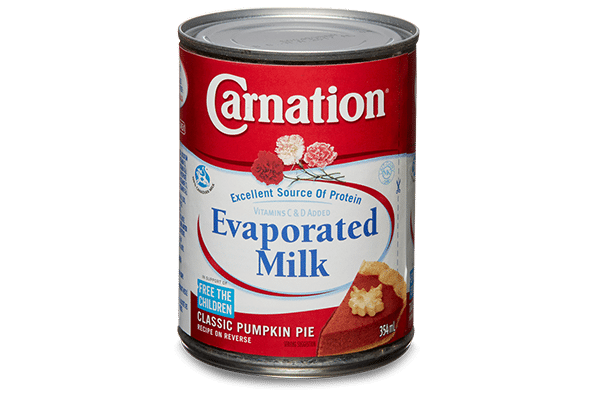
Evaporated milk is a shelf-stable dairy product produced by removing 60 percent of the water from fresh milk. A large serving of the canned evaporated milk (252g) contains 338 calories, but the calories in evaporated milk fluctuate based on portion size. A small serving (31.5g) of evaporated milk provides 42 calories while a medium serving (126g) yields 169 calories. The fat content significantly impacts the density, as 100g of nonfat evaporated milk has 78 calories, while the whole milk version for the same size contains 134 calories per 100g. A standard 100g portion of whole evaporated milk provides 134 calories. Commercial brands exhibit slight differences, as a can of Carnation Evaporated Milk (354ml) has 480 calories, and PET Evaporated Milk (354ml) similarly contains 480 calories.
An analysis of evaporated milk calories reveals a nutrient-dense food source with significant concentrations of milk solids. A large serving (252g) supplies 25.2g of carbohydrates and 0g of dietary fiber, accompanied by 17.2g of protein and 19.1g of fat. The mineral profile emphasizes the ingredient's utility in supporting skeletal integrity, confirming the liquid is beneficial for bone density due to the high calcium content. A study by Cormick, G., & Belizán, J. M. (2019) found that adequate calcium consumption is essential for preventing fractures and sustaining bone mass in adults. Micronutrient intake is equally notable, offering 658mg of calcium (51% DV) and 511mg of phosphorus (41% DV) per large serving. This concentration process results in a high level of lactose, making the product unsuitable for individuals with severe lactose intolerance.
Global availability of evaporated milk relies on the dairy processing industry, with Germany and the United States leading production volumes. This supply caters to specific international markets, where Hong Kong imported over $225 million worth of evaporated and condensed milk products in 2022. Evaporated milk is a primary component in Hong Kong Style Milk Tea, Singaporean Teh Tarik, and American Pumpkin Pie. Increasing global demand has pushed retail costs higher, with a standard can of evaporated milk rising from $0.89 in 2003 to between $1.68 and $1.98 by 2023. Restaurant pricing mirrors this shift, as Iced Thai Coffee at Thai Express increased from $3.50 in 2016 to between $5.00 and $6.50 in 2024.
Evaporated milk is valued as a nutrient-rich dairy product featuring high levels of calcium and complete proteins. This nutritional profile aids in skeletal maintenance and muscle repair, making it a healthy addition to coffee because it provides these nutrients without the added sugar found in processed creamers. Dietitians recommend consuming this concentrated liquid in moderation, restricting intake to small amounts like 30ml per day. Despite the benefits, evaporated milk is considered fattening if consumed in large quantities due to the high calorie density resulting from the removal of water. The whole milk variety is high in saturated fat, as a single large serving contains substantial amounts of lipids. A large portion contains 338 calories, an energy load that requires 34 minutes of running or 42 minutes of swimming to metabolize.
Evaporated Milk nutrition
| Stats | Weight |
|---|---|
| Carbs | 12.6 grams |
| Protein | 8.6 grams |
| Fats | 0 grams |
| Sugars | 13 grams |
- Large Evaporated Milk Calories (Nutritional Facts)
- Medium Evaporated Milk Calories (Nutritional Facts)
- Small Evaporated Milk Calories (Nutritional Facts)
- Raw Evaporated Milk Nutrition
- Sodium in Evaporated Milk
- Potassium in Evaporated Milk
- Sugar in Evaporated Milk
- Fiber in Evaporated Milk
- Protein in Evaporated Milk
- Carbs in Evaporated Milk
- Fat in Evaporated Milk
- Vitamins in Evaporated Milk
- Minerals in Evaporated Milk
Large Evaporated Milk Calories (Nutritional Facts)
A large serving of canned evaporated milk (252g or 8.9oz) contains 338 calories, 17.2g of protein, 19.1g of fat, 25.2g of carbohydrates, 0g of fiber, and 267mg of sodium. This serving size provides 658mg of calcium and 511mg of phosphorus.
A medium serving of canned evaporated milk (126g or 4.4oz) provides 169 calories, 8.6g of protein, 9.5g of fat, 12.6g of carbohydrates, 0g of fiber, and 134mg of sodium. This portion supplies 329mg of calcium and 256mg of phosphorus.
A small serving of canned evaporated milk (31.5g or 1.1oz) contains 42 calories, 2.1g of protein, 2.4g of fat, 3.2g of carbohydrates, 0g of fiber, and 33mg of sodium. This amount offers 82mg of calcium and 64mg of phosphorus.
Evaporated milk is a cooked product created by heating milk to remove water content, so it does not exist in a raw state. The nutritional data provided reflects the canned, processed form of the food.
A large serving of evaporated milk (252g) contains 267mg of sodium (12% DV). A medium serving (126g) has 134mg of sodium (6% DV). A small serving (31.5g) contains 33mg of sodium (1% DV).
A large serving of evaporated milk (252g) contains 764mg of potassium (16% DV). A medium serving (126g) has 382mg of potassium (8% DV). A small serving (31.5g) contains 95mg of potassium (2% DV).
A large serving of evaporated milk (252g) contains 25.2g of carbohydrates, which function as the primary sugar content. A medium serving (126g) has 12.6g of carbohydrates. A small serving (31.5g) contains 3.2g of carbohydrates.
A large serving of evaporated milk (252g) provides 0g of dietary fiber (0% DV). A medium serving (126g) has 0g of fiber (0% DV). A small serving (31.5g) contains 0g of fiber (0% DV).
A large serving of evaporated milk (252g) provides 17.2g of protein (34% DV). A medium serving (126g) has 8.6g of protein (17% DV). A small serving (31.5g) contains 2.1g of protein (4% DV).
A large serving of evaporated milk (252g) contains 25.2g of carbohydrates (9% DV). A medium serving (126g) has 12.6g of carbohydrates (5% DV). A small serving (31.5g) contains 3.2g of carbohydrates (1% DV).
A large serving of evaporated milk (252g) contains 19.1g of total fat (25% DV). A medium serving (126g) has 9.5g of total fat (12% DV). A small serving (31.5g) contains 2.4g of total fat (3% DV).
A large serving of evaporated milk (252g) provides 0.8mg of Riboflavin (61% DV) and 1000 IU of Vitamin A (20% DV). A medium serving (126g) provides 0.4mg of Riboflavin (31% DV) and 500 IU of Vitamin A (10% DV). A small serving (31.5g) provides 0.1mg of Riboflavin (8% DV) and 125 IU of Vitamin A (3% DV).
A large serving of evaporated milk (252g) provides 658mg of calcium (51% DV) and 511mg of phosphorus (41% DV). A medium serving (126g) provides 329mg of calcium (25% DV) and 256mg of phosphorus (20% DV). A small serving (31.5g) provides 82mg of calcium (6% DV) and 64mg of phosphorus (5% DV).
Get a Custom Report on Evaporated Milk Nutrition Data – Contact Us!
What are the Types of Evaporated Milk?
The types of evaporated milk are Whole, Low-Fat, Skim, and Filled. The table below provides details on these common varieties.
| Type | Description | Calories (per 100g) | Calorie Qualifications |
|---|---|---|---|
|
Evaporated Whole Milk
|
Concentrated milk with at least 6.5% milkfat. | 134 | This version has the highest calorie count due to the full retention of natural milk fats. |
|
Evaporated Low-Fat Milk
|
Concentrated milk with reduced fat content, usually 2%. | 110 | The partial removal of fat results in a moderate calorie density suitable for lighter cooking. |
|
Evaporated Skim Milk
|
Concentrated milk with less than 0.5% milkfat. | 78 | This type offers the lowest calorie count by eliminating almost all lipid content. |
|
Evaporated Filled Milk
|
Milk solids combined with vegetable oil instead of butterfat. | 125 | The substitution of vegetable oil creates a calorie density similar to whole milk. |
What are the Desserts With Evaporated Milk?
Evaporated milk acts as a key ingredient in numerous rich, custard-based desserts due to the product's ability to withstand high heat without curdling. The table below details popular desserts featuring this concentrated dairy product.
| Dish Name | Calories (Estimate per serving) | Type of Dessert | Carbs (g) (Estimate) | Sugar (g) (Estimate) | Protein (g) (Estimate) | Fat (g) (Estimate) | Cuisine | Restaurants |
|---|---|---|---|---|---|---|---|---|
|
Pumpkin Pie
|
323 | Custard Pie | 46 | 25 | 5 | 13 | American | Costco Bakery |
|
Tres Leches Cake
|
520 | Sponge Cake | 65 | 45 | 8 | 22 | Mexican | The Cheesecake Factory |
|
Sweet Potato Pie
|
340 | Custard Pie | 48 | 28 | 5 | 15 | Southern American | Walmart Bakery (Patti LaBelle) |
|
Caramel Flan
|
300 | Custard | 45 | 45 | 6 | 10 | Latin American | Chuy's |
|
Halo-Halo
|
600 | Shaved Ice Dessert | 100 | 85 | 12 | 15 | Filipino | Jollibee |
|
Bread Pudding
|
450 | Baked Pudding | 60 | 40 | 8 | 20 | American | Cracker Barrel Old Country Store |
|
Coconut Cream Pie
|
400 | Cream Pie | 45 | 30 | 5 | 22 | American | Marie Callender's |
|
German Chocolate Cake
|
550 | Layer Cake | 70 | 55 | 6 | 28 | American | The Cheesecake Factory |
|
Hong Kong Egg Tart
|
200 | Pastry | 22 | 10 | 4 | 11 | Chinese | 85°C Bakery Cafe |
|
Thai Iced Tea
|
180 | Beverage/Dessert | 35 | 30 | 1 | 4 | Thai | Thai Express |
|
Rice Pudding
|
250 | Pudding | 40 | 25 | 6 | 8 | Global | Kozy Shack (Retail) |
|
Banana Pudding
|
350 | Layered Pudding | 55 | 40 | 4 | 12 | Southern American | Magnolia Bakery |
|
Kulfi
|
200 | Frozen Dairy | 25 | 20 | 5 | 10 | Indian | Patel Brothers (Retail) |
|
Fudge
|
150 | Confectionery | 25 | 23 | 1 | 5 | American | See's Candies |
|
Custard Pie
|
280 | Pie | 35 | 20 | 7 | 12 | American | Perkins Restaurant & Bakery |
What are the Main Dishes With Evaporated Milk?
Savory applications of evaporated milk provide creaminess to soups, sauces, and casseroles without the heaviness of heavy cream. The table below lists main courses and savory sides that utilize this ingredient.
| Dish Name | Calories (Estimate per serving) | Type of Dish | Carbs (g) (Estimate) | Sugar (g) (Estimate) | Protein (g) (Estimate) | Fat (g) (Estimate) | Cuisine | Restaurants |
|---|---|---|---|---|---|---|---|---|
|
Macaroni and Cheese
|
400 | Pasta Casserole | 40 | 5 | 15 | 20 | American | Panera Bread |
|
Sausage Gravy
|
450 | Sauce/Breakfast | 15 | 2 | 10 | 40 | Southern American | Cracker Barrel Old Country Store |
|
New England Clam Chowder
|
300 | Soup | 25 | 4 | 10 | 18 | American | Legal Sea Foods |
|
Chicken à la King
|
450 | Creamed Meat | 20 | 3 | 25 | 28 | French/American | Stouffer's (Retail) |
|
Swedish Meatballs
|
600 | Meat with Gravy | 25 | 5 | 28 | 40 | Swedish | IKEA Restaurant |
|
Creamed Corn
|
180 | Vegetable Side | 25 | 10 | 4 | 8 | American | Boston Market |
|
Chicken Pot Pie
|
600 | Savory Pie | 55 | 6 | 22 | 32 | American | Marie Callender's |
|
Broccoli Cheddar Soup
|
350 | Soup | 20 | 6 | 12 | 24 | American | Panera Bread |
|
Queso Dip
|
200 | Appetizer | 5 | 2 | 8 | 16 | Tex-Mex | Chili's Grill & Bar |
|
Creamed Spinach
|
250 | Vegetable Side | 10 | 2 | 6 | 20 | American | Ruth's Chris Steak House |
|
Singapore Curry Laksa
|
600 | Noodle Soup | 50 | 8 | 25 | 35 | Southeast Asian | P.F. Chang's |
|
Creamy Mashed Potatoes
|
250 | Side Dish | 35 | 3 | 4 | 10 | American | KFC |
|
Corn Chowder
|
300 | Soup | 30 | 8 | 6 | 15 | American | Jason's Deli |
|
Beef Stroganoff
|
500 | Pasta Dish | 45 | 5 | 25 | 22 | Russian/American | Noodles & Company |
|
Loaded Potato Soup
|
380 | Soup | 35 | 4 | 8 | 24 | American | O'Charley's |
What Cuisines Prefer Evaporated Milk the Most?
Evaporated milk serves as a staple in culinary traditions where fresh milk preservation was historically difficult, such as in tropical climates or during wartime. The table below outlines the cuisines that heavily rely on this shelf-stable dairy product.
| Cuisine | Dish | Types of Evaporated Milk Used | Calories (Estimate) | Restaurant(s) |
|---|---|---|---|---|
|
American (Southern)
|
Sausage Gravy | Whole Evaporated Milk | 450 | Cracker Barrel Old Country Store |
|
Mexican
|
Tres Leches Cake | Whole Evaporated Milk | 520 | Chuy's |
|
Filipino
|
Halo-Halo | Whole/Filled Evaporated Milk | 600 | Jollibee |
|
Thai
|
Thai Iced Tea | Whole/Filled Evaporated Milk | 180 | Thai Express |
|
Hong Kong
|
Hong Kong Style Milk Tea | Whole/Filled Evaporated Milk | 140 | 85°C Bakery Cafe |
|
Malaysian
|
Teh Tarik (Pulled Tea) | Filled Evaporated Milk | 160 | P.F. Chang's |
|
Indian
|
Kulfi | Whole Evaporated Milk (Reduced) | 200 | Amber India |
|
Peruvian
|
Aji de Gallina | Whole Evaporated Milk | 550 | Pio Pio |
|
British
|
Tea Whitener | Whole Evaporated Milk | 30 | The English Tea Room |
|
Singaporean
|
Fish Head Curry | Whole/Filled Evaporated Milk | 700 | Hawker Chan |
|
German
|
Coffee Creamer (Kondensmilch) | Whole Evaporated Milk | 40 | Hofbräuhaus |
|
Caribbean
|
Rum Cake | Whole Evaporated Milk | 400 | Bahama Breeze |
|
Dutch
|
Coffee Whitener (Koffiemelk) | Whole Evaporated Milk | 30 | The Pancake Bakery |
|
Vietnamese
|
Vietnamese Iced Coffee | Whole Evaporated Milk | 180 | Phở Hòa |
|
Indonesian
|
Es Teler | Filled Evaporated Milk | 350 | Satay Sarinah |
Which Countries Produce the Most Evaporated Milk?
The top producers of evaporated and condensed milk are Germany, the United States, and Peru. These nations maintain large dairy processing infrastructures to meet both domestic demand and export needs. Germany consistently leads in production volume, supplying much of the European and Middle Eastern markets. The United States maintains high production levels to support the domestic baking and confectionery industries. Peru utilizes high production to meet local demand where fresh milk distribution remains logistically challenging. The table below shows the production volume of evaporated and condensed milk in tonnes for these key countries over the last two decades.
| Country | 2003 | 2008 | 2013 | 2018 | 2019 | 2020 | 2021 | 2022 |
|---|---|---|---|---|---|---|---|---|
| Germany | 420,000 | 455,000 | 480,000 | 410,000 | 395,000 | 380,000 | 375,000 | 360,000 |
| United States | 240,000 | 230,000 | 215,000 | 195,000 | 190,000 | 185,000 | 180,000 | 175,000 |
| Peru | 110,000 | 145,000 | 180,000 | 205,000 | 210,000 | 215,000 | 220,000 | 225,000 |
| Russia | 250,000 | 240,000 | 230,000 | 210,000 | 205,000 | 200,000 | 195,000 | 190,000 |
| Netherlands | 180,000 | 175,000 | 170,000 | 160,000 | 155,000 | 150,000 | 145,000 | 140,000 |
Which Countries Consume the Most Evaporated Milk?
The top consumers of evaporated milk, based on import values, are Hong Kong, Singapore, and the United Arab Emirates. These regions rely heavily on the product for culinary traditions such as milk tea and coffee, as well as for dessert preparation. Hong Kong maintains the highest import value due to the immense popularity of Hong Kong-style milk tea. Singapore utilizes the product extensively in local dishes like Teh Tarik and various curries. The United Arab Emirates serves as a major hub for consumption and re-export within the Middle East. The table below shows the import values in thousands of USD for evaporated and condensed milk products for these markets.
| Country | 2003 | 2008 | 2013 | 2018 | 2019 | 2020 | 2021 | 2022 |
|---|---|---|---|---|---|---|---|---|
| Hong Kong | 85,000 | 120,000 | 180,000 | 210,000 | 205,000 | 195,000 | 215,000 | 225,000 |
| Singapore | 60,000 | 95,000 | 140,000 | 160,000 | 165,000 | 170,000 | 180,000 | 190,000 |
| United Arab Emirates | 55,000 | 90,000 | 130,000 | 150,000 | 155,000 | 145,000 | 160,000 | 175,000 |
| Philippines | 45,000 | 70,000 | 110,000 | 135,000 | 140,000 | 150,000 | 165,000 | 180,000 |
| Saudi Arabia | 50,000 | 85,000 | 125,000 | 140,000 | 135,000 | 130,000 | 145,000 | 155,000 |
How Do Prices of Evaporated Milk-Including Dishes Change?
The rising cost of dairy ingredients and labor caused menu prices for dishes featuring evaporated milk to increase noticeably over the last decade. The table below compares the historical and current prices of specific dishes at popular restaurant chains.
| Restaurant | Dish | Old Price (Year) | Current Price Range (2024/2025) |
|---|---|---|---|
| Marie Callender's | Slice of Pumpkin Pie | $4.29 (2014) | $6.98 - $7.99 |
| Thai Express | Iced Thai Coffee | $3.50 (2016) | $5.00 - $6.50 |
| Cracker Barrel | Momma's Pancake Breakfast | $8.99 (2013) | $11.99 - $14.99 |
| Panera Bread | Mac & Cheese (Large) | $7.99 (2014) | $10.49 - $12.89 |
| Jollibee | Halo-Halo | $4.99 (2015) | $5.99 - $8.99 |
| Chili's Grill & Bar | Skillet Queso | $6.49 (2012) | $9.59 - $10.99 |
What is the Evaporated Milk Calorie for 100 Grams?
A 100g serving of canned evaporated milk contains 134 calories.
What is the Evaporated Milk Calorie for 1 KG?
One kilogram (1000g) of canned evaporated milk contains 1,340 calories.
What is the Calorie of 1 Evaporated Milk?
One standard can of evaporated milk (370g or 13oz) contains 496 calories, whereas a can of Carnation Evaporated Milk (354ml or 12 fl oz) and a can of PET Evaporated Milk (354ml or 12 fl oz) each provide 480 calories.
What are the Health Benefits of Evaporated Milk?
Evaporated milk provides notable health benefits such as supporting skeletal integrity and muscle function through a dense nutrient profile. An account of these potential evaporated milk health benefits is provided here.
- Supports Bone Health: The product serves as a rich source of calcium and Vitamin D, which are critical for maintaining bone density. A study by Cormick, G., & Belizán, J. M. (2019), "Calcium Intake and Health," confirmed that adequate calcium consumption is essential for preventing fractures and sustaining bone mass in adults.
- Promotes Muscle Maintenance: The high concentration of milk protein aids in the repair and growth of muscle tissue. Research by Phillips, S. M. (2016), "The impact of protein quality on the promotion of resistance exercise-induced changes in muscle mass," demonstrated that dairy proteins are effective at stimulating muscle protein synthesis.
- Provides Essential B Vitamins: Evaporated milk delivers significant amounts of Riboflavin and Vitamin B12, which are necessary for energy metabolism. A review by Kennedy, D. O. (2016), "B Vitamins and the Brain: Mechanisms, Dose and Efficacy—A Review," established that maintaining optimal B vitamin levels supports cognitive performance and neurological health.
What are the Downsides of Evaporated Milk?
Evaporated milk, due to the high fat composition, has some downsides including an increased risk of cardiovascular issues and digestive distress for specific populations. The list below details these health risks.
- High Saturated Fat Content: The whole milk variety contains a concentrated amount of saturated fat, which contributes to elevated LDL cholesterol levels. A presidential advisory from the American Heart Association by Sacks, F. M., et al. (2017), "Dietary Fats and Cardiovascular Disease," recommends lowering saturated fat intake to reduce the risk of heart disease. A healthier alternative is to use evaporated skim milk. A suggested daily limit is 30ml.
- Digestive Issues from Lactose: The evaporation process concentrates the natural milk sugar lactose, which triggers symptoms in individuals with lactase deficiency. A study by Szilagyi, A., & Ishayek, N. (2018), "Lactose Intolerance, Dairy Avoidance, and Treatment Options," noted that consuming concentrated dairy products leads to bloating and abdominal pain in susceptible individuals.
Is Evaporated Milk Good for You?
Yes, evaporated milk is good for the body when consumed in moderation because the high protein and calcium content supports essential physiological functions. The product strengthens bones through high levels of calcium and Vitamin D, a benefit supported by a review from Weaver, C. M., et al. (2016), "Calcium plus vitamin D supplementation and risk of fractures: an updated meta-analysis from the National Osteoporosis Foundation," which confirmed that adequate intake reduces fracture risk. The high-quality dairy protein aids in tissue repair and muscle growth, a mechanism detailed in a study by Wolfe, R. R. (2006), "The underappreciated role of muscle in health and disease," which highlights the necessity of amino acids for metabolic function. The concentration of saturated fat in the whole milk variety poses a risk to cardiovascular health, but the nonfat version mitigates this issue, aligning with findings from Astrup, A., et al. (2011), "The role of reducing intakes of saturated fat in the prevention of cardiovascular disease," regarding lipid management.
How Much Evaporated Milk Should I Consume in a Day?
A recommended consumption rate is to limit intake to 30ml (2 tablespoons) per day when used as a coffee creamer or cooking ingredient. This amount allows for the enjoyment of the rich flavor and texture without exceeding daily limits for saturated fat and calories.
Is Evaporated Milk Healthy in Coffee?
Yes, evaporated milk is a healthy addition to coffee because the liquid provides essential nutrients like calcium and protein without the added sugar found in processed non-dairy creamers. The product offers a creamy texture similar to heavy cream but contains significantly less fat per gram.
Is Evaporated Milk Fattening?
Yes, evaporated milk is considered fattening if consumed in large quantities due to the high calorie density resulting from the removal of water. The whole milk variety contains concentrated saturated fats, which increases the total caloric load compared to fresh milk.
How Do Calories Change According to Evaporated Milk Types?
The fat content determines the calorie count of evaporated milk varieties. Evaporated whole milk possesses the highest calorie value at 134 calories per 100 grams due to the retention of milk fats. Evaporated skim milk contains the lowest calorie value at 78 calories per 100 grams because the skimming process removes the lipid content. The removal of fat lowers the energy density while maintaining protein and mineral levels.
Does Evaporated Milk Have Lactose?
Yes, evaporated milk contains a high concentration of lactose because the evaporation process removes water, leaving the natural milk sugars in a denser form. A standard serving contains more lactose per ounce than regular fresh milk, making the product unsuitable for individuals with severe lactose intolerance.
Can I Drink Evaporated Milk Like Regular Milk?
Yes, people can drink evaporated milk like regular milk, provided the liquid is diluted with an equal amount of water to restore the original consistency. The resulting mixture possesses a distinct, slightly caramelized flavor due to the high-heat processing used during sterilization. Drinking the product undiluted delivers a much thicker texture and a higher concentration of nutrients and calories per ounce compared to fresh milk.
What is the Origin of Evaporated Milk?
The invention of evaporated milk dates back to the late 19th century as a solution to the problem of milk preservation and safety. John B. Meyenberg, a Swiss immigrant, patented the sterilization process for unsweetened condensed milk in 1884 after observing the spoilage issues with earlier canning methods. The Helvetia Milk Condensing Company, established in Highland, Illinois, produced the first commercially successful evaporated milk in 1885. This innovation gained massive popularity during the First World War, as the shelf-stable nature of the cans allowed for safe transport to soldiers overseas, firmly establishing the product as a household staple in the United States and eventually the world.
Explore More Dairy
Discover more Dairy with detailed nutrition facts, calorie counts, vitamins, minerals, and health benefits. Compare similar foods, serving sizes, macronutrients, and key nutrients to find the best option for your diet and nutrition goals.
 Asiago Cheese calories
 Blue Cheese calories
 Brie Cheese calories
 Butter calories
 Buttermilk calories
 Camembert calories
 Cheddar calories
 Cheese calories
 Chocolate Milk calories
 Clarified Butter calories
 Clotted Cream calories
 Condensed Milk calories