Calories and Nutritions in Flank Steak
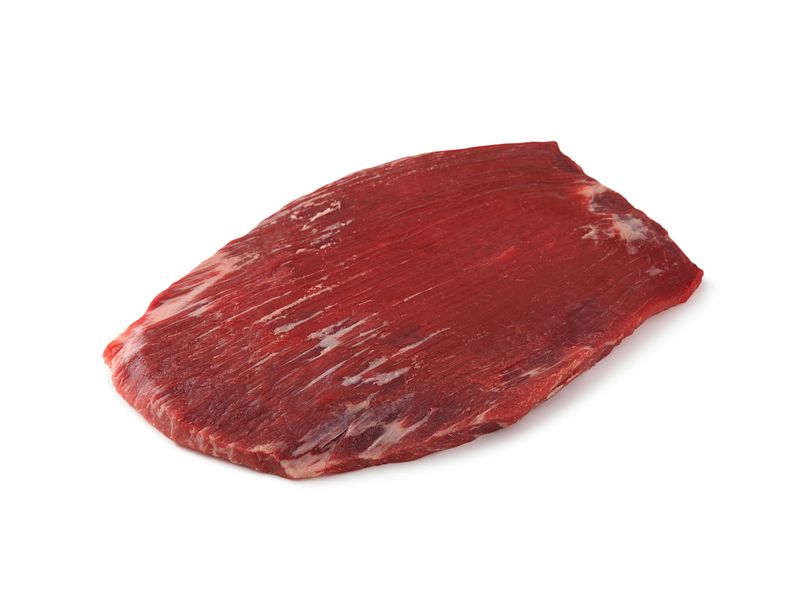
Calories in Flank Steak vary based on cooking method, size, cut, and preparation style. A 100 gram (3.53 ounce) serving of raw flank steak has 165 calories, while a 100 gram broiled serving has 219 calories. A 3-ounce (85g) broiled serving of flank steak has 186 calories. Flank steak nutrition for a 100g broiled portion contains 28.7 grams protein, which supports muscle growth and maintenance (Wolfe, R. R., 2017). Flank steak nutrition facts for a 100 gram broiled serving show that it also provides 10.7 grams of fat (14% Daily Value/DV) and zero carbohydrates. Like most steak types, flank steak contains Zinc (4.1 milligrams, 37% DV), Selenium (23.1 micrograms, 42% DV), Sodium (61 milligrams, 3% DV), Vitamin B12 (1.6 micrograms, 67% DV) and Niacin (5.2 milligrams, 33% DV).
The benefits of flank steak come from the rich profile of high-quality protein, iron, and B vitamins. The main types of flank steak are distinguished by USDA grades, including Prime, Choice, and Select, and by preparation style, such as marinated or unmarinated. Flank steak is a cut from the abdominal muscles of the cow, historically popularized through preparations like London Broil.
The United States, Brazil, and China are the top producers and consumers of beef, from which flank steak is sourced. The price of beef steak has increased greatly over the last 20 years, from $5.17 per pound in January 2005, to $10.51 per pound in 2024.
The recommended consumption is one 3-ounce (85 gram) serving of broiled flank steak in a day. Burning the 186 calories from a 3-ounce broiled serving of flank steak requires 18 minutes of jogging, 22 minutes of swimming, or 35 minutes of brisk walking.
Flank Steak nutrition
| Stats | Weight |
|---|---|
| Carbs | 0 grams |
| Protein | 20.1 grams |
| Fats | 9.4 grams |
| Sugars | 0 grams |
- Beef Flank Steak Calories (Nutritional Facts)
- Raw Flank Steak Nutrition
- Sodium in Flank Steak
- Potassium in Flank Steak
- Sugar in Flank Steak
- Fiber in Flank Steak
- Cholesterol in Flank Steak
- Protein in Flank Steak
- Carbs in Flank Steak
- Fat in Flank Steak
- Vitamins in Flank Steak
- Minerals in Flank Steak
Beef Flank Steak Calories (Nutritional Facts)
A 100-gram (3.5 oz) serving of broiled beef flank steak contains 219 calories, 28.7g of protein, 10.7g of fat, 0g of carbohydrates, 0g of fiber, 0g of sugar, 81mg of cholesterol, and 61mg of sodium. An 8-ounce (227g) broiled flank steak contains 497 calories, 65.2g of protein, 24.3g of fat, 0g of carbohydrates, 0g of fiber, 0g of sugar, 184mg of cholesterol, and 138mg of sodium. A 6-ounce (170g) broiled flank steak contains 372 calories, 48.8g of protein, 18.2g of fat, 0g of carbohydrates, 0g of fiber, 0g of sugar, 138mg of cholesterol, and 104mg of sodium. A 3-ounce (85g) broiled flank steak contains 186 calories, 24.4g of protein, 9.1g of fat, 0g of carbohydrates, 0g of fiber, 0g of sugar, 69mg of cholesterol, and 52mg of sodium.
A 100-gram (3.5 oz) serving of raw beef flank steak contains 165 calories, 21.8g of protein, 7.9g of fat, 0g of carbohydrates, 0g of fiber, 0g of sugar, 65mg of cholesterol, and 56mg of sodium. An 8-ounce (227g) raw flank steak contains 375 calories, 49.5g of protein, 17.9g of fat, 0g of carbohydrates, 0g of fiber, 0g of sugar, 148mg of cholesterol, and 127mg of sodium. A 6-ounce (170g) raw flank steak contains 281 calories, 37g of protein, 13.4g of fat, 0g of carbohydrates, 0g of fiber, 0g of sugar, 111mg of cholesterol, and 95mg of sodium. A 3-ounce (85g) raw flank steak contains 140 calories, 18.5g of protein, 6.7g of fat, 0g of carbohydrates, 0g of fiber, 0g of sugar, 55mg of cholesterol, and 48mg of sodium.
A 100-gram serving of raw beef flank steak contains 56mg of sodium (2% DV). A 100-gram serving of broiled beef flank steak has 61mg of sodium (3% DV). An 8-ounce (227g) broiled flank steak contains 138mg of sodium (6% DV). A 6-ounce (170g) broiled flank steak has 104mg of sodium (5% DV). A 3-ounce (85g) broiled flank steak contains 52mg of sodium (2% DV).
Raw beef flank steak contains 343mg of potassium (7% DV) in a 100-gram serving. Broiled beef flank steak provides 310mg of potassium (7% DV) per 100 grams. An 8-ounce (227g) broiled flank steak has 704mg of potassium (15% DV). A 6-ounce (170g) broiled flank steak contains 527mg of potassium (11% DV). A 3-ounce (85g) broiled serving has 264mg of potassium (6% DV).
Raw beef flank steak contains 0g of sugar in all serving sizes. Broiled beef flank steak also contains 0g of sugar in all serving sizes.
There is 0g of fiber in raw beef flank steak. Cooked beef flank steak also contains 0g of fiber.
A 100-gram serving of raw beef flank steak has 65mg of cholesterol (22% DV). A 100-gram serving of broiled beef flank steak contains 81mg of cholesterol (27% DV). An 8-ounce (227g) broiled flank steak has 184mg of cholesterol (61% DV). A 6-ounce (170g) broiled flank steak contains 138mg of cholesterol (46% DV). A 3-ounce (85g) broiled flank steak has 69mg of cholesterol (23% DV).
The answer to how much protein is in Flank Steak depends on the preparation and serving size. A 100-gram serving of raw beef flank steak provides 21.8g of protein. A 100-gram serving of broiled beef flank steak contains 28.7g of protein. An 8-ounce (227g) broiled flank steak has 65.2g of protein. A 6-ounce (170g) broiled flank steak contains 48.8g of protein. A 3-ounce (85g) broiled serving provides 24.4g of protein.
Raw beef flank steak contains 0g of carbohydrates. Broiled beef flank steak also has 0g of carbohydrates.
A 100-gram serving of raw beef flank steak contains 7.9g of total fat (10% DV). A 100-gram serving of broiled beef flank steak has 10.7g of total fat (14% DV). An 8-ounce (227g) broiled flank steak contains 24.3g of fat (31% DV). A 6-ounce (170g) broiled flank steak has 18.2g of fat (23% DV). A 3-ounce (85g) broiled flank steak contains 9.1g of fat (12% DV).
A 100-gram serving of broiled beef flank steak contains 0.5mg of Vitamin B6 (29% DV), 1.6mcg of Vitamin B12 (67% DV), 5.2mg of Niacin (33% DV), 0.1mg of Riboflavin (8% DV), and 0.4mg of Pantothenic Acid (8% DV). A 3-ounce (85g) serving of broiled beef flank steak contains 0.4mg of Vitamin B6 (25% DV), 1.4mcg of Vitamin B12 (57% DV), 4.4mg of Niacin (28% DV), 0.1mg of Riboflavin (7% DV), and 0.3mg of Pantothenic Acid (7% DV).
A 100-gram serving of broiled beef flank steak provides 4.1mg of Zinc (37% DV), 23.1mcg of Selenium (42% DV), 2.1mg of Iron (12% DV), 224mg of Phosphorus (18% DV), and 24mg of Magnesium (6% DV). A 3-ounce (85g) serving of broiled beef flank steak provides 3.5mg of Zinc (32% DV), 19.6mcg of Selenium (36% DV), 1.8mg of Iron (10% DV), 190mg of Phosphorus (15% DV), and 20mg of Magnesium (5% DV).
Get a Custom Report on Flank Steak Nutrition Data – Contact Us!
What are the Types of Flank Steak?
The types of flank steak are USDA Prime, USDA Choice, USDA Select, Marinated, and Unmarinated. The table below details these common varieties and the characteristics of each.
| Type | Description | Calories (Approximate per 100g/3.5oz cooked) | Calorie Qualifications |
|---|---|---|---|
|
USDA Prime Flank Steak
|
The highest grade with the most marbling. This fat content results in a more tender and flavorful steak. | 225-240 | The higher fat content from marbling leads to a higher calorie count compared to lower grades. |
|
USDA Choice Flank Steak
|
High quality with less marbling than Prime. This is the most widely available grade in supermarkets and offers good flavor and tenderness. | 210-225 | A moderate calorie count, representing a balance between leanness and the flavor that comes from some marbling. |
|
USDA Select Flank Steak
|
A leaner grade with less marbling. Select flank steak is less tender and juicy than Prime or Choice and benefits from marinades. | 190-210 | This is one of the lowest calorie options for flank steak due to the lower fat content of the steak. |
|
Marinated Flank Steak
|
Flank steak that has been soaked in a marinade, often containing oil, soy sauce, vinegar, and sugar. | 220-280+ | Calories are higher due to the added fats from oil and sugars from ingredients like teriyaki or barbecue sauce. |
|
Unmarinated Flank Steak
|
Plain flank steak without any added marinades or sauces, seasoned only with dry spices like salt and pepper. | 190-220 | The calorie count reflects the natural nutritional profile of the beef itself, varying only by the grade of the meat. |
What are the Main Dishes with Flank Steak?
Flank steak is a key ingredient in numerous main dishes across several cuisines, prized for the flavor of the meat and ability to absorb marinades. The table below details staple main dishes that use flank steak.
| Dish Name | Calories (Estimate per serving) | Type of Flank Steak Used | Carbs (g) (Estimate) | Sugar (g) (Estimate) | Protein (g) (Estimate) | Fat (g) (Estimate) | Cuisine | Restaurants |
|---|---|---|---|---|---|---|---|---|
|
Beef Fajitas
|
400-600 | Marinated, Sliced Flank Steak | 30-50 | 5-10 | 25-35 | 15-25 | Tex-Mex | On the Border Mexican Grill & Cantina, Chuy's |
|
Carne Asada Tacos
|
200-350 (per taco) | Marinated, Grilled, and Diced Flank Steak | 15-25 | 1-3 | 15-25 | 10-18 | Mexican | Guelaguetza (Los Angeles, CA), Chipotle Mexican Grill |
|
London Broil
|
350-550 | Marinated, Broiled, and Thinly Sliced Flank Steak | 0-5 | 0-2 | 40-50 | 18-28 | American | Lawry's The Prime Rib, Tad's Steaks |
|
Beef and Broccoli
|
450-700 | Thinly Sliced Flank Steak | 40-60 | 20-35 | 25-35 | 20-30 | Chinese-American | P.F. Chang's, Panda Express |
|
Thai Beef Salad (Yum Nua)
|
300-450 | Grilled, Thinly Sliced Flank Steak | 15-25 | 10-18 | 25-35 | 12-20 | Thai | Zabb Elee (New York, NY), Lotus of Siam (Las Vegas, NV) |
What are the Desserts to Pair with Flank Steak?
Flank steak is a savory ingredient not used in desserts. Certain desserts pair exceptionally well with a flank steak meal by providing a contrasting flavor profile to cleanse the palate. The table below details dessert options that complement a main course of flank steak.
| Dish Name | Calories (Estimate per serving) | Carbs (g) (Estimate) | Sugar (g) (Estimate) | Protein (g) (Estimate) | Fat (g) (Estimate) | Cuisine | Restaurants |
|---|---|---|---|---|---|---|---|
| Key Lime Pie | 300-500 | 50-70 | 40-60 | 5-8 | 15-25 | American (Floridian) | Joe's Stone Crab (Miami, FL), Steve's Authentic Key Lime Pies (Brooklyn, NY) |
| Lemon Sorbet | 100-150 | 25-35 | 20-30 | 0-1 | 0 | Italian / French | Del Frisco's Double Eagle Steakhouse, Capital Grille |
| Flan | 250-400 | 40-55 | 35-50 | 6-9 | 8-15 | Spanish / Latin American | Cosme (New York, NY), various authentic Mexican restaurants |
| Berries with Cream | 200-350 | 20-30 | 18-28 | 2-4 | 15-25 | American / European | The Cheesecake Factory, many farm-to-table restaurants |
| Panna Cotta | 250-400 | 20-30 | 18-28 | 3-5 | 18-28 | Italian | Eataly (multiple locations), Babbo (New York, NY) |
What Cuisines Prefer Flank Steak Most?
Flank steak is a versatile cut of beef featured prominently in many global culinary traditions, especially those that employ marinades and quick cooking methods. The table below details cuisines where the role of flank steak is foundational.
| Cuisine | Dish | Types of Flank Steak Used | Calories (Estimate per serving) | Restaurant(s) |
|---|---|---|---|---|
|
Mexican / Latin American
|
Carne Asada, Lomo Saltado | Marinated, grilled, or stir-fried flank steak | 400-700 | Rick Bayless' Frontera Grill (Chicago, IL), Pio Pio (New York, NY) |
|
American
|
London Broil | Marinated and broiled whole flank steak | 350-550 | Keens Steakhouse (New York, NY), House of Prime Rib (San Francisco, CA) |
|
Chinese
|
Beef with Broccoli, Mongolian Beef | Thinly sliced and stir-fried flank steak | 450-700 | Joe's Shanghai (New York, NY), Din Tai Fung |
|
Thai
|
Crying Tiger (Suea Rong Hai) | Marinated, grilled, and thinly sliced flank steak | 300-450 | Ayada Thai (New York, NY), Jitlada (Los Angeles, CA) |
|
Colombian
|
Bandeja Paisa (Carne en Polvo) | Flank steak, cooked, shredded, and fried | 800-1200+ | La Pequeña Colombia (New York, NY), Pueblito Viejo (Chicago, IL) |
Which Countries Produce the Most Flank Steaks?
The top producers of beef, from which flank steak is sourced, are the United States, Brazil, and China. These countries lead in global cattle production and meat processing, making them the largest sources of all beef cuts, including flank steak. The table below shows the beef and veal production quantities for these leading countries from 2003 to 2022.
| Country | 2003 | 2004 | 2005 | 2006 | 2007 | 2008 | 2009 | 2010 | 2011 | 2012 | 2013 | 2014 | 2015 | 2016 | 2017 | 2018 | 2019 | 2020 | 2021 | 2022 |
|---|---|---|---|---|---|---|---|---|---|---|---|---|---|---|---|---|---|---|---|---|
| United States | 11,941,600 | 11,093,000 | 11,159,000 | 11,623,000 | 12,030,000 | 12,125,000 | 11,798,000 | 11,882,000 | 11,939,000 | 11,931,000 | 11,719,000 | 11,234,000 | 10,871,000 | 11,475,000 | 12,219,000 | 12,220,000 | 12,380,000 | 12,386,000 | 12,735,000 | 12,890,000 |
| Brazil | 7,618,000 | 7,995,000 | 8,630,000 | 9,020,000 | 9,375,000 | 9,024,000 | 9,395,000 | 9,115,000 | 9,030,000 | 9,575,000 | 9,710,000 | 10,220,000 | 9,720,000 | 9,550,000 | 9,900,000 | 10,100,000 | 10,200,000 | 10,100,000 | 9,750,000 | 9,850,000 |
| China | 5,580,000 | 6,130,000 | 6,680,000 | 6,950,000 | 7,130,000 | 6,160,000 | 6,300,000 | 6,420,000 | 6,480,000 | 6,270,000 | 6,380,000 | 6,450,000 | 6,670,000 | 6,750,000 | 6,860,000 | 6,920,000 | 6,670,000 | 6,720,000 | 6,980,000 | 7,180,000 |
Which Countries Consume the Most Flank Steak?
The top consumers of beef, and by extension flank steak, are the United States, China, and Brazil. High domestic production in the United States and Brazil supports high consumption levels, while China's growing demand makes the nation a top consumer through both domestic production and large import volumes. The table below shows beef and veal consumption for these top consuming countries from 2003 to 2022.
| Country | 2003 | 2004 | 2005 | 2006 | 2007 | 2008 | 2009 | 2010 | 2011 | 2012 | 2013 | 2014 | 2015 | 2016 | 2017 | 2018 | 2019 | 2020 | 2021 | 2022 |
|---|---|---|---|---|---|---|---|---|---|---|---|---|---|---|---|---|---|---|---|---|
| United States | 12,395,000 | 12,510,000 | 12,680,000 | 12,890,000 | 12,950,000 | 12,560,000 | 12,470,000 | 12,110,000 | 12,050,000 | 11,830,000 | 11,720,000 | 11,290,000 | 11,460,000 | 11,780,000 | 12,130,000 | 12,340,000 | 12,350,000 | 12,640,000 | 12,890,000 | 12,760,000 |
| China | 5,890,000 | 6,350,000 | 6,890,000 | 7,150,000 | 7,320,000 | 6,410,000 | 6,550,000 | 6,680,000 | 6,750,000 | 6,540,000 | 6,890,000 | 7,230,000 | 7,480,000 | 7,760,000 | 8,240,000 | 8,530,000 | 9,320,000 | 10,430,000 | 10,670,000 | 10,850,000 |
| Brazil | 6,650,000 | 6,980,000 | 7,340,000 | 7,650,000 | 7,910,000 | 7,780,000 | 7,850,000 | 7,630,000 | 7,590,000 | 7,860,000 | 8,010,000 | 8,150,000 | 7,820,000 | 7,540,000 | 7,720,000 | 7,690,000 | 7,880,000 | 7,760,000 | 7,450,000 | 6,980,000 |
How Do Prices of Flank Steak-including Dishes Change?
The menu prices of dishes that feature flank steak have risen over the past decade. This change reflects increases in the costs of all ingredients, labor, and restaurant operations. Restaurants like P.F. Chang's and Chipotle have adjusted menu prices to account for these economic factors.
| Restaurant | Dish | Old Price (Year) | Current Price (2024/2025) |
|---|---|---|---|
| P.F. Chang's | Beef with Broccoli | $15.50 (2014) | $20.00 - $22.00 |
| Chipotle Mexican Grill | Steak Burrito | $7.50 (2014) | $10.95 - $12.00 |
| On the Border | Sizzling Fajitas with Steak | $13.99 (2015) | $19.49 - $21.89 |
| Panda Express | Beijing Beef | $7.90 (Bowl, 2016) | $9.50 - $9.90 (Bowl) |
What is the Flank Steak Calorie for 100 Grams?
A 100-gram serving of raw flank steak contains 165 calories. A 100-gram serving of broiled flank steak contains 219 calories.
What is the Flank Steak Calorie for 1 KG?
One kilogram (1000g) of raw flank steak contains 1650 calories. One kilogram of broiled flank steak contains 2190 calories.
What is the Calorie of 1 Flank Steak?
The calorie content of one flank steak depends on its weight. A whole flank steak that weighs 1.5 pounds (680g) raw contains 1122 calories. A broiled flank steak that had a raw weight of 1.5 pounds (680g) contains 1117 calories.
What are the Health Benefits of Flank Steak?
Flank steak provides several health benefits due to the rich nutrient profile of flank steak, particularly the high protein content and concentration of essential minerals and vitamins. The following points detail the key health advantages of consuming flank steak.
- Supports Muscle Growth and Maintenance. Flank steak is a dense source of high-quality protein, and dietary protein is essential for repairing and building muscle tissue (Wolfe, R. R., 2017, The role of dietary protein in muscle resistance exercise).
- Aids in Anemia Prevention. This cut of beef is rich in heme iron, a highly bioavailable form of iron critical for producing hemoglobin to carry oxygen in the blood and prevent iron-deficiency anemia (Hurrell, R. & Egli, I., 2010, Iron bioavailability and dietary reference values).
- Boosts Immune Function. Flank steak is a good source of zinc and selenium, and these micronutrients are vital for immune function, with zinc supporting immune cell development and selenium acting as a protective antioxidant (Maggini, S., et al., 2018, Immune Function and Micronutrient Requirements Change over the Life Course).
- Enhances Cognitive Health. The B vitamins in flank steak, like vitamin B12, are important for maintaining healthy nerve cells and overall cognitive function (Kennedy, D. O., 2016, B Vitamins and the Brain: Mechanisms, Dose and Efficacy—A Review).
What are the Downsides of Flank Steak?
Flank steak offers nutritional benefits, but some potential downsides are associated with its consumption, mainly related to the health risks of red meat intake. The table below shows some of these disadvantages.
- Increased Risk of Heart Disease. High consumption of red meat is linked to an elevated risk of heart disease, and higher intake of unprocessed red meat is associated with a modestly higher risk of coronary heart disease (Al-Shaar, L., et al., 2020, Red Meat Intake and Risk of Coronary Heart Disease Among US Men: Prospective Cohort Study).
- Potential Link to Type 2 Diabetes. A higher consumption of unprocessed red meat is associated with a higher risk of developing type 2 diabetes (Pan, A., et al., 2011, Red meat consumption and risk of type 2 diabetes: 3 cohorts of US adults and an updated meta-analysis).
- Formation of a Heart-Disease-Linked Chemical. Chronic dietary red meat intake increases levels of trimethylamine N-oxide (TMAO), a chemical produced by gut bacteria that is linked to a higher risk of clot-related events like heart attack and stroke (Wang, Z., et al., 2019, Impact of chronic dietary red meat, white meat, or non-meat protein on trimethylamine N-oxide metabolism and renal excretion in healthy men and women).
- High Sodium in Marinated Varieties. Marinated flank steak can contain high amounts of sodium, as sauces are major contributors to sodium intake in the diet (Quader, Z. S., et al., 2017, Sodium Intake from Processed Food in the United States, 2009–2012). For a healthier alternative, consider grilled chicken breast or tofu. A suggested consumption rate is no more than three portions of red meat per week, equal to 350–500g cooked weight.
Is Flank Steak Good for You?
Yes, flank steak is a good food choice because flank steak is a lean cut of beef that is a rich source of high-quality protein, iron, zinc, and B vitamins. For heart health, a diet including lean beef can lower LDL cholesterol and improve blood pressure (Roussell, P. M., et al., 2012, Beef in an Optimal Lean Diet study: a high-protein, lean beef diet improves lipid profiles and blood pressure in mildly hypercholesterolemic men and women). Regarding cognitive health, the micronutrients in flank steak, such as iron, are important for cognitive function (Black, M. M., 2003, Micronutrient deficiencies and cognitive functioning). The high-quality protein in flank steak also supports muscle health and overall bodily function (Weiler, M., et al., 2016, Protein-Rich Food for Public Health with a Focus on Meat).
How Do Calories Change According to Flank Steak Types?
The calorie content of flank steak changes due to the grade of the meat and the preparation method. A USDA Select flank steak is the lowest calorie option, with 190-210 calories per 100g cooked serving, due to having the least amount of fat. The highest calorie flank steak is a marinated version, which can contain 280 calories or more per 100g serving because of added oils and sugars in the marinade. USDA Prime and Choice grades fall between these two extremes, with calorie counts increasing with the amount of marbling.
Do Flank Steak Macros Change When Cooked?
Yes, the flank steak macros profile changes when cooked. The cooking process removes water from the meat, which concentrates the nutrients in the remaining weight. A 100-gram portion of raw flank steak contains 165 calories, 21.8 grams of protein, and 7.9 grams of fat. After cooking, the grilled flank steak calories increase per gram. A 100-gram portion of grilled or broiled flank steak contains 219 calories, 28.7 grams of protein, and 10.7 grams of fat. The cooked serving has more protein, fat, and calories per gram because the reduction in water content makes the meat more nutritionally dense.
What is the Origin of Flank Steak?
The flank steak is a cut of beef from the abdominal muscles of the cow, located behind the plate and below the loin. Historically, because the muscle is well-exercised, the cut was considered tough and less desirable than more tender steaks. The popularity of flank steak grew with the development of cooking techniques that tenderize the meat. One of the most famous dishes, London Broil, involves marinating the flank steak for several hours in an acidic mixture and then cooking the meat quickly under a high-heat broiler before slicing the steak thinly against the grain. Despite the name, the dish "London Broil" did not originate in London, England; culinary historians trace the method and name to North America in the early 20th century. In Mexican cuisine, flank steak became the preferred cut for carne asada, where marinating and grilling over high heat impart flavor and tenderness before the meat is chopped for tacos and other dishes. The thin profile of the cut also made flank steak ideal for Asian stir-fry dishes, where the meat is sliced thinly and cooked rapidly.
Explore More Meat
Discover more Meat with detailed nutrition facts, calorie counts, vitamins, minerals, and health benefits. Compare similar foods, serving sizes, macronutrients, and key nutrients to find the best option for your diet and nutrition goals.
 Bacon calories
 Beef calories
 Beef Brisket calories
 Beef Chuck calories
 Beef Jerky calories
 Beef Liver calories
 Beef Short Ribs calories
 Beef Tenderloin calories
 Beef Tongue calories
 Bison calories
 Buffalo Meat calories
 Chicken calories