Calories and Nutritions in Ginger
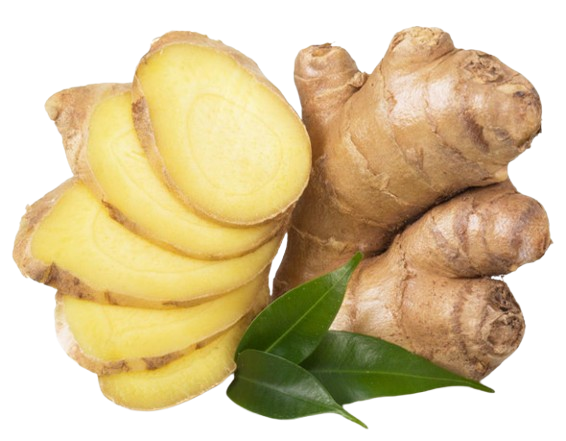
Ginger calories vary based on its form, with fresh raw ginger root containing 80 calories per 100g (3.5 oz), while dried ground ginger has 335 calories per 100g. Ginger nutrition facts reveal its significant ginger nutritional value, especially bioactive compounds. A 100g serving of raw ginger offers 2g of fiber (7% Daily Value/DV), 415mg of potassium (9% DV), and notable amounts of manganese (26% DV) and Vitamin B6 (9% DV). The primary bioactive compound in ginger, gingerol, is responsible for much of its medicinal properties, including its potent anti-inflammatory and antioxidant effects. (Grzanna, R., et al., 2005, "Ginger: An Herbal Medicinal Product with Broad Anti-Inflammatory Actions").
Common types of ginger include fresh root, dried ground powder, pickled ginger (gari, 50 calories per 100g), and candied ginger (340-360 calories per 100g). India, Nigeria, and China are leading global producers of ginger, with significant consumption in these Asian countries and increasing popularity worldwide. Ginger prices have shown volatility over the past two decades, influenced by crop yields and global demand, with fresh ginger in U.S. markets often retailing between $2 to $5 per pound between 2022 and 2024.
Ginger is a staple in many cuisines, featuring in dishes like ginger chicken stir-fry at P.F. Chang's, various curries at Indian restaurants, and as pickled ginger accompanying sushi at establishments like Kura Sushi. There is no specific recommended daily intake for ginger, but it is widely used in culinary amounts for flavor and health benefits. A serving of 1-2g of fresh ginger (1-2 calories) or a quarter teaspoon of ground ginger (about 2 calories) can be a flavorful addition to meals. Burning these few calories from a culinary serving of ginger requires minimal physical activity, taking less than a minute of any light effort, as its caloric contribution in such quantities is very low.
Ginger nutrition
| Stats | Weight |
|---|---|
| Carbs | 2.6 grams |
| Protein | 0.3 grams |
| Fats | 0 grams |
| Sugars | 0.2 grams |
- Ginger Water Calories (Nutritional Facts)
- Ginger Root Calories (Nutritional Facts)
- Pickled Ginger Calories (Nutritional Facts)
- Raw (Fresh) Ginger Calories (Nutritional Facts)
- Sodium in Ginger
- Potassium in Ginger
- Sugar in Ginger
- Fiber in Ginger
- Protein in Ginger
- Carbs in Ginger
- Fat in Ginger
- Vitamins in Ginger
- Minerals in Ginger
Ginger Water Calories (Nutritional Facts)
Ginger water, made by infusing fresh ginger in water, contains a negligible amount of calories, often considered to be 0 calories per cup (240ml, 8 fl oz) if no sweeteners or other caloric ingredients are added. If a small amount of ginger (e.g., 5g) is used to make the ginger water and some compounds leach into the water, the caloric contribution would still be minimal, likely less than 2 calories per cup. The main nutritional contribution would be trace minerals and bioactive compounds from the ginger rather than significant macronutrients or calories.
A 100g (3.5 oz) serving of raw ginger root contains 80 calories. One tablespoon of chopped raw ginger root (6g, 0.21 oz) provides 4.8 calories. A quarter-cup of sliced raw ginger root (24g, 0.85 oz) has 19.2 calories. Raw ginger root (100g) contains 1.8g of protein, 17.8g of carbohydrates, and 0.8g of fat.
A 100g (3.5 oz) serving of pickled ginger (gari) contains 50 calories. One tablespoon (15g, 0.53 oz) of pickled ginger provides 7.5 calories. Pickled ginger (100g) contains 0.2g of protein, 12.3g of carbohydrates (primarily from sugars added during pickling), and 0.2g of fat. The sodium content in pickled ginger can be high due to the pickling process.
A 100g (3.5 oz) serving of raw fresh ginger root contains 80 calories. A one-inch piece of raw ginger root (11g, 0.39 oz) provides 8.8 calories. One teaspoon of grated raw ginger root (2g, 0.07 oz) has 1.6 calories.
Raw ginger root contains 13mg of sodium per 100g (1% DV). One tablespoon of chopped raw ginger root (6g, 0.21 oz) has 0.8mg of sodium (0% DV). Pickled ginger contains a significantly higher amount of sodium, with some commercial varieties having 600-800mg of sodium per 100g (26-35% DV) or more. Ground dried ginger contains 27mg of sodium per 100g (1% DV).
Raw ginger root provides 415mg of potassium per 100g (9% DV). One tablespoon of chopped raw ginger root (6g, 0.21 oz) contains 24.9mg of potassium (1% DV). Pickled ginger contains less potassium due to processing, around 68mg per 100g (1% DV). Ground dried ginger provides 1320mg of potassium per 100g (28% DV).
Raw ginger root contains 1.7g of total sugars per 100g. One tablespoon of chopped raw ginger root (6g, 0.21 oz) has 0.1g of sugar. Pickled ginger contains a much higher amount of sugar due to the sweeteners used in the pickling solution, often ranging from 8g to 12g of sugar per 100g. Ground dried ginger contains 3.4g of total sugars per 100g.
Raw ginger root provides 2g of dietary fiber per 100g (7% DV). One tablespoon of chopped raw ginger root (6g, 0.21 oz) offers 0.12g of dietary fiber (0% DV). Pickled ginger contains about 0.5g of dietary fiber per 100g (2% DV). Ground dried ginger provides 14.1g of dietary fiber per 100g (50% DV).
Raw ginger root contains 1.8g of protein per 100g (4% DV). One tablespoon of chopped raw ginger root (6g, 0.21 oz) has 0.1g of protein (0% DV). Pickled ginger contains around 0.2g of protein per 100g (0% DV). Ground dried ginger provides 9g of protein per 100g (18% DV).
Raw ginger root has 17.8g of total carbohydrates per 100g (6% DV). One tablespoon of chopped raw ginger root (6g, 0.21 oz) contains 1.1g of total carbohydrates (0% DV). Pickled ginger contains 12.3g of total carbohydrates per 100g (4% DV), mainly from added sugars. Ground dried ginger has 71.6g of total carbohydrates per 100g (26% DV).
Raw ginger root contains 0.8g of total fat per 100g (1% DV). One tablespoon of chopped raw ginger root (6g, 0.21 oz) has less than 0.1g of total fat (0% DV). Pickled ginger contains around 0.2g of total fat per 100g (0% DV). Ground dried ginger provides 4.2g of total fat per 100g (5% DV).
A 100g (3.5 oz) serving of raw ginger root provides Vitamin C at 5mg (6% DV) and Vitamin B6 at 0.16mg (9% DV). It also contains smaller amounts of niacin (Vitamin B3) at 0.75mg (5% DV) and folate (Vitamin B9) at 11µg (3% DV). Ground dried ginger (100g) is a better source of some B vitamins due to concentration, providing Vitamin B6 at 0.6mg (35% DV) and niacin at 5.2mg (33% DV), though its Vitamin C content is lower at 0.7mg (1% DV).
A 100g (3.5 oz) serving of raw ginger root contains 415mg of potassium (9% DV), 43mg of magnesium (10% DV), and 0.6mg of manganese (26% DV). It also provides phosphorus at 34mg (5% DV) and iron at 0.6mg (3% DV). Ground dried ginger (100g) is richer in minerals, offering iron at 19.8mg (110% DV), manganese at 33.3mg (1448% DV), magnesium at 214mg (51% DV), and potassium at 1320mg (28% DV).
Get a Custom Report on Ginger Nutrition Data – Contact Us!
What are the Types of Ginger?
Ginger is available in several forms, each with distinct characteristics, culinary uses, and slight variations in nutrient concentration and thus calorie content. The most common types are fresh ginger root, dried ground ginger, and pickled ginger.
| Type | Description | Calories (per 100g) | Calorie Qualifications |
|---|---|---|---|
|
Fresh Ginger Root
|
The raw, whole rhizome (underground stem). Pungent, spicy, and slightly sweet flavor. | 80 | Moderate calories, high water content. |
|
Dried Ground Ginger
|
Fresh ginger that has been dried and ground into a fine powder. More concentrated, warmer, and less bright flavor. | 335 | Significantly higher in calories and nutrients by weight due to dehydration. |
|
Pickled Ginger (Gari)
|
Thinly sliced ginger preserved in a solution of vinegar and sugar. Sweet, tangy, and mildly spicy. | 50 | Lower in calories than fresh ginger by weight; calories mainly from added sugar. |
|
Candied/Crystallized Ginger
|
Ginger cooked in sugar syrup and coated with sugar. Sweet and spicy. | 340-360 | High in calories due to very high sugar content. |
|
Ginger Paste/Puree
|
Fresh ginger ground into a paste, often with a small amount of oil or preservatives. | Varies (80-120) | Calorie content similar to fresh or slightly higher if oil is added. |
|
Ginger Juice/Extract
|
Liquid extracted from fresh ginger. Intense flavor. | Varies (low if unsweetened) | Low in calories if no sugar is added, similar to ginger water. |
What are the Main Dishes with Ginger?
Ginger is used in countless main dishes across a multitude of global cuisines. It can be used fresh, dried, pickled, or candied, adding depth and aroma to stir-fries, curries, soups, marinades, and more. The table below outlines various main dishes where ginger frequently plays a key role, along with estimated nutritional information and examples of restaurants where these or similar dishes might be enjoyed:
| Dish Name | Calories (per serving) | Type of Ginger Used | Carbs (g) | Sugar (g) | Protein (g) | Fat (g) | Cuisine | Restaurants |
|---|---|---|---|---|---|---|---|---|
|
Ginger Chicken Stir-fry
|
350-600 | Fresh, Paste | 20-40 | 5-15 | 25-40 | 10-25 | Chinese, Asian Fusion | P.F. Chang's, Panda Express (seasonal), Pei Wei Asian Kitchen, local Chinese/Asian spots |
|
Thai Green Curry (with ginger)
|
400-700 | Fresh, Paste | 25-45 | 5-10 | 20-35 | 20-35 | Thai | Local Thai restaurants |
|
Indian Ginger Garlic Chicken/Mutton Curry
|
400-650 | Fresh (as paste with garlic) | 15-30 | 3-8 | 25-40 | 20-35 | Indian | Local Indian restaurants |
|
Teriyaki Salmon with Ginger
|
400-650 | Fresh, Paste | 20-35 | 15-25 | 30-45 | 15-25 | Japanese, Asian Fusion | Bonefish Grill, Nobu (upscale), local Japanese or fusion restaurants |
|
Vietnamese Pho (broth often contains ginger)
|
350-550 | Fresh (in broth) | 40-60 | 2-5 | 20-30 | 5-15 | Vietnamese | Local Vietnamese restaurants, some Pho specialty chains |
|
Miso Soup (often with ginger garnish)
|
60-120 (cup) | Fresh (garnish) | 5-10 | 2-4 | 3-6 | 2-4 | Japanese | Most Japanese restaurants, sushi bars |
|
Korean Bulgogi (marinade includes ginger)
|
400-600 | Fresh, Paste | 15-25 | 10-18 | 25-35 | 20-30 | Korean | Local Korean BBQ restaurants |
|
Carrot Ginger Soup
|
150-300 (bowl) | Fresh, Paste | 20-35 | 10-20 | 3-6 | 5-15 | International, Vegetarian | Panera Bread (seasonal), Hale and Hearty Soups, health-focused cafes |
|
Ginger Beef and Broccoli
|
400-650 | Fresh, Paste | 25-40 | 8-15 | 25-35 | 15-25 | Chinese-American | Local Chinese-American restaurants |
|
Adobo (Filipino, some variations use ginger)
|
400-600 | Fresh | 10-20 | 3-7 | 25-40 | 20-30 | Filipino | Jollibee (some items), Max's Restaurant, local Filipino eateries |
|
Tom Yum Soup (Thai, includes galangal/ginger)
|
200-400 | Fresh (or galangal) | 10-20 | 3-8 | 10-20 | 8-18 | Thai | Local Thai restaurants |
|
Szechuan Chicken with Ginger
|
450-700 | Fresh, Paste | 20-35 | 5-10 | 30-45 | 20-30 | Chinese (Szechuan) | P.F. Chang's, many authentic Chinese restaurants |
|
Pickled Ginger (Gari, as a side with Sushi)
|
5-15 (small serving) | Pickled | 1-3 | 1-2 | <0.5 | <0.1 | Japanese | Most sushi restaurants, e.g., Kura Sushi, Nobu, local sushi spots |
|
Ginger Salad Dressing (on Asian Salads)
|
80-150 (2 tbsp) | Fresh, Paste, Pickled | 5-15 | 4-12 | <1 | 6-12 | Japanese, Asian Fusion | Japanese steakhouses (e.g., Benihana, Kobe), some Pan-Asian restaurants |
|
Lemon Ginger Chicken
|
350-550 | Fresh, Paste | 10-20 | 2-6 | 30-45 | 15-25 | Contemporary American | Various health-focused or contemporary American bistros |
What are the Desserts with Ginger?
Ginger's warm, spicy, and aromatic qualities make it a versatile ingredient in a variety of desserts, ranging from baked goods to candies and frozen treats, as shown here:
| Dish Name | Calories (per serving) | Type of Ginger Used | Carbs (g) | Sugar (g) | Protein (g) | Fat (g) | Cuisine | Restaurants |
|---|---|---|---|---|---|---|---|---|
|
Gingerbread Cookies/Cake
|
120-350 (cookie/slice) | Ground, Fresh, Candied | 20-50 | 10-30 | 1-4 | 3-15 | European, American | Starbucks (seasonal), Panera Bread (seasonal), local bakeries, Pepperidge Farm (retail) |
|
Ginger Snaps
|
30-60 (per cookie) | Ground | 5-10 | 2-5 | <1 | 1-3 | European, American | Nabisco (Archway), local bakeries |
|
Candied/Crystallized Ginger
|
80-120 (per oz/28g) | Candied | 20-30 | 18-28 | <0.5 | <0.5 | Confectionery | Specialty food stores, The Ginger People (brand) |
|
Ginger Ice Cream/Sorbet
|
150-250 (1/2 cup) | Fresh, Candied, Extract | 20-35 | 18-30 | 1-3 | 7-15 | Modern, Asian-inspired | Jeni's Splendid Ice Creams (seasonal), Haagen-Dazs (some international markets) |
|
Apple Crumble/Pie with Ginger
|
300-500 (slice) | Ground, Fresh | 40-60 | 20-35 | 2-4 | 12-20 | American, British | Marie Callender's (seasonal pies), local bakeries and diners |
|
Pear and Ginger Tart/Cake
|
250-450 (slice) | Fresh, Candied, Ground | 30-50 | 18-30 | 2-5 | 10-18 | European, American | Upscale bakeries, some contemporary American restaurants |
|
Ginger-infused Panna Cotta/Crème brûlée
|
250-400 | Fresh, Extract | 20-35 | 18-30 | 3-6 | 15-25 | Modern European/Fusion | Fine dining establishments with creative dessert menus |
|
Pumpkin Pie with Ginger
|
300-450 (slice) | Ground | 35-50 | 20-30 | 3-6 | 15-20 | American (Thanksgiving) | Costco (seasonal), Libby's (canned filling for home baking) |
|
Dark Chocolate with Ginger
|
150-200 (per oz/28g) | Candied, Ground | 10-18 | 8-15 | 1-3 | 8-14 | Confectionery | Lindt (Excellence Ginger Dark Chocolate), Godiva (seasonal), Green & Black's |
What Cuisines Prefer Ginger the Most?
Ginger is a globally revered spice, but it holds a particularly prominent and indispensable role in many Asian cuisines, where its aromatic warmth and pungency are foundational to countless dishes. It is also significantly used in Caribbean and some Western culinary traditions, especially in baking. The table below highlights cuisines that most extensively feature ginger.
| Cuisine | Dish Name | Calories (per serving) | Restaurants |
|---|---|---|---|
|
Chinese
|
Ginger Chicken Stir-fry | 350-600 | P.F. Chang's, Panda Express (seasonal), local Chinese restaurants |
|
Chinese
|
Ginger Beef and Broccoli | 400-650 | Most Chinese-American restaurants |
|
Indian
|
Ginger Garlic Paste (base for many curries) | Varies (as ingredient) | Most Indian restaurants |
|
Indian
|
Adrak Chai (Ginger Tea) | 20-80 (cup) | Indian cafes and restaurants |
|
Japanese
|
Pickled Ginger (Gari, with Sushi) | 5-15 (small serving) | Most sushi restaurants, e.g., Kura Sushi, Nobu |
|
Japanese
|
Ginger Salad Dressing | 80-150 (2 tbsp) | Japanese steakhouses like Benihana, Kobe |
|
Korean
|
Kimchi (often includes ginger) | 50-150 (1 cup) | Most Korean restaurants |
|
Korean
|
Bulgogi Marinade | Varies (as ingredient) | Korean BBQ restaurants |
|
Thai
|
Tom Yum Soup (includes galangal/ginger) | 200-400 | Local Thai restaurants |
|
Thai
|
Green/Red Curries (often with ginger/galangal) | 400-700 | Local Thai restaurants |
|
Vietnamese
|
Pho Broth | 350-550 | Local Vietnamese restaurants, Pho specialty chains |
|
Caribbean
|
Ginger Beer (beverage) | 100-180 (12 oz) | Golden Krust Caribbean Bakery & Grill, Caribbean specialty stores |
|
Caribbean
|
Jerk Marinades (often include ginger) | Varies (as ingredient) | Restaurants serving Jamaican Jerk cuisine |
|
Western (Baking)
|
Gingerbread Cookies/Cake | 120-350 (cookie/slice) | Starbucks (seasonal), Panera Bread (seasonal), local bakeries |
Which Countries Produce the Most Ginger?
The top producers of ginger globally are India, Nigeria, China, Indonesia, and Nepal. In 2022, India was the leading producer, yielding over 2,200 kilotonnes of ginger. China also contributes a very significant portion to global ginger production. The Food and Agriculture Organization of the United Nations (FAO) provides data for "Ginger" production. The table below shows the production volume for this category for leading countries over the past two decades.
| Country | 2004 | 2005 | 2006 | 2007 | 2008 | 2009 | 2010 | 2011 | 2012 | 2013 | 2014 | 2015 | 2016 | 2017 | 2018 | 2019 | 2020 | 2021 | 2022 | 2023 (Est.) |
|---|---|---|---|---|---|---|---|---|---|---|---|---|---|---|---|---|---|---|---|---|
| India | 350 | 365 | 385 | 400 | 420 | 435 | 450 | 700 | 750 | 885 | 1,020 | 1,090 | 1,130 | 1,070 | 1,788 | 1,840 | 1,960 | 2,150 | 2,277 | 2,350 |
| Nigeria | 140 | 145 | 152 | 155 | 160 | 162 | 150 | 305 | 320 | 335 | 522 | 540 | 555 | 605 | 650 | 690 | 734 | 770 | 805 | 820 |
| China | 305 | 320 | 330 | 340 | 355 | 360 | 390 | 420 | 450 | 480 | 510 | 550 | 580 | 620 | 650 | 680 | 705 | 730 | 750 | 765 |
| Indonesia | 180 | 175 | 170 | 165 | 160 | 175 | 180 | 190 | 200 | 210 | 220 | 230 | 240 | 160 | 175 | 190 | 205 | 220 | 230 | 235 |
| Nepal | 160 | 165 | 174 | 178 | 185 | 190 | 205 | 210 | 215 | 220 | 235 | 240 | 245 | 275 | 280 | 285 | 290 | 298 | 305 | 310 |
| Thailand | 130 | 135 | 140 | 150 | 155 | 160 | 165 | 170 | 170 | 165 | 160 | 150 | 140 | 130 | 125 | 120 | 115 | 110 | 105 | 100 |
Which Countries Consume the Most Ginger?
Based on data from FAOSTAT regarding food supply quantity ( kg/capita/yr ) and total production, countries in Asia are the largest consumers of ginger. India, China, Indonesia, Nepal, and Japan show high per capita availability and overall consumption. These nations have strong culinary traditions that extensively use ginger.
| Country | 2004 | 2005 | 2006 | 2007 | 2008 | 2009 | 2010 | 2011 | 2012 | 2013 | 2014 | 2015 | 2016 | 2017 | 2018 | 2019 | 2020 | 2021 |
|---|---|---|---|---|---|---|---|---|---|---|---|---|---|---|---|---|---|---|
| India | 280 | 290 | 305 | 315 | 330 | 340 | 350 | 580 | 620 | 740 | 850 | 900 | 930 | 860 | 1,550 | 1,600 | 1,700 | 1,850 |
| China | 200 | 210 | 215 | 220 | 230 | 235 | 260 | 280 | 300 | 320 | 340 | 360 | 380 | 410 | 430 | 450 | 465 | 480 |
| Indonesia | 170 | 165 | 160 | 155 | 150 | 160 | 165 | 175 | 185 | 195 | 205 | 215 | 225 | 145 | 160 | 175 | 190 | 205 |
| Nigeria | 130 | 135 | 140 | 143 | 148 | 150 | 138 | 280 | 295 | 310 | 480 | 500 | 515 | 560 | 600 | 635 | 675 | 710 |
| Nepal | 155 | 160 | 169 | 173 | 180 | 185 | 200 | 205 | 210 | 215 | 230 | 235 | 240 | 270 | 275 | 280 | 285 | 293 |
| Japan | 60 | 62 | 65 | 68 | 70 | 72 | 75 | 78 | 80 | 82 | 85 | 88 | 90 | 92 | 95 | 98 | 100 | 102 |
How Do Prices of Ginger-including Dishes Change?
The prices of restaurant dishes that prominently feature ginger, such as many Asian stir-fries, curries, soups, and specific Western baked goods, have generally increased over the past 20 years. This is due to several factors: the fluctuating and generally rising cost of ginger itself, more significant increases in the prices of other main ingredients (meats, seafood, other vegetables), and escalating operational costs for restaurants, including labor, rent, and energy. Below is a comparison of estimated prices for representative menu items where ginger is a key flavor component.
| Restaurant Chain/Type | Dish | Old Price (2004-2008) | Current Price (2024-2025) |
|---|---|---|---|
| P.F. Chang's | Ginger Chicken with Broccoli | $12.95 - $15.95 | $19.50 - $24.50 |
| Panera Bread (Seasonal) | Carrot Ginger Soup (Bowl) | $4.59 - $5.99 | $6.99 - $8.99 |
| Starbucks (Seasonal) | Gingerbread Latte/Loaf | $3.75 - $4.95 (drink); $2.50 - $3.25 (loaf) | $5.25 - $6.75 (drink); $3.45 - $4.25 (loaf) |
| Japanese Steakhouse (e.g., Benihana) | Ginger Salad Dressing (part of meal/side salad) | Included or $2.00 - $3.50 (if separate) | Included or $3.50 - $5.50 (if separate) |
| Local Vietnamese Restaurant | Pho (broth often has ginger) | $7.50 - $10.50 | $12.50 - $17.50 |
How Does the Price of Ginger Change for the Last 20 Years?
The price of ginger has shown considerable volatility and a general upward trend over the past 20 years. Ginger prices are highly dependent on agricultural output in major producing countries like India, China, and Nigeria. Weather conditions (monsoons, droughts), crop diseases, and changes in cultivated area significantly impact supply. When supply is tight due to poor harvests, prices can spike sharply. The lowest prices for ginger were generally seen in periods of oversupply or stable production in the earlier part of the last two decades (between 2004-2010). For instance, farm gate prices in India or China could drop significantly during such times. Price range factors are numerous: quality (size, appearance, pungency of rhizomes), whether it is fresh or dried (dried ginger generally has a higher value per unit of raw equivalent due to processing and concentration), organic certification, and seasonality. Countries that are major producers often have the lowest domestic prices, while import-reliant countries experience higher prices due to transportation, import duties, and markups. Global demand for ginger has been growing, driven by its popularity in various cuisines, its use in health products and beverages, and increasing awareness of its health benefits. This rising demand, coupled with supply-side volatilities (including climate change impacts on agriculture and occasional trade disruptions), has contributed to the overall increase and fluctuation in ginger prices over the last 20 years. More recently (2020-2023), global supply chain issues and inflationary pressures have also impacted ginger prices, like many other food commodities.
| Year | Price |
|---|---|
| 2005 | $1.2 |
| 2006 | $1.25 |
| 2007 | $1.35 |
| 2008 | $1.5 |
| 2009 | $1.4 |
| 2010 | $1.45 |
| 2011 | $1.6 |
| 2012 | $1.7 |
| 2013 | $1.8 |
| 2014 | $2 |
| 2015 | $2.1 |
| 2016 | $2.3 |
| 2017 | $2.5 |
| 2018 | $2.4 |
| 2019 | $2.7 |
| 2020 | $3.1 |
| 2021 | $3.3 |
| 2022 | $3.45 |
| 2023 | $3.6 |
| 2024 | $3.7 |
What is the Ginger Calorie for 100g?
A 100g (3.5 oz) serving of raw fresh ginger root contains 80 calories. A 100g (3.5 oz) serving of pickled ginger provides 50 calories. A 100g (3.5 oz) serving of ground dried ginger has 335 calories. Ginger water (unsweetened) contains 0 calories per 100g.
What is the Ginger Calorie for 1 KG?
One kilogram (1000g, 35.27 oz) of raw fresh ginger root contains 800 calories. One kilogram (1000g, 35.27 oz) of pickled ginger provides 500 calories. One kilogram (1000g, 35.27 oz) of ground dried ginger has 3350 calories.
What is the Calorie of 1 Tablespoon of Ground Ginger?
One tablespoon (5.1g, 0.18 oz) of ground dried ginger contains 17.1 calories.
What are the Health Benefits of Ginger?
Ginger (Zingiber officinale) has been used for centuries in traditional medicine and cooking, and modern research supports many of its health benefits, listed below:
- Possesses Potent Anti-inflammatory Properties: Ginger contains gingerol, shogaol, and other compounds that exhibit significant anti-inflammatory effects. These can help reduce inflammation and pain associated with conditions like osteoarthritis. (Grzanna, R., et al., 2005, "Ginger—An Herbal Medicinal Product with Broad Anti-Inflammatory Actions").
- Alleviates Nausea and Vomiting: Ginger is well-known for its effectiveness in reducing nausea and vomiting, including motion sickness, morning sickness during pregnancy (when used appropriately), and chemotherapy-induced nausea. (Chaiyakunapruk, N., et al., 2006, "The efficacy of ginger for the prevention of postoperative nausea and vomiting: a meta-analysis").
- Aids Digestion and Soothes Digestive Discomfort: Ginger can help speed up stomach emptying and stimulate digestive enzymes, which can alleviate indigestion, bloating, and gas. It may also help protect the gastric lining. (Wu, K.L., et al., 2008, "Effects of ginger on gastric emptying and motility in healthy humans").
- Rich in Antioxidants: Ginger contains a variety of antioxidants that help protect cells from damage caused by free radicals and oxidative stress, potentially reducing the risk of chronic diseases. (Masuda, Y., et al., 2004, "Antioxidant properties of gingerol related compounds from ginger").
- May Lower Blood Sugar Levels and Improve Diabetes Risk Factors: Some studies suggest that ginger may help lower blood sugar levels and improve insulin sensitivity, which could be beneficial for individuals with type 2 diabetes or those at risk. (Khandouzi, N., et al., 2015, "The Effects of Ginger on Fasting Blood Sugar, Hemoglobin A1c, Apolipoprotein B, Apolipoprotein A-I and Malondialdehyde in Type 2 Diabetic Patients").
- May Reduce Menstrual Pain: Ginger has been shown to be as effective as some pain medications, like ibuprofen, in reducing menstrual pain (dysmenorrhea). (Ozgoli, G., et al., 2009, "Comparison of effects of ginger, mefenamic acid, and ibuprofen on pain in women with primary dysmenorrhea").
- May Help Lower Cholesterol Levels: Some research indicates that ginger can help lower LDL (bad) cholesterol levels and triglycerides, contributing to better heart health. (Alizadeh-Navaei, R., et al., 2008, "Investigation of the effect of ginger on the lipid levels. A double blind controlled clinical trial").
- May Have Anticancer Properties: Bioactive compounds in ginger, such as gingerol and shogaol, have been studied for their potential to inhibit the growth of certain cancer cells and induce apoptosis (programmed cell death) in laboratory and animal studies, though more human research is needed. (Shukla, Y. & Singh, M., 2007, "Cancer preventive properties of ginger: A brief review").
What are the Downsides of Ginger?
While ginger is safe for most people when consumed in culinary amounts, there are some potential downsides, particularly with high doses or for individuals with certain conditions, as listed below:
- Digestive Discomfort in High Doses: Consuming large amounts of ginger can sometimes lead to mild digestive issues such as heartburn, diarrhea, and general stomach discomfort or irritation.
- May Interact with Blood-Thinning Medications: Ginger has mild blood-thinning properties. Individuals taking anticoagulant or antiplatelet drugs (like warfarin or aspirin) should consult their doctor before consuming large amounts of ginger or ginger supplements, as it could potentially increase the risk of bleeding or bruising. (Marx, W., et al., 2015, "The effect of ginger (Zingiber officinale) on platelet aggregation: A systematic literature review").
- Can Lower Blood Sugar, Requiring Medication Adjustment: Since ginger may lower blood sugar levels, individuals with diabetes who are taking medication to manage their blood sugar should monitor their levels closely if they start consuming more ginger, and may need to discuss medication adjustments with their healthcare provider.
- May Worsen Gallstone Issues: Ginger can stimulate bile production, which is generally good for digestion. However, for individuals with gallstones, increased bile flow could potentially cause discomfort or problems if a stone blocks a bile duct.
- Contact Dermatitis in Some Individuals: Handling fresh ginger can occasionally cause a skin rash or irritation (contact dermatitis) in sensitive individuals.
Is Ginger Good for You?
Yes, ginger is good for you when consumed as part of a balanced diet and in appropriate amounts. It is a powerful spice with a long history of medicinal use, supported by modern scientific research. Ginger is rich in bioactive compounds, most notably gingerol, which is responsible for many of its health-promoting properties, including potent anti-inflammatory and antioxidant effects. (Rahmani, A.H., et al., 2014, "Active ingredients of ginger as potential candidates in the prevention and treatment of diseases via modulation of biological activities"). Its ability to alleviate nausea, aid digestion, and potentially reduce pain and lower blood sugar makes it a valuable functional food. While it has some potential downsides at very high doses or for individuals with specific medical conditions or on certain medications, for most people, incorporating ginger into their meals or enjoying ginger tea can contribute positively to overall health and well-being. (Anh, N.H., et al., 2020, "Ginger on Human Health: A Comprehensive Systematic Review of 109 Randomized Controlled Trials").
How Do Calories Change According to Ginger Types?
The calorie content of ginger varies significantly depending on its form and preparation method. Fresh ginger root is moderately low in calories, containing 80 calories per 100g, due to its high water content. When ginger is dried to produce ground ginger, the water is removed, leading to a much more concentrated product; dried ground ginger contains 335 calories per 100g, making it the most calorie-dense form by weight among common preparations. Pickled ginger (gari) has fewer calories than fresh ginger by weight, around 50 calories per 100g, but these calories are primarily derived from the sugars added during the pickling process. Candied or crystallized ginger is very high in calories, ranging from 340 to 360 calories per 100g, because it is cooked in and coated with sugar. Ginger paste or puree will have a caloric value similar to fresh ginger, or slightly higher if oil is a significant additive. Unsweetened ginger juice or ginger water will be very low in calories, approaching zero.
Do Ginger Macros Change When Dried?
Yes, ginger macros change significantly when ginger is dried. Drying ginger removes the vast majority of its water content, which leads to a more concentrated form of all the other components, including the macronutrients.
Carbohydrates, which include sugars and fiber, become much more concentrated in dried ginger. Per gram, dried ginger will have a substantially higher carbohydrate content compared to fresh ginger. Similarly, the fiber content per gram is also much higher in dried ginger. Protein, while not a primary component of ginger, also becomes more concentrated. Consequently, because carbohydrates and protein (and the small amount of fat present) are concentrated, dried ginger has more calories per gram than fresh ginger. The reduction in water content means that the same weight of dried ginger contains a much greater proportion of these energy-providing macronutrients.
What is the Origin of Ginger?
Ginger (Zingiber officinale) is believed to have originated in the tropical rainforests of Southern Asia, likely in regions spanning from Maritime Southeast Asia (Islands of Southeast Asia) to India. It has been cultivated for thousands of years and does not grow wild in its current domesticated form. Ancient Chinese and Indian civilizations highly valued ginger for its culinary and medicinal properties, with records of its use dating back over 5,000 years. Confucius wrote about ginger in his Analects, and it was an important commodity in the spice trade between Asia and Europe from ancient times.
The Romans imported ginger from Asia, and it became a popular spice in their cuisine. After the fall of the Roman Empire, its use in Europe declined somewhat but was revived during the Middle Ages as Arab traders reintroduced it. By the 11th century, it was well-known in England. An interesting piece of trivia is that during the Middle Ages, a pound of ginger was said to be worth the price of a sheep. Queen Elizabeth I of England is credited by some with the invention of the gingerbread man, which became a popular Christmas treat. Ginger's journey from the tropical climes of Asia to becoming a globally cherished spice, integral to diverse culinary traditions from Asian stir-fries and curries to Western gingerbread, highlights its remarkable adaptability and enduring appeal.
Explore More Herbs & Spices
Discover more Herbs & Spices with detailed nutrition facts, calorie counts, vitamins, minerals, and health benefits. Compare similar foods, serving sizes, macronutrients, and key nutrients to find the best option for your diet and nutrition goals.
 Black Pepper calories
 Cayenne Pepper calories
 Garlic Powder calories
 Guarana calories
 Horseradish calories
 Old Bay Seasoning calories
 Onion Powder calories
 Oregano calories
 Paprika calories
 Rosemary calories
 Spices calories
 Turmeric calories