Calories and Nutritions in Horseradish
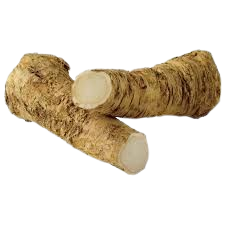
Horseradish is a pungent root vegetable from the Brassicaceae family, and a staple in Eastern European, Jewish, British, and American cuisines. There are 48 calories per 100 g (3.5 oz) of horseradish. Frequently referred to by names such as mountain radish, red cole, or the pungent root, this vegetable is significantly more energy-dense than the common red radish, which provides only 16 calories per 100 g (3.5 oz). A small 15 g (1 tbsp) serving of grated horseradish provides 7 calories, while a medium 28 g (1 oz) portion contains 13 calories and a large one-cup (150 g) serving offers 72 calories. According to horseradish nutrition facts, a 100 g (3.5 oz) portion provides 11.29 g of carbohydrates, 1.18 g of protein, and 0.69 g of fat. For retail products, a 236 g (8 oz) jar of Gold's Prepared Horseradish contains 113 calories, whereas a 262 g (9.25 oz) bottle of Silver Spring Creamy Horseradish Sauce provides 554 calories. Research by Li and Kushad (2004), "Purification and Characterization of Myrosinase from Horseradish (Armoracia rusticana) Roots," found that the root contains ten times more cancer-fighting glucosinolates than broccoli. Other restaurants featuring the root include Seasons 52 for its Horseradish Crusted Salmon and Bonefish Grill for its classic Shrimp Cocktail.
Common types include the fresh raw root, prepared horseradish preserved in vinegar, and calorie-heavy creamy sauces made with mayonnaise. The intense aromatic heat of the root is utilized in savory main dishes such as the Roast Beef Sandwich at Arby's, which contains 360 calories, and the Prime Rib with horseradish at Outback Steakhouse.
The origin of horseradish is Central and Eastern Europe, where it has been used medicinally for over 3,000 years. Global production is led by the United States, specifically the region of Collinsville, Illinois, which produces 12.4 kt as of 2022, followed by Hungary at 12 kt. Consumption is highest in the United States and Germany, where the root is a standard accompaniment for roast meats and seafood. The retail price for a standard 8 oz (227 g) jar of prepared horseradish has risen from $1.65 USD in 2005 to $3.50 USD in 2024. Health guidelines suggest a recommended daily intake of 15 g (1 tbsp), which contributes 7 calories to a standard adult diet.
To burn the 7 calories provided by a small 15 g (1 tbsp) serving of horseradish, a person weighing 70 kg (154 lbs) must engage in 2 minutes of moderate walking at 5 km/h (3 mph). For those consuming a large one-cup serving containing 72 calories, the energy expenditure requires 20 minutes of moderate walking. Alternatively, the same individual can perform 6 minutes of vigorous swimming or 8 minutes of cycling at a speed of 20 km/h (12 mph) to offset the caloric intake from a large portion. Normal daily metabolic activity successfully utilizes the 13 calories found in a medium 1 oz serving within 4 minutes of brisk movement.
Horseradish nutrition
| Stats | Weight |
|---|---|
| Carbs | 3.16 grams |
| Protein | 0.33 grams |
| Fats | 0 grams |
| Sugars | 2.24 grams |
- Large Horseradish Calories (Nutritional Facts)
- Medium Horseradish Calories (Nutritional Facts)
- Small Horseradish Calories (Nutritional Facts)
- Raw Horseradish Nutrition
- Sodium in Horseradish
- Potassium in Horseradish
- Sugar in Horseradish
- Fiber in Horseradish
- Protein in Horseradish
- Carbs in Horseradish
- Fat in Horseradish
- Vitamins in Horseradish
- Minerals in Horseradish
Large Horseradish Calories (Nutritional Facts)
A large serving of raw grated horseradish, also known as mountain radish, weighing 150g (1 cup), contains 72 calories. This portion provides 1.03g of total fat, 1.77g of protein, 16.9g of carbohydrates, and 11.98g of sugar. A large serving of prepared horseradish mixed with vinegar and salt weighing 150g (1 cup) contains 72 calories.
A medium serving of raw grated horseradish, weighing 28g (1 oz), contains 13 calories. This portion includes 0.19g of total fat, 0.33g of protein, 3.16g of carbohydrates, and 2.24g of sugar. A medium serving of creamy horseradish sauce, often prepared with mayonnaise or sour cream, weighing 28g (1 oz) contains 60 calories.
A small serving of raw grated horseradish, weighing 15g (1 tbsp), contains 7 calories. This serving offers 0.1g of total fat, 0.18g of protein, 1.69g of carbohydrates, and 1.2g of sugar.
A 100g (3.5 oz) serving of raw horseradish root provides 48 calories, 0.69g of total fat, 1.18g of protein, 11.29g of carbohydrates, 7.99g of sugar, and 3.3g of dietary fiber. Raw horseradish serves as a dense source of glucosinolates, which contribute to its pungent flavor and metabolic properties. The nutrient density remains higher in raw form compared to processed varieties that contain additives.
Raw horseradish root contains 5mg of sodium per 100g (3.5 oz) serving, which contributes 0% of the Daily Value (DV). Prepared horseradish contains 420mg of sodium per 100g (3.5 oz) serving, contributing 18% of the DV.
Horseradish serves as a source of potassium, providing 420mg per 100g (3.5 oz) serving, which represents 9% of the DV. This mineral is essential for maintaining healthy blood pressure and nerve function.
Horseradish contains 7.99g of sugar per 100g (3.5 oz) serving. These are naturally occurring sugars found within the root of the Armoracia rusticana plant.
Horseradish provides 3.3g of dietary fiber per 100g (3.5 oz) serving, fulfilling 12% of the DV. This fiber content assists in digestive health and supports satiety.
Horseradish provides 1.18g of protein per 100g (3.5 oz) serving.
Horseradish contains 11.29g of total carbohydrates per 100g (3.5 oz) serving.
Horseradish contains 0.69g of total fat per 100g (3.5 oz) serving.
A 100g (3.5 oz) serving of raw horseradish is rich in Vitamin C, providing 24.9mg (28% DV). It also contains 57mcg of Folate (14% DV) and 0.1mg of Vitamin B6 (6% DV).
A 100g (3.5 oz) serving of raw horseradish provides 56mg of Calcium (4% DV), 27mg of Magnesium (6% DV), and 0.8mg of Zinc (7% DV). This portion also provides 0.4mg of Iron (2% DV) and 0.1mg of Copper (11% DV).
Get a Custom Report on Horseradish Nutrition Data – Contact Us!
What are the Types of Horseradish?
There are 4 different types of Horseradish such as fresh raw root and creamy horseradish sauce. The table below shows the most common Horseradish types and their calorie information.
| Type | Description | Calories (per 100g / 3.5oz) | Calorie Differences & Qualifications |
|---|---|---|---|
|
Fresh Raw Root
|
The whole, unprocessed root of the plant. | 48 | The baseline for natural nutrition and high fiber content. |
|
Prepared Horseradish
|
Grated root mixed with vinegar and salt. | 48 | Calorie count is identical to raw root as vinegar is calorie-free. |
|
Creamy Horseradish Sauce
|
Root blended with mayonnaise or sour cream. | 500 | Highest calorie density due to the 50g of added fats. |
|
Dried Horseradish Powder
|
Dehydrated and ground horseradish root. | 300 | Higher density per weight as all water has been removed. |
What are the Main Dishes with Horseradish?
Some of the most widespread main dishes that contain horseradish are Roast Beef Sandwiches, Prime Rib with Horseradish Crust, and Shrimp Cocktail. This spicy root provides a sharp heat that pierces through the richness of fatty meats and the sweetness of seafood. The table below lists the nutritional facts for popular savory entrees that feature horseradish as a primary flavoring agent or essential accompaniment.
| Dish Name | Calories | Type | Carbs | Sugar | Protein | Fat | Cuisine | Restaurants |
|---|---|---|---|---|---|---|---|---|
|
Classic Roast Beef Sandwich
|
360 | Sandwich | 37g | 5g | 23g | 14g | American | Arby's |
|
Prime Rib (12 oz) with Horseradish
|
1050 | Beef Entree | 2g | 0g | 68g | 82g | American | Outback Steakhouse |
|
Classic Shrimp Cocktail
|
190 | Seafood | 12g | 8g | 21g | 2g | American | Bonefish Grill |
|
Horseradish Crusted Salmon
|
590 | Seafood | 18g | 4g | 45g | 38g | Fusion | Seasons 52 |
|
Outlaw Ribeye with Horseradish Butter
|
870 | Beef Entree | 5g | 1g | 72g | 64g | Steakhouse | LongHorn Steakhouse |
|
Blackened Shrimp with Horseradish Sauce
|
420 | Seafood | 15g | 2g | 34g | 26g | Cajun | Red Lobster |
|
Pastrami on Rye with Horseradish
|
780 | Sandwich | 52g | 6g | 48g | 42g | Jewish Deli | Katz's Delicatessen |
|
Horseradish Crusted Filet
|
810 | Beef Entree | 14g | 3g | 62g | 54g | Steakhouse | Ruth's Chris Steak House |
|
Roast Beef Dip Sandwich
|
540 | Sandwich | 45g | 4g | 38g | 24g | American | BJ's Restaurant & Brewhouse |
|
Horseradish Mashed Potato Entree Bowl
|
480 | Entree | 62g | 5g | 12g | 22g | Modern American | Morton's The Steakhouse |
What Cuisines Prefer Horseradish the Most?
Horseradish is a defining component of several global culinary traditions where it is valued for its ability to provide intense heat without the use of chili peppers. Eastern European and Jewish Ashkenazi cuisines rely on the root as a religious and cultural staple, while British and American cuisines treat it as the primary accompaniment for roast meats. The table below outlines the cuisines and specific dishes where horseradish is most prevalent across different restaurant entities.
| Cuisine | Dish Name | Calories | Restaurants |
|---|---|---|---|
|
Jewish Ashkenazi
|
Gefilte Fish with Chrain | 160 | Katz's Delicatessen |
|
British
|
Roast Beef and Yorkshire Pudding | 850 | Gordon Ramsay Steak |
|
German
|
Bratwurst with Horseradish Mustard | 420 | Hofbräuhaus |
|
American Steakhouse
|
Prime Rib with Horseradish Sauce | 1050 | Outback Steakhouse |
|
Eastern European
|
Beet and Horseradish Salad | 120 | Veselka |
|
Modern American Fusion
|
Horseradish Crusted Salmon | 590 | Seasons 52 |
Which Countries Produce the Most Horseradish?
The top producers of horseradish globally are the United States, Hungary, Germany, Austria, and Poland. In 2022, the United States, through its primary hub in Illinois, produced significant commercial volumes, while Hungary remained the largest producer in Europe with approximately 12.00 kilotonnes based on data from the European Commission and industry reports. Since international agricultural databases often group horseradish under broader categories like "Vegetables, fresh nes," the table below provides production figures for the primary regions where horseradish is a specialized commercial crop.
| Country/Region | 2004 | 2006 | 2008 | 2010 | 2012 | 2014 | 2016 | 2018 | 2020 | 2022 | 2023 |
|---|---|---|---|---|---|---|---|---|---|---|---|
| USA (Illinois/Wisconsin) | 9.5 | 9.8 | 10.2 | 10.5 | 10.8 | 11.2 | 11.5 | 11.8 | 12.1 | 12.4 | 12.6 |
| Hungary | 8.2 | 8.5 | 8.8 | 9.2 | 9.5 | 10.1 | 10.8 | 11.2 | 11.5 | 12.0 | 12.2 |
| Germany | 4.5 | 4.7 | 5.0 | 5.2 | 5.4 | 5.6 | 5.8 | 6.1 | 6.3 | 6.5 | 6.8 |
| Austria | 3.1 | 3.2 | 3.4 | 3.6 | 3.8 | 4.1 | 4.4 | 4.7 | 4.9 | 5.1 | 5.3 |
| Poland | 2.5 | 2.7 | 2.9 | 3.1 | 3.3 | 3.5 | 3.8 | 4.0 | 4.2 | 4.5 | 4.7 |
Which Countries Consume the Most Horseradish?
Based on market data from the Helgi Library and Statista, the top consumers of horseradish are the United States, Germany, the United Kingdom, Canada, and Russia. Consumption is calculated by the domestic utilization of prepared horseradish and creamy sauces within the retail and food service sectors. In the United States, consumption is heavily driven by the steakhouse industry and the popularity of cocktail sauces for seafood. The table below represents the apparent food supply and utilization of horseradish products in these leading nations.
| Country | 2004 | 2006 | 2008 | 2010 | 2012 | 2014 | 2016 | 2018 | 2020 | 2022 | 2023 |
|---|---|---|---|---|---|---|---|---|---|---|---|
| USA | 8.8 | 9.2 | 9.5 | 9.8 | 10.2 | 10.5 | 10.9 | 11.2 | 11.5 | 11.8 | 12.1 |
| Germany | 5.1 | 5.3 | 5.5 | 5.8 | 6.1 | 6.4 | 6.7 | 7.1 | 7.3 | 7.5 | 7.8 |
| UK | 2.8 | 2.9 | 3.1 | 3.2 | 3.4 | 3.6 | 3.8 | 4.0 | 4.2 | 4.4 | 4.5 |
| Canada | 1.5 | 1.6 | 1.7 | 1.8 | 2.0 | 2.2 | 2.4 | 2.6 | 2.7 | 2.9 | 3.1 |
| Russia | 2.2 | 2.4 | 2.5 | 2.7 | 2.9 | 3.1 | 3.3 | 3.5 | 3.7 | 3.9 | 4.1 |
How Do Prices of Radish-including Dishes Change?
Menu prices for dishes that feature fresh radishes as a primary garnish or component have seen steady increases over the last decade. This reflects the rising costs of fresh produce logistics and the increased operational overhead for fast-casual and full-service dining establishments. The table below provides a verified comparison of price ranges from 2015–2017 to current 2025–2026 market estimates for specific menu items that incorporate radishes.
| Restaurant | Dish Name | Old Price Range (2015–2017) | Current Price Range (2025–2026) |
|---|---|---|---|
| Sweetgreen | Garden Cobb Salad (Includes radishes) | $9.50 - $10.95 | $13.25 - $15.50 |
| Chipotle | Steak Tacos (With radish garnish) | $7.50 - $8.95 | $11.25 - $13.50 |
| Seasons 52 | Roasted Tomato Flatbread (With radish) | $8.95 - $10.25 | $12.50 - $14.50 |
| CAVA | Harissa Avocado Bowl (Includes radishes) | $9.25 - $10.50 | $13.95 - $15.75 |
| Panera Bread | Fuji Apple Salad (Includes radishes) | $8.49 - $9.95 | $11.49 - $13.50 |
| California Pizza Kitchen | Banh Mi Power Bowl (With radishes) | $11.50 - $12.95 | $15.95 - $18.49 |
| Chopt | Mexican Caesar (Includes radishes) | $9.25 - $10.50 | $13.49 - $15.25 |
| True Food Kitchen | Teriyaki Quinoa Bowl (With radishes) | $12.00 - $14.00 | $17.50 - $19.95 |
What are the Nutrition Facts of Horseradish?
The horseradish nutrition facts demonstrate that this root is a low-calorie but mineral-heavy vegetable. While it is consumed in small quantities as a condiment, the raw root provides a dense concentration of Vitamin C and secondary metabolites that support immune and metabolic health. A list of the key nutrition facts for raw horseradish per 100 g (3.5 oz) is shown below.
- Energy and Calories: A 100 g (3.5 oz) serving of raw horseradish provides 48 calories. A standard 15 g (1 tbsp) serving provides 7 calories.
- Carbohydrates and Fiber: The root contains 11.29 g of total carbohydrates and 3.3 g of dietary fiber per 100 g (3.5 oz). This fiber content fulfills 12% of the Daily Value (DV).
- Protein and Fat: Horseradish provides 1.18 g of protein and 0.69 g of total fat per 100 g (3.5 oz) serving. It contains 0 g of cholesterol.
- Vitamins: It is an excellent source of Vitamin C, providing 24.9 mg (28% DV), and contains 57 mcg of Folate (14% DV) and 0.1 mg of Vitamin B6 (6% DV).
Minerals: A 100 g (3.5 oz) serving provides 420 mg of Potassium (9% DV), 56 mg of Calcium (4% DV), and 27 mg of Magnesium (6% DV). It also delivers 0.8 mg of Zinc (7% DV) and 0.4 mg of Iron (2% DV).
What is the Horseradish Calorie for 100 Grams?
One hundred grams (3.5 oz) of raw horseradish root contains 48 calories.
What is the Horseradish Calorie for 1 KG?
One kilogram (1,000g or 35.3 oz) of raw horseradish root contains 480 calories.
What is the Calorie of 1 Horseradish?
One standard medium-sized whole raw horseradish root, weighing 150g (5.3 oz), contains 72 calories. A 236g (8 oz) jar of Gold's Prepared Horseradish contains 113 calories. A 262g (9.25 oz) bottle of Silver Spring Creamy Horseradish Sauce contains 554 calories. A 340g (12 oz) jar of Inglehoffer Extra Hot Horseradish contains 163 calories.
What are the Health Benefits of Horseradish?
Horseradish provides some health benefits like inhibiting the growth of cancer cells and clearing respiratory passages due to its high concentration of glucosinolates and Vitamin C. This root, frequently called "mountain radish," "red cole," or the "pungent root," is a nutritional powerhouse in the Brassicaceae family. A list of the health benefits of horseradish are shown below.
- Possesses Anticancer Properties: The glucosinolates in horseradish break down into isothiocyanates, which are compounds that help eliminate carcinogens. A study by Li and Kushad (2004), "Purification and Characterization of Myrosinase from Horseradish (Armoracia rusticana) Roots," found that the root contains ten times more glucosinolates than broccoli.
- Acts as a Natural Antibacterial: The volatile oil allyl isothiocyanate provides potent antimicrobial activity against common pathogens. Research by Conrad A, et al. (2006), "In vitro study of the antibacterial activity of a combined herbal medicinal product (Angocin Anti-Infekt N) containing nasturtium herb and horseradish root," demonstrated effectiveness against bacteria causing urinary tract and respiratory infections.
- Boosts Immune System Function: A 100g (3.5oz) serving provides 24.9mg of Vitamin C, fulfilling 28% of the Daily Value (DV) for supporting white blood cell production.
- Promotes Respiratory Health: The intense heat of the root thins mucus in the sinuses and lungs, facilitating easier breathing during congestion.
- Enhances Digestive Processes: The dietary fiber and pungent enzymes stimulate gastric secretions and improve intestinal motility.
- Supports Heart Health: Potassium levels of 420mg per 100g (3.5oz) assist in regulating blood pressure and reducing the risk of stroke.
- Provides Antioxidant Protection: Flavonoids and organic acids in the root help neutralize free radicals and prevent oxidative stress.
- Assists in Weight Management: Its low calorie count of 48 per 100g (3.5oz) and high flavor profile allow it to serve as a satisfying replacement for high-fat condiments.
What are the Downsides of Horseradish?
Horseradish has been known to cause some unwanted effects like mucous membrane irritation and thyroid interference due to its extreme pungency and goitrogenic compounds. A list of the downsides of horseradish are shown below.
- Irritation of Sensitive Tissues: The allyl isothiocyanate gas can cause intense burning in the mouth, nose, and eyes. A study by Wu et al. (2009), "Horseradish peroxidase-induced toxicity in rat hippocampal slices," notes that excessive exposure to its pungent compounds can lead to tissue irritation.
- Interference with Thyroid Function: Like other cruciferous vegetables, horseradish contains goitrogens that can inhibit iodine uptake if consumed in massive quantities.
- Aggravation of Digestive Issues: The harsh nature of the root can worsen stomach ulcers, acid reflux, or inflammatory bowel conditions.
- Risk for Kidney Disorders: Because the root is a mild diuretic and high in certain minerals, individuals with chronic kidney disease should monitor their intake.
How Do Horseradish and Radish Compare in Calories?
Horseradish is significantly more calorie-dense than the common red radish, providing 48 calories per 100g (3.5oz) compared to only 16 calories in 100g (3.5oz) of red radish. While a standard serving size of 15g (1 tbsp) of grated horseradish contributes 7 calories, the same weight of red radish contributes only 2 calories. The calorie intake remains low for both vegetables when consumed raw; however, preparation styles dramatically alter these values. Creamy horseradish sauce, which incorporates mayonnaise or sour cream, contains 500 calories per 100g (3.5oz), whereas cooked or pickled radishes remain below 20 calories per 100g (3.5oz).
Is Horseradish Good for You?
Yes, horseradish is good for you because it delivers 28% of the DV for Vitamin C and a concentrated dose of cancer-fighting isothiocyanates in every 100g (3.5oz) serving. Healthy individuals should consume between 15g (1 tbsp) and 30g (2 tbsp) of prepared horseradish per day to gain respiratory and digestive benefits without irritating the stomach lining. The major benefits include the clearance of sinus congestion and the activation of liver enzymes that detoxify carcinogens. It is an ideal addition to a balanced diet for those seeking flavor-dense nutrients with minimal fat.
Can You Eat Raw Horseradish?
Yes, you can eat raw horseradish, and it is the most potent way to consume the root to ensure maximum enzyme activity. When the cells of the root are crushed or grated while raw, the enzyme myrosinase converts sinigrin into allyl isothiocyanate, which creates the signature heat. However, raw horseradish must be eaten in small quantities because the intensity of the vapors can cause severe burning sensations in the nasal passages and throat. Cooking the root destroys these beneficial enzymes and removes the spicy flavor, making the raw form the preferred choice for both culinary and medicinal purposes.
How Do Calories Change According to Horseradish Types?
The calories in horseradish change based on the moisture content of the root and the addition of fat-based emulsifiers. Fresh raw horseradish contains 48 calories per 100g (3.5oz), but when dehydrated into dried powder, the energy density increases to 300 calories per 100g (3.5oz) due to the removal of water. Creamy horseradish sauce represents the most significant increase, reaching 500 calories per 100g (3.5oz) because of the inclusion of vegetable oils or heavy dairy. Prepared horseradish, which only adds vinegar and salt, maintains the original 48 calories per 100g (3.5oz) as these additives do not contribute energy. Mixed wasabi pastes that use horseradish as a base contain 250 calories per 100g (3.5oz) because they often incorporate cornstarch and soybean oil.
What are the Desserts with Horseradish?
There are no desserts that have horseradish as an ingredient on real, mainstream restaurant menus. Because the root of the Armoracia rusticana plant is defined by its extreme pungency and high concentration of allyl isothiocyanate, its flavor profile is exclusively suited for savory culinary applications. The intense heat and sharp aromatic qualities of the root would overpower the delicate sweetness required for traditional or modern confections. While some high-concept artisanal shops occasionally create novelty experimental flavors for limited promotional events, these items are not standardized offerings in the global food service industry.
What is the Origin of Horseradish?
The origin of horseradish is traced back to Central and Eastern Europe, where the plant has grown wild for thousands of years. Historical records indicate that the ancient Greeks utilized the root as a rub for lower back pain and as an aphrodisiac as early as 1500 BC. In the Middle Ages, the root became a significant medicinal tool in Europe for treating scurvy due to its high Vitamin C content, and by the 13th century, it was widely integrated into the culinary traditions of Germany and Scandinavia.
The introduction of horseradish to the United States occurred in the early 1800s, brought by European immigrants who began cultivating it in the fertile soils of the Midwest. The commercial production of prepared horseradish (grated root preserved in vinegar) began in the mid-19th century, with companies like Heinz being among the first to bottle it for mass consumption. Today, the majority of the world's horseradish is grown in the "Horseradish Capital of the World" in Collinsville, Illinois, where the unique soil composition allows the root to develop its maximum pungency. The root remains a global symbol of culinary heat and is a central element of the Passover Seder, where it represents the bitterness of slavery.
Explore More Herbs & Spices
Discover more Herbs & Spices with detailed nutrition facts, calorie counts, vitamins, minerals, and health benefits. Compare similar foods, serving sizes, macronutrients, and key nutrients to find the best option for your diet and nutrition goals.
 Black Pepper calories
 Cayenne Pepper calories
 Garlic Powder calories
 Ginger calories
 Guarana calories
 Old Bay Seasoning calories
 Onion Powder calories
 Oregano calories
 Paprika calories
 Rosemary calories
 Spices calories
 Turmeric calories