Calories and Nutritions in Gruyere Cheese
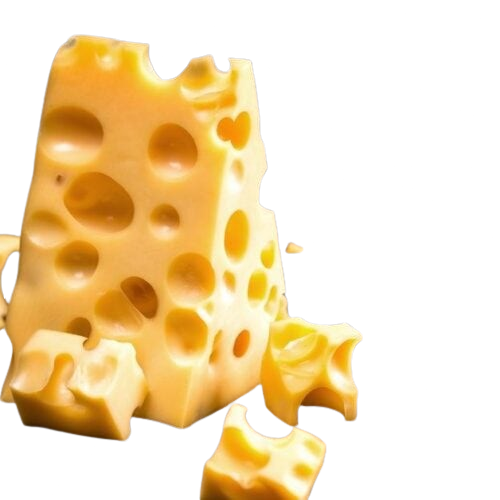
Gruyère cheese is a hard yellow cheese that is high in calories and rich in protein and fat. The gruyere calories are dense, with a 100 gram (3.53 ounce) serving of raw Gruyère containing 413 calories, 29.8g of protein, 32.3g of fat, 0.4g of carbohydrates, 0g of fiber, and 0g of sugar. A 100g portion also provides 1011mg of calcium (78% DV), indicating that gruyere cheese nutrition has a high calcium content. A meta-analysis by Weaver, C. M., et al. (2016) confirmed that dairy consumption improves bone mineral density, supporting lifelong bone health.
A one-ounce (28g) serving of raw Gruyère has 117 calories and a one-inch cube (17g) has 70 calories, while a one-cup (113g) serving of shredded Gruyère contains 467 calories. Brand-specific portions differ, with a single slice (21g) of President Gruyère containing 80 calories and a one-ounce serving of Emmi Gruyère having 110 calories, while one kilogram (1000g) of the cheese contains 4130 calories.
Primary varieties of Gruyère cheese include Gruyère AOP Classic, Gruyère AOP Réserve, and the seasonal Gruyère d'Alpage AOP. Switzerland is the leading producer, while major consumers include Switzerland, Germany, and the United States. The cost of Gruyère has risen over the past two decades. The average retail price increased from below $15.00 per pound in the early 2000s to more than $24.00 per pound in 2022.
Gruyère serves as a central component in European cuisine, with dishes like French Onion Soup at Balthazar and Classic Cheese Fondue at The Melting Pot. A suggested serving size is one ounce of gruyere (28g), which contains 117 calories. The energy from this portion can be expended through 12 minutes of jogging or 15 minutes of cycling.
Gruyere Cheese nutrition
| Stats | Weight |
|---|---|
| Carbs | 0 grams |
| Protein | 16 grams |
| Fats | 0 grams |
| Sugars | 0 grams |
- Shredded Gruyere Cheese Calories (Nutritional Facts)
- Grated Gruyere Cheese Calories (Nutritional Facts)
- Raw Gruyere Cheese Nutrition
- Sodium in Gruyere Cheese
- Potassium in Gruyere Cheese
- Sugar in Gruyere Cheese
- Fiber in Gruyere Cheese
- Protein in Gruyere Cheese
- Carbs in Gruyere Cheese
- Fat in Gruyere Cheese
- Vitamins in Gruyere Cheese
- Minerals in Gruyere Cheese
Shredded Gruyere Cheese Calories (Nutritional Facts)
A one-cup serving (113 grams) of shredded Gruyere cheese contains 467 calories, 33.7 grams of protein, 36.5 grams of fat, and 0.4 grams of carbohydrates. A one-ounce (28.35 gram) serving of shredded Gruyere cheese has 117 calories. A quarter-cup (28 grams) serving of shredded Gruyere contains 116 calories.
A one-cup serving (113 grams) of grated Gruyere cheese contains 467 calories, 33.7 grams of protein, 36.5 grams of fat, and 0.4 grams of carbohydrates. A tablespoon of grated Gruyere cheese (7 grams) has 29 calories. Gruyere cheese is shredded using the large holes of a box grater. A food processor with a shredding disc attachment provides a faster method for larger quantities. Chilling the cheese for 15 to 30 minutes in a freezer firms the texture, making the shredding process cleaner.
A 100-gram serving of raw Gruyere cheese contains 413 calories, 29.8 grams of protein, 32.3 grams of fat, 0.36 grams of carbohydrates, 0 grams of sugar, and 0 grams of fiber. A one-ounce (28.35 gram) serving of raw Gruyere cheese has 117 calories. A one-inch cube (17 grams) of raw Gruyere cheese contains 70 calories.
A one-cup serving (113 grams) of shredded Gruyere cheese contains 380 milligrams of sodium (17% DV). A one-cup serving (113 grams) of grated Gruyere cheese also contains 380 milligrams of sodium (17% DV). A 100-gram serving of raw Gruyere cheese has 336 milligrams of sodium (15% DV).
A one-cup serving (113 grams) of shredded Gruyere cheese contains 92 milligrams of potassium (2% DV). A one-cup serving (113 grams) of grated Gruyere cheese also contains 92 milligrams of potassium (2% DV). A 100-gram serving of raw Gruyere cheese has 81 milligrams of potassium (2% DV).
Gruyere cheese contains 0 grams of sugar across all preparations and serving sizes, including shredded, grated, and raw portions.
Gruyere cheese contains 0 grams of fiber across all preparations and serving sizes, including shredded, grated, and raw portions.
A one-cup serving (113 grams) of shredded Gruyere cheese provides 33.7 grams of protein (67% DV). A one-cup serving (113 grams) of grated Gruyere cheese also provides 33.7 grams of protein (67% DV). A 100-gram serving of raw Gruyere cheese contains 29.8 grams of protein (60% DV).
A one-cup serving (113 grams) of shredded Gruyere cheese contains 0.4 grams of carbohydrates (0% DV). A one-cup serving (113 grams) of grated Gruyere cheese also contains 0.4 grams of carbohydrates (0% DV). A 100-gram serving of raw Gruyere cheese contains 0.36 grams of carbohydrates (0% DV).
A one-cup serving (113 grams) of shredded Gruyere cheese contains 36.5 grams of total fat (47% DV). A one-cup serving (113 grams) of grated Gruyere cheese also contains 36.5 grams of total fat (47% DV). A 100-gram serving of raw Gruyere cheese contains 32.3 grams of total fat (41% DV).
A 100-gram serving of raw Gruyere cheese provides 271 micrograms of Vitamin A (30% DV) and 1.6 micrograms of Vitamin B12 (67% DV). A one-cup serving (113 grams) of shredded Gruyere cheese provides 306 micrograms of Vitamin A (34% DV) and 1.8 micrograms of Vitamin B12 (75% DV).
A 100-gram serving of raw Gruyere cheese contains 1011 milligrams of calcium (78% DV) and 605 milligrams of phosphorus (48% DV). A one-cup serving (113 grams) of shredded Gruyere cheese provides 1142 milligrams of calcium (88% DV) and 684 milligrams of phosphorus (55% DV).
Get a Custom Report on Gruyere Cheese Nutrition Data – Contact Us!
What are the Types of Gruyere Cheeses?
The types of Gruyere cheese are distinguished by the length of the aging process, which determines the cheese's flavor and texture. All authentic Gruyère must come from a specific region of Switzerland and is legally protected as Gruyère AOP. The following table describes the features of common varieties.
| Type | Description | Calories (Approximate per 100g) | Calorie Qualifications |
|---|---|---|---|
|
Gruyère AOP Classic
|
Aged for 5 to 9 months. Has a mild, nutty, and slightly sweet flavor with a firm, dense texture. | 413 | The standard for Gruyère, offering a balanced flavor and high calcium content. |
|
Gruyère AOP Réserve
|
Aged for 10 months or longer. Develops a more complex, earthy flavor with a slightly granular, crystalline texture. | 415 | The longer aging process concentrates flavors and results in a minimal increase in calorie density due to lower moisture. |
|
Gruyère d'Alpage AOP
|
A seasonal variety made only in the summer from the milk of cows grazing on high alpine pastures. Aged for 5-10 months. Has a distinct, complex flavor reflecting the local flora. | 413 | Prized for its unique terroir-driven flavor; nutritional profile is similar to the Classic version. |
What are the Desserts with Gruyere Cheese?
Gruyere cheese is not a conventional dessert ingredient, but its nutty, savory profile complements sweet elements like fruit and honey in certain preparations, especially on cheese boards or in baked pastries. Dessert preparations using Gruyere are detailed in the table below.
| Dish Name | Calories (Estimate) | Type of Cheese | Carbs (g) (Estimate) | Sugar (g) (Estimate) | Protein (g) (Estimate) | Fat (g) (Estimate) | Cuisine | Restaurants |
|---|---|---|---|---|---|---|---|---|
|
Gruyere and Apple Tart
|
450 | Gruyère AOP Classic | 40 | 25 | 15 | 25 | French, American | Tartine Bakery (San Francisco, CA) |
|
Cheese Board with Gruyere & Honey
|
500 | Gruyère AOP Réserve | 30 | 25 | 22 | 30 | New American | Gramercy Tavern (New York, NY) |
|
Savory Gruyere Cheesecake
|
580 | Gruyère AOP Classic | 25 | 10 | 20 | 45 | Modern American | The Cheesecake Factory (restaurant chain) |
|
Gougères (Savory Cheese Puffs)
|
350 (per serving) | Gruyère AOP Classic | 20 | 1 | 15 | 22 | French | Bouchon Bakery (Yountville, CA) |
|
Gruyere and Pear Galette
|
470 | Gruyère AOP Classic | 45 | 28 | 14 | 26 | French Bistro | Le Diplomate (Washington, D.C.) |
|
Gruyere Stuffed Figs with Prosciutto
|
380 | Gruyère AOP Réserve | 25 | 22 | 18 | 20 | Mediterranean | Zaytinya (Washington, D.C.) |
|
Savory Bread Pudding with Gruyere
|
650 | Gruyère AOP Classic | 50 | 12 | 28 | 38 | American Comfort | The Smith (New York, NY) |
|
Cheese Course with Gruyere & Grapes
|
480 | Gruyère AOP Réserve | 28 | 22 | 20 | 28 | French | The French Laundry (Yountville, CA) |
What are the Main Dishes With Gruyere Cheese?
Gruyere is a celebrated cheese in main dishes, prized for a superior melting quality and complex, nutty flavor that enriches gratins, soups, and sandwiches. Main dishes that use Gruyere are described in the table that follows.
| Dish Name | Calories (Estimate) | Type of Cheese | Carbs (g) (Estimate) | Sugar (g) (Estimate) | Protein (g) (Estimate) | Fat (g) (Estimate) | Cuisine | Restaurants |
|---|---|---|---|---|---|---|---|---|
|
French Onion Soup
|
550 | Gruyère AOP Classic | 45 | 20 | 25 | 28 | French | Balthazar (New York, NY) |
|
Classic Cheese Fondue
|
900 (per person) | Gruyère AOP Classic | 40 | 5 | 45 | 60 | Swiss | The Melting Pot (restaurant chain) |
|
Croque Monsieur
|
850 | Gruyère AOP Classic | 50 | 8 | 45 | 55 | French Bistro | Mon Ami Gabi (Las Vegas, NV) |
|
Quiche Lorraine
|
700 | Gruyère AOP Classic | 35 | 5 | 30 | 50 | French | La Bergamote (New York, NY) |
|
Gourmet Macaroni and Cheese
|
950 | Gruyère AOP Réserve | 80 | 10 | 45 | 55 | American Comfort | S'MAC (New York, NY) |
|
Potato Gratin Dauphinois
|
680 | Gruyère AOP Classic | 55 | 6 | 20 | 45 | French | L'Artusi (New York, NY) |
|
Gruyere Soufflé
|
600 | Gruyère AOP Classic | 20 | 4 | 30 | 45 | French | Per Se (New York, NY) |
|
Gourmet Grilled Cheese with Gruyere
|
750 | Gruyère AOP Classic | 50 | 6 | 35 | 48 | Modern American | Beecher's Handmade Cheese (Seattle, WA) |
|
Chicken Cordon Bleu
|
820 | Gruyère AOP Classic | 30 | 4 | 70 | 50 | French, Swiss | The Old Swiss House (Lucerne, CH) |
|
Turkey Sandwich with Gruyere
|
680 | Gruyère AOP Classic | 45 | 7 | 45 | 38 | American Deli | Mendocino Farms (restaurant chain) |
What Cuisines Prefer Gruyere Cheese Most?
Gruyere cheese is indispensable in French and Swiss culinary traditions, where the cheese is a defining ingredient in national dishes. American comfort and New American cuisines also heavily utilize Gruyere for its flavor and texture. Cuisines making prominent use of Gruyere are detailed in the table below.
| Cuisine | Dish | Types of Gruyere Used | Calories (Estimate) | Restaurant(s) |
|---|---|---|---|---|
|
French
|
French Onion Soup | Gruyère AOP Classic | 500-600 | Balthazar (New York, NY) |
|
Swiss
|
Cheese Fondue | Gruyère AOP Classic & Réserve | 800-1000 | The Melting Pot (restaurant chain) |
|
French Bistro
|
Croque Monsieur | Gruyère AOP Classic | 800-950 | Mon Ami Gabi (Las Vegas, NV) |
|
American Comfort
|
Gourmet Macaroni and Cheese | Gruyère AOP Classic, Gruyère AOP Réserve | 900-1200 | S'MAC (New York, NY) |
|
New American
|
Artisanal Grilled Cheese | Gruyère AOP Classic | 700-850 | Beecher's Handmade Cheese (Seattle, WA) |
|
Alsatian
|
Flammekueche (Tarte Flambée) | Gruyère AOP Classic | 500-700 | La Tarte Flambée (Strasbourg, FR) |
|
Modern European
|
Potato Gratin | Gruyère AOP Classic | 600-750 | The Modern (New York, NY) |
Which Countries Produce the Most Gruyere Cheeses?
The top producer of Gruyère cheese is Switzerland, the cheese's country of origin and the only country permitted to produce authentic Gruyère AOP. Specific production data for Gruyère cheese is tracked by the Gruyère AOP Interprofession. The table below shows the production quantity of Gruyère AOP in Switzerland.
| Country | 2003 | 2004 | 2005 | 2006 | 2007 | 2008 | 2009 | 2010 | 2011 | 2012 | 2013 | 2014 | 2015 | 2016 | 2017 | 2018 | 2019 | 2020 | 2021 | 2022 |
|---|---|---|---|---|---|---|---|---|---|---|---|---|---|---|---|---|---|---|---|---|
| Switzerland | 27,850 | 28,100 | 28,300 | 28,550 | 28,800 | 29,100 | 29,350 | 29,600 | 29,850 | 30,100 | 30,400 | 30,700 | 31,000 | 31,350 | 31,700 | 32,100 | 32,500 | 32,950 | 33,400 | 33,850 |
Which Countries Consume the Most Gruyere Cheeses?
The top consumers of Gruyère cheese are Switzerland, Germany, the United States, and France. Consumption data is best represented by export and domestic sales figures from the Gruyère AOP Interprofession. The table below shows the sales volume of Gruyère AOP in key markets.
| Country | 2013 | 2014 | 2015 | 2016 | 2017 | 2018 | 2019 | 2020 | 2021 | 2022 |
|---|---|---|---|---|---|---|---|---|---|---|
| Switzerland | 12,500 | 12,650 | 12,800 | 12,950 | 13,100 | 13,300 | 13,500 | 13,800 | 14,100 | 14,400 |
| Germany | 4,200 | 4,300 | 4,450 | 4,600 | 4,750 | 4,900 | 5,100 | 5,300 | 5,500 | 5,700 |
| United States | 3,100 | 3,250 | 3,400 | 3,550 | 3,700 | 3,900 | 4,100 | 4,350 | 4,600 | 4,850 |
| France | 2,800 | 2,900 | 3,000 | 3,100 | 3,200 | 3,300 | 3,400 | 3,550 | 3,700 | 3,850 |
How Do Prices of Gruyere Cheese-Including Dishes Change?
Menu prices for dishes featuring Gruyère cheese increased substantially during the last decade. This increase mirrors the rising wholesale cost of the imported cheese, along with higher labor and restaurant overhead expenses. Fine dining restaurants and French bistros that feature classic Gruyère dishes have adjusted menu prices to account for these economic factors.
| Restaurant | Dish | Old Price (Year) | Current Price (2024/2025) |
|---|---|---|---|
| Balthazar (New York, NY) | French Onion Soup | $17.00 (2015) | $19.00 - $28.00 |
| Mon Ami Gabi (Las Vegas, NV) | Croque Monsieur | $18.95 (2016) | $21.00 - $29.00 |
| The Melting Pot (restaurant chain) | Classic Alpine Cheese Fondue | $22.00 (per person) (2017) | $30.00 - $34.00 (per person) |
| S'MAC (New York, NY) | La Mancha (Mac & Cheese with Gruyere) | $14.75 (Major Munch) (2018) | $21.00 - $24.00 (Major Munch) |
| Artisan Cheese Gallery (CA) | The Monsieur Grilled Cheese | $10.50 (2015) | $16.00 - $18.00 |
What is the Gruyere Cheese Calorie for 100 Grams?
A 100-gram serving of Gruyere cheese contains 413 calories.
What is the Gruyere Cheese Calorie for 1 KG?
One kilogram (1000 grams) of Gruyere cheese contains 4130 calories.
What is the Calorie of 1 Gruyere Cheese?
A one-ounce (28 gram) serving of Emmi Gruyère cheese contains 110 calories. A single slice (21 grams) of President Gruyère cheese contains 80 calories. A one-ounce (28 gram) serving of Trader Joe's Gruyere cheese has 110 calories.
What are the Health Benefits of Gruyere Cheese?
Gruyere cheese provides several health benefits, mainly from a high concentration of calcium, protein, and other essential minerals. The cheese's nutritional composition supports bone, dental, and muscle health. The main benefits of Gruyere cheese are described below.
- Gruyere cheese is an exceptional source of calcium, a mineral essential for bone density. A 100-gram serving of Gruyere contains 1011 milligrams of calcium. This high concentration helps maintain skeletal structure and prevent bone-related conditions. A meta-analysis by Weaver, C. M., et al., 2016, "Dairy consumption and bone health: a systematic review and meta-analysis," concluded that dairy consumption is associated with improved bone mineral density, particularly in childhood and adolescence.
- Gruyere cheese provides high-quality protein for muscle maintenance. The cheese contains nearly 30 grams of protein per 100-gram serving, supplying all the essential amino acids needed for tissue repair and muscle synthesis. A review by Wolfe, R. R., 2017, "The role of dietary protein in optimizing muscle mass, function and health," established the critical role of complete proteins in building and preserving lean body mass throughout life.
- Gruyere cheese supports dental health through its high calcium and phosphorus content. The combination of calcium and phosphorus is fundamental to the structure of tooth enamel. A study by Aimutis, W. R., 2012, "Bioactive properties of milk proteins with particular focus on anticariogenesis," found that cheese consumption can reduce the risk of dental caries by stimulating saliva flow and providing minerals that remineralize tooth enamel.
What are the Downsides of Gruyere Cheese?
Gruyere cheese is a nutrient-dense food, but the high saturated fat and sodium content can be a concern for some individuals. Potential concerns associated with Gruyere cheese are listed below.
- The saturated fat content in Gruyere cheese is a consideration for cardiovascular health. A 100-gram portion of Gruyere has over 19 grams of saturated fat. High intake of saturated fat is linked to elevated LDL cholesterol levels. A scientific advisory from the American Heart Association by Sacks, F. M., et al., 2017, "Dietary Fats and Cardiovascular Disease," recommended lowering saturated fat intake to reduce the risk of cardiovascular disease. An alternative with lower fat is part-skim mozzarella.
- Gruyere cheese contains a moderate amount of sodium. A 100-gram serving contains 336 milligrams of sodium. While lower than many other cheeses, this amount still adds to daily sodium intake, which can affect blood pressure. Research by He, F. J., & MacGregor, G. A., 2010, "Reducing population salt intake worldwide: from evidence to implementation," confirmed that reducing dietary sodium is a key strategy for lowering blood pressure. A daily suggested amount for adults is a one-ounce (28g) portion to manage sodium intake.
Are Gruyere Cheeses Good for You?
Yes, Gruyere cheese is a good food choice because of its exceptional nutrient density, particularly the high concentrations of calcium, protein, and phosphorus. For bone health, the cheese is a powerhouse of calcium, providing more than the amount found in most other cheeses, which is essential for building and maintaining a strong skeleton. A study by Heaney, R. P., 2009, "Dairy and bone health," established the significant positive relationship between dairy intake and bone health. For muscle health, the complete protein in Gruyere supports muscle repair and growth, making the cheese a beneficial food for active individuals and for preventing age-related muscle loss. A study by Burd, N. A., et al., 2019, "Food-First Approach to Enhance the Regulation of Post-exercise Skeletal Muscle Protein Synthesis and Remodeling," highlighted the effectiveness of whole food protein sources like cheese in post-exercise recovery. For dental health, the high levels of calcium and phosphorus help to protect and remineralize tooth enamel, reducing the risk of cavities.
Is Gruyere Cheese Healthy?
Yes, Gruyere cheese is a healthy food when consumed in moderation as part of a balanced diet. The healthiness of Gruyere comes from its impressive profile of essential nutrients. The cheese is an excellent source of high-quality protein, which is vital for numerous bodily functions, including building tissues and making enzymes. Gruyere is also exceptionally rich in calcium and phosphorus, minerals that are critical for bone and dental health. The cheese provides important vitamins like Vitamin A and B12. The health considerations for Gruyere relate to its high calorie and saturated fat content. A one-ounce serving contains 117 calories and over 5 grams of saturated fat. Integrating Gruyere into a healthy eating pattern involves managing portion sizes to enjoy the nutritional benefits without consuming excessive calories or fat.
How Does Calorie Change According to Gruyere Cheese Types?
The calorie content of Gruyere cheese changes very little according to the type. The primary factor distinguishing the varieties is the aging period, not the fundamental nutritional composition. The lowest calorie count for Gruyere is 413 calories per 100 grams for both Gruyère AOP Classic and Gruyère d'Alpage AOP. The highest calorie count is found in Gruyère AOP Réserve, which has 415 calories per 100 grams. This slight increase is due to the extended aging process, which reduces the cheese's moisture content and concentrates the fat and protein, making the cheese marginally more calorie-dense per gram.
What is the Origin of Gruyere Cheese?
The origin of Gruyere cheese is the area surrounding the town of Gruyères in Switzerland. Cheesemaking in this region dates back to at least 1115. The cheese was traditionally made in alpine dairies during the summer months from the raw milk of cows grazing on mountain pastures. The name "Gruyère" became legally protected as an Appellation d'Origine Protégée (AOP) in Switzerland in 2001, a designation that strictly defines the production area and methods to ensure authenticity. The cheese's history in famous dishes is deep-rooted. Gruyere became the foundation of Swiss cheese fondue, a communal dish that gained national popularity in the 1930s through the efforts of the Swiss Cheese Union. The cheese is also the classic choice for the melted topping on French onion soup, a preparation that was standardized in Parisian bistros in the 19th century.
Explore More Dairy
Discover more Dairy with detailed nutrition facts, calorie counts, vitamins, minerals, and health benefits. Compare similar foods, serving sizes, macronutrients, and key nutrients to find the best option for your diet and nutrition goals.
 Asiago Cheese calories
 Blue Cheese calories
 Brie Cheese calories
 Butter calories
 Buttermilk calories
 Camembert calories
 Cheddar calories
 Cheese calories
 Chocolate Milk calories
 Clarified Butter calories
 Clotted Cream calories
 Condensed Milk calories