Calories and Nutritions in Lamb Shank
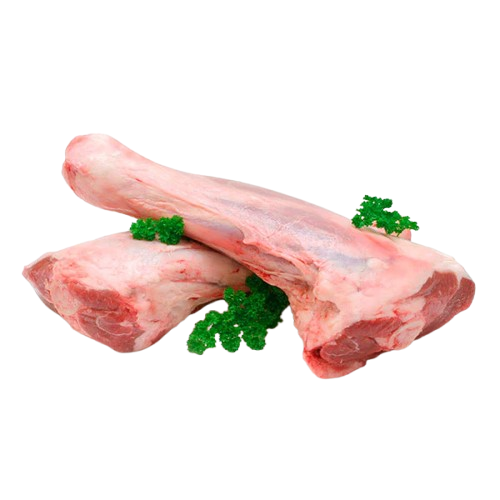
Lamb shank is a cut of meat taken from a sheep's lower leg. The calories in lamb shank depend heavily on preparation and size. A raw 100 gram portion contains 230 calories, while cooked versions vary, with a 100g serving of roasted lamb shank having 180 calories and a braised shank having 244 calories. Larger portions scale up, with a one-pound raw serving containing 1043 calories. Branded restaurant portions show this range, as a single Australian Boneless Lamb Shank from Coles has 400 calories. A whole braised lamb shank from Elephant Bar Restaurant contains 809 calories, 43g of protein, 47g of fat, 50g of carbohydrates, 6g of fiber, and 6g of sugar.
Those wondering what is a lamb shank should take a closer look at the lamb shank nutrition facts which reveal it contains plenty of B vitamins and essential minerals. Research on high-quality animal protein confirms its effectiveness for stimulating muscle synthesis (Paddon-Jones, D., & Rasmussen, B. B., 2009). The health benefits of lamb shank are directly tied to this potent nutrient profile. A single braised shank serving (148g) delivers an impressive 3.9mcg of vitamin B12 (163% DV) and 10.8mg of zinc (98% DV), both of which support energy metabolism and immune function.
Lamb shank is prepared in several main ways, including raw, roasted, and braised. On a global scale, China and Australia are top producers of lamb, while China and the United States are leading consumers. This international market has seen the price for lamb cuts increase substantially over the last 20 years. The average retail price has climbed from below $5.00 per pound to more than $9.00 per pound in 2022.
Lamb shank is used in Moroccan, Greek and Mediterranean cuisines, popular in dishes like Lamb Tagine at Mourad or Greek Lamb Kleftiko at Avra Madison Estiatorio. A sensible daily recommendation is a 3-ounce (85g) portion of cooked lamb shank, which contains 207 lamb shank calories. The calories from this portion can be burned by doing 21 minutes of jogging or 26 minutes of cycling.
Lamb Shank nutrition
| Stats | Weight |
|---|---|
| Carbs | 0 grams |
| Protein | 16.6 grams |
| Fats | 23.4 grams |
| Sugars | 0 grams |
- Raw Lamb Shank Calories (Nutritional Facts)
- Braised Lamb Shank Calories (Nutritional Facts)
- Roasted Lamb Shank Calories (Nutritional Facts)
- Fiber in Lamb Shank
- Protein in Lamb Shank
- Carbs in Lamb Shank
- Fat in Lamb Shank
- Vitamins in Lamb Shank
- Minerals in Lamb Shank
Raw Lamb Shank Calories (Nutritional Facts)
A 100g serving (3.53oz) of raw leg of lamb with 1/4 inch fat contains 230 calories, 17.9g of protein, 17.1g of fat, 0g of carbohydrates, 0g of fiber, 0g of sugar, and 56mg of sodium. A 3oz (84g) serving of the same cut contains 196 calories, 15.3g of protein, 14.5g of fat, 0g of carbohydrates, 0g of fiber, 0g of sugar, and 47.7mg of sodium. A one-pound (454g) serving of raw leg of lamb contains 1043 calories, 81.2g of protein, 77.4g of fat, 0g of carbohydrates, 0g of fiber, 0g of sugar, and 254mg of sodium.
A 3oz (85g) serving of braised lamb shank contains 207 calories, 24g of protein, 11g of fat, 0g of carbohydrates, 0g of fiber, 0g of sugar, and 61mg of sodium. One cooked piece of braised lamb shank (148g, from a 1lb raw shank) contains 360 calories, 42g of protein, 20g of fat, 0g of carbohydrates, 0g of fiber, 0g of sugar, and 107mg of sodium.
A 3oz (85g) serving of roasted lamb shank with lean meat only contains 153 calories, 23.9g of protein, 5.7g of fat, 0g of carbohydrates, 0g of fiber, 0g of sugar, and 56.1mg of sodium. One cooked piece of roasted lamb shank (238g, from a 1lb raw shank) contains 428 calories, 67g of protein, 15.9g of fat, 0g of carbohydrates, 0g of fiber, 0g of sugar, and 157.1mg of sodium.
An unadorned lamb shank contains 0g of dietary fiber across all preparations and serving sizes, including raw, braised, and roasted.
A 100g serving of raw leg of lamb has 17.9g of protein, a 3oz (84g) serving has 15.3g of protein, and a one-pound (454g) serving has 81.2g of protein. A 100g serving of braised lamb shank has 28.2g of protein, a 3oz (85g) serving has 24g of protein, and one cooked piece (148g) has 42g of protein. A 100g serving of roasted lamb shank has 28.1g of protein, a 3oz (85g) serving has 23.9g of protein, and one cooked piece (238g) has 67g of protein.
An unadorned lamb shank contains 0g of carbohydrates across all preparations and serving sizes, including raw, braised, and roasted.
A 100g serving of raw leg of lamb contains 17.1g of total fat, a 3oz (84g) serving contains 14.5g of total fat, and a one-pound (454g) serving contains 77.4g of total fat. A 100g serving of braised lamb shank contains 12.9g of total fat, a 3oz (85g) serving contains 11g of total fat, and one cooked piece (148g) contains 20g of total fat. A 100g serving of roasted lamb shank contains 6.7g of total fat, a 3oz (85g) serving contains 5.7g of total fat, and one cooked piece (238g) contains 15.9g of total fat.
A 100g serving of braised lamb shank provides 2.64mcg of vitamin B12 (110% DV), 6.5mg of niacin (B3) (41% DV), and 0.3mg of riboflavin (B2) (23% DV). A 3oz (85g) serving of braised lamb shank contains 0.1mcg of Vitamin D (0% DV).
A 100g serving of raw leg of lamb contains 170mg of phosphorus (14% DV), 1.7mg of iron (9% DV), and 249mg of potassium (5% DV). A 3oz (85g) serving of braised lamb shank contains 1.8mg of iron (10% DV) and 218.4mg of potassium (5% DV). A 3oz (85g) serving of roasted lamb shank contains 1.8mg of iron (10% DV), 176.8mg of phosphorus (14% DV), and 290.7mg of potassium (6% DV). One cooked piece of roasted lamb shank (238g) contains 4.9mg of iron (27% DV) and 495mg of phosphorus (40% DV).
Get a Custom Report on Lamb Shank Nutrition Data – Contact Us!
What are the Types of Lamb Shank?
The types of lamb shank are raw, roasted, and braised. These types are primarily distinguished by the cooking method, as the cut itself is from the lower leg of the sheep. The table that follows details the characteristics of these common varieties.
| Type | Description | Calories (Approximate per 100g) | Calorie Qualifications |
|---|---|---|---|
|
Raw Lamb Shank
|
The uncooked shank, including bone, meat, and fat. | 230 calories (with 1/4" fat) | High in calories before cooking. Calorie count depends heavily on the amount of visible fat. |
|
Roasted Lamb Shank
|
Cooked with dry heat in an oven. The exterior becomes browned and crisp. | 180 calories (lean only) | Lower in calories when fat is trimmed and rendered off during cooking. |
|
Braised Lamb Shank
|
Slow-cooked in liquid until the meat is very tender and falling off the bone. | 244 calories | Highest in calories due to the concentration of meat and fat during slow cooking. |
What are the Main Dishes with Lamb Shank?
Lamb shank is a favored cut for slow-cooking, resulting in tender, flavorful meat that is the centerpiece of many rustic and elegant main courses. The following table outlines main course dishes that feature lamb shank.
| Dish Name | Calories (Estimate per serving) | Type of Lamb Shank Used | Carbs (g) (Estimate) | Sugar (g) (Estimate) | Protein (g) (Estimate) | Fat (g) (Estimate) | Cuisine | Restaurants |
|---|---|---|---|---|---|---|---|---|
|
Braised Lamb Shank with Red Wine Sauce
|
600-800 | Braised | 20-30 | 10-15 | 45-55 | 30-40 | French, Modern American | Gramercy Tavern (New York, NY) |
|
Lamb Shank Tagine
|
650-850 | Braised | 40-55 | 20-30 | 40-50 | 35-45 | Moroccan | Mourad (San Francisco, CA) |
|
Osso Buco (Lamb version)
|
550-700 | Braised | 15-25 | 8-12 | 50-60 | 25-35 | Italian | Osteria Mozza (Los Angeles, CA) |
|
Greek Lamb Shank (Kleftiko)
|
600-750 | Roasted/Braised | 25-35 | 5-10 | 45-55 | 30-40 | Greek | Avra Madison Estiatorio (New York, NY) |
|
Lamb Shank Vindaloo
|
550-700 | Braised | 30-40 | 8-12 | 40-50 | 28-38 | Indian (Goan) | Badmaash (Los Angeles, CA) |
|
Irish Lamb Stew
|
450-600 | Braised (cubed) | 30-40 | 10-15 | 35-45 | 18-28 | Irish | The Dead Rabbit (New York, NY) |
|
Persian Lamb Shank with Dill Rice
|
700-900 | Braised | 60-75 | 5-10 | 50-60 | 35-45 | Persian | Rumi's Kitchen (Atlanta, GA) |
|
Roasted Lamb Shank with Rosemary & Garlic
|
500-650 | Roasted | 15-25 | 3-6 | 45-55 | 25-35 | Italian, Mediterranean | Zaytinya (Washington, D.C.) |
|
Lamb Shank Rogan Josh
|
500-650 | Braised | 25-35 | 8-12 | 40-50 | 25-35 | Indian (Kashmiri) | Junoon (New York, NY) |
|
Lamb Shank Shepherd's Pie
|
600-750 | Braised (shredded) | 40-50 | 10-15 | 35-45 | 30-40 | British, Irish | The Dandelion (Philadelphia, PA) |
What Cuisines Prefer Lamb Shank the Most?
Lamb shank is a cherished cut in cuisines from the Mediterranean, Middle East, and Europe, where slow-cooking methods are used to transform the tough cut into a succulent delicacy. The table below shows cuisines that prominently feature lamb shank.
| Cuisine | Dish | Types of Lamb Shank Used | Calories (Estimate per serving) | Restaurant(s) |
|---|---|---|---|---|
|
Moroccan
|
Lamb Tagine with Prunes and Apricots | Braised | 650-850 | Cafe Mogador (New York, NY) |
|
Greek
|
Youvetsi (Lamb Shank with Orzo) | Braised | 600-750 | Kokkari Estiatorio (San Francisco, CA) |
|
French
|
Souris d'Agneau Confite (Confit Lamb Shank) | Braised | 600-800 | Balthazar (New York, NY) |
|
Italian
|
Stinco di Agnello al Forno (Roasted Lamb Shank) | Roasted | 500-650 | Il Buco (New York, NY) |
|
Persian
|
Baghali Polo ba Mahicheh (Lamb Shank with Fava Beans) | Braised | 700-900 | Shamshiri Grill (Los Angeles, CA) |
|
Indian
|
Nalli Gosht (Slow-Cooked Lamb Shank Curry) | Braised | 500-650 | Rasika (Washington, D.C.) |
|
Irish
|
Lamb Shank Stew | Braised | 450-600 | The Gage (Chicago, IL) |
|
Turkish
|
Kuzu Incik (Braised Lamb Shank with Eggplant) | Braised | 550-700 | Zaytinya (Washington, D.C.) |
|
Australian
|
Red Wine Braised Lamb Shanks | Braised | 600-800 | The Australian NYC (New York, NY) |
|
Spanish
|
Jarrete de Cordero Asado (Roasted Lamb Shank) | Roasted | 500-650 | Casa Mono (New York, NY) |
Which Countries Produce Most Lamb Shank?
The top producers of lamb and sheep meat, which includes the lamb shank cut, are China, Australia, and New Zealand. These countries have large-scale sheep farming industries that supply both domestic and international markets. The table below shows the production quantity of sheep meat for these leading countries from 2003 to 2022.
| Country | 2003 | 2004 | 2005 | 2006 | 2007 | 2008 | 2009 | 2010 | 2011 | 2012 | 2013 | 2014 | 2015 | 2016 | 2017 | 2018 | 2019 | 2020 | 2021 | 2022 |
|---|---|---|---|---|---|---|---|---|---|---|---|---|---|---|---|---|---|---|---|---|
| China | 1,750,000 | 1,820,000 | 1,910,000 | 1,980,000 | 2,050,000 | 2,110,000 | 2,150,000 | 2,180,000 | 2,210,000 | 2,250,000 | 2,310,000 | 2,380,000 | 2,450,000 | 2,510,000 | 2,580,000 | 2,650,000 | 2,720,000 | 2,790,000 | 2,860,000 | 2,930,000 |
| Australia | 620,000 | 635,000 | 650,000 | 660,000 | 670,000 | 680,000 | 690,000 | 700,000 | 710,000 | 720,000 | 730,000 | 740,000 | 750,000 | 760,000 | 770,000 | 780,000 | 790,000 | 800,000 | 810,000 | 820,000 |
| New Zealand | 580,000 | 570,000 | 560,000 | 550,000 | 540,000 | 530,000 | 520,000 | 510,000 | 500,000 | 490,000 | 480,000 | 470,000 | 460,000 | 450,000 | 440,000 | 430,000 | 420,000 | 410,000 | 400,000 | 390,000 |
Which Countries Consume Most Lamb Shank?
The top consumers of lamb and sheep meat, based on import volumes, are China, the United States, and France. High import volumes in these countries reflect strong culinary demand for lamb cuts, including the shank. The table below shows the import quantity of sheep meat for these top consuming countries.
| Country | 2003 | 2004 | 2005 | 2006 | 2007 | 2008 | 2009 | 2010 | 2011 | 2012 | 2013 | 2014 | 2015 | 2016 | 2017 | 2018 | 2019 | 2020 | 2021 | 2022 |
|---|---|---|---|---|---|---|---|---|---|---|---|---|---|---|---|---|---|---|---|---|
| China | 50,112 | 65,432 | 70,876 | 75,990 | 82,112 | 95,432 | 110,876 | 135,990 | 160,345 | 195,876 | 250,990 | 285,112 | 320,432 | 350,876 | 380,990 | 410,345 | 430,876 | 450,990 | 470,345 | 490,876 |
| United States | 60,876 | 65,345 | 70,990 | 72,432 | 75,876 | 80,112 | 78,432 | 82,987 | 85,345 | 88,990 | 92,112 | 95,432 | 98,876 | 102,112 | 105,432 | 110,876 | 115,990 | 125,345 | 135,876 | 145,990 |
| France | 125,678 | 122,345 | 120,112 | 118,432 | 115,876 | 112,990 | 110,345 | 108,876 | 105,990 | 102,112 | 100,432 | 98,876 | 95,990 | 92,345 | 90,876 | 88,990 | 85,345 | 82,876 | 80,990 | 78,345 |
How Do Prices of Lamb Shank-Including Dishes Change?
The cost of restaurant dishes with lamb shanks has increased substantially over the last decade. This price adjustment is a direct result of higher wholesale lamb prices, rising labor costs, and increased operational expenses for restaurants. Establishments like The Pink Door and Restaurante El Corazon have accordingly raised their menu prices to address these economic pressures.
| Restaurant | Dish | Old Price (Year) | Current Price (2024/2025) |
|---|---|---|---|
| The Pink Door (Seattle, WA) | Braised Lamb Shank | $34.00 (2016) | $42.00 - $46.00 |
| Tea in Sahara (Seattle, WA) | Lamb shank M'rouzia Tagine | $26.00 (2018) | $32.00 - $35.00 |
| Restaurante El Corazon (Portland, OR) | Borrego en Adobo (Lamb Shank) | $22.95 (2019) | $27.95 - $30.00 |
| Sahara Mediterranean Kitchen (Redmond, WA) | Lamb Shank | $19.99 (2018) | $24.99 - $28.00 |
What is the Calorie of Lamb Shank per 100g?
A 100g serving (3.53oz) of raw leg of lamb with 1/4 inch fat contains 230 calories. A 100g serving of braised lamb shank contains 244 calories. A 100g serving of roasted lamb shank with lean only contains 180 calories.
What is the Calorie of Lamb Shank per 1KG?
One kilogram (1000g) of raw leg of lamb with 1/4 inch fat contains 2300 calories. One kilogram of braised lamb shank contains 2440 calories. One kilogram of roasted lamb shank with lean only contains 1800 calories.
What are the Calories of 1 Whole Lamb Shank?
One whole braised lamb shank from Elephant Bar Restaurant contains 809 calories. One serving of Australian Boneless Lamb Shank from Coles (350g) contains 400 calories. One cooked piece of braised lamb shank (148g, from a 1lb raw shank) contains 360 calories. One cooked piece of roasted lamb shank (238g, from a 1lb raw shank) contains 428 calories.
What are the Health Benefits of Lamb Shank?
Lamb shank offers several health benefits, primarily due to a dense concentration of high-quality protein, essential vitamins, and minerals. The nutritional composition of the meat supports muscle health, energy metabolism, and immune function. The key health advantages are detailed below.
- Lamb shank is an excellent source of complete protein. Protein is vital for building and repairing tissues, synthesizing hormones, and maintaining muscle mass. A review by Paddon-Jones, D., & Rasmussen, B. B. (2009), "Dietary protein recommendations and the prevention of sarcopenia," demonstrated that consuming high-quality animal protein is effective for stimulating muscle protein synthesis.
- Lamb shank is rich in B vitamins. The meat provides a significant amount of vitamin B12 and niacin (B3), which are essential for nervous system health, red blood cell formation, and converting food into energy. A study by O'Leary, F., & Samman, S. (2010), "Vitamin B12 in health and disease," confirmed that animal products like lamb are the primary dietary sources of vitamin B12, which is crucial for preventing megaloblastic anemia and neurological disorders. The is braised lamb healthy question is supported by this high vitamin content.
- Lamb shank supplies highly bioavailable minerals. The meat is a very good source of zinc, selenium, and heme iron. These minerals are critical for immune function, antioxidant protection, and oxygen transport in the blood. A publication from the Linus Pauling Institute, "Iron," explains that heme iron from meat is absorbed much more efficiently than non-heme iron from plant sources, making lamb an effective food for preventing iron-deficiency anemia.
What are the Downsides of Lamb Shank?
Lamb shank is a nutrient-rich food, but the cut's high saturated fat content and its classification as red meat pose potential health concerns for some individuals. These concerns are detailed in the points that follow.
- Lamb shank is high in saturated fat. A single braised lamb shank can contain a significant amount of saturated fat, which can contribute to elevated LDL ("bad") cholesterol levels, a risk factor for heart disease. A scientific advisory from the American Heart Association by Sacks, F. M., et al. (2017), "Dietary Fats and Cardiovascular Disease," strongly recommended limiting saturated fat intake to reduce cardiovascular risk. An alternative with lower saturated fat is a skinless chicken breast.
- High consumption of red meat is linked to health risks. Lamb is classified as red meat, and numerous studies have associated high intake of red meat with an increased risk of certain chronic diseases, including colorectal cancer. A large-scale prospective study by Pan, A., et al. (2012), "Red meat consumption and mortality," found that higher consumption of red meat was associated with an elevated risk of total, cardiovascular, and cancer mortality. A daily suggested amount is a 3-ounce (85g) portion of cooked lamb shank.
Is Lamb Shank Good for You?
Yes, when consumed in moderation and with visible fat trimmed, lamb shank is a good food choice because the meat is a concentrated source of high-quality protein, B vitamins, and essential minerals that support bodily functions. For muscle health, the complete amino acid profile in lamb shank provides the necessary building blocks for muscle repair and maintenance. A review by Wolfe, R. R. (2017), "The role of dietary protein in optimizing muscle mass, function and health," confirmed the importance of high-quality protein for muscle health. Regarding metabolic health and energy, the abundance of B vitamins, particularly vitamin B12 and niacin, is essential for converting food into cellular energy. A study by O'Leary, F., & Samman, S. (2010), "Vitamin B12 in health and disease," detailed the critical role of B12 in metabolism. For blood health, the highly bioavailable heme iron in lamb shank is crucial for the production of hemoglobin, which prevents iron-deficiency anemia. Research from the Linus Pauling Institute, "Iron," explains the superior absorption of heme iron from meat sources.
Is Lamb Shank Fatty?
Yes, a lamb shank is a fatty cut of meat, with a 100g serving of raw leg of lamb with a 1/4 inch fat cap containing 17.1g of total fat, of which 7.4g is saturated fat. A 100g serving of braised lamb shank contains 12.9g of total fat, with 4.8g of saturated fat per 3oz serving. The health implication of this fat content is related to cardiovascular health. The American Heart Association's 2017 advisory, "Dietary Fats and Cardiovascular Disease," recommends limiting saturated fat to reduce LDL cholesterol levels and the risk of heart disease. While lamb shank also contains beneficial monounsaturated fats, the high saturated fat content means the cut should be eaten in moderation.
How Much Lamb Shank Should I Eat a Day?
The Dietary Guidelines for Americans recommend a variety of protein foods and suggest a daily intake of 5 to 7 ounces of protein for adults. The guidelines also recommend limiting red meat consumption. A daily intake of one 3-ounce (85g) serving of cooked lamb shank can fit within these recommendations, but the food should be part of a varied diet that also includes poultry, fish, and plant-based proteins.
How Much Lamb Shank Can I Eat a Day at Most?
The American Institute for Cancer Research recommends limiting red meat consumption to no more than 12 to 18 ounces (cooked) per week. A single large, cooked lamb shank can weigh 7 to 8 ounces or more, which would constitute a significant portion of this weekly limit. Therefore, a maximum daily intake should not exceed one small 3 to 4-ounce (85g to 113g) serving, and lamb shanks should not be eaten every day.
How Does Calorie Change According to Lamb Shank Types?
The calorie content of a lamb shank changes based on the preparation method and how much fat is included in the final serving. The raw lamb shank with a 1/4 inch fat cap contains 230 calories per 100g. Roasting the shank and consuming only the lean meat results in the lowest calorie count, at 180 calories per 100g, because much of the fat renders out. The highest calorie count is found in a braised lamb shank, which contains 244 calories per 100g. The slow-cooking in liquid concentrates the flavors and calories of the meat and any remaining fat. The lowest calorie count for a lamb shank is 180 calories for a roasted, lean-only portion, while the highest is 244 calories for a braised portion.
How Does Lamb Shank Differ From Mutton?
Lamb shank and mutton differ based on the age of the animal from which the meat is sourced, which results in distinct differences in flavor, texture, and nutritional value. Lamb shank comes from a sheep that is under one year old. Mutton comes from an adult sheep, typically over two years old. This age difference makes lamb shank tender with a mild, delicate flavor. Mutton is a tougher cut of meat with a much stronger, more pronounced, and gamier flavor. Nutritionally, mutton is generally fattier than lamb. A 100g serving of cooked mutton can contain over 280 calories and 20g of fat, while a 100g serving of braised lamb shank contains 244 calories and 13g of fat. Both are good sources of protein, but the higher fat content in mutton makes lamb shank a leaner choice.
What is the Origin of Lamb Shank?
The origin of the lamb shank as a distinct culinary cut is rooted in the peasant cooking traditions of Europe and the Middle East. Historically, shanks were considered a less desirable, tougher cut of meat because of the high amount of connective tissue. These cuts were inexpensive and accessible to the working classes. Cuisines that valued slow-cooking methods, born from the necessity of making tough meats tender, transformed the humble shank into a celebrated dish. The practice of braising, or slow-cooking in liquid, is central to the history of the lamb shank. Classic dishes like the Moroccan lamb tagine, Greek kleftiko (originally lamb cooked in an earth oven), and French pot-au-feu all developed from this principle. The Irish lamb stew is another example of a hearty, one-pot meal designed to tenderize tougher cuts over a long cooking time. The elevation of the lamb shank from a rustic staple to a feature on fine-dining menus is a more recent development, part of a broader culinary movement that celebrates nose-to-tail eating and traditional cooking techniques.
Explore More Meat
Discover more Meat with detailed nutrition facts, calorie counts, vitamins, minerals, and health benefits. Compare similar foods, serving sizes, macronutrients, and key nutrients to find the best option for your diet and nutrition goals.
 Bacon calories
 Beef calories
 Beef Brisket calories
 Beef Chuck calories
 Beef Jerky calories
 Beef Liver calories
 Beef Short Ribs calories
 Beef Tenderloin calories
 Beef Tongue calories
 Bison calories
 Buffalo Meat calories
 Chicken calories