Calories and Nutritions in Ostrich
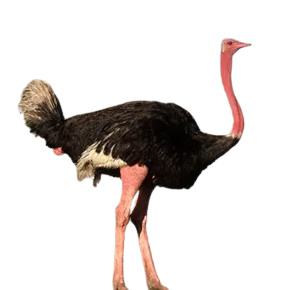
Ostrich is a red meat product derived from a large flightless bird native to Africa. A single small serving of cooked ostrich inside strip (28g) contains 46 calories. Cooked cuts vary in energy content based on portion size, with a medium serving (85g) providing 139 calories, and a large serving (170g) yielding 278 calories. Cooked preparations for ostrich meat contain 164 calories per 100g, while the raw tenderloin ostrich meat provides slightly less energy at 124 calories per 100g. A kilogram of raw ostrich tenderloin provides 1,240 calories, while one whole average adult ostrich yields 45,000g (99 lbs) of edible meat and contains 55,575 calories. A cut of American Ostrich Farms Ground Ostrich Steak (113g) has 160 calories, and Fossil Farms Ostrich Filet (113g) contains 120 calories. The ostrich egg represents a significant caloric source, with a single whole egg weighing 1.4kg and supplying roughly 2,000 calories.
An evaluation of ostrich nutrition facts highlights a food rich in protein and essential B-vitamins. A large serving of cooked ostrich meat (170g) supplies 0g of carbohydrates and 0 fiber, but offers 50g of protein and 7.2g of fat. The meat is notable for vitamin density, as the same portion delivers 10.2mcg of Vitamin B12 (425% DV) and 10.2mg of Niacin (64% DV). Mineral content is also significant, offering 8.2mg of iron (46% DV) and 430mg of phosphorus (34% DV) per large serving. Bioactive compounds such as heme iron and Omega-3 fatty acids are present in substantial amounts, with a large serving providing 0.11g of these essential lipids to support cardiovascular health. This low intramuscular fat concentration results in a unique physical property where the meat cooks faster than beef due to the lack of insulating marbling.
International supply of ostrich meat depends on specialized ratite farming, with South Africa leading production by yielding over 3,100 tonnes annually. This output meets substantial demand in major markets, where Germany imported significant quantities of fresh and frozen ostrich meat in 2023. Within these regions, the ingredient serves as a core component in distinct cooking styles, featuring in South African Bobotie, American Burgers, and French Tartare. Rising feed costs and supply chain disruptions have driven retail prices upward, with a pound of fresh fan fillet increasing from $12.00 in 2004 to over $30.00 after 2020.
Ostrich is considered a healthy protein source and supports muscle maintenance and cardiovascular health. Nutritionists advise consuming this lean red meat as a regular alternative to beef, though portion control remains important. A large portion of cooked ostrich meat (170g) contains 278 calories, which necessitates 28 minutes of running or 35 minutes of swimming to burn. People with concerns about foodborne pathogens should ensure the meat reaches an internal temperature of 160°F to minimize potential risks.
Ostrich nutrition
| Stats | Weight |
|---|---|
| Carbs | 0 grams |
| Protein | 25 grams |
| Fats | 0 grams |
| Sugars | 0 grams |
- Large Ostrich Calories (Nutritional Facts)
- Medium Ostrich Calories (Nutritional Facts)
- Small Ostrich Calories (Nutritional Facts)
- Raw Ostrich Nutrition
- Omega-3 fatty acids in Ostrich
- Sodium in Ostrich
- Potassium in Ostrich
- Sugar in Ostrich
- Fiber in Ostrich
- Protein in Ostrich
- Carbs in Ostrich
- Fat in Ostrich
- Vitamins in Ostrich
- Minerals in Ostrich
Large Ostrich Calories (Nutritional Facts)
A large serving of cooked Ostrich Inside Strip (170g or 6oz) contains 278 calories, 50g of protein, 7.2g of fat, 0g of carbohydrates, 0g of fiber, 0g of sugar, and 124mg of sodium. A large serving of cooked Ostrich Top Loin (170g or 6oz) provides 264 calories, 47.8g of protein, 6.6g of fat, 0g of carbohydrates, 0g of fiber, 0g of sugar, and 131mg of sodium.
A medium serving of cooked Ostrich Inside Strip (85g or 3oz) provides 139 calories, 25g of protein, 3.6g of fat, 0g of carbohydrates, 0g of fiber, 0g of sugar, and 62.1mg of sodium. A medium serving of cooked Ostrich Top Loin (85g or 3oz) contains 132 calories, 23.9g of protein, 3.3g of fat, 0g of carbohydrates, 0g of fiber, 0g of sugar, and 65.5mg of sodium.
A small serving of cooked Ostrich Inside Strip (28g or 1oz) contains 46 calories, 8.3g of protein, 1.2g of fat, 0g of carbohydrates, 0g of fiber, 0g of sugar, and 21mg of sodium. A small serving of cooked Ostrich Top Loin (28g or 1oz) provides 44 calories, 8g of protein, 1.1g of fat, 0g of carbohydrates, 0g of fiber, 0g of sugar, and 22mg of sodium.
A serving of raw Ostrich Tenderloin (85g or 3oz) contains 105 calories, 18.8g of protein, 2.7g of fat, 0g of carbohydrates, 0g of fiber, 0g of sugar, and 73.1mg of sodium.
A large serving of cooked Ostrich Inside Strip (170g or 6oz) and cooked Ostrich Top Loin (170g or 6oz) provides 0.11g of Omega-3 fatty acids. A medium serving of cooked Ostrich Inside Strip (85g or 3oz) and cooked Ostrich Top Loin (85g or 3oz) contains 0.06g of Omega-3 fatty acids. A small serving of cooked Ostrich Inside Strip (28g or 1oz) and cooked Ostrich Top Loin (28g or 1oz) provides 0.02g of Omega-3 fatty acids. A serving of raw Ostrich Tenderloin (85g or 3oz) contains 0.05g of Omega-3 fatty acids.
A large serving of cooked Ostrich Inside Strip (170g or 6oz) contains 124mg of sodium (5% DV), while a large serving of cooked Ostrich Top Loin (170g or 6oz) contains 131mg of sodium (6% DV). A medium serving of cooked Ostrich Inside Strip (85g or 3oz) has 62.1mg of sodium (3% DV), and a medium serving of cooked Ostrich Top Loin (85g or 3oz) has 65.5mg of sodium (3% DV). A small serving of cooked Ostrich Inside Strip (28g or 1oz) contains 20mg of sodium (1% DV), while a small serving of cooked Ostrich Top Loin (28g or 1oz) has 22mg of sodium (1% DV). A serving of raw Ostrich Tenderloin (85g or 3oz) contains 73.1mg of sodium (3% DV).
A large serving of cooked Ostrich Inside Strip (170g or 6oz) contains 622mg of potassium (13% DV), and a large serving of cooked Ostrich Top Loin (170g or 6oz) provides 600mg of potassium (13% DV). A medium serving of cooked Ostrich Inside Strip (85g or 3oz) has 311.1mg of potassium (7% DV), while a medium serving of cooked Ostrich Top Loin (85g or 3oz) has 300.1mg of potassium (6% DV). A small serving of cooked Ostrich Inside Strip (28g or 1oz) contains 102mg of potassium (2% DV), and a small serving of cooked Ostrich Top Loin (28g or 1oz) provides 99mg of potassium (2% DV). A serving of raw Ostrich Tenderloin (85g or 3oz) contains 272mg of potassium (6% DV).
A large serving of cooked Ostrich Inside Strip (170g or 6oz) and cooked Ostrich Top Loin (170g or 6oz) contains 0g of sugar. A medium serving of cooked Ostrich Inside Strip (85g or 3oz) and cooked Ostrich Top Loin (85g or 3oz) has 0g of sugar. A small serving of cooked Ostrich Inside Strip (28g or 1oz) and cooked Ostrich Top Loin (28g or 1oz) also contains 0g of sugar. A serving of raw Ostrich Tenderloin (85g or 3oz) contains 0g of sugar.
A large serving of cooked Ostrich Inside Strip (170g or 6oz) and cooked Ostrich Top Loin (170g or 6oz) provides 0g of dietary fiber (0% DV). A medium serving of cooked Ostrich Inside Strip (85g or 3oz) and cooked Ostrich Top Loin (85g or 3oz) has 0g of fiber (0% DV). A small serving of cooked Ostrich Inside Strip (28g or 1oz) and cooked Ostrich Top Loin (28g or 1oz) contains 0g of fiber (0% DV). A serving of raw Ostrich Tenderloin (85g or 3oz) provides 0g of fiber (0% DV).
A large serving of cooked Ostrich Inside Strip (170g or 6oz) provides 50g of protein (100% DV), while a large serving of cooked Ostrich Top Loin (170g or 6oz) provides 47.8g of protein (96% DV). A medium serving of cooked Ostrich Inside Strip (85g or 3oz) has 25g of protein (50% DV), and a medium serving of cooked Ostrich Top Loin (85g or 3oz) has 23.9g of protein (48% DV). A small serving of cooked Ostrich Inside Strip (28g or 1oz) contains 8.2g of protein (16% DV), while a small serving of cooked Ostrich Top Loin (28g or 1oz) provides 7.9g of protein (16% DV). A serving of raw Ostrich Tenderloin (85g or 3oz) provides 18.8g of protein (38% DV).
A large serving of cooked Ostrich Inside Strip (170g or 6oz) and cooked Ostrich Top Loin (170g or 6oz) contains 0g of carbohydrates (0% DV). A medium serving of cooked Ostrich Inside Strip (85g or 3oz) and cooked Ostrich Top Loin (85g or 3oz) has 0g of carbohydrates (0% DV). A small serving of cooked Ostrich Inside Strip (28g or 1oz) and cooked Ostrich Top Loin (28g or 1oz) contains 0g of carbohydrates (0% DV). A serving of raw Ostrich Tenderloin (85g or 3oz) contains 0g of carbohydrates (0% DV).
A large serving of cooked Ostrich Inside Strip (170g or 6oz) contains 7.2g of total fat (9% DV), while a large serving of cooked Ostrich Top Loin (170g or 6oz) contains 6.6g of total fat (8% DV). A medium serving of cooked Ostrich Inside Strip (85g or 3oz) has 3.6g of total fat (5% DV), and a medium serving of cooked Ostrich Top Loin (85g or 3oz) has 3.3g of total fat (4% DV). A small serving of cooked Ostrich Inside Strip (28g or 1oz) contains 1.2g of total fat (2% DV), while a small serving of cooked Ostrich Top Loin (28g or 1oz) has 1.1g of total fat (1% DV). A serving of raw Ostrich Tenderloin (85g or 3oz) contains 2.7g of total fat (3% DV).
A large serving of cooked Ostrich Inside Strip (170g or 6oz) provides 10.2mcg of Vitamin B12 (425% DV), 10.2mg of Niacin (64% DV), and 0.9mg of Vitamin B6 (53% DV). A medium serving of cooked Ostrich Inside Strip (85g or 3oz) provides 5.1mcg of Vitamin B12 (213% DV), 5.1mg of Niacin (32% DV), and 0.45mg of Vitamin B6 (26% DV). A small serving of cooked Ostrich Inside Strip (28g or 1oz) provides 1.7mcg of Vitamin B12 (71% DV), 1.7mg of Niacin (11% DV), and 0.15mg of Vitamin B6 (9% DV). A serving of raw Ostrich Tenderloin (85g or 3oz) provides 4.2mcg of Vitamin B12 (175% DV).
A large serving of cooked Ostrich Inside Strip (170g or 6oz) provides 8.2mg of iron (46% DV) and 430mg of phosphorus (34% DV), while a large serving of cooked Ostrich Top Loin (170g or 6oz) provides 5.6mg of iron (31% DV) and 416mg of phosphorus (33% DV). A medium serving of cooked Ostrich Inside Strip (85g or 3oz) provides 4.1mg of iron (23% DV) and 215.1mg of phosphorus (17% DV), whereas a medium serving of cooked Ostrich Top Loin (85g or 3oz) provides 2.8mg of iron (16% DV) and 208.3mg of phosphorus (17% DV). A small serving of cooked Ostrich Inside Strip (28g or 1oz) provides 1.4mg of iron (8% DV) and 71mg of phosphorus (6% DV), while a small serving of cooked Ostrich Top Loin (28g or 1oz) provides 0.9mg of iron (5% DV) and 69mg of phosphorus (6% DV). A serving of raw Ostrich Tenderloin (85g or 3oz) provides 4.1mg of iron (23% DV) and 187mg of phosphorus (15% DV).
Get a Custom Report on Ostrich Nutrition Data – Contact Us!
What are the Types of Ostrich?
The types of Ostrich are the Fan Fillet, Tenderloin, Top Loin, Inside Strip, and Ground Ostrich. The table below provides details on these common cuts.
| Type | Description | Calories (Approximate per 100g cooked) | Calorie Qualifications |
|---|---|---|---|
|
Fan Fillet
|
The most tender cut from the upper thigh, resembling a filet mignon. | 135 | This cut is very lean and has the lowest calorie density due to minimal intramuscular fat. |
|
Tenderloin
|
A lean cut from the inner thigh, often used for medallions. | 145 | The low fat content keeps the calorie count moderate, similar to the fan fillet. |
|
Top Loin
|
A strip steak cut from the back of the bird, slightly more textured. | 155 | The calorie count is slightly higher than the tenderloin due to a denser muscle structure. |
|
Inside Strip
|
A flavorful cut from the leg, often used for grilling. | 164 | The calorie density increases slightly as this working muscle retains more firmness. |
|
Ground Ostrich
|
Meat ground from various muscle trimmings, often mixed with some fat. | 165 | The grinding process often incorporates trimmings that raise the overall fat and calorie content. |
What are the Main Dishes With Ostrich?
Ostrich meat features prominently in savory courses ranging from rustic burgers to refined steak preparations, favored for the red meat texture that lacks the fat of beef. The table below displays common entrees using this lean protein.
| Dish Name | Calories (Estimate per serving) | Type of Ostrich | Carbs (g) (Estimate) | Sugar (g) (Estimate) | Protein (g) (Estimate) | Fat (g) (Estimate) | Cuisine | Restaurants |
|---|---|---|---|---|---|---|---|---|
|
Ostrich Burger
|
350 | Ground | 30 | 4 | 28 | 14 | American | Twisted Root Burger Co. (Dallas, TX) |
|
Ostrich Fan Fillet
|
140 | Fan Fillet | 0 | 0 | 26 | 3 | American | The Buckhorn Exchange (Denver, CO) |
|
Ostrich Chili
|
300 | Ground | 25 | 6 | 22 | 10 | Southwestern | Lonesome Dove Western Bistro (Fort Worth, TX) |
|
Ostrich Sliders
|
280 | Ground | 20 | 3 | 18 | 12 | American | Bareburger (New York, NY) |
|
Ostrich Carpaccio
|
180 | Tenderloin | 2 | 0 | 24 | 8 | Italian | STK Steakhouse (Las Vegas, NV) |
|
Ostrich Sausage
|
260 | Processed | 2 | 1 | 20 | 18 | German/American | Biker Jim's Gourmet Dogs (Denver, CO) |
|
Ostrich Tacos
|
320 | Inside Strip | 28 | 2 | 22 | 12 | Mexican | Taco Mac (Atlanta, GA) |
|
Ostrich Meatballs
|
290 | Ground | 12 | 2 | 24 | 14 | Italian | Wildubretto (San Antonio, TX) |
|
Ostrich Steak Frites
|
450 | Top Loin | 45 | 0 | 35 | 18 | French | Mon Ami Gabi (Las Vegas, NV) |
|
Smoked Ostrich Sandwich
|
380 | Brisket/Fan | 35 | 8 | 30 | 12 | BBQ | Clark's Outpost BBQ (Tioga, TX) |
|
Ostrich Neck Stew
|
350 | Neck | 15 | 4 | 35 | 15 | South African | The Fort (Morrison, CO) |
|
Grilled Ostrich Drummies
|
220 | Wings/Drum | 0 | 0 | 28 | 10 | American | Fossil Farms (Boonton, NJ) |
|
Ostrich Stir-Fry
|
310 | Steak Strips | 18 | 6 | 28 | 12 | Asian | P.F. Chang's (Scottsdale, AZ - Seasonal) |
|
Ostrich Pizza
|
600 | Sausage/Ground | 65 | 4 | 30 | 25 | Italian/American | Jungle Jim's International Market (Fairfield, OH) |
|
Ostrich Tenderloin Medallions
|
150 | Tenderloin | 0 | 0 | 29 | 3 | Continental | Rodizio Grill (Denver, CO) |
What are Desserts With Ostrich?
The culinary application of the ostrich extends to the confectionery world primarily through the use of the massive egg, which equals two dozen chicken eggs and provides a light, fluffy texture for baking. The table below details these sweet preparations, noting that the meat itself is not used in desserts.
| Dish Name | Calories (Estimate per serving) | Type of Ostrich | Carbs (g) (Estimate) | Sugar (g) (Estimate) | Protein (g) (Estimate) | Fat (g) (Estimate) | Cuisine | Restaurants |
|---|---|---|---|---|---|---|---|---|
|
Ostrich Egg Sponge Cake
|
350 | Egg | 45 | 25 | 6 | 12 | American | OstrichLand USA (Solvang, CA) |
|
Ostrich Egg Custard
|
280 | Egg | 20 | 18 | 8 | 15 | South African | 10 Degrees South (Atlanta, GA) |
|
Giant Ostrich Meringue
|
150 | Egg White | 35 | 33 | 3 | 0 | French | La Provence (Slidell, LA) |
|
Ostrich Egg Cheesecake
|
450 | Egg | 30 | 22 | 10 | 32 | American | Rooster Cogburn Ostrich Ranch (Picacho, AZ) |
|
Ostrich Egg Flan
|
320 | Egg | 28 | 26 | 9 | 14 | Spanish | Jaleo by José Andrés (Washington, DC) |
|
Ostrich Egg Pavlova
|
300 | Egg White | 50 | 45 | 4 | 0 | Australian | Outback Steakhouse |
|
Ostrich Egg Pound Cake
|
400 | Egg | 48 | 28 | 7 | 20 | British | The Ostrich Inn (Colnbrook, UK) |
|
Ostrich Egg Scramble (Sweet)
|
250 | Egg | 5 | 2 | 18 | 16 | American | Blue Heaven (Key West, FL) |
|
Ostrich Egg Crème Brûlée
|
380 | Yolk | 18 | 16 | 6 | 30 | French | Bistro Jeanty (Yountville, CA) |
|
Ostrich Egg Waffles
|
420 | Egg | 55 | 15 | 10 | 18 | Belgian | Cogburn's Cafe (Picacho, AZ) |
|
Ostrich Egg Pancakes
|
350 | Egg | 60 | 12 | 12 | 10 | American | Safari West (Santa Rosa, CA) |
|
Ostrich Egg Mooncake
|
500 | Salted Yolk | 65 | 30 | 8 | 25 | Chinese | Kee Wah Bakery (Los Angeles, CA) |
|
Ostrich Egg Ice Cream
|
280 | Yolk | 25 | 22 | 5 | 18 | American | Salt & Straw (Portland, OR - Seasonal) |
|
Ostrich Egg Soufflé
|
220 | Egg | 10 | 8 | 12 | 15 | French | Le Fou Frog (Kansas City, MO) |
|
Ostrich Egg Fruit Tart
|
360 | Egg | 40 | 20 | 6 | 18 | European | Cango Ostrich Show Farm (Oudtshoorn, SA) |
What Cuisines Prefer Ostrich the Most?
Ostrich meat serves as a staple or a delicacy in diverse culinary traditions that value the ingredient for the lean profile and rich flavor. The table below highlights the cultures that utilize this bird most frequently.
| Cuisine | Dish | Types of Ostrich | Calories (Estimate) | Restaurant(s) |
|---|---|---|---|---|
|
South African
|
Ostrich Bobotie | Ground | 350 | 10 Degrees South (Atlanta, GA) |
|
American (New)
|
Ostrich Burger | Ground | 400 | Twisted Root Burger Co. (Dallas, TX) |
|
Namibian
|
Game Platter | Steak/Sausage | 500 | Joe's Beerhouse (Windhoek, Namibia) |
|
Australian
|
Bush Tucker Stew | Neck/Steak | 300 | Outback Steakhouse (Tampa, FL - Concept) |
|
French
|
Ostrich Tartare | Tenderloin | 200 | La Maison du Gibier (Quebec, Canada) |
|
German
|
Ostrich Bratwurst | Sausage | 280 | Sammy's Wild Game Grill (Houston, TX) |
|
Chinese
|
Ostrich Stir-Fry | Steak Strips | 320 | P.F. Chang's (Las Vegas, NV) |
|
Japanese
|
Ostrich Tataki | Tenderloin | 150 | Gyukaku Japanese BBQ (Los Angeles, CA) |
|
Belgian
|
Ostrich Filet | Fan Fillet | 450 | Belga Queen (Brussels, Belgium) |
|
British
|
Ostrich Pie | Ground/Steak | 400 | The Ostrich Inn (Colnbrook, UK) |
|
Swiss
|
Ostrich Fondue | Cubed Steak | 350 | Restaurant Swiss Chuchi (Zurich, Switzerland) |
|
Italian
|
Ostrich Carpaccio | Tenderloin | 180 | Carpaccio (Bal Harbour, FL) |
|
Kenyan
|
Roasted Ostrich | Leg/Thigh | 300 | Carnivore (Nairobi, Kenya) |
|
Zimbabwean
|
Smoked Ostrich | Fillet | 220 | Victoria Falls Hotel (Victoria Falls, Zimbabwe) |
|
Dutch
|
Ostrich Croquettes | Ground | 250 | De Struisvogel (Amsterdam, Netherlands) |
Which Countries Produce the Most Ostrich?
The top producers of ostrich meat are South Africa, the United States, and Australia. South Africa dominates the global market, accounting for the majority of the world's ostrich products, including meat, leather, and feathers. The industry in South Africa experienced a significant contraction following the 2011 avian influenza outbreak but remains the primary global supplier. The table below shows the estimated production of ostrich meat in tonnes for the leading countries from 2004 to 2023.
| Country | 2004 | 2006 | 2008 | 2010 | 2012 | 2014 | 2016 | 2018 | 2020 | 2022 | 2023 |
|---|---|---|---|---|---|---|---|---|---|---|---|
| South Africa | 4,200 | 4,500 | 4,100 | 3,800 | 2,500 | 2,800 | 3,100 | 3,300 | 2,900 | 3,050 | 3,100 |
| United States | 500 | 450 | 400 | 350 | 400 | 450 | 500 | 600 | 750 | 850 | 900 |
| Australia | 300 | 280 | 250 | 200 | 180 | 200 | 220 | 250 | 280 | 300 | 310 |
| Israel | 250 | 240 | 220 | 200 | 150 | 100 | 80 | 60 | 50 | 40 | 30 |
| Zimbabwe | 150 | 140 | 130 | 120 | 110 | 120 | 130 | 140 | 150 | 160 | 165 |
Which Countries Consume the Most Ostrich?
The top consumers of ostrich meat are Germany, the United States, and France. These nations represent the largest import markets for the meat, which is valued for the low fat content and red meat characteristics. Consumption in Europe relies on imports from South Africa, while the United States market utilizes both domestic farming and imports. The table below shows the import value of fresh, chilled, or frozen meat of ostriches and emus for key consuming nations from 2004 to 2023.
| Country | 2004 | 2006 | 2008 | 2010 | 2012 | 2014 | 2016 | 2018 | 2020 | 2022 | 2023 |
|---|---|---|---|---|---|---|---|---|---|---|---|
| Germany | 18,500 | 22,000 | 25,000 | 24,000 | 15,000 | 16,500 | 17,000 | 18,500 | 16,000 | 19,000 | 19,500 |
| United States | 4,500 | 5,200 | 6,000 | 6,500 | 7,000 | 8,500 | 9,500 | 11,000 | 12,500 | 14,000 | 14,800 |
| France | 12,000 | 14,000 | 15,500 | 14,000 | 9,000 | 10,000 | 10,500 | 11,000 | 9,500 | 10,500 | 11,000 |
| Belgium | 10,000 | 12,000 | 13,000 | 12,500 | 8,000 | 9,000 | 9,500 | 10,000 | 8,500 | 9,500 | 9,800 |
| Netherlands | 8,000 | 9,500 | 10,500 | 10,000 | 6,500 | 7,500 | 8,000 | 8,500 | 7,000 | 8,000 | 8,200 |
How Do Prices of Ostrich-Including Dishes Change?
The menu prices for ostrich dishes have risen due to the increased wholesale cost of the meat. The table below compares the historical and current prices of specific ostrich dishes at established restaurants in the United States and South Africa.
| Restaurant | Dish | Old Price (Year) | Current Price (2024/2025) |
|---|---|---|---|
| Astor's Table (Katy, TX) | 8 oz Ostrich Steak | $45.00 (2021) | $69.00 - $72.00 |
| Astor's Table (Katy, TX) | Ostrich Filet (8 oz.) | $49.00 (2021) | $72.00 - $75.00 |
| Nostalgie Restaurant (Oudtshoorn, SA) | Grilled Ostrich Strips with Cream Cheese, Pesto and Grilled Cherry Tomatoes | R 95.00 (2017) | $150.00 - $155.00 |
What is the Ostrich Calorie for 100 Grams?
A 100g serving of cooked Ostrich Inside Strip contains 164 calories, while cooked Ostrich Top Loin has 155 calories and raw Ostrich Tenderloin provides 124 calories.
What is the Ostrich Calorie for 1 KG?
One kilogram (1000g) of cooked Ostrich Inside Strip contains 1,635 calories, whereas the same amount of cooked Ostrich Top Loin contains 1,553 calories.
What is the Calorie of 1 Ostrich?
One whole average adult ostrich yields 45,000g (99 lbs) of edible meat and contains 55,575 calories based on the raw tenderloin calorie density. Commercial brands offer specific portioned products, as one American Ostrich Farms Ground Ostrich Steak (113g or 4oz) contains 160 calories. A single serving of Blackwing Meats Ground Ostrich (113g or 4oz) provides 165 calories, while one Fossil Farms Ostrich Filet (113g or 4oz) contains 120 calories.
What are the Health Benefits of Ostrich?
The nutritional value of ostrich meat stems from a high protein content combined with low intramuscular fat. An account of these potential upsides is provided here.
- Supports Cardiovascular Health: Ostrich meat contains significantly less saturated fat and cholesterol compared to beef and chicken, which assists in maintaining healthy lipid profiles. A study by Poławska, E., et al. (2011), "Ostrich meat – an updated review," confirmed that the favorable fatty acid profile of ostrich meat contributes to reduced risks of cardiovascular disease when consumed as a replacement for fattier red meats.
- Enhances Muscle Maintenance and Satiety: The high protein density in ostrich meat provides essential amino acids required for muscle repair and growth without excessive caloric intake. A review by Paddon-Jones, D., et al. (2008), "Protein, weight management, and satiety," established that high-protein diets increase satiety and thermogenesis, which supports lean muscle mass retention during weight management.
- Prevents Iron Deficiency Anemia: Ostrich meat is a rich source of heme iron, a mineral essential for oxygen transport in the blood and the prevention of fatigue. A report by Abbaspour, N., et al. (2014), "Review on iron and its importance for human health," highlighted that heme iron found in animal tissues is absorbed more efficiently by the body than non-heme iron from plant sources.
What are the Downsides of Ostrich?
The consumption of ostrich meat presents specific challenges related to food safety and mineral intake. The table below shows the potential health risks associated with the consumption of red meats, including ostrich, when eaten in excess or prepared improperly.
- Potential for Bacterial Contamination: Raw or undercooked ostrich meat poses a risk of foodborne illnesses such as Salmonella and Campylobacter. A study by Ley, E. C., et al. (2014), "Prevalence of Salmonella, Campylobacter, and Escherichia coli on Ostrich Carcasses," found that pathogens can be present on the meat surface, necessitating proper cooking temperatures to ensure safety. A safer alternative is fully cooked turkey breast. A suggested consumption limit is to keep portions to under 4 ounces (113g) and ensure the internal temperature reaches 160°F (71°C).
- Heme Iron and Oxidative Stress: Excessive consumption of heme iron, while beneficial in moderation, can catalyze oxidative stress in the colon. A meta-analysis by Qiao, L., et al. (2013), "Heme iron intake and risk of colorectal cancer: a meta-analysis of prospective cohort studies," indicated a positive association between high heme iron intake and an increased risk of colorectal issues. A suggested intake is to limit red meat consumption to no more than three portions per week.
What Bioactive Compounds are Found in Ostrich?
Ostrich meat contains various functional nutrients that support metabolic and muscular systems. The table below shows the bioactive substances present in ostrich meat that contribute to physiological functions beyond basic nutrition.
- Polyunsaturated Fatty Acids (PUFA): Ostrich meat is a significant source of n-3 fatty acids (Omega-3s), which function as anti-inflammatory agents and support cardiovascular health. A study by Poławska, E., et al. (2011), "Ostrich meat – an updated review," identified a favorable ratio of polyunsaturated to saturated fatty acids in the meat, highlighting its role in reducing the risk of atherosclerosis.
- Conjugated Linoleic Acid (CLA): This bioactive lipid exhibits antioxidant and anti-carcinogenic properties while aiding in lipid metabolism. A research paper by Horbańczuk, J. O., et al. (1998), "Cholesterol content and fatty acid composition of ostrich meat," established the presence of CLA in ostrich muscle tissue, noting its potential benefit for human weight management and immune function.
- Heme Iron: This mineral acts as a bioactive component essential for oxygen transport and cognitive performance, with higher bioavailability than plant-based iron. A foundational analysis by Sales, J. (1996), "Histological, biophysical, physical and chemical characteristics of ostrich meat," confirmed that the meat contains high levels of myoglobin-derived iron, supporting the prevention of anemia and fatigue.
Is Ostrich Meat Good for You?
Yes, ostrich meat is a healthy protein source because the food offers the nutrient density of red meat with a fat profile similar to poultry. The high protein content supports metabolic health by increasing the thermic effect of food and promoting satiety, which assists in weight management. A study by Westerterp-Plantenga, M. S. (2008), "Protein intake and energy balance," demonstrated that higher protein intake leads to sustained weight loss and improved body composition. For cardiovascular health, the low levels of saturated fat and sodium reduce the strain on the heart compared to traditional beef cuts. A systematic review by McAfee, A. J., et al. (2010), "Red meat consumption: An overview of the risks and benefits," concluded that lean red meats, when consumed in moderation, do not negatively impact cardiovascular risk factors. Regarding blood health, the substantial iron and Vitamin B12 content prevents anemia and supports neurological function. A paper by Biesalski, H. K. (2005), "Meat as a component of a healthy diet – are there any risks or benefits if meat is avoided?," emphasized that lean meat provides bioavailable micronutrients critical for cognitive and physical development.
Is Ostrich Meat Keto-Friendly?
Yes, ostrich meat is keto-friendly as the food contains zero grams of carbohydrates and a high amount of protein. The absence of sugar and fiber ensures that consumption does not trigger an insulin spike, allowing the body to maintain a state of ketosis. A study by Paoli, A., et al. (2013), "Beyond weight loss: a review of the therapeutic uses of very-low-carbohydrate (ketogenic) diets," confirmed that animal proteins free of carbohydrates are fundamental staples for ketogenic dietary adherence. A sample keto-friendly menu includes a breakfast of ostrich sausage patties with scrambled eggs and spinach, followed by a lunch of grilled Ostrich Top Loin salad with olive oil dressing, avocado, and feta cheese, and concluding with a dinner of pan-seared Ostrich Inside Strip steak topped with herb butter, served with roasted asparagus and cauliflower mash.
How Do Calories Change According to Ostrich Types?
The calorie content of ostrich meat changes based on the fat content inherent to the specific muscle cut and the processing method used. Ground ostrich possesses the highest calorie count at roughly 165 calories per 100 grams because the grinding process often includes trimmings with slightly higher fat content to ensure moisture. The Fan Fillet and Tenderloin cuts contain the lowest calorie values, ranging between 135 and 145 calories per 100 grams, as these muscles are exceptionally lean with almost no intramuscular fat. The cooking process also concentrates calories; moisture loss during heating causes the nutrients and calories to become denser per gram compared to the raw state.
What is the Origin of Ostrich?
The history of the ostrich as a food source begins in the wild plains of Africa, where indigenous hunter-gatherers utilized both the meat and the massive eggs. Commercialization commenced in the 1860s in the Little Karoo region of South Africa, driven initially by the high demand for feathers in European fashion rather than for the meat. The collapse of the feather market in 1914 forced farmers to pivot, leading to the promotion of the bird for the leather and the lean, red meat. Global expansion occurred in the late 20th century, introducing the ostrich to the United States and Australia as a healthy alternative to beef. The meat gained popularity in the 1990s due to the resemblance to red meat and the low fat content, establishing the bird as a niche but valued livestock in modern agriculture.
Explore More Meat
Discover more Meat with detailed nutrition facts, calorie counts, vitamins, minerals, and health benefits. Compare similar foods, serving sizes, macronutrients, and key nutrients to find the best option for your diet and nutrition goals.
 Bacon calories
 Beef calories
 Beef Brisket calories
 Beef Chuck calories
 Beef Jerky calories
 Beef Liver calories
 Beef Short Ribs calories
 Beef Tenderloin calories
 Beef Tongue calories
 Bison calories
 Buffalo Meat calories
 Chicken calories