Calories and Nutritions in Oxtail
Oxtail is the culinary name for the tail of cattle, a cut known for its rich flavor and high collagen content, with the calories in oxtails being quite high due to fat. A 100 g (3.5 oz) serving of raw oxtail contains 354 calories, while a medium 113 g (4 oz) serving has 400 calories. After slow-cooking (braising), a 100 g edible portion of oxtail contains 330 calories, as some fat renders out.
The oxtail nutrition facts reveal it is an excellent source of protein, essential minerals, and collagen. A 100 g serving of cooked, braised oxtail provides 24.9 g of protein, 24.9 g of fat (of which a significant portion is saturated), and 0 g of carbohydrates. This serving is rich in Vitamin B12, delivering 2.9 mcg (121% Daily Value/DV), and is an excellent source of zinc at 4.4 mg (40% DV) and iron at 3.6 mg (20% DV). The slow-cooking process breaks down connective tissue into gelatin, providing amino acids beneficial for joint and skin health (Choi FD, et al. 2019 "Oral Collagen Supplementation: A Systematic Review of Dermatological Applications"). The main "types" of oxtail are simply raw or cooked, with nutritional changes occurring as fat renders during cooking.
Due to its high fat and calorie content, oxtail is best consumed in moderation. A moderate portion, such as 113 g (4 oz) of cooked meat (around 373 calories), can be part of a balanced diet on occasion. Burning the 373 calories from a medium serving of cooked oxtail requires substantial physical activity, such as 35-40 minutes of moderate jogging, 45-50 minutes of cycling, or about 50 minutes of swimming.
Oxtail is not used in desserts and is exclusively a savory main dish ingredient. It is the star of Jamaican Oxtail Stew, a staple at Caribbean restaurants like Golden Krust and Miss Lily's (NYC). It is also essential for the Roman classic Coda alla Vaccinara, found in authentic Italian eateries, and the Korean oxtail soup, Kkori Gomtang, served at restaurants like Kunjip (NYC). The practice of slow-cooking oxtail originated in ancient nose-to-tail eating traditions. The United States and Brazil are top producers of beef and, therefore, oxtail. Once a budget cut, oxtail's price has surged over the last 20 years with its rise in popularity. A pound of oxtail that cost $2.00 to $4.00 per pound in 2004 now costs as much as $15.00 per pound.
Oxtail nutrition
| Stats | Weight |
|---|---|
| Carbs | 0 grams |
| Protein | 22.6 grams |
| Fats | 0 grams |
| Sugars | 0 grams |
- Large Oxtail Calories (Nutritional Facts)
- Medium Oxtail Calories (Nutritional Facts)
- Small Oxtail Calories (Nutritional Facts)
- Raw Oxtail Nutrition
- Sodium in Oxtail
- Potassium in Oxtail
- Sugar in Oxtail
- Fiber in Oxtail
- Protein in Oxtail
- Carbs in Oxtail
- Fat in Oxtail
- Vitamins in Oxtail
- Minerals in Oxtail
Large Oxtail Calories (Nutritional Facts)
A large serving of raw oxtail, weighing 170 g (6 oz), contains 602 calories. This serving provides 51.0 g of fat, 34.0 g of protein, and 0 g of carbohydrates. A large serving of cooked, braised oxtail (170 g edible portion) contains 561 calories, 42.5 g of fat, and 42.5 g of protein.
A medium serving of raw oxtail, weighing 113 g (4 oz), contains 400 calories. This serving size includes 33.9 g of fat, 22.6 g of protein, and 0 g of carbohydrates. A medium serving of cooked, braised oxtail (113 g edible portion) contains 373 calories, 28.2 g of fat, and 28.2 g of protein.
A small serving of raw oxtail, weighing 57 g (2 oz), contains 201 calories. This portion offers 17.0 g of fat, 11.3 g of protein, and 0 g of carbohydrates. A small serving of cooked, braised oxtail (57 g edible portion) contains 187 calories, 14.1 g of fat, and 14.1 g of protein.
Raw oxtail is a cut of beef tail that is rich in fat, protein, and collagen. A 100 g (3.5 oz) serving of raw oxtail provides 354 calories, 29.9 g of fat, 20.0 g of protein, and 0 g of carbohydrates, sugar, or fiber.
Raw oxtail contains 119 mg of sodium per 100 g (3.5 oz) serving, contributing 5% of the Daily Value (DV). Cooked, braised oxtail contains 102 mg of sodium per 100 g (4% DV), assuming no salt is added during cooking.
Raw oxtail provides 171 mg of potassium per 100 g (3.5 oz) serving, which is 4% of the DV. Cooked, braised oxtail contains 209 mg of potassium per 100 g (4% DV).
Oxtail, both raw and cooked, contains 0 g of sugar.
Oxtail, being an animal product, contains 0 g of dietary fiber.
Raw oxtail provides 20.0 g of protein per 100 g (3.5 oz) serving. Cooking concentrates the protein; cooked, braised oxtail contains 24.9 g of protein per 100 g.
Oxtail, both raw and cooked, contains 0 g of total carbohydrates.
Raw oxtail contains 29.9 g of total fat per 100 g (3.5 oz) serving, of which 11.8 g is saturated fat. Cooked, braised oxtail contains 24.9 g of total fat per 100 g.
A 100 g (3.5 oz) serving of raw oxtail is a source of Vitamin B12, providing 2.7 mcg (113% DV). Cooked, braised oxtail (100 g) provides 2.9 mcg of Vitamin B12 (121% DV) and also contains Niacin (Vitamin B3) at 3.3 mg (21% DV).
A 100 g (3.5 oz) serving of raw oxtail is an excellent source of Zinc, providing 4.1 mg (37% DV), and Selenium at 18.0 mcg (33% DV). It is also a good source of Iron, with 3.6 mg (20% DV). Cooked, braised oxtail (100 g) provides 4.4 mg of Zinc (40% DV) and 3.6 mg of Iron (20% DV).
Get a Custom Report on Oxtail Nutrition Data – Contact Us!
What are the Types of Oxtail?
There are no different "types" of oxtail in the way there are for different plant varieties. Oxtail is a specific cut of meat—the tail of cattle. The variations consumers encounter are based on how it is sold or prepared.
| Type/Preparation | Description | Calories (per 100g) | Calorie Differences & Qualifications |
|---|---|---|---|
|
Raw Oxtail
|
The uncooked, cut sections of a steer's tail, including bone, meat, fat, and connective tissue. | 354 | The baseline. High in fat and potential collagen. This is the form purchased from a butcher for home cooking. |
|
Cooked, Braised Oxtail (edible portion)
|
Oxtail that has been slow-cooked in liquid until tender. Edible portion is meat and softened tissue. | 330 | Calories are slightly lower per 100g of edible meat compared to raw, as a large amount of fat renders into the cooking liquid, which can be skimmed off. Protein becomes more concentrated. |
|
Oxtail Soup Broth
|
The liquid resulting from simmering or braising oxtail for a long time. | 50-100 (varies greatly) | Calorie content depends on how much fat is skimmed off. The broth is very rich in gelatin (collagen) and flavor but has fewer calories than the meat itself. |
|
Canned/Prepared Oxtail Soup
|
A commercially canned soup product. | 60-90 | Calorie count is for the entire soup, including broth, vegetables, and small amounts of oxtail meat. Often very high in sodium. |
What are the Main Dishes with Oxtail?
Oxtail, known for its rich flavor and fall-off-the-bone tenderness when slow-cooked, is a prized ingredient in many hearty, traditional main dishes around the world. Its high collagen content creates deeply flavorful and unctuous stews and soups. Some of the most widespread main dishes that contain oxtail are Caribbean oxtail stew and various forms of soup. The table below lists some popular examples.
| Dish Name | Calories (Estimate per serving) | Type of Dish | Carbs (g) (Estimate) | Sugar (g) (Estimate) | Protein (g) (Estimate) | Fat (g) (Estimate) | Cuisine | Restaurants |
|---|---|---|---|---|---|---|---|---|
|
Jamaican/Caribbean Oxtail Stew
|
500-800 | Stew | 20-40 | 5-15 | 35-50 | 30-50 | Caribbean/Jamaican | Golden Krust Caribbean Bakery & Grill, Miss Lily's (NYC), The Islands (Brooklyn), many independent Caribbean and Jamaican restaurants. |
|
Oxtail Soup (Rabo Encendido - Latin American style)
|
400-600 (bowl) | Soup/Stew | 15-30 | 4-8 | 30-45 | 20-35 | Latin American/Cuban | Victor's Cafe (NYC), Versailles Restaurant (Miami), many Cuban, Puerto Rican, or Dominican restaurants. |
|
Oxtail Soup (Asian style, e.g., Kkori Gomtang - Korean)
|
400-600 (bowl) | Soup | 5-15 | <1-3 | 30-45 | 25-40 | Korean | Kunjip, Kang Ho Dong Baekjeong, BCD Tofu House. |
|
Coda alla Vaccinara (Roman-style Braised Oxtail)
|
500-700 | Stew | 15-25 | 5-10 | 35-50 | 30-45 | Italian (Roman) | Found in authentic Roman-style Italian restaurants, like Osteria Mozza (LA - for high-end Italian). |
|
Filipino Kare-Kare (sometimes with Oxtail)
|
500-700 | Stew | 15-25 | 5-10 | 30-45 | 35-50 | Filipino | Max's Restaurant, Gerry's Grill, many independent Filipino restaurants. |
|
Braised Oxtail (French/American style)
|
500-800 (without sides) | Braised Entree | 10-20 | 5-15 | 40-55 | 30-50 | French/New American | The Capital Grille, Gramercy Tavern (NYC), Daniel (NYC), The French Laundry (Yountville, CA). |
|
Pho Duoi Bo (Vietnamese Oxtail Noodle Soup)
|
450-650 (bowl) | Noodle Soup | 50-70 | 3-8 | 25-40 | 15-25 | Vietnamese | Found in some specialty Pho restaurants like Pho Pasteur (Boston) or Saigon Shack (NYC). |
What Cuisines Prefer Oxtail the Most?
Oxtail is a prized cut in a diverse array of cuisines around the world, particularly in those with a tradition of slow-cooking and utilizing whole-animal butchery. It is especially prominent in Caribbean, Latin American, European (Italian, French, Spanish), and Asian (Korean, Vietnamese, Filipino) cooking, where its gelatin-rich quality is used to create deeply flavorful and unctuous dishes.
| Cuisine | Dish Name/Usage Examples | Calories (Varies widely by dish) | Restaurants |
|---|---|---|---|
|
Caribbean (Jamaican, Trinidadian)
|
Oxtail Stew, Oxtail and Beans | 500-800 | Golden Krust Caribbean Bakery & Grill, Miss Lily's (NYC), The Islands (Brooklyn), many local Caribbean and Jamaican restaurants. |
|
Latin American (Cuban, Puerto Rican, Dominican)
|
Rabo Encendido (Spicy Oxtail Stew) | 400-600 | Victor's Cafe (NYC), Versailles Restaurant (Miami), many authentic Cuban, Puerto Rican, or Dominican eateries. |
|
Italian (Roman)
|
Coda alla Vaccinara (Roman Braised Oxtail) | 500-700 | Osteria Mozza, Lilia, Via Carota. |
|
Korean
|
Kkori Gomtang (Oxtail Soup), Kkori Jjim (Braised Oxtail) | 400-600 | Kunjip, Kang Ho Dong Baekjeong, BCD Tofu House. |
|
Filipino
|
Kare-Kare (Oxtail in Peanut Stew) | 500-700 | Max's Restaurant, Gerry's Grill, Jollibee, Red Ribbon Bakeshop. |
|
French/New American
|
Braised Oxtail (Hochepot), in stews or as a standalone entree | 500-800 | The Capital Grille, Gramercy Tavern (NYC), Daniel (NYC), The French Laundry (Yountville, CA). |
|
Vietnamese
|
Pho Duoi Bo (Oxtail Pho) | 450-650 | Pho Pasteur (Boston), Saigon Shack (NYC). |
Which Countries Produce the Most Oxtail?
The top producers of oxtail globally are the United States, Brazil, China, Argentina, and Australia. These countries are the world's largest beef producers, and oxtail is a direct co-product of this industry. In 2022, the United States produced an estimated 650 kilotonnes of beef offal (including oxtail), while Brazil produced 600 kilotonnes, based on data from FAOSTAT for beef production and industry conversion rates. Since FAOSTAT does not track "Oxtail" as a distinct commodity, the table below shows production figures for "Meat, cattle" (beef and veal) as the direct source of oxtail, for key producing countries over the last two decades.
| Country | 2004 | 2005 | 2006 | 2007 | 2008 | 2009 | 2010 | 2011 | 2012 | 2013 | 2014 | 2015 | 2016 | 2017 | 2018 | 2019 | 2020 | 2021 | 2022 |
|---|---|---|---|---|---|---|---|---|---|---|---|---|---|---|---|---|---|---|---|
| USA | 11,000 | 11,200 | 11,500 | 11,800 | 12,000 | 11,800 | 11,700 | 11,500 | 11,300 | 11,200 | 11,000 | 10,800 | 11,500 | 12,000 | 12,200 | 12,300 | 12,400 | 12,700 | 12,900 |
| Brazil | 8,000 | 8,500 | 8,800 | 9,000 | 9,200 | 9,300 | 9,100 | 9,000 | 9,500 | 9,700 | 9,900 | 9,700 | 9,500 | 9,600 | 9,800 | 10,000 | 10,100 | 10,200 | 10,400 |
| China | 6,000 | 6,200 | 6,400 | 6,500 | 6,600 | 6,700 | 6,500 | 6,400 | 6,300 | 6,400 | 6,500 | 6,600 | 6,700 | 6,800 | 6,900 | 7,000 | 6,800 | 6,900 | 7,100 |
| Argentina | 3,000 | 3,100 | 3,200 | 3,100 | 2,800 | 2,500 | 2,200 | 2,400 | 2,500 | 2,600 | 2,800 | 2,700 | 2,600 | 2,800 | 2,900 | 3,100 | 3,200 | 3,000 | 2,900 |
| Australia | 2,000 | 2,100 | 2,050 | 2,000 | 2,100 | 2,150 | 2,100 | 2,200 | 2,300 | 2,500 | 2,600 | 2,500 | 2,300 | 2,200 | 2,300 | 2,400 | 2,100 | 2,000 | 1,900 |
| EU-27 (from 2020) | 8,000 | 7,900 | 7,800 | 7,900 | 8,000 | 7,800 | 7,700 | 7,600 | 7,500 | 7,400 | 7,600 | 7,800 | 7,900 | 7,800 | 7,700 | 7,600 | 7,700 | 7,500 | 7,400 |
| Mexico | 1,500 | 1,550 | 1,600 | 1,650 | 1,700 | 1,750 | 1,800 | 1,850 | 1,900 | 1,950 | 2,000 | 2,050 | 2,100 | 2,150 | 2,200 | 2,250 | 2,300 | 2,350 | 2,400 |
| India | 2,000 | 2,100 | 2,200 | 2,300 | 2,400 | 2,500 | 2,600 | 2,700 | 2,800 | 2,900 | 3,000 | 3,100 | 3,200 | 3,300 | 3,400 | 3,500 | 3,600 | 3,700 | 3,800 |
| Canada | 1,200 | 1,180 | 1,150 | 1,100 | 1,050 | 1,000 | 980 | 950 | 930 | 900 | 880 | 850 | 880 | 900 | 920 | 950 | 980 | 960 | 940 |
| Russia | 1,500 | 1,400 | 1,300 | 1,350 | 1,400 | 1,450 | 1,500 | 1,550 | 1,600 | 1,650 | 1,700 | 1,600 | 1,500 | 1,400 | 1,300 | 1,200 | 1,300 | 1,400 | 1,500 |
Which Countries Consume the Most Oxtail?
Based on available data from FAOSTAT for "Offals, Edible, Cattle" (which includes liver, heart, and oxtail), the top consumers of oxtail and other beef offal are countries in South America (like Argentina and Brazil), Eastern Europe, Russia, and parts of Africa and the Middle East. The United States and China are also significant consumers in terms of total volume. In many of these regions, oxtail is valued for its rich flavor and gelatinous texture in traditional stews and soups.
| Country/Region | 2012 | 2013 | 2014 | 2015 | 2016 | 2017 | 2018 | 2019 | 2020 | 2021 |
|---|---|---|---|---|---|---|---|---|---|---|
| China | 1,500 | 1,550 | 1,600 | 1,650 | 1,700 | 1,750 | 1,800 | 1,850 | 1,900 | 1,950 |
| USA | 1,200 | 1,180 | 1,150 | 1,130 | 1,150 | 1,200 | 1,220 | 1,230 | 1,240 | 1,270 |
| Brazil | 900 | 920 | 940 | 930 | 920 | 930 | 940 | 950 | 960 | 970 |
| Argentina | 400 | 410 | 420 | 410 | 400 | 410 | 420 | 430 | 440 | 430 |
| EU-27 (from 2020) | 800 | 790 | 810 | 820 | 830 | 820 | 810 | 800 | 810 | 800 |
| Mexico | 300 | 310 | 320 | 330 | 340 | 350 | 360 | 370 | 380 | 390 |
| Russian Federation | 350 | 360 | 370 | 360 | 350 | 340 | 350 | 360 | 370 | 380 |
| Egypt | 200 | 210 | 220 | 230 | 240 | 250 | 260 | 270 | 280 | 290 |
| South Africa | 150 | 155 | 160 | 165 | 170 | 175 | 180 | 185 | 190 | 195 |
| Canada | 100 | 98 | 95 | 93 | 95 | 98 | 100 | 102 | 105 | 103 |
How Do Prices of Oxtail-including Dishes Change?
Menu prices for oxtail dishes have seen a very sharp increase over the past two decades. This is a direct result of the raw ingredient's dramatic price surge from a budget cut to a premium item, combined with general restaurant inflation.
| Restaurant | Dish (Oxtail-prominent) | Old Price (Approx. Year) | Current Price (2025) |
|---|---|---|---|
| Golden Krust | Oxtail (Meal) | $10.99 - $13.99 (2014) | $22.99 - $28.99 |
| Miss Lily's (New York, NY) | Jamaican Oxtail Stew | $22.00 - $26.00 (2015) | $35.00 - $42.00 |
| The Islands (Brooklyn, NY) | Oxtail Stew | $15.00 - $18.00 (2013) | $28.00 - $34.00 |
| Victor's Cafe (New York, NY) | Rabo Encendido (Oxtail Stew) | $25.00 - $29.00 (2012) | $40.00 - $48.00 |
| Kunjip (New York, NY) | Kkori Gomtang (Oxtail Soup) | $16.99 - $19.99 (2015) | $28.99 - $34.99 |
| Max's Restaurant (US locations) | Kare-Kare (with oxtail) | $14.99 - $17.99 (2014) | $22.99 - $26.99 |
What is the Oxtail Calorie for 100 Grams?
One hundred grams (3.5 oz) of raw oxtail contains 354 calories. One hundred grams of cooked, braised oxtail (edible portion) contains 330 calories; the calorie reduction is due to a significant amount of fat rendering out during the slow cooking process.
What is the Oxtail Calorie for 1 KG?
One kilogram (2.2 lbs) of raw oxtail contains 3540 calories. One kilogram of cooked, braised oxtail (edible portion) contains 3300 calories.
What is the Calorie of 1 Oxtail?
A single medium-sized piece of raw oxtail cut weighing 85 g (3 oz), contains 301 calories. The entire tail from one animal contains several thousand calories.
What are the Health Benefits of Oxtail?
Oxtail provides some health benefits like supporting muscle maintenance and providing essential minerals due to its high content of protein, collagen, and nutrients like iron and zinc. Oxtail, the culinary name for the tail of cattle, is a gelatin-rich meat. A list of the health benefits of oxtail are shown below.
- Excellent Source of Protein: Oxtail is rich in high-quality protein, which is essential for building and repairing body tissues, supporting muscle mass, and creating enzymes and hormones.
- Rich in Collagen: Slow-cooking oxtail breaks down its abundant connective tissue into gelatin, a cooked form of collagen. Dietary collagen and its amino acids (glycine, proline) are important for skin, hair, nail, and joint health. A review by Choi FD, et al. (2019), "Oral Collagen Supplementation: A Systematic Review of Dermatological Applications," discusses the potential benefits of collagen for skin.
- Good Source of Iron: Oxtail provides a significant amount of heme iron, the most easily absorbed form of iron. Adequate iron is crucial for forming hemoglobin, which carries oxygen in the blood, and for preventing iron-deficiency anemia.
- Provides B Vitamins: It is a good source of B vitamins, especially Vitamin B12, which is vital for neurological function and the formation of red blood cells. It also contains niacin (B3) and vitamin B6.
- Rich in Zinc: Oxtail is an excellent source of zinc, a mineral that plays a key role in immune function, wound healing, protein synthesis, and DNA synthesis.
- Contains Selenium: It provides selenium, a trace mineral that acts as a powerful antioxidant, supports thyroid function, and is important for immune health.
- Supports Bone Health: Oxtail contains phosphorus and calcium, which are essential minerals for building and maintaining strong bones and teeth. The gelatin from the connective tissue also provides building blocks for healthy joints.
- Provides Healthy Fats: While oxtail is a fatty cut, a portion of its fat is monounsaturated fat. Additionally, it contains conjugated linoleic acid (CLA), a fatty acid found in meat and dairy from ruminants that has been researched for various health benefits.
What are the Downsides of Oxtail?
Oxtail has been known to cause some unwanted effects like contributing to high cholesterol and calorie intake due to its high content of saturated fat. A list of the downsides of oxtail are shown below.
- High in Saturated Fat: Oxtail is a fatty cut of meat with a significant amount of saturated fat. Diets high in saturated fat can raise LDL ("bad") cholesterol levels, which is a risk factor for heart disease (Siri-Tarino PW, et al., 2010, "Meta-analysis of prospective cohort studies evaluating the association of saturated fat with cardiovascular disease"). Skimming the excess fat after braising can mitigate this.
- High in Calories: Due to its high fat content, oxtail is very calorie-dense. Large portions can contribute a significant number of calories, which can lead to weight gain if not balanced with overall energy expenditure.
- High in Purines: As a red meat, oxtail is high in purines. In susceptible individuals, purines break down into uric acid, and high levels can lead to gout, a painful inflammatory condition affecting the joints.
- Long Cooking Time: Oxtail requires a long, slow cooking process (braising, stewing) for several hours to become tender, which can be a practical downside for meal preparation.
Is Oxtail Good for You?
Yes, oxtail can be good for you when consumed in moderation as part of a balanced diet. It is a highly nutritious cut of meat, offering an excellent source of protein, collagen, and essential minerals like iron and zinc, which are crucial for blood health, immune function, and tissue repair. The slow-cooking process required for oxtail breaks down the tough connective tissue into rich, flavorful gelatin. While oxtail is high in saturated fat and calories, a significant portion of the fat can be rendered out and skimmed off during cooking. A review by Bilsborough S and Mann N (2006), "A review of issues of dietary protein intake in humans," underscores the importance of high-quality protein from sources like red meat for health. A preferred consumption rate would be a moderate portion (e.g., 113-170 g or 4-6 oz cooked) on occasion, rather than as a daily staple, to benefit from its nutrients without excessive saturated fat intake.
How Do Calories Change According to Oxtail Types?
The calorie content of oxtail changes primarily based on its preparation, specifically the cooking method and whether the rendered fat is consumed. Raw oxtail is the highest in calories, at around 354 calories per 100g, due to its high fat content. When oxtail is slow-cooked, as in braising or stewing, a significant amount of this fat melts and renders into the cooking liquid. If this excess fat is skimmed from the top of the stew or broth, the resulting edible meat portion becomes less calorie-dense, with around 330 calories per 100g. The broth from oxtail soup can have a calorie count ranging from 50 to 100 calories per 100g, with the lower end representing a well-skimmed broth and the higher end representing a broth with more of the rendered fat retained. Commercially prepared canned oxtail soups are generally the lowest in calories per 100g (60-90 calories) as they are heavily diluted with water and other vegetables, containing only a small proportion of oxtail meat.
Is Oxtail Considered Red Meat?
Yes, oxtail is considered red meat. Oxtail is the culinary term for the tail of cattle (beef). Because it comes from beef, it falls under the classification of red meat, which includes meat from mammals such as cattle, veal, lamb, and pork. Its nutritional profile, particularly its high content of myoglobin (the protein that gives red meat its color) and its iron and Vitamin B12 levels, are characteristic of red meat.
Does Oxtail Have Collagen?
Yes, oxtail has a very high amount of collagen. The oxtail is composed of tailbones surrounded by small pockets of meat and a large amount of cartilage and connective tissue, which are rich in collagen. When oxtail is slow-cooked for a long time in liquid (braised or stewed), this collagen breaks down and dissolves into the liquid, forming gelatin. This process is what gives oxtail stews and soups their rich, full-bodied, and unctuous mouthfeel.
Collagen is the most abundant protein in the human body, providing structure to skin, bones, tendons, and ligaments. Consuming collagen-rich foods like oxtail provides the body with amino acids like glycine and proline, which are essential building blocks for the body to produce its own collagen. The benefits of dietary collagen and its amino acids include supporting skin elasticity and hydration, promoting joint health, and contributing to a healthy gut lining. A review by León-López A, et al. (2019), "Hydrolyzed Collagen—Sources and Applications," discusses the various sources and benefits of collagen.
What are the Desserts with Oxtail?
Desserts featuring oxtail are non-existent in any traditional or mainstream culinary practice. The intensely savory, beefy, and rich flavor of oxtail is fundamentally incompatible with the sweet profiles required for desserts. Its use is exclusively confined to savory soups, stews, and braises.
Does Cooking Oxtail Remove Any Nutrients?
Yes, cooking oxtail removes or alters some nutrients, but it also makes others more beneficial. The long, slow, wet-heat cooking methods required for oxtail, like braising or stewing, have several effects. Water-soluble vitamins, particularly some B vitamins, can leach out of the meat and into the surrounding cooking liquid or broth. While this means the meat itself may contain fewer of these vitamins, they are retained in the dish if the broth is consumed, so the overall nutritional loss to the meal is minimal.
Conversely, the cooking process is essential for breaking down the tough connective tissue in oxtail into gelatin. This process makes the abundant collagen nutritionally available to the body in a more easily digestible form. Furthermore, a significant amount of fat, including saturated fat, renders out of the oxtail during slow cooking. This rendered fat can be skimmed from the surface of the stew or broth, effectively reducing the total fat and calorie content of the final dish compared to consuming the raw cut with all its fat. Minerals like iron and zinc are heat-stable and remain largely intact within the meat and broth.
What is the Origin of the Oxtail?
The origin of cooking oxtail is rooted in the "nose-to-tail" eating philosophies of ancient and rustic cultures, where every part of a slaughtered animal was utilized out of necessity and respect. The tail, being a tough and bony cut, was often considered a less desirable part and was therefore an inexpensive food for working-class populations. Various cuisines around the world developed long, slow-cooking methods (braising, stewing, simmering) to break down the abundant connective tissue and cartilage, transforming this tough cut into a tender, flavorful, and gelatin-rich meal. The practice is ancient and can be found in cultures across Europe, Africa, Asia, and the Americas wherever cattle were raised.
A classic dish that highlights oxtail's journey from a humble cut to a celebrated delicacy is Jamaican Oxtail Stew. This dish has its roots in the African diaspora and the culinary traditions brought to the Caribbean. It involves braising oxtail for several hours with a rich assortment of ingredients, including broad beans (or butter beans), onions, garlic, scallions, thyme, and fiery Scotch bonnet peppers. Spices like allspice and browning sauce give the stew its characteristic deep color and complex flavor. The long cooking time not only makes the meat incredibly tender but also creates a thick, unctuous, and deeply savory gravy from the breakdown of collagen in the oxtail. This hearty, flavorful stew, often served with rice and peas, is a cornerstone of Jamaican comfort food and is now featured in Caribbean restaurants worldwide, showcasing how a once-overlooked cut can become a beloved culinary icon.
What Part of the Animal is Oxtail?
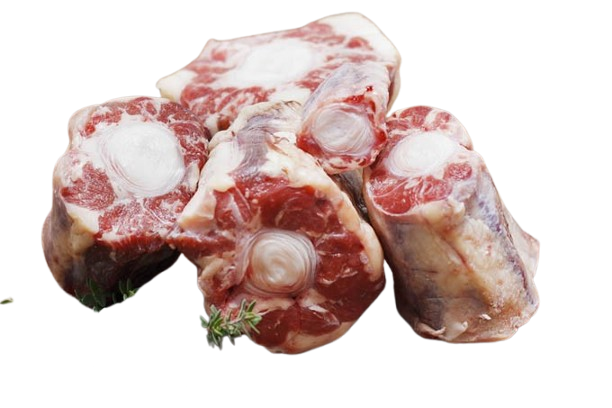
Oxtail is the culinary name for the tail of cattle. Originally, it came from the tail of an ox, but today it comes from the tail of either gender of beef cattle. The tail is cut into short, disc-like sections, which reveals the tailbone in the center surrounded by meat, fat, and a large amount of connective tissue. A 100 g (3.5 oz) serving of raw oxtail contains 354 calories. The oxtail macros for this portion include 29.9 g of fat and 20.0 g of protein, with 0 g of carbohydrates.
Explore More Meat
Discover more Meat with detailed nutrition facts, calorie counts, vitamins, minerals, and health benefits. Compare similar foods, serving sizes, macronutrients, and key nutrients to find the best option for your diet and nutrition goals.
 Bacon calories
 Beef calories
 Beef Brisket calories
 Beef Chuck calories
 Beef Jerky calories
 Beef Liver calories
 Beef Short Ribs calories
 Beef Tenderloin calories
 Beef Tongue calories
 Bison calories
 Buffalo Meat calories
 Chicken calories