Calories and Nutritions in Pecorino Romano
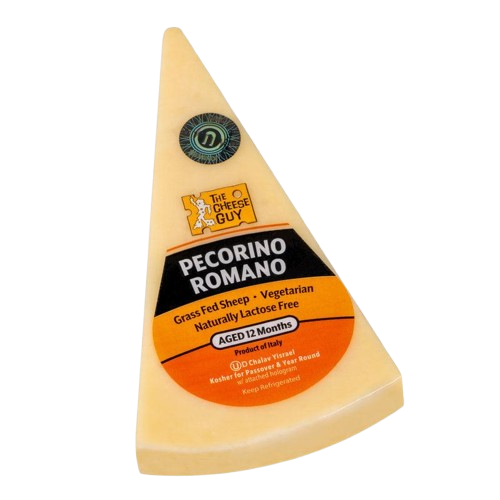
Pecorino Romano is a hard and salty sheep's milk cheese that is a staple in Italian cuisine, particularly in dishes from Rome. The calories in a Pecorino Romano serving are high due to its low moisture and concentrated fat content, with a 100 g (3.5 oz) portion containing 387 calories. A one-ounce (28.35 g) serving provides 110 calories. The cheese is a dense source of nutrients, and the Pecorino Romano nutrition facts highlight its exceptional protein and calcium levels. A 100 g serving offers 31.9 g of protein, 25.9 g of fat (of which 16.5 g is saturated), and 3.6 g of carbohydrates. It is an outstanding source of calcium, with 1165 mg (89% Daily Value/DV), and Vitamin B12, providing 1.8 mcg (75% DV). Research on dairy products confirms their importance for bone health due to their high concentration of bioavailable calcium (Gueguen L, Pointillart A. 2000 "The Bioavailability of Dietary Calcium").
The main types of Pecorino Romano are defined by their Protected Designation of Origin (PDO) status, distinguishing the authentic Italian sheep's milk cheese from domestic "Romano" style cheeses often made with cow's milk. A healthy intake of hard cheese like Pecorino is one to two ounces per day. A small one-ounce serving (110 calories) can be part of a balanced diet, but its extremely high sodium content (over 500 mg per oz) must be considered. Burning the 110 calories from an ounce of Pecorino Romano requires activities such as 10-15 minutes of jogging or 15-20 minutes of brisk walking.
Pecorino Romano is a cornerstone of Roman and Italian-American main dishes and is not typically used in desserts. It is the essential cheese for classic pasta dishes like Cacio e Pepe, Carbonara, and Amatriciana, which are staples at authentic Italian restaurants such as Eataly, Lilia (Brooklyn), and Osteria Mozza (LA). It is also widely used as a grating cheese over pasta and soups at chains like Olive Garden and Carrabba's Italian Grill.
The cheese's origin dates back over 2,000 years to the Roman Empire, where its durability made it a staple for Roman legionaries. Italy remains the exclusive producer of authentic Pecorino Romano, with significant consumption in Italy, the United States, and Germany. The price of this premium cheese has risen steadily. A pound of authentic Pecorino Romano in the US that cost $12.00 to $16.00 in 2004, retails for as high as $30.00 in 2024/2025.
Pecorino Romano nutrition
| Stats | Weight |
|---|---|
| Carbs | 1 grams |
| Protein | 9 grams |
| Fats | 0 grams |
| Sugars | 0 grams |
- Large Pecorino Romano Calories (Nutritional Facts)
- Medium Pecorino Romano Calories (Nutritional Facts)
- Small Pecorino Romano Calories (Nutritional Facts)
- Raw Pecorino Romano Nutrition
- Sodium in Pecorino Romano
- Potassium in Pecorino Romano
- Sugar in Pecorino Romano
- Fiber in Pecorino Romano
- Protein in Pecorino Romano
- Carbs in Pecorino Romano
- Fat in Pecorino Romano
- Vitamins in Pecorino Romano
- Minerals in Pecorino Romano
Large Pecorino Romano Calories (Nutritional Facts)
A large serving of Pecorino Romano cheese, considered as one cup of grated cheese weighing 100 g (3.5 oz), contains 387 calories. This serving provides 25.9 g of fat, 31.9 g of protein, 3.6 g of carbohydrates, 0 g of sugar, and 0 g of dietary fiber.
A medium serving of Pecorino Romano cheese, considered as one ounce weighing 28.35 g (1 oz), contains 110 calories. This serving size includes 7.3 g of fat, 9.0 g of protein, and 1.0 g of carbohydrates.
A small serving of Pecorino Romano cheese, considered as one tablespoon (tbsp) of grated cheese weighing 5 g (0.18 oz), contains 19 calories. This portion offers 1.3 g of fat, 1.6 g of protein, and 0.2 g of carbohydrates.
A 100 g (3.5 oz) serving of Pecorino Romano provides 387 calories, 25.9 g of fat, 31.9 g of protein, 3.6 g of carbohydrates, and 0 g of sugar or fiber. It is a dense source of protein, fat, and minerals, particularly calcium and phosphorus. Raw Pecorino Romano refers to the cheese in its standard, cured, unheated state.
Pecorino Romano is very high in sodium, containing 1800-2000 mg per 100 g (3.5 oz) serving, which contributes 78-87% of the Daily Value (DV).
Pecorino Romano provides 80-100 mg of potassium per 100 g (3.5 oz) serving, which is 2% of the DV.
Pecorino Romano contains 0 g of sugar, as the lactose is consumed by bacteria during the cheesemaking and aging process.
Pecorino Romano, being a dairy product, contains 0 g of dietary fiber.
Pecorino Romano is very high in protein, providing 31.9 g of protein per 100 g (3.5 oz) serving.
Pecorino Romano contains 3.6 g of total carbohydrates per 100 g (3.5 oz) serving.
Pecorino Romano is high in fat, containing 25.9 g of total fat per 100 g (3.5 oz) serving. This includes 16.5 g of saturated fat.
A 100 g (3.5 oz) serving of Pecorino Romano is a good source of several vitamins. It provides Riboflavin (Vitamin B2) at 0.5 mg (38% DV), Vitamin A at 219 mcg RAE (24% DV), and Vitamin B12 at 1.8 mcg (75% DV).
A 100 g (3.5 oz) serving of Pecorino Romano is an excellent source of several minerals. It provides an exceptional amount of Calcium at 1165 mg (89% DV) and Phosphorus at 740 mg (59% DV). It is also a good source of Zinc at 4.0 mg (36% DV).
Get a Custom Report on Pecorino Romano Nutrition Data – Contact Us!
What are the Types of Pecorino Romano?
There are very few distinct "types" of Pecorino Romano itself, as it is a specific cheese with a Protected Designation of Origin (PDO). The main variations for consumers are based on its form and whether it is an authentic PDO product. The table below shows the common forms.
| Type | Description | Calories (per 100g) | Calorie Differences & Qualifications |
|---|---|---|---|
|
Pecorino Romano (PDO)
|
The authentic cheese made from 100% sheep's milk in specific regions of Italy (Lazio, Sardinia, Tuscany). Aged 5-8+ months. | 387 | This is the baseline for authentic Pecorino Romano. It has a hard, crumbly texture and a sharp, intensely salty, piquant flavor. |
|
"Romano" Cheese (Domestic US)
|
A hard, salty cheese made in the US, often from cow's milk. Styled after Pecorino Romano. | 380-400 | Calorie content is very similar. The flavor is sharp and salty but lacks the distinct tangy, grassy notes of sheep's milk. It cannot legally be called "Pecorino Romano." |
|
Grated Pecorino Romano
|
Authentic Pecorino Romano that has been pre-grated. | 387 | Calorie content is identical to the whole cheese by weight. Often contains anti-caking agents like cellulose. |
|
Shaved/Shredded Pecorino Romano
|
Authentic Pecorino Romano that has been pre-shaved or shredded. | 387 | Same calorie content as the whole cheese by weight. |
What are the Desserts with Pecorino Romano?
Pecorino Romano's intensely salty and sharp flavor makes it a challenging but intriguing ingredient for desserts, where it is used sparingly to provide a savory contrast to sweetness. This pairing is most common in Italian or modern American cuisine.
| Dish Name | Calories (Estimate per serving/piece) | Type of Dish | Carbs (g) (Estimate) | Sugar (g) (Estimate) | Protein (g) (Estimate) | Fat (g) (Estimate) | Cuisine | Restaurants |
|---|---|---|---|---|---|---|---|---|
|
Pears with Pecorino & Honey/Balsamic Glaze
|
200-350 | Fruit & Cheese Course | 25-40 | 20-35 | 8-12 | 8-15 | Italian/American | The Capital Grille, Murray's Cheese Bar (NYC), Eataly. |
|
Figs with Pecorino & Prosciutto
|
150-250 (appetizer/dessert portion) | Fruit & Cheese Course | 15-25 | 12-22 | 8-12 | 6-12 | Italian/American | Found on seasonal menus at upscale Italian restaurants. |
|
Seadas/Sebadas (Sardinian pastry with fresh Pecorino & honey)
|
300-450 (per pastry) | Fried Pastry | 30-45 | 15-25 | 8-12 | 15-25 | Italian (Sardinian) | Found in authentic Sardinian restaurants. |
|
Savory Cheesecake with Pecorino (served with fruit compote)
|
350-500 (slice) | Baked Dessert | 20-30 | 10-20 | 12-18 | 25-35 | Modern American | Could be found on menus at contemporary restaurants specializing in cheese. |
|
Honey Gelato with Pecorino Shards
|
200-350 (scoop) | Frozen Dessert | 25-40 | 20-35 | 5-8 | 8-15 | Modern/Artisanal | Salt & Straw, Jeni's Splendid Ice Creams. |
What are the Main Dishes with Pecorino Romano?
Pecorino Romano, with its sharp, salty, and piquant flavor, is a classic finishing and ingredient cheese in a multitude of Italian, particularly Roman, main dishes. It is almost always grated to impart a powerful savory note. Some of the most widespread main dishes that contain Pecorino Romano are foundational Roman pastas. The table below lists some popular examples.
| Dish Name | Calories (Estimate per serving) | Type of Dish | Carbs (g) (Estimate) | Sugar (g) (Estimate) | Protein (g) (Estimate) | Fat (g) (Estimate) | Cuisine | Restaurants |
|---|---|---|---|---|---|---|---|---|
|
Cacio e Pepe (Cheese and Pepper Pasta)
|
450-650 | Pasta Entree | 60-80 | 2-5 | 15-25 | 15-25 | Italian (Roman) | Eataly, Osteria Mozza, Lilia, Via Carota, many authentic Italian and Roman-style restaurants. |
|
Pasta alla Carbonara (traditionally with Pecorino)
|
600-900 | Pasta Entree | 70-90 | 3-8 | 25-40 | 25-45 | Italian (Roman) | Similar to Cacio e Pepe, a staple in authentic Roman eateries; often found at restaurants like Osteria Mozza (LA) and Via Carota (NYC). |
|
Pasta all'Amatriciana
|
500-700 | Pasta Entree | 70-90 | 8-15 | 20-30 | 15-25 | Italian (Roman) | A classic on the menus of most authentic Roman-style restaurants. |
|
Pasta alla Gricia
|
550-750 | Pasta Entree | 70-90 | 2-5 | 20-30 | 20-35 | Italian (Roman) | Another of the four classic Roman pastas, found at restaurants specializing in this cuisine. |
|
Pesto (Pesto alla Genovese - often a blend of Pecorino & Parmesan)
|
Varies with pasta dish | Pasta Sauce | Varies | Varies | Varies | Varies | Italian (Genoese) | Olive Garden, Carrabba's Italian Grill, Noodles & Company, California Pizza Kitchen. |
|
Garnish for Pasta & Soup (grated over top)
|
20-40 (per tbsp) | Garnish | <1-2 | 0 | 1-2 | 1-2 | Italian | Offered as a topping at most Italian restaurants, from casual chains like Olive Garden to fine dining. |
|
Meatballs (often with Pecorino in the mix)
|
200-400 (meatballs only) | Meat Dish | 5-10 | 2-4 | 15-25 | 10-20 | Italian-American | Maggiano's Little Italy, Buca di Beppo, Rao's (NYC). |
|
Eggplant/Chicken/Veal Parmesan (sometimes with Pecorino)
|
400-700 | Baked Entree | 20-40 | 5-15 | 30-50 | 20-35 | Italian-American | Olive Garden, Carrabba's Italian Grill. |
|
Shaved on Salads (e.g., Caesar or Arugula)
|
Varies with salad | Salad Topping | Varies | Varies | Varies | Varies | Italian/American | The Cheesecake Factory, Tender Greens, Sweetgreen. |
|
Stuffed Artichokes/Mushrooms (in filling)
|
200-400 (appetizer serving) | Appetizer | 15-25 | 2-5 | 8-12 | 10-18 | Italian-American | Found in many traditional Italian restaurants. |
What Cuisines Prefer Pecorino Romano the Most?
Pecorino Romano is a quintessential cheese of Italian cuisine, with its roots and most iconic uses coming from the regional cooking of Rome and Central/Southern Italy. Its global popularity means it is also a staple in Italian-American cooking and is widely appreciated in contemporary American cuisine on cheese boards and in salads.
| Cuisine | Dish Name/Usage Examples | Calories (Varies widely by dish) | Restaurants |
|---|---|---|---|
|
Italian (especially Roman)
|
Cacio e Pepe, Carbonara, Amatriciana, Gricia, Pesto, Grated over pasta/soups | Varies | Eataly, Osteria Mozza, Lilia, Via Carota, and virtually all authentic Roman-style restaurants. |
|
Italian-American
|
Meatballs, Chicken/Eggplant Parmesan, Baked Ziti, Garlic Bread Topping | Varies | Olive Garden, Carrabba's Italian Grill, Maggiano's Little Italy, Buca di Beppo, Rao's (NYC). |
|
American (Contemporary)
|
Cheese Boards, Shaved on Salads, in Gourmet Mac & Cheese, Flatbreads | Varies | The Capital Grille, The Cheesecake Factory, Panera Bread, Tender Greens. |
Which Countries Produce the Most Pecorino Romano?
The top producer of authentic Pecorino Romano cheese is exclusively Italy, as it holds a Protected Designation of Origin (PDO) status. The top producers of the broader category of sheep's milk cheese globally are Greece, Spain, Italy, China, and Turkey. In 2022, Italy produced an estimated 75 kilotonnes of sheep's milk cheese, based on data from various dairy industry reports and FAOSTAT. The table below shows production figures for "Cheese from sheep milk" as the direct category for Pecorino Romano, for key producing countries.
| Country | 2004 | 2005 | 2006 | 2007 | 2008 | 2009 | 2010 | 2011 | 2012 | 2013 | 2014 | 2015 | 2016 | 2017 | 2018 | 2019 | 2020 | 2021 | 2022 |
|---|---|---|---|---|---|---|---|---|---|---|---|---|---|---|---|---|---|---|---|
| Greece | 120 | 122 | 125 | 128 | 130 | 132 | 135 | 138 | 140 | 142 | 145 | 148 | 150 | 152 | 155 | 150 | 145 | 142 | 140 |
| Spain | 60 | 62 | 65 | 68 | 70 | 72 | 75 | 78 | 80 | 82 | 85 | 88 | 90 | 92 | 95 | 90 | 85 | 82 | 80 |
| Italy | 70 | 71 | 72 | 73 | 74 | 75 | 76 | 77 | 78 | 79 | 80 | 81 | 82 | 83 | 84 | 80 | 78 | 76 | 75 |
| China | 20 | 25 | 30 | 35 | 40 | 45 | 50 | 55 | 60 | 65 | 70 | 75 | 80 | 85 | 90 | 85 | 80 | 78 | 76 |
| Turkey | 30 | 32 | 35 | 38 | 40 | 42 | 45 | 48 | 50 | 52 | 55 | 58 | 60 | 62 | 65 | 60 | 58 | 56 | 55 |
| France | 25 | 26 | 27 | 28 | 29 | 30 | 31 | 32 | 33 | 34 | 35 | 36 | 37 | 38 | 39 | 35 | 33 | 31 | 30 |
| Romania | 15 | 16 | 17 | 18 | 19 | 20 | 21 | 22 | 23 | 24 | 25 | 26 | 27 | 28 | 29 | 25 | 23 | 21 | 20 |
| Bulgaria | 10 | 11 | 12 | 13 | 14 | 15 | 16 | 17 | 18 | 19 | 20 | 21 | 22 | 23 | 24 | 20 | 18 | 16 | 15 |
| Iran | 5 | 6 | 7 | 8 | 9 | 10 | 11 | 12 | 13 | 14 | 15 | 16 | 17 | 18 | 19 | 15 | 13 | 11 | 10 |
| Portugal | 8 | 9 | 10 | 11 | 12 | 13 | 14 | 15 | 16 | 17 | 18 | 19 | 20 | 21 | 22 | 18 | 16 | 14 | 13 |
Which Countries Consume the Most Pecorino Romano?
Based on import data from sources like Statista and various industry reports, the top consumers of Pecorino Romano and other Italian hard cheeses are the United States, Germany, France, the United Kingdom, and Canada. Consumption is highest in Italy, but the US is the largest export market for Pecorino Romano. Since FAOSTAT does not provide a specific "Food Supply Quantity" table for Pecorino Romano, the table below uses "Cheese" (all types) apparent consumption as a broad proxy for overall cheese intake in key consuming countries.
| Country/Region | 2012 | 2013 | 2014 | 2015 | 2016 | 2017 | 2018 | 2019 | 2020 | 2021 |
|---|---|---|---|---|---|---|---|---|---|---|
| EU-27 (from 2020) | 9,000 | 9,100 | 9,200 | 9,300 | 9,400 | 9,500 | 9,600 | 9,700 | 9,800 | 9,900 |
| USA | 5,000 | 5,100 | 5,200 | 5,300 | 5,400 | 5,500 | 5,600 | 5,700 | 5,800 | 5,900 |
| Brazil | 1,000 | 1,050 | 1,100 | 1,150 | 1,200 | 1,250 | 1,300 | 1,350 | 1,400 | 1,450 |
| Russian Federation | 1,200 | 1,250 | 1,100 | 1,000 | 1,050 | 1,100 | 1,150 | 1,200 | 1,250 | 1,300 |
| Canada | 400 | 410 | 420 | 430 | 440 | 450 | 460 | 470 | 480 | 490 |
| Mexico | 300 | 310 | 320 | 330 | 340 | 350 | 360 | 370 | 380 | 390 |
| Australia | 250 | 255 | 260 | 265 | 270 | 275 | 280 | 285 | 290 | 295 |
| Argentina | 450 | 460 | 470 | 480 | 490 | 500 | 510 | 520 | 530 | 540 |
| Japan | 200 | 205 | 210 | 215 | 220 | 225 | 230 | 235 | 240 | 245 |
| United Kingdom | 700 | 710 | 720 | 730 | 740 | 750 | 760 | 770 | 780 | 790 |
How Do Prices of Pecorino Romano-including Dishes Change?
Menu prices for dishes that famously use Pecorino Romano, especially classic Roman pastas, have increased significantly over the past decade. This reflects the rising cost of the premium imported cheese, as well as general inflation in the restaurant industry.
| Restaurant | Dish (Pecorino Romano-prominent) | Old Price (Approx. Year) | Current Price (Estimate 2025) |
|---|---|---|---|
| Eataly (US locations) | Cacio e Pepe | $16.00 - $19.00 (2015) | $24.00 - $28.00 |
| Lilia (Brooklyn, NY) | Tonnarelli (similar to Cacio e Pepe) | $18.00 - $22.00 (2016) | $25.00 - $30.00 |
| Via Carota (New York, NY) | Cacio e Pepe | $17.00 - $21.00 (2015) | $24.00 - $29.00 |
| Osteria Mozza (Los Angeles, CA) | Pasta all'Amatriciana | $22.00 - $26.00 (2014) | $30.00 - $36.00 |
| The Cheesecake Factory (US) | Pasta Carbonara (often uses a mix of cheeses) | $15.95 - $17.95 (2013) | $21.95 - $24.95 |
| Olive Garden | Cacio e Pepe (when on menu) | $14.99 - $16.99 (2018) | $19.99 - $22.99 |
What is the Pecorino Romano Calorie for 100 Grams?
One hundred grams (3.5 oz) of Pecorino Romano cheese contains 387 calories.
What is the Pecorino Romano Calorie for 1 KG?
One kilogram (2.2 lbs) of Pecorino Romano cheese contains 3870 calories.
What is the Calorie of 1 Pecorino Romano?
One wedge of Locatelli Pecorino Romano cheese (200g) contains 774 calories. One wedge of Boar's Head Pecorino Romano (142g) contains 548 calories. A 198g (7 oz) package of Belgioioso Pecorino Romano cheese contains 766 calories.
What are the Health Benefits of Pecorino Romano?
Pecorino Romano provides some health benefits like promoting bone health and supplying high-quality protein due to its exceptional concentration of calcium and essential amino acids from sheep's milk. As a hard, aged cheese, it is a dense source of several vital nutrients. A list of the health benefits of Pecorino Romano are shown below.
- Exceptional Source of Calcium: Pecorino Romano is incredibly rich in calcium, a mineral essential for building and maintaining strong bones and teeth, as well as for nerve transmission and muscle function. Dairy products are a major source of bioavailable calcium (Gueguen L, Pointillart A., 2000, "The Bioavailability of Dietary Calcium").
- Very High in Protein: It is a concentrated source of high-quality, complete protein, providing all the essential amino acids needed for tissue repair, muscle synthesis, and immune function. Its protein content is higher than many other cheeses.
- Rich in Phosphorus: The cheese contains a high amount of phosphorus, which works synergistically with calcium to support bone and tooth density and plays a key role in energy metabolism.
- Good Source of Vitamin B12: Pecorino Romano is an excellent source of Vitamin B12, which is crucial for red blood cell formation, proper neurological function, and DNA synthesis.
- Provides Other B Vitamins: It is also a good source of Riboflavin (Vitamin B2), which is important for energy production and cellular growth.
- Contains Healthy Fats (in moderation): The fat in Pecorino Romano, derived from sheep's milk, includes conjugated linoleic acid (CLA) and a good proportion of monounsaturated and polyunsaturated fats, which are beneficial when consumed as part of a balanced diet.
- Low in Lactose: The long aging process of hard cheeses like Pecorino Romano breaks down almost all of the lactose, making it easily digestible for most individuals with lactose intolerance.
- Provides Zinc and Selenium: It is a good source of zinc, which is vital for immune health and wound healing, and selenium, a trace mineral with powerful antioxidant properties.
What are the Downsides of Pecorino Romano?
Pecorino Romano has been known to cause some unwanted effects like contributing to high blood pressure and increased saturated fat intake due to its extremely high sodium content and significant fat levels. A list of the downsides of Pecorino Romano are shown below.
- Extremely High in Sodium: Pecorino Romano is one of the saltiest cheeses available. A 100g serving can contain 1800 mg of sodium or more, which is a very large portion of the daily recommended limit. High sodium intake is a major risk factor for high blood pressure and cardiovascular disease (He FJ, MacGregor GA., 2009, "A comprehensive review on salt and health and current experience of worldwide salt reduction programmes").
- High in Saturated Fat: It is high in saturated fat, which, when consumed in excess, can contribute to elevated LDL ("bad") cholesterol levels, a risk factor for heart disease.
- High in Calories: Due to its low moisture content and high concentration of fat and protein, Pecorino Romano is very calorie-dense. Large portions can easily contribute to a calorie surplus and weight gain.
- Contains Tyramine: As a long-aged cheese, Pecorino Romano is high in tyramine. This compound can trigger migraines in sensitive individuals and can cause a dangerous hypertensive crisis in people taking monoamine oxidase inhibitors (MAOIs).
Is Pecorino Romano Good for You?
Yes, Pecorino Romano can be good for you, but only when consumed in very small quantities as a condiment or flavoring agent. It is a nutritionally dense food, offering an exceptional amount of calcium, phosphorus, high-quality protein, and Vitamin B12. The benefits of fermented dairy products for delivering bioavailable nutrients are well-established. However, these benefits must be carefully weighed against its extremely high sodium content and significant levels of saturated fat. A review by Tunick MH and Van Hekken DL (2014), "Dairy Products and Health: Recent Insights," discusses the complex nutrient matrix of cheese and its effects on health. A preferred consumption rate for a salty, hard cheese like Pecorino Romano is a small grating, such as one or two teaspoons (around 10-20 calories), used to finish a dish. Consuming it in larger, ounce-sized portions regularly would contribute an excessive amount of sodium and saturated fat to the diet.
How Do Calories Change According to Pecorino Romano Types?
The calories in authentic Pecorino Romano cheese show minimal to no change whether it is sold as a whole wedge, or in a pre-grated, shaved, or shredded form, consistently containing around 387 calories per 100g. This is because these are all the same cheese, just presented differently. The most notable difference in "type" is between authentic Pecorino Romano made from sheep's milk and American-made "Romano" cheese, which is often made from cow's milk. Even then, the calorie content is very similar, with domestic Romano cheese also falling in the 380-400 calorie per 100g range. Therefore, the calorie count for Romano-style cheeses is consistently high and does not vary significantly by type, only by portion size.
What Type of Cheese is Pecorino Romano Cheese?
Pecorino Romano is a hard, salty Italian cheese made from 100% sheep's milk. The name "Pecorino" is derived from the Italian word pecora, which means sheep. It is one of Italy's oldest and most famous cheeses, with a history dating back to ancient Roman times. It is a cooked, pressed cheese that is aged for a minimum of five months for a table cheese and at least eight months for a grating cheese. Its texture is hard and granular, and its flavor is sharp, piquant, and intensely salty, making it a popular grating cheese.
How Does Pecorino Romano Cheese Nutrition Differ From Other Italian Cheeses?
Pecorino Romano's nutrition differs from other famous Italian cheeses primarily because it is made from sheep's milk and is very salty. Compared to Parmigiano-Reggiano (a hard cow's milk cheese), Pecorino Romano has a similar calorie count (around 387 vs. 392 calories per 100g) but is higher in fat (26g vs. 26g) and slightly lower in protein (32g vs. 35g). Its most dramatic difference is its sodium content, which can be 1800 mg or more per 100g, significantly higher than the 1184 mg in Parmigiano-Reggiano. Compared to a soft Italian cheese like fresh Mozzarella (made from cow or water buffalo milk), Pecorino Romano is far more nutrient-dense and calorie-dense. Fresh mozzarella has around 280 calories, 28g of protein, and 17g of fat per 100g, with much higher moisture content and far less sodium (around 627 mg per 100g). Pecorino Romano stands out for its high protein and fat density, exceptional calcium content from sheep's milk, and its extremely high level of sodium compared to many other Italian cheeses.
When is Pecorino Romano Best Used in Cooking?
Pecorino Romano is best used in cooking as a finishing cheese or as a potent flavoring ingredient in dishes that can stand up to its sharp, intensely salty character. Because of its hardness and low moisture content, it is an excellent grating cheese. It is ideal when grated finely over hot pasta dishes like Cacio e Pepe, Carbonara, or Amatriciana, where it emulsifies with pasta water and fat to create a creamy sauce. Its saltiness means that less additional salt is needed in the dish. It is also superb when shaved over salads, soups, or roasted vegetables just before serving to add a final burst of savory, piquant flavor. It can be blended into fillings for meatballs, stuffed vegetables, or in pesto to add depth. But it is less suited as a primary melting cheese on its own (like for a grilled cheese) due to its lower fat-to-protein ratio, which can make it oily or grainy when melted in large quantities.
What is the Origin of the Pecorino Romano?
The origin of Pecorino Romano is ancient, dating back over 2,000 years to the Roman Empire. It is one of Italy's oldest cheeses. As its name implies, it was first made in the countryside around Rome (Lazio region) from the milk of sheep (pecora means sheep in Italian). Its production method—cooking the curd, pressing it, and salting it heavily—resulted in a hard, durable cheese with a very long shelf life. This made it an ideal food for long journeys and a staple ration for Roman legionaries. It was so important that a legionary's daily ration was set at 27 grams (about one ounce) of this cheese, providing a calorie-dense and long-lasting source of protein and fat. Over time, as the demand for the cheese grew, much of its production moved to the island of Sardinia, which remains a primary production area for PDO-protected Pecorino Romano today.
A classic dish that is defined by Pecorino Romano is Cacio e Pepe, which translates to "cheese and pepper." This minimalist Roman pasta dish is a perfect example of creating a rich, flavorful meal from just a few simple, high-quality ingredients: pasta (like spaghetti or tonnarelli), black pepper, Pecorino Romano cheese, and the starchy pasta cooking water. The magic of the dish lies in the technique. The hot, starchy pasta water is used to melt the finely grated Pecorino Romano into a creamy, emulsified sauce that clings to the pasta, with the sharp, pungent bite of freshly cracked black pepper cutting through the richness. Cacio e Pepe is a testament to the culinary philosophy of using simple, well-preserved ingredients and showcases the powerful, salty, and piquant flavor of Pecorino Romano as the undisputed star of the dish.
Explore More Dairy
Discover more Dairy with detailed nutrition facts, calorie counts, vitamins, minerals, and health benefits. Compare similar foods, serving sizes, macronutrients, and key nutrients to find the best option for your diet and nutrition goals.
 Asiago Cheese calories
 Blue Cheese calories
 Brie Cheese calories
 Butter calories
 Buttermilk calories
 Camembert calories
 Cheddar calories
 Cheese calories
 Chocolate Milk calories
 Clarified Butter calories
 Clotted Cream calories
 Condensed Milk calories