Calories and Nutritions in Picanha
Calories in picanha depend on the cooking method and preparation. A 100g serving of cooked picanha contains 235 calories, while 100g of raw picanha has 153 calories. A large cooked fillet (150g) contains 353 calories, while a medium cooked fillet (120g) has 282 calories. Picanha nutrition facts for a 100g serving (cooked) include 27g of protein (54% DV), 13g of fat (17% DV), 0g of carbohydrates, and 65mg of sodium (3% DV). Picanha is a rich source of high-quality protein, which is essential for muscle repair and growth (Paddon-Jones, D., & Rasmussen, B. B., 2009). Picanha provides essential nutrients like iron, zinc, and vitamin B12. There is no official recommended daily consumption for picanha, but a moderate intake of 85g to 170g (3oz to 6oz) per serving is a reasonable amount. A 100g serving of cooked picanha has 235 calories, which can be burned by doing 24-30 minutes of running or 45 minutes of cycling.
The types of picanha are defined by the cattle's diet, such as grain-fed or grass-fed, and whether the fat cap is trimmed. Brazil and the United States are the top producers and consumers of beef, including picanha. The price of picanha has risen from $4.00-$6.00 per pound in the early 2000s to $10.00-$18.00 in 2024. Picanha is the signature dish at Brazilian churrascarias like Fogo de Chão and Texas de Brazil, where it is served churrasco-style.
Picanha nutrition
| Stats | Weight |
|---|---|
| Carbs | 0 grams |
| Protein | 28 grams |
| Fats | 0 grams |
| Sugars | 0 grams |
- Picanha Steak Calories (Nutritional Facts)
- Raw Picanha Nutrition
- Sodium in Picanha
- Potassium in Picanha
- Sugar in Picanha
- Fiber in Picanha
- Protein in Picanha
- Carbs in Picanha
- Fat in Picanha
- Vitamins in Picanha
- Minerals in Picanha
Picanha Steak Calories (Nutritional Facts)
A 100g (3.53oz) serving of cooked picanha steak contains 235 calories, 27g of protein, 13g of fat, 0g of carbohydrates, and 65mg of sodium. A large fillet (150g) of cooked picanha steak has 353 calories, 41g of protein, 20g of fat, 0g of carbohydrates, and 98mg of sodium. A medium fillet (120g) has 282 calories, 32g of protein, 16g of fat, 0g of carbohydrates, and 78mg of sodium. A small fillet (80g) has 188 calories, 22g of protein, 10g of fat, 0g of carbohydrates, and 52mg of sodium. A palm-sized portion (100g) has 235 calories, 27g of protein, 13g of fat, 0g of carbohydrates, and 65mg of sodium.
A 100g (3.53oz) serving of picanha raw contains 153 calories, 21g of protein, 7g of fat, 0g of carbohydrates, and 55mg of sodium. A large fillet (150g) of raw picanha has 230 calories, 32g of protein, 11g of fat, 0g of carbohydrates, and 83mg of sodium. A medium fillet (120g) has 184 calories, 25g of protein, 8g of fat, 0g of carbohydrates, and 66mg of sodium. A small fillet (80g) has 122 calories, 17g of protein, 6g of fat, 0g of carbohydrates, and 44mg of sodium. A palm-sized portion (100g) has 153 calories, 21g of protein, 7g of fat, 0g of carbohydrates, and 55mg of sodium.
A 100g (3.53oz) serving of cooked picanha contains 65mg of sodium (3% DV). A large cooked fillet (150g) has 98mg of sodium (4% DV). A medium cooked fillet (120g) has 78mg of sodium (3% DV). A small cooked fillet (80g) has 52mg of sodium (2% DV). A palm-sized cooked portion (100g) has 65mg of sodium (3% DV). A 100g serving of raw picanha contains 55mg of sodium (2% DV).
A 100g (3.53oz) serving of cooked picanha contains 350mg of potassium (7% DV). A large cooked fillet (150g) has 525mg of potassium (11% DV). A medium cooked fillet (120g) has 420mg of potassium (9% DV). A small cooked fillet (80g) has 280mg of potassium (6% DV). A palm-sized cooked portion (100g) has 350mg of potassium (7% DV). A 100g serving of raw picanha contains 310mg of potassium (7% DV).
A 100g (3.53oz) serving of cooked picanha contains 0g of sugar. A large (150g), medium (120g), small (80g), or palm-sized (100g) portion of cooked picanha also contains 0g of sugar. Raw picanha also contains 0g of sugar per 100g serving.
A 100g (3.53oz) serving of cooked picanha contains 0g of fiber. A large (150g), medium (120g), small (80g), or palm-sized (100g) portion of cooked picanha also contains 0g of fiber. Raw picanha also contains 0g of fiber per 100g serving.
A 100g (3.53oz) serving of cooked picanha contains 27g of protein (54% DV). A large cooked fillet (150g) has 41g of protein (82% DV). A medium cooked fillet (120g) has 32g of protein (64% DV). A small cooked fillet (80g) has 22g of protein (44% DV). A palm-sized cooked portion (100g) has 27g of protein (54% DV). A 100g serving of raw picanha contains 21g of protein (42% DV).
A 100g (3.53oz) serving of cooked picanha contains 0g of carbohydrates. A large (150g), medium (120g), small (80g), or palm-sized (100g) portion of cooked picanha also contains 0g of carbohydrates. Raw picanha also contains 0g of carbohydrates per 100g serving.
A 100g (3.53oz) serving of cooked picanha contains 13g of fat (17% DV). A large cooked fillet (150g) has 20g of fat (26% DV). A medium cooked fillet (120g) has 16g of fat (21% DV). A small cooked fillet (80g) has 10g of fat (13% DV). A palm-sized cooked portion (100g) has 13g of fat (17% DV). A 100g serving of raw picanha contains 7g of fat (9% DV).
A 100g (3.53oz) serving of cooked picanha contains 0.1mg of thiamin (8% DV), 0.2mg of riboflavin (15% DV), 5.5mg of niacin (34% DV), 0.5mg of vitamin B6 (29% DV), and 2.5µg of vitamin B12 (104% DV). A large cooked fillet (150g) has 0.8mg of vitamin B6 (44% DV) and 3.8µg of vitamin B12 (158% DV). A medium cooked fillet (120g) has 0.6mg of vitamin B6 (35% DV) and 3.0µg of vitamin B12 (125% DV). A small cooked fillet (80g) has 0.4mg of vitamin B6 (23% DV) and 2.0µg of vitamin B12 (83% DV). A palm-sized cooked portion (100g) has 0.5mg of vitamin B6 (29% DV) and 2.5µg of vitamin B12 (104% DV). A 100g serving of raw picanha contains 0.1mg of thiamin (8% DV), 0.2mg of riboflavin (15% DV), 5.2mg of niacin (33% DV), 0.4mg of vitamin B6 (24% DV), and 2.3µg of vitamin B12 (96% DV).
A 100g (3.53oz) serving of cooked picanha contains 4.1mg of iron (23% DV), 28mg of magnesium (7% DV), 230mg of phosphorus (18% DV), and 5.2mg of zinc (47% DV). A large cooked fillet (150g) has 6.2mg of iron (34% DV) and 7.8mg of zinc (71% DV). A medium cooked fillet (120g) has 4.9mg of iron (27% DV) and 6.2mg of zinc (56% DV). A small cooked fillet (80g) has 3.3mg of iron (18% DV) and 4.2mg of zinc (38% DV). A palm-sized cooked portion (100g) has 4.1mg of iron (23% DV) and 5.2mg of zinc (47% DV). A 100g serving of raw picanha contains 3.5mg of iron (19% DV), 25mg of magnesium (6% DV), 200mg of phosphorus (16% DV), and 4.5mg of zinc (41% DV).
Get a Custom Report on Picanha Nutrition Data – Contact Us!
What are the Types of Picanhas?
The types of Picanhas are distinguished by the cattle's diet and the way the meat is prepared, not by different botanical or animal varieties. The table below discusses these forms further:
| Type | Description | Calories (per 100g cooked) | Calorie Qualifications |
|---|---|---|---|
|
Grain-Fed Picanha
|
From cattle raised on a diet primarily of corn and soy. Tends to have more marbling and a milder, buttery flavor. | 245 | Higher in calories and total fat, particularly saturated fat, due to increased intramuscular fat (marbling). |
|
Grass-Fed Picanha
|
From cattle raised on a diet of grass and forage. Leaner with a more pronounced beefy flavor. | 225 | Lower in calories and total fat. Contains a higher proportion of healthy fats like omega-3s and CLA. |
|
Picanha with Fat Cap
|
The traditional preparation where the thick layer of fat (fat cap) is left on during cooking. | 235 (average) | Calorie count is an average. The fat cap adds a significant amount of calories and flavor. The final calorie intake depends on how much fat is eaten. |
|
Picanha with Fat Cap Trimmed
|
A preparation where the fat cap is removed before cooking. | 190 | Significantly lower in calories and saturated fat because the primary source of fat has been removed. |
What are the Desserts with Picanha?
Picanha is a savory cut of beef and is not used in desserts. Traditional Brazilian desserts are the perfect pairing to follow a picanha-focused meal. The table below details some common desserts served after picanha.
| Dish Name | Calories (Estimate per serving) | Description | Carbs (g) (Estimate) | Sugar (g) (Estimate) | Protein (g) (Estimate) | Fat (g) (Estimate) | Cuisine | Restaurants |
|---|---|---|---|---|---|---|---|---|
|
Pudim de Leite
|
300-450 | A rich, creamy caramel flan made with condensed milk. | 50-70 | 45-65 | 8-12 | 8-15 | Brazilian | Fogo de Chão, Texas de Brazil. |
|
Quindim
|
250-400 | A bright yellow baked custard made with egg yolks, sugar, and coconut. | 35-50 | 30-45 | 5-8 | 10-18 | Brazilian | Pampa's Grill (Los Angeles), Brazil Brazil (New York). |
|
Brigadeiros
|
80-120 (per piece) | Chocolate fudge balls made from condensed milk, cocoa powder, and butter, covered in sprinkles. | 10-15 | 9-14 | 1-2 | 3-5 | Brazilian | Rodizio Grill, various Brazilian bakeries. |
|
Papaya Cream
|
350-500 | A simple, elegant dessert of blended fresh papaya with vanilla ice cream, often with a splash of cassis liqueur. | 40-60 | 35-55 | 5-8 | 15-25 | Brazilian | Plataforma Churrascaria (New York), Galpão Gaucho. |
What are the Main Dishes with Picanha?
Picanha is the star of many main courses, especially in Brazilian churrascarias, where the preparation is a celebrated tradition. The table below details main dishes that feature picanha.
| Dish Name | Calories (Estimate per serving) | Type of Picanha Used | Carbs (g) (Estimate) | Sugar (g) (Estimate) | Protein (g) (Estimate) | Fat (g) (Estimate) | Cuisine | Restaurants |
|---|---|---|---|---|---|---|---|---|
|
Churrasco-Style Picanha
|
400-700 (meat only) | Picanha with Fat Cap | 0 | 0 | 45-60 | 25-45 | Brazilian | Fogo de Chão, Texas de Brazil, Rodizio Grill. |
|
Picanha Steak with Chimichurri
|
450-750 | Picanha with Fat Cap | 2-5 | <1 | 45-60 | 28-50 | Brazilian/Argentinian | Galpão Gaucho (multiple locations), Estancia Churrascaria (Austin). |
|
Picanha Plate (com Arroz e Feijão)
|
800-1200 (full meal) | Picanha with Fat Cap | 80-120 | 2-6 | 50-70 | 35-55 | Brazilian | Brazil Brazil (New York), Pampa's Grill (Los Angeles), Giraffas (Florida). |
|
Picanha Burger
|
800-1300 | Ground Picanha | 40-60 | 5-15 | 40-55 | 50-75 | American/Brazilian Fusion | Slater's 50/50 (California), Burgatory (Pittsburgh). |
What Cuisines Prefer Picanha the Most?
Picanha is indispensable in Brazilian culinary traditions, where the cut is revered as the best part of the steer for churrasco. The table below details the cuisine where picanha is most prominent.
| Cuisine | Dish | Types of Picanha Used | Calories (Estimate per serving) | Restaurant(s) |
|---|---|---|---|---|
|
Brazilian
|
Churrasco, Picanha na Chapa | Picanha with Fat Cap | 400-700 (meat only) | Fogo de Chão, Texas de Brazil, Plataforma Churrascaria (New York) |
|
Argentinian
|
Tapa de Cuadril (Picanha) a la Parrilla | Picanha with Fat Cap | 450-750 | Buenos Aires Grill (Northridge, CA), Gaucho Grill (multiple locations, CA) |
|
Portuguese
|
Picanha Fatiada | Picanha with Fat Cap | 400-700 | Seabra's Armory (Newark, NJ), Fogo Do Chão (which has Portuguese influence). |
|
American Steakhouse
|
Coulotte Steak, Sirloin Cap Steak | Picanha, Trimmed or with Fat Cap | 400-700 | Harris Ranch Steakhouse (Coalinga, CA), some high-end butchers like Eataly offer the cut. |
Which Countries Produce the Most Picanhas?
The top producers of beef, the source of picanha, are the United States, Brazil, and China. Brazil is the single most important producer for the picanha cut itself, given its cultural significance. The table below shows beef production quantities for these key countries, which directly impacts the availability and price of picanha.
| Country | 2004 | 2005 | 2006 | 2007 | 2008 | 2009 | 2010 | 2011 | 2012 | 2013 | 2014 | 2015 | 2016 | 2017 | 2018 | 2019 | 2020 | 2021 | 2022 | 2023 |
|---|---|---|---|---|---|---|---|---|---|---|---|---|---|---|---|---|---|---|---|---|
| USA | 11,092,000 | 11,095,000 | 11,623,000 | 11,993,000 | 12,091,000 | 11,821,000 | 11,798,000 | 11,911,000 | 11,887,000 | 11,716,000 | 10,996,000 | 10,873,000 | 11,473,000 | 12,219,000 | 12,221,000 | 12,382,000 | 12,379,000 | 12,735,000 | 12,890,000 | 12,300,000 |
| Brazil | 8,675,000 | 9,023,000 | 9,310,000 | 9,520,000 | 9,024,000 | 9,395,000 | 9,115,000 | 9,030,000 | 9,575,000 | 10,120,000 | 9,890,000 | 9,720,000 | 9,550,000 | 9,900,000 | 10,100,000 | 10,200,000 | 10,100,000 | 9,750,000 | 10,350,000 | 10,600,000 |
| China | 6,132,000 | 6,341,000 | 6,550,000 | 6,750,000 | 6,950,000 | 7,050,000 | 7,150,000 | 7,250,000 | 7,350,000 | 7,450,000 | 7,550,000 | 7,650,000 | 7,750,000 | 7,850,000 | 7,950,000 | 8,050,000 | 8,150,000 | 8,250,000 | 8,350,000 | 8,450,000 |
| Argentina | 3,129,000 | 3,000,000 | 3,130,000 | 3,100,000 | 2,800,000 | 2,500,000 | 2,600,000 | 2,700,000 | 2,800,000 | 2,900,000 | 3,000,000 | 3,100,000 | 2,900,000 | 2,800,000 | 3,000,000 | 3,100,000 | 3,200,000 | 3,100,000 | 3,000,000 | 3,050,000 |
Which Countries Consume the Most Picanhas?
The top consumers of picanha are Brazil, where the cut is a national favorite, and the United States, due to the popularity of Brazilian steakhouses. Import values for beef serve as a proxy for demand in non-producing nations. The table below shows recent import values (USD) for beef for leading consuming nations.
| Country | 2004 | 2005 | 2006 | 2007 | 2008 | 2009 | 2010 | 2011 | 2012 | 2013 | 2014 | 2015 | 2016 | 2017 | 2018 | 2019 | 2020 | 2021 | 2022 | 2023 |
|---|---|---|---|---|---|---|---|---|---|---|---|---|---|---|---|---|---|---|---|---|
| USA | 3.5B | 3.6B | 3.8B | 4.0B | 4.2B | 4.1B | 4.5B | 5.5B | 5.8B | 6.2B | 7.5B | 8.0B | 7.2B | 7.8B | 8.2B | 8.5B | 9.0B | 10.5B | 11.5B | 11.0B |
| China | 0.01B | 0.01B | 0.02B | 0.03B | 0.05B | 0.07B | 0.1B | 0.2B | 0.5B | 1.3B | 2.5B | 2.8B | 4.0B | 5.5B | 7.0B | 10.0B | 13.0B | 15.0B | 17.0B | 16.5B |
| Japan | 2.5B | 2.3B | 2.6B | 2.8B | 3.0B | 2.9B | 3.2B | 3.8B | 4.0B | 4.5B | 4.8B | 4.5B | 4.9B | 5.5B | 6.0B | 6.2B | 6.5B | 7.5B | 8.0B | 7.8B |
| South Korea | 1.0B | 0.8B | 1.1B | 1.3B | 1.5B | 1.4B | 1.8B | 2.5B | 2.8B | 3.0B | 3.5B | 3.8B | 4.2B | 5.0B | 5.8B | 6.0B | 6.5B | 7.8B | 8.5B | 8.2B |
| United Kingdom | 1.2B | 1.3B | 1.5B | 1.8B | 2.0B | 1.8B | 1.9B | 2.2B | 2.3B | 2.5B | 2.7B | 2.6B | 2.4B | 2.5B | 2.7B | 2.8B | 2.9B | 3.2B | 3.5B | 3.4B |
How Do Prices of Picanha-including Dishes Change?
Menu prices for dishes featuring picanha, especially the "all-you-can-eat" churrasco experience, have risen to reflect the increased cost of beef and other operational expenses. The price of picanha as a premium cut directly impacts the pricing strategy of these specialty restaurants.
| Restaurant | Dish | Old Price | Current Price (2024/2025) |
|---|---|---|---|
| Fogo de Chão | Full Churrasco Experience (Dinner) | $45.50 (2012) | $50.00 - $60.00 |
| Texas de Brazil | Regular Dinner (Full Experience) | $42.99 (2013) | $54.99 - $62.99 |
| Plataforma Churrascaria (New York) | Rodizio Dinner | $58.95 (2014) | $69.99 - $88.99 |
| Galpão Gaucho | Full Rodizio Experience | $45.95 (2016) | $65.00 - $75.00 |
What is the Picanha Calorie for 100 Grams?
A 100g (3.53oz) serving of cooked picanha contains 235 calories. A 100g serving of raw picanha contains 153 calories.
What is the Picanha Calorie for 1 KG?
A 1kg (2.2lb) serving of cooked picanha contains 2,350 calories. A 1kg serving of raw picanha contains 1,530 calories.
What is the Calorie of 1 Picanha?
One whole picanha roast weighing 1.2kg (2.65lbs) contains 1,836 calories when raw. The same picanha roast, when cooked, contains 2,820 calories.
What are the Health Benefits of Picanha?
Picanha offers several health advantages, primarily due to its rich nutrient profile as a cut of beef, which are detailed below:
- Rich Source of High-Quality Protein: Picanha is an excellent source of complete protein, providing all the essential amino acids the body needs for muscle growth, tissue repair, and the production of enzymes and hormones. Dietary protein is critical for maintaining lean body mass and supporting metabolic function. (Paddon-Jones, D., & Rasmussen, B. B., 2009, Dietary protein recommendations and the prevention of sarcopenia)
- Provides Essential Micronutrients: This cut of beef is packed with bioavailable minerals like iron and zinc, and B-vitamins, especially vitamin B12. Heme iron from meat is more easily absorbed than non-heme iron from plants, making picanha effective for preventing iron-deficiency anemia. Vitamin B12 is crucial for neurological function and DNA synthesis. (McAfee, A. J., et al., 2010, Red meat from animals offered a grass diet increases plasma and platelet n-3 PUFA in healthy consumers)
- Source of Healthy Fats (Grass-Fed): When sourced from grass-fed cattle, picanha contains a more favorable fatty acid profile, including higher amounts of omega-3 fatty acids and conjugated linoleic acid (CLA). These fats have been associated with anti-inflammatory properties and benefits for heart health. (Daley, C. A., et al., 2010, A review of fatty acid profiles and antioxidant content in grass-fed and grain-fed beef)
What are the Downsides of Picanha?
Picanha, like other red meats, has potential downsides to consider, which are outlined here:
- High in Saturated Fat: Picanha, particularly the fat cap, is high in saturated fat. Diets high in saturated fat are linked to elevated levels of LDL (bad) cholesterol, which is a major risk factor for heart disease and stroke. An alternative is to trim the fat cap before or after cooking. A daily suggested amount is to limit saturated fat intake to less than 10% of total daily calories. (Sacks, F. M., et al., 2017, Dietary Fats and Cardiovascular Disease: A Presidential Advisory From the American Heart Association)
- Potential Increased Risk of Certain Cancers: High consumption of red meat has been associated with an increased risk of colorectal cancer. This link is thought to be related to compounds formed during high-temperature cooking, such as heterocyclic amines (HCAs) and polycyclic aromatic hydrocarbons (PAHs). An alternative is to consume more poultry, fish, or plant-based proteins. A daily suggested amount is to moderate red meat intake. (Bouvard, V., et al., 2015, Carcinogenicity of consumption of red and processed meat)
- Environmental Impact: The production of beef has a substantial environmental footprint, including high land and water use, and significant greenhouse gas emissions. The environmental impact is a consideration for sustainable dietary choices. An alternative is to incorporate more plant-based protein sources like beans and lentils into the diet. A daily suggested amount is not applicable, but reducing overall red meat consumption is recommended for environmental reasons. (Poore, J., & Nemecek, T., 2018, Reducing food’s environmental impacts through producers and consumers)
Is Picanha Good for You?
Yes, picanha can be good for health when consumed in moderation as part of a balanced diet. For physical health, picanha is a dense source of high-quality protein, which is essential for building and repairing muscle tissue and maintaining lean body mass (Paddon-Jones, D., & Rasmussen, B. B., 2009, Dietary protein recommendations and the prevention of sarcopenia). For brain health and neurological function, picanha is rich in vitamin B12, a nutrient vital for the maintenance of nerve cells and the prevention of certain types of anemia that can affect cognitive function (McAfee, A. J., et al., 2010, Red meat from animals offered a grass diet increases plasma and platelet n-3 PUFA in healthy consumers). For metabolic health, the heme iron found in picanha is highly bioavailable, meaning the body can easily absorb and use it to form hemoglobin for oxygen transport, which is critical for energy levels and preventing fatigue (Zimmermann, M. B., & Hurrell, R. F., 2007, Nutritional iron deficiency).
How Much Picanha Can One Person Eat?
A person can eat between 85g (3oz) and 170g (6oz) of cooked picanha per serving, one to two times per week, as part of a balanced diet. Eating too much picanha can lead to health risks. Excessive intake of red meat, and the associated high intake of saturated fat, can increase LDL cholesterol levels, elevating the risk of cardiovascular disease (Sacks, F. M., et al., 2017, Dietary Fats and Cardiovascular Disease: A Presidential Advisory From the American Heart Association). High consumption of red meat is also linked to an increased risk of colorectal cancer, particularly when cooked at high temperatures (Bouvard, V., et al., 2015, Carcinogenicity of consumption of red and processed meat). Overconsumption can also place a heavy load on the kidneys due to the high protein content, which may be a concern for individuals with pre-existing kidney conditions (Knight, E. L., et al., 2003, The impact of protein intake on renal function decline in women with normal renal function or mild renal insufficiency).
How Do Calories Change According to Picanha Types?
The calorie content of picanha changes based on the animal's diet and how the cut is prepared. Picanha from grain-fed cattle has the highest calorie count, at 245 calories per 100g, due to higher levels of intramuscular fat. Grass-fed picanha is leaner and has fewer calories, with 225 calories per 100g. The preparation method has the largest impact. A traditional picanha cooked with the fat cap on has an average of 235 calories per 100g, though this varies based on how much fat is rendered and consumed. Picanha with the fat cap trimmed before cooking is the lowest in calories, containing 190 calories per 100g.
What is the Origin of Picanha?
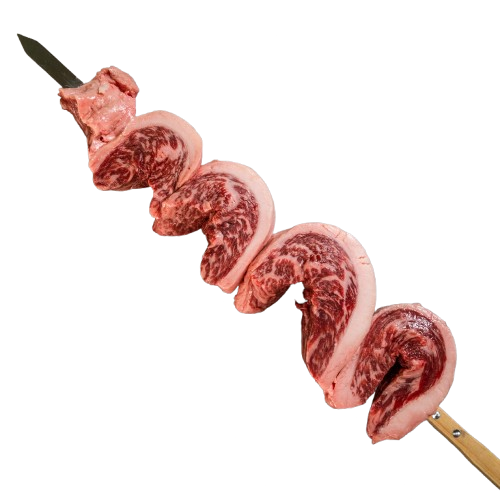
The origin of picanha as a prized cut of meat is rooted in the cattle-ranching culture of Southern Brazil, particularly in the state of Rio Grande do Sul. The name "picanha" comes from the word for the picana, a pole used by ranchers in the region to herd cattle. This specific cut, known in the United States as the sirloin cap or coulotte, was not traditionally favored by European butchers who settled in Brazil, so the cut was left for the local gauchos (cowboys) to cook. The gauchos developed the classic churrasco method of preparing picanha: skewering the meat in a "C" shape with the fat cap on the outside, seasoning it generously with coarse salt, and slow-roasting it over open flames. This technique renders the fat, basting the meat as it cooks and creating an incredibly juicy and flavorful result. The popularity of picanha spread throughout Brazil with the rise of churrascarias (Brazilian steakhouses) in the mid-20th century. Restaurants like Fogo de Chão, founded in Southern Brazil in 1979, were instrumental in bringing the churrasco experience and the love for picanha to an international audience, making the cut a globally recognized symbol of Brazilian cuisine.
Explore More Meat
Discover more Meat with detailed nutrition facts, calorie counts, vitamins, minerals, and health benefits. Compare similar foods, serving sizes, macronutrients, and key nutrients to find the best option for your diet and nutrition goals.
 Bacon calories
 Beef calories
 Beef Brisket calories
 Beef Chuck calories
 Beef Jerky calories
 Beef Liver calories
 Beef Short Ribs calories
 Beef Tenderloin calories
 Beef Tongue calories
 Bison calories
 Buffalo Meat calories
 Chicken calories