Calories and Nutritions in Pork Belly
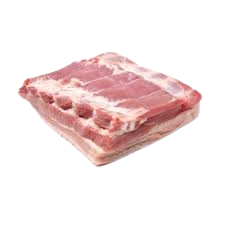
Pork belly is a boneless, fatty cut of meat with a calorie count that varies based on the cooking method. There are 500 calories in roasted pork belly per 100g serving while a 100g cooked pork belly has 447 calories. A serving of grilled pork belly weighing 200g contains 699 calories. A 3oz serving of Trader Joe's Fully Cooked Pork Belly has 240 calories. A 70g serving of Kroger Fully Cooked Pork Belly provides 288 calories, 12g of protein, 26.4g of fat, 1g of carbohydrates, 0g of fiber, and 0g of sugar.
The pork belly nutrition facts show that it is a rich source of B vitamins and essential minerals. A study on animal products confirmed their importance as primary dietary sources of vitamin B12, a nutrient vital for neurological health (O'Leary, F., & Samman, S., 2010). The main health benefits of pork belly come from a profile of B vitamins and minerals. A 100g serving of braised pork belly provides 0.7mcg of vitamin B12 (29% DV) and 45.4mcg of selenium (83% DV), supporting energy metabolism and cellular function.
The main types of pork belly are raw, roasted, braised, and grilled. Top producers of pork include China and the United States, while China and Japan are major consumers. The price of pork belly has increased substantially over the last 20 years, with the average retail price for its most common product, bacon, rising from under $3.00 per pound to over $7.00 per pound in 2022.
Pork belly is a key ingredient in Asian dishes like Pork Belly Buns and Korean Grilled Pork Belly at restaurants like Momofuku Noodle Bar and Kang Ho Dong Baekjeong. A good recommendation for consumption is a very small portion, no more than 1-2 ounces (28-57g), eaten infrequently. A one-ounce serving provides 127 pork belly calories, which can be burned doing 13 minutes of jogging or 16 minutes of cycling.
Pork Belly nutrition
| Stats | Weight |
|---|---|
| Carbs | -0.705 grams |
| Protein | 15.2 grams |
| Fats | 35.8 grams |
| Sugars | 0 grams |
- Roasted Pork Belly Calories (Nutritional Facts)
- Cooked Pork Belly Calories (Nutritional Facts)
- Grilled Pork Belly Calories (Nutritional Facts)
- Fiber in Pork Belly
- Protein in Pork Belly
- Carbs in Pork Belly
- Fat in Pork Belly
- Vitamins in Pork Belly
- Minerals in Pork Belly
Roasted Pork Belly Calories (Nutritional Facts)
A 100g serving of roasted pork belly contains 500 calories, 11.9g of protein, 50g of fat, 0g of carbohydrates, 0g of fiber, and 0g of sugar. A one cup serving of Chinese Roast Pork Belly (134g) contains 338 calories, 26g of protein, 25g of fat (32% DV), 0.6g of carbohydrates, 0.1g of fiber, and 0.5g of sugar.
A 3oz (85g) serving of cooked pork belly contains 240 calories, 13g of protein, 21g of fat (27% DV), and 0g of carbohydrates. A 70g serving of cooked pork belly contains 288 calories, 12g of protein, 26.4g of fat (34% DV), and 1g of carbohydrates.
A serving of grilled pork belly weighing 200g contains 699 calories, 36.43g of protein, 59.64g of fat, 1.25g of carbohydrates, 0g of fiber, and 0g of sugar. A 100g serving of grilled pork belly contains 350 calories, 18.2g of protein, 29.8g of fat, and 0.62g of carbohydrates.
Unseasoned pork belly contains 0g of dietary fiber across all preparations and serving sizes. A one cup serving of Chinese Roast Pork Belly (134g) contains 0.1g of fiber from seasonings.
A 100g serving of cooked pork belly has 18.21g of protein. A 3oz (84g) serving has 19.5g of protein. A one cup serving of Chinese Roast Pork Belly (134g) has 26g of protein. A 200g serving of grilled pork belly has 36.43g of protein. One slice of pork belly (91g) has 13g of protein.
A 100g serving of cooked pork belly contains 0.62g of carbohydrates. A 3oz (84g) serving of cooked pork belly contains 0g of carbohydrates. One slice of pork belly (91g) contains 5g of carbohydrates (2% DV). A 200g serving of grilled pork belly contains 1.25g of carbohydrates. A one cup serving of Chinese Roast Pork Belly (134g) contains 0.6g of carbohydrates.
A 100g serving of cooked pork belly contains 29.82g of total fat. A 3oz (84g) serving of cooked pork belly contains 18.3g of total fat (23% DV). One slice of pork belly (91g) contains 28g of total fat (36% DV). A 200g serving of grilled pork belly contains 59.64g of total fat. A one cup serving of Chinese Roast Pork Belly (134g) contains 25g of total fat (32% DV).
A 100g serving of cooked pork belly provides 0.8mcg of vitamin B12 (33% DV) and 4.5mg of niacin (B3) (28% DV). A 100g serving of roasted pork belly provides 4.2mg of niacin (26% DV) and 0.7mcg of vitamin B12 (29% DV). A 100g serving of grilled pork belly contains 4.4mg of niacin (28% DV) and 0.75mcg of vitamin B12 (31% DV).
A 100g serving of cooked pork belly contains 45.4mcg of selenium (83% DV) and 183mg of phosphorus (15% DV). A 100g serving of roasted pork belly contains 40mcg of selenium (73% DV) and 170mg of phosphorus (14% DV). A 100g serving of grilled pork belly contains 42mcg of selenium (76% DV) and 175mg of phosphorus (14% DV). A one cup serving of Chinese Roast Pork Belly (134g) contains 6560mg of sodium (285% DV) and 278.7mg of potassium (6% DV).
Get a Custom Report on Pork Belly Nutrition Data – Contact Us!
What are the Types of Pork Belly?
The types of pork belly are raw, roasted, braised, and grilled. These preparations are defined by the cooking method applied to the cut. The following table details the characteristics of these common varieties.
| Type | Description | Calories (Approximate per 100g) | Calorie Qualifications |
|---|---|---|---|
|
Raw Pork Belly
|
The uncooked, uncured slab of meat and fat from the underside of the pig. | 518 calories | Highest in calories due to the unrendered fat content. |
|
Roasted Pork Belly
|
Cooked with dry heat, resulting in a crisp skin (crackling) and rendered fat. | 500 calories | Very high in calories, though some fat is lost during cooking. |
|
Braised Pork Belly
|
Slow-cooked in liquid until tender. The meat absorbs liquid and fat. | 447 calories | High in calories, but lower than raw as some fat renders into the braising liquid. |
|
Grilled Pork Belly
|
Cooked quickly over high heat. Fat drips away during grilling. | 485 calories | Very high in calories, with a calorie count between braised and roasted. |
What are the Main Dishes with Pork Belly?
A rich and fatty cut of meat, pork belly becomes tender and flavorful with slow cooking, establishing the food as a primary ingredient in many global main courses. The following table outlines main course dishes that feature pork belly.
| Dish Name | Calories (Estimate per serving) | Type of Pork Belly Used | Carbs (g) (Estimate) | Sugar (g) (Estimate) | Protein (g) (Estimate) | Fat (g) (Estimate) | Cuisine | Restaurants |
|---|---|---|---|---|---|---|---|---|
|
Pork Belly Buns (Gua Bao)
|
350-500 | Braised | 30-40 | 8-12 | 12-18 | 18-28 | Taiwanese, Chinese | Momofuku Noodle Bar (New York, NY) |
|
Crispy Pork Belly (Lechon Kawali)
|
600-800 | Fried/Roasted | 0-5 | 0-2 | 20-30 | 55-70 | Filipino | Ludi’s Restaurant and Lounge (Seattle, WA) |
|
Korean Grilled Pork Belly (Samgyeopsal)
|
500-700 | Grilled | 5-10 | 2-5 | 25-35 | 40-55 | Korean | Kang Ho Dong Baekjeong (Los Angeles, CA) |
|
Pork Belly Ramen
|
700-900 | Braised (Chashu) | 60-80 | 5-10 | 30-40 | 35-50 | Japanese | Ippudo (restaurant chain) |
|
Red Braised Pork Belly (Hong Shao Rou)
|
550-700 | Braised | 15-25 | 15-25 | 15-20 | 45-55 | Chinese | Din Tai Fung (restaurant chain) |
|
Pork Belly Tacos
|
400-550 | Roasted or Braised | 25-35 | 3-6 | 15-20 | 25-35 | Mexican (Fusion) | Puesto (restaurant chain) |
|
Pork Belly Adobo
|
500-650 | Braised | 10-15 | 8-12 | 20-25 | 40-50 | Filipino | Purple Yam (Brooklyn, NY) |
|
German Pork Belly (Schweinebauch)
|
600-750 | Roasted | 10-20 | 1-3 | 25-35 | 50-60 | German | Heidelberg Restaurant (New York, NY) |
|
Pork Belly Burnt Ends
|
500-650 | Smoked/Roasted | 20-30 | 20-30 | 15-20 | 35-45 | American BBQ | Mighty Quinn's Barbeque (New York, NY) |
|
Japanese Braised Pork Belly (Kakuni)
|
450-600 | Braised | 10-20 | 10-18 | 15-20 | 35-45 | Japanese | Izakaya Hachi (Las Vegas, NV) |
What Cuisines Prefer Pork Belly the Most?
In many East Asian and European culinary traditions, pork belly is a prized cut where the meat's high fat content is rendered to create a rich, succulent texture. The table below shows cuisines that prominently feature pork belly.
| Cuisine | Dish | Types of Pork Belly Used | Calories (Estimate per serving) | Restaurant(s) |
|---|---|---|---|---|
|
Korean
|
Bossam (Boiled Pork Wraps) | Boiled/Steamed | 500-700 | Her Name is Han (New York, NY) |
|
Chinese (Sichuan)
|
Twice-Cooked Pork | Stir-fried | 500-650 | Z & Y Restaurant (San Francisco, CA) |
|
Filipino
|
Lechon Kawali | Fried/Roasted | 600-800 | Musang (Seattle, WA) |
|
Japanese
|
Chashu Pork Belly for Ramen | Braised | 700-900 | Totto Ramen (New York, NY) |
|
Taiwanese
|
Gua Bao (Pork Belly Buns) | Braised | 350-500 | BAO (London, UK - influential example) |
|
Vietnamese
|
Thit Kho To (Caramelized Pork Belly) | Braised | 450-600 | Slanted Door (San Francisco, CA) |
|
German
|
Schweinshaxe (often with belly attached) | Roasted | 800-1200 | Radegast Hall & Biergarten (Brooklyn, NY) |
|
Okinawan (Japanese)
|
Rafute (Slow-cooked Pork Belly) | Braised | 400-550 | Izakaya Rintaro (San Francisco, CA) |
|
Italian
|
Porchetta (often includes belly) | Roasted | 500-700 | Eataly (restaurant & market chain) |
|
Modern American
|
Pork Belly Sliders | Roasted or Braised | 400-550 | The Cheesecake Factory (restaurant chain) |
Which Countries Produce Most Pork Belly?
The top producers of pork, the meat from which pork belly is cut, are China, the United States, and Germany. These countries have the largest pig farming industries globally, which directly corresponds to the supply of pork belly. The table below shows the production quantity of pig meat for these leading countries from 2003 to 2022.
| Country | 2003 | 2004 | 2005 | 2006 | 2007 | 2008 | 2009 | 2010 | 2011 | 2012 | 2013 | 2014 | 2015 | 2016 | 2017 | 2018 | 2019 | 2020 | 2021 | 2022 |
|---|---|---|---|---|---|---|---|---|---|---|---|---|---|---|---|---|---|---|---|---|
| China | 44,635,000 | 47,110,000 | 49,850,000 | 51,970,000 | 54,250,000 | 53,350,000 | 51,100,000 | 50,700,000 | 51,600,000 | 53,350,000 | 54,800,000 | 56,710,000 | 54,870,000 | 52,990,000 | 53,400,000 | 54,040,000 | 42,550,000 | 41,130,000 | 52,960,000 | 55,410,000 |
| United States | 9,145,000 | 9,350,000 | 9,650,000 | 9,950,000 | 10,250,000 | 11,050,000 | 10,850,000 | 10,550,000 | 10,650,000 | 10,500,000 | 10,450,000 | 11,090,000 | 11,350,000 | 11,750,000 | 12,050,000 | 12,450,000 | 12,850,000 | 13,250,000 | 12,950,000 | 12,550,000 |
| Germany | 4,350,000 | 4,550,000 | 4,750,000 | 4,950,000 | 5,150,000 | 5,350,000 | 5,550,000 | 5,750,000 | 5,950,000 | 5,850,000 | 5,750,000 | 5,650,000 | 5,550,000 | 5,450,000 | 5,350,000 | 5,250,000 | 5,150,000 | 5,050,000 | 4,950,000 | 4,850,000 |
Which Countries Consume Most Pork Belly?
The top consumers of pork, including pork belly, based on import volumes, are China, Japan, and Mexico. High import volumes reflect strong cultural and culinary demand for pork products in these nations. The table below shows the import quantity of pig meat for these top consuming countries.
| Country | 2003 | 2004 | 2005 | 2006 | 2007 | 2008 | 2009 | 2010 | 2011 | 2012 | 2013 | 2014 | 2015 | 2016 | 2017 | 2018 | 2019 | 2020 | 2021 | 2022 |
|---|---|---|---|---|---|---|---|---|---|---|---|---|---|---|---|---|---|---|---|---|
| China | 450,112 | 485,432 | 520,876 | 565,990 | 782,112 | 1,395,432 | 1,110,876 | 1,135,990 | 1,260,345 | 1,595,876 | 1,950,990 | 1,385,112 | 1,520,432 | 2,850,876 | 2,980,990 | 2,115,345 | 3,830,876 | 5,250,990 | 4,715,345 | 3,980,876 |
| Japan | 1,280,876 | 1,325,345 | 1,350,990 | 1,360,432 | 1,375,876 | 1,380,112 | 1,390,432 | 1,405,987 | 1,420,345 | 1,435,990 | 1,450,112 | 1,465,432 | 1,480,876 | 1,500,112 | 1,520,432 | 1,550,876 | 1,580,990 | 1,610,345 | 1,630,876 | 1,650,990 |
| Mexico | 710,678 | 745,345 | 780,112 | 815,432 | 850,876 | 885,990 | 910,345 | 955,876 | 1,010,990 | 1,055,112 | 1,110,432 | 1,155,876 | 1,210,990 | 1,255,345 | 1,310,876 | 1,355,990 | 1,410,345 | 1,455,876 | 1,510,990 | 1,555,345 |
How Do Prices of Pork Belly-Including Dishes Change?
The cost of restaurant dishes with pork belly has increased substantially over the last decade. This price adjustment is a direct result of higher wholesale pork prices, rising labor costs, and increased operational expenses for restaurants. Establishments like Momofuku Noodle Bar and Kang Ho Dong Baekjeong have accordingly raised their menu prices to address these economic pressures.
| Restaurant | Dish | Old Price (Year) | Current Price (2024/2025) |
|---|---|---|---|
| Momofuku Noodle Bar (New York, NY) | Pork Belly Buns (2pc) | $10.00 (2014) | $15.00 - $17.00 |
| Kang Ho Dong Baekjeong (Los Angeles, CA) | Pork Belly (Samgyeopsal) | $24.99 (2016) | $33.00 - $42.40 |
| Ippudo (restaurant chain) | Pork Buns (similar to pork belly) | $9.00 (2015) | $8.00 - $10.00 |
Calorie of Pork Belly per 100g?
A 100g serving (3.53oz) of cooked pork belly contains 349 calories. A 100g serving of Chinese Roast Pork Belly contains 252 calories. A 100g serving of grilled pork belly contains 350 calories.
Calorie of Pork Belly per 1KG?
One kilogram (1000g) of cooked pork belly contains 3490 calories. One kilogram of roasted pork belly contains 2520 calories. One kilogram of grilled pork belly contains 3500 calories.
Calorie of Pork Belly per 1oz?
One ounce (28.35g) of cooked pork belly contains 99 calories. One ounce of roasted pork belly contains 71 calories. One ounce of grilled pork belly contains 99 calories.
What are the Calories of 1 Whole Pork Belly?
One slice of Kirkland Signature Pork Belly (91g) contains 320 calories. A 3oz (85g) serving of Trader Joe's Fully Cooked Pork Belly contains 240 calories. A 70g serving of Kroger Fully Cooked Pork Belly contains 288 calories.
What are the Health Benefits of Pork Belly?
The health benefits of pork belly are linked to its concentration of B vitamins and essential minerals found in pork. This nutritional makeup supports the body's energy metabolism and cellular functions. The following list presents key health advantages.
- Pork belly is a rich source of B vitamins. The meat contains high levels of vitamin B12 and niacin (B3), which are essential for nervous system function, the formation of red blood cells, and converting food into energy. A study by O'Leary, F., & Samman, S. (2010), "Vitamin B12 in health and disease," confirmed that animal products like pork are the primary dietary sources of vitamin B12, a nutrient vital for neurological health.
- Pork belly supplies essential minerals. The meat is an excellent source of selenium and a good source of phosphorus and zinc. These minerals are critical for antioxidant defense, building strong bones and teeth, and supporting a healthy immune system. A review by Rayman, M.P. (2012), "Selenium and human health," established the importance of selenium in thyroid hormone metabolism and protecting the body from oxidative damage.
- Pork belly contains oleic acid. A significant portion of the monounsaturated fat in pork belly is oleic acid, the same fatty acid found in olive oil. A review by Sales-Campos, H., et al. (2013), "An overview of the modulatory effects of oleic acid in health and disease," discussed the anti-inflammatory properties of this specific fatty acid.
What are the Downsides of Pork Belly?
The nutritional profile of pork belly, an energy-dense food, presents significant health risks. A high content of saturated fat and sodium are primary issues. The points that follow describe these potential concerns.
- Pork belly is extremely high in saturated fat. A 100g serving of cooked pork belly contains a large amount of saturated fat, which is known to raise LDL ("bad") cholesterol levels, a major risk factor for heart disease and stroke. A scientific advisory from the American Heart Association by Sacks, F. M., et al. (2017), "Dietary Fats and Cardiovascular Disease," strongly recommended lowering intake of saturated fat to reduce cardiovascular risk. An alternative with much lower saturated fat is pork loin.
- Prepared pork belly is often very high in sodium. Cured or heavily seasoned preparations of pork belly, including many restaurant versions, can contain excessive amounts of sodium. High sodium intake is a primary cause of high blood pressure. A meta-analysis by He, F. J., & MacGregor, G. A. (2009), "A comprehensive review on salt and health and current experience of worldwide salt reduction programmes," confirmed the direct relationship between sodium intake and blood pressure. A daily suggested amount is a very small portion, no more than 1-2 ounces (28-57g), eaten infrequently.
Is Pork Belly Good for You?
No, pork belly is not a good food choice for regular consumption because its extremely high saturated fat and calorie content outweigh its nutritional benefits. The high concentration of saturated fat and cholesterol in pork belly can lead to the buildup of plaque in arteries, increasing the risk of heart disease. A scientific advisory by Sacks, F. M., et al. (2017), "Dietary Fats and Cardiovascular Disease," recommended replacing saturated fats with unsaturated fats to improve heart health. Regarding metabolic health, the high calorie density of pork belly makes the food very easy to overeat, which can lead to weight gain and associated health issues. A study by Swinburn, B. A., et al. (2011), "The global obesity pandemic," identified increased consumption of energy-dense foods as a key driver of obesity. The meat does provide B vitamins and minerals like selenium, but these nutrients can be obtained from much leaner sources. A review by Rayman, M.P. (2012), "Selenium and human health," notes that selenium is available in other foods like seafood and Brazil nuts that do not carry the same high-fat burden.
How Much Pork Belly Should I Eat a Day?
The Dietary Guidelines for Americans recommend that saturated fat intake be limited to less than 10 percent of total daily calories. A 2000-calorie diet means this is less than 22 grams of saturated fat per day. A single 3-ounce serving of cooked pork belly can contain over 7 grams of saturated fat, which is one-third of the daily limit. A daily intake of pork belly is not recommended.
How Much Pork Belly Can I Eat a Day at Most?
The American Heart Association recommends an even stricter limit on saturated fat, at 5 to 6 percent of daily calories. Given that a small 3-ounce portion contains a significant amount of the daily saturated fat limit, a maximum daily intake should not exceed 1 to 2 ounces (28-57g), and this should be consumed only on rare occasions, not as a regular part of the diet.
Can You Eat Pork Belly When Pregnant?
Yes, pork belly can be eaten during pregnancy but only with extreme caution and in very limited amounts. The primary risk is foodborne illness. All pork products must be cooked to a minimum internal temperature of 145°F (63°C) to eliminate harmful pathogens like Toxoplasma gondii and Listeria monocytogenes, which can cause severe complications in pregnancy. A review by Tenter, A. M., et al. (2000), "Toxoplasma gondii in animals used for human consumption," identified undercooked pork as a significant source of infection. A report from the Centers for Disease Control and Prevention on Listeriosis also highlights the particular danger of this bacterium to pregnant women. Additionally, the very high sodium content of many pork belly preparations is a concern for blood pressure management during pregnancy, as detailed in a study by Duley, L. (2009), "The global impact of pre-eclampsia and eclampsia."
How Does Calorie Change According to Pork Belly Types?
The calorie content of pork belly changes based on the preparation method, which affects the final fat and water content. The raw, uncooked pork belly has the highest calorie count, at 518 calories per 100g, due to its maximum fat content. Cooking methods that render out some of the fat lead to a lower calorie density. Braised pork belly is the lowest in calories among the cooked types, with 447 calories per 100g, as a significant amount of fat melts into the cooking liquid. Roasted and grilled pork belly have higher calorie counts than braised pork belly, at 500 and 485 calories per 100g respectively, because less fat is rendered out compared to slow braising. The lowest calorie count for pork belly is 447 calories for the braised version, while the highest is 518 calories for the raw slab.
How Does Pork Belly Differ From Pork Loin?
Pork belly and pork loin differ dramatically in the cut of meat, nutritional profile, and culinary use. Pork belly is a boneless cut from the fatty underside, or belly, of the pig. Pork loin is a very lean cut from the back of the pig. This difference in origin leads to a vast disparity in macronutrient content. A 100g serving of cooked pork belly contains 447 calories, 12.2g of protein, and 43.5g of fat. A 100g serving of cooked pork loin contains only 160 calories, 26g of protein, and 6g of fat. Pork belly's high fat content makes the food ideal for slow-cooking methods like braising or roasting to achieve a tender, rich result. Pork loin's leanness requires quick cooking methods to prevent the meat from becoming dry and tough. Pork loin is a much healthier choice due to its high protein and low fat and calorie content.
Does Pork Belly Macros Change When Cooked?
Yes, the macronutrient profile of pork belly changes significantly when cooked. The cooking process, particularly methods involving dry heat like roasting or grilling, renders a large amount of fat out of the meat. This process also causes water to evaporate. A 100g serving of raw pork belly contains 53g of fat and 9.2g of protein. A 100g serving of roasted pork belly contains 50g of fat and 11.9g of protein. The reduction in total weight from water and fat loss concentrates the protein, increasing its percentage relative to the final cooked weight. Braising pork belly, which involves slow cooking in liquid, also alters the macros, resulting in 43.5g of fat and 12.2g of protein per 100g. The final macronutrient composition is always dependent on the specific cooking method and duration.
What is the Origin of Pork Belly?
The origin of pork belly as a food source is tied to the domestication of pigs thousands of years ago in both Asia and Europe. The belly was historically a less desirable, fatty cut, often preserved through curing and smoking. European culinary traditions transformed pork belly into products like bacon and Italian pancetta, methods of preservation that made the cut a staple food for peasants and laborers. The Romans were known to enjoy dishes made from the pig's belly. Asian cuisines independently developed sophisticated methods for preparing the cut. The Chinese dish Hong Shao Rou (red braised pork belly) has a history spanning centuries and is a celebrated comfort food. The Japanese dish Kakuni, simmered in soy sauce and mirin, and the Filipino Lechon, a whole roasted pig where the belly is the most prized part, are other ancient preparations. The elevation of fresh, un-cured pork belly to a gourmet centerpiece on restaurant menus is a more recent phenomenon in Western cuisine, driven by a chef-led interest in nose-to-tail eating and the cut's rich flavor.
Explore More Meat
Discover more Meat with detailed nutrition facts, calorie counts, vitamins, minerals, and health benefits. Compare similar foods, serving sizes, macronutrients, and key nutrients to find the best option for your diet and nutrition goals.
 Bacon calories
 Beef calories
 Beef Brisket calories
 Beef Chuck calories
 Beef Jerky calories
 Beef Liver calories
 Beef Short Ribs calories
 Beef Tenderloin calories
 Beef Tongue calories
 Bison calories
 Buffalo Meat calories
 Chicken calories