Calories and Nutritions in Pork Jowl
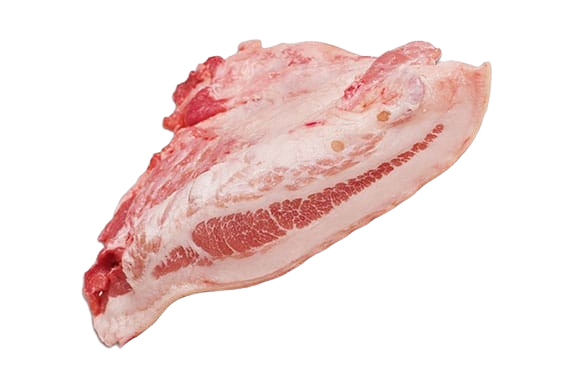
Pork jowl is a cut of pork from the cheek of a pig, and pork jowl calories are very high due to its rich fat content. A 100 g (3.5 oz) serving of raw pork jowl contains 655 calories, while a small serving of 28 g (1 oz) provides 183 calories. Cured versions like guanciale have a similar calorie density. The pork jowl nutrition profile is dominated by fat, with a 100 g raw serving containing 69.6 g of fat (of which 24.8 g is saturated), 8.3 g of protein, and 0 g of carbohydrates. This cut also provides B vitamins, including Niacin (14% Daily Value/DV) and Vitamin B12 (17% DV), and minerals like selenium (22% DV). Research on processed meats, which includes cured pork jowl, links high consumption to increased health risks (Bouvard V, et al. 2015 "Carcinogenicity of consumption of red and processed meat").
Pork jowl, also known as pork cheek, is available fresh (raw) or, more famously, cured as Italian guanciale or smoked as jowl bacon. Due to its very high saturated fat and calorie content, dietary guidelines recommend minimizing intake of such fatty and processed meats. A healthy daily consumption is zero grams; if used, it should be in very small, infrequent amounts as a flavoring agent. Burning the 183 calories from a single ounce of pork jowl requires a significant effort, such as 15-20 minutes of vigorous running or 25-30 minutes of swimming.
Pork jowl is not used in desserts. It is a prized savory ingredient, with its cured form, guanciale, being essential for authentic Italian pasta dishes like Carbonara and Amatriciana, served at restaurants such as Osteria Mozza (LA) and Lilia (Brooklyn). In the Southern US, smoked jowl bacon is a traditional seasoning for greens and beans, featured in restaurants like Husk (Charleston). The practice of using pork jowl originates from ancient nose-to-tail butchery traditions where no part of the animal was wasted.
The production and consumption of pork jowl are tied to the broader pork market, which is led by China, the EU, and the United States. China is the largest producer and consumer of pork globally. The price of pork jowl as a specialty cut has increased over the last 20 years with culinary trends; a pound of fresh pork jowl that cost $1.00 to $2.00 in 2004 in the United States has risen to as much as $7.00 per pound in 2024. The price for its cured form, guanciale, is significantly higher at $15.00 to $25.00 per pound.
Pork Jowl nutrition
| Stats | Weight |
|---|---|
| Carbs | 0 grams |
| Protein | 4.7 grams |
| Fats | 0 grams |
| Sugars | 0 grams |
- Large Pork Jowl Calories (Nutritional Facts)
- Medium Pork Jowl Calories (Nutritional Facts)
- Small Pork Jowl Calories (Nutritional Facts)
- Raw Pork Jowl Nutrition
- Sodium in Pork Jowl
- Potassium in Pork Jowl
- Sugar in Pork Jowl
- Fiber in Pork Jowl
- Protein in Pork Jowl
- Carbs in Pork Jowl
- Fat in Pork Jowl
- Vitamins in Pork Jowl
- Minerals in Pork Jowl
Large Pork Jowl Calories (Nutritional Facts)
A large serving of raw pork jowl, weighing 100 g (3.5 oz), contains 655 calories. This serving provides 69.6 g of fat, 8.3 g of protein, 0 g of carbohydrates, 0 g of sugar, and 0 g of dietary fiber.
A medium serving of raw pork jowl, weighing 57 g (2 oz), contains 373 calories. This serving size includes 39.7 g of fat, 4.7 g of protein, and 0 g of carbohydrates.
A small serving of raw pork jowl, weighing 28 g (1 oz), contains 183 calories. This portion offers 19.5 g of fat, 2.3 g of protein, and 0 g of carbohydrates.
Raw pork jowl, also known as pork cheek, is a cut of meat very high in fat. A 100 g (3.5 oz) serving of raw pork jowl provides 655 calories, 69.6 g of fat, 8.3 g of protein, and 0 g of carbohydrates. When pork jowl is cured to make guanciale, its nutritional profile becomes more concentrated and much higher in sodium.
Raw pork jowl contains 48 mg of sodium per 100 g (3.5 oz) serving, contributing 2% of the Daily Value (DV). Cured pork jowl (guanciale) is significantly higher in sodium, containing 1000-1500 mg of sodium per 100 g (43-65% DV).
Raw pork jowl provides 135 mg of potassium per 100 g (3.5 oz) serving, which is 3% of the DV.
Pork jowl, both raw and cured, contains 0 g of sugar.
Pork jowl, being an animal product, contains 0 g of dietary fiber.
Raw pork jowl provides 8.3 g of protein per 100 g (3.5 oz) serving. Curing and drying the jowl to make guanciale concentrates the protein, which contains 9-10 g of protein per 100 g.
Pork jowl contains 0 g of total carbohydrates.
Raw pork jowl contains 69.6 g of total fat per 100 g (3.5 oz) serving, of which 24.8 g is saturated fat. Cured pork jowl (guanciale) has a similar high fat content.
A 100 g (3.5 oz) serving of raw pork jowl is a source of several B vitamins. It provides Niacin (Vitamin B3) at 2.3 mg (14% DV), Vitamin B6 at 0.14 mg (8% DV), and Vitamin B12 at 0.4 mcg (17% DV).
A 100 g (3.5 oz) serving of raw pork jowl provides Phosphorus at 94 mg (8% DV) and Selenium at 12.3 mcg (22% DV). It also contains smaller amounts of Iron and Zinc.
Get a Custom Report on Pork Jowl Nutrition Data – Contact Us!
What are the Types of Pork Jowl?
There are a few different types of pork jowl, primarily distinguished by how the cut is prepared and whether it is fresh or cured. The table below shows the most common pork jowl types and their calorie information.
| Type | Description | Calories (per 100g) | Calorie Differences & Qualifications |
|---|---|---|---|
|
Raw Pork Jowl
|
The fresh, uncured, uncooked cheek of the pig. | 655 | Extremely high in fat and calories. This is the base product before further processing. |
|
Guanciale
|
Italian cured pork jowl. Seasoned with salt, pepper, and sometimes herbs, then cured and aged for several weeks. | 650-700 | Calorie content is similar to raw jowl. The curing process removes some water, concentrating the fat and protein. It is extremely high in sodium. |
|
Pork Jowl Bacon (Smoked)
|
Pork jowl that has been cured and smoked, similar to traditional bacon but from the cheek instead of the belly. | 600-650 | Calorie count is slightly lower than raw jowl if some fat renders out during the smoking process, but it remains a very high-fat, high-calorie product with high sodium content. |
|
Cooked Pork Jowl (e.g., fried/rendered)
|
Fresh pork jowl that has been cooked. | Varies widely | If the fat is rendered out and discarded, the remaining crispy meat will be lower in calories per gram. If eaten with all the rendered fat, the calorie count remains very high. |
What are the Main Dishes with Pork Jowl?
Pork jowl, especially in its cured form as guanciale or smoked as jowl bacon, is a rich, flavorful ingredient used to add depth and fat to several classic and contemporary main dishes. Its high fat content renders beautifully, creating a unique texture and taste. Some of the most widespread main dishes that contain pork jowl are Italian pasta dishes like Carbonara and Amatriciana. The table below lists some popular examples.
| Dish Name | Calories (Estimate per serving) | Type of Dish | Carbs (g) (Estimate) | Sugar (g) (Estimate) | Protein (g) (Estimate) | Fat (g) (Estimate) | Cuisine | Restaurants |
|---|---|---|---|---|---|---|---|---|
|
Pasta alla Carbonara (with Guanciale)
|
600-900 | Pasta Entree | 70-90 | 3-8 | 25-40 | 25-45 | Italian (Roman) | Osteria Mozza, Lilia, Via Carota, Eataly (seasonal/regional menus), many authentic Roman-style Italian restaurants. |
|
Pasta all'Amatriciana (with Guanciale)
|
500-700 | Pasta Entree | 70-90 | 8-15 | 20-30 | 15-25 | Italian (Roman) | Similar to Carbonara, a staple in authentic Roman eateries. |
|
Pork Jowl Bacon (as a side or in dishes)
|
150-200 (per 1 oz/28g cooked) | Cured Meat | <1 | <1 | 5-8 | 12-18 | Southern American | Husk (Charleston, SC), Blackberry Farm (Walland, TN), other Southern fine dining restaurants. |
|
Braised Pork Jowl (as an entree)
|
400-600 (meat portion) | Braised Entree | 5-15 | 3-10 | 15-25 | 30-50 | Modern American/Southern | The Publican, St. John (London - for nose-to-tail), some upscale restaurants with a focus on charcuterie and whole-animal butchery. |
|
Pork Jowl Tacos (Tacos de Cachete)
|
180-250 (per taco) | Taco | 15-20 | <1-2 | 8-12 | 10-15 | Mexican | Found in authentic taquerias specializing in various cuts of meat. |
|
Jowl Bacon in a BLT or Burger
|
Varies with dish | Sandwich | Varies | Varies | Varies | Varies | Modern American | Some gastropubs or high-end burger joints might offer jowl bacon as a premium add-on, like at Father's Office (LA) or The Spotted Pig (NYC - historically). |
|
Pasta alla Gricia (with Guanciale)
|
550-750 | Pasta Entree | 70-90 | 2-5 | 20-30 | 20-35 | Italian (Roman) | A classic Roman dish found alongside Carbonara and Amatriciana in traditional Italian restaurants. |
What Cuisines Prefer Pork Jowl the Most?
Pork jowl is most famously and prominently used in Italian cuisine, specifically in Roman and Central Italian dishes where its cured form, guanciale, is considered essential. It is also a traditional ingredient in Southern American cooking, where it is often cured, smoked, and used for seasoning or as a standalone bacon-like item.
| Cuisine | Dish Name/Usage Examples | Calories (Varies widely by dish) | Restaurants |
|---|---|---|---|
|
Italian (especially Roman)
|
Pasta alla Carbonara, Pasta all'Amatriciana, Pasta alla Gricia (all using Guanciale) | 500-900 | Osteria Mozza, Lilia, Via Carota, Eataly (seasonal/regional menus), many authentic Roman-style Italian restaurants. |
|
Southern American
|
Jowl Bacon, Seasoning for Greens/Beans, Cracklins' | Varies | Husk (Charleston, SC), Blackberry Farm (Walland, TN), many traditional Southern and soul food restaurants. |
|
Mexican (some regions)
|
Tacos de Cachete (Pork Cheek Tacos), Carnitas | 180-250 (per taco) | Found in authentic taquerias. |
|
Modern American (Nose-to-Tail/Artisanal)
|
Braised Pork Jowl, House-cured Guanciale/Jowl Bacon, Charcuterie Boards | Varies | The Publican, Cochon Butcher (New Orleans), Father's Office (LA). |
Which Countries Produce the Most Pork Jowl?
The top producers of pork jowl globally are the same as the leading producers of pork meat, as the jowl is a direct co-product. China is by far the world's largest producer of pork. The European Union (led by Spain and Germany), the United States, Brazil, and Russia are also major producers. In 2022, China produced 57,940 kilotonnes of pork, while the European Union produced 22,140 kilotonnes, based on data from FAOSTAT. The table below shows production figures for "Meat, pig" (pork) as the direct source of pork jowl, for key producing countries over the last two decades.
| Country/Region | 2004 | 2005 | 2006 | 2007 | 2008 | 2009 | 2010 | 2011 | 2012 | 2013 | 2014 | 2015 | 2016 | 2017 | 2018 | 2019 | 2020 | 2021 | 2022 |
|---|---|---|---|---|---|---|---|---|---|---|---|---|---|---|---|---|---|---|---|
| China | 47,000 | 48,000 | 51,000 | 54,000 | 53,000 | 50,000 | 51,000 | 50,000 | 52,000 | 55,000 | 57,000 | 56,000 | 54,000 | 54,500 | 55,000 | 42,000 | 41,000 | 55,000 | 57,940 |
| EU-27 (from 2020) | 22,000 | 22,500 | 23,000 | 23,500 | 24,000 | 23,000 | 22,500 | 22,000 | 22,300 | 22,600 | 22,900 | 23,200 | 23,500 | 23,800 | 24,000 | 24,200 | 24,000 | 23,000 | 22,140 |
| USA | 9,000 | 9,300 | 9,500 | 10,000 | 10,500 | 10,300 | 10,200 | 10,500 | 10,800 | 10,600 | 11,000 | 11,200 | 11,500 | 11,800 | 12,000 | 12,500 | 12,800 | 12,700 | 12,500 |
| Brazil | 2,500 | 2,600 | 2,700 | 2,800 | 2,900 | 3,000 | 3,100 | 3,200 | 3,300 | 3,400 | 3,500 | 3,600 | 3,700 | 3,800 | 3,900 | 4,000 | 4,100 | 4,200 | 4,400 |
| Russian Federation | 1,500 | 1,600 | 1,700 | 1,800 | 1,900 | 2,000 | 2,200 | 2,300 | 2,400 | 2,500 | 2,600 | 2,800 | 3,000 | 3,100 | 3,200 | 3,500 | 3,700 | 3,600 | 3,750 |
| Viet Nam | 1,800 | 1,900 | 2,000 | 2,100 | 2,200 | 2,300 | 2,400 | 2,500 | 2,600 | 2,700 | 2,800 | 2,900 | 3,000 | 3,100 | 3,200 | 2,800 | 2,500 | 2,700 | 2,900 |
| Canada | 1,800 | 1,850 | 1,900 | 1,950 | 2,000 | 1,900 | 1,800 | 1,850 | 1,900 | 1,950 | 2,000 | 2,050 | 2,100 | 2,000 | 2,050 | 2,100 | 2,150 | 2,100 | 2,000 |
| Spain | 3,000 | 3,100 | 3,200 | 3,300 | 3,400 | 3,300 | 3,200 | 3,300 | 3,400 | 3,500 | 3,600 | 3,700 | 3,800 | 3,900 | 4,000 | 4,100 | 4,200 | 4,100 | 4,000 |
| Philippines | 1,000 | 1,050 | 1,100 | 1,150 | 1,200 | 1,250 | 1,300 | 1,350 | 1,400 | 1,450 | 1,500 | 1,550 | 1,600 | 1,650 | 1,700 | 1,500 | 1,400 | 1,450 | 1,500 |
| Mexico | 1,000 | 1,020 | 1,050 | 1,080 | 1,100 | 1,120 | 1,150 | 1,180 | 1,200 | 1,220 | 1,250 | 1,280 | 1,300 | 1,350 | 1,400 | 1,450 | 1,500 | 1,550 | 1,600 |
Which Countries Consume the Most Pork Jowl?
Based on data from FAOSTAT and industry sources for total pork consumption, the top consumers of pork and its co-products like pork jowl are China, the European Union, the United States, Russia, and Vietnam. Consumption of specialty cured items like guanciale (from pork jowl) is highest in Italy and in places with strong Italian culinary influence. In the United States, consumption of pork jowl is more of a regional specialty, particularly in the South. The table below uses "Meat, pig" (pork) Food Supply Quantity from FAOSTAT as a proxy for apparent consumption.
| Country/Region | 2012 | 2013 | 2014 | 2015 | 2016 | 2017 | 2018 | 2019 | 2020 | 2021 |
|---|---|---|---|---|---|---|---|---|---|---|
| China | 53,000 | 56,000 | 58,000 | 57,000 | 55,000 | 56,000 | 57,000 | 44,000 | 43,000 | 57,000 |
| EU-27 (from 2020) | 20,000 | 20,200 | 20,500 | 20,800 | 21,000 | 21,200 | 21,500 | 21,800 | 22,000 | 21,500 |
| USA | 9,000 | 9,200 | 9,300 | 9,500 | 9,700 | 9,800 | 10,000 | 10,200 | 10,500 | 10,300 |
| Russian Federation | 2,500 | 2,600 | 2,700 | 2,800 | 2,900 | 3,000 | 3,200 | 3,300 | 3,400 | 3,500 |
| Viet Nam | 2,500 | 2,600 | 2,700 | 2,800 | 2,900 | 3,000 | 2,700 | 2,400 | 2,600 | 2,800 |
| Brazil | 2,600 | 2,700 | 2,800 | 2,900 | 3,000 | 3,100 | 3,200 | 3,300 | 3,400 | 3,500 |
| Republic of Korea | 1,500 | 1,600 | 1,700 | 1,800 | 1,900 | 2,000 | 2,100 | 2,200 | 2,300 | 2,400 |
| Japan | 2,200 | 2,250 | 2,300 | 2,350 | 2,400 | 2,450 | 2,500 | 2,550 | 2,600 | 2,650 |
| Mexico | 1,800 | 1,850 | 1,900 | 1,950 | 2,000 | 2,050 | 2,100 | 2,150 | 2,200 | 2,250 |
| Philippines | 1,600 | 1,650 | 1,700 | 1,750 | 1,800 | 1,850 | 1,700 | 1,600 | 1,650 | 1,700 |
How Do Prices of Pork Jowl-including Dishes Change?
Restaurant menu prices for dishes featuring pork jowl, especially authentic Italian pastas made with guanciale, have seen a significant increase over the past decade. This is driven by the rising cost of the specialty cured meat itself, its premium positioning on menus, and general restaurant inflation.
| Restaurant | Dish (Pork Jowl/Guanciale-prominent) | Old Price | Current Price (Estimate 2025) |
|---|---|---|---|
| Osteria Mozza (Los Angeles, CA) | Pasta all'Amatriciana or Gricia | $20.00 - $24.00 (2014) | $28.00 - $35.00 |
| Lilia (Brooklyn, NY) | Pasta with Guanciale (Carbonara) | $19.00 - $23.00 (2016) | $26.00 - $32.00 |
| Via Carota (New York, NY) | Tonnarelli Cacio e Pepe (sometimes made with guanciale fat) | $17.00 - $21.00 (2015) | $24.00 - $29.00 |
| Husk (Charleston, SC) | Appetizer/Dish with Jowl Bacon | $12.00 - $16.00 (2013) | $18.00 - $24.00 |
| The Publican (Chicago, IL) | Charcuterie/Pork Dish with Jowl | $15.00 - $20.00 (2012) | $22.00 - $28.00 |
What is the Pork Jowl Calorie for 100 Grams?
One hundred grams (3.5 oz) of raw pork jowl contains 655 calories. One hundred grams of cured pork jowl (guanciale) contains a similar amount, 650-700 calories.
What is the Pork Jowl Calorie for 1 KG?
One kilogram (2.2 lbs) of raw pork jowl contains 6550 calories.
What is the Calorie of 1 Pork Jowl?
The calorie content of one whole pork jowl depends on its size, as it is a butcher's cut that varies in weight. A whole raw pork jowl weighing 454 g (1 lb) contains 2974 calories.
What are the Health Benefits of Pork Jowl?
Pork jowl provides some health benefits like supplying energy and B vitamins due to its high fat content and pork origins. As a cut of pork, pork jowl offers some nutritional value, though it is primarily an energy-dense food. A list of the health benefits of pork jowl are shown below.
- Rich Source of Energy: Due to its extremely high fat content, pork jowl is a very calorie-dense food, providing a concentrated source of energy.
- Provides B Vitamins: Pork jowl is a source of several B vitamins, including Niacin (Vitamin B3), Vitamin B6, and Vitamin B12. These vitamins are essential for energy metabolism, nervous system function, and the formation of red blood cells.
- Good Source of Selenium: It contains a good amount of selenium, a trace mineral that acts as an antioxidant, supports thyroid function, and is important for immune health.
- Source of Phosphorus: Pork jowl provides phosphorus, a mineral that works with calcium to build and maintain strong bones and teeth.
- Contains Choline: Pork is a source of choline, an important nutrient for brain health, liver function, and metabolism.
- Provides Monounsaturated Fats: A significant portion of the fat in pork jowl is monounsaturated fat, which is considered a healthier type of fat compared to saturated fat.
What are the Downsides of Pork Jowl?
Pork jowl has been known to cause some unwanted effects like increased risk of heart disease and high sodium intake due to its extremely high content of saturated fat and, in cured forms, salt. A list of the downsides of pork jowl are shown below.
- Extremely High in Fat and Calories: Pork jowl is one of the fattiest cuts of pork, with nearly 70% of its weight being fat. This makes it exceptionally high in calories, which can contribute to weight gain if consumed in large quantities.
- High in Saturated Fat: A large portion of the fat in pork jowl is saturated fat. Diets high in saturated fat are associated with elevated LDL ("bad") cholesterol levels and an increased risk of cardiovascular disease (Siri-Tarino PW, et al., 2010, "Meta-analysis of prospective cohort studies evaluating the association of saturated fat with cardiovascular disease").
- Very High in Sodium (when cured): When pork jowl is cured to make guanciale or bacon, it is treated with large amounts of salt. This results in a product that is extremely high in sodium, which can contribute to high blood pressure and other cardiovascular issues with excessive intake.
- Processed Meat Concerns (when cured): Cured pork jowl falls into the category of processed meats. The World Health Organization has classified processed meat as a Group 1 carcinogen, meaning there is strong evidence that it can cause colorectal cancer (Bouvard V, et al., 2015, "Carcinogenicity of consumption of red and processed meat").
Is Pork Jowl Good for You?
No, pork jowl is generally not considered a "good for you" food to be eaten regularly. While it provides some B vitamins and minerals like selenium, these benefits are far outweighed by its extremely high content of calories, total fat, and saturated fat. A diet high in saturated fat and calories from sources like pork jowl can contribute to weight gain, elevated cholesterol levels, and an increased risk of chronic diseases such as heart disease. There is no preferred consumption rate recommended by health authorities for fatty pork cuts like jowl; instead, guidelines from organizations like the American Heart Association advise limiting saturated fat intake. If consumed, it should be in very small quantities and on rare occasions, treated as a flavor accent rather than a main component of a meal.
How Much Pork Jowl Should I Eat Per Day?
A healthy range for daily consumption of pork jowl is zero grams for most people. Due to its exceptionally high content of saturated fat and calories, pork jowl is not a food that fits into daily healthy eating patterns. Health authorities like the Dietary Guidelines for Americans recommend minimizing intake of high-fat processed meats and limiting saturated fat to less than 10% of total daily calories. A single ounce (28 g) of raw pork jowl contains nearly 20 g of fat, a significant portion of which is saturated. If used at all, it should be in very small, infrequent amounts (e.g., a few grams) as a flavoring agent, similar to how a small amount of bacon or guanciale might be used in a larger dish.
Is Pork Jowl Healthy to Eat Regularly?
No, pork jowl is not healthy to eat regularly. Regular consumption poses several health risks due to its nutritional profile. It is extremely high in saturated fat, which is strongly linked to an increased risk of cardiovascular disease by raising levels of LDL ("bad") cholesterol. Its high calorie density also contributes to an increased risk of weight gain and obesity when eaten regularly. When cured (as in guanciale or jowl bacon), it becomes processed meat. The International Agency for Research on Cancer, a part of the World Health Organization, has classified processed meat as carcinogenic to humans, particularly linking its consumption to an increased risk of colorectal cancer. Given these risks, regular consumption of pork jowl is detrimental to long-term health.
How Do Calories Change According to Pork Jowl Types?
The calorie content of pork jowl remains extremely high across its various types, as its primary component is fat. Raw pork jowl serves as the baseline, with around 655 calories per 100g. When processed into cured forms like Italian guanciale, the calorie count remains in a very high range of 650-700 calories per 100g. This is because the curing and aging process removes water, which concentrates the already high fat and protein content per gram. Similarly, smoked pork jowl bacon is also very high in calories, estimated at 600-650 per 100g, with slight variations depending on how much fat is rendered during the smoking process. The only way to significantly reduce the calories is to cook the jowl and discard the rendered fat, consuming only the smaller, crispy meat portion that remains. In all its common forms, pork jowl is one of the highest calorie pork cuts.
Does Pork Jowl Have Fewer Calories Than Other Pork Cuts?
No, pork jowl has significantly more calories than most other pork cuts, with a calorie range of 650-700 calories per 100g for cured/raw jowl. It is one of the fattiest and most calorie-dense parts of the pig. For comparison, pork belly (from which bacon is made) has around 518 calories per 100g raw, pork shoulder has around 200-280 calories per 100g, and lean cuts like pork tenderloin are much lower, with only around 143 calories per 100g raw.
Is Pork Jowl a Good Source of Protein?
No, pork jowl is a poor source of protein relative to its high calorie and fat content. Raw pork jowl provides only around 8-9 g of protein per 100g. While this amount increases slightly in cured forms like guanciale (9-10 g of protein per 100g) due to moisture loss, it is still very low compared to leaner cuts of meat. For example, lean pork tenderloin provides around 21 g of protein per 100g for far fewer calories. The vast majority of the calories in pork jowl come from fat, not protein.
What are the Desserts with Pork Jowl?
Desserts featuring pork jowl or guanciale are extremely rare and highly unconventional. Its intensely savory, salty, and fatty profile is fundamentally at odds with the sweet characteristics of dessert. While some avant-garde chefs have experimented with "candied bacon" or using rendered animal fats in pastries for a savory-sweet contrast (a concept known as "pork candy"), there are no standard or widely recognized desserts that use pork jowl as a primary ingredient. Its use is exclusively in the savory culinary domain.
What is the Origin of the Pork Jowl?
The origin of using pork jowl as a food source is rooted in the ancient practice of whole-animal butchery, or "nose-to-tail" eating, where no part of a valuable animal like the pig was wasted. This tradition was common across many cultures for millennia, from ancient Rome to rural societies throughout Europe and the Americas. The jowl, being a fatty and flavorful cut, was preserved through curing (salting) and sometimes smoking, which extended its shelf life and transformed it into a potent seasoning ingredient. In many rustic culinary traditions, cured fatty cuts like pork jowl or fatback were essential for adding flavor and calories to vegetable-heavy dishes like cooked greens or beans.
Pasta alla Carbonara is an iconic Roman dish traditionally made with guanciale (cured pork jowl), eggs, Pecorino Romano cheese, and black pepper. The origins of Carbonara are debated, but one popular theory suggests it was created in the mid-20th century in Rome, possibly as a hearty meal for Italian charcoal workers (carbonari). The dish's brilliance lies in its simple yet rich preparation: the guanciale is rendered until its fat is released and the meat is crisp. This hot rendered fat is then tossed with cooked pasta, followed by a mixture of beaten eggs and grated cheese, which cooks gently in the residual heat to form a creamy, emulsified sauce without the use of cream. The crispy bits of guanciale provide a salty, intensely porky flavor and a delightful textural contrast. The use of guanciale, not pancetta or bacon, is considered essential for authentic Carbonara due to the unique flavor and texture of the fat rendered from the pork jowl.
Explore More Meat
Discover more Meat with detailed nutrition facts, calorie counts, vitamins, minerals, and health benefits. Compare similar foods, serving sizes, macronutrients, and key nutrients to find the best option for your diet and nutrition goals.
 Bacon calories
 Beef calories
 Beef Brisket calories
 Beef Chuck calories
 Beef Jerky calories
 Beef Liver calories
 Beef Short Ribs calories
 Beef Tenderloin calories
 Beef Tongue calories
 Bison calories
 Buffalo Meat calories
 Chicken calories