Calories and Nutritions in Pork Loin
Pork loin is a lean cut of pork with a calorie count that varies by portion size and cooking method. A single broiled pork loin chop (87g) contains 211 calories in a pork loin serving, while a whole roasted piece from a 1lb raw portion (333g) has 476 calories. A 4oz Smithfield Marinated Boneless Pork Loin Filet has 160 calories, while a Hormel Seasoned Pork Loin Filet (112g) has 130 calories. A large serving of broiled pork loin (227g or 8oz) has 550 calories, a medium one (170g) contains 412 calories, and a small portion (85g) has 206 calories. A 100 gram (3.5 ounce) portion of broiled pork loin contains 242 calories, the same amount of pulled pork loin has 196 calories.
The pork loin nutrition facts reveal a food that is a good source of B vitamins, especially thiamin, with a 100g broiled serving providing 73% of the Daily Value. This high thiamin content is critical for energy metabolism and proper nerve function, a conclusion supported by research (Whitfield, K. C., et al., 2018). The pork loin macros for a 100g broiled portion consist of 27.3g of protein and 13.9g of fat with 0g of carbohydrates. This nutrient profile also delivers a significant amount of selenium, with the same 100g serving providing 82% of the DV to support immune function and cellular health.
Pork loin's versatility allows for many preparations, from whole roasts to grilled or pan-seared pork chops, making it a favorite in numerous global cuisines. This global popularity is met by top pork producers and consumers like China, the European Union, and the United States. Reflecting its demand and economic factors, the price of pork loin has climbed substantially over the last 20 years, with the average retail cost for boneless pork chops rising from under $3.00 per pound in the early 2000s to over $4.50 per pound after 2020.
As a key ingredient in various main dishes like American grilled pork chops and Japanese Tonkatsu, it is important to distinguish the large pork loin from the smaller and more tender pork tenderloin, which is a different muscle. To manage saturated fat intake, health advisories from the American Heart Association recommend choosing lean cuts. An 85g serving of broiled pork loin contains 206 calories, an amount that can be expended through 21 minutes of jogging or 27 minutes of swimming.
Pork Loin nutrition
| Stats | Weight |
|---|---|
| Carbs | 0 grams |
| Protein | 21.1 grams |
| Fats | 9.47 grams |
| Sugars | 0 grams |
- Large Pork Loin Calories (Nutritional Facts)
- Medium Pork Loin Calories (Nutritional Facts)
- Small Pork Loin Calories (Nutritional Facts)
- Pulled Pork Loin Calories (Nutritional Facts)
- Pork Loin Roast Calories (Nutritional Facts)
- Sugar in Pork Loin
- Fiber in Pork Loin
- Protein in Pork Loin
- Carbs in Pork Loin
- Fat in Pork Loin
- Vitamins in Pork Loin
- Minerals in Pork Loin
Large Pork Loin Calories (Nutritional Facts)
A large serving of broiled pork loin (227g or 8oz) contains 550 calories, 62g of protein, 31.6g of fat, 0g of carbohydrates, 0g of fiber, 0g of sugar, and 141mg of sodium.
A medium serving of broiled pork loin (170g or 6oz) has 412 calories, 46.4g of protein, 23.6g of fat, 0g of carbohydrates, 0g of fiber, 0g of sugar, and 105mg of sodium.
A small serving of broiled pork loin (85g or 3oz) provides 206 calories, 23.2g of protein, 11.8g of fat, 0g of carbohydrates, 0g of fiber, 0g of sugar, and 53mg of sodium.
A 2oz serving of pulled pork loin (56g) has 110 calories, 15g of protein, 5g of fat, 0g of carbohydrates, 0g of fiber, 0g of sugar, and 399.8mg of sodium.
The pork loin roast nutrition profile for a whole roasted tenderloin (402g or 14.2oz) includes 575 calories, 105.2g of protein, 14.1g of fat, 0g of carbohydrates, 0g of fiber, 0g of sugar, and 229.1mg of sodium.
Pork loin, whether served as a large, medium, or small broiled portion, a pulled loin, or a whole roast, contains 0g of sugar.
Pork loin, whether served as a large, medium, or small broiled portion, a pulled loin, or a whole roast, contains 0g of fiber.
To answer how much protein is in pork loin, a whole roasted pork tenderloin roast (402g) provides 105.2g of protein (210% DV). A large broiled serving of pork loin (227g) has 62g of protein (124% DV). A medium broiled serving (170g) has 46.4g of protein (93% DV). A small broiled serving (85g) has 23.2g of protein (46% DV). A 2oz serving of pulled pork loin (56g) has 15g of protein (30% DV).
The carbs in pork loin are 0g for any serving, whether it is a large, medium, or small broiled portion, a pulled loin, or a whole roast.
The pork loin fat content varies by serving size. A large broiled serving of pork loin (227g) contains 31.6g of total fat (41% DV). A medium broiled serving (170g) has 23.6g of total fat (30% DV). A whole roasted pork tenderloin roast (402g) has 14.1g of total fat (18% DV). A small broiled serving (85g) has 11.8g of total fat (15% DV). A 2oz serving of pulled pork loin (56g) has 5g of total fat (6% DV).
A whole roasted pork tenderloin roast (402g) provides 36% of the DV for potassium and 86% of the DV for phosphorus. A large broiled serving of pork loin (227g) provides 21% of the DV for potassium and 46% of the DV for phosphorus. A medium broiled serving (170g) provides 16% of the DV for potassium and 35% of the DV for phosphorus. A small broiled serving (85g) provides 8% of the DV for potassium and 17% of the DV for phosphorus.
A whole roasted pork tenderloin roast (402g) provides 86% of the DV for phosphorus and 36% of the DV for potassium. A large broiled serving of pork loin (227g) provides 46% of the DV for phosphorus and 21% of the DV for potassium. A medium broiled serving (170g) provides 35% of the DV for phosphorus and 16% of the DV for potassium. A small broiled serving (85g) provides 17% of the DV for phosphorus and 8% of the DV for potassium.
Get a Custom Report on Pork Loin Nutrition Data – Contact Us!
What are the Types of Pork Loin?
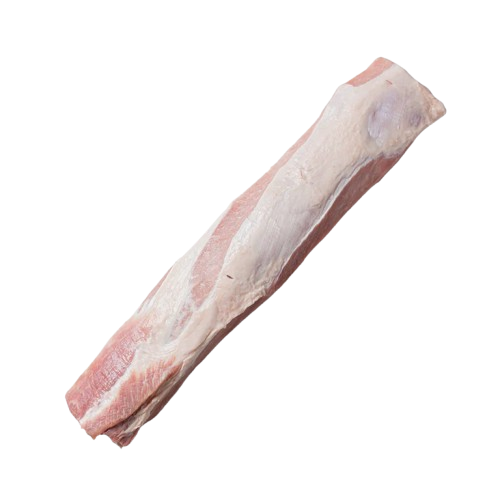
The types of pork loin are the Loin Roast and Pork Chops, which are cut from the large loin muscle running along the back of the pig. The following table explains these common cuts.
| Type | Description | Calories (Approximate per 100g, Cooked) | Calorie Qualifications |
|---|---|---|---|
|
Loin Roast
|
A large, whole section of the loin, sold either boneless or bone-in. It is lean with a cap of fat on top. | 242 | The fat cap can increase calorie density, but the meat itself is very lean. |
|
Pork Chops
|
Individual steaks cut from the loin roast. Can be bone-in or boneless, with varying thickness. | 242 | Calorie count is identical to the roast per 100g, but varies widely based on the chop's size and fat trim. |
What are the Main Dishes with Pork Loin?
Pork loin is a versatile cut featured in a wide range of main courses, from simple roasts to elegant stuffed preparations. The table that follows details main courses that are built around pork loin.
| Dish Name | Calories (Estimate per serving) | Type of Pork Loin | Carbs (g) (Estimate) | Sugar (g) (Estimate) | Protein (g) (Estimate) | Fat (g) (Estimate) | Cuisine | Restaurants |
|---|---|---|---|---|---|---|---|---|
|
Roasted Pork Loin
|
400-600 | Loin Roast | 5 | 2 | 55 | 20 | American/European | Boston Market |
|
Pan-Seared Pork Chops
|
350-550 | Pork Chops | 2 | 0 | 50 | 18 | American | Texas Roadhouse, Outback Steakhouse |
|
Stuffed Pork Loin
|
500-750 | Loin Roast | 25 | 15 | 60 | 25 | Italian-American | Maggiano's Little Italy |
|
Tonkatsu (Pork Cutlet)
|
500-700 | Boneless Chops | 50 | 5 | 40 | 25 | Japanese | Wagamama, Katsuya |
|
Pork Schnitzel
|
450-650 | Boneless Chops | 40 | 2 | 45 | 25 | German/Austrian | Hofbräuhaus |
|
Grilled Pork Chops
|
300-500 | Pork Chops | 2 | 0 | 50 | 15 | American | Applebee's, Chili's Grill & Bar |
|
Canadian Bacon
|
100-150 (per few slices) | Cured Loin | 2 | 1 | 15 | 5 | Canadian/American | IHOP, Denny's |
What Cuisines Prefer Pork Loin the Most?
Pork loin is a prized cut in many European and North American cuisines, where roasting and pan-searing are common cooking methods. The table below highlights the culinary traditions where pork loin is a key ingredient.
| Cuisine | Dish | Types of Pork Loin Used | Calories (Estimate) | Restaurant(s) |
|---|---|---|---|---|
|
American
|
Roast Pork Loin, Grilled Pork Chops | Loin Roast, Pork Chops | 300-600 | Texas Roadhouse, Boston Market |
|
German/Austrian
|
Pork Schnitzel, Schweinebraten | Boneless Chops, Loin Roast | 450-700 | Hofbräuhaus |
|
Italian
|
Arrosto di Maiale, Braciole | Loin Roast, Thin Chops | 400-650 | Carmine's, Il Mulino New York |
|
Japanese
|
Tonkatsu | Boneless Chops | 500-700 | Wagamama, Katsuya |
|
Danish
|
Flæskesteg (Roast Pork) | Loin Roast (with rind) | 500-750 | Aquavit (specialty) |
|
British
|
Roast Pork with Crackling | Loin Roast (with rind) | 500-750 | Gordon Ramsay Steak |
Which Countries Produce the Most Pork Loin?
The top producers of pork, which is the source of pork loin, are China, the European Union, and the United States. Specific global production data for "pork loin" is not tracked separately from the broader "pork meat" category. The table below shows the production quantity of pork meat in key countries and regions.
| Country/Region | 2003 | 2008 | 2013 | 2018 | 2019 | 2020 | 2021 | 2022 |
|---|---|---|---|---|---|---|---|---|
| China | 44,600,000 | 48,900,000 | 54,750,000 | 54,040,000 | 42,550,000 | 41,130,000 | 52,960,000 | 55,410,000 |
| European Union | 21,500,000 | 22,500,000 | 22,700,000 | 24,150,000 | 24,200,000 | 24,000,000 | 23,400,000 | 22,200,000 |
| United States | 9,150,000 | 10,500,000 | 10,550,000 | 11,950,000 | 12,550,000 | 12,800,000 | 12,500,000 | 12,350,000 |
| Brazil | 2,500,000 | 3,000,000 | 3,400,000 | 3,850,000 | 4,000,000 | 4,100,000 | 4,300,000 | 4,400,000 |
| Russian Federation | 1,550,000 | 1,800,000 | 2,400,000 | 3,150,000 | 3,300,000 | 3,500,000 | 3,650,000 | 3,750,000 |
Which Countries Consume the Most Pork Loin?
The top consumers of pork, which includes pork loin, are China, the European Union, and the United States. China's consumption is by far the largest in the world. The table below shows pork consumption in key markets.
| Country/Region | 2003 | 2008 | 2013 | 2018 | 2019 | 2020 | 2021 | 2022 |
|---|---|---|---|---|---|---|---|---|
| China | 45,000,000 | 50,000,000 | 55,000,000 | 56,000,000 | 44,500,000 | 43,000,000 | 54,000,000 | 57,000,000 |
| European Union | 19,500,000 | 20,500,000 | 20,000,000 | 21,000,000 | 20,800,000 | 20,500,000 | 20,000,000 | 19,000,000 |
| United States | 8,500,000 | 9,000,000 | 9,200,000 | 9,800,000 | 10,100,000 | 10,300,000 | 10,200,000 | 10,100,000 |
| Russian Federation | 2,000,000 | 2,500,000 | 3,000,000 | 3,200,000 | 3,300,000 | 3,500,000 | 3,600,000 | 3,700,000 |
| Vietnam | 2,200,000 | 2,500,000 | 2,800,000 | 3,200,000 | 2,800,000 | 2,900,000 | 3,100,000 | 3,300,000 |
How Do Prices of Pork Loin-Including Dishes Change?
Restaurant checks for meals containing pork loin, such as pork chops, have increased over the last ten years. This shift reflects the higher wholesale price of pork, along with greater costs for restaurant operations and other food items. These updated prices are noticeable on the menus at casual and family-style dining chains.
| Restaurant | Dish | Old Price (Year) | Current Price (2024/2025) |
|---|---|---|---|
| Texas Roadhouse | Pork Chops (Single) | $10.99 (2016) | $13.49 - $17.49 |
| Outback Steakhouse | Pork Porterhouse | $19.99 (2017) | $34.99 - $36.99 |
| Applebee's | Double-Glazed Pork Chop | $13.99 (2015) | $18.99 - $22.99 |
What is the Pork Loin Calorie for 100 Grams?
A 100g serving of broiled pork loin contains 242 calories. The same amount of pulled pork loin has 196 calories, while a roasted portion has 143 calories.
What is the Pork Loin Calorie for 1 KG?
For one kilogram of pork loin, a broiled preparation contains 2420 calories. A kilogram of pulled pork loin has 1960 calories, and a kilogram of roasted pork loin has 1430 calories.
What is the Calorie of 1 Pork Loin?
A single broiled pork loin chop (87g) contains 211 calories, while a whole roasted piece from a 1lb raw portion (333g) has 476 calories. A 4oz Smithfield Marinated Boneless Pork Loin Filet has 160 calories, and a Hormel Seasoned Pork Loin Filet (112g) has 130 calories.
What are the Health Benefits of Pork Loin?
Pork loin provides distinct nutritional benefits from a high concentration of quality protein and an excellent profile of B vitamins. The main wellness advantages of eating pork loin are detailed here.
- Supports Energy Metabolism: Pork loin is an exceptional source of thiamin (Vitamin B1), a crucial vitamin for converting carbohydrates into energy. Thiamin is a necessary coenzyme for several key reactions in energy metabolism. A review by Lonsdale, D. (2006), "A review of the biochemistry, metabolism and clinical benefits of thiamin," established the fundamental role of thiamin in glucose metabolism and energy production for all cells.
- Promotes Muscle Repair and Maintenance: The complete protein in pork loin supplies all essential amino acids required for building and repairing muscle tissue. Consuming high-quality protein is vital for stimulating muscle protein synthesis, especially after exercise. A study by Paddon-Jones, D., & Rasmussen, B. B. (2009), "Dietary protein recommendations and the prevention of sarcopenia," established that adequate protein intake is fundamental for preserving muscle mass.
- Aids in Red Blood Cell Formation: Pork loin is a good source of Vitamin B12, which is essential for the formation of red blood cells and the prevention of certain types of anemia. Vitamin B12 works together with folate in the synthesis of DNA and red blood cells. Research by O'Leary, F., & Samman, S. (2010), "Vitamin B12 in health and disease," demonstrated the essential role of Vitamin B12 in hematopoiesis and preventing megaloblastic anemia.
What are the Downsides of Pork Loin?
Eating pork loin, while a lean cut, involves health considerations connected to its saturated fat content when consumed in large quantities. The potential health problems associated with pork loin are explained below.
- Contains Saturated Fat: Pork loin, although lean, contains saturated fat, which can raise low-density lipoprotein (LDL) cholesterol levels, a risk factor for heart disease. A medium broiled serving (170g) contains 8.9g of saturated fat. A scientific advisory from the American Heart Association by Sacks, F. M., et al. (2017), "Dietary Fats and Cardiovascular Disease," reaffirmed the recommendation to limit saturated fat intake to reduce cardiovascular disease risk. An alternative with lower saturated fat is skinless chicken breast or fish. A suggested amount is to trim all visible fat before cooking and keep portions to 3-4 ounces.
- Potential Contaminants in Processed Forms: Cured or smoked pork loin products, such as Canadian bacon, can contain high levels of sodium and nitrates. High sodium intake is a primary cause of high blood pressure, and nitrates are preservatives that can form potentially carcinogenic compounds in the body. A meta-analysis by Mozaffarian, D., et al. (2014), "Global sodium consumption and death from cardiovascular causes," confirmed a direct link between high sodium consumption and an increased risk of death from cardiovascular events. An alternative is to choose fresh, uncured pork loin. A daily suggested amount is to limit consumption of processed meats.
Is Pork Loin Good for You?
Yes, pork loin is a good food choice when consumed in moderation because it is a lean cut of meat that delivers high-quality protein and a rich profile of vitamins and minerals. The nutritional composition offers several benefits for bodily functions. The high thiamin content is crucial for Nerve Function, as the vitamin plays a key role in the synthesis of neurotransmitters. A review by Whitfield, K. C., et al. (2018), "Thiamine deficiency and its prevention and control in major emergencies," details the vitamin's critical importance for maintaining the health of the nervous system. The selenium in pork loin supports Immune Health by acting as a powerful antioxidant and modulating immune responses. A review by Rayman, M. P. (2012), "Selenium and human health," demonstrated the importance of adequate selenium intake for a robust immune system. The protein in pork loin also aids in Weight Management by increasing feelings of fullness, a concept detailed in a study by Paddon-Jones, D., et al. (2008), "Protein, weight management, and sarcopenia."
How Do Calories Change According to Pork Loin Types?
The calorie count in pork loin does not change significantly between a whole roast and individual chops, as they are from the same muscle. Both a Loin Roast and Pork Chops contain 242 calories per 100 grams when broiled. The primary factor that alters the calorie count is the amount of the external fat cap that is left on the meat during cooking and consumed. Trimming the fat cap before cooking will lower the final calorie count of the serving.
What is the Difference Between Pork Loin and Pork Tenderloin?
The primary difference between pork loin and pork tenderloin is the specific muscle they are cut from. The pork loin is a large, wide muscle that runs along the back of the pig. The pork tenderloin is a small, narrow muscle that sits beneath the loin, next to the backbone. The tenderloin is a non-weight-bearing muscle, which makes it exceptionally tender but also very lean. The pork loin is larger, wider, and has a fat cap, making it ideal for roasts and thick chops.
What are Desserts with Pork Loin?
Pork loin is a savory cut of meat with a rich flavor that is not used in dessert preparations. Culinary traditions do not incorporate pork loin into sweet dishes. Instead, meals featuring pork loin are followed by separate dessert courses that complement the main dish.
What is the Origin of Pork Loin?
The origin of pork loin as a prime culinary cut is rooted in European butchery traditions that sought to isolate the most tender parts of the pig. The loin, a large muscle running along the back, is naturally tender because it is not heavily exercised. For centuries, this cut was reserved for roasts and celebratory meals. In Britain, the tradition of scoring the fat cap and skin to create crispy "crackling" on a roast loin became a national dish. In Germany and Austria, the practice of pounding loin cutlets thin to create schnitzel became a culinary hallmark. The French perfected the art of roasting the loin and creating delicate pan sauces. These European techniques were brought to America, where the pork chop, a single-serving steak cut from the loin, became an immensely popular and accessible meal for families.
Explore More Meat
Discover more Meat with detailed nutrition facts, calorie counts, vitamins, minerals, and health benefits. Compare similar foods, serving sizes, macronutrients, and key nutrients to find the best option for your diet and nutrition goals.
 Bacon calories
 Beef calories
 Beef Brisket calories
 Beef Chuck calories
 Beef Jerky calories
 Beef Liver calories
 Beef Short Ribs calories
 Beef Tenderloin calories
 Beef Tongue calories
 Bison calories
 Buffalo Meat calories
 Chicken calories