Calories and Nutritions in Pork Shoulder
Pork shoulder is a popular cut of pork used in a variety of cooking styles, especially in American, Mexican and Puerto Rican cuisines. A single pork shoulder roast (262g) contains 705 calories. The calories in pork roast slices range from 41 calories for a thin slice (14g) to 122 calories for a thick one (42g). A 3oz (85g) braised pork shoulder has 224 calories, while a 3oz smoked pork roast portion (84g) has 180 calories. Packaged pulled pork options (cut from the pork shoulder) show a serving of Hormel Original (140g) has 240 calories, while a serving of Curly's Sauceless (140g) has 300 calories. A full cup of pulled pork in barbecue sauce (249g) contains 418 calories.
The pork shoulder nutrition facts reveal a food rich in B vitamins, with a 100g roasted serving providing 109% of the Daily Value for thiamin. This high thiamin content is critical for energy metabolism and proper nerve function, a conclusion supported by research (Whitfield, K. C., et al., 2018). The same 100g serving also delivers significant amounts of other important minerals, including 81% of the DV for selenium and 32% for zinc, to support immune function and cellular health.
Pork shoulder's versatility allows for many preparations, including slow-roasting for pulled pork, braising for pot roast, and cubing for stews, making it a favorite in numerous global cuisines. The top pork producers and consumers include China, the United States, and the European Union. The price of pork shoulder has climbed significantly over the last 20 years, with the average retail cost rising from under $1.50 per pound in the early 2000s to over $3.00 per pound after 2020.
As a main ingredient in food cultures from American barbecue to Puerto Rican Pernil, health advisories from the American Heart Association recommend trimming visible fat to manage saturated fat intake. An 85g roasted pork serving is a sensible portion (229 calories) and the calories can be burned doing 23 minutes of jogging or 31 minutes of swimming.
Pork Shoulder nutrition
| Stats | Weight |
|---|---|
| Carbs | 0 grams |
| Protein | 27 grams |
| Fats | 0 grams |
| Sugars | 0 grams |
- Large Pork Shoulder Calories (Nutritional Facts)
- Medium Pork Shoulder Calories (Nutritional Facts)
- Small Pork Shoulder Calories (Nutritional Facts)
- Cooked Pork Shoulder Calories (Nutritional Facts)
- Smoked Pork Shoulder Calories (Nutritional Facts)
- Pork Shoulder Roast Calories (Nutritional Facts)
- Shredded Pork Shoulder Calories (Nutritional Facts)
- Sugar in Pork Shoulder
- Fiber in Pork Shoulder
- Protein in Pork Shoulder
- Carbs in Pork Shoulder
- Fat in Pork Shoulder
- Vitamins in Pork Shoulder
- Minerals in Pork Shoulder
Large Pork Shoulder Calories (Nutritional Facts)
A large serving of roasted pork shoulder (227g or 8oz) contains 611 calories, 52.4g of protein, 42.9g of fat, 0g of carbohydrates, 0g of fiber, 0g of sugar, and 152mg of sodium.
A medium serving of roasted pork shoulder (170g or 6oz) has 458 calories, 39.3g of protein, 32.1g of fat, 0g of carbohydrates, 0g of fiber, 0g of sugar, and 114mg of sodium.
A small serving of roasted pork shoulder (85g or 3oz) provides 229 calories, 19.6g of protein, 16.1g of fat, 0g of carbohydrates, 0g of fiber, 0g of sugar, and 57mg of sodium.
The pork shoulder roast nutrition profile for a braised steak (264g or 9.3oz) includes 694 calories, 68.2g of protein, 44.7g of fat, 0.08g of carbohydrates, 0g of fiber, 0g of sugar, and 398.6mg of sodium. A 3oz serving of braised pork shoulder (85g) has 224 calories, 22g of protein, 14.4g of fat, 0.03g of carbohydrates, 0g of fiber, 0g of sugar, and 128.4mg of sodium.
The protein in shredded pork for a 3oz smoked serving (84g) is 13g. This serving of smoked pork shoulder contains 180 calories, 14g of fat, 1g of carbohydrates, 0g of fiber, 0g of sugar, and 990mg of sodium. The pulled pork protein in a one-cup serving with barbecue sauce (249g) is 32.8g.
A one-cup serving of cooked, diced pork shoulder roast (134g or 4.7oz) has 389 calories, 30.9g of protein, 28.4g of fat, 0g of carbohydrates, 0g of fiber, 0g of sugar, and 522.6mg of sodium. A thick slice of roast (42g) has 122 calories, 9.7g of protein, 8.9g of fat, and 163.8mg of sodium. A medium slice (28g) has 81 calories, 6.5g of protein, 5.9g of fat, and 109.2mg of sodium. A thin slice (14g) has 41 calories, 3.2g of protein, 3g of fat, and 54.6mg of sodium.
One cup of pulled pork shoulder in barbecue sauce (249g or 8.8oz) has 418 calories, 32.8g of protein, 11g of fat, 46.7g of carbohydrates, 3g of fiber, 37.8g of sugar, and 1658.3mg of sodium.
Pork shoulder, whether raw, roasted, braised, or smoked, contains 0g of sugar. Shredded pork shoulder in barbecue sauce contains 37.8g of sugar per cup.
Pork shoulder, whether raw, roasted, braised, or smoked, contains 0g of fiber. Shredded pork shoulder in barbecue sauce provides 3g of fiber (11% DV) per cup.
A braised pork shoulder steak (264g) provides 68.2g of protein (136% DV). A large roasted serving (227g) has 52.4g of protein (105% DV). A medium roasted serving (170g) has 39.3g of protein (79% DV). A cup of shredded pork in sauce (249g) has 32.8g of protein (66% DV). A one-cup diced roast (134g) has 30.9g of protein (62% DV). A 3oz braised serving (85g) has 22g of protein (44% DV). A small roasted serving (85g) has 19.6g of protein (39% DV). A 3oz smoked serving (84g) has 13g of protein (26% DV). A thick slice of roast (42g) has 9.7g of protein (19% DV). A medium slice of roast (28g) has 6.5g of protein (13% DV). A thin slice of roast (14g) has 3.2g of protein (6% DV).
A cup of shredded pork in barbecue sauce has 46.7g of carbohydrates (17% DV). A 3oz smoked serving (84g) has 1g of carbohydrates (0% DV). All other servings of pork shoulder, whether roasted or braised in large, medium, or small portions, contain 0g of carbohydrates (0% DV).
The pork shoulder fat content changes with the portion size and preparation. A braised pork shoulder steak (264g) contains 44.7g of total fat (57% DV). A large roasted serving (227g) has 42.9g of total fat (55% DV). A medium roasted serving (170g) has 32.1g of total fat (41% DV). A one-cup diced roast (134g) has 28.4g of total fat (36% DV). A small roasted serving (85g) has 16.1g of total fat (21% DV). A 3oz braised serving (85g) has 14.4g of total fat (18% DV). A 3oz smoked serving (84g) has 14g of total fat (18% DV). A cup of shredded pork in sauce (249g) has 11g of total fat (14% DV). A thick slice of roast (42g) has 8.9g of total fat (11% DV). A medium slice of roast (28g) has 5.9g of total fat (8% DV). A thin slice of roast (14g) has 3g of total fat (4% DV).
A braised pork shoulder steak (264g) provides 15% of the DV for Vitamin D. A one-cup diced roast (134g) provides 10% of the DV for Vitamin D. A 3oz braised serving (85g) provides 5% of the DV for Vitamin D. A thick slice of roast (42g) provides 3% of the DV for Vitamin D. A medium slice of roast (28g) provides 2% of the DV for Vitamin D. A large roasted serving (227g), a medium roasted serving (170g), a small roasted serving (85g), a 3oz smoked serving (84g), and a cup of shredded pork in sauce (249g) provide 0-2% of the DV for Vitamin D.
A braised pork shoulder steak (264g) provides 48% of the DV for phosphorus, 25% of the DV for iron, and 21% of the DV for potassium. A cup of shredded pork in sauce (249g) provides 32% of the DV for phosphorus and 17% of the DV for iron. A one-cup diced roast (134g) provides 23% of the DV for phosphorus and 10% of the DV for iron. A large roasted serving (227g) provides 44% of the DV for phosphorus and 16% of the DV for iron. A medium roasted serving (170g) provides 33% of the DV for phosphorus and 12% of the DV for iron. A small roasted serving (85g) provides 17% of the DV for phosphorus and 6% of the DV for iron.
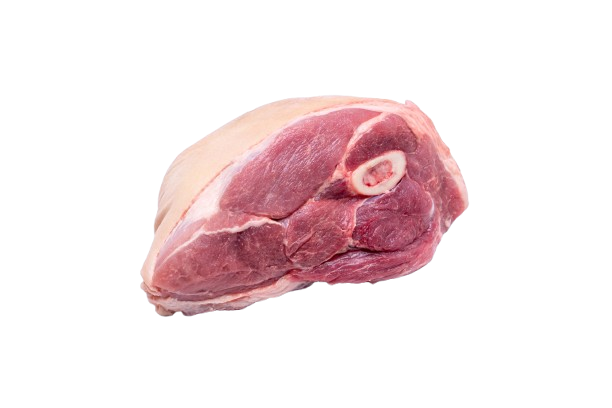
Get a Custom Report on Pork Shoulder Nutrition Data – Contact Us!
What are the Types of Pork Shoulder?
The types of pork shoulder are the Boston Butt and the Picnic Roast. These are the two sub-primal cuts that make up the whole pork shoulder. The following table explains these common cuts.
| Type | Description | Calories (Approximate per 100g, Roasted) | Calorie Qualifications |
|---|---|---|---|
|
Boston Butt
|
The upper part of the pork shoulder. It is well-marbled with fat, making it flavorful and tender when slow-cooked. | 269 | The rich intramuscular fat makes this the more calorie-dense part of the shoulder. |
|
Picnic Roast
|
The lower part of the pork shoulder, extending down to the hog's front leg. It is leaner than the Boston butt. | 245 | The lower fat content and higher proportion of muscle make this a slightly lower-calorie option. |
What are the Main Dishes with Pork Shoulder?
Pork shoulder serves as the base for numerous substantial main courses worldwide, acclaimed for its flavor and tenderness when slow-cooked. The following table provides a breakdown of main dishes centered on pork shoulder.
| Dish Name | Calories (Estimate per serving) | Type of Pork Shoulder | Carbs (g) (Estimate) | Sugar (g) (Estimate) | Protein (g) (Estimate) | Fat (g) (Estimate) | Cuisine | Restaurants |
|---|---|---|---|---|---|---|---|---|
|
Pulled Pork Sandwich
|
600-900 | Boston Butt | 55 | 25 | 45 | 30 | American BBQ | Jack's BBQ, Mighty Quinn's BBQ |
|
Pork Carnitas Tacos
|
500-750 | Boston Butt | 35 | 2 | 40 | 35 | Mexican | Dos Caminos, Rosa Mexicano |
|
Pork Pot Roast
|
550-800 | Picnic Roast | 25 | 8 | 60 | 30 | American | Cracker Barrel |
|
Pernil (Roast Pork Shoulder)
|
600-850 | Picnic Roast | 5 | 1 | 65 | 40 | Puerto Rican | Victor's Cafe, Havana Central |
|
Kalua Pig
|
500-700 | Boston Butt | 2 | 0 | 50 | 35 | Hawaiian | Roy's Restaurant, Helena's Hawaiian Food |
|
Pork Vindaloo
|
550-750 | Boston Butt (cubed) | 20 | 8 | 45 | 35 | Indian (Goan) | Rasika |
|
Cochon de Lait
|
500-750 | Whole Shoulder | 2 | 0 | 55 | 35 | Cajun/Creole | Commander's Palace |
What Cuisines Prefer Pork Shoulder the Most?
Pork shoulder is a prized cut, fundamental to culinary traditions that master the art of slow-roasting and braising pork. The table below showcases the cuisines where pork shoulder is a key ingredient.
| Cuisine | Dish | Types of Pork Shoulder Used | Calories (Estimate) | Restaurant(s) |
|---|---|---|---|---|
|
American BBQ
|
Pulled Pork | Boston Butt | 600-900 | Dinosaur Bar-B-Que, Jack's BBQ |
|
Mexican
|
Carnitas, Al Pastor | Boston Butt | 500-800 | Chipotle Mexican Grill, Dos Caminos |
|
Puerto Rican
|
Pernil | Picnic Roast | 600-850 | Victor's Cafe, Havana Central |
|
Chinese
|
Char Siu, Red-Braised Pork | Boston Butt | 400-650 | Din Tai Fung, Great NY Noodletown |
|
Hawaiian
|
Kalua Pig | Boston Butt | 500-700 | Roy's Restaurant, Helena's Hawaiian Food |
|
Cuban
|
Lechon Asado | Picnic Roast | 600-850 | Versailles Restaurant, Gloria Estefan's Kitchen |
|
Korean
|
Bossam | Boston Butt | 550-800 | Kang Ho Dong Baekjeong |
Which Countries Produce the Most Pork Shoulder?
The top producers of pork, which is the source of pork shoulder, are China, the European Union, and the United States. Specific global production data for "pork shoulder" is not tracked separately from the broader "pork meat" category. The table below shows the production quantity of pork meat in key countries and regions.
| Country/Region | 2003 | 2008 | 2013 | 2018 | 2019 | 2020 | 2021 | 2022 |
|---|---|---|---|---|---|---|---|---|
| China | 44,600,000 | 48,900,000 | 54,750,000 | 54,040,000 | 42,550,000 | 41,130,000 | 52,960,000 | 55,410,000 |
| European Union | 21,500,000 | 22,500,000 | 22,700,000 | 24,150,000 | 24,200,000 | 24,000,000 | 23,400,000 | 22,200,000 |
| United States | 9,150,000 | 10,500,000 | 10,550,000 | 11,950,000 | 12,550,000 | 12,800,000 | 12,500,000 | 12,350,000 |
| Brazil | 2,500,000 | 3,000,000 | 3,400,000 | 3,850,000 | 4,000,000 | 4,100,000 | 4,300,000 | 4,400,000 |
| Russian Federation | 1,550,000 | 1,800,000 | 2,400,000 | 3,150,000 | 3,300,000 | 3,500,000 | 3,650,000 | 3,750,000 |
Which Countries Consume the Most Pork Shoulders?
The top consumers of pork, which includes pork shoulder, are China, the European Union, and the United States. China's consumption is by far the largest in the world. The table below shows pork consumption in key markets.
| Country/Region | 2003 | 2008 | 2013 | 2018 | 2019 | 2020 | 2021 | 2022 |
|---|---|---|---|---|---|---|---|---|
| China | 45,000,000 | 50,000,000 | 55,000,000 | 56,000,000 | 44,500,000 | 43,000,000 | 54,000,000 | 57,000,000 |
| European Union | 19,500,000 | 20,500,000 | 20,000,000 | 21,000,000 | 20,800,000 | 20,500,000 | 20,000,000 | 19,000,000 |
| United States | 8,500,000 | 9,000,000 | 9,200,000 | 9,800,000 | 10,100,000 | 10,300,000 | 10,200,000 | 10,100,000 |
| Russian Federation | 2,000,000 | 2,500,000 | 3,000,000 | 3,200,000 | 3,300,000 | 3,500,000 | 3,600,000 | 3,700,000 |
| Vietnam | 2,200,000 | 2,500,000 | 2,800,000 | 3,200,000 | 2,800,000 | 2,900,000 | 3,100,000 | 3,300,000 |
How Do Prices of Pork Shoulder-Including Dishes Change?
Restaurant checks for meals containing pork shoulder, such as pulled pork, have increased over the last ten years. This shift reflects the higher wholesale price of pork, along with greater costs for restaurant operations and other food items. These updated prices are noticeable on the menus at barbecue and casual dining restaurant chains.
| Restaurant | Dish | Old Price (Year) | Current Price (2024/2025) |
|---|---|---|---|
| Dinosaur Bar-B-Que | Pulled Pork Sandwich | $10.95 (2015) | $16.50 - $18.00 |
| Chipotle Mexican Grill | Carnitas Burrito | $7.50 (2016) | $9.25 - $10.50 |
| Cracker Barrel | Sunday Homestyle Chicken (sub pork) | $10.99 (2014) | $13.79 - $14.59 |
What are the Pork Shoulder Calories for 100 Grams?
A 100g serving of roasted pork shoulder contains 269 calories. A 100g serving of braised pork shoulder has 263 calories. A 100g serving of smoked pork shoulder has 214 calories. A 100g serving of shredded pork in barbecue sauce has 168 calories.
What is the Pork Shoulder Calorie for 1 KG?
One kilogram (1000g) of roasted pork shoulder contains 2690 calories. One kilogram of braised pork shoulder has 2630 calories. One kilogram of smoked pork shoulder has 2140 calories. One kilogram of shredded pork in barbecue sauce has 1680 calories.
What is the Calorie Content of 1 Pork Shoulder?
A single pork shoulder roast (262g) contains 705 calories. A serving of Hormel Original Pulled Pork (140g) has 240 calories, and a serving of Curly's Sauceless Pulled Pork (140g) has 300 calories.
What are the Health Benefits of Pork Shoulder?
Pork shoulder delivers significant nutritional value, characterized by a high concentration of quality protein and a remarkable profile of B vitamins. The main wellness advantages of eating pork shoulder are detailed here.
- Supports Energy Metabolism: Pork shoulder is an exceptional source of thiamin (Vitamin B1), a crucial vitamin for converting carbohydrates into energy. Thiamin is a necessary coenzyme for several key reactions in energy metabolism. A review by Lonsdale, D. (2006), "A review of the biochemistry, metabolism and clinical benefits of thiamin," established the fundamental role of thiamin in glucose metabolism and energy production for all cells.
- Promotes Muscle Repair and Maintenance: The complete protein in pork shoulder supplies all essential amino acids required for building and repairing muscle tissue. Consuming high-quality protein is vital for stimulating muscle protein synthesis, especially after exercise. A study by Paddon-Jones, D., & Rasmussen, B. B. (2009), "Dietary protein recommendations and the prevention of sarcopenia," established that adequate protein intake is fundamental for preserving muscle mass.
- Aids in Red Blood Cell Formation: Pork shoulder is a good source of Vitamin B12, which is essential for the formation of red blood cells and the prevention of certain types of anemia. Vitamin B12 works together with folate in the synthesis of DNA and red blood cells. Research by O'Leary, F., & Samman, S. (2010), "Vitamin B12 in health and disease," demonstrated the essential role of Vitamin B12 in hematopoiesis and preventing megaloblastic anemia.
What are the Downsides of Pork Shoulder?
Consuming pork shoulder, a cut recognized for its high fat content, carries health considerations related to saturated fat. The potential health problems associated with pork shoulder are explained below.
- High in Saturated Fat: Pork shoulder is a fatty cut of meat containing a significant amount of saturated fat, which can raise low-density lipoprotein (LDL) cholesterol levels, a major risk factor for heart disease. A small roasted serving (85g) contains 5.8g of saturated fat (29% DV). A scientific advisory from the American Heart Association by Sacks, F. M., et al. (2017), "Dietary Fats and Cardiovascular Disease," reaffirmed the recommendation to limit saturated fat intake to reduce cardiovascular disease risk. An alternative with lower saturated fat is pork tenderloin or skinless chicken. A suggested amount is to trim all visible fat before cooking and reserve this cut for occasional meals.
- High Calorie Density: The high fat content makes pork shoulder a very calorie-dense food, which can lead to weight gain if consumed in large quantities without adjusting overall calorie intake. A small roasted serving (85g) contains 229 calories. A meta-analysis by Mozaffarian, D., Hao, T., Rimm, E. B., Willett, W. C., & Hu, F. B. (2011), "Changes in diet and lifestyle and long-term weight gain in women and men," found a direct association between red meat consumption and long-term weight gain. A lower-calorie alternative is a leaner pork cut like loin roast. A daily suggested amount is to keep portions small, around 3-4 ounces.
Is Pork Shoulder Good for You?
Yes, pork shoulder can be a good food choice when visible fat is trimmed and the meat is consumed in moderation, because it is a nutrient-dense protein source rich in specific vitamins and minerals. The nutritional composition offers several benefits for bodily functions. The high thiamin content is crucial for Nerve Function, as the vitamin plays a key role in the synthesis of neurotransmitters. A review by Whitfield, K. C., et al. (2018), "Thiamine deficiency and its prevention and control in major emergencies," details the vitamin's critical importance for maintaining the health of the nervous system. The selenium in pork shoulder supports Immune Health by acting as a powerful antioxidant and modulating immune responses. A review by Rayman, M. P. (2012), "Selenium and human health," demonstrated the importance of adequate selenium intake for a robust immune system. The protein in pork shoulder also aids in Weight Management by increasing feelings of fullness, a concept detailed in a study by Paddon-Jones, D., et al. (2008), "Protein, weight management, and sarcopenia."
How Do Calories Change According to Pork Shoulder Types?
The calorie content of pork shoulder is dictated by which section of the shoulder the meat is sourced from. The Boston Butt contains the most calories, with 269 per 100 grams when roasted, a result of the extensive intramuscular fat that makes the cut perfect for pulled pork. The Picnic Roast has a lower calorie count of 245 per 100 grams, a figure that reflects its leaner muscle composition with less marbling.
What is the Difference Between Pork Shoulder and Pork Butt?
The primary difference is that "pork butt" and "pork shoulder" are terms for different parts of the same section of the pig. The "pork butt," also known as the Boston butt, is the upper, rectangular part of the shoulder. The "pork shoulder," also called the picnic roast, is the lower, triangular part of the shoulder. The pork butt is not the rear of the pig. It is more marbled and has a more uniform shape, making it the preferred cut for pulled pork. The picnic roast is leaner and contains more bone and connective tissue.
What are Desserts with Pork Shoulder?
Pork shoulder is a savory cut of meat with a rich, distinctive flavor that is not used in dessert preparations. Culinary traditions do not incorporate pork shoulder into sweet dishes. Instead, meals featuring pork shoulder are followed by separate dessert courses.
What is the Origin of Pork Shoulder?
The culinary use of pork shoulder as a specific cut originates from traditional butchering practices that aimed to utilize the whole animal. As a well-worked muscle, the shoulder is a tougher cut with abundant fat and connective tissue, which historically made it an affordable option. Its importance in cooking grew as slow-cooking methods were developed to tenderize such cuts. In the American South, the technique of slow-smoking whole hogs, perfected by enslaved African Americans, turned the tough shoulder into the tender "pulled pork" that became central to American barbecue. In Latin America, pigs introduced by Spanish colonists led to the adaptation of the shoulder for slow-roasting in dishes like Pernil and Carnitas. The cut's fatty nature also made it perfect for Asian preparations like Chinese Char Siu, where the rendering fat creates a moist and flavorful dish.
Explore More Meat
Discover more Meat with detailed nutrition facts, calorie counts, vitamins, minerals, and health benefits. Compare similar foods, serving sizes, macronutrients, and key nutrients to find the best option for your diet and nutrition goals.
 Bacon calories
 Beef calories
 Beef Brisket calories
 Beef Chuck calories
 Beef Jerky calories
 Beef Liver calories
 Beef Short Ribs calories
 Beef Tenderloin calories
 Beef Tongue calories
 Bison calories
 Buffalo Meat calories
 Chicken calories