Calories and Nutritions in Pork Tenderloin
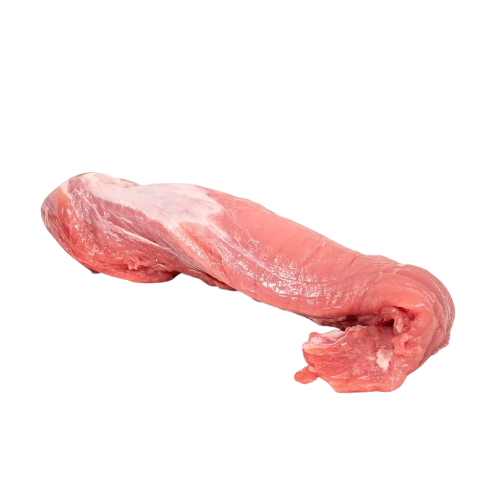
Pork tenderloin is a lean cut often used in Midwestern breaded sandwiches and French cuisine. A single broiled pork loin chop (87g) has 211 calories per pork tenderloin serving, while a whole roasted piece from a 1lb raw portion (333g) contains 476 calories. A breaded and fried pork tenderloin sandwich (290g) has 552 calories, and a grilled serving (235g) offers 346 calories. A 4oz Smithfield Marinated Boneless Pork Loin Filet has 160 calories, while a Hormel Seasoned Pork Loin Filet (112g) has 130 calories.
The pork tenderloin nutrition facts highlight its status as an extra-lean protein, a classification given by the USDA because a 100g serving contains less than 5g of fat. The meat is a powerhouse of B vitamins, especially thiamin, with a 100g roasted serving providing 73% of the Daily Value, a nutrient critical for nerve function and energy metabolism (Whitfield, K. C., et al., 2018). The pork tenderloin macros for a 100g roasted portion consist of 26.2g of protein, only 3.5g of fat, and 0g of carbohydrates. This nutrient density also delivers a significant amount of selenium (89% DV) and zinc (24% DV) to support immune function and cellular health.
Pork tenderloin lends itself to a variety of cooking methods, from roasting whole to slicing into medallions for pan-searing or grilling, making it a favorite in numerous global cuisines. This worldwide demand is met by top pork producers like China and the United States. The price of this premium cut has shown a consistent upward trend over the last 20 years, with the average retail cost rising from below $3.50 per pound in the early 2000s to over $5.00 per pound after 2020.
To maintain a healthy diet, the American Heart Association recommends choosing lean cuts of meat like tenderloin. A small 85g roasted serving is a sensible portion containing just 122 calories, an amount that can be expended through 12 minutes of jogging or 16 minutes of swimming.
Pork Tenderloin nutrition
| Stats | Weight |
|---|---|
| Carbs | 0 grams |
| Protein | 21.6 grams |
| Fats | 3.9 grams |
| Sugars | 0 grams |
- Large Pork Tenderloin Calories (Nutritional Facts)
- Medium Pork Tenderloin Calories (Nutritional Facts)
- Small Pork Tenderloin Calories (Nutritional Facts)
- Grilled Pork Tenderloin Calories (Nutritional Facts)
- Pork Tenderloin Sandwich (Nutritional Facts)
- Sodium in Pork Tenderloin
- Sugar in Pork Tenderloin
- Fiber in Pork Tenderloin
- Protein in Pork Tenderloin
- Carbs in Pork Tenderloin
- Fat in Pork Tenderloin
- Vitamins in Pork Tenderloin
- Minerals in Pork Tenderloin
Large Pork Tenderloin Calories (Nutritional Facts)
A large serving of broiled pork loin (227g or 8oz) contains 550 calories, 62g of protein, 31.6g of fat, 0g of carbohydrates, 0g of fiber, 0g of sugar, and 141mg of sodium.
A medium serving of broiled pork loin (170g or 6oz) has 412 calories, 46.4g of protein, 23.6g of fat, 0g of carbohydrates, 0g of fiber, 0g of sugar, and 105mg of sodium.
A small serving of broiled pork loin (85g or 3oz) provides 206 calories, 23.2g of protein, 11.8g of fat, 0g of carbohydrates, 0g of fiber, 0g of sugar, and 53mg of sodium.
A grilled pork tenderloin serving (235g or 8.3oz) has 346 calories, 60g of protein, 9g of fat, 3g of carbohydrates, 1g of fiber, 0.3g of sugar, and 1876mg of sodium.
A breaded and fried pork tenderloin sandwich (290g or 10.2oz) contains 552 calories, 42g of protein, 26g of fat, 35g of carbohydrates, 6g of fiber, 12g of sugar, and 1955mg of sodium in pork tenderloin.
A breaded and fried pork tenderloin sandwich (290g) contains 1955mg of sodium (85% DV). A grilled pork tenderloin serving (235g) has 1876mg of sodium (82% DV). A large serving of broiled pork loin (227g) has 141mg of sodium (6% DV). A medium broiled serving (170g) has 105mg of sodium (5% DV). A small broiled serving (85g) has 53mg of sodium (2% DV).
A breaded and fried pork tenderloin sandwich (290g) contains 12g of sugar. A grilled pork tenderloin serving (235g) has 0.3g of sugar. Broiled pork loin in any serving size contains 0g of sugar.
A breaded and fried pork tenderloin sandwich (290g) provides 6g of fiber (20% DV). A grilled pork tenderloin serving (235g) has 1g of fiber (3% DV). Broiled pork loin in any serving size contains 0g of fiber.
To give an idea of how much protein in pork tenderloin, a large broiled serving (227g) provides 62g of protein (124% DV). A grilled pork tenderloin serving (235g) has 60g of protein (120% DV). A medium broiled serving (170g) has 46.4g of protein (93% DV). A breaded and fried pork tenderloin sandwich (290g) has 42g of protein (84% DV). A small broiled serving (85g) has 23.2g of protein (46% DV). The pork tenderloin protein per 100g for a roasted portion is 26.2g.
A breaded and fried pork tenderloin sandwich (290g) contains 35g of carbohydrates (13% DV). A grilled pork tenderloin serving (235g) has 3g of carbohydrates (1% DV). Broiled pork loin in any serving size contains 0g of carbohydrates (0% DV).
A large serving (227g) contains 31.6g of total pork tenderloin fat content (41% DV). A breaded and fried pork tenderloin sandwich (290g) has 26g of total fat (33% DV). A medium broiled serving (170g) has 23.6g of total fat (30% DV). A small broiled serving (85g) has 11.8g of total fat (15% DV). A grilled pork tenderloin serving (235g) has 9g of total fat (12% DV).
A breaded and fried pork tenderloin sandwich (290g) provides 99% of the DV for thiamin, 60% of the DV for Vitamin B6, and 22% of the DV for Vitamin B12. A large serving of broiled pork loin (227g) provides 166% of the DV for thiamin. A medium broiled serving (170g) provides 124% of the DV for thiamin.
A breaded and fried pork tenderloin sandwich (290g) provides 90% of the DV for selenium, 47% of the DV for phosphorus, and 32% of the DV for iron. A large serving of broiled pork loin (227g) provides 186% of the DV for selenium. A medium broiled serving (170g) provides 140% of the DV for selenium.
Get a Custom Report on Pork Tenderloin Nutrition Data – Contact Us!
What are the Types of Pork Tenderloins?
Pork tenderloin is a single, specific muscle, so it does not have different types in the way larger cuts do. The variations are based on preparation and how the meat is sold. The following table explains these common forms.
| Type | Description | Calories (Approximate per 100g, Cooked) | Calorie Qualifications |
|---|---|---|---|
|
Whole Tenderloin
|
The entire tenderloin muscle, sold as a whole piece for roasting. | 143 | This is the baseline calorie count for the lean, roasted meat. |
|
Medallions
|
The whole tenderloin sliced into thick, round pieces for pan-searing or grilling. | 143 | The calorie count per 100g is identical to the whole roast, as it is the same meat. |
|
Marinated Tenderloin
|
Pre-packaged tenderloins sold in a marinade or solution. | 115-130 | The marinade adds sodium and sometimes sugar, but can have a slightly lower calorie count per 100g depending on water content. |
What are the Main Dishes with Pork Tenderloin?
Pork tenderloin is a valued cut used in numerous sophisticated and quickly prepared main dishes. A selection of main courses that highlight pork tenderloin is detailed in the following table.
| Dish Name | Calories (Estimate per serving) | Type of Pork Tenderloin | Carbs (g) (Estimate) | Sugar (g) (Estimate) | Protein (g) (Estimate) | Fat (g) (Estimate) | Cuisine | Restaurants |
|---|---|---|---|---|---|---|---|---|
|
Roasted Pork Tenderloin
|
300-450 | Whole Roast | 5 | 2 | 50 | 8 | American/European | The Cheesecake Factory |
|
Pan-Seared Medallions
|
250-400 | Medallions | 2 | 0 | 45 | 7 | French/American | Fleming's Prime Steakhouse & Wine Bar |
|
Stuffed Pork Tenderloin
|
400-600 | Whole Roast | 20 | 10 | 55 | 15 | Italian-American | Maggiano's Little Italy |
|
Pork Tenderloin Sandwich
|
500-800 | Medallions (pounded) | 60 | 8 | 35 | 30 | American (Midwest) | Culver's |
|
Grilled Pork Tenderloin
|
250-400 | Whole or Medallions | 2 | 0 | 50 | 6 | American | Applebee's |
|
Pork Medallions with Mushroom Sauce
|
350-500 | Medallions | 10 | 4 | 45 | 15 | French/American | Capital Grille |
|
Sweet and Sour Pork (Tenderloin)
|
500-700 | Cubed | 60 | 45 | 30 | 20 | Chinese-American | P.F. Chang's |
What Cuisines Prefer Pork Tenderloin the Most?
Pork tenderloin is a prized cut in many European and North American cuisines, where its tenderness and lean profile are valued. The table below showcases the culinary traditions where pork tenderloin is a key ingredient.
| Cuisine | Dish | Types of Pork Tenderloin Used | Calories (Estimate) | Restaurant(s) |
|---|---|---|---|---|
|
American
|
Roasted or Grilled Tenderloin | Whole Roast, Medallions | 250-450 | The Cheesecake Factory, Applebee's |
|
French
|
Filet de Porc, Pan-Seared Medallions | Whole Roast, Medallions | 300-500 | Daniel, Le Bernardin |
|
German
|
Schweinefilet | Medallions | 350-550 | Hofbräuhaus |
|
Italian
|
Filetto di Maiale | Whole Roast | 300-500 | Il Mulino New York |
|
Spanish
|
Solomillo de Cerdo | Medallions | 300-450 | Jaleo by José Andrés |
|
Chinese-American
|
Sweet and Sour Pork | Cubed | 500-700 | P.F. Chang's |
Which Countries Produce the Most Pork Tenderloin?
The top producers of pork, which is the source of pork tenderloin, are China, the European Union, and the United States. Specific global production data for "pork tenderloin" is not tracked separately from the broader "pork meat" category. The table below shows the production quantity of pork meat in key countries and regions.
| Country/Region | 2003 | 2008 | 2013 | 2018 | 2019 | 2020 | 2021 | 2022 |
|---|---|---|---|---|---|---|---|---|
| China | 44,600,000 | 48,900,000 | 54,750,000 | 54,040,000 | 42,550,000 | 41,130,000 | 52,960,000 | 55,410,000 |
| European Union | 21,500,000 | 22,500,000 | 22,700,000 | 24,150,000 | 24,200,000 | 24,000,000 | 23,400,000 | 22,200,000 |
| United States | 9,150,000 | 10,500,000 | 10,550,000 | 11,950,000 | 12,550,000 | 12,800,000 | 12,500,000 | 12,350,000 |
| Brazil | 2,500,000 | 3,000,000 | 3,400,000 | 3,850,000 | 4,000,000 | 4,100,000 | 4,300,000 | 4,400,000 |
| Russian Federation | 1,550,000 | 1,800,000 | 2,400,000 | 3,150,000 | 3,300,000 | 3,500,000 | 3,650,000 | 3,750,000 |
Which Countries Consume the Most Pork Tenderloin?
The top consumers of pork, which includes pork tenderloin, are China, the European Union, and the United States. China's consumption is by far the largest in the world. The table below shows pork consumption in key markets.
| Country/Region | 2003 | 2008 | 2013 | 2018 | 2019 | 2020 | 2021 | 2022 |
|---|---|---|---|---|---|---|---|---|
| China | 45,000,000 | 50,000,000 | 55,000,000 | 56,000,000 | 44,500,000 | 43,000,000 | 54,000,000 | 57,000,000 |
| European Union | 19,500,000 | 20,500,000 | 20,000,000 | 21,000,000 | 20,800,000 | 20,500,000 | 20,000,000 | 19,000,000 |
| United States | 8,500,000 | 9,000,000 | 9,200,000 | 9,800,000 | 10,100,000 | 10,300,000 | 10,200,000 | 10,100,000 |
| Russian Federation | 2,000,000 | 2,500,000 | 3,000,000 | 3,200,000 | 3,300,000 | 3,500,000 | 3,600,000 | 3,700,000 |
| Vietnam | 2,200,000 | 2,500,000 | 2,800,000 | 3,200,000 | 2,800,000 | 2,900,000 | 3,100,000 | 3,300,000 |
How Do Prices of Pork Tenderloin-Including Dishes Change?
The rise in cost for restaurant meals featuring pork tenderloin has increased over the last decade, a direct result of the higher wholesale price of this premium cut and growing operational expenses. These upward price shifts are visible on the menus at both casual and fine dining restaurant chains.
| Restaurant | Dish | Old Price (Year) | Current Price (2024/2025) |
|---|---|---|---|
| Perry's Steakhouse & Grille | Perry's Famous Pork Chop | $34.95 (2014) | $49.00 - $55.00 |
| The Capital Grille | Bone-In Kona Crusted Dry Aged NY Strip with Shallot Butter | $48.00 (2015) | $65.00 - $75.00 |
| St. Elmo Steak House | Pork Chops | $32.00 (2016) | $42.00 - $50.00 |
| Balthazar | Steak Frites (sub pork chop) | $38.00 (2017) | $49.00 - $54.00 |
What is the Pork Tenderloin Calorie for 100 Grams?
A 100g serving of broiled pork loin contains 242 calories. A 100g serving of roasted pork tenderloin has 143 calories, and a 100g serving of grilled pork tenderloin has 147 calories.
What is the Pork Tenderloin Calorie for 1 KG?
One kilogram of broiled pork loin contains 2420 calories. One kilogram of roasted pork tenderloin has 1430 calories, and one kilogram of grilled pork tenderloin has 1470 calories.
What is the Calorie of 1 Pork Tenderloin?
A single broiled pork loin chop (87g) contains 211 calories. A whole roasted piece from a 1lb raw portion (333g) has 476 calories. A 4oz Smithfield Marinated Boneless Pork Loin Filet has 160 calories, and a Hormel Seasoned Pork Loin Filet (112g) has 130 calories.
What are the Health Benefits of Pork Tenderloin?
Pork tenderloin delivers notable nutritional value through rich, lean protein and a strong range of B vitamins, all with minimal fat content. Key health benefits associated with pork tenderloin are outlined below.
- Supports Energy Metabolism: Pork tenderloin is an exceptional source of thiamin (Vitamin B1), a crucial vitamin for converting carbohydrates into energy. Thiamin is a necessary coenzyme for several key reactions in energy metabolism. A review by Lonsdale, D. (2006), "A review of the biochemistry, metabolism and clinical benefits of thiamin," established the fundamental role of thiamin in glucose metabolism and energy production for all cells.
- Promotes Muscle Repair and Maintenance: The complete protein in pork tenderloin supplies all essential amino acids required for building and repairing muscle tissue. Consuming high-quality protein is vital for stimulating muscle protein synthesis, especially after exercise. A study by Paddon-Jones, D., & Rasmussen, B. B. (2009), "Dietary protein recommendations and the prevention of sarcopenia," established that adequate protein intake is fundamental for preserving muscle mass.
- Aids in Red Blood Cell Formation: Pork tenderloin is a good source of Vitamin B12, which is essential for the formation of red blood cells and the prevention of certain types of anemia. Vitamin B12 works together with folate in the synthesis of DNA and red blood cells. Research by O'Leary, F., & Samman, S. (2010), "Vitamin B12 in health and disease," demonstrated the essential role of Vitamin B12 in hematopoiesis and preventing megaloblastic anemia.
What are the Downsides of Pork Tenderloin?
Eating pork tenderloin is very safe for most people, but some considerations relate to processed versions and cooking methods. The potential health problems associated with pork tenderloin are explained below.
- Potential Contaminants in Processed Forms: Cured or smoked pork tenderloin products can contain high levels of sodium and nitrates. High sodium intake is a primary cause of high blood pressure, and nitrates are preservatives that can form potentially carcinogenic compounds in the body. A meta-analysis by Mozaffarian, D., et al. (2014), "Global sodium consumption and death from cardiovascular causes," confirmed a direct link between high sodium consumption and an increased risk of death from cardiovascular events. An alternative is to choose fresh, uncured pork tenderloin. A daily suggested amount is to limit consumption of processed meats.
- Risk of Undercooking: Pork must be cooked to a safe internal temperature to eliminate the risk of foodborne illnesses like trichinosis. While trichinosis is now rare in commercially raised pork, proper cooking is still essential for safety. The USDA recommends cooking whole muscle cuts of pork to an internal temperature of 145°F. An alternative for those concerned is to use a meat thermometer. A suggested amount is to always verify the internal temperature before consuming.
Is Pork Tenderloin Good for You?
Yes, pork tenderloin is a good food choice because it is an exceptionally lean cut of meat that delivers high-quality protein and a rich profile of vitamins and minerals. The nutritional composition offers several benefits for bodily functions. The high protein content supports Weight Management by increasing feelings of fullness and maintaining metabolic rate, a concept detailed in a study by Paddon-Jones, D., et al. (2008), "Protein, weight management, and sarcopenia." The high thiamin content is crucial for Nerve Function, as the vitamin plays a key role in the synthesis of neurotransmitters. A review by Whitfield, K. C., et al. (2018), "Thiamine deficiency and its prevention and control in major emergencies," details the vitamin's critical importance for maintaining the health of the nervous system. The selenium in pork tenderloin supports Immune Health by acting as a powerful antioxidant and modulating immune responses. A review by Rayman, M. P. (2012), "Selenium and human health," demonstrated the importance of adequate selenium intake for a robust immune system.
How Do Calories Change According to Pork Tenderloin Types?
The calorie count in pork tenderloin does not change significantly based on how it is cut, but rather on how it is prepared. Both a whole roasted tenderloin and medallions cut from it contain 143 calories per 100 grams. The calorie count can decrease slightly in pre-marinated products, which may have a higher water content, bringing the calories down to 115-130 per 100g. Breading and frying the tenderloin for a sandwich dramatically increases the calories.
What Type of Pork Tenderloin is Lean?
Pork tenderloin itself is an exceptionally lean cut of pork. The entire muscle is naturally low in fat, with minimal marbling. The United States Department of Agriculture classifies pork tenderloin as "extra lean," which means that a 100g serving contains less than 5g of total fat, less than 2g of saturated fat, and less than 95mg of cholesterol.
What are Desserts with Pork Tenderloin?
Pork tenderloin is a savory cut of meat with a mild flavor that is not used in dessert preparations. Culinary traditions do not incorporate pork tenderloin into sweet dishes. Instead, meals featuring pork tenderloin are followed by separate dessert courses that complement the main dish.
What is the Origin of Pork Tenderloin?
The recognition of pork tenderloin as a prime culinary cut stems from European butchery traditions focused on isolating the most tender muscles. The tenderloin is a long, narrow muscle located beneath the loin that is not heavily used, resulting in exceptionally tender and lean meat. French butchers pioneered the practice of separating this muscle for special preparations, calling it "filet mignon de porc" to equate its quality with the prized beef cut. This technique of quick-roasting or pan-searing the tenderloin spread throughout Europe, establishing the cut as a symbol of refined pork cookery, distinct from the slow-cooking methods needed for tougher cuts like the shoulder.
Explore More Meat
Discover more Meat with detailed nutrition facts, calorie counts, vitamins, minerals, and health benefits. Compare similar foods, serving sizes, macronutrients, and key nutrients to find the best option for your diet and nutrition goals.
 Bacon calories
 Beef calories
 Beef Brisket calories
 Beef Chuck calories
 Beef Jerky calories
 Beef Liver calories
 Beef Short Ribs calories
 Beef Tenderloin calories
 Beef Tongue calories
 Bison calories
 Buffalo Meat calories
 Chicken calories