Calories and Nutritions in Porterhouse Steak
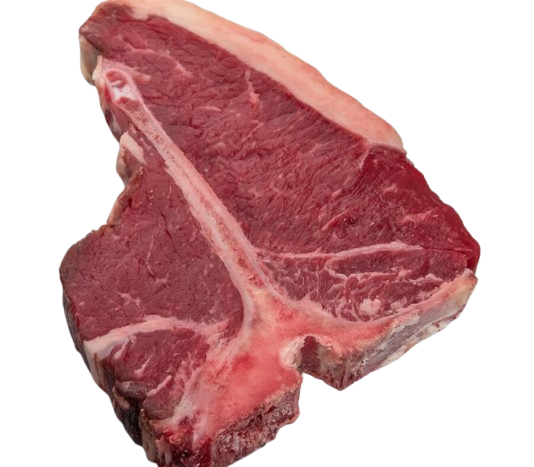
The porterhouse steak is a high protein meat often served in steakhouses, providing 966 calories per 1 pound of grilled porterhouse There are 362 Porterhouse calories for a small grilled steak (168g or 6oz), while a medium sized porterhouse steak (448g or 16oz) contains 966 calories. A 100 gram (3.5 ounce) cut of raw porterhouse steak has 177 calories, while a 100g serving of grilled porterhouse contains 213 calories. A 22oz Porterhouse from LongHorn Steakhouse has 1,280 calories.
The porterhouse steak nutrition profile is notable for a high protein content. The Porterhouse protein amount is 47.9g (96% DV) in a small grilled steak. A study established the importance of high-quality protein for stimulating muscle protein synthesis (Wolfe, R. R., 2012). Major health benefits come from this nutrient density, including a rich supply of iron and B vitamins. A 3oz (85g) raw serving delivers 2mg of iron (23% DV) and 2µg of Vitamin B12 (65% DV), supporting red blood cell formation and neurological health.
Common preparations for porterhouse steak include grilling, pan-searing, and broiling, methods favored in top consuming countries. The United States, China, and Brazil are the leading producers and consumers of beef, ensuring a global supply of these cuts. The price of porterhouse steaks has increased substantially over the last 20 years. The average retail price for a comparable choice beef steak rose from under $5.00 per pound in the early 2000s to over $11.00 per pound by 2023.
Porterhouse steak is a staple dish, from the Bistecca alla Fiorentina in Italian cuisine to the Classic Grilled Porterhouse in American steakhouses. A small, lean grilled portion (85g or 3oz) provides 241 calories, which can be expended through 24 minutes of running or 32 minutes of swimming. Health advisories recommend limiting consumption of red meat to a few times per month to manage health risks.
Porterhouse Steak nutrition
| Stats | Weight |
|---|---|
| Carbs | 0 grams |
| Protein | 25 grams |
| Fats | 0 grams |
| Sugars | 0 grams |
- Large Porterhouse Steak Calories (Nutritional Facts)
- Medium Porterhouse Steak Calories (Nutritional Facts)
- Small Porterhouse Steak Calories (Nutritional Facts)
- Lean Porterhouse Steak Calories (Nutritional Facts)
- Raw Porterhouse Steak Nutrition
- Sodium in Porterhouse Steak
- Potassium in Porterhouse Steak
- Sugar in Porterhouse Steak
- Fiber in Porterhouse Steak
- Protein in Porterhouse Steak
- Carbs in Porterhouse Steak
- Fat in Porterhouse Steak
- Vitamins in Porterhouse Steak
- Minerals in Porterhouse Steak
Large Porterhouse Steak Calories (Nutritional Facts)
A large grilled porterhouse steak (896g or 32oz) contains 1932 calories, 255.5g of protein, 93.6g of fat, 0g of carbohydrates, 0g of fiber, 0g of sugar, and 616.9mg of sodium.
A medium grilled porterhouse steak (448g or 16oz) contains 966 calories, 127.7g of protein, 46.8g of fat, 0g of carbohydrates, 0g of fiber, 0g of sugar, and 308.4mg of sodium.
A small grilled porterhouse steak (168g or 6oz) contains 362 calories, 47.9g of protein, 17.6g of fat, 0g of carbohydrates, 0g of fiber, 0g of sugar, and 115.7mg of sodium.
A lean grilled porterhouse steak (85g or 3oz) contains 241 calories, 21.1g of protein, 16.8g of fat, 0g of carbohydrates, 0g of fiber, 0g of sugar, and 53.6mg of sodium.
A 3oz serving of raw porterhouse steak (85g) has 177 calories, 18g of protein, 11g of fat, 0g of carbohydrates, 0g of fiber, 0g of sugar, and 36mg of sodium.
A large grilled porterhouse steak (896g) contains 616.9mg of sodium (26% DV), a medium one (448g) has 308.4mg (13% DV), and a small one (168g) has 115.7mg (5% DV). A 3oz lean grilled porterhouse steak (85g) contains 53.6mg of sodium (2% DV), while a 3oz raw porterhouse steak (85g) has 36mg of sodium (2% DV).
A large grilled porterhouse steak (896g) provides 2640mg of potassium (56% DV), a medium one (448g) has 1320mg (28% DV), and a small one (168g) provides 495mg (11% DV). A 3oz lean grilled porterhouse steak (85g) contains 216.8mg of potassium (5% DV), and a 3oz raw porterhouse steak (85g) has 200mg of potassium (4% DV).
A large (896g), medium (448g), or small (168g) grilled porterhouse steak contains 0g of sugar. A lean grilled (85g) or raw (85g) porterhouse steak also contains 0g of sugar.
A large (896g), medium (448g), or small (168g) grilled porterhouse steak contains 0g of fiber. A lean grilled (85g) or raw (85g) porterhouse steak also contains 0g of fiber.
A large grilled porterhouse steak (896g) provides 255.5g of protein (511% DV), a medium one (448g) has 127.7g (255% DV), and a small one (168g) contains 47.9g (96% DV). A 3oz lean grilled porterhouse steak (85g) provides 21.1g of protein (42% DV), and a 3oz raw porterhouse steak (85g) has 18g of protein (36% DV).
A large (896g), medium (448g), or small (168g) grilled porterhouse steak contains 0g of carbohydrates (0% DV). A lean grilled (85g) or raw (85g) porterhouse steak also contains 0g of carbohydrates (0% DV).
A large grilled porterhouse steak (896g) contains 93.6g of total fat (120% DV), a medium one (448g) has 46.8g (60% DV), and a small one (168g) has 17.6g (23% DV). A 3oz lean grilled porterhouse steak (85g) contains 16.8g of total fat (22% DV), and a 3oz raw porterhouse steak (85g) has 11g of total fat (14% DV).
A large grilled porterhouse steak (896g) contains 0.91mcg of Vitamin D (5% DV), a medium one (448g) has 0.45mcg (2% DV), a small one (168g) has 0.17mcg (1% DV), and a lean one (85g) has 0.09mcg (0% DV). A 3oz serving of raw porterhouse steak (85g) provides 2µg of Vitamin B12 (65% DV), 1mg of Vitamin B6 (44% DV), 4mg of Niacin (26% DV), and 0.2mg of Riboflavin (13% DV).
A large grilled porterhouse steak (896g) contains 29.2mg of iron (162% DV), a medium one (448g) has 14.6mg (81% DV), a small one (168g) has 5.5mg (30% DV), a lean one (85g) has 2.5mg (14% DV), and a raw one (85g) has 2mg (23% DV). For phosphorus, a large grilled steak has 2032.1mg (163% DV), a medium one has 1016.1mg (81% DV), a small one has 381mg (30% DV), a lean one has 176mg (14% DV), and a raw one has 152mg (22% DV). A 3oz serving of raw porterhouse steak (85g) also provides 16µg of selenium (30% DV) and 3mg of zinc (24% DV).
Get a Custom Report on Porterhouse Steak Nutrition Data – Contact Us!
What are the Types of Porterhouse Steaks?
The types of porterhouse steaks are USDA Prime, USDA Choice, and USDA Select. These grades are defined by the United States Department of Agriculture (USDA) and evaluate the meat based on marbling (intramuscular fat) and the age of the animal. The table below outlines the features of these common grades.
| Type | Description | Calories (Approximate per 100g, Grilled) | Calorie Qualifications |
|---|---|---|---|
|
USDA Prime
|
The highest grade, with abundant marbling. The steak is exceptionally tender, juicy, and flavorful. | 295 | The high amount of intramuscular fat makes this the most calorie-dense grade. |
|
USDA Choice
|
High quality with less marbling than Prime. The steak is tender and flavorful, representing the most common grade in retail. | 270 | A moderate fat content results in a calorie count lower than Prime but higher than Select. |
|
USDA Select
|
A leaner grade with slight marbling. The steak has less flavor and tenderness compared to higher grades. | 250 | The lower fat content makes this the least calorie-dense grade among the three. |
What are Main Dishes With Porterhouse Steak?
Porterhouse steak serves as a centerpiece for many classic and contemporary main courses, primarily in steakhouse and fine dining settings. The table below outlines main dishes that feature the porterhouse cut.
| Dish Name | Calories (Estimate per serving) | Type of Porterhouse Steak | Carbs (g) (Estimate) | Sugar (g) (Estimate) | Protein (g) (Estimate) | Fat (g) (Estimate) | Cuisine | Restaurants |
|---|---|---|---|---|---|---|---|---|
|
Classic Grilled Porterhouse
|
1500 | Grilled | 2 | 0 | 150 | 100 | American Steakhouse | Peter Luger Steak House, Smith & Wollensky |
|
Porterhouse for Two
|
2500 | Grilled (Large Cut) | 5 | 0 | 250 | 170 | American Steakhouse | Morton's The Steakhouse, Wolfgang's Steakhouse |
|
Surf and Turf
|
1700 | Grilled | 5 | 0 | 190 | 110 | American | Mastro's Restaurants, Ocean Prime |
|
Bistecca alla Fiorentina
|
1600 | Grilled | 2 | 0 | 150 | 110 | Italian (Tuscan) | Carbone, Bistecca (New York) |
|
Porterhouse with Béarnaise
|
1700 | Grilled or Broiled | 5 | 2 | 150 | 120 | French/American | The Palm, Delmonico's |
|
Porterhouse Au Poivre
|
1750 | Pan-seared | 10 | 4 | 152 | 125 | French | Balthazar, Minetta Tavern |
|
Cast-Iron Seared Porterhouse
|
1550 | Pan-seared | 3 | 1 | 151 | 105 | American | Keens Steakhouse, Hawksmoor |
|
Porterhouse with Garlic Butter
|
1650 | Broiled | 3 | 0 | 150 | 115 | American/French | Fleming's Prime Steakhouse & Wine Bar |
|
Smoked Porterhouse Steak
|
1400 | Smoked | 3 | 1 | 155 | 90 | American BBQ | Franklin Barbecue (specialty item) |
|
Peppercorn Crusted Porterhouse
|
1650 | Pan-seared | 8 | 3 | 152 | 115 | French/American | Capital Grille, STK Steakhouse |
What Cuisines Prefer Porterhouse Steak the Most?
The Porterhouse steak is a celebrated cut of beef, indispensable in American steakhouse culture and adapted by several other global cuisines. The table below shows culinary traditions that make prominent use of porterhouse steak.
| Cuisine | Dish | Types of Porterhouse Steak Used | Calories (Estimate) | Restaurant(s) |
|---|---|---|---|---|
|
American Steakhouse
|
Classic Grilled Porterhouse | Grilled (USDA Prime or Choice) | 1200-1800 | Peter Luger Steak House, Gibsons Bar & Steakhouse |
|
Italian
|
Bistecca alla Fiorentina | Grilled (High-quality, thick-cut) | 1500-2000 | Carbone, Il Mulino New York |
|
French
|
Steak Au Poivre | Pan-seared (USDA Choice or Prime) | 1400-1950 | Balthazar, Daniel |
|
Argentinian
|
Parrillada (mixed grill) | Grilled over wood fire | 1300-1900 | Fogo de Chão, Texas de Brazil |
|
Italian-American
|
Porterhouse with Garlic and Herbs | Broiled or Pan-seared | 1350-1900 | Rao's, Delmonico's |
|
New American
|
Dry-Aged Porterhouse | Dry-aged, various preparations | 1400-2000 | Eleven Madison Park, The French Laundry |
|
Southern American
|
Cast-Iron Porterhouse | Pan-seared in cast iron | 1250-1800 | Commander's Palace, Husk |
|
Japanese-American
|
Wagyu Porterhouse | Grilled (Wagyu or American Wagyu) | 1800-2500 | CUT by Wolfgang Puck, Nobu |
Which Countries Produce the Most Porterhouse Steaks?
The top producers of beef and veal, which are the source of porterhouse steaks, are the United States, Brazil, and China. Specific global production data for the porterhouse cut is not tracked separately from the broader "beef and veal meat" category. The table below shows the production quantity of beef and veal meat in key countries.
| Country | 2003 | 2008 | 2013 | 2018 | 2019 | 2020 | 2021 | 2022 |
|---|---|---|---|---|---|---|---|---|
| United States | 12,185,000 | 12,101,000 | 11,714,000 | 12,219,000 | 12,382,000 | 12,379,000 | 12,735,000 | 12,890,000 |
| Brazil | 7,618,000 | 9,024,000 | 9,705,000 | 9,900,000 | 10,200,000 | 10,100,000 | 9,750,000 | 10,350,000 |
| China | 5,500,000 | 5,850,000 | 6,350,000 | 6,440,000 | 6,670,000 | 6,720,000 | 6,980,000 | 7,200,000 |
| Argentina | 3,120,000 | 3,200,000 | 2,800,000 | 3,060,000 | 3,170,000 | 3,150,000 | 2,700,000 | 3,000,000 |
| Australia | 2,050,000 | 2,100,000 | 2,250,000 | 2,310,000 | 2,400,000 | 2,080,000 | 1,950,000 | 2,100,000 |
Which Countries Consume the Most Porterhouse Steaks?
The top consumers of beef and veal, which includes porterhouse steaks, are the United States, China, and Brazil. Consumption data is best represented by domestic disappearance, a measure that accounts for production, imports, and exports. The table below shows beef and veal consumption in key markets.
| Country | 2003 | 2008 | 2013 | 2018 | 2019 | 2020 | 2021 | 2022 |
|---|---|---|---|---|---|---|---|---|
| United States | 12,300,000 | 12,500,000 | 11,800,000 | 12,400,000 | 12,500,000 | 12,600,000 | 12,800,000 | 12,900,000 |
| China | 5,600,000 | 6,000,000 | 7,200,000 | 8,500,000 | 9,300,000 | 9,800,000 | 10,400,000 | 10,800,000 |
| Brazil | 6,500,000 | 7,200,000 | 7,900,000 | 7,800,000 | 7,900,000 | 7,700,000 | 7,300,000 | 7,500,000 |
| Argentina | 2,400,000 | 2,600,000 | 2,500,000 | 2,400,000 | 2,450,000 | 2,400,000 | 2,200,000 | 2,300,000 |
| Russian Federation | 2,000,000 | 2,200,000 | 2,300,000 | 1,900,000 | 1,950,000 | 2,000,000 | 2,050,000 | 2,100,000 |
How Do Prices of Porterhouse Steak-Including Dishes Change?
Restaurant menu costs for porterhouse steak dishes have risen over the last decade. The increase reflects the volatile wholesale price of beef and greater expenses for labor and restaurant operations. National steakhouse chains show these price adjustments on menus.
| Restaurant | Dish | Old Price (Year) | Current Price (2024/2025) |
|---|---|---|---|
| Peter Luger Steak House | Steak for Two (Porterhouse) | $96.90 (2014) | $169.00 - $184.95 |
| Ruth's Chris Steak House | Porterhouse for Two (40 oz) | $94.00 (2016) | $124.00 - $135.00 |
| The Capital Grille | Porterhouse Steak (24 oz) | $46.00 (2013) | $49.00 - $85.00 |
| Smith & Wollensky | Porterhouse (for two, 44 oz) | $98.00 (2015) | $275.00 - $285.00 |
| Keens Steakhouse | Porterhouse Steak (for two or three) | $102.00 (2015) | $114.00 - $143.00 |
What is the Porterhouse Steak Calorie for 250 Grams?
A serving of 250g porterhouse steak grilled contains 533 calories.
What is the Porterhouse Steak Calorie for 100 Grams?
A 100g (3.5oz) serving of grilled porterhouse steak contains 213 calories. A 100g serving of raw porterhouse steak has 208 calories, and a 100g serving of lean grilled porterhouse steak contains 283 calories.
What is the Porterhouse Steak Calorie for 1 KG?
One kilogram (1000g) of grilled porterhouse steak contains 2130 calories. One kilogram of raw porterhouse steak contains 2080 calories.
What are the Porterhouse Steak Calories per 1LB?
One pound (453.6g) of grilled porterhouse steak contains 966 calories, while one pound of raw porterhouse steak has 944 calories. One pound of grilled porterhouse has 129.3g of protein.
What is the Calorie of 1 Porterhouse Steak?
The calorie of one porterhouse steak varies by size and restaurant preparation, with a standard grilled steak (421g or 14.8oz) containing 897 calories. A 22oz Porterhouse from LongHorn Steakhouse has 1280 calories. The 40oz Porterhouse from Ruth's Chris Steak House has 1960 calories. Morton's The Steakhouse's Porterhouse for Two contains 2480 calories.
What are the Health Benefits of Porterhouse Steak?
Porterhouse steak offers specific nutritional advantages due to its dense concentration of high-quality protein and essential micronutrients. The key health benefits are detailed below.
- Supports Muscle Synthesis and Repair: The complete protein in porterhouse steak provides all essential amino acids required for building and maintaining lean muscle mass. A study by Wolfe, R. R. (2012), "The role of dietary protein in muscle resistance exercise," established that consuming high-quality protein is fundamental for stimulating muscle protein synthesis, a crucial process for muscle adaptation and growth after physical activity.
- Aids in Red Blood Cell Formation: Porterhouse steak is a rich source of heme iron, a highly bioavailable form of iron found in animal products. Heme iron is critical for the production of hemoglobin, the protein in red blood cells that transports oxygen throughout the body. A review by Abbaspour, N., Hurrell, R., & Kelishadi, R. (2014), "Review on iron and its importance for human health," confirmed that adequate intake of heme iron is effective in preventing iron-deficiency anemia and its associated symptoms like fatigue and weakness.
- Promotes Neurological Health: The high concentration of Vitamin B12 in porterhouse steak is vital for maintaining healthy nerve cells and supporting cognitive function. Vitamin B12 plays a key role in the synthesis of myelin, the protective sheath that surrounds nerves. Research by O'Leary, F., & Samman, S. (2010), "Vitamin B12 in health and disease," demonstrated the essential role of Vitamin B12 in preventing neurological disorders and preserving brain health, particularly in aging populations.
What are the Downsides of Porterhouse Steak?
Excessive consumption of porterhouse steak can pose health risks, mainly related to its high content of saturated fat and the compounds formed during high-temperature cooking. Health risks connected to porterhouse steak consumption are listed below.
- Increased Risk of Cardiovascular Disease: Porterhouse steak contains high levels of saturated fat, which can raise low-density lipoprotein (LDL) cholesterol levels in the blood, a major risk factor for heart disease. A scientific advisory from the American Heart Association by Sacks, F. M., et al. (2017), "Dietary Fats and Cardiovascular Disease," reaffirmed the recommendation to limit saturated fat intake to reduce cardiovascular disease risk. An alternative with lower saturated fat is skinless chicken breast or fish like salmon. A suggested amount is one small, lean portion of red meat limited to a few times per month.
- Association with Certain Cancers: High consumption of red meat, particularly when cooked at high temperatures like grilling, is linked to an increased risk of colorectal cancer. The cooking process can form carcinogenic compounds such as heterocyclic amines (HCAs) and polycyclic aromatic hydrocarbons (PAHs). A comprehensive review by the World Health Organization's International Agency for Research on Cancer (2015), "Red Meat and Processed Meat," classified red meat as "probably carcinogenic to humans" based on substantial evidence. A lower-risk alternative is baked fish or legumes. A daily suggested amount for red meat is to adhere to guidelines that recommend limiting intake to less than 70g per day.
Are Porterhouse Steaks Good for You?
No, porterhouse steaks are not inherently a good food choice because of their high concentration of saturated fat and calories, which are linked to adverse health outcomes when consumed in excess. The nutritional profile does offer some benefits for bodily functions. The steak's supply of iron and Vitamin B12 supports neurological health and red blood cell production, which is essential for oxygen transport and energy levels. A study by Kennedy, D. O. (2016), "B Vitamins and the Brain: Mechanisms, Dose and Efficacy—A Review," details the critical role of B vitamins in brain function and energy metabolism. The zinc content in the steak supports immune health by aiding in the development and function of immune cells. A review by Prasad, A. S. (2008), "Zinc in Human Health: Effect of Zinc on Immune Cells," outlines the importance of zinc for maintaining a robust immune system. Despite these benefits, the negative impact on heart health from high saturated fat intake outweighs the positives for regular consumption. A meta-analysis by Pan, A., et al. (2012), "Red meat consumption and mortality," found that higher consumption of red meat is associated with an increased risk of cardiovascular disease mortality.
How Do Calories Change According to Porterhouse Steak Types?
The calorie content of porterhouse steaks changes directly with the USDA grade, which is determined by the amount of marbling. The highest calorie count belongs to the USDA Prime grade, which contains 295 calories per 100 grams when grilled. This high calorie density is a result of the abundant intramuscular fat that defines this premium grade. The lowest calorie count is found in the USDA Select grade, which contains 250 calories per 100 grams. This lower value reflects the steak's leaner composition with minimal marbling. The USDA Choice grade falls in the middle, with 270 calories per 100 grams, representing a balance between the richness of Prime and the leanness of Select.
What are Desserts Best With Porterhouse Steak?
Porterhouse steak is a popular menu item in steakhouses as a main dish, not as a dessert.
What is the Origin of Porterhouse Steak?
The popularization and name of the porterhouse steak trace back to the 19th-century United States. The term "porter house" referred to taverns or coach stops that served porter, a dark beer. These establishments also served meals, and large, high-quality steaks became a signature offering. One widely cited origin story credits Martin Morrison, who owned a porter house on Pearl Street in Manhattan around 1814, with serving a particularly large T-bone steak that became famous. Another claim comes from Cambridge, Massachusetts, where a hotel and restaurant owner named Zachariah B. Porter was said to have lent his name to the generous cut. The steak is defined by its inclusion of both the large strip loin and the smaller, tender tenderloin, separated by a T-shaped bone. The United States Department of Agriculture specifies that a porterhouse must have a tenderloin section that is at least 1.25 inches wide at its widest point; a steak with a smaller tenderloin is classified as a T-bone. This specific cut became a symbol of American indulgence and a staple of the New York steakhouse tradition that spread across the country.
Explore More Meat
Discover more Meat with detailed nutrition facts, calorie counts, vitamins, minerals, and health benefits. Compare similar foods, serving sizes, macronutrients, and key nutrients to find the best option for your diet and nutrition goals.
 Bacon calories
 Beef calories
 Beef Brisket calories
 Beef Chuck calories
 Beef Jerky calories
 Beef Liver calories
 Beef Short Ribs calories
 Beef Tenderloin calories
 Beef Tongue calories
 Bison calories
 Buffalo Meat calories
 Chicken calories