Calories and Nutritions in Quail
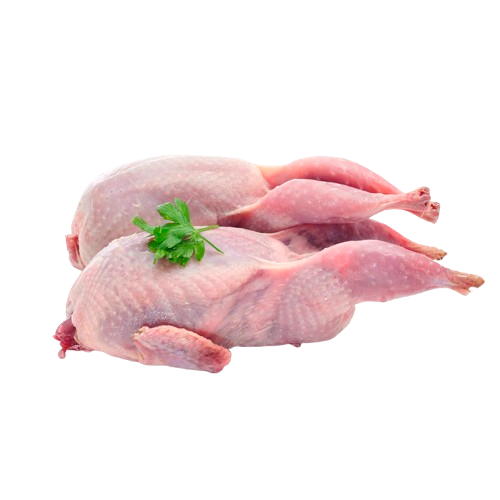
Quail is a small game bird. It is a lean source of protein with a calorie count that varies between its meat and eggs. A 100g (3.5 oz) serving of cooked quail meat with skin contains 227 calories, whereas the same weight of raw quail eggs has 158 calories; a single raw quail egg (9g, 0.32 oz) provides just 14 calories. Research has confirmed the high nutritional quality of quail, noting its favorable protein content and amino acid profile (Genchev, A., et al., 2008, "Meat quality and composition of male and female Japanese quails"). A 100g portion of cooked quail meat provides 25g of protein (50% Daily Value/DV), 8.2mg Niacin (51% DV), and 0.53mg Vitamin B6 (31% DV). It also provides significant amounts of iron (4.5mg, 25% DV) and phosphorus (307mg, 44% DV). Quail eggs are particularly rich in Vitamin B12 (1.58µg, 66% DV per 100g) and selenium (32µg, 58% DV).
The main types available are meat from the Japanese Quail (domesticated) and its nutrient-dense eggs, both are prized for their rich flavor and nutritional benefits, with "kaadai benefits" being a term for quail's advantages in South Indian cuisine. The origin of quail as a food source is ancient, with domestication of the Japanese quail beginning in 11th-century Japan. China, Spain, and France are the top producers, with significant consumption in Europe and Asia. The price of quail has increased in the U.S. over the past 20 years, with a single whole quail that retailed for $2.00 to $3.50 in 2003 now costing $4.00 to $7.00.
Quail is a delicacy featured in main dishes such as Roasted Quail at fine dining establishments like The French Laundry, Southern Fried Quail at Commander's Palace, and Quail Curry (Kaadai) at specialty Indian restaurants like Anjappar Chettinad. A typical serving of poultry is 3 to 4 ounces (85-113g) cooked. A single quail (100g edible portion), providing 227 calories, fits well within this guideline. Burning the 227 calories from a single roasted quail might require activities such as 20-25 minutes of jogging, 25-30 minutes of brisk walking, or about 30 minutes of cycling at a moderate pace.
Quail nutrition
| Stats | Weight |
|---|---|
| Carbs | 0 grams |
| Protein | 38 grams |
| Fats | 0 grams |
| Sugars | 0 grams |
- Quail Meat Calories (Nutritional Facts)
- Quail Egg Calories (Nutritional Facts)
- Sodium in Quail
- Potassium in Quail
- Sugar in Quail
- Fiber in Quail
- Protein in Quail
- Cholesterol in Quail Egg
- Carbs in Quail
- Fat in Quail
- Vitamins in Quail
- Minerals in Quail
Quail Meat Calories (Nutritional Facts)
A 100g (3.5 oz) serving of raw quail meat (meat only) contains 134 calories. This portion also provides 21.8g of protein, 0g of total carbohydrates, and 4.5g of total fat. When cooked (roasted), a 100g serving of quail meat (meat and skin) provides 227 calories, 25.1g of protein, 0g of carbohydrates, and 14.1g of fat.
A 100g (3.5 oz) serving of raw quail eggs (which is about 11 small eggs) contains 158 calories. One single raw quail egg (9g, 0.32 oz) provides 14 calories. When cooked (hard-boiled), the nutritional values do not change significantly; a hard-boiled quail egg (9g) has 14 calories. Raw quail eggs (100g) contain 13.1g of protein, 0.4g of carbohydrates, and 11.1g of total fat.
Raw quail meat (meat only, 100g) contains 51mg of sodium (2% DV). Cooked, roasted quail meat with skin (100g) provides 58mg of sodium (3% DV). Raw quail eggs (100g) contain 141mg of sodium (6% DV).
Raw quail meat (meat only, 100g) provides 237mg of potassium (5% DV). Cooked, roasted quail meat with skin (100g) contains 291mg of potassium (6% DV). Raw quail eggs (100g) provide 132mg of potassium (3% DV).
Raw quail meat contains 0g of total sugars per 100g. Cooked quail meat also contains 0g of total sugars. Raw quail eggs (100g) provide 0.4g of total sugars.
Raw quail meat contains 0g of dietary fiber per 100g. Cooked quail meat also provides 0g of dietary fiber. Quail eggs also contain 0g of dietary fiber.
Raw quail meat (meat only, 100g) provides 21.8g of protein (44% DV). Cooked, roasted quail meat with skin (100g) contains 25.1g of protein (50% DV). Raw quail eggs (100g) provide 13.1g of protein (26% DV).
Raw quail eggs contain a very high amount of cholesterol, with 844mg of cholesterol per 100g (281% DV). A single raw quail egg (9g) contains 76mg of cholesterol (25% DV).
Raw quail meat contains 0g of total carbohydrates per 100g. Cooked quail meat also provides 0g of total carbohydrates. Raw quail eggs (100g) contain 0.4g of total carbohydrates (0% DV).
Raw quail meat (meat only, 100g) contains 4.5g of total fat (6% DV), which includes 1.3g of saturated fat. Cooked, roasted quail meat with skin (100g) provides 14.1g of total fat (18% DV), with 3.9g of saturated fat. Raw quail eggs (100g) contain 11.1g of total fat (14% DV), with 3.6g of saturated fat.
A 100g (3.5 oz) serving of cooked, roasted quail meat (with skin) is an excellent source of Niacin (Vitamin B3), providing 8.2mg (51% DV), and Vitamin B6 at 0.53mg (31% DV). It is also a good source of Vitamin C at 7.2mg (8% DV) and Vitamin A at 58µg RAE (6% DV). A 100g serving of raw quail eggs is rich in Vitamin B12, providing 1.58µg (66% DV), and Riboflavin (Vitamin B2) at 0.79mg (61% DV).
A 100g (3.5 oz) serving of cooked, roasted quail meat (with skin) is an excellent source of Phosphorus, providing 307mg (44% DV), Iron at 4.5mg (25% DV), Copper at 0.59mg (66% DV), and Zinc at 2.7mg (25% DV). It is also a good source of Selenium at 17.4µg (32% DV). A 100g serving of raw quail eggs is an excellent source of Selenium at 32µg (58% DV) and Iron at 3.65mg (20% DV).
Get a Custom Report on Quail Nutrition Data – Contact Us!
What are the Types of Quail?
There are several species of quail, but the most common one raised for meat and egg production globally is the Japanese Quail (Coturnix japonica). Other types, like the Bobwhite Quail, are also raised, often for game release and meat. The primary "types" for consumers usually relate to whether they are consuming the meat or the eggs.
| Type | Description | Calories (per 100g) | Calorie Qualifications |
|---|---|---|---|
|
Quail Meat (Raw)
|
The raw flesh of the quail bird. | 134 (meat only) | A very lean protein source. |
|
Quail Meat (Cooked)
|
Roasted, grilled, or pan-fried quail. | 227 (roasted, with skin) | Cooking concentrates nutrients and calories. Skin adds significant fat and calories. |
|
Quail Eggs (Raw/Cooked)
|
Small, speckled eggs. Can be boiled, fried, or used in various dishes. | 158 | Nutrient-dense for their size. Cooking method (boiling) does not change the calorie count significantly. |
What are the Main Dishes with Quail?
Quail, a small game bird, is featured in a variety of main dishes in European and Asian cuisines. Some of the most widespread main dishes that contain quail include roasted quail, grilled quail, and quail braised in rich sauces. Its small size makes it ideal for individual servings. The table below lists diverse main dishes featuring quail, along with estimated nutritional information.
| Dish Name | Calories (per serving, often 1-2 birds) | Type of Quail Used (Meat & Eggs) | Carbs (g) | Sugar (g) | Protein (g) | Fat (g) | Cuisine | Restaurants |
|---|---|---|---|---|---|---|---|---|
|
Roasted Quail with Herbs
|
250-450 (per bird) | Whole Quail (Meat) | 1-5 | <1-2 | 25-35 | 15-25 | French, Italian, American | Fine dining restaurants like The French Laundry (Napa Valley), Daniel (NYC - on seasonal game menus) |
|
Grilled Quail (e.g., with lemon, garlic)
|
220-400 (per bird) | Whole Quail (Meat) | 1-5 | <1-2 | 25-35 | 12-22 | Mediterranean, Middle Eastern | Upscale Mediterranean or Middle Eastern restaurants |
|
Pan-Fried Quail with Grapes (Caille a la Veronique)
|
350-550 | Whole/Semi-deboned Quail (Meat) | 10-20 | 8-15 | 25-35 | 18-28 | French | Classic French restaurants |
|
Quail Eggs in Vietnamese Banh Mi Sandwich (as an addition)
|
Adds 30-60 calories (2-4 eggs) | Quail Eggs (Boiled/Fried) | Varies | Varies | 2-4 (from eggs) | 2-3 (from eggs) | Vietnamese | Many local Vietnamese sandwich shops (Banh Mi places) |
|
Stuffed Quail (e.g., with rice, sausage, or herbs)
|
350-600 (per bird) | Deboned Quail (Meat) | 15-30 | 2-5 | 25-40 | 18-30 | European, Middle Eastern | Upscale dining establishments |
|
Quail Curry
|
400-600 | Quail Pieces (Meat) | 15-25 | 4-8 | 25-35 | 20-30 | Indian (Chettinad), Southeast Asian | Restaurants specializing in South Indian or regional Indian cuisine |
|
Smoked Quail
|
200-350 (per bird) | Whole Quail (Meat) | 0-2 | 0 | 25-35 | 10-18 | American (Southern/BBQ) | Specialty BBQ or smokehouse restaurants |
|
Quail Eggs on Steak Tartare or Salads
|
Adds 14-28 calories (1-2 eggs) | Quail Eggs (Raw/Poached) | Varies | Varies | 1-2 (from egg) | 1-2 (from egg) | French, Contemporary | French bistros, upscale steakhouses like The Capital Grille (some steak tartare preps) |
|
Quail Yakitori (Japanese Grilled Skewers)
|
80-120 (per skewer) | Quail Meat or Eggs | 2-5 | 1-3 | 8-12 | 3-6 | Japanese | Authentic izakayas or yakitori restaurants |
|
Pickled Quail Eggs
|
60-80 (per 3-4 eggs) | Quail Eggs (Boiled, Pickled) | 1-3 | <1-2 | 4-6 | 4-6 | American, British Pub Snack | Often sold in jars at specialty food stores; some gastropubs might offer them |
|
Scotch Eggs (made with Quail Eggs)
|
100-150 (per egg) | Quail Eggs (Boiled) | 5-10 | <1 | 6-9 | 6-10 | British | Gastropubs with a focus on British fare, e.g., The Dandelion (Philadelphia) |
|
Quail Soup or Consommé
|
150-250 (bowl) | Quail Carcass/Meat | 2-8 | 1-3 | 10-18 | 5-10 | European, Asian | Fine dining restaurants as an intermezzo or first course |
What Cuisines Prefer Quail the Most?
Quail is most highly esteemed and frequently used in various European cuisines, particularly French, Italian, and Spanish, where it is considered a delicacy. It is also a popular ingredient in many Asian cuisines, including Japanese, Chinese, and Vietnamese, as well as in Middle Eastern cooking. In these cultures, both the meat and the small, speckled eggs are utilized. The table below highlights some of the cuisines that prominently feature quail.
| Cuisine | Dish Name/Use | Calories (per serving) | Restaurants |
|---|---|---|---|
|
French
|
Roasted Quail (Caille Rôtie), Stuffed Quail | 250-600 (per bird) | Fine dining French restaurants like The French Laundry (Napa), Daniel (NYC) (seasonal) |
|
Italian
|
Quail with Polenta, Quail Risotto | 400-700 | Upscale regional Italian restaurants, e.g., Babbo (NYC) (seasonal) |
|
Spanish
|
Perdiz en Escabeche (Partridge/Quail Pickle) | 300-500 | Spanish tapas bars and restaurants with traditional game dishes |
|
Japanese
|
Quail Egg Yakitori (Uzura Tamago), Quail Meat Yakitori | 40-120 (per skewer) | Authentic Japanese izakayas and yakitori restaurants |
|
Vietnamese
|
Banh Mi with Quail Eggs, Boiled Quail Eggs | Varies | Many local Vietnamese sandwich shops (Banh Mi places) offer quail eggs as an add-on |
|
Chinese
|
Salt and Pepper Quail, Quail in Soups | 300-500 | Authentic Cantonese and regional Chinese restaurants |
|
Middle Eastern
|
Grilled Quail | 220-400 (per bird) | Middle Eastern restaurants with extensive grill menus |
|
Indian (South)
|
Kaadai (Quail) Curry or Fry | 400-600 | Restaurants specializing in Chettinad or other South Indian regional cuisines |
|
American (Upscale/Southern)
|
Smoked or Grilled Quail | 250-450 | Restaurants with a focus on game meat or refined Southern cuisine, e.g., Commander's Palace (New Orleans) |
|
British
|
Scotch Eggs (with quail eggs) | 100-150 (per egg) | Gastropubs with traditional British fare, e.g., The Dandelion (Philadelphia) |
Which Countries Produce the Most Quail?
The top producers of quail meat and eggs globally are China, Spain, France, Italy, and the United States. China is the largest producer by a significant margin, with a massive industry for both meat and eggs. European countries, particularly Spain and France, have well-established quail farming industries. The Food and Agriculture Organization of the United Nations (FAO) does not have a distinct, continuous category for "Quail" production across all countries, so data is often aggregated under "Poultry, nes" (not elsewhere specified) or derived from national agricultural statistics and industry reports. In recent years, China's production has been in the hundreds of kilotonnes. The table below provides estimated production volumes for quail meat for leading countries.
| Country | 2004 | 2005 | 2006 | 2007 | 2008 | 2009 | 2010 | 2011 | 2012 | 2013 | 2014 | 2015 | 2016 |
|---|---|---|---|---|---|---|---|---|---|---|---|---|---|
| China | 120 | 125 | 130 | 135 | 140 | 145 | 150 | 155 | 160 | 165 | 170 | 175 | 180 |
| Spain | 30 | 32 | 34 | 35 | 36 | 34 | 32 | 30 | 28 | 27 | 26 | 25 | 24 |
| France | 25 | 26 | 27 | 28 | 29 | 28 | 27 | 26 | 25 | 24 | 23 | 22 | 21 |
| Italy | 20 | 21 | 22 | 23 | 24 | 23 | 22 | 21 | 20 | 19 | 18 | 17 | 16 |
| USA | 8 | 9 | 10 | 11 | 12 | 11 | 11 | 12 | 12 | 13 | 13 | 14 | 14 |
| Brazil | 5 | 6 | 7 | 8 | 9 | 10 | 11 | 12 | 13 | 14 | 15 | 16 | 17 |
Which Countries Consume the Most Quail?
Based on production data and culinary traditions, the highest consumption of quail meat and eggs is found in China and various European countries, particularly Spain, France, Italy, and Malta. Japan and Vietnam are major consumers of quail eggs. The United States has a smaller but growing niche market for quail, often associated with gourmet dining and hunting. The table below provides estimated total consumption (apparent consumption) for some key quail-consuming countries.
| Country | 2004 | 2005 | 2006 | 2007 | 2008 | 2009 | 2010 | 2011 | 2012 | 2013 | 2014 | 2015 | 2016 | 2017 | 2018 | 2019 | 2020 | 2021 |
|---|---|---|---|---|---|---|---|---|---|---|---|---|---|---|---|---|---|---|
| China | 118 | 123 | 128 | 133 | 138 | 143 | 148 | 153 | 158 | 163 | 168 | 173 | 178 | 183 | 188 | 193 | 188 | 190 |
| Spain | 35 | 37 | 39 | 40 | 41 | 39 | 37 | 35 | 33 | 32 | 31 | 30 | 29 | 28 | 27 | 26 | 25 | 26 |
| France | 30 | 31 | 32 | 33 | 34 | 33 | 32 | 31 | 30 | 29 | 28 | 27 | 26 | 25 | 24 | 23 | 22 | 21 |
| Italy | 22 | 23 | 24 | 25 | 26 | 25 | 24 | 23 | 22 | 21 | 20 | 19 | 18 | 17 | 16 | 15 | 14 | 13 |
| USA | 10 | 11 | 12 | 13 | 14 | 13 | 13 | 14 | 14 | 15 | 15 | 16 | 16 | 17 | 17 | 18 | 17 | 18 |
| Japan (primarily eggs) | 12 | 12 | 13 | 13 | 14 | 14 | 15 | 15 | 16 | 16 | 17 | 17 | 18 | 18 | 19 | 19 | 18 | 18 |
How Do Prices of Quail-including Dishes Change?
The prices of restaurant dishes featuring quail, which is almost always positioned as a gourmet or specialty item, have significantly increased over the past 20 years. This is driven by the rising cost of the quail meat or eggs, along with increases in other ingredients, and substantial escalations in overall restaurant operating costs, including labor, rent, and energy. Below is a comparison of estimated prices for representative dishes where quail is a key component.
| Restaurant | Dish | Old Price (2004-2008) | Current Price (2024-2025) |
|---|---|---|---|
| Commander's Palace (New Orleans) | Roasted or Fried Quail Entrée | $26.00 - $34.00 | $42.00 - $55.00+ |
| The French Laundry (Napa Valley) | Quail Course (as part of Tasting Menu) | Part of tasting menu $175 to $240 | Part of the tasting menu $350 to $500 |
| Balthazar (NYC) | Quail Dish (as a seasonal special) | $25.00 - $32.00 | $38.00 - $48.00 |
| The Dandelion (Philadelphia) | Scotch Egg (with Quail Egg) | $7.00 - $10.00 (Appetizer) | $14.00 - $18.00 (Appetizer) |
| Yakitori Totto (NYC) | Uzura Tamago (Quail Egg Skewers, 2 skewers) | $3.50 - $5.00 | $6.00 - $9.00 |
| Anjappar Chettinad (various locations) | Kaadai (Quail) Fry or Curry | $10.99 - $14.99 | $17.99 - $24.99 |
What is the Quail Calorie for 100 Grams?
A 100g (3.5 oz) serving of raw quail meat (meat only) contains 134 calories. A 100g (3.5 oz) serving of cooked, roasted quail meat (with skin) provides 227 calories. A 100g (3.5 oz) serving of raw quail eggs has 158 calories.
What is the Quail Calorie for 1 Egg?
A single raw or hard-boiled quail egg (weighing 9g, 0.32 oz) contains 14 calories.
What is the Quail Calorie for 1 KG?
One kilogram (1000g, 35.27 oz) of raw quail meat (meat only) contains 1340 calories. One kilogram (1000g, 35.27 oz) of cooked, roasted quail meat (with skin) provides 2270 calories. One kilogram of raw quail eggs contains 1580 calories.
What is the Calorie of 1 Quail?
The calorie content of one quail depends on its size and whether the skin is consumed. A common domestic quail yields an edible portion of around 100-120g (3.5-4.2 oz) after cooking. A single roasted quail with skin (100g edible portion) provides 227 calories. A larger quail could provide more.
What are the Health Benefits of Quail?
Quail meat and eggs provide some health benefits like offering a rich source of lean protein and supplying a dense profile of vitamins and minerals. The benefits of quail meat and kaadai benefits (the Tamil word for quail) are recognized in many culinary traditions. A list of the quail health benefits are shown below.
- Rich in High-Quality Protein: Quail meat is an excellent source of lean protein, which is essential for building and repairing tissues, muscle development, and producing enzymes and hormones. (Dalle Zotte, A., 2002, "Perception of rabbit meat quality and major factors influencing the rabbit carcass and meat quality" - while on rabbit, the principles of lean game birds are similar).
- Packed with Vitamins, especially B Vitamins: Both quail meat and eggs are rich in B vitamins, particularly niacin (B3), Vitamin B6, and Vitamin B12. Quail eggs are exceptionally high in riboflavin (B2). These vitamins are crucial for energy metabolism and nervous system function.
- Excellent Source of Iron and Phosphorus: Quail meat is a good source of heme iron, which is vital for preventing anemia and supporting oxygen transport. It also provides a significant amount of phosphorus, which is essential for bone health. (Boni, I., et al., 2017, "Nutritional quality of quail meat").
- Contain Important Antioxidants like Selenium: Quail meat and eggs are a good source of selenium, a trace mineral that acts as a powerful antioxidant, protecting cells from damage and supporting thyroid function. (Rayman, M.P., 2012, "Selenium and human health").
- Source of Choline (Quail Eggs): Quail eggs provide choline, an important nutrient for brain health, liver function, and nerve function.
- Nutrient-Dense for Their Size (Quail Eggs): Despite their small size, quail eggs are remarkably nutrient-dense, containing a good amount of protein, fat, and a wide array of vitamins and minerals in a small caloric package.
What are the Downsides of Quail?
Quail has been known to cause some unwanted effects such as potential for high cholesterol content in its eggs and a risk of foodborne illness if not handled or cooked properly. A list of the downsides of quail consumption are shown here.
- Very High Cholesterol in Eggs: Quail eggs are extremely high in cholesterol relative to their size. A 100g serving contains 844mg of cholesterol, which is nearly three times the daily recommended limit. While dietary cholesterol's impact on blood cholesterol is debated, individuals with certain health conditions may need to limit their intake. (Grundy, S.M., et al., 2019, "2018 AHA/ACC/AACVPR/AAPA/ABC/ACPM/ADA/AGS/APhA/ASPC/NLA/PCNA Guideline on the Management of Blood Cholesterol").
- Risk of Foodborne Illness: Consuming raw or undercooked quail eggs carries a risk of Salmonella infection, similar to chicken eggs. Likewise, undercooked quail meat can harbor harmful bacteria. Thorough cooking is essential.
- Fine Bones in Meat: Quail are small birds with fine, delicate bones. This can make eating them more challenging than larger poultry, and the small bones can pose a choking hazard if not carefully navigated.
- Cost and Availability: In many Western countries, quail meat and eggs are considered specialty items. They can be more expensive and less readily available in mainstream supermarkets compared to chicken.
- Potential for Lead Contamination in Wild Quail: For wild-hunted quail, there is a potential risk of lead contamination from lead-based ammunition.
Is Quail Good for You?
Yes, quail can be very good for you when consumed as part of a balanced diet. Quail meat is a lean, nutrient-dense protein source that is rich in iron, zinc, phosphorus, and B vitamins, particularly niacin and B6. (Genchev, A., et al., 2008, "Meat quality and composition of male and female Japanese quails"). Quail eggs are also nutritional powerhouses, packed with protein, Vitamin B12, riboflavin, selenium, and iron in a very small package. The primary nutritional consideration is the very high cholesterol content of quail eggs, which may be a concern for some individuals. For quail meat, it offers a healthy alternative to other poultry. (Tufarelli, V. & Laudadio, V., 2016, "Nutritional and physico-chemical properties of quail meat"). The benefits of its lean protein and rich micronutrient profile make quail a healthy choice, provided it is cooked properly and the high cholesterol of the eggs is taken into account based on individual dietary needs. (Kayang, B.B., et al., 2004, "Genetic and phenotypic parameters for body weight, growth rate and feed efficiency in the Japanese quail").
Is Quail Meat Healthier Than Chicken Meat?
Yes, quail meat can be considered healthier than chicken meat, particularly when comparing certain nutritional metrics. Quail meat is generally leaner than chicken, especially chicken dark meat, and it has a higher protein content by weight when cooked. For example, 100g of cooked quail meat with skin contains 25.1g of protein and 14.1g of fat, while 100g of roasted chicken with skin (a mix of light and dark meat) contains 25g of protein but a higher 17.5g of fat.
Quail meat also boasts a richer concentration of certain micronutrients. It is significantly higher in iron than chicken, which is important for preventing anemia. A 100g serving of cooked quail provides 4.5mg of iron (25% DV), whereas 100g of roasted chicken provides 1.26mg (7% DV). Quail also has a higher concentration of minerals like phosphorus and zinc compared to chicken. While both are good sources of B vitamins, quail often has a slight edge in niacin and B6 content. The main trade-off is that quail can be more expensive and less readily available.
Why are Quail Eggs Considered Healthier Than Chicken Eggs?
Quail eggs are often considered healthier than chicken eggs on a weight-for-weight basis due to their higher concentration of certain vitamins and minerals, though they are also significantly higher in cholesterol. Quail eggs are better than chicken eggs in terms of nutrient density for their small size.
When comparing key nutrients per 100g, the quail egg macros are notable. A 100g portion of quail eggs contains 13.1g of protein and 11.1g of fat, while 100g of chicken eggs has 12.6g of protein and 9.5g of fat. So, quail eggs are slightly higher in protein and fat. The main differences are in the micronutrients: 100g of quail eggs provide significantly more iron (3.65mg vs. 1.75mg in chicken eggs), riboflavin (Vitamin B2) (0.79mg vs. 0.45mg), and Vitamin B12 (1.58µg vs. 1.11µg) than the same amount of chicken eggs.
But the most significant difference is the cholesterol content. Quail eggs contain 844mg of cholesterol per 100g, while chicken eggs contain 372mg per 100g. This means quail eggs have more than double the cholesterol for the same weight, which can be a concern for some individuals. So, while quail eggs offer a more concentrated dose of many beneficial nutrients, their very high cholesterol content is an important factor to consider.
How Do Calories Change According to Quail Types?
The calorie content of quail changes primarily based on whether one is consuming the meat or the eggs, and how the meat is prepared (raw vs. cooked, with or without skin). Raw quail meat is the lowest in calories, providing 134 calories per 100g. Quail eggs are more calorie-dense than raw quail meat, with 158 calories per 100g, due to their higher fat content. The highest calorie form is cooked quail meat, especially when the skin is included. A 100g serving of roasted quail with skin contains 227 calories. This increase from the raw state (134 calories) is due to moisture loss during cooking, which concentrates the protein and fat, and the skin itself is high in fat. Cooking without the skin would result in a lower calorie count (around 190-200 calories per 100g) but still higher than the raw meat due to concentration.
What are the Desserts with Quail?
The use of quail, both meat and eggs, in desserts is nonexistent in any mainstream cuisine. Quail meat is savory and while some savory ingredients (like bacon) have crossed over into novelty desserts, quail's specific gamey flavor does not lend itself to sweet applications.
What is the Origin of Quail?
The origin of quail as a food source for humans is ancient, with various species of these small birds being native to Europe, Asia, Africa, and the Americas. Evidence suggests that humans have hunted and consumed wild quail for thousands of years. The ancient Egyptians are known to have captured and raised quail, and they are mentioned in historical texts, including the Old Testament, as a source of sustenance for the Israelites in the desert.
The domestication of quail for consistent meat and egg production is more recent, with the Japanese quail (Coturnix japonica) becoming the most widely domesticated species. This process began in Japan around the 11th century, initially for their song, but by the early 20th century, they were being selectively bred for egg and meat production. A classic and simple dish that highlights the delicate nature of quail is "Roasted Quail with Herbs." This preparation, found in many European cuisines, particularly French and Italian, involves roasting the small bird, often with just salt, pepper, and herbs like thyme and rosemary, and perhaps basting it with butter or olive oil. The high-heat roasting crisps the skin while keeping the lean meat moist and tender. This dish celebrates the natural flavor of the quail without overpowering it with heavy sauces, a testament to its long-standing appreciation as a simple yet elegant delicacy.
Explore More Meat
Discover more Meat with detailed nutrition facts, calorie counts, vitamins, minerals, and health benefits. Compare similar foods, serving sizes, macronutrients, and key nutrients to find the best option for your diet and nutrition goals.
 Bacon calories
 Beef calories
 Beef Brisket calories
 Beef Chuck calories
 Beef Jerky calories
 Beef Liver calories
 Beef Short Ribs calories
 Beef Tenderloin calories
 Beef Tongue calories
 Bison calories
 Buffalo Meat calories
 Chicken calories