Calories and Nutritions in Quark
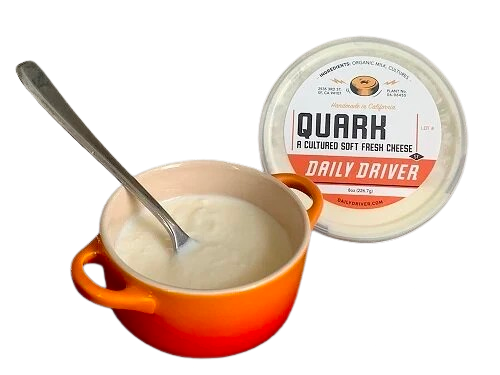
Quark is a food staple in German and Eastern European cuisines, and a small portion of plain low-fat quark cheese (100g) delivers 90 calories. The energy content expands with serving size, as a large bowl of quark cheese (250g) provides 225 calories, while a full fat variety has 412 calories per 250g serving. A container of Lindahls Natural Quark (150g) and a cup of Elli Plain Quark (153g) both yield 90 calories, whereas Wunder Creamery Plain Quark (142g) has 100 calories and Milsani Lean Quark (250g) provides 170 calories. A standard 100g measure of low-fat quark holds 90 calories, contrasting with the 165 calories found in the same weight of full-fat quark.
An analysis of quark nutrition reveals a protein-dense food source with minimal lipids in the low-fat form. A large serving of low-fat quark (250g) supplies 10g of carbohydrates and 0g of fiber, accompanied by 30g of protein and 0.5g of fat. The macronutrient profile emphasizes the food's utility in high-protein diets, confirming the dairy product is suitable for muscle synthesis due to the high casein content. A study by Paddon-Jones, D., et al. (2008) found that high-quality protein intake is critical for preserving lean muscle mass and supporting metabolic health. Micronutrient intake is equally notable, offering 1.75mcg of Vitamin B12 (73% DV) and 300mg of calcium (23% DV) per 250g serving. The preparation style alters the nutritional landscape, as the fat content added during production determines the final composition, with full-fat quark cheese containing significantly higher lipids compared to the skimmed low-fat version. Individuals monitoring digestive health should limit consumption if sensitive to lactose due to the presence of milk sugars.
Global availability of quark relies on the European dairy industry, with Germany and Russia leading production volumes. Germany alone produced over 518,000 tonnes of fresh cheese including quark in 2022. Quark functions as a primary protein in German Käsekuchen, Polish Pierogi Ruskie, and Russian Syrniki. Increasing global demand and rising milk costs have pushed retail prices higher, with a standard 250g container rising from €0.45 in the early 2000s to over €0.99 by 2023. Restaurant pricing mirrors this shift, as a Blintz Plate at Veselka increased from $14.00 in 2015 to between $17.00 and $24.00 in 2024.
Quark is valued as a nutrient-rich dairy product featuring high levels of B-vitamins and complete proteins, which aid in metabolic health and tissue repair. Dietitians recommend eating this food for satiety, though individuals with lactose intolerance should exercise caution. A large serving of low-fat quark contains 225 calories, an energy load that requires 23 minutes of running or 29 minutes of swimming to burn.
Quark nutrition
| Stats | Weight |
|---|---|
| Carbs | 6 grams |
| Protein | 18 grams |
| Fats | 0 grams |
| Sugars | 6 grams |
- Large Quark Calories (Nutritional Facts)
- Medium Quark Calories (Nutritional Facts)
- Small Quark Calories (Nutritional Facts)
- Quark Cheese Calories (Nutritional Facts)
- Quark Yogurt Calories (Nutritional Facts)
- Raw Quark Nutrition
- Sodium in Quark
- Potassium in Quark
- Sugar in Quark
- Fiber in Quark
- Protein in Quark
- Carbs in Quark
- Fat in Quark
- Vitamins in Quark
- Minerals in Quark
Large Quark Calories (Nutritional Facts)
A large serving of plain low-fat quark (250g or 8.8oz) contains 225 calories, 30g of protein, 0.5g of fat, 10g of carbohydrates, 0g of fiber, 10g of sugar, and 100mg of sodium. A large serving of full-fat quark (250g or 8.8oz) provides 412 calories, 28g of protein, 28.5g of fat, 9.5g of carbohydrates, 0g of fiber, 9.5g of sugar, and 95mg of sodium.
A medium serving of plain low-fat quark (150g or 5.3oz) provides 135 calories, 18g of protein, 0.3g of fat, 6g of carbohydrates, 0g of fiber, 6g of sugar, and 60mg of sodium. A medium serving of full-fat quark (150g or 5.3oz) contains 247 calories, 16.8g of protein, 17.1g of fat, 5.7g of carbohydrates, 0g of fiber, 5.7g of sugar, and 57mg of sodium.
A small serving of plain low-fat quark (100g or 3.5oz) contains 90 calories, 12g of protein, 0.2g of fat, 4g of carbohydrates, 0g of fiber, 4g of sugar, and 40mg of sodium. A small serving of full-fat quark (100g or 3.5oz) provides 165 calories, 11.2g of protein, 11.4g of fat, 3.8g of carbohydrates, 0g of fiber, 3.8g of sugar, and 38mg of sodium.
Quark cheese is a fresh dairy product, and a standard serving of low-fat quark cheese (100g or 3.5oz) contains 90 calories, 12g of protein, 0.2g of fat, 4g of carbohydrates, and 40mg of sodium. A serving of cream-style quark cheese with a higher fat content (100g or 3.5oz) contains 165 calories, 11.2g of protein, 11.4g of fat, 3.8g of carbohydrates, and 38mg of sodium.
A serving of plain quark yogurt (150g or 5.3oz) provides 135 calories, 18g of protein, 0.3g of fat, 6g of carbohydrates, and 60mg of sodium. A serving of fruit-flavored quark yogurt (150g or 5.3oz) contains 160 calories, 16g of protein, 0.3g of fat, 20g of carbohydrates, and 55mg of sodium.
A serving of raw quark (100g or 3.5oz) contains 90 calories, 12g of protein, 0.2g of fat, 4g of carbohydrates, 0g of fiber, 4g of sugar, and 40mg of sodium.
A large serving of low-fat quark (250g) contains 100mg of sodium (4% DV), while a large serving of full-fat quark (250g) contains 95mg of sodium (4% DV). A medium serving of low-fat quark (150g) has 60mg of sodium (3% DV), and a medium serving of full-fat quark (150g) has 57mg of sodium (2% DV). A small serving of low-fat quark (100g) contains 40mg of sodium (2% DV), whereas a small serving of full-fat quark (100g) contains 38mg of sodium (2% DV). A serving of quark cheese (100g) contains 40mg of sodium (2% DV), and a serving of quark yogurt (150g) contains 60mg of sodium (3% DV).
A large serving of low-fat quark (250g) contains 375mg of potassium (8% DV), and a large serving of full-fat quark (250g) contains 350mg of potassium (7% DV). A medium serving of low-fat quark (150g) has 225mg of potassium (5% DV), while a medium serving of full-fat quark (150g) has 210mg of potassium (4% DV). A small serving of low-fat quark (100g) contains 150mg of potassium (3% DV), and a small serving of full-fat quark (100g) contains 140mg of potassium (3% DV). A serving of quark cheese (100g) provides 150mg of potassium (3% DV), while a serving of quark yogurt (150g) provides 225mg of potassium (5% DV).
A large serving of low-fat quark (250g) contains 10g of sugar, while a large serving of full-fat quark (250g) contains 9.5g of sugar. A medium serving of low-fat quark (150g) has 6g of sugar, and a medium serving of full-fat quark (150g) has 5.7g of sugar. A small serving of low-fat quark (100g) contains 4g of sugar, whereas a small serving of full-fat quark (100g) contains 3.8g of sugar. A serving of quark cheese (100g) contains 4g of sugar, and a serving of quark yogurt (150g) contains 6g of sugar.
A large serving of low-fat quark (250g) and a large serving of full-fat quark (250g) both provide 0g of dietary fiber (0% DV). A medium serving of low-fat quark (150g) and a medium serving of full-fat quark (150g) both have 0g of fiber (0% DV). A small serving of low-fat quark (100g) and a small serving of full-fat quark (100g) both contain 0g of fiber (0% DV). A serving of quark cheese (100g) and a serving of quark yogurt (150g) both contain 0g of fiber (0% DV).
A large serving of low-fat quark (250g) provides 30g of protein (60% DV), while a large serving of full-fat quark (250g) provides 28g of protein (56% DV). A medium serving of low-fat quark (150g) has 18g of protein (36% DV), and a medium serving of full-fat quark (150g) has 16.8g of protein (34% DV). A small serving of low-fat quark (100g) contains 12g of protein (24% DV), whereas a small serving of full-fat quark (100g) contains 11.2g of protein (22% DV). A serving of quark cheese (100g) provides 12g of protein (24% DV), and a serving of quark yogurt (150g) provides 18g of protein (36% DV).
A large serving of low-fat quark (250g) contains 10g of carbohydrates (4% DV), and a large serving of full-fat quark (250g) contains 9.5g of carbohydrates (3% DV). A medium serving of low-fat quark (150g) has 6g of carbohydrates (2% DV), while a medium serving of full-fat quark (150g) has 5.7g of carbohydrates (2% DV). A small serving of low-fat quark (100g) contains 4g of carbohydrates (1% DV), whereas a small serving of full-fat quark (100g) contains 3.8g of carbohydrates (1% DV). A serving of quark cheese (100g) contains 4g of carbohydrates (1% DV), and a serving of quark yogurt (150g) contains 6g of carbohydrates (2% DV).
A large serving of low-fat quark (250g) contains 0.5g of total fat (1% DV), while a large serving of full-fat quark (250g) contains 28.5g of total fat (37% DV). A medium serving of low-fat quark (150g) has 0.3g of total fat (0% DV), and a medium serving of full-fat quark (150g) has 17.1g of total fat (22% DV). A small serving of low-fat quark (100g) contains 0.2g of total fat (0% DV), whereas a small serving of full-fat quark (100g) contains 11.4g of total fat (15% DV). A serving of quark cheese (100g) contains 0.2g of total fat (0% DV), while a serving of quark yogurt (150g) contains 0.3g of total fat (0% DV).
A large serving of low-fat quark (250g) provides 1.75mcg of Vitamin B12 (73% DV), while a large serving of full-fat quark (250g) provides 1.6mcg of Vitamin B12 (67% DV). A medium serving of low-fat quark (150g) provides 1.05mcg of Vitamin B12 (44% DV), and a medium serving of full-fat quark (150g) provides 0.96mcg of Vitamin B12 (40% DV). A small serving of low-fat quark (100g) provides 0.7mcg of Vitamin B12 (29% DV), whereas a small serving of full-fat quark (100g) provides 0.64mcg of Vitamin B12 (27% DV). A serving of quark cheese (100g) provides 0.7mcg of Vitamin B12 (29% DV), and a serving of quark yogurt (150g) provides 1.05mcg of Vitamin B12 (44% DV).
A large serving of low-fat quark (250g) provides 300mg of calcium (23% DV), while a large serving of full-fat quark (250g) provides 275mg of calcium (21% DV). A medium serving of low-fat quark (150g) provides 180mg of calcium (14% DV), and a medium serving of full-fat quark (150g) provides 165mg of calcium (13% DV). A small serving of low-fat quark (100g) provides 120mg of calcium (9% DV), whereas a small serving of full-fat quark (100g) provides 110mg of calcium (8% DV). A serving of quark cheese (100g) provides 120mg of calcium (9% DV), and a serving of quark yogurt (150g) provides 180mg of calcium (14% DV).
Get a Custom Report on Quark Nutrition Data – Contact Us!
What are the Types of Quarks?
The types of quark are Low-fat Quark, Medium-fat Quark, and Full-fat Quark. The table below provides details on these common quark styles.
| Type | Description | Calories (Approximate per 100g) | Calorie Qualifications |
|---|---|---|---|
|
Low-fat Quark (Magerquark)
|
Made from skimmed milk with almost no fat. | 70-90 | This version has the lowest calorie density and is almost pure protein. |
|
Medium-fat Quark (Halbfettstufe)
|
Made with a fat content of 20% in the dry matter. | 110-120 | The addition of cream increases the calorie count moderately. |
|
Full-fat Quark (Sahnequark)
|
Enriched with cream to reach 40% fat in the dry matter. | 150-170 | The high cream content makes this the most calorie-dense option. |
|
Flavored Quark
|
Sweetened with sugar or fruit preparations. | 120-160 | Added sugars increase the calorie load compared to plain versions. |
What are the Desserts With Quark?
Quark is a complete dessert ingredient in itself, but the fresh cheese flavor is also incorporated into other rich desserts. A catalog of sweet dishes that feature quark is detailed below.
| Dish Name | Calories (Estimate per serving) | Type of Quark | Carbs (g) (Estimate) | Sugar (g) (Estimate) | Protein (g) (Estimate) | Fat (g) (Estimate) | Cuisine | Restaurants |
|---|---|---|---|---|---|---|---|---|
|
German Cheesecake (Käsekuchen)
|
350 | Low-fat Quark | 30 | 22 | 12 | 18 | German | Cafe Sabarsky (New York, NY) |
|
Topfenstrudel
|
320 | Topfen (Quark) | 38 | 18 | 10 | 14 | Austrian | Wallsé (New York, NY) |
|
Syrniki (Sweet)
|
280 | Tvorog (Quark) | 25 | 15 | 14 | 12 | Russian | Mari Vanna (New York, NY) |
|
Quarkbällchen
|
60 (per piece) | Quark | 8 | 4 | 2 | 3 | German | Heidelberg Pastry Shoppe (Arlington, VA) |
|
Cheese Blintzes
|
310 | Farmer Cheese | 35 | 16 | 11 | 10 | Jewish | Veselka (New York, NY) |
|
Russischer Zupfkuchen
|
380 | Quark | 42 | 25 | 9 | 20 | German | Guglhupf Bakery (Durham, NC) |
|
Topfenknödel (Sweet Dumplings)
|
340 | Topfen (Quark) | 45 | 18 | 12 | 10 | Austrian | Werkstatt (Brooklyn, NY) |
|
Quark Danish
|
290 | Quark | 32 | 14 | 6 | 16 | Danish | Old World German Bakery (Boynton Beach, FL) |
|
Hungarian Crepes (Palacsinta)
|
250 | Tehén túró | 28 | 12 | 8 | 10 | Hungarian | Andre's Hungarian Bakery (New York, NY) |
|
Quark Stollen
|
360 | Quark | 48 | 20 | 7 | 14 | German | Dresden Stollen Baker (Online) |
|
Sweet Cheese Bun (Drożdżówka)
|
280 | Twaróg (Quark) | 36 | 15 | 8 | 11 | Polish | Polka Deli (Philadelphia, PA) |
|
Kohuke (Curd Snack)
|
160 | Kohupiim | 12 | 10 | 6 | 10 | Estonian | Moscow on the Hudson (New York, NY) |
|
Sweet Vareniki
|
220 | Tvorog (Quark) | 30 | 8 | 10 | 6 | Ukrainian | Kachka (Portland, OR) |
|
Quark Torte
|
350 | Sahnequark | 34 | 24 | 8 | 22 | German | Cafe Berlin (Washington, DC) |
|
Berry Quark Parfait
|
180 | Low-fat Quark | 20 | 14 | 16 | 2 | American | Wünder Creamery (Retail) |
What are the Main Dishes With Quark?
Quark functions as a versatile protein source in savory applications, distinct from the confectionery role of chocolate truffles. A catalog of entrees or main dishes that feature quark is detailed below.
| Dish Name | Calories (Estimate per serving) | Type of Quark | Carbs (g) (Estimate) | Sugar (g) (Estimate) | Protein (g) (Estimate) | Fat (g) (Estimate) | Cuisine | Restaurants |
|---|---|---|---|---|---|---|---|---|
|
Pierogi Ruskie
|
320 | Twaróg (Quark) | 45 | 2 | 12 | 10 | Polish | Staropolska Restaurant (Chicago, IL) |
|
Pellkartoffeln mit Quark
|
350 | Magerquark | 40 | 4 | 20 | 12 | German | Cafe Katja (New York, NY) |
|
Liptauer Spread
|
150 | Topfen (Quark) | 4 | 2 | 8 | 12 | Austrian | Cafe Sabarsky (New York, NY) |
|
Savory Syrniki
|
260 | Tvorog (Quark) | 18 | 3 | 16 | 14 | Russian | Mari Vanna (Washington, DC) |
|
Kräuterquark with Bread
|
200 | Quark | 25 | 3 | 12 | 6 | German | Old Heidelberg (Fort Lauderdale, FL) |
|
Körözött
|
140 | Tehén túró | 3 | 2 | 9 | 10 | Hungarian | Agi's Counter (Brooklyn, NY) |
|
Quark Spätzle
|
400 | Quark | 55 | 2 | 18 | 14 | German | The Bavarian Lodge (Lisle, IL) |
|
Lazanki with Cheese
|
450 | Twaróg (Quark) | 60 | 3 | 22 | 15 | Polish | Red Apple Buffet (Chicago, IL) |
|
Savory Vareniki
|
300 | Tvorog (Quark) | 42 | 2 | 14 | 8 | Ukrainian | Kachka (Portland, OR) |
|
Savory Cheese Crepes
|
280 | Topfen (Quark) | 26 | 4 | 12 | 14 | Austrian | Cafe Mozart (Washington, DC) |
|
Flammkuchen (Quark Base)
|
550 | Quark | 65 | 4 | 18 | 24 | German | Dacha Beer Garden (Washington, DC) |
|
Gibanica
|
420 | Sir (Quark) | 35 | 3 | 16 | 24 | Serbian | Kafana (New York, NY) |
|
Nalesniki with Cheese
|
290 | Twaróg (Quark) | 30 | 5 | 14 | 12 | Polish | Smakosz Restaurant (Chicago, IL) |
|
Kaspressknödel
|
380 | Topfen (Quark) | 40 | 2 | 15 | 18 | Austrian | Wallsé (New York, NY) |
|
Cucumber Salad with Quark
|
120 | Quark | 8 | 4 | 6 | 8 | German | Brauhaus Schmitz (Philadelphia, PA) |
What Cuisines Prefer Quark the Most?
Quark is indispensable in many Central and Eastern European culinary traditions. The following list displays the culinary settings where quark is a signature item.
| Cuisine | Dish | Types of Quark | Calories (Estimate) | Restaurant(s) |
|---|---|---|---|---|
|
German
|
Käsekuchen | Magerquark (Low-fat) | 350 | Cafe Berlin (Washington, DC) |
|
Austrian
|
Topfenstrudel | Topfen (Pressed Quark) | 320 | Cafe Sabarsky (New York, NY) |
|
Polish
|
Pierogi Ruskie | Twaróg | 320 | Staropolska (Chicago, IL) |
|
Russian
|
Syrniki | Tvorog (Farmer's Cheese) | 260 | Mari Vanna (New York, NY) |
|
Ukrainian
|
Vareniki | Tvorog | 300 | Veselka (New York, NY) |
|
Hungarian
|
Körözött | Tehén túró | 140 | Agi's Counter (Brooklyn, NY) |
|
Czech
|
Ovocné Knedlíky | Tvaroh | 340 | Bohemian Spirit (New York, NY) |
|
Swiss
|
Quark Muesli | Magerquark | 250 | Stable Cafe (San Francisco, CA) |
|
Estonian
|
Kohuke | Kohupiim | 160 | New York Estonian House (New York, NY) |
|
Latvian
|
Biezpiens | Biezpiens | 150 | Priedaine (New Jersey) |
|
Lithuanian
|
Varškėčiai | Varškė | 280 | Grand Duke's (Summit, IL) |
|
Jewish (Ashkenazi)
|
Blintzes | Farmer Cheese | 310 | Russ & Daughters (New York, NY) |
|
Dutch
|
Kwarktaart | Kwark | 300 | The Dutch (New York, NY) |
|
Scandinavian
|
Quark Parfait | Kvarg | 180 | Smörgås Chef (New York, NY) |
|
Serbian
|
Gibanica | Sir | 420 | Kafana (New York, NY) |
Which Countries Produce the Most Quark?
The top producers of quark and fresh acid-set cheeses are Germany, Russia, and Poland. These nations maintain a strong cultural tradition of consuming fresh dairy curds, driving high domestic production volumes. The table below shows the production volume of fresh cheese (including quark) in tonnes for these leading nations from 2003 to 2022.
| Country | 2003 | 2008 | 2013 | 2018 | 2019 | 2020 | 2021 | 2022 |
|---|---|---|---|---|---|---|---|---|
| Germany | 345,000 | 390,000 | 435,000 | 485,000 | 495,000 | 508,000 | 512,000 | 518,000 |
| Russia | 210,000 | 265,000 | 315,000 | 360,000 | 370,000 | 385,000 | 395,000 | 405,000 |
| Poland | 290,000 | 320,000 | 350,000 | 395,000 | 405,000 | 415,000 | 422,000 | 428,000 |
| France | 155,000 | 165,000 | 175,000 | 185,000 | 188,000 | 192,000 | 196,000 | 202,000 |
| Belarus | 60,000 | 75,000 | 95,000 | 110,000 | 115,000 | 120,000 | 125,000 | 130,000 |
Which Countries Consume the Most Quark?
The top consumers of quark align closely with the major production centers in Central and Eastern Europe, where the ingredient is a daily staple. The table below displays the estimated domestic supply quantity (production plus imports minus exports) of fresh cheese in tonnes for the largest markets from 2003 to 2022.
| Country | 2003 | 2008 | 2013 | 2018 | 2019 | 2020 | 2021 | 2022 |
|---|---|---|---|---|---|---|---|---|
| Germany | 330,000 | 375,000 | 420,000 | 475,000 | 485,000 | 500,000 | 505,000 | 510,000 |
| Poland | 280,000 | 310,000 | 340,000 | 385,000 | 395,000 | 405,000 | 410,000 | 415,000 |
| Russia | 205,000 | 260,000 | 310,000 | 355,000 | 365,000 | 380,000 | 390,000 | 400,000 |
| France | 150,000 | 160,000 | 170,000 | 180,000 | 182,000 | 185,000 | 188,000 | 192,000 |
| Ukraine | 90,000 | 105,000 | 120,000 | 135,000 | 140,000 | 145,000 | 130,000 | 110,000 |
How Do Prices of Quark-Including Dishes Change?
The cost of dishes containing quark has risen in parallel with ingredient and labor costs. The table below compares historical menu prices with current estimates for popular quark-based items.
| Restaurant | Dish Name | Old Price (Year) | Current Price (2024) |
|---|---|---|---|
| Veselka (New York, NY) | Blintz Plate | $14.00 (2015) | $17.00 - $24.00 |
| Mari Vanna (New York, NY) | Syrniki | $16.00 (2014) | $20.40 - $28.00 |
| Staropolska (Chicago, IL) | Cheese Pierogi | $9.99 (2017) | $14.99 - $17.00 |
What is the Quark Calorie for 100 Grams?
A 100g serving of low-fat quark contains 90 calories. A 100g serving of full-fat quark contains 165 calories. A 100g serving of quark cheese contains 90 calories, while a 100g serving of quark yogurt contains 90 calories.
What is the Quark Calorie for 1 KG?
One kilogram (1000g) of low-fat quark contains 900 calories. One kilogram (1000g) of full-fat quark contains 1,650 calories. One kilogram (1000g) of quark cheese provides 900 calories, and one kilogram (1000g) of quark yogurt provides 900 calories.
What is the Calorie of 1 Quark?
One container of Lindahls Natural Quark (150g) and one cup of Elli Plain Quark (153g) both contain 90 calories. One serving of Wunder Creamery Plain Quark (142g) contains 100 calories, while one container of Milsani Lean Quark (250g) has 170 calories.
What are the Health Benefits of Quark?
The benefits of quark consumption are associated with several health advantages, supported by research. The key health benefits of quark are detailed below.
- Supports Muscle Growth and Repair: Quark is rich in casein and whey protein, which are essential for muscle synthesis. A study by Paddon-Jones, D., et al. (2008), "Protein, weight management, and satiety," demonstrates that high-quality protein intake is critical for preserving lean muscle mass and supporting metabolic health.
- Strengthens Bone Density: The high calcium and phosphorus content in the food supports the maintenance of strong bones and teeth. A review by Heaney, R. P. (2000), "Calcium, dairy products and osteoporosis," confirms that adequate calcium intake from dairy sources is vital for bone health and reducing fracture risk in older adults.
- Promotes Gut Health: The fermentation process used to create the cheese introduces beneficial bacteria that support the gut microbiome. A review by Marco, M. L., et al. (2017), "Health benefits of fermented foods: microbiota and beyond," indicates that consuming fermented dairy products can improve digestive health and immune function.
What are the Downsides of Quark?
Quark is safe for most people in culinary amounts, but some considerations exist. These potential aspects are outlined below.
- Causes Digestive Distress in Lactose Intolerant Individuals: The product contains lactose, which can cause bloating, gas, and diarrhea in individuals with lactose malabsorption. A study by Misselwitz, B., et al. (2019), "Update on lactose malabsorption and intolerance: pathogenesis, diagnosis and clinical management," notes that symptoms occur when the body lacks the enzyme lactase to break down milk sugar. An alternative is lactose-free quark or a plant-based yogurt alternative. A suggested consumption limit for those with mild sensitivity is less than 12g of lactose per day, or roughly one small serving.
- Increases Saturated Fat Intake: Full-fat versions of the cheese contain amounts of saturated fat that can negatively impact cardiovascular health if consumed in excess. A presidential advisory from the American Heart Association by Sacks, F. M., et al. (2017), "Dietary Fats and Cardiovascular Disease," recommends reducing saturated fat intake to lower the risk of heart disease. A suggested consumption rate for full-fat quark is to limit intake to one serving per day or choose low-fat options.
Is Quark Good for You?
Yes, quark is a beneficial food choice because the high protein content, essential minerals, and probiotics support heart, brain, and metabolic health. The dense nutritional profile aids in muscle maintenance and satiety, which helps regulate body weight. A study by Westerterp-Plantenga, M. S., et al. (2009), "Dietary protein, weight loss, and weight maintenance," found that sustained high-protein diets favor weight management and metabolic stability. Cardiovascular health benefits from the potassium and calcium found in the dairy product, which help regulate blood pressure. A meta-analysis by Alexander, D. D., et al. (2016), "Dairy consumption and CVD: a systematic review and meta-analysis," observed an inverse association between total dairy consumption and the risk of cardiovascular disease. Cognitive function also benefits from the B-vitamins present in the food. A study by Crichton, G. E., et al. (2010), "Dairy intake and cognitive health," suggests that regular consumption of dairy products is associated with better cognitive performance and memory.
How Do Calories Change According to Quark Types?
The fat content added during production of quark determines the calorie count of the final product. Full-fat quark has the highest calorie value at approximately 165 calories per 100 grams due to the addition of heavy cream. Low-fat quark contains the lowest calorie value at roughly 90 calories per 100 grams, representing a baseline of protein and carbohydrates without the added fat. The inclusion of sugar or fruit in flavored varieties also raises the energy density compared to the plain low-fat version.
Is Low-Fat Quark a Good Source of Protein?
Yes, low fat quark is an exceptional source of protein. A single 100g serving provides approximately 12g of high-quality casein and whey protein, which contains all nine essential amino acids required by the human body. This high protein-to-calorie ratio makes the food highly efficient for muscle repair and satiety.
What is the Origin of Quark?
The history of quark extends back to Iron Age Europe, where Germanic tribes produced a fresh, acid-set cheese. Roman historian Tacitus documented the consumption of a coagulated milk product by these groups in the 1st century AD, describing a simple cheese made without rennet. The term "quark" emerged in late Middle High German as "twarc," likely derived from the West Slavic "twarog," signifying the deep cultural exchange between Germanic and Slavic peoples regarding dairy fermentation. This ancient method of allowing milk to sour naturally and straining the whey evolved into the modern production of low-fat and full-fat varieties. Specific dishes followed this evolution, with the first recipes for quark-based cheesecakes appearing in late medieval German cookbooks, while the inclusion of quark in dumplings like Pierogi became a staple in Eastern Europe by the 13th century.
Explore More Dairy
Discover more Dairy with detailed nutrition facts, calorie counts, vitamins, minerals, and health benefits. Compare similar foods, serving sizes, macronutrients, and key nutrients to find the best option for your diet and nutrition goals.
 Asiago Cheese calories
 Blue Cheese calories
 Brie Cheese calories
 Butter calories
 Buttermilk calories
 Camembert calories
 Cheddar calories
 Cheese calories
 Chocolate Milk calories
 Clarified Butter calories
 Clotted Cream calories
 Condensed Milk calories