Calories and Nutritions in Skim Milk
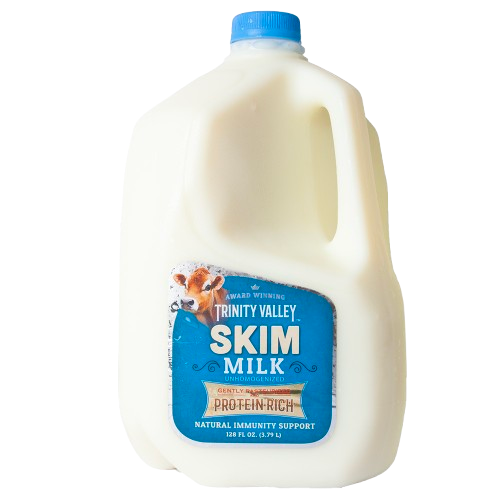
Skim milk is a nutrient-fortified dairy product with nearly all milk fat removed, and it is a primary staple in wellness-focused cuisines. There are 34 calories in skim milk per 100 g (3.5 oz). A small 237 mL (8 oz) serving of skim milk provides 83 calories, while a medium 355 mL (12 oz) portion contains 125 calories and a large 473 mL (16 oz) serving offers 167 calories. This beverage is significantly less energy-dense than whole milk, which provides 61 calories per 100 g (3.5 oz). The fundamental difference lies in the lipid content - whole milk retains its natural 3.25% milk fat, whereas skim milk contains less than 0.5% fat, resulting in a 44% reduction in total energy per serving.
Skim milk nutrition facts indicate that a 100 g (3.5 oz) portion provides 4.96 g of total carbohydrates, 3.37 g of protein, and 0.08 g of fat. For retail products, a 240 mL (8.1 oz) cup of Horizon Organic Fat Free Milk contains 90 calories, whereas a 240 mL (8.1 oz) serving of Fairlife Fat-Free Ultra-Filtered Milk provides 80 calories and a same-sized serving of Lactaid Fat Free Milk delivers 90 calories. Research by Josse AR, et al. (2010), "Body composition and strength changes in women with milk and resistance exercise," found that non-fat milk consumption improves lean muscle mass acquisition when paired with resistance training. Common types include standard fluid skim milk, non-fat dry milk powder, evaporated skim milk, and ultra-filtered varieties.
The lean protein profile of skim milk is utilized in savory breakfast main dishes such as the Egg White & Red Pepper Egg Bites at Starbucks, which contains 170 calories, and the Fruit & Maple Oatmeal at McDonald's, which contains 320 calories. Other restaurants featuring the liquid for its structural and nutritional benefits include IHOP for its Veggie Egg White Omelette and Subway for its Turkey Breast Sub meal combinations. Popular desserts and light refreshments incorporating the liquid include the Lemon Sorbet at Haagen-Dazs, which contains 120 calories, and the Non-Fat Vanilla Soft Serve at Pinkberry.
The origin of skim milk is traced to European dairy practices where it was initially a byproduct of butter and cheese production, though the modern mechanical centrifugal separation process was perfected by Gustaf de Laval in 1878. Global production of non-fat milk solids is led by the European Union, which produced 1,510 kt in 2021, followed by the United States at 1,154 kt. Consumption is highest in the European Union and the United States, where the beverage serves as a fundamental component of heart-healthy and weight-management diets. The retail price for a gallon (3.78 L) of fresh skim milk in the United States has risen from $3.02 USD in 2005 to $3.98 USD in 2024.
Health guidelines suggest a recommended daily intake of 245 g (1 cup), which contributes 83 calories to a standard adult diet. To burn the 83 calories provided by a small 237 mL (8 oz) serving of skim milk, a person weighing 70 kg (154 lbs) must engage in 24 minutes of moderate walking at 5 km/h (3 mph). For those consuming a large 473 mL (16 oz) serving containing 167 calories, the energy expenditure requires 48 minutes of moderate walking.
Skim Milk nutrition
| Stats | Weight |
|---|---|
| Carbs | 18.2 grams |
| Protein | 12.4 grams |
| Fats | 0 grams |
| Sugars | 18.6 grams |
- 8oz Skim Milk Calories (Nutritional Facts)
- 12oz Skim Milk Calories (Nutritional Facts)
- 16oz Skim Milk Calories (Nutritional Facts)
- Standard Skim Milk Nutrition
- Sodium in Skim Milk
- Potassium in Skim Milk
- Sugar in Skim Milk
- Fiber in Skim Milk
- Protein in Skim Milk
- Carbs in Skim Milk
- Fat in Skim Milk
- Vitamins in Skim Milk
- Minerals in Skim Milk
8oz Skim Milk Calories (Nutritional Facts)
A small 237 mL (8 oz) serving of skim milk, frequently referred to as fat-free milk or non-fat milk, contains 83 calories. This portion provides 0.2 g of total fat, 12.2 g of total carbohydrates, 12.5 g of sugar, and 8.3 g of protein. A 237 mL (8 oz) serving of skim milk prepared from non-fat dry milk powder using 23 g of powder and water contains 80 calories.
A medium 355 mL (12 oz) serving of skim milk contains 125 calories. This serving size offers 0.3 g of total fat, 18.2 g of total carbohydrates, 18.6 g of sugar, and 12.4 g of protein. A 355 mL (12 oz) portion of this dairy liquid provides 459 mg of potassium and 378 mg of calcium.
A large 473 mL (16 oz) serving of skim milk contains 167 calories. This portion delivers 0.4 g of total fat, 24.3 g of total carbohydrates, 24.8 g of sugar, and 16.5 g of protein. A 473 mL (16 oz) serving of non-fat milk, often used in large lattes or protein shakes, provides 1.0 mcg of Vitamin B12.
A 100 g (3.5 oz) serving of standard fluid skim milk provides 34 calories, 0.08 g of total fat, 3.37 g of protein, 4.96 g of carbohydrates, and 5.07 g of sugar. Non-fat dry milk powder provides 362 calories per 100 g (3.5 oz) because the moisture has been removed, creating a concentrated nutrient profile. Standard skim milk serves as a low-calorie source of dairy proteins and essential micronutrients without the saturated fats found in whole milk.
Skim milk contains 42 mg of sodium per 100 g (3.5 oz) serving, which fulfills 2% of the Daily Value (DV). A standard 245 g (1 cup) serving provides 103 mg of sodium, contributing 4% of the DV for a healthy diet.
Skim milk serves as a source of potassium, providing 156 mg per 100 g (3.5 oz) serving, which represents 3% of the DV. A 245 g (1 cup) portion delivers 382 mg of potassium, fulfilling 8% of the DV. This mineral is essential for supporting nerve function and maintaining a healthy fluid balance in the body.
Skim milk contains 5.07 g of sugar per 100 g (3.5 oz) serving. These are naturally occurring sugars known as lactose which are found within all dairy-based milk varieties.
Skim milk contains 0 g of dietary fiber per 100 g (3.5 oz) serving, fulfilling 0% of the DV.
Skim milk provides 3.37 g of protein per 100 g (3.5 oz) serving. A standard 245 g (1 cup) portion delivers 8.3 g of protein, which consists of both casein and whey to support muscle repair.
Skim milk contains 4.96 g of total carbohydrates per 100 g (3.5 oz) serving.
Skim milk contains 0.08 g of total fat per 100 g (3.5 oz) serving. This minimal fat content defines the beverage as fat-free according to food labeling standards.
A 100 g (3.5 oz) serving of fortified skim milk is rich in Vitamin D, providing 1.3 mcg (7% DV), and Vitamin A, providing 61 mcg (7% DV). It also delivers 0.5 mcg of Vitamin B12, which fulfills 21% of the DV for supporting metabolic health. Riboflavin levels reach 0.14 mg per 100 g (3.5 oz), fulfilling 11% of the DV.
A 100 g (3.5 oz) serving of skim milk provides 125 mg of Calcium (10% DV) and 11 mg of Magnesium (3% DV). This portion also provides 0.03 mg of Iron (0% DV) and 101 mg of Phosphorus (8% DV). Selenium levels reach 3.3 mcg per 100 g (3.5 oz), fulfilling 6% of the DV.
Get a Custom Report on Skim Milk Nutrition Data – Contact Us!
What are the Types of Skim Milk?
There are 4 different types of skim milk such as standard fluid skim and non-fat dry milk. The table below shows the most common skim milk types and their calorie information.
| Type | Description | Calories (per 100 g / 3.5 oz) | Calorie Differences & Qualifications |
|---|---|---|---|
|
Fluid Skim Milk
|
Standardized dairy with less than 0.5% milk fat. | 34 | The baseline for fat-free nutrition and high water content. |
|
Non-Fat Dry Milk
|
Dehydrated skim milk powder with moisture removed. | 362 | Highest energy density as the nutrients are concentrated. |
|
Evaporated Skim
|
Concentrated fluid milk with 60% of water removed. | 80 | Higher density per weight due to the reduction of water. |
|
Ultra-Filtered Skim
|
Milk passed through filters to concentrate protein. | 33 | Slightly lower energy as 50% of the lactose is removed. |
What are the Desserts with Skim Milk?
A variety of health-conscious dessert options and sweet beverages utilize skim milk to provide a creamy consistency without the caloric load of dairy fats. These items are frequently found in metropolitan cafe chains and frozen yogurt shops that prioritize lean nutritional profiles for their confectionary offerings. The table below provides the nutritional facts for factual dessert items and sweet refreshments available at specific restaurant locations that feature skim milk as a primary ingredient.
| Dish Name | Calories | Type | Carbs | Sugar | Protein | Fat | Cuisine | Restaurants |
|---|---|---|---|---|---|---|---|---|
|
Non-Fat Vanilla Soft Serve (100 g)
|
114 | Frozen | 24g | 21g | 4g | 0g | American | Pinkberry |
|
Skinny Vanilla Latte (473 mL)
|
120 | Beverage | 18g | 15g | 12g | 0g | Modern American | Starbucks |
|
Purely Tart Frozen Yogurt (100 g)
|
100 | Frozen | 22g | 18g | 3g | 0g | American | Menchie's |
|
Non-Fat Chocolate Milk (236 mL)
|
130 | Beverage | 23g | 21g | 8g | 0g | American | Subway |
|
Skinny Hot Cocoa (473 mL)
|
160 | Beverage | 26g | 21g | 14g | 0g | American | Starbucks |
|
Strawberry Banana Smoothie (Medium)
|
260 | Blended | 58g | 48g | 6g | 1g | Modern American | Jamba |
|
Non-fat Matcha Tea Latte (473 mL)
|
160 | Beverage | 28g | 26g | 12g | 0g | Fusion | Dunkin' |
|
Fat Free Chocolate Milk (236 mL)
|
150 | Beverage | 26g | 24g | 8g | 0g | American | Burger King |
|
Nonfat Caffè Mocha (473 mL)
|
220 | Beverage | 35g | 28g | 13g | 2.5g | Modern American | Starbucks |
|
100% Non-fat Greek Yogurt with Honey
|
160 | Yogurt | 24g | 21g | 15g | 0g | Mediterranean | CAVA |
|
Mango Smoothie (Medium)
|
240 | Blended | 52g | 45g | 8g | 0.5g | Modern American | Smoothie King |
|
Nonfat Cappuccino (473 mL)
|
120 | Beverage | 15g | 13g | 12g | 0g | Italian-American | Panera Bread |
What are the Main Dishes with Skim Milk?
Some popular main dishes that contain skim milk are Egg White Sous Vide Bites, Fruit and Maple Oatmeal, and various high-protein meal combinations where fat-free dairy serves as a structural or nutritional base. Culinary professionals in the fast-casual and wellness sectors utilize skim milk to provide essential proteins and a smooth mouthfeel to breakfast grains and egg preparations while maintaining a low energy density. The table below lists the nutritional facts for popular savory entrees and meal sets that feature skim milk as an existing preparation agent or essential meal accompaniment.
| Dish Name | Calories | Type | Carbs | Sugar | Protein | Fat | Cuisine | Restaurants |
|---|---|---|---|---|---|---|---|---|
|
Egg White & Red Pepper Egg Bites
|
170 | Breakfast | 13g | 2g | 12g | 7g | American | Starbucks |
|
Fruit & Maple Oatmeal with Skim
|
320 | Breakfast | 64g | 31g | 6g | 4.5g | American | McDonald's |
|
Steel-Cut Oatmeal with Skim Milk
|
350 | Breakfast | 52g | 16g | 10g | 5g | American | Panera Bread |
|
Spinach & Feta Egg White Wrap
|
290 | Breakfast | 34g | 5g | 20g | 8g | Mediterranean | Starbucks |
|
Turkey Breast Sub with Skim Milk
|
410 | Meal Combo | 52g | 13g | 33g | 4.5g | American | Subway |
|
High Protein Smoothie with Skim
|
340 | Meal Replacement | 42g | 32g | 35g | 2g | Wellness | Muscle Maker Grill |
|
Berry Trim Smoothie (Large)
|
310 | Meal Replacement | 68g | 54g | 12g | 1g | Modern American | Smoothie King |
|
Veggie Egg White Omelette with Skim
|
420 | Breakfast | 24g | 8g | 32g | 12g | American | IHOP |
|
Grains & Greens Bowl with Yogurt
|
540 | Salad Bowl | 58g | 12g | 24g | 22g | Modern American | Sweetgreen |
|
Fit and Trim Veggie Wrap Meal
|
480 | Lunch Combo | 48g | 12g | 28g | 14g | Fusion | Tropical Smoothie Cafe |
What Cuisines Prefer Skim Milk the Most?
Skim milk is a defining component of Modern American and Western Wellness cuisines where it is valued for its ability to deliver dairy nutrients with a minimal lipid profile. Cuisines that focus on calorie-controlled diets and high-protein intake frequently utilize fat-free dairy in both beverage service and functional food preparation to align with metabolic health trends. The table below outlines the culinary traditions and specific dishes where skim milk is a prominent featured element.
| Cuisine | Dish Name | Calories | Restaurants |
|---|---|---|---|
|
Modern American
|
Skinny Vanilla Latte | 120 | Starbucks |
|
Western Wellness
|
High Protein Smoothie | 340 | Muscle Maker Grill |
|
Mediterranean Fusion
|
Spinach & Feta Egg White Wrap | 290 | Starbucks |
|
Fast Casual American
|
Fruit & Maple Oatmeal | 320 | McDonald's |
|
Italian-American
|
Nonfat Cappuccino | 120 | Panera Bread |
|
French-American
|
Lemon Sorbet with Skim | 120 | Haagen-Dazs |
Which Countries Produce the Most Skim Milk?
The top producers of skim milk solids globally are the European Union, the United States, India, New Zealand, and Australia. In 2021, the United States produced 1,154.00 kilotonnes of non-fat dry milk while the European Union produced 1,510.00 kilotonnes based on data from the USDA Foreign Agricultural Service and FAOSTAT. Production is concentrated in regions with advanced centrifugal separation technology and large-scale spray-drying facilities for the creation of non-fat milk powder. The global manufacturing of liquid skim milk has remained stable, though the production of reconstituted solids has expanded to meet the requirements of food manufacturers in Asia. The table below provides production figures for the primary regions where skim milk components are a specialized commercial crop of the dairy industry.
| Country | 2005 | 2006 | 2007 | 2008 | 2009 | 2010 | 2011 | 2012 | 2013 | 2014 | 2015 | 2016 | 2017 | 2018 | 2019 | 2020 | 2021 | 2022 | 2023 | 2024 |
|---|---|---|---|---|---|---|---|---|---|---|---|---|---|---|---|---|---|---|---|---|
| EU | 1,080 | 1,120 | 1,150 | 1,180 | 1,210 | 1,245 | 1,310 | 1,380 | 1,420 | 1,450 | 1,480 | 1,520 | 1,550 | 1,580 | 1,605 | 1,590 | 1,510 | 1,540 | 1,565 | 1,580 |
| USA | 640 | 665 | 690 | 715 | 740 | 780 | 825 | 870 | 915 | 960 | 1,010 | 1,040 | 1,080 | 1,110 | 1,135 | 1,148 | 1,154 | 1,185 | 1,210 | 1,235 |
| India | 380 | 395 | 412 | 430 | 455 | 472 | 495 | 510 | 528 | 545 | 562 | 580 | 602 | 625 | 648 | 662 | 680 | 710 | 735 | 760 |
| New Zealand | 310 | 322 | 335 | 348 | 362 | 378 | 392 | 405 | 412 | 425 | 438 | 445 | 452 | 460 | 468 | 455 | 442 | 448 | 455 | 462 |
| Australia | 195 | 202 | 210 | 218 | 225 | 231 | 238 | 245 | 252 | 258 | 265 | 272 | 280 | 285 | 278 | 272 | 268 | 274 | 282 | 288 |
Which Countries Consume the Most Skim Milk?
Based on data from the Helgi Library and the International Dairy Federation, the top consumers of skim milk products are the European Union, the United States, China, Mexico, and India. Consumption is calculated by the domestic utilization of liquid non-fat milk and reconstituted milk solids within the retail and industrial food sectors. The European Union maintains the highest per capita consumption of fluid skim milk due to established dietary guidelines and the popularity of low-fat coffee beverages in major metropolitan areas. In Mexico, consumption is high as a result of government social programs that distribute non-fat milk solids to urban populations for nutritional support. The table below represents the apparent food supply and utilization of skim milk in these leading nations.
| Country | 2005 | 2006 | 2007 | 2008 | 2009 | 2010 | 2011 | 2012 | 2013 | 2014 | 2015 | 2016 | 2017 | 2018 | 2019 | 2020 | 2021 | 2022 | 2023 | 2024 |
|---|---|---|---|---|---|---|---|---|---|---|---|---|---|---|---|---|---|---|---|---|
| EU | 1,020 | 1,050 | 1,085 | 1,120 | 1,150 | 1,180 | 1,220 | 1,260 | 1,300 | 1,340 | 1,380 | 1,410 | 1,445 | 1,480 | 1,510 | 1,525 | 1,495 | 1,520 | 1,545 | 1,570 |
| USA | 580 | 610 | 635 | 660 | 690 | 725 | 760 | 810 | 850 | 905 | 950 | 985 | 1,020 | 1,055 | 1,085 | 1,102 | 1,115 | 1,140 | 1,165 | 1,195 |
| China | 185 | 210 | 242 | 280 | 325 | 385 | 452 | 530 | 610 | 695 | 785 | 880 | 945 | 1,010 | 1,080 | 1,120 | 1,165 | 1,220 | 1,285 | 1,350 |
| Mexico | 320 | 335 | 350 | 368 | 382 | 395 | 412 | 428 | 445 | 462 | 478 | 495 | 510 | 525 | 542 | 558 | 572 | 590 | 612 | 635 |
| India | 285 | 302 | 325 | 348 | 372 | 395 | 420 | 445 | 472 | 501 | 530 | 562 | 595 | 628 | 662 | 684 | 705 | 738 | 772 | 810 |
How Do Prices of Skim Milk-including Dishes Change?
Menu prices for dishes that utilize skim milk as a primary protein source or low-fat structural base have seen consistent upward adjustments over the last ten years. This reflects the rising costs of fortified dairy and the increased overhead for establishments that specialize in wellness-oriented menu items. The table below provides a comparison of price ranges for popular items featuring skim milk from the 2017–2019 period to current 2025–2026 market estimates.
| Restaurant | Dish Name | Old Price Range (2017–2019) | Current Price Range (2025–2026) |
|---|---|---|---|
| Starbucks | Grande Skinny Vanilla Latte | $4.25 - $4.75 | $5.95 - $6.75 |
| McDonald's | Fruit & Maple Oatmeal with Skim | $2.49 - $3.10 | $3.99 - $4.65 |
| Panera Bread | Nonfat Cappuccino (16 oz) | $3.50 - $4.25 | $4.95 - $5.75 |
| Subway | Turkey Breast Sub Meal (with Skim) | $6.50 - $7.50 | $9.95 - $11.25 |
| Jamba | Strawberry Banana Smoothie | $5.75 - $6.25 | $7.95 - $8.75 |
| Smoothie King | Berry Trim Smoothie | $5.25 - $5.95 | $7.45 - $8.25 |
| Dunkin' | Non-fat Matcha Tea Latte | $3.25 - $3.95 | $4.65 - $5.35 |
What is the Skim Milk Calorie for 2 Cups?
Two cups (490 g or 16.6 oz) of fluid skim milk contain 166 calories.
What is the Skim Milk Calorie for 1 Bottle?
A standard 414 mL (14 oz) retail bottle of skim milk provides 145 calories. A smaller 236 mL (8 oz) single-serve bottle contains 83 calories.
What is the Calorie of 1 Skim Milk?
One 240 mL (8.1 oz) cup of Horizon Organic Fat Free Milk contains 90 calories. A 240 mL (8.1 oz) serving of Fairlife Fat-Free Ultra-Filtered Milk provides 80 calories. One 240 mL (8.1 oz) cup of Organic Valley Fat Free Milk delivers 90 calories. A standard 240 mL (8.1 oz) serving of Borden Fat Free Skim Milk contains 90 calories. One 240 mL (8.1 oz) serving of Lactaid Fat Free Milk provides 90 calories. A 240 mL (8.1 oz) cup of Stonyfield Organic Fat Free Milk contains 90 calories. One 240 mL (8.1 oz) serving of Lucerne Fat Free Milk provides 90 calories.
What are the Health Benefits of Skim Milk?
Skim milk provides some health benefits like promoting bone density and assisting in muscle repair due to its high concentration of bioavailable calcium and complete proteins. This beverage, frequently called "fat-free milk," "non-fat milk," "0% dairy," or "lean milk," serves as a low-energy source of essential nutrients. A list of the health benefits of skim milk are shown below.
- Promotes Skeletal Strength: Skim milk contains 125 mg of calcium per 100 g (3.5 oz) serving, fulfilling 10% of the Daily Value (DV). A study by Rizzoli R. (2014), "Dairy products and bone health," found that the mineral matrix in dairy is essential for optimizing bone mass and preventing osteoporosis.
- Enhances Muscle Recovery and Growth: It provides 3.37 g of high-quality protein per 100 g (3.5 oz). Research by Josse AR, et al. (2010), "Body composition and strength changes in women with milk and resistance exercise," demonstrated that milk consumption significantly improves lean muscle mass acquisition.
- Supports Cardiovascular Health: The absence of saturated fats helps maintain healthy cholesterol levels. Replacing whole dairy with skim milk reduces the intake of lipids that contribute to arterial plaque.
- Assists in Blood Pressure Regulation: The potassium levels of 156 mg per 100 g (3.5 oz) help the body balance sodium and maintain vascular health.
- Provides Essential B-Vitamins: A standard 245 g (1 cup) serving delivers 1.2 mcg of Vitamin B12, fulfilling 50% of the DV for supporting nerve function and red blood cell production.
- Aids in Weight Management: Its low calorie count of 34 per 100 g (3.5 oz) allows for the intake of essential vitamins without a high energy load.
- Supplies High Levels of Riboflavin: Every 100 g (3.5 oz) provides 0.14 mg (11% DV) of Vitamin B2, which is crucial for cellular energy production.
What are the Downsides of Skim Milk?
Skim milk has been known to cause some unwanted effects like skin irritation and reduced absorption of fat-soluble nutrients due to its high insulinogenic response and lack of dietary lipids. A list of the downsides of skim milk are shown below.
- Aggravates Acne Vulgaris: The hormonal constituents and whey proteins in non-fat milk can trigger skin breakouts. A study by Adebamowo CA, et al. (2005), "High school dietary dairy intake and teenage acne," found a strong positive association between skim milk consumption and the prevalence of acne.
- Inhibits Absorption of Fat-Soluble Vitamins: Vitamins A, D, E, and K require dietary fat for effective uptake in the intestines. Because skim milk contains 0.08 g of fat per 100 g (3.5 oz), the body may not utilize the fortified vitamins as efficiently as it does with whole milk.
- Triggers Lactose Intolerance Symptoms: The 5.07 g of lactose per 100 g (3.5 oz) can cause bloating, gas, and diarrhea in sensitive individuals. Research by Melnik BC. (2011), "Evidence for acne-promoting effects of milk," notes that the high glycemic index of skim milk may further exacerbate metabolic sensitivities.
Is Skim Milk Good for You?
Yes, skim milk is good for you because it delivers 10% of the DV for Calcium and 3.37 g of protein in every 100 g (3.5 oz) serving. Healthy individuals should consume 245 g (1 cup) to 490 g (2 cups) per day to gain the benefits of muscle-supporting proteins without the caloric burden of dairy fats. The major benefits include the intake of 50% of the DV for Vitamin B12 and 10% of the DV for Phosphorus per cup. It is an ideal addition to a balanced diet for those seeking a lean source of minerals and vitamins.
How Do Calories Change According to Skim Milk Types?
The calories in skim milk change based on the level of moisture removal and the concentration of milk solids. Standard fluid skim milk contains 34 calories per 100 g (3.5 oz), but when processed into non-fat dry milk powder, the energy density increases to 362 calories per 100 g (3.5 oz) because all water has been removed. Evaporated skim milk represents an intermediate increase, reaching 80 calories per 100 g (3.5 oz) due to the removal of 60% of its moisture. Ultra-filtered varieties like Fairlife reduce the energy count to 33 calories per 100 g (3.5 oz) because they remove a significant portion of the natural milk sugars. Reconstituted powder, made by mixing 23 g of powder with water to reach a 245 g volume, returns the energy count to 83 calories per cup.
How Do Calories in Skim Milk Compare to Whole Milk?
One hundred grams (3.5 oz) of skim milk contains 34 calories, while 100 g (3.5 oz) of whole milk contains 61 calories. Whole milk contains significantly more fat and calories because it retains 3.25 g of lipids, whereas skim milk has these fats removed during the separation process. A 245 g (1 cup) serving of skim milk provides 83 calories, while the same volume of whole milk delivers 149 calories. Protein and nutrient content remain similar between the two types, as skim milk provides 3.37 g of protein compared to the 3.15 g found in whole milk. The calorie difference comes primarily from the 9 calories provided per gram of milk fat present in the whole variety.
What is the Origin of Skim Milk?
The origin of skim milk is traced back to the traditional dairy practices of Europe and Central Asia where the separation of cream from milk was a byproduct of butter and cheese production. Historically, milk was allowed to sit in shallow pans for several hours until the lighter fat globules rose to the surface through gravity, allowing the "skimmed" low-fat liquid to be collected from beneath the cream layer. Until the late 19th century, this diluted liquid was primarily used as a supplemental feed for livestock or consumed only by the lower socioeconomic classes who could not afford whole dairy products.
The commercialization of skim milk was revolutionized in 1878 by the Swedish inventor Gustaf de Laval, who developed the first continuous centrifugal cream separator. This technological advancement allowed for the immediate and efficient mechanical separation of fat from milk, providing a consistent supply of non-fat dairy for industrial use. During World War II, the production of non-fat dry milk powder surged as a shelf-stable protein source for soldiers, which eventually led to the integration of liquid skim milk into the mainstream retail market. By the 1980s and 1990s, the beverage became a global dietary staple in response to public health guidelines emphasizing the reduction of saturated fat intake. Today, skim milk is recognized as a functional nutritional tool, defined by its less than 0.5% fat content and its role in modern weight management and cardiovascular health strategies.
Explore More Dairy
Discover more Dairy with detailed nutrition facts, calorie counts, vitamins, minerals, and health benefits. Compare similar foods, serving sizes, macronutrients, and key nutrients to find the best option for your diet and nutrition goals.
 Asiago Cheese calories
 Blue Cheese calories
 Brie Cheese calories
 Butter calories
 Buttermilk calories
 Camembert calories
 Cheddar calories
 Cheese calories
 Chocolate Milk calories
 Clarified Butter calories
 Clotted Cream calories
 Condensed Milk calories