Calories and Nutritions in Steak
Steak calories vary dramatically depending on the cut, with a 100g (3.5 oz) serving of cooked steak ranging from 165 calories for a lean top sirloin to 291 calories for a richly marbled ribeye. A common restaurant-sized 8 oz (227g) cooked top sirloin steak contains 374 calories, while an 8 oz ribeye has 661 calories. Steak nutrition facts show it is a powerhouse of protein and fat, with 0g of carbohydrates, fiber, or sugar. The steak macros for a 100g cooked top sirloin (lean only) include an impressive 30.5g of protein (61% Daily Value/DV) and only 4.4g of fat (6% DV). A 100g cut of cooked ribeye (lean and fat) provides 25.1g of protein (50% DV) and 20.3g of fat (26% DV). Steak is also a vital source of iron (3.3mg, 18% DV per 100g sirloin), zinc (6.5mg, 59% DV), selenium (40.5µg, 74% DV), and Vitamin B12 (2.7µg, 113% DV). Research confirms that lean red meat can be a valuable source of these highly bioavailable micronutrients. (Wyness, L., et al., 2011, "Red meat in the diet: an update").
The cals in steak are directly related to the type of cut. The main types of steak range from very lean to heavily marbled. For example, a filet mignon (tenderloin) is very tender and lean, containing 200 calories per 100g cooked (lean only), making it one of the lowest-calorie premium cuts. Flank steak is another lean option at 192 calories per 100g. Fattier, more flavorful cuts like the ribeye (291 calories per 100g) and T-bone (289 calories per 100g) are much higher in calories due to their extensive marbling. Steak has its culinary origins in European cooking, especially in Italy and Britain, but was perfected in the American steakhouse tradition.
The United States is the world's largest producer and consumer of high-quality beef for steaks, followed by Brazil, the European Union, and Argentina in production and consumption. The price of steak has increased over the past 20 years. Based on USDA data, the average retail price per kilogram for USDA Choice sirloin steak in the U.S. rose from $8 to $12 in 2002/2003, to $20 to $26 in 2022/2023.
Steak is a centerpiece in a vast number of main dishes and is a staple at countless restaurants. There are well over 15 common main dish preparations for steak, from Steak Frites at French bistros like Balthazar, to grilled ribeyes at Outback Steakhouse and LongHorn Steakhouse, and Filet Mignon at fine dining establishments like The Capital Grille. The demand for high-quality steak has remained consistently strong. The American Institute for Cancer Research recommends limiting red meat consumption to no more than 12-18 ounces (340-510g) cooked per week. A 3-4 ounce (85-113g) serving of lean sirloin provides 140-187 calories. Burning the 165 calories from a 100g serving of cooked lean sirloin would require 15-20 minutes of brisk walking or 12-15 minutes of jogging.
Steak nutrition
| Stats | Weight |
|---|---|
| Carbs | 0.18 grams |
| Protein | 21.1 grams |
| Fats | 6.46 grams |
| Sugars | 0 grams |
- Large Steak Calories (Nutritional Facts)
- Small Steak Calories (Nutritional Facts)
- Sirloin Steak Calories (Nutritional Facts)
- Steak Tip Calories (Nutritional Facts)
- Skirt Steak Calories (Nutritional Facts)
- Flank Steak Calories (Nutritional Facts)
- Fillet Steak Calories (Nutritional Facts)
- Grilled Steak Calories (Nutritional Facts)
- Sodium in Steak
- Potassium in Steak
- Sugar in Steak
- Fiber in Steak
- Protein in Steak
- Cholesterol in Steak
- Carbs in Steak
- Fat in Steak
- Saturated Fat in Steak
- Magnesium in Steak
- Vitamins in Steak
- Minerals in Steak
Large Steak Calories (Nutritional Facts)
A large cooked steak can contain a wide range of calories, from 400 to over 1000, depending on the cut and its size. A large 12 oz (340g) cooked beef top sirloin steak (lean only, broiled) contains 561 calories. A large, fatty 12 oz (340g) cooked beef ribeye steak (lean and fat, pan-seared) contains 962 calories.
A small cooked steak generally contains 200 to 400 calories. A small 6 oz (170g) cooked beef top sirloin steak (lean only, broiled) provides 281 calories. A small 6 oz (170g) cooked beef filet mignon (tenderloin, lean only, broiled) contains 340 calories.
A 100g (3.5 oz) serving of cooked beef sirloin steak can range from 165 to 250 calories depending on the specific cut and fat content. A cooked top sirloin steak (lean only, broiled) contains 165 calories per 100g. A cooked bottom sirloin tri-tip roast (lean and fat) provides 230 calories per 100g.
A 100g (3.5 oz) serving of cooked steak tips (broiled, often from sirloin or similar cuts) contains 200-220 calories. A 6 oz (170g) serving of cooked steak tips provides 340-374 calories. Cooked steak tips (100g) also contain 35g of protein, 0g of carbohydrates, and 6g of total fat.
A 100g (3.5 oz) serving of cooked skirt steak (broiled) contains 212 calories. A 6 oz (170g) serving of cooked skirt steak provides 360 calories. Cooked skirt steak (100g) contains 28.1g of protein, 0g of carbohydrates, and 10.4g of total fat.
A 100g (3.5 oz) serving of cooked flank steak (broiled, lean only) contains 192 calories. A 6 oz (170g) serving of cooked flank steak provides 326 calories. Cooked flank steak (100g) contains 29.5g of protein, 0g of carbohydrates, and 7.3g of total fat.
A fillet steak, or filet mignon (tenderloin), contains 200 calories per 100g (3.5 oz) when cooked (broiled, separable lean only). A 6 oz (170g) cooked filet mignon provides 340 calories. Cooked filet mignon (100g, lean only) contains 28.2g of protein, 0g of carbohydrates, and 8.9g of total fat.
Grilled steak has a similar calorie profile to broiled steak, as both are dry-heat cooking methods. A 100g (3.5 oz) serving of grilled beef top sirloin steak (lean only) contains 165 calories. A 100g serving of a grilled T-bone steak (lean and fat) contains 289 calories.
A 100g serving of cooked top sirloin steak (broiled, unseasoned) contains 56mg of sodium (2% DV). A 100g serving of cooked ribeye steak (broiled, unseasoned) has 58mg of sodium (3% DV). Salt added during seasoning or in sauces will significantly increase this amount.
A 100g serving of cooked top sirloin steak (broiled, lean only) provides 366mg of potassium (8% DV). A 100g serving of cooked ribeye steak (broiled, lean and fat) contains 315mg of potassium (7% DV).
Steak contains 0g of total sugars per 100g. All cuts of beef, including sirloin, ribeye, and filet mignon, contain no sugar.
Steak contains 0g of dietary fiber per 100g.
A 100g serving of cooked top sirloin steak (broiled, lean only) is an excellent source of protein, providing 30.5g (61% DV). A 100g serving of cooked ribeye steak (broiled, lean and fat) contains 25.1g of protein (50% DV).
A 100g serving of cooked top sirloin steak (broiled, lean only) contains 95mg of cholesterol (32% DV). A 100g serving of cooked ribeye steak (broiled, lean and fat) provides 102mg of cholesterol (34% DV).
Steak contains 0g of total carbohydrates per 100g.
A 100g serving of cooked top sirloin steak (broiled, lean only) contains 4.4g of total fat (6% DV). A 100g serving of cooked ribeye steak (broiled, lean and fat) is much higher in fat, with 20.3g (26% DV).
A 100g serving of cooked top sirloin steak (broiled, lean only) contains 1.6g of saturated fat (8% DV). A 100g serving of cooked ribeye steak (broiled, lean and fat) contains 8.4g of saturated fat (42% DV).
A 100g serving of cooked top sirloin steak (broiled, lean only) provides 27mg of magnesium (6% DV).
A 100g (3.5 oz) serving of cooked top sirloin steak (broiled, lean only) is an excellent source of Vitamin B12, providing 2.7µg (113% DV), and Niacin (Vitamin B3) at 6.9mg (43% DV). It is also a good source of Vitamin B6, with 0.5mg (29% DV), and Riboflavin (Vitamin B2) at 0.2mg (15% DV).
A 100g (3.5 oz) serving of cooked top sirloin steak (broiled, lean only) is an excellent source of Zinc, providing 6.5mg (59% DV), and Selenium at 40.5µg (74% DV). It is also a good source of Iron at 3.3mg (18% DV) and Phosphorus at 245mg (35% DV).
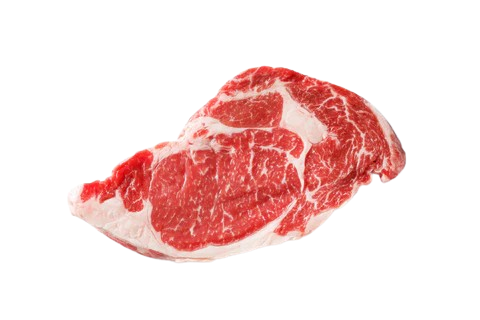
Get a Custom Report on Steak Nutrition Data – Contact Us!
What are the Types of Steak?
There are many different types of steak, which are essentially cuts of beef from various parts of the cattle. They differ widely in terms of tenderness, flavor, fat content (marbling), and price, which in turn affects their nutritional profile, particularly their calorie and fat content. The table below shows some of the most common types of steak and their general calorie information.
| Type (Cut of Beef) | Description | Calories (per 100g cooked, broiled, lean & fat) | Calorie Qualifications |
|---|---|---|---|
|
Filet Mignon (Tenderloin)
|
The most tender cut of steak, very lean with a buttery texture and mild flavor. | 277 (lean & fat); 200 (lean only) | Low in fat for a steak, but often cooked with butter, increasing calories. |
|
Ribeye Steak
|
Highly marbled with fat, making it extremely rich, flavorful, and tender. Can be bone-in or boneless. | 283-291 | One of the highest-calorie and fattiest cuts due to its extensive marbling. |
|
New York Strip Steak (Strip Loin)
|
A well-marbled cut with a strong beefy flavor and a slightly chewy texture. | 274 | High in fat and calories, but generally leaner than a ribeye. |
|
T-Bone / Porterhouse Steak
|
Contains two cuts in one: the tenderloin and the strip loin, separated by a T-shaped bone. Porterhouse has a larger filet. | 289 | High in calories due to the combination of two well-marbled cuts. |
|
Sirloin Steak (Top Sirloin)
|
A leaner cut with good beefy flavor, but less tender than a ribeye or strip. | 243 (lean & fat); 165 (lean only) | A good balance of flavor and leanness. A much lower-calorie option if visible fat is trimmed. |
|
Flank Steak
|
A very lean, flavorful cut from the abdominal muscles. Can be tough if not marinated and cooked properly. | 200 (lean & fat) | Lower in calories and fat. Best when sliced thinly against the grain. |
|
Skirt Steak
|
A long, thin, flavorful cut, similar to flank but with more fat. Popular for fajitas. | 212 | More fat and calories than flank steak. |
|
Chuck Eye Steak
|
From the shoulder (chuck), has properties similar to a ribeye but is less expensive. | 270-290 | A high-calorie, fatty cut. |
|
Hanger Steak
|
Very flavorful, tender cut from the diaphragm. | 210-230 | Moderately fatty and caloric. |
|
Flat Iron Steak
|
A tender, well-marbled, and flavorful cut from the chuck shoulder. | 220-240 | Moderately high in calories and fat. |
|
Tri-Tip Steak/Roast
|
A triangular cut from the bottom sirloin. Lean and flavorful. | 230 | A leaner, moderately caloric option. |
What are the Main Dishes with Steak?
Steak, a premium cut of beef, is the centerpiece of countless main dishes, celebrated for its rich flavor and hearty texture. Some of the most widespread main dishes that feature steak are the classic grilled or pan-seared steak served with potatoes and vegetables, steak fajitas, and Philly cheesesteaks. Its versatility allows it to be prepared in numerous ways, from quick grilling to slow braising. The table below lists diverse main dishes featuring steak, along with estimated nutritional information.
| Dish Name | Calories (per serving) | Type of Steak Cut Commonly Used | Carbs (g) | Sugar (g) | Protein (g) | Fat (g) | Cuisine | Restaurants |
|---|---|---|---|---|---|---|---|---|
|
Grilled Ribeye or New York Strip Steak
|
500-900 (10-12 oz steak only) | Ribeye, New York Strip | 0-5 | 0-1 | 50-70 | 30-60 | American Steakhouse | Outback Steakhouse, LongHorn Steakhouse, Texas Roadhouse, Ruth's Chris Steak House, The Capital Grille |
|
Filet Mignon with Accompaniments
|
400-700 (6-8 oz steak only) | Tenderloin (Filet Mignon) | 0-5 | 0-1 | 40-60 | 20-40 | American Steakhouse, French | Morton's The Steakhouse, Del Frisco's Double Eagle Steakhouse, Fleming's Prime Steakhouse & Wine Bar |
|
Steak Fajitas
|
500-800 (filling + tortillas) | Skirt, Flank | 40-60 | 5-10 | 30-45 | 20-35 | Tex-Mex, Mexican | Chili's, On The Border Mexican Grill & Cantina, Abuelo's Mexican Restaurant |
|
Philly Cheesesteak
|
600-1000+ | Ribeye (thinly sliced), Sirloin | 40-60 | 3-7 | 30-50 | 25-50+ | American (Philadelphia) | Pat's King of Steaks (Philadelphia), Geno's Steaks (Philadelphia), Charleys Cheesesteaks |
|
Steak Frites (Steak and Fries)
|
800-1200 | Hanger, Skirt, Sirloin | 40-60 | 1-3 | 40-55 | 45-65 | French, Belgian | Balthazar (NYC), Mon Ami Gabi, various French bistros |
|
Beef Stroganoff
|
500-800 | Sirloin, Tenderloin Tips | 30-50 | 3-7 | 30-45 | 25-40 | Russian, European | The Cheesecake Factory (some variations) |
|
Carne Asada Tacos
|
200-350 (per taco) | Skirt, Flank | 15-25 | <1-2 | 12-20 | 8-15 | Mexican | Chipotle Mexican Grill, Qdoba Mexican Eats, local taquerias |
|
Pepper Steak Stir-fry
|
400-650 | Sirloin, Flank | 30-50 | 10-20 | 25-35 | 15-25 | Chinese-American | Panda Express (Beijing Beef is similar), P.F. Chang's (Mongolian Beef) |
|
Steak Salad (e.g., with blue cheese)
|
450-700 | Sirloin, Flank | 15-30 | 5-10 | 30-45 | 20-35 | American | Applebee's, Chili's, Panera Bread (seasonal) |
|
Steak and Eggs
|
600-900 | Sirloin, Strip | 20-35 (from sides) | 2-5 | 40-55 | 35-50 | American (Breakfast) | IHOP, Denny's, Waffle House |
|
Lomo Saltado (Peruvian Stir-fried Steak)
|
500-750 | Sirloin | 50-70 (with rice/fries) | 3-6 | 25-35 | 18-28 | Peruvian | Restaurants specializing in Peruvian cuisine |
|
Salisbury Steak
|
400-600 | Ground Sirloin/Chuck | 20-30 | 4-8 | 25-35 | 20-30 | American Comfort Food | Cracker Barrel, Boston Market (seasonal), local diners |
|
Steak Kabobs (Shish Kebab)
|
300-500 (2 skewers) | Sirloin | 10-20 | 3-6 | 25-35 | 10-20 | Middle Eastern, Mediterranean | The Great Greek Mediterranean Grill, local Mediterranean eateries |
What Cuisines Prefer Steak the Most?
Steak is most prominently featured and preferred in American cuisine, where grilling and broiling large, high-quality cuts are celebrated. It is also a cornerstone of Argentinian cuisine (asado) and is highly valued in French, British, and Brazilian cooking. The table below highlights cuisines that frequently feature steak as a centerpiece dish.
| Cuisine | Dish Name | Calories (per serving) | Restaurants |
|---|---|---|---|
|
American Steakhouse
|
Grilled Ribeye, New York Strip, Porterhouse, Filet Mignon | 500-1000+ | Outback Steakhouse, LongHorn Steakhouse, Texas Roadhouse, Ruth's Chris Steak House, The Capital Grille |
|
French
|
Steak Frites | 800-1200 | Balthazar (NYC), Mon Ami Gabi, French bistros |
|
French
|
Steak au Poivre (Pepper Steak) | 600-900 | Classic French restaurants |
|
Argentinian
|
Asado (Grilled Steaks, various cuts) | Varies | Fogo de Chão, Texas de Brazil (Brazilian churrascarias are similar), Argentinian steakhouses |
|
Italian (Tuscan)
|
Bistecca alla Fiorentina (Florentine T-bone) | Varies (very large) | Eataly (some locations), upscale, authentic Tuscan restaurants |
|
Japanese
|
Teppanyaki Steak, Wagyu/Kobe Steak | Varies | Benihana, Kobe Japanese Steakhouse, high-end Japanese steakhouses |
|
British
|
Steak and Ale Pie, Sunday Roast Beef | 500-800 | British-style pubs, e.g., The Dandelion (Philadelphia) |
|
Tex-Mex
|
Steak Fajitas, Carne Asada | 500-800 | Chili's, On The Border Mexican Grill & Cantina |
|
Brazilian (Churrasco)
|
Picanha (Top Sirloin Cap) and other grilled steak cuts | Varies | Fogo de Chão, Texas de Brazil |
Which Countries Produce the Most Steak?
The top producers of steak globally are the same countries that lead in beef production. These include the United States, Brazil, the European Union (as a collective), China, and Argentina. The United States is the world's largest producer of high-quality beef suitable for steaks, with a highly developed cattle industry. Brazil is another massive producer, though much of its beef is exported for various uses. The Food and Agriculture Organization of the United Nations (FAO) provides comprehensive data for "Meat, cattle, with bone," which is the primary source for steak. In 2022, the United States produced over 12,000 kilotonnes of beef. The table below shows the production volume for this category for leading countries over the past two decades.
| Country/Region | 2004 | 2005 | 2006 | 2007 | 2008 | 2009 | 2010 | 2011 | 2012 | 2013 | 2014 | 2015 | 2016 | 2017 | 2018 | 2019 | 2020 | 2021 | 2022 | 2023 (Est.) |
|---|---|---|---|---|---|---|---|---|---|---|---|---|---|---|---|---|---|---|---|---|
| USA | 11,095 | 11,040 | 11,620 | 11,980 | 12,110 | 11,850 | 11,790 | 11,920 | 11,870 | 11,650 | 11,530 | 10,860 | 11,470 | 11,910 | 12,220 | 12,380 | 12,370 | 12,740 | 12,890 | 12,250 |
| Brazil | 8,020 | 8,350 | 8,650 | 8,950 | 9,250 | 9,350 | 9,120 | 9,030 | 9,580 | 9,850 | 10,220 | 9,720 | 9,430 | 9,620 | 9,900 | 10,200 | 10,100 | 9,750 | 10,350 | 10,400 |
| European Union | 8,100 | 8,050 | 8,000 | 7,950 | 7,900 | 7,850 | 7,800 | 7,750 | 7,700 | 7,650 | 7,600 | 7,550 | 7,650 | 7,750 | 7,800 | 7,750 | 7,700 | 7,650 | 7,500 | 7,450 |
| China | 6,150 | 6,300 | 6,500 | 6,650 | 6,750 | 6,850 | 6,470 | 6,490 | 6,520 | 6,580 | 6,650 | 6,750 | 6,850 | 6,950 | 7,100 | 7,250 | 7,400 | 7,100 | 7,200 | 7,250 |
| Argentina | 2,900 | 3,100 | 3,250 | 3,400 | 3,100 | 2,800 | 2,500 | 2,600 | 2,650 | 2,700 | 2,850 | 2,950 | 2,650 | 2,750 | 2,850 | 3,000 | 3,100 | 3,000 | 2,800 | 2,750 |
| Australia | 2,100 | 2,150 | 2,200 | 2,250 | 2,150 | 2,100 | 2,050 | 2,150 | 2,200 | 2,250 | 2,500 | 2,450 | 2,350 | 2,250 | 2,200 | 2,150 | 2,100 | 2,050 | 2,000 | 1,980 |
Which Countries Consume the Most Steak?
Based on data from the OECD and FAO regarding per capita meat consumption and total food supply, the countries with the highest consumption of beef (and therefore steak) are Argentina, Uruguay, the United States, Brazil, and Australia. Argentina and Uruguay have traditionally had the highest per capita beef consumption in the world, with grilling steaks ("asado") being a central part of their national culture. The United States has the largest total consumption volume due to its large population and strong steakhouse culture. The table below provides estimated total consumption (apparent consumption) for some key beef and steak-consuming countries.
| Country | 2004 | 2005 | 2006 | 2007 | 2008 | 2009 | 2010 | 2011 | 2012 | 2013 | 2014 | 2015 | 2016 | 2017 | 2018 | 2019 | 2020 | 2021 |
|---|---|---|---|---|---|---|---|---|---|---|---|---|---|---|---|---|---|---|
| USA | 12,000 | 12,200 | 12,500 | 12,800 | 12,700 | 12,400 | 12,300 | 12,200 | 12,000 | 11,800 | 11,600 | 11,400 | 11,800 | 12,200 | 12,400 | 12,500 | 12,600 | 12,800 |
| China | 6,500 | 6,700 | 6,900 | 7,100 | 7,300 | 7,500 | 7,200 | 7,300 | 7,400 | 7,500 | 7,700 | 7,900 | 8,200 | 8,500 | 8,800 | 9,200 | 9,500 | 9,800 |
| Brazil | 7,200 | 7,500 | 7,800 | 8,100 | 8,300 | 8,400 | 8,200 | 8,100 | 8,500 | 8,700 | 9,000 | 8,500 | 8,200 | 8,300 | 8,500 | 8,700 | 8,500 | 8,200 |
| Argentina | 2,200 | 2,300 | 2,400 | 2,500 | 2,300 | 2,100 | 1,900 | 2,100 | 2,200 | 2,250 | 2,400 | 2,500 | 2,200 | 2,300 | 2,400 | 2,500 | 2,600 | 2,500 |
| Russia | 1,800 | 1,900 | 2,000 | 2,100 | 2,200 | 2,150 | 2,100 | 2,050 | 2,000 | 1,950 | 1,900 | 1,850 | 1,800 | 1,750 | 1,700 | 1,650 | 1,680 | 1,700 |
| Mexico | 1,500 | 1,550 | 1,600 | 1,650 | 1,700 | 1,750 | 1,800 | 1,850 | 1,900 | 1,850 | 1,800 | 1,750 | 1,780 | 1,820 | 1,850 | 1,880 | 1,900 | 1,920 |
How Does Prices of Steak-including Dishes Change?
The prices of restaurant dishes where steak is the centerpiece, such as a classic steakhouse dinner, have dramatically increased over the past 20 years. This is driven by the sharp rise in the market price of high-quality beef, along with significant increases in all other restaurant operational costs, including labor, rent, energy, and other ingredients. Steak is a premium menu item, and its price often sets the tone for a restaurant's price scale. Below is a comparison of estimated prices for representative steak dishes.
| Restaurant | Dish Name | Old Price (2004-2008) | Current Price (2024-2025) |
|---|---|---|---|
| Outback Steakhouse | Outback Center-Cut Sirloin (6-8 oz) | $12.99 - $16.99 | $20.99 - $27.99 |
| LongHorn Steakhouse | Flo's Filet® (6 oz) | $17.99 - $21.99 | $28.99 - $35.99 |
| The Capital Grille | New York Strip or Ribeye (12-16 oz) | $30.00 - $45.00 | $55.00 - $75.00+ |
| Texas Roadhouse | USDA Choice Sirloin (6-8 oz) | $9.99 - $13.99 | $15.99 - $21.99 |
| Chili's | Classic Sirloin with Grilled Avocado | $13.49 - $15.99 | $19.49 - $23.49 |
| Applebee's | 8 oz. Top Sirloin | $12.99 - $15.49 | $19.99 - $24.99 |
What is the Steak Calorie for 1 KG?
One kilogram (1000g, 35.27 oz) of cooked top sirloin steak (lean only, broiled) contains 1650 calories. One kilogram of cooked ribeye steak (lean and fat, pan-seared) provides 2830 calories.
What is the Calorie of 1 Steak?
The calorie content of one steak depends entirely on its size and cut. A common restaurant-sized 8 oz (227g) cooked top sirloin steak (lean only, broiled) contains 374 calories. An 8 oz (227g) cooked filet mignon (lean only, broiled) provides 454 calories. An 8 oz (227g) cooked ribeye steak (lean and fat, pan-seared) contains 642 calories.
What is the Steak Calorie for 100 Grams?
The calorie content of 100g of cooked steak varies by cut. A 100g (3.5 oz) serving of cooked top sirloin steak (lean only, broiled) contains 165 calories. A 100g serving of cooked filet mignon (lean only, broiled) provides 200 calories. A 100g serving of cooked flank steak (lean only, broiled) has 192 calories. A 100g serving of cooked T-bone steak (lean and fat, broiled) contains 289 calories.
What are the Health Benefits of Steak?
Steak, particularly lean cuts, provides some health benefits like supplying high-quality complete protein and offering a rich source of bioavailable minerals due to its composition as red meat. A list of the steak health benefits are shown below.
- Excellent Source of High-Quality Protein: Steak is a complete protein source, meaning it provides all the essential amino acids the body needs for building and repairing tissues, maintaining muscle mass, and producing enzymes and hormones. (Paddon-Jones, D. & Rasmussen, B.B., 2009, "Dietary protein recommendations and the prevention of sarcopenia").
- Rich in Iron: One of the key benefits of steak meat is its high content of heme iron, which is significantly more bioavailable (easily absorbed) than the non-heme iron found in plant foods. Iron is crucial for forming hemoglobin, which transports oxygen in the blood, and for preventing iron-deficiency anemia. (Abbaspour, N., et al., 2014, "Review on iron and its importance for human health").
- High in Vitamin B12: Steak is an excellent natural source of Vitamin B12, a nutrient found almost exclusively in animal products. Vitamin B12 is vital for proper nerve function, DNA synthesis, and the formation of red blood cells.
- Good Source of Other B Vitamins: It also provides other important B vitamins, including niacin (B3), riboflavin (B2), and vitamin B6, which are essential for converting food into energy and supporting the nervous system.
- Rich in Zinc and Selenium: Steak is a great source of zinc, which is critical for immune function, wound healing, and cell growth, and selenium, a powerful antioxidant that helps protect cells from damage.
- Contains Creatine and Carnosine: Red meat like steak is a natural source of creatine, which can enhance physical performance by providing energy for muscle contractions, and carnosine, which functions as an antioxidant and may help reduce muscle fatigue.
What are the Downsides of Steak?
Steak has been known to cause some unwanted effects like contributing to high saturated fat intake and potential links to certain diseases when consumed in excess due to its composition as red meat. A list of the downsides of steak are shown below.
- High in Saturated Fat and Cholesterol (especially fatty cuts): Many popular cuts of steak, such as ribeye and T-bone, are high in saturated fat and cholesterol. Diets high in saturated fat can raise LDL (bad) cholesterol levels in the blood, which is a significant risk factor for heart disease. (American Heart Association, "Saturated Fat").
- Increased Risk of Certain Cancers: High consumption of red meat, particularly processed meat but also including steak, has been associated with an increased risk of certain cancers, most notably colorectal cancer. This may be due to compounds formed during high-temperature cooking (like grilling or pan-searing) or other inherent components of red meat. (World Health Organization, International Agency for Research on Cancer, 2015, "IARC Monographs evaluate consumption of red meat and processed meat").
- Increased Risk of Heart Disease: In addition to the impact of saturated fat, some large observational studies have linked high intakes of red meat to an increased risk of cardiovascular disease and mortality. (Pan, A., et al., 2012, "Red Meat Consumption and Mortality: Results From 2 Prospective Cohort Studies").
- Potential for High-Temperature Cooking Contaminants: Cooking steak at high temperatures, such as grilling, broiling, or pan-frying, can create potentially harmful compounds like heterocyclic amines (HCAs) and polycyclic aromatic hydrocarbons (PAHs), which have been linked to cancer in some studies.
- Environmental Impact: The production of beef has a significant environmental footprint, requiring large amounts of land, water, and feed, and contributing substantially to greenhouse gas emissions compared to the production of plant-based proteins or poultry.
Is Steak Good for You?
Yes, steak can be good for you but only when consumed in moderation, with careful selection of lean cuts, and as part of an overall healthy dietary pattern. Steak is a nutrient-dense food, providing high-quality protein, highly bioavailable iron and zinc, and a wealth of B vitamins, particularly B12. (Wyness, L., et al., 2011, "Red meat in the diet: an update"). These nutrients are essential for muscle health, energy production, and preventing anemia.
But high consumption of red meat, especially fatty cuts, is associated with significant health risks. Major health organizations like the World Health Organization have linked high red meat intake to an increased risk of colorectal cancer. (World Health Organization, International Agency for Research on Cancer, 2015, "IARC Monographs evaluate consumption of red meat and processed meat"). Furthermore, many studies have associated high red meat consumption with an increased risk of cardiovascular disease. (Zhong, V.W., et al., 2019, "Associations of Processed Meat, Unprocessed Red Meat, Fish, or Poultry Consumption With Incident Cardiovascular Disease and All-Cause Mortality").
How Do Calories Change According to Steak Types?
The calories in steak change dramatically according to the type of cut, which is directly related to the amount of intramuscular fat, or marbling, and the presence of an external fat cap. The highest-calorie steaks are the most heavily marbled cuts. Ribeye steak and T-bone/Porterhouse steaks are among the highest, with 283 to 291 calories per 100g of cooked meat (lean and fat included). Other rich cuts like a chuck eye steak also fall into this high-calorie range. The New York strip steak is also high in calories at 274 per 100g. In the middle of the spectrum are cuts with moderate marbling like a flat iron steak (220-240 calories per 100g) or a tri-tip (230 calories per 100g). The lowest-calorie steaks are the leanest cuts with the least amount of marbling. A lean-only top sirloin steak is a significantly lower-calorie option at 165 calories per 100g, and a lean-only flank steak is also on the lower end at 192 calories per 100g. The filet mignon (tenderloin) is very lean, containing around 200 calories per 100g for the lean meat only, though it is often prepared with high-calorie additions like butter or bacon. The choice of cut is the single most important factor determining a steak's caloric content, with a difference of over 100 calories per 100g between the leanest and fattiest options.
What are the Desserts with Steak?
The use of steak or any savory red meat in desserts is very uncommon. Steak has a robust, savory, and umami flavor profile that is fundamentally incompatible with the sweet characteristics of desserts. Some novelty items exist, like bacon-topped doughnuts or maple bacon ice cream, this trend has not extended to steak.
Is Cooked Steak More Calorie-Dense Than Raw Steak?
Yes, cooked steak is more calorie-dense than raw steak on a weight-for-weight basis. This is because the cooking process causes the steak to lose a significant amount of moisture (water) and some fat, which concentrates the remaining protein and fat in a smaller total weight.
For example, 100g of raw beef top sirloin (lean and fat) has 183 calories. After broiling, that same 100g of raw meat might cook down to 70-75g. If we look at the final cooked product, 100g of broiled top sirloin (lean and fat) contains 243 calories. The steak macros show a similar concentration. Raw sirloin (100g) has 20.6g of protein and 10.6g of fat. Cooked sirloin (100g) has 28.1g of protein and 13.9g of fat. The total number of calories and grams of protein/fat in the entire piece of meat decreases slightly (as some fat renders out), but because the total weight decreases more substantially due to water loss, the calories and macros per gram of the final cooked product are higher.
What is the Origin of Steak?
The origin of steak is most strongly associated with European, particularly British and Italian, culinary history, and was later perfected in the American steakhouse tradition. Although humans have been roasting large pieces of meat over fires for millennia, the idea of the "steak" as a distinct cut and preparation method gained prominence in the 15th century and beyond. The word itself is of Scandinavian origin, "steik," which appeared in Middle English.
In Italy, the "Bistecca alla Fiorentina," a very large T-bone steak from Chianina cattle, grilled over embers, has been a celebrated dish in Tuscany since at least the 16th century. In Britain, the steak became a symbol of prosperity and was central to the hearty English diet, famously enjoyed at "beefsteak clubs" in the 18th century. However, the modern steakhouse culture, with its specific cuts (like the New York Strip, Ribeye, Porterhouse) and established accompaniments (baked potato, creamed spinach), is largely an American innovation that developed in the 19th and early 20th centuries, particularly in New York City and Chicago.
A classic dish that highlights this American evolution is the "New York Strip Steak." This cut, from the short loin of the cow, became an iconic offering in early American steakhouses like Delmonico's in New York. Simply seasoned with salt and pepper and cooked over high heat (broiled or grilled), it delivered a robust beefy flavor and satisfyingly firm texture, defining the quintessential American steak experience that has since been exported worldwide.
Explore More Meat
Discover more Meat with detailed nutrition facts, calorie counts, vitamins, minerals, and health benefits. Compare similar foods, serving sizes, macronutrients, and key nutrients to find the best option for your diet and nutrition goals.
 Bacon calories
 Beef calories
 Beef Brisket calories
 Beef Chuck calories
 Beef Jerky calories
 Beef Liver calories
 Beef Short Ribs calories
 Beef Tenderloin calories
 Beef Tongue calories
 Bison calories
 Buffalo Meat calories
 Chicken calories