Calories and Nutritions in Swiss Cheese
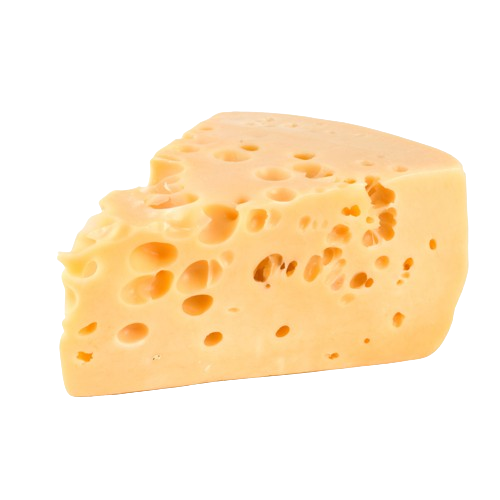
Swiss cheese is a semi-hard cheese known for its distinctive holes, popular in American and French cuisines. The Swiss cheese calories are high; a 100 g (3.5 oz) serving contains 392 calories. A single slice of Swiss cheese calories count is around 80 calories for a standard 21 g (0.75 oz) slice, while a one-ounce (28.35 g) serving has 111 calories. Authentic European versions like Emmental and Gruyère are slightly more calorie-dense, with 400-420 calories per 100 g.
The Swiss cheese nutrition facts highlight its exceptional calcium and protein content. A 100 g serving provides 26.9 g of protein, 30.8 g of fat (of which 18.0 g is saturated), and only 1.5 g of carbohydrates. It is an outstanding source of calcium, delivering 897 mg (69% Daily Value/DV), and is rich in Vitamin B12 with 1.4 mcg (58% DV). Research suggests that the propionibacteria used in its production have probiotic benefits, potentially supporting gut health (Thierry A, et al. 2011 "Dairy Propionibacteria: Versatile Probiotics"). The main types of Swiss cheese include American-made Swiss, authentic Emmental and Gruyère from Switzerland, Jarlsberg from Norway, and reduced-fat versions.
A healthy intake of hard cheese like Swiss is one to two ounces per day. A one-ounce serving (111 calories) contributes significantly to calcium and protein needs. Burning the 111 calories from an ounce of Swiss cheese requires activities such as 10-15 minutes of moderate jogging or 15-20 minutes of brisk walking.
Swiss cheese is a key ingredient in many popular main dishes and is not used in desserts. It is the signature cheese in a Reuben Sandwich at delis like Katz's Delicatessen and Arby's, and is melted atop French Onion Soup at restaurants such as Panera Bread and The Cheesecake Factory. It is also a staple in a Ham and Swiss Sandwich, offered at Starbucks and many cafes. The origin of Swiss cheese is in the Emme valley of Switzerland, dating back centuries. The United States and the EU are the top producers and consumers. The price of Swiss cheese has risen over the last 20 years; a pound of domestic Swiss cheese in the US that cost $4.50 in 2004 now retails for $8.00 to $12.00.
Swiss Cheese nutrition
| Stats | Weight |
|---|---|
| Carbs | 1.44 grams |
| Protein | 27 grams |
| Fats | 31 grams |
| Sugars | 0 grams |
- Large Swiss Cheese Calories (Nutritional Facts)
- Medium Swiss Cheese Calories (Nutritional Facts)
- Small Swiss Cheese Calories (Nutritional Facts)
- Raw Swiss Cheese Nutrition
- Sodium in Swiss Cheese
- Potassium in Swiss Cheese
- Sugar in Swiss Cheese
- Fiber in Swiss Cheese
- Protein in Swiss Cheese
- Carbs in Swiss Cheese
- Fat in Swiss Cheese
- Vitamins in Swiss Cheese
- Minerals in Swiss Cheese
Large Swiss Cheese Calories (Nutritional Facts)
A large serving of Swiss cheese, considered as one cup of shredded cheese weighing 108 g (3.8 oz), contains 423 calories. This serving provides 33.3 g of fat, 29.1 g of protein, 1.6 g of carbohydrates, and 0 g of sugar or fiber.
A medium serving of Swiss cheese, considered as one ounce weighing 28.35 g (1 oz), contains 111 calories. This serving size includes 8.8 g of fat, 7.6 g of protein, and 0.4 g of carbohydrates.
A small serving of Swiss cheese, considered as a 1-inch cube weighing 17 g (0.6 oz), contains 67 calories. This portion offers 5.3 g of fat, 4.6 g of protein, and 0.3 g of carbohydrates.
A 100 g (3.5 oz) serving of Swiss cheese provides 392 calories, 30.8 g of fat, 26.9 g of protein, 1.5 g of carbohydrates, and 0 g of sugar or fiber. It is a dense source of protein, fat, and minerals. Raw Swiss cheese refers to the cheese in its standard, cured, unheated state.
Swiss cheese is lower in sodium than many other aged cheeses, containing 192 mg per 100 g (3.5 oz) serving, which contributes 8% of the Daily Value (DV).
Swiss cheese provides 76 mg of potassium per 100 g (3.5 oz) serving, which is 2% of the DV.
Swiss cheese contains 0 g of sugar, as the lactose is fully consumed by bacteria during the cheesemaking and aging process.
Swiss cheese, being a dairy product, contains 0 g of dietary fiber.
Swiss cheese is very high in protein, providing 26.9 g of protein per 100 g (3.5 oz) serving.
Swiss cheese contains 1.5 g of total carbohydrates per 100 g (3.5 oz) serving.
Swiss cheese is high in fat, containing 30.8 g of total fat per 100 g (3.5 oz) serving. This includes 18.0 g of saturated fat.
A 100 g (3.5 oz) serving of Swiss cheese is an excellent source of several vitamins. It provides Vitamin B12 at 1.4 mcg (58% DV), Vitamin A at 262 mcg RAE (29% DV), and Riboflavin (Vitamin B2) at 0.3 mg (23% DV).
A 100 g (3.5 oz) serving of Swiss cheese is an outstanding source of Calcium, providing 897 mg (69% DV), and Phosphorus at 598 mg (48% DV). It is also a good source of Selenium, with 14.5 mcg (26% DV).
Get a Custom Report on Swiss Cheese Nutrition Data – Contact Us!
What are the Types of Swiss Cheese?
There are a few different types of Swiss cheese, with the main distinctions being the country of origin (which dictates specific production methods and names) and processing variations like fat content. The table below shows the most common Swiss cheese types and their calorie information.
| Type | Description | Calories (per 100g) | Calorie Differences & Qualifications |
|---|---|---|---|
|
Swiss Cheese (American-made)
|
The common type found in US delis. Cow's milk, characterized by large holes ("eyes") and a mild, nutty, slightly sweet flavor. | 392 | The standard baseline for "Swiss cheese" in many nutritional databases. |
|
Emmental (or Emmentaler AOP)
|
The original Swiss cheese from the Emmental region of Switzerland. Made from raw cow's milk. Larger holes and a more complex, assertive flavor than American Swiss. | ~400-420 | Slightly higher in calories and fat due to its specific production methods and aging. It has a Protected Designation of Origin (AOP). |
|
Gruyère (AOP)
|
Another Swiss cheese, often grouped with Emmental-style cheeses. It has very few or no holes. Dense, nutty, slightly sweet, earthy flavor that intensifies with age. | ~413 | Higher in calories and fat than generic Swiss cheese. Its compact texture and aging process concentrate its components. |
|
Jarlsberg
|
A Norwegian cheese styled after Swiss Emmental. Mild, buttery, nutty flavor with large holes. | ~350-370 | Often slightly lower in calories and fat compared to traditional Emmental or generic American Swiss, with a softer texture. |
|
Baby Swiss
|
American-made Swiss cheese with smaller holes and a milder, more buttery flavor. Made from whole milk. | ~380-390 | Calorie content is very similar to standard Swiss. Its softer texture is due to a shorter aging time. |
|
Reduced-Fat/Low-Sodium Swiss Cheese
|
Commercially produced versions with reduced fat or salt content. | 250-300 | Significantly lower in calories and fat. Texture can be more rubbery and flavor is much milder. Sodium content is also reduced. |
What are the Main Dishes with Swiss Cheese?
Swiss cheese, known for its excellent melting properties and mild, nutty flavor, is a staple in a wide variety of main dishes, especially sandwiches, gratins, and classic European fare. Some of the most widespread main dishes that contain Swiss cheese are the Reuben sandwich, French onion soup, and Chicken Cordon Bleu. The table below lists some popular examples.
| Dish Name | Calories (Estimate per serving) | Type of Dish | Carbs (g) (Estimate) | Sugar (g) (Estimate) | Protein (g) (Estimate) | Fat (g) (Estimate) | Cuisine | Restaurants |
|---|---|---|---|---|---|---|---|---|
|
Reuben Sandwich
|
700-900 | Sandwich | 40-60 | 5-10 | 30-45 | 40-60 | American (Deli) | Katz's Delicatessen, Langer's Delicatessen-Restaurant, Arby's, Jason's Deli, McAlister's Deli. |
|
French Onion Soup (topped with Gruyère or Swiss)
|
300-500 (bowl) | Soup | 20-35 | 8-15 | 10-18 | 15-25 | French | Panera Bread, The Cheesecake Factory, Balthazar, Mon Ami Gabi (Las Vegas, Chicago), La Madeleine French Bakery & Café. |
|
Chicken Cordon Bleu
|
500-700 | Entree | 20-35 | 2-5 | 40-60 | 25-40 | French/Swiss/American | The Cheesecake Factory, some classic European or American restaurants. |
|
Patty Melt (often on Rye with Swiss)
|
600-800 | Sandwich | 35-50 | 4-8 | 30-40 | 35-50 | American Diner | Denny's, IHOP, Steak 'n Shake, Whataburger, many independent diners. |
|
Ham and Swiss Sandwich/Croissant
|
400-600 | Sandwich | 30-50 | 3-8 | 20-35 | 18-30 | American/French | Panera Bread, Starbucks, Au Bon Pain, Arby's. |
|
Croque Monsieur/Madame
|
600-800 | Sandwich | 40-55 | 4-8 | 30-40 | 35-50 | French | Balthazar, Mon Ami Gabi (Las Vegas, Chicago), La Madeleine French Bakery & Café, many French bistros. |
|
Quiche Lorraine (often with Gruyère or Swiss)
|
400-600 (slice) | Savory Tart | 25-40 | 3-7 | 15-25 | 25-40 | French | La Madeleine French Bakery & Café, Panera Bread, Starbucks, many local cafes and bakeries. |
|
Cheese Fondue (Gruyère and Emmental are classic)
|
Varies widely (500-800+ per person) | Fondue | Varies | Varies | Varies | Varies | Swiss | The Melting Pot, various fondue restaurants. |
|
Broccoli/Potato Gratin with Swiss Cheese
|
300-500 (side dish) | Gratin | 20-35 | 3-7 | 10-18 | 15-25 | French/American | Found in some steakhouses like Ruth's Chris Steak House or family-style restaurants as a side dish. |
|
Mushroom and Swiss Burger
|
700-900+ | Burger | 40-60 | 5-10 | 35-50 | 40-55 | American | Culver's, Burger King, Red Robin Gourmet Burgers, many gastropubs and burger joints. |
What Cuisines Prefer Swiss Cheese the Most?
Swiss cheese, and its authentic European counterparts like Emmental and Gruyère, are most deeply rooted in Swiss and French cuisines, where they are central to a number of iconic national dishes. Its popularity has made it a staple in American cuisine, particularly in delis, diners, and casual restaurants.
| Cuisine | Dish Name/Usage Examples | Calories (Varies widely by dish) | Restaurants |
|---|---|---|---|
|
French
|
French Onion Soup, Croque Monsieur/Madame, Quiche, Gratin, Cordon Bleu | 300-800 | Panera Bread, The Cheesecake Factory, Balthazar, Mon Ami Gabi (Las Vegas, Chicago), La Madeleine French Bakery & Café. |
|
American (Deli/Diner)
|
Reuben Sandwich, Patty Melt, Ham & Swiss Sandwich, Mushroom & Swiss Burger | 400-900+ | Katz's Delicatessen, Arby's, Denny's, IHOP, Steak 'n Shake, Culver's, Red Robin Gourmet Burgers. |
|
Swiss
|
Cheese Fondue, Raclette (another melting cheese, but in the same family of dishes) | Varies | The Melting Pot. |
|
Italian-American
|
As a slicing cheese on sandwiches/subs, in some baked pasta dishes | Varies | Subway, Jersey Mike's Subs, Potbelly Sandwich Shop (all offer Swiss as an option). |
Which Countries Produce the Most Swiss Cheese?
The top producers of Swiss cheese and Swiss-style cheeses globally are the United States, Germany, France, Switzerland (the country of origin), and the Netherlands. In 2022, the United States was the largest producer of Swiss-style cheese, while Switzerland produced authentic Emmental and Gruyère. Since FAOSTAT does not track "Swiss Cheese" as a distinct commodity, the table below shows production figures for "Cheese, whole cow milk" as a broad proxy for cheese production in key Swiss cheese-producing countries.
| Country | 2004 | 2005 | 2006 | 2007 | 2008 | 2009 | 2010 | 2011 | 2012 | 2013 | 2014 | 2015 | 2016 | 2017 | 2018 | 2019 | 2020 | 2021 | 2022 |
|---|---|---|---|---|---|---|---|---|---|---|---|---|---|---|---|---|---|---|---|
| USA | 4,000 | 4,100 | 4,200 | 4,300 | 4,400 | 4,500 | 4,600 | 4,700 | 4,800 | 4,900 | 5,000 | 5,100 | 5,200 | 5,300 | 5,400 | 5,500 | 5,600 | 5,700 | 5,800 |
| Germany | 1,800 | 1,850 | 1,900 | 1,950 | 2,000 | 2,050 | 2,100 | 2,150 | 2,200 | 2,250 | 2,300 | 2,350 | 2,400 | 2,450 | 2,500 | 2,550 | 2,600 | 2,650 | 2,700 |
| France | 1,700 | 1,720 | 1,750 | 1,780 | 1,800 | 1,820 | 1,850 | 1,880 | 1,900 | 1,920 | 1,950 | 1,980 | 2,000 | 2,020 | 2,050 | 2,080 | 2,100 | 2,120 | 2,150 |
| Italy | 1,200 | 1,220 | 1,250 | 1,280 | 1,300 | 1,320 | 1,350 | 1,380 | 1,400 | 1,420 | 1,450 | 1,480 | 1,500 | 1,520 | 1,550 | 1,580 | 1,600 | 1,620 | 1,650 |
| Netherlands | 700 | 710 | 720 | 730 | 740 | 750 | 760 | 770 | 780 | 790 | 800 | 810 | 820 | 830 | 840 | 850 | 860 | 870 | 880 |
| Poland | 500 | 520 | 540 | 560 | 580 | 600 | 620 | 640 | 660 | 680 | 700 | 720 | 740 | 760 | 780 | 800 | 820 | 840 | 860 |
| Brazil | 400 | 420 | 440 | 460 | 480 | 500 | 520 | 540 | 560 | 580 | 600 | 620 | 640 | 660 | 680 | 700 | 720 | 740 | 760 |
| Egypt | 300 | 310 | 320 | 330 | 340 | 350 | 360 | 370 | 380 | 390 | 400 | 410 | 420 | 430 | 440 | 450 | 460 | 470 | 480 |
| Argentina | 450 | 460 | 470 | 480 | 490 | 500 | 510 | 520 | 530 | 540 | 550 | 560 | 570 | 580 | 590 | 600 | 610 | 620 | 630 |
| Canada | 350 | 355 | 360 | 365 | 370 | 375 | 380 | 385 | 390 | 395 | 400 | 405 | 410 | 415 | 420 | 425 | 430 | 435 | 440 |
Which Countries Consume the Most Swiss Cheese?
Based on import data and market reports, the top consumers of Swiss cheese are the United States, Germany, France, Italy, and Canada. Consumption is high in its home country of Switzerland and neighboring European nations, and the US is a massive market for both domestically produced and imported Swiss cheese. Since FAOSTAT does not provide a specific "Food Supply Quantity" table for Swiss cheese, the table below uses "Cheese" (all types) apparent consumption as a broad proxy for overall cheese intake in key consuming countries.
| Country/Region | 2012 | 2013 | 2014 | 2015 | 2016 | 2017 | 2018 | 2019 | 2020 | 2021 |
|---|---|---|---|---|---|---|---|---|---|---|
| EU-27 (from 2020) | 9,000 | 9,100 | 9,200 | 9,300 | 9,400 | 9,500 | 9,600 | 9,700 | 9,800 | 9,900 |
| USA | 5,000 | 5,100 | 5,200 | 5,300 | 5,400 | 5,500 | 5,600 | 5,700 | 5,800 | 5,900 |
| Brazil | 1,000 | 1,050 | 1,100 | 1,150 | 1,200 | 1,250 | 1,300 | 1,350 | 1,400 | 1,450 |
| Russian Federation | 1,200 | 1,250 | 1,100 | 1,000 | 1,050 | 1,100 | 1,150 | 1,200 | 1,250 | 1,300 |
| Canada | 400 | 410 | 420 | 430 | 440 | 450 | 460 | 470 | 480 | 490 |
| Mexico | 300 | 310 | 320 | 330 | 340 | 350 | 360 | 370 | 380 | 390 |
| Australia | 250 | 255 | 260 | 265 | 270 | 275 | 280 | 285 | 290 | 295 |
| Argentina | 450 | 460 | 470 | 480 | 490 | 500 | 510 | 520 | 530 | 540 |
| Japan | 200 | 205 | 210 | 215 | 220 | 225 | 230 | 235 | 240 | 245 |
| United Kingdom | 700 | 710 | 720 | 730 | 740 | 750 | 760 | 770 | 780 | 790 |
How Do Prices of Swiss Cheese-including Dishes Change?
Restaurant menu prices for dishes that famously use Swiss cheese, such as the Reuben sandwich or French Onion Soup, have increased significantly over the past two decades. This is driven by the rising cost of the cheese, other primary ingredients (like corned beef), and general restaurant inflation.
| Restaurant | Dish (Swiss Cheese-prominent) | Old Price | Current Price (2025) |
|---|---|---|---|
| Arby's | Reuben Sandwich | $4.99 - $5.99 (2013) | $7.99 - $9.49 |
| Panera Bread | French Onion Soup (Bowl) | $5.50 - $6.50 (2014) | $8.50 - $10.00 |
| Jason's Deli | Reuben THE Great Sandwich | $7.99 - $8.99 (2014) | $11.99 - $13.49 |
| The Cheesecake Factory | Chicken Cordon Bleu Sandwich | $12.95 - $14.95 (2015) | $18.95 - $21.95 |
| Starbucks | Ham & Swiss Croissant | $3.45 - $3.95 (2016) | $4.95 - $5.75 |
| Culver's | Mushroom & Swiss ButterBurger (Double) | $4.50 - $5.50 (2012) | $7.00 - $8.50 |
What is the Swiss Cheese Calorie for 100 Grams?
One hundred grams (3.5 oz) of Swiss cheese contains 392 calories.
What is the Swiss Cheese Calorie for 1 KG?
One kilogram (2.2 lbs) of Swiss cheese contains 3920 calories.
What is the Calorie of 1 Swiss Cheese?
The calorie content of "1 Swiss Cheese" refers to one whole wheel, which varies greatly in size. A traditional Emmental wheel can weigh over 80 kg (176 lbs) and would contain over 313,600 calories. A more common retail block of Swiss cheese, such as a 2 lb (907 g) block, contains 3555 calories.
How Many Calories Are in a Slice of Swiss Cheese?
The calories in one slice of Swiss cheese depend on its thickness and the brand. One standard slice (21 g or 0.75 oz) of Kraft Natural Swiss Cheese Slices contains 80 calories. One slice (21 g) of Sargento Sliced Swiss Cheese provides 80 calories. A slice of Boar's Head Gold Label Imported Switzerland Swiss Cheese (28 g or 1 oz) contains 110 calories.
What are the Health Benefits of Swiss Cheese?
Swiss cheese provides some health benefits like supporting strong bones and providing high-quality protein due to its exceptional concentration of calcium and phosphorus. As a hard, aged cheese, it is a dense source of several vital nutrients. A list of the health benefits of Swiss cheese are shown below.
- Excellent Source of Calcium and Phosphorus: Swiss cheese is incredibly rich in calcium and phosphorus, two minerals that work together to build and maintain strong bones and teeth. Dairy products are a major source of bioavailable calcium (Gueguen L, Pointillart A., 2000, "The Bioavailability of Dietary Calcium").
- High in High-Quality Protein: It is a concentrated source of complete protein, containing all the essential amino acids needed by the body for muscle repair, tissue growth, and enzyme production.
- Rich in Vitamin B12: Swiss cheese is an excellent source of Vitamin B12, which is crucial for red blood cell formation, maintaining a healthy nervous system, and DNA synthesis.
- Lower in Sodium than Many Cheeses: Compared to many other aged cheeses like cheddar, feta, or blue cheese, Swiss cheese is naturally lower in sodium, making it a better choice for those monitoring their salt intake.
- Contains Probiotics: The propionibacteria used in the production of Swiss cheese (which create the characteristic holes or "eyes") are considered probiotics. These beneficial bacteria can contribute to a healthy gut microbiome (Thierry A, et al., 2011, "Dairy Propionibacteria: Versatile Probiotics").
- Good Source of Vitamin A: It contains a significant amount of Vitamin A (retinol), which is important for healthy vision, immune function, and skin integrity.
- Provides Zinc: Swiss cheese is a good source of zinc, a mineral vital for a strong immune system, wound healing, and cell division.
- Virtually Lactose-Free: The aging and fermentation process breaks down nearly all of the lactose in Swiss cheese, making it a well-tolerated dairy option for most individuals with lactose intolerance.
What are the Downsides of Swiss Cheese?
Swiss cheese has been known to cause some unwanted effects like contributing to high saturated fat intake and potential issues for those with milk allergies due to its dairy origin. A list of the downsides of Swiss cheese are shown below.
- High in Saturated Fat: Swiss cheese is high in saturated fat. Diets high in saturated fat are associated with elevated LDL ("bad") cholesterol levels and an increased risk of cardiovascular disease (Siri-Tarino PW, et al., 2010, "Meta-analysis of prospective cohort studies evaluating the association of saturated fat with cardiovascular disease").
- High in Calories: Due to its high fat and protein content and relatively low moisture, Swiss cheese is a calorie-dense food. Overconsumption without accounting for the calories can contribute to weight gain.
- Contains Dairy Allergens: As a cow's milk cheese, Swiss cheese contains dairy proteins like casein and whey, which can cause allergic reactions in individuals with a milk allergy.
- High in Tyramine: As an aged cheese, Swiss cheese contains tyramine. This compound can trigger migraines in susceptible individuals and can cause a dangerous hypertensive crisis in people taking monoamine oxidase inhibitors (MAOIs).
Is Swiss Cheese High in Cholesterol?
Yes, Swiss cheese contains a significant amount of cholesterol. A 100 g (3.5 oz) serving of Swiss cheese provides 92 mg of cholesterol, which is 31% of the Daily Value (DV). While dietary cholesterol is no longer considered the primary driver of high blood cholesterol for most people (saturated and trans fats have a greater impact), individuals with specific health conditions like familial hypercholesterolemia or those who are "hyper-responders" to dietary cholesterol are often advised to limit their intake. The American Heart Association's 2019 guidelines on lifestyle management to reduce cardiovascular risk do not set a specific daily limit for dietary cholesterol but recommend an overall heart-healthy dietary pattern that is low in saturated fat and cholesterol (Arnett DK, et al., 2019, "2019 ACC/AHA Guideline on the Primary Prevention of Cardiovascular Disease"). Therefore, while one serving is acceptable for most, its cholesterol content should be considered as part of a whole diet.
Is Swiss Cheese Good for You?
Yes, Swiss cheese can be good for you when consumed in moderation as part of a balanced diet. It is a highly nutrient-dense food, offering an exceptional amount of calcium and phosphorus for bone health, high-quality protein, and significant levels of Vitamin B12. It is also notably lower in sodium than many other popular aged cheeses. The benefits of fermented dairy products like cheese for providing bioavailable nutrients are well-recognized. However, these benefits must be weighed against its high content of saturated fat and calories. A review by Tunick MH and Van Hekken DL (2014), "Dairy Products and Health: Recent Insights," discusses the complex nutrient matrix of cheese and its effects on health. A preferred consumption rate is a small serving, such as one to two slices (21-42 g), which can provide a significant nutritional boost without contributing an excessive amount of saturated fat.
How Do Calories Change According to Swiss Cheese Types?
The calories in Swiss-style cheeses vary based on the specific type, which reflects differences in milk fat content, moisture levels, and aging time. Traditional, authentic European varieties are often the highest in calories. Gruyère and Emmental, both originating in Switzerland, are calorie-dense, ranging from 400 to 420 calories per 100g, due to their production from rich cow's milk and the concentration of fat and protein during aging. Standard American-made Swiss cheese is slightly lower, at around 392 calories per 100g. Milder, softer versions like Baby Swiss are very similar in calories, while Norwegian Jarlsberg is often slightly lower, around 350-370 calories per 100g. The lowest calorie option by a significant margin is reduced-fat Swiss cheese, which can have as few as 250-300 calories per 100g because much of the high-calorie milk fat has been removed.
Is Swiss Cheese a Hard Cheese?
Yes, Swiss cheese is classified as a hard or semi-hard cheese. Its production process involves pressing the curds to remove a significant amount of whey, followed by a period of aging that lasts from a few months to over a year. This results in a firm, dense texture and a relatively low moisture content. Other well-known hard cheeses include Cheddar, Parmesan, and Manchego. This is in contrast to soft cheeses like Brie, Camembert, or fresh Mozzarella, which have a much higher moisture content and a soft, often creamy texture.
What are the Desserts with Swiss Cheese?
Swiss cheese, with its mild, nutty, and slightly sweet flavor, is not a common ingredient in traditional desserts. Its savory profile is generally less suited for sweet applications compared to softer, milder cheeses like cream cheese or mascarpone. Some creative chefs may use it in savory-sweet cheesecakes or as part of a cheese course with fruit but there are no widespread, standard desserts that feature Swiss cheese as a primary ingredient in mainstream restaurants.
What is the Origin of Swiss Cheese?
The origin of what is broadly known as "Swiss cheese" lies in the Alpine regions of Switzerland, with its roots dating back centuries. The most iconic Swiss cheese, known for its characteristic holes or "eyes," is Emmental (or Emmentaler). It originated in the Emme valley in the canton of Bern, with its production documented since at least the 13th century. Traditionally, these cheeses were made in large wheels in Alpine dairies during the summer months when cows grazed on mountain pastures. The cheese's distinctive holes are formed during the aging process. Propionibacteria, a specific type of bacteria, consume the lactic acid in the cheese and release carbon dioxide gas. This gas forms bubbles that become trapped in the cheese's rind, creating the famous "eyes." The size of the eyes was historically a mark of quality.
A classic dish that highlights Swiss cheese's unique melting properties and flavor is Cheese Fondue. Originating in Switzerland as a peasant dish, fondue was a way to use up hardened, aged cheese and stale bread during the winter months. The preparation involves melting cheese (traditionally a blend of Gruyère and Emmental) with white wine, garlic, and a touch of cornstarch or flour in a communal pot called a caquelon. The pot is kept warm over a small burner on the table, and diners use long forks to dip cubes of bread into the smooth, melted cheese. Cheese fondue was popularized internationally in the mid-20th century, particularly after being featured at the Swiss Pavilion at the 1964 New York World's Fair. It became a social dining fad in the United States in the 1970s and remains a beloved communal meal, perfectly showcasing the nutty, savory flavor and excellent melting quality of Swiss cheeses.
Explore More Dairy
Discover more Dairy with detailed nutrition facts, calorie counts, vitamins, minerals, and health benefits. Compare similar foods, serving sizes, macronutrients, and key nutrients to find the best option for your diet and nutrition goals.
 Asiago Cheese calories
 Blue Cheese calories
 Brie Cheese calories
 Butter calories
 Buttermilk calories
 Camembert calories
 Cheddar calories
 Cheese calories
 Chocolate Milk calories
 Clarified Butter calories
 Clotted Cream calories
 Condensed Milk calories