Calories and Nutritions in T-bone steak
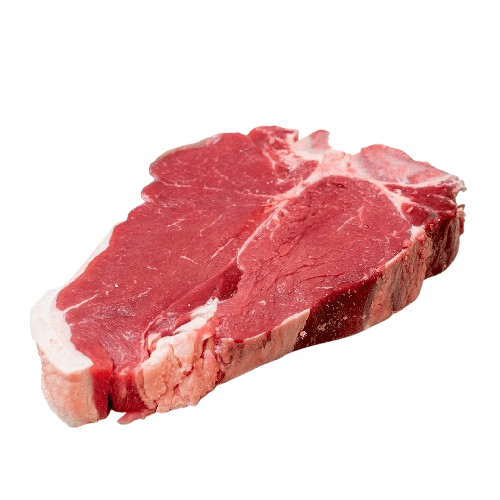
A T-bone steak is a classic beef cut prepared primarily by grilling or broiling. A small broiled T-bone (175g) has 432 calories in a T-bone steak serving, while a medium cut (260g) contains 642 calories. A 100 gram (3.5 ounce) broiled T-bone has 247 calories, while a 100g grilled portion has 212 calories. A single large grilled T-bone steak (363g) contains 770 calories. The T-Bone at Outback Steakhouse (510g) provides 1070 calories while the LongHorn Steakhouse T-Bone (510g) contains 890 calories.
The T-bone steak nutrition facts reveal a food that is dense in high-quality protein and essential nutrients. A single large broiled T-bone (350g) delivers 84.7g of protein (169% DV), a nutrient critical for preserving muscle mass with age, as supported by research (Paddon-Jones, D., & Rasmussen, B. B., 2009). The macros for a 100g broiled portion consist of 24.2g of protein, 15.9g of fat, and 0g of carbohydrates. This nutrient profile also provides major health benefits from an excellent supply of B vitamins and minerals, with a 100g serving offering 110% of the DV for Vitamin B12 and 58% for zinc to support neurological and immune function.
Grilling and broiling are the most famous preparation methods for T-bone steaks, techniques that make this cut a staple of American steakhouses. A global supply of beef is maintained by top producers and consumers like the United States, Brazil, and China, but strong demand has influenced cost. The price of T-bone steaks has shown a consistent upward trend over the last 20 years, with the average retail cost for a choice T-bone rising from under $6.00 per pound in the early 2000s to over $14.00 per pound after 2020.
Serving as a central part of meals in American and Italian food cultures, the T-bone is a popular but rich cut. Health advisories from the American Heart Association recommend limiting red meat consumption to manage potential health risks. A small 175g broiled T-bone contains 432 calories, an amount that can be expended through 43 minutes of running or 58 minutes of swimming.
T-bone steak nutrition
| Stats | Weight |
|---|---|
| Carbs | 0 grams |
| Protein | 60 grams |
| Fats | 0 grams |
| Sugars | 0 grams |
- Large T-bone steak Calories (Nutritional Facts)
- Medium T-bone steak Calories (Nutritional Facts)
- Small T-bone steak Calories (Nutritional Facts)
- Barbeque T-bone Steak Calories (Nutritional Facts)
- Sugar in T-bone steak
- Fiber in T-bone steak
- Protein in T-bone steak
- Carbs in T-bone steak
- Fat in T-bone steak
- Vitamins in T-bone steak
- Minerals in T-bone steak
Large T-bone steak Calories (Nutritional Facts)
A large broiled T-bone steak (350g or 12.3oz) contains 865 calories, 84.7g of protein, 55.7g of fat, 0g of carbohydrates, 0g of fiber, 0g of sugar, and 235mg of sodium.
A medium broiled T-bone steak (260g or 9.2oz) has 642 calories, 62.9g of protein, 41.3g of fat, 0g of carbohydrates, 0g of fiber, 0g of sugar, and 174mg of sodium.
A small broiled T-bone steak (175g or 6.2oz) provides 432 calories, 42.4g of protein, 27.8g of fat, 0g of carbohydrates, 0g of fiber, 0g of sugar, and 117mg of sodium.
A 3oz grilled T-bone steak (85g) has 180 calories, 23.7g of protein, 8.8g of fat, 0g of carbohydrates, 0g of fiber, 0g of sugar, and 57mg of sodium.
A plain T-bone steak, whether a large, medium, or small broiled portion, or a 3oz grilled serving, contains 0g of sugar.
A plain T-bone steak, whether a large, medium, or small broiled portion, or a 3oz grilled serving, contains 0g of fiber.
The protein in t bone steak for a large broiled serving (350g) is 84.7g (169% DV). A medium broiled serving (260g) has 62.9g of protein (126% DV). A small broiled serving (175g) has 42.4g of protein (85% DV). A 3oz grilled serving (85g) has 23.7g of protein (47% DV).
A plain T-bone steak, whether a large, medium, or small broiled portion, or a 3oz grilled serving, contains 0g of carbohydrates (0% DV).
A large broiled T-bone steak (350g) contains 55.7g of total fat (71% DV). A medium broiled serving (260g) has 41.3g of total fat (53% DV). A small broiled serving (175g) has 27.8g of total fat (36% DV). A 3oz grilled serving (85g) has 8.8g of total fat (11% DV).
A large broiled T-bone steak (350g) provides 319% of the DV for Vitamin B12. A medium broiled serving (260g) provides 237% of the DV for Vitamin B12. A small broiled serving (175g) provides 159% of the DV for Vitamin B12. A 3oz grilled serving (85g) provides 0% of the DV for Vitamin D.
A large broiled T-bone steak (350g) provides 102% of the DV for zinc and 70% of the DV for iron. A medium broiled serving (260g) provides 75% of the DV for zinc and 52% of the DV for iron. A small broiled serving (175g) provides 51% of the DV for zinc and 35% of the DV for iron. A 3oz grilled serving (85g) provides 17% of the DV for iron.
Get a Custom Report on T-bone steak Nutrition Data – Contact Us!
What are the Types of T-bone steaks?
The types of T-bone steaks are defined by the USDA grading system, which evaluates meat based on marbling and the age of the animal. The following table clarifies the characteristics of these forms.
| Type | Description | Calories (Approximate per 100g, Broiled) | Calorie Qualifications |
|---|---|---|---|
|
USDA Prime
|
The highest grade, with abundant marbling. The steak is exceptionally tender and flavorful. | 290 | The high amount of intramuscular fat makes this the most calorie-dense grade. |
|
USDA Choice
|
High quality with moderate marbling. The steak is tender and flavorful, the most common grade in restaurants and stores. | 270 | A moderate fat content results in a calorie count lower than Prime but higher than Select. |
|
USDA Select
|
A leaner grade with slight marbling. The steak has less flavor and tenderness compared to higher grades. | 250 | The lower fat content makes this the least calorie-dense grade among the three. |
What are the Main Dishes with T-bone steak?
T-bone steak is a classic main course, celebrated for offering two different steak experiences in one cut. A breakdown of main dishes centered on T-bone steak is provided in the following table.
| Dish Name | Calories (Estimate per serving) | Type of T-bone steak | Carbs (g) (Estimate) | Sugar (g) (Estimate) | Protein (g) (Estimate) | Fat (g) (Estimate) | Cuisine | Restaurants |
|---|---|---|---|---|---|---|---|---|
|
Classic Broiled T-bone
|
700-1100 | USDA Choice or Prime | 2 | 0 | 65 | 60 | American Steakhouse | Outback Steakhouse, LongHorn Steakhouse |
|
Grilled T-bone with Herb Butter
|
750-1150 | USDA Choice or Prime | 3 | 1 | 65 | 65 | American/French | The Capital Grille |
|
T-bone with Mushroom Sauce
|
800-1200 | USDA Choice | 10 | 4 | 68 | 70 | American/European | The Cheesecake Factory |
|
Surf and Turf (T-bone & Shrimp)
|
900-1300 | USDA Choice | 5 | 2 | 85 | 70 | American | Morton's The Steakhouse |
|
Bistecca alla Fiorentina
|
1500-2000 | Chianina Beef (similar cut) | 2 | 0 | 150 | 110 | Italian (Tuscan) | Carbone, Bistecca (New York) |
What Cuisines Prefer T-bone Steak the Most?
T-bone steak is a foundational ingredient, central to American steakhouse culture and also important in Italian cuisine. The table below showcases the culinary traditions where T-bone steak is a staple.
| Cuisine | Dish | Types of T-bone steak Used | Calories (Estimate) | Restaurant(s) |
|---|---|---|---|---|
|
American Steakhouse
|
Broiled or Grilled T-bone | USDA Prime or Choice | 700-1100 | Outback Steakhouse, LongHorn Steakhouse |
|
Italian
|
Bistecca alla Fiorentina | Chianina Beef (thick cut) | 1500-2000 | Carbone, Il Mulino New York |
|
Australian
|
Grilled T-bone ("T-bone") | Grass-fed beef | 600-900 | Outback Steakhouse |
|
Argentinian
|
Parrillada (mixed grill) | Grass-fed beef | 700-1000 | Fogo de Chão |
Which Countries Produce the Most T-bone Steaks?
The top producers of beef and veal, which are the source of T-bone steaks, are the United States, Brazil, and China. Specific global production data for "T-bone steak" is not tracked separately from the broader "beef and veal meat" category. The table below shows the production quantity of beef and veal meat in key countries.
| Country | 2003 | 2008 | 2013 | 2018 | 2019 | 2020 | 2021 | 2022 |
|---|---|---|---|---|---|---|---|---|
| United States | 12,185,000 | 12,101,000 | 11,714,000 | 12,219,000 | 12,382,000 | 12,379,000 | 12,735,000 | 12,890,000 |
| Brazil | 7,618,000 | 9,024,000 | 9,705,000 | 9,900,000 | 10,200,000 | 10,100,000 | 9,750,000 | 10,350,000 |
| China | 5,500,000 | 5,850,000 | 6,350,000 | 6,440,000 | 6,670,000 | 6,720,000 | 6,980,000 | 7,200,000 |
| Argentina | 3,120,000 | 3,200,000 | 2,800,000 | 3,060,000 | 3,170,000 | 3,150,000 | 2,700,000 | 3,000,000 |
| Australia | 2,050,000 | 2,100,000 | 2,250,000 | 2,310,000 | 2,400,000 | 2,080,000 | 1,950,000 | 2,100,000 |
Which Countries Consume the Most T-bone Steaks?
The top consumers of beef and veal, which includes T-bone steaks, are the United States, China, and Brazil. Per capita consumption of steak cuts like the T-bone is highest in the United States and Argentina. The table below shows beef and veal consumption in key markets.
| Country | 2003 | 2008 | 2013 | 2018 | 2019 | 2020 | 2021 | 2022 |
|---|---|---|---|---|---|---|---|---|
| United States | 12,300,000 | 12,500,000 | 11,800,000 | 12,400,000 | 12,500,000 | 12,600,000 | 12,800,000 | 12,900,000 |
| China | 5,600,000 | 6,000,000 | 7,200,000 | 8,500,000 | 9,300,000 | 9,800,000 | 10,400,000 | 10,800,000 |
| Brazil | 6,500,000 | 7,200,000 | 7,900,000 | 7,800,000 | 7,900,000 | 7,700,000 | 7,300,000 | 7,500,000 |
| Argentina | 2,400,000 | 2,600,000 | 2,500,000 | 2,400,000 | 2,450,000 | 2,400,000 | 2,200,000 | 2,300,000 |
| Russian Federation | 2,000,000 | 2,200,000 | 2,300,000 | 1,900,000 | 1,950,000 | 2,000,000 | 2,050,000 | 2,100,000 |
How Do Prices of T-bone Steak-Including Dishes Change?
The rise in cost for restaurant meals featuring T-bone steak has increased over the last decade, a direct result of the higher wholesale price of this premium cut and growing operational expenses. These upward price shifts are visible on the menus at major steakhouse chains.
| Restaurant | Dish | Old Price (Year) | Current Price (2024/2025) |
|---|---|---|---|
| LongHorn Steakhouse | Outlaw Ribeye (Bone-In) | $24.29 (2016) | $30.79 - $33.49 |
| Texas Roadhouse | Porterhouse T-Bone (23 oz) | $25.99 (2018) | $33.99 - $35.99 |
| Ruth's Chris Steak House | T-Bone (24 oz) | $52.00 (2017) | $72.00 - $79.00 |
| Smith & Wollensky | T-Bone (24 oz) | $52.00 (2016) | $90.00 - $94.00 |
What is the T-bone steak Calorie for 100 Grams?
A 100g serving of broiled T-bone steak contains 247 calories. A 100g serving of grilled T-bone steak has 212 calories.
What is the T-bone steak Calorie for 1 KG?
One kilogram of broiled T-bone steak contains 2470 calories. One kilogram of grilled T-bone steak has 2120 calories.
What is the Calorie of 1 T-bone steak?
A single grilled T-bone steak (363g) contains 770 calories. A T-Bone from Outback Steakhouse (510g) has 1070 calories. A LongHorn Steakhouse T-Bone (510g) has 890 calories.
What is the Calorie of 1 Pound T-bone steak?
For a 1 pound t bone steak how many calories in 1 lb steak will depend on the preparation. A one-pound (453.6g) broiled T-bone steak has 1120 calories.
What is the Calorie of 8 ounces T-bone steak?
An 8oz t bone steak (227g) that is broiled contains 560 calories, and an 8oz (224g) grilled T-bone steak has 481 calories.
What are the Health Benefits of T-bone steak?
T-bone steak delivers notable nutritional value from a high concentration of quality protein and key minerals. The primary wellness advantages of eating T-bone steak are detailed here.
- Supports Muscle Mass and Function: The complete protein in T-bone steak supplies all essential amino acids required for building and maintaining lean muscle mass. A study by Paddon-Jones, D., & Rasmussen, B. B. (2009), "Dietary protein recommendations and the prevention of sarcopenia," established that consuming high-quality protein is fundamental for stimulating muscle protein synthesis, a crucial process for preserving muscle mass with age.
- Aids in Anemia Prevention: T-bone steak is a rich source of heme iron, a form of iron that is more readily absorbed by the body than the non-heme iron found in plants. Heme iron is essential for creating hemoglobin, the protein in red blood cells responsible for carrying oxygen. A review by Abbaspour, N., Hurrell, R., & Kelishadi, R. (2014), "Review on iron and its importance for human health," confirmed that adequate intake of heme iron is effective in preventing iron-deficiency anemia.
- Promotes Neurological Health: The high concentration of Vitamin B12 in T-bone steak is vital for maintaining healthy nerve cells and supporting cognitive function. Vitamin B12 is a key component in the synthesis of myelin, the protective sheath that surrounds nerves. Research by O'Leary, F., & Samman, S. (2001), "Vitamin B12 in health and disease," demonstrated the essential role of Vitamin B12 in preventing neurological disorders and preserving brain health.
What are the Downsides of T-bone steak?
Eating T-bone steak involves certain health factors connected to its high saturated fat content and the compounds formed during high-temperature cooking. The health issues linked to T-bone steak consumption are explained below.
- High in Saturated Fat: T-bone steak is a fatty cut of meat containing a significant amount of saturated fat, which can raise low-density lipoprotein (LDL) cholesterol levels, a major risk factor for heart disease. A medium broiled T-bone steak (260g) contains over 20g of saturated fat. A scientific advisory from the American Heart Association by Sacks, F. M., et al. (2017), "Dietary Fats and Cardiovascular Disease," reaffirmed the recommendation to limit saturated fat intake to reduce cardiovascular disease risk. An alternative with lower saturated fat is a leaner cut like a top sirloin steak or skinless chicken. A suggested amount is to reserve large, fatty steaks for infrequent occasions.
- Potential Link to Certain Cancers: High consumption of red meat, especially when cooked at high temperatures like grilling or broiling, is associated with an increased risk of colorectal cancer. The cooking process can form carcinogenic compounds. A comprehensive review by the World Health Organization's International Agency for Research on Cancer (2015), "Red Meat and Processed Meat," classified red meat as "probably carcinogenic to humans" based on substantial evidence. A lower-risk alternative is baked fish or plant-based proteins. A daily suggested amount for red meat is to adhere to guidelines that recommend limiting intake to less than 70g per day.
Are T-bone Steaks Good for You?
No, T-bone steaks are not a good food choice for regular consumption because of the high concentration of saturated fat and calories, which are linked to negative health outcomes. While some nutrients are present, the drawbacks are considerable. The protein present aids in Muscle Maintenance, a concept detailed in a study by Paddon-Jones, D., & Rasmussen, B. B. (2009), "Dietary protein recommendations and the prevention of sarcopenia." A supply of B vitamins supports Brain Health and energy metabolism, as a study by Kennedy, D. O. (2016), "B Vitamins and the Brain: Mechanisms, Dose and Efficacy—A Review," details. The zinc in T-bone steak supports Immune Health, as a review by Prasad, A. S. (2008), "Zinc in Human Health: Effect of Zinc on Immune Cells," outlines. The substantial negative impact on heart health from the high saturated fat content makes T-bone steaks an indulgence rather than a healthy staple.
How Do Calories Change According to T-bone Steak Types?
Calorie content in T-bone steak is dictated by the USDA grade, which reflects the amount of marbling. USDA Prime T-bone steak possesses the highest calorie value, with 290 calories per 100 grams when broiled, a result of the abundant intramuscular fat. USDA Select T-bone steak has the lowest calorie value at 250 calories per 100 grams, a reflection of its leaner composition. The USDA Choice grade falls in the middle, with a calorie count of 270 calories per 100 grams.
What are the Desserts with T-bone steak?
T-bone steak serves as a savory dish and does not function as an ingredient in dessert creations. The natural flavor of beef does not align with sweet dessert profiles. Culinary practice places steak as a main course, followed by rich, traditional desserts served after the meal.
What is the Origin of T-bone steak?
The culinary history of the T-bone steak is deeply rooted in American butchery and restaurant culture. The steak is cut from the short loin, and its name comes from the T-shaped lumbar vertebra bone that separates two different muscles: the larger strip steak and the smaller tenderloin. While the similar Porterhouse steak has a more specific origin story, the T-bone became a popular and recognizable steakhouse offering in the United States in the mid-20th century. Its appeal was the "best of both worlds" combination of the flavorful strip and the tender filet. The USDA defines a T-bone as having a tenderloin section that is at least 0.5 inches but less than 1.25 inches across.
Explore More Meat
Discover more Meat with detailed nutrition facts, calorie counts, vitamins, minerals, and health benefits. Compare similar foods, serving sizes, macronutrients, and key nutrients to find the best option for your diet and nutrition goals.
 Bacon calories
 Beef calories
 Beef Brisket calories
 Beef Chuck calories
 Beef Jerky calories
 Beef Liver calories
 Beef Short Ribs calories
 Beef Tenderloin calories
 Beef Tongue calories
 Bison calories
 Buffalo Meat calories
 Chicken calories