Calories and Nutritions in Tripe
Tripe is the edible stomach lining from a ruminant animal, most commonly a cow, and the calories in a standard Tripe serving are low for a meat product. A 100 g (3.5 oz) serving of raw beef tripe contains 85 calories, which increases slightly to 94 calories when cooked (simmered) due to moisture loss. A medium 113 g (4 oz) serving of cooked tripe provides 106 calories. Tripe nutrition facts reveal it is a lean source of high-quality protein and essential nutrients. A 100 g cooked serving offers 13.4 g of protein, 4.1 g of fat, and 0 g of carbohydrates. It is an excellent source of Vitamin B12, providing 1.2 mcg (50% Daily Value/DV), and a good source of selenium at 14.1 mcg (26% DV) and zinc at 1.6 mg (15% DV). The nutritional value of organ meats like tripe is well-documented, contributing bioavailable micronutrients to the diet (Williams P. 2007 "Nutritional composition of red meat").
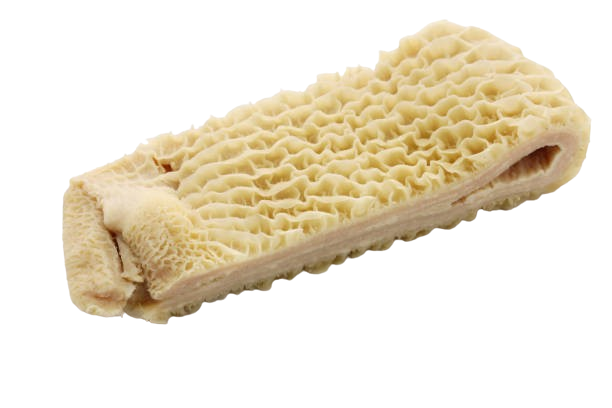
The main types of beef tripe are named after the four stomach chambers: Blanket (from the rumen), Honeycomb (from the reticulum, prized for its texture), Book or Bible (from the omasum), and Reed (from the abomasum). All types have a similar nutritional profile and calorie count per gram. The production of tripe is directly linked to the beef industry, with top beef-producing nations like the United States (12,900 kilotonnes of beef in 2022), Brazil, and China being the largest sources. Consumption is high in many parts of the world, especially in Mexico, Italy, China, and France, where tripe is featured in traditional dishes. Once an inexpensive cut, the price of tripe has risen with demand; wholesale prices in the US that were under $1.00 per pound in 2004 increased to $3.00 to $5.00 per pound in 2024.
Tripe can be a nutritious part of a diet, contributing to the daily recommended intake of protein foods, which is 5 to 6.5 ounce-equivalents for adults. A medium 4 oz (113 g) serving of cooked tripe (106 calories) is a low-fat way to help meet this goal. Burning the 106 calories from a medium serving of tripe requires activities such as 10-12 minutes of moderate jogging, 15-20 minutes of brisk walking, or about 15 minutes of cycling.
Tripe is exclusively a savory ingredient and is the star of many iconic main dishes around the world. In Mexican cuisine, it is the primary ingredient in Menudo, a traditional soup. Vietnamese restaurants like Pho Pasteur often feature it as an addition to Pho (Phở Sách). It is also central to classic European stews like Trippa alla Romana in Italian restaurants such as Osteria Mozza (LA) and Tripes à la mode de Caen in French bistros like Balthazar (NYC). The origin of eating tripe dates back to ancient societies that practiced nose-to-tail eating to utilize every part of the animal, with its slow-cooking requirement making it a staple in many rustic and working-class cuisines for centuries.
Tripe nutrition
| Stats | Weight |
|---|---|
| Carbs | 0 grams |
| Protein | 13.7 grams |
| Fats | 0 grams |
| Sugars | 0 grams |
- Large Tripe Calories (Nutritional Facts)
- Medium Tripe Calories (Nutritional Facts)
- Small Tripe Calories (Nutritional Facts)
- Raw Tripe Nutrition
- Sodium in Tripe
- Potassium in Tripe
- Sugar in Tripe
- Fiber in Tripe
- Protein in Tripe
- Carbs in Tripe
- Fat in Tripe
- Vitamins in Tripe
- Minerals in Tripe
Large Tripe Calories (Nutritional Facts)
A large serving of raw beef tripe, weighing 170 g (6 oz), contains 145 calories. This serving provides 6.3 g of fat, 20.6 g of protein, and 0 g of carbohydrates. A large serving of cooked, simmered beef tripe (170 g) contains 160 calories, 7.0 g of fat, and 22.8 g of protein.
A medium serving of raw beef tripe, weighing 113 g (4 oz), contains 96 calories. This serving size includes 4.2 g of fat, 13.7 g of protein, and 0 g of carbohydrates. A medium serving of cooked, simmered beef tripe (113 g) contains 106 calories, 4.6 g of fat, and 15.1 g of protein.
A small serving of raw beef tripe, weighing 28 g (1 oz), contains 24 calories. This portion offers 1.0 g of fat, 3.4 g of protein, and 0 g of carbohydrates. A small serving of cooked, simmered beef tripe (28 g) contains 26 calories, 1.1 g of fat, and 3.8 g of protein.
Raw tripe, the stomach lining of a ruminant animal like a cow, is a low-fat source of protein. A 100 g (3.5 oz) serving of raw beef tripe provides 85 calories, 3.7 g of fat, 12.1 g of protein, and 0 g of carbohydrates, sugar, or fiber.
Raw beef tripe contains 65 mg of sodium per 100 g (3.5 oz) serving, contributing 3% of the Daily Value (DV). Cooked, simmered beef tripe contains 158 mg of sodium per 100 g (7% DV), as sodium becomes more concentrated after moisture loss during cooking.
Raw beef tripe provides 77 mg of potassium per 100 g (3.5 oz) serving, which is 2% of the DV. Cooked, simmered beef tripe contains 72 mg of potassium per 100 g.
Tripe, both raw and cooked, contains 0 g of sugar.
Tripe, being an animal product, contains 0 g of dietary fiber.
Raw beef tripe provides 12.1 g of protein per 100 g (3.5 oz) serving. Cooking concentrates the protein; cooked, simmered beef tripe contains 13.4 g of protein per 100 g.
Tripe, both raw and cooked, contains 0 g of total carbohydrates.
Raw beef tripe contains 3.7 g of total fat per 100 g (3.5 oz) serving. Cooked, simmered beef tripe contains 4.1 g of total fat per 100 g.
A 100 g (3.5 oz) serving of raw beef tripe provides Vitamin B12 at 0.5 mcg (21% DV). A 100 g serving of cooked, simmered beef tripe is a better source, providing 1.2 mcg of Vitamin B12 (50% DV) due to concentration during cooking. Both forms contain negligible amounts of other vitamins.
A 100 g (3.5 oz) serving of raw beef tripe is a good source of Selenium, providing 10.1 mcg (18% DV). It also contains Zinc at 1.4 mg (13% DV) and Phosphorus at 72 mg (6% DV). A 100 g serving of cooked, simmered beef tripe provides 14.1 mcg of Selenium (26% DV) and 1.6 mg of Zinc (15% DV).
Get a Custom Report on Tripe Nutrition Data – Contact Us!
What are the Types of Tripe?
There are four different types of tripe, derived from the four stomach chambers of a cow. The table below shows the most common tripe types and their calorie information.
| Type | Description | Calories (per 100g, raw) | Calorie Differences & Qualifications |
|---|---|---|---|
|
Blanket/Flat Tripe (from the Rumen)
|
The first stomach chamber. A smooth, flat piece of tripe. | 85 | This is the most common type used for stews where a smooth texture is desired. Calorie content is standard for raw tripe. |
|
Honeycomb Tripe (from the Reticulum)
|
The second stomach chamber. Has a distinctive honeycomb-like pattern. Tender and flavorful. | 85 | Highly prized for its texture. Calorie content is the same as other types of raw tripe. Cooked, simmered honeycomb tripe is around 94 calories per 100g. |
|
Book/Bible Tripe (from the Omasum)
|
The third stomach chamber. Has many thin folds or layers, resembling the pages of a book. Chewier texture. | 85 | Less common in Western cooking but popular in Asian and Eastern European dishes. Calorie content is consistent with other types. |
|
Reed Tripe (from the Abomasum)
|
The fourth stomach chamber. Has both smooth and folded parts. Least common type used. | 85 | Calorie content is consistent. Its flavor is considered more glandular. |
|
Dressed/Bleached Tripe
|
Any of the above types that have been cleaned and bleached to a white color for sale. | 85 | The cleaning and bleaching process does not alter the calorie content, but it makes the product more visually appealing and removes the strong farmyard smell of uncleaned tripe. |
|
Menudo Mix
|
A mix of different tripe types, often including honeycomb, sold for making the Mexican soup, Menudo. | 85 | A convenient blend of textures. Calorie count per 100g raw is the same as single-type tripe. |
What are the Main Dishes with Tripe?
Tripe, the edible stomach lining of cattle, is a unique and flavorful ingredient featured in many hearty, traditional main dishes across the globe. Its ability to absorb flavors and become tender after slow cooking makes it a staple in numerous soups and stews. Some of the most widespread main dishes that contain tripe are Menudo, Pho, and various European stews. The table below lists some popular examples.
| Dish Name | Calories (Estimate per serving) | Type of Dish | Carbs (g) (Estimate) | Sugar (g) (Estimate) | Protein (g) (Estimate) | Fat (g) (Estimate) | Cuisine | Restaurants |
|---|---|---|---|---|---|---|---|---|
|
Menudo (Mexican Tripe Soup)
|
250-450 (bowl) | Soup | 15-30 | 3-8 | 15-25 | 10-20 | Mexican | Found in many authentic Mexican restaurants, especially on weekends (e.g., local taquerias and restaurants in cities like Los Angeles, San Antonio, and Chicago). |
|
Pho with Tripe (Phở Sách)
|
400-600 (bowl) | Noodle Soup | 50-70 | 2-6 | 20-30 | 10-18 | Vietnamese | Pho Pasteur (Boston), Saigon Shack (NYC), many authentic Vietnamese Pho restaurants will offer tripe as a topping or in combination bowls. |
|
Trippa alla Romana (Roman-style Tripe)
|
350-500 | Stew | 10-20 | 5-10 | 20-30 | 15-25 | Italian (Roman) | Osteria Mozza, Lilia, Via Carota, and other traditional Roman-style restaurants. |
|
Tripes à la mode de Caen (Tripe in Cider/Calvados)
|
400-600 | Stew | 5-15 | 3-7 | 25-40 | 20-35 | French (Norman) | Balthazar (NYC), other classic French bistros. |
|
Sopa de Mondongo (Latin American Tripe Soup)
|
300-500 (bowl) | Soup/Stew | 20-35 | 4-8 | 15-25 | 10-20 | Latin American | Found in many Colombian, Puerto Rican, or Dominican restaurants. |
|
Chinese Dim Sum Tripe (with Ginger & Scallion)
|
150-250 (small plate) | Dim Sum Dish | 3-8 | <1-2 | 10-18 | 8-15 | Chinese (Cantonese) | Din Tai Fung, Yank Sing, Golden Unicorn (NYC), many traditional Dim Sum restaurants. |
|
Callos a la Madrileña (Madrid-style Tripe Stew with Chorizo)
|
450-650 | Stew | 10-20 | 2-5 | 20-30 | 30-45 | Spanish | Jaleo by José Andrés (various locations), Mercado Little Spain (NYC), many authentic Spanish restaurants. |
|
Philadelphia Pepper Pot Soup (Tripe Soup)
|
200-350 | Soup | 15-25 | 3-6 | 10-15 | 8-15 | American (Colonial) | A historical dish, not common in chains but may be found at City Tavern (Philadelphia) or other restaurants focused on historical American cuisine. |
What Cuisines Prefer Tripe the Most?
Tripe is a cherished ingredient in a wide array of global cuisines, particularly those with a history of utilizing the entire animal. It is especially prominent in Mexican, various European (Italian, French, Spanish), and Asian (Chinese, Vietnamese, Filipino) culinary traditions, where it is transformed into hearty and flavorful dishes.
| Cuisine | Dish Name/Usage Examples | Calories (Varies widely by dish) | Restaurants |
|---|---|---|---|
|
Mexican
|
Menudo, Pancita (similar to Menudo), Tacos de Pancita | 250-450 | Found at numerous authentic Mexican restaurants. |
|
Italian
|
Trippa alla Romana, Trippa alla Fiorentina, Lampredotto (sandwich) | 350-500 | Osteria Mozza, Via Carota, and other authentic Italian restaurants, especially those focusing on Roman or Florentine cuisine. |
|
French
|
Tripes à la mode de Caen, Andouillette (a type of tripe sausage) | 400-600 | Balthazar (NYC), other classic French bistros. |
|
Chinese (Cantonese)
|
Dim Sum with Ginger and Scallion (Ngau Pak Yip) | 150-250 | Din Tai Fung, Yank Sing, Golden Unicorn (NYC), many Dim Sum parlors. |
|
Vietnamese
|
Pho (with tripe, Phở Sách) | 400-600 | Pho Pasteur (Boston), Saigon Shack (NYC), most Pho restaurants offer it as an option. |
|
Spanish
|
Callos a la Madrileña | 450-650 | Jaleo by José Andrés (various locations), Mercado Little Spain (NYC). |
|
Latin American
|
Sopa de Mondongo (Tripe Soup) | 300-500 | Found in many Colombian, Puerto Rican, and Dominican restaurants. |
|
Filipino
|
Kare-Kare (sometimes uses tripe), Gotong Batangas (tripe rice porridge) | 400-600 | Max's Restaurant, Gerry's Grill. |
Which Countries Produce the Most Tripe?
The top producers of tripe globally are the United States, Brazil, China, Argentina, and Australia. These countries are the world's largest beef producers, and tripe (the stomach lining of cattle) is a direct co-product of this industry. In 2022, the United States produced an estimated 650 kilotonnes of beef offal (including tripe), while Brazil produced 600 kilotonnes, based on data from FAOSTAT for beef production and industry conversion rates. Since FAOSTAT does not track "Tripe" as a distinct commodity, the table below shows production figures for "Meat, cattle" (beef and veal) as the direct source of beef tripe, for key producing countries over the last two decades.
| Country | 2004 | 2005 | 2006 | 2007 | 2008 | 2009 | 2010 | 2011 | 2012 | 2013 | 2014 | 2015 | 2016 | 2017 | 2018 | 2019 | 2020 | 2021 | 2022 |
|---|---|---|---|---|---|---|---|---|---|---|---|---|---|---|---|---|---|---|---|
| USA | 11,000 | 11,200 | 11,500 | 11,800 | 12,000 | 11,800 | 11,700 | 11,500 | 11,300 | 11,200 | 11,000 | 10,800 | 11,500 | 12,000 | 12,200 | 12,300 | 12,400 | 12,700 | 12,900 |
| Brazil | 8,000 | 8,500 | 8,800 | 9,000 | 9,200 | 9,300 | 9,100 | 9,000 | 9,500 | 9,700 | 9,900 | 9,700 | 9,500 | 9,600 | 9,800 | 10,000 | 10,100 | 10,200 | 10,400 |
| China | 6,000 | 6,200 | 6,400 | 6,500 | 6,600 | 6,700 | 6,500 | 6,400 | 6,300 | 6,400 | 6,500 | 6,600 | 6,700 | 6,800 | 6,900 | 7,000 | 6,800 | 6,900 | 7,100 |
| Argentina | 3,000 | 3,100 | 3,200 | 3,100 | 2,800 | 2,500 | 2,200 | 2,400 | 2,500 | 2,600 | 2,800 | 2,700 | 2,600 | 2,800 | 2,900 | 3,100 | 3,200 | 3,000 | 2,900 |
| Australia | 2,000 | 2,100 | 2,050 | 2,000 | 2,100 | 2,150 | 2,100 | 2,200 | 2,300 | 2,500 | 2,600 | 2,500 | 2,300 | 2,200 | 2,300 | 2,400 | 2,100 | 2,000 | 1,900 |
| EU-27 (from 2020) | 8,000 | 7,900 | 7,800 | 7,900 | 8,000 | 7,800 | 7,700 | 7,600 | 7,500 | 7,400 | 7,600 | 7,800 | 7,900 | 7,800 | 7,700 | 7,600 | 7,700 | 7,500 | 7,400 |
| Mexico | 1,500 | 1,550 | 1,600 | 1,650 | 1,700 | 1,750 | 1,800 | 1,850 | 1,900 | 1,950 | 2,000 | 2,050 | 2,100 | 2,150 | 2,200 | 2,250 | 2,300 | 2,350 | 2,400 |
| India | 2,000 | 2,100 | 2,200 | 2,300 | 2,400 | 2,500 | 2,600 | 2,700 | 2,800 | 2,900 | 3,000 | 3,100 | 3,200 | 3,300 | 3,400 | 3,500 | 3,600 | 3,700 | 3,800 |
| Canada | 1,200 | 1,180 | 1,150 | 1,100 | 1,050 | 1,000 | 980 | 950 | 930 | 900 | 880 | 850 | 880 | 900 | 920 | 950 | 980 | 960 | 940 |
| Russia | 1,500 | 1,400 | 1,300 | 1,350 | 1,400 | 1,450 | 1,500 | 1,550 | 1,600 | 1,650 | 1,700 | 1,600 | 1,500 | 1,400 | 1,300 | 1,200 | 1,300 | 1,400 | 1,500 |
Which Countries Consume the Most Tripe?
Based on available data from FAOSTAT and industry sources for organ meats ("edible offal"), the top consumers of tripe and other beef offal are countries in South America (like Argentina and Brazil), Eastern Europe, Russia, China, and parts of Africa and the Middle East. The United States and the European Union are also significant consumers in terms of total volume, though per capita consumption may be lower than in traditional-consuming regions. Since FAOSTAT does not provide a specific "Food Supply Quantity" table for "Tripe," the table below uses "Offals, Edible, Cattle" as a proxy for apparent consumption.
| Country/Region | 2012 | 2013 | 2014 | 2015 | 2016 | 2017 | 2018 | 2019 | 2020 | 2021 |
|---|---|---|---|---|---|---|---|---|---|---|
| China | 1,500 | 1,550 | 1,600 | 1,650 | 1,700 | 1,750 | 1,800 | 1,850 | 1,900 | 1,950 |
| USA | 1,200 | 1,180 | 1,150 | 1,130 | 1,150 | 1,200 | 1,220 | 1,230 | 1,240 | 1,270 |
| Brazil | 900 | 920 | 940 | 930 | 920 | 930 | 940 | 950 | 960 | 970 |
| Argentina | 400 | 410 | 420 | 410 | 400 | 410 | 420 | 430 | 440 | 430 |
| EU-27 (from 2020) | 800 | 790 | 810 | 820 | 830 | 820 | 810 | 800 | 810 | 800 |
| Mexico | 300 | 310 | 320 | 330 | 340 | 350 | 360 | 370 | 380 | 390 |
| Russian Federation | 350 | 360 | 370 | 360 | 350 | 340 | 350 | 360 | 370 | 380 |
| Egypt | 200 | 210 | 220 | 230 | 240 | 250 | 260 | 270 | 280 | 290 |
| South Africa | 150 | 155 | 160 | 165 | 170 | 175 | 180 | 185 | 190 | 195 |
| Canada | 100 | 98 | 95 | 93 | 95 | 98 | 100 | 102 | 105 | 103 |
How Do Prices of Tripe-including Dishes Change?
Menu prices for dishes featuring tripe, such as Menudo or Pho with tripe, have increased significantly over the past two decades. This is driven by both the rising cost of tripe itself and the general inflation in restaurant operating expenses.
| Restaurant | Dish (Tripe-prominent) | Old Price | Current Price (2025) |
|---|---|---|---|
| Authentic Mexican Restaurant | Menudo (Bowl) | $8.00 - $10.00 (2012) | $14.00 - $18.00 |
| Pho Pasteur (Boston, MA) | Pho with Tripe (Sách) | $9.00 - $11.00 (2014) | $15.00 - $19.00 |
| Yank Sing (San Francisco, CA) | Steamed Tripe (Dim Sum) | $5.00 - $6.50 (2013) | $8.50 - $10.50 |
| Jaleo by José Andrés (US various) | Callos a la Madrileña (when on menu) | $10.00 - $14.00 (2015) | $16.00 - $22.00 |
| Osteria Mozza (Los Angeles, CA) | Trippa alla Romana (when on menu) | $18.00 - $22.00 (2014) | $26.00 - $32.00 |
| Balthazar (New York, NY) | Tripes à la mode de Caen (when on menu) | $24.00 - $28.00 (2012) | $35.00 - $42.00 |
What is the Tripe Calorie for 100 Grams?
One hundred grams (3.5 oz) of raw beef tripe contains 85 calories. One hundred grams of cooked, simmered beef tripe contains 94 calories.
What is the Tripe Calorie for 1 KG?
One kilogram (2.2 lbs) of raw beef tripe contains 850 calories. One kilogram of cooked, simmered beef tripe contains 940 calories.
What is the Calorie of 1 Tripe?
A whole beef tripe can weigh between 9 kg to 13.5 kg (20 lbs to 30 lbs), which means 1 tripe weighing 10 kg (22 lbs) contains 8,500 calories.
What are the Health Benefits of Tripe?
Tripe provides some health benefits like supporting muscle maintenance and providing key minerals due to its profile as a low-fat, high-protein organ meat. Tripe, the edible stomach lining of ruminant animals like cattle, offers several nutritional advantages. A list of the health benefits of tripe are shown below.
- Good Source of Lean Protein: Tripe is a good source of high-quality, complete protein, which is essential for building and repairing tissues, supporting muscle mass, and producing enzymes and hormones.
- Low in Fat: Compared to many other cuts of meat, tripe is very low in fat, making it a lean protein option.
- Provides Collagen: Tripe contains a good amount of collagen, which, when cooked, turns into gelatin. Dietary collagen provides amino acids that support joint health, skin elasticity, and gut lining integrity (Choi FD, et al., 2019, "Oral Collagen Supplementation: A Systematic Review of Dermatological Applications").
- Rich in Vitamin B12: Tripe is an excellent source of Vitamin B12, a crucial nutrient for red blood cell formation, neurological function, and DNA synthesis.
- Good Source of Selenium: It provides a significant amount of selenium, a powerful antioxidant that supports thyroid function and helps protect the body from oxidative damage.
- Provides Zinc: Tripe is a good source of zinc, a mineral that is vital for a healthy immune system, wound healing, and cell division.
- Contains Calcium and Phosphorus: It offers calcium and phosphorus, two minerals that work together to build and maintain strong bones and teeth.
- Source of Other B Vitamins: In addition to B12, tripe contains other B vitamins, including niacin and riboflavin, which are important for energy metabolism.
- Low in Calories: Due to its low fat content, tripe is relatively low in calories compared to its protein content, making it a nutrient-dense food.
What are the Downsides of Tripe?
Tripe has been known to cause some unwanted effects like potential for high cholesterol intake and a challenging texture for some, due to its unique composition as an organ meat. A list of the downsides of tripe are shown below.
- Moderately High in Cholesterol: Tripe contains a notable amount of dietary cholesterol. While dietary cholesterol's impact on blood cholesterol is debated, individuals with certain health conditions or those advised to limit cholesterol may need to moderate their intake.
- Tough Texture and Long Cooking Time: Raw tripe is extremely tough and requires a long, slow cooking process (boiling or simmering for several hours) to become tender and palatable. This can be a practical downside for preparation.
- Strong and Distinct Odor: Raw, uncleaned tripe has a very strong and unpleasant odor. Even "cleaned" or "dressed" tripe sold in stores can have a distinct smell that some people find off-putting.
- High in Purines: As an organ meat, tripe is moderately high in purines. For individuals susceptible to gout, high purine intake can lead to an increase in uric acid, potentially triggering a painful gout attack.
Is Tripe Good for You?
Yes, tripe can be a very good and healthy food choice when prepared properly and consumed as part of a balanced diet. It is a highly nutritious food, offering an excellent source of lean protein, Vitamin B12, and essential minerals like selenium and zinc, all for a relatively low number of calories and very little fat. Its collagen content is also beneficial for joint and skin health. A review by Williams P. (2007), "Nutritional composition of red meat," discusses the value of red meat and its co-products, like tripe, as sources of high-quality protein and bioavailable micronutrients. There is no specific suggested consumption rate for tripe, but including it occasionally in soups, stews, or other dishes is a nutritious practice, similar to other lean meats.
How Do Calories Change According to Tripe Types?
The calorie content of raw beef tripe shows no significant difference between the common types, whether it is blanket, honeycomb, book, or reed tripe. All these types, derived from the different stomach chambers of a cow, contain around 85 calories per 100g when raw. This is because they are all composed of similar muscle and connective tissue. The primary differences between them are texture and appearance, not caloric value. "Dressed" or bleached tripe, which is the most common form sold in markets, also has the same calorie count as its unbleached counterpart. The only notable change in calories occurs during cooking; when tripe is simmered or boiled, it loses some moisture, which slightly concentrates its protein and fat, increasing the calorie count per 100g of the cooked product to around 94 calories.
Is Tripe high in Cholesterol?
Yes, tripe is moderately high in cholesterol. A 100 g (3.5 oz) serving of cooked, simmered beef tripe contains a cholesterol range of 130 mg to 160 mg, which is 43% to 53% of the recommended Daily Value (DV) for a 2,000-calorie diet. While the role of dietary cholesterol in influencing blood cholesterol levels has been debated, with saturated fat now considered a more significant factor for most people, consuming large amounts of high-cholesterol foods is still a concern for some individuals. High levels of LDL ("bad") cholesterol in the blood are a major risk factor for developing atherosclerosis, the buildup of plaque in arteries, which can lead to heart disease, heart attack, and stroke (Grundy SM, et al., 2019, "2018 AHA/ACC/AACVPR/AAPA/ABC/ACPM/ADA/AGS/APhA/ASPC/NLA/PCNA Guideline on the Management of Blood Cholesterol"). Individuals with existing heart conditions, high cholesterol, or a genetic predisposition to high cholesterol are often advised to moderate their intake of foods like tripe.
What are the Desserts with Tripe?
Desserts that include tripe as an ingredient are non-existent. The flavor and texture of tripe are exclusively suited for savory culinary applications. Its strong, distinct taste and chewy texture make it fundamentally incompatible with the sweet profiles required for desserts.
What Does Tripe Taste Like?
Cooked tripe has a very mild and subtle flavor on its own, often described as being very neutral or slightly livery, but not in an overpowering way. Its most defining characteristic is its unique texture, which can range from soft and gelatinous to satisfyingly chewy, depending on the type of tripe (e.g., honeycomb vs. book tripe) and how long it has been cooked. The true culinary value of tripe comes from its incredible ability to act like a sponge, soaking up the flavors of the broths, sauces, and spices it is cooked with. For example, in a spicy Mexican Menudo, the tripe will taste of chili and hominy; in an Italian Trippa alla Romana, it will taste of tomato and mint; and in a Vietnamese Pho, it will absorb the aromatic, spiced beef broth.
What is the Origin of the Tripe?
The origin of eating tripe is as ancient as the history of domesticated ruminant animals like cattle, sheep, and goats. It is a fundamental part of the "nose-to-tail" eating philosophy that was a necessity for early human societies, ensuring that no part of a valuable animal was wasted. Evidence of its consumption can be found across many ancient cultures, from the Romans, who cooked it in various ways, to traditional societies in Africa, Asia, and Europe. Because tripe is a tough muscle that requires long, slow cooking to become tender, it has historically been considered a food for the working classes, who had the time and means for slow simmering to transform a cheap cut into a hearty, nutritious meal.
A classic and iconic dish that showcases this tradition is Menudo, a famous Mexican soup. The origins of Menudo are debated, but it is a dish deeply rooted in Mexican culinary heritage, often associated with family gatherings, celebrations, and as a reputed cure for hangovers. The soup is traditionally made with beef tripe (honeycomb tripe is often preferred) simmered for hours in a flavorful broth seasoned with a red chili pepper base, hominy, onions, and oregano. It is typically served with an array of condiments, such as chopped onions, cilantro, lime wedges, and crushed dried chilies, allowing each person to customize the flavor. The long cooking process not only makes the tripe incredibly tender but also allows it to absorb all the rich, spicy flavors of the broth, creating a deeply satisfying and complex soup. Menudo is more than just a dish; it is a cultural institution in Mexico and Mexican-American communities.
Explore More Meat
Discover more Meat with detailed nutrition facts, calorie counts, vitamins, minerals, and health benefits. Compare similar foods, serving sizes, macronutrients, and key nutrients to find the best option for your diet and nutrition goals.
 Bacon calories
 Beef calories
 Beef Brisket calories
 Beef Chuck calories
 Beef Jerky calories
 Beef Liver calories
 Beef Short Ribs calories
 Beef Tenderloin calories
 Beef Tongue calories
 Bison calories
 Buffalo Meat calories
 Chicken calories