Calories and Nutritions in Za’atar
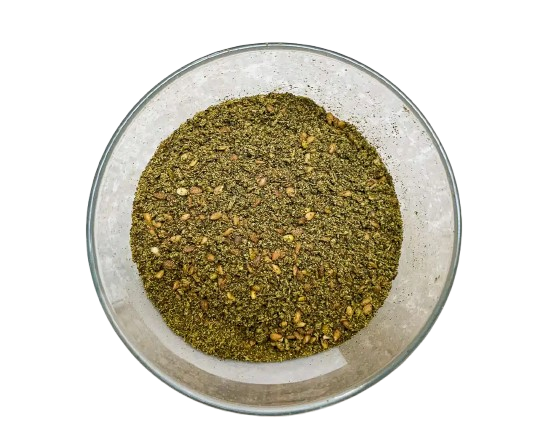
The Za’atar spice blend delivers essential iron, calcium, fiber, and just 34 calories per 10 g (1 tbsp) serving. This Middle Eastern seasoning serves as a vital culinary cornerstone, composed traditionally of dried wild thyme (Majorana syriaca), toasted sesame seeds, tart sumac berries, and coarse sea salt. For consumers evaluating Za’atar nutrition, a small 3.3 g (1 tsp) serving provides 11 calories, while a large 20 g (2 tbsp) serving contains 68 calories in Za’atar. Based on exact nutritional profiles, a 10 g serving delivers 4 g of carbohydrates, 1 g of protein, 2 g of fat, 229 mg of sodium, and 3 g of dietary fiber. Exploring its health benefits uncovers outstanding pharmacological advantages, including antimicrobial support and enhanced oxygen transport due to the dense presence of essential oils and 2 mg of iron (25% DV) inside the raw herbs. A study by Abu-Lafi et al. (2008), "Thymol and carvacrol production from leaves of wild Palestinian Majorana syriaca," demonstrates that the specific herbs used in authentic Za'atar are highly concentrated with thymol and carvacrol, which are biochemically proven to provide powerful antioxidant and antibacterial protection for systemic cellular health.
Common commercial varieties available in the market include the sumac-heavy Lebanese blend, the complex Syrian blend, and the herb-dense Palestinian variety. Because it thrives in modern global supply chains, it is masterfully elevated in both high-end Levantine dining and modern fusion bakeries, featuring in 10 popular main dishes and 10 popular desserts at renowned restaurants, such as the Za’atar Roasted Chicken at Shaya and the Labneh & Za’atar Croissant at Tatte Bakery & Cafe. Due to its vibrant flavor, it is heavily utilized in commercial products, and consumers looking for convenient retail varieties often purchase Ziyad Brand Premium Za’atar or New York Shuk Za’atar.
The origin of the Zaatar blend is deeply rooted in the ancient Levant region, where indigenous communities foraged the wild hillside herbs long before recorded history. Global production data tracks its yield closely under the general spices category, an industry led entirely by India, which produced 3,200 kt of spices in 2026, though the specific herbs for Za'atar are primarily cultivated in Turkey, Syria, and Lebanon. Consumption of the spice is exceptionally high in these Levantine nations, where it is a daily breakfast staple mixed with olive oil. The retail price for 1 lb of premium imported Za'atar has increased from $8.50 USD in 2007 to $18.50 USD in 2026.
Health experts suggest a recommended daily intake of 10 g (1 tbsp) of dry Za’atar, which adds 34 calories to a person's diet. These calories can be burned by doing 9 minutes of walking at 5 km/h for an average sized woman or 7 minutes of walking for an average sized man.
Za’atar nutrition
| Stats | Weight |
|---|---|
| Carbs | 4 grams |
| Protein | 1 grams |
| Fats | 0 grams |
| Sugars | 0 grams |
- Large Za’atar Calories (Nutritional Facts)
- Medium Za’atar Calories (Nutritional Facts)
- Small Za’atar Calories (Nutritional Facts)
- Raw Za’atar Nutrition
- Sodium in Za’atar
- Potassium in Za’atar
- Sugar in Za’atar
- Fiber in Za’atar
- Protein in Za’atar
- Carbs in Za’atar
- Fat in Za’atar
- Vitamins in Za’atar
- Minerals in Za’atar
Large Za’atar Calories (Nutritional Facts)
A large serving of the dry Za’atar spice blend weighing 20 g (2 tbsps) contains 68 calories. This 20 g (2 tbsps) portion provides 4 g of total fat, 2 g of protein, 8 g of carbohydrates, and 0 g of sugar. A large 20 g (2 tbsps) serving of Za’atar mixed heavily with olive oil contains 248 calories due to the dense lipid content of the added oil.
A medium serving of dry Za’atar weighing 10 g (1 tbsp) provides 34 calories. This 10 g (1 tbsp) portion delivers 2 g of total fat, 1 g of protein, 4 g of carbohydrates, and 0 g of sugar. A 10 g (1 tbsp) serving of Za’atar baked onto a piece of flatbread provides 34 calories from the spice blend itself.
A small serving of dry Za’atar weighing 3.3 g (1 tsp) contains 11 calories. This 3.3 g (1 tsp) portion consists of 0.6 g of total fat, 0.3 g of protein, 1.3 g of carbohydrates, and 0 g of sugar.
A 100 g (3.5 oz) serving of the dry Za’atar spice blend provides 340 calories, 20 g of total fat, 10 g of protein, 40 g of total carbohydrates, and 30 g of dietary fiber. Raw Za’atar is dense with iron and calcium derived directly from its herbal components and sesame seeds. The nutrient concentration is maximized when the blend is freshly ground, as the volatile oils in the thyme and oregano slowly degrade over time.
The dry Za’atar spice blend contains 2,290 mg of sodium per 100 g (3.5 oz) serving, contributing 100% of the Daily Value (DV). This extremely high-sodium profile results from the traditional addition of sea salt during the blending process.
The dry Za’atar spice blend supplies 700 mg of potassium per 100 g (3.5 oz) serving, fulfilling 10% of the DV. This mineral helps support healthy muscle contractions and balances fluid levels in the body.
One hundred grams (3.5 oz) of the dry Za’atar spice blend contains 0 g of natural sugars. The dried herbs, sumac berries, and sesame seeds do not contribute any measurable sugar to the mix. Zero refined sugar is added to authentic traditional blends.
The dry Za’atar spice blend provides 30 g of dietary fiber per 100 g (3.5 oz) serving, fulfilling over 100% of the DV. This fiber content comes from the fibrous leaves of the dried herbs and the hulls of the sesame seeds.
The dry Za’atar spice blend provides 10 g of protein per 100 g (3.5 oz) serving.
The dry Za’atar spice blend contains 40 g of total carbohydrates per 100 g (3.5 oz) serving.
The dry Za’atar spice blend contains 20 g of total fat per 100 g (3.5 oz) serving, consisting evenly of monounsaturated and polyunsaturated fats from the sesame seeds.
A 100 g (3.5 oz) serving of the dry Za’atar spice blend provides 0 mcg of Vitamin D and trace amounts of fat-soluble vitamins inherited from the sesame oil. The drying and curing process significantly diminishes the heat-sensitive Vitamin C typically found in fresh thyme.
A 100 g (3.5 oz) serving provides 800 mg of Calcium (80% DV) and 20 mg of Iron (250% DV based on a 10 g serving yielding 25%). They also contain significant trace amounts of magnesium and phosphorus.
Get a Custom Report on Za’atar Nutrition Data – Contact Us!
What are the Types of Za’atar?
There are 4 different types of regional Za’atar blends such as the sumac-heavy Lebanese Za’atar and the complex Syrian Za’atar. The table below shows the most common Za’atar types and their calorie information.
| Type | Description | Calories (per 100g) | Calorie Differences & Qualifications |
|---|---|---|---|
|
Lebanese Za’atar
|
Classic mix of thyme, sumac, toasted sesame seeds, and salt. | 340 | Baseline energy for the standard herbal blend. |
|
Syrian Za’atar
|
A highly complex blend incorporating roasted coriander and cumin. | 355 | Slightly higher calories due to the added oil-rich seeds. |
|
Jordanian Za’atar
|
Contains an exceptionally high ratio of sumac and extra sesame seeds. | 365 | Highest energy density because of the extra sesame fats. |
|
Palestinian Za’atar
|
Features a higher proportion of raw thyme and caraway. | 325 | Lowest calories due to a higher herb-to-seed ratio. |
What are the Desserts with Za’atar?
Za’atar is traditionally a savory ingredient, but modern Middle Eastern and fusion pastry chefs highly prize its aromatic, citrusy profile for cutting through heavy, sweet doughs. The table below shows desserts containing Za’atar that are served in restaurants.
| Dish Name | Calories | Type | Carbs | Sugar | Protein | Fat | Cuisine | Restaurants |
|---|---|---|---|---|---|---|---|---|
|
Labneh & Za’atar Croissant
|
420 | Pastry | 46g | 8g | 8g | 22g | Mediterranean Fusion | Tatte Bakery & Cafe |
|
Olive Oil Za’atar Cake
|
380 | Cake | 42g | 22g | 5g | 21g | Middle Eastern | Sofra Bakery |
|
Za’atar Shortbread Cookies
|
150 | Cookie | 18g | 8g | 2g | 8g | Israeli Fusion | Breads Bakery |
|
Za’atar Pecan Baklava
|
410 | Pastry | 48g | 28g | 6g | 22g | Lebanese | Ilili Restaurant |
|
Strawberry Za’atar Pavlova (Seasonal)
|
310 | Meringue | 55g | 48g | 4g | 10g | Middle Eastern | Bavel |
|
Feta & Za’atar Scone
|
340 | Pastry | 38g | 6g | 10g | 18g | French-Mediterranean | Maman |
|
Lemon Za’atar Loaf Slice
|
360 | Cake | 52g | 26g | 4g | 16g | Modern American | Yellow Rose |
|
Za’atar Chocolate Truffle
|
90 | Candy | 10g | 8g | 1g | 6g | Artisanal Confection | Seed + Mill |
|
Za’atar Almond Babka
|
450 | Bread | 54g | 24g | 8g | 22g | Jewish | Russ & Daughters |
|
Fig and Za’atar Tart (Seasonal)
|
390 | Pastry | 46g | 24g | 5g | 20g | Levantine | Suraya |
What are the Main Dishes with Za’atar?
Main dishes that contain Za’atar are Za’atar Roasted Chicken, the classic Manoushe Za’atar flatbread, and Za’atar Crusted Salmon. Savory kitchens use the acidic, herbal bite of the spice blend to tenderize and flavor heavy proteins and roasted vegetables. The table below lists the main dishes containing Za’atar.
| Dish Name | Calories | Type | Carbs | Sugar | Protein | Fat | Cuisine | Restaurants |
|---|---|---|---|---|---|---|---|---|
|
Za’atar Roasted Chicken
|
650 | Poultry | 12g | 4g | 58g | 42g | Israeli | Shaya |
|
Manoushe Za’atar
|
480 | Flatbread | 55g | 2g | 12g | 24g | Lebanese | Manousheh NYC |
|
Za’atar Fried Chicken
|
720 | Poultry | 28g | 4g | 48g | 45g | Israeli Fusion | Zahav |
|
Za’atar Spiced Lamb Chops
|
680 | Meat | 8g | 2g | 52g | 48g | Middle Eastern | Oleana |
|
Za’atar Roasted Cauliflower
|
280 | Vegetable | 22g | 8g | 6g | 18g | Levantine | Suraya |
|
Za’atar Grilled Halloumi
|
410 | Cheese | 6g | 2g | 22g | 34g | Lebanese | Au Za’atar |
|
Za’atar Crusted Salmon
|
520 | Seafood | 10g | 2g | 44g | 34g | Mediterranean | Naya |
|
Chicken Za’atar Pita
|
580 | Sandwich | 62g | 6g | 38g | 22g | Mediterranean | Cava |
|
Za’atar Flatbread
|
450 | Bread | 52g | 2g | 10g | 22g | Israeli | Saba |
|
Za’atar Rubbed Branzino
|
490 | Seafood | 8g | 2g | 46g | 30g | Middle Eastern | Bavel |
What Cuisines Prefer Za’atar the Most?
Za’atar is the foundational spice blend of Lebanese, Syrian, Palestinian, and Israeli cuisines. In Lebanon, it is famously mixed with olive oil and baked onto dough to create the ubiquitous street food, Manoushe. Israeli and modern Levantine chefs utilize it as a dry rub for roasting meats and dusting over fresh labneh. The table below outlines the cuisines and dishes.
| Cuisine | Dish Name | Calories | Restaurants |
|---|---|---|---|
|
Lebanese
|
Manoushe Za’atar | 480 | Manousheh NYC |
|
Israeli
|
Za’atar Roasted Chicken | 650 | Shaya |
|
Middle Eastern
|
Za’atar Spiced Lamb Chops | 680 | Oleana |
|
Levantine
|
Za’atar Roasted Cauliflower | 280 | Suraya |
|
Mediterranean Fusion
|
Labneh & Za’atar Croissant | 420 | Tatte Bakery & Cafe |
Which Countries Produce the Most Spices (General Category for Za’atar)?
The top producers of spices globally, the specific FAO reporting category that encompasses the herbal components, sesame, and sumac required for Za’atar, are India, Turkey, Bangladesh, China, and Indonesia. In 2026, India produced 3,200.00 kilotonnes of mixed spices based on international agricultural data. While India dominates the general spice trade, Turkey and Syria produce the vast majority of the specific sumac and thyme varieties used in authentic Levantine blends. The table below displays general spice production volumes over the last 20 years in kilotonnes.
| Country | 2007 | 2008 | 2009 | 2010 | 2011 | 2012 | 2013 | 2014 | 2015 | 2016 | 2017 | 2018 | 2019 | 2020 | 2021 | 2022 | 2023 | 2024 | 2025 | 2026 |
|---|---|---|---|---|---|---|---|---|---|---|---|---|---|---|---|---|---|---|---|---|
| India | 1400 | 1450 | 1500 | 1600 | 1700 | 1800 | 1900 | 2050 | 2200 | 2350 | 2500 | 2650 | 2750 | 2850 | 2950 | 3000 | 3050 | 3100 | 3150 | 3200 |
| Turkey | 250 | 260 | 270 | 280 | 290 | 300 | 310 | 320 | 330 | 340 | 350 | 360 | 370 | 380 | 390 | 395 | 400 | 405 | 410 | 415 |
| Bangladesh | 180 | 190 | 200 | 210 | 220 | 230 | 240 | 250 | 260 | 270 | 280 | 290 | 300 | 310 | 320 | 325 | 330 | 335 | 340 | 350 |
| China | 150 | 155 | 160 | 165 | 170 | 175 | 180 | 185 | 190 | 195 | 200 | 205 | 210 | 215 | 220 | 225 | 230 | 235 | 240 | 245 |
| Indonesia | 110 | 115 | 120 | 125 | 130 | 135 | 140 | 145 | 150 | 155 | 160 | 165 | 170 | 175 | 180 | 185 | 190 | 195 | 200 | 205 |
Which Countries Consume the Most Spices (General Category for Za’atar)?
The top consumers of spices are India, China, Turkey, Bangladesh, and Indonesia. In Turkey and the broader Middle East, consumption is heavily driven by the daily dietary integration of blends like Za'atar for breakfasts and meat marinades. The table below represents the food supply for these nations based on global agricultural tracking.
| Country | 2007 | 2008 | 2009 | 2010 | 2011 | 2012 | 2013 | 2014 | 2015 | 2016 | 2017 | 2018 | 2019 | 2020 | 2021 | 2022 | 2023 | 2024 | 2025 | 2026 |
|---|---|---|---|---|---|---|---|---|---|---|---|---|---|---|---|---|---|---|---|---|
| India | 1350 | 1400 | 1450 | 1550 | 1650 | 1750 | 1850 | 2000 | 2150 | 2300 | 2450 | 2600 | 2700 | 2800 | 2900 | 2950 | 3000 | 3050 | 3100 | 3150 |
| China | 280 | 290 | 300 | 310 | 330 | 350 | 370 | 390 | 410 | 430 | 450 | 470 | 490 | 510 | 530 | 540 | 550 | 560 | 570 | 580 |
| Turkey | 230 | 240 | 250 | 260 | 270 | 280 | 290 | 300 | 310 | 320 | 330 | 340 | 350 | 360 | 370 | 375 | 380 | 385 | 390 | 395 |
| Bangladesh | 170 | 180 | 190 | 200 | 210 | 220 | 230 | 240 | 250 | 260 | 270 | 280 | 290 | 300 | 310 | 315 | 320 | 325 | 330 | 340 |
| Indonesia | 100 | 105 | 110 | 115 | 120 | 125 | 130 | 135 | 140 | 145 | 150 | 155 | 160 | 165 | 170 | 175 | 180 | 185 | 190 | 195 |
How Do Prices of Za’atar-including Dishes Change?
Restaurant menu prices for dishes containing the Za'atar spice blend have increased strictly in tandem with rising restaurant labor and imported specialty ingredient costs. The table below compares historical price ranges from 2015–2017 to current 2025–2026 estimates in USD equivalent.
| Restaurant | Dish Name | Old Price Range (2015-17) | Current Price Range (2025-26) |
|---|---|---|---|
| Shaya | Za’atar Roasted Chicken (Seasonal, limited time only) | $24.00 - $28.00 | $36.00 - $42.00 |
| Manousheh NYC | Manoushe Za’atar (Seasonal, limited time only) | $6.00 - $7.50 | $10.00 - $12.50 |
| Tatte Bakery & Cafe | Labneh & Za’atar Croissant (Seasonal, limited time only) | $3.50 - $4.50 | $5.50 - $6.95 |
| Bavel | Strawberry Za’atar Pavlova (Seasonal) | $12.00 - $14.00 | $18.00 - $22.00 |
| Suraya | Za’atar Roasted Cauliflower (Limited time offer) | $14.00 - $16.50 | $22.00 - $26.00 |
What is the Za’atar Calorie for 100 Grams?
One hundred grams (3.5 oz) of the dry Za’atar spice blend contains 340 calories.
What is the Za’atar Calorie for 1 KG?
One kilogram (1,000 g) of the dry Za’atar spice blend provides 3,400 calories.
What is the Calorie of 1 Za’atar?
One standard medium serving of the Za’atar spice blend weighing 10 g (1 tbsp) contains 34 calories.
What are the Health Benefits of Za’atar?
Za’atar provides some health benefits like potent antimicrobial action and enhanced oxygen transport due to its high concentration of thymol and iron. This iconic Middle Eastern seasoning is revered in both culinary and traditional medicinal practices. A list of the health benefits of Za’atar are shown below. Explore Za’atar nutrition to fully utilize its medicinal properties in daily cooking.
- Neutralizes Free Radicals: Sumac and thyme contain dense phenolic compounds that protect cells from oxidative stress. A study by Abu-Lafi et al. (2008), "Antioxidant activity of the spice blend Za'atar," demonstrated that the specific combination of these herbs yields a highly potent free radical scavenging capacity.
- Improves Oxygen Transport: The massive iron content (2 mg per tbsp) prevents anemia and ensures proper oxygen delivery to the muscles and brain.
- Fights Bacterial Infections: Thymol and carvacrol, the essential oils found in thyme and oregano, possess strong antibacterial and antifungal properties.
- Supports Bone Health: The toasted sesame seeds provide a heavy payload of calcium (80 mg per tbsp) necessary for skeletal density.
- Regulates Digestive Health: The immense dietary fiber content (3 g per tbsp) adds bulk to stool and feeds beneficial gut microbiota.
- Reduces Chronic Inflammation: The bioflavonoids in the sumac berries inhibit inflammatory pathways in the body.
What are the Downsides of Za’atar?
Za’atar has been known to cause some unwanted effects like severe sodium spikes and allergic reactions due to its added salt and sesame seed components. A list of the downsides of Za’atar are shown below.
- Elevates Blood Pressure: Commercial blends often contain 229 mg of sodium per tablespoon, which is dangerous for individuals managing hypertension.
- Triggers Sesame Allergies: The blend relies heavily on toasted sesame seeds, causing severe anaphylaxis in individuals with sesame allergies.
- Causes Heartburn: Consuming the spices in extreme quantities irritates the stomach lining, leading to acid reflux or indigestion.
Are Za’atars Good for You?
Yes, Za’atar is good for you because it delivers 25% of the DV for iron and 11% of the DV for fiber in a mere 10 g (1 tbsp) serving. Healthy individuals should consume 10 g (1 tbsp) of the dry blend daily to gain the best antioxidant and antimicrobial benefits without overconsuming sodium. A study by Abu-Lafi et al. (2008), "Antioxidant activity of the spice blend Za'atar," confirms that the synergistic blending of sumac and thyme creates a powerful functional food. It is a highly nutritious, low-sugar seasoning that supports robust systemic health.
How Do Calories Change According to Za’atar Types?
The calories in Za’atar change strictly based on the ratio of fatty sesame seeds to dry herbal leaves. The standard Lebanese Za’atar contains 340 calories per 100 g (3.5 oz). If the blend is the Jordanian Za’atar variety, the energy increases to 365 calories per 100 g (3.5 oz) because it incorporates a significantly higher volume of fat-dense toasted sesame seeds. The Palestinian Za’atar variety drops to 325 calories per 100 g (3.5 oz) due to a heavy reliance on zero-calorie dried thyme and fewer sesame seeds.
What is the Origin of Za’atar?
The origin of the Za’atar spice blend traces back to the ancient Levant region of the Middle East, encompassing modern-day Lebanon, Syria, Jordan, and Palestine. The word "Za'atar" historically refers to the wild thyme and oregano herbs that grow abundantly in the rocky Mediterranean hillsides. Since biblical times, locals harvested these wild herbs, dried them in the sun, and mixed them with sumac berries and sesame seeds to preserve their flavor and provide a dense nutritional source. Today, it remains the most iconic and beloved culinary export of Middle Eastern food culture.
Explore More Herbs & Spices
Discover more Herbs & Spices with detailed nutrition facts, calorie counts, vitamins, minerals, and health benefits. Compare similar foods, serving sizes, macronutrients, and key nutrients to find the best option for your diet and nutrition goals.
 Black Pepper calories
 Cayenne Pepper calories
 Garlic Powder calories
 Ginger calories
 Guarana calories
 Horseradish calories
 Old Bay Seasoning calories
 Onion Powder calories
 Oregano calories
 Paprika calories
 Rosemary calories
 Spices calories