Calories and Nutritions in Blueberry Muffins
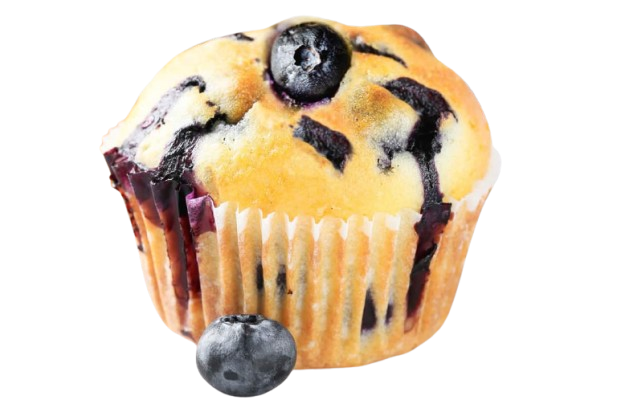
A blueberry muffin is a quick bread and a staple of American breakfast culture. The blueberry muffin is considered a high calorie food with a single standard blueberry muffin (66g) providing 248 calories. A medium blueberry muffin (113g) has 424 calories while a large muffin (139g) has 521 calories. A Starbucks Blueberry Muffin has 360 calories and a Costco muffin contains 610 calories. A 100g portion of a standard blueberry muffin provides 375 calories.
An analysis of the blueberry muffin nutrition facts reveals a product high in refined carbohydrates, sugar, and fat. A medium muffin (113g) provides 5.1g of protein (10% DV), 18.2g of fat (23% DV), and 59.9g of carbohydrates (22% DV), including 35.6g of sugar. A study by Kalt, W., et al. (2019) confirms that blueberries contain antioxidants, but this benefit is minor when considering the muffin's complete nutritional profile. The standard macros per 100g, consisting of 4.5g of protein, 16.1g of fat, and 53g of carbohydrates, firmly establish the muffin's profile as a high-energy food.
This bakery item appears in several distinct styles, such as large bakery-style muffins and smaller homemade versions. The muffin's popularity is supported by a global supply chain of top blueberry producers like the United States and Peru, and major bakery consumers such as the United Kingdom. This demand and rising ingredient costs are reflected in the price, with a single cafe muffin increasing from below $2.00 in the early 2000s to over $4.50 after 2020.
Due to its composition, a blueberry muffin is not good for weight loss and is considered a high-calorie food when it exceeds the size of a small homemade version. The high sugar and fat content makes a muffin a food for occasional consumption, a practice supported by the Dietary Guidelines for Americans, which recommend limiting foods high in added sugars to prevent weight gain. The 424 calories in a single medium muffin require an energy expenditure equivalent to 42 minutes of running or 55 minutes of swimming.
Blueberry Muffins nutrition
| Stats | Weight |
|---|---|
| Carbs | 59.9 grams |
| Protein | 5.1 grams |
| Fats | 0 grams |
| Sugars | 35.6 grams |
- Large Blueberry Muffins Calories (Nutritional Facts)
- Medium Blueberry Muffins Calories (Nutritional Facts)
- Small Blueberry Muffins Calories (Nutritional Facts)
- Raw Blueberry Muffins Nutrition
- Sodium in Blueberry Muffins
- Potassium in Blueberry Muffins
- Cholesterol in Blueberry Muffins
- Sugar in Blueberry Muffins
- Fiber in Blueberry Muffins
- Protein in Blueberry Muffins
- Carbs in Blueberry Muffins
- Fat in Blueberry Muffins
- Vitamins in Blueberry Muffins
- Minerals in Blueberry Muffins
Large Blueberry Muffins Calories (Nutritional Facts)
A large blueberry muffin (139g or 4.9oz) contains 521 calories, 6.2g of protein, 22.3g of fat, 73.7g of carbohydrates, 1.5g of fiber, 43.7g of sugar, and 467mg of sodium. An extra large blueberry muffin (168g or 5.9oz) contains 630 calories, 7.5g of protein, 27g of fat, 89g of carbohydrates, 1.8g of fiber, 52.9g of sugar, and 565mg of sodium.
A medium blueberry muffin (113g or 4oz) provides 424 calories, 5.1g of protein, 18.2g of fat, 59.9g of carbohydrates, 1.2g of fiber, 35.6g of sugar, and 380mg of sodium.
A small blueberry muffin (66g or 2.3oz) contains 248 calories, 3g of protein, 10.6g of fat, 35g of carbohydrates, 0.7g of fiber, 20.8g of sugar, and 222mg of sodium. A mini blueberry muffin (17g or 0.6oz) contains 64 calories, 0.8g of protein, 2.7g of fat, 9g of carbohydrates, 0.2g of fiber, 5.3g of sugar, and 57mg of sodium.
Blueberry muffin batter is not consumed raw due to health risks from uncooked eggs and flour, with all nutritional information reflecting a fully baked muffin.
An extra large blueberry muffin (168g) contains 565mg of sodium (25% DV). A large blueberry muffin (139g) has 467mg of sodium (20% DV). A medium blueberry muffin (113g) has 380mg of sodium (17% DV). A small blueberry muffin (66g) contains 222mg of sodium (10% DV). A mini blueberry muffin (17g) has 57mg of sodium (2% DV). A single muffin (31g) has 104mg of sodium (5% DV).
An extra large blueberry muffin (168g) contains 203mg of potassium (4% DV). A large blueberry muffin (139g) has 168mg of potassium (4% DV). A medium blueberry muffin (113g) has 137mg of potassium (3% DV). A small blueberry muffin (66g) contains 80mg of potassium (2% DV). A mini blueberry muffin (17g) has 21mg of potassium (0% DV). A single muffin (31g) has 38mg of potassium (1% DV).
An extra large blueberry muffin (168g) contains 50mg of cholesterol (17% DV). A large blueberry muffin (139g) has 42mg of cholesterol (14% DV). A medium blueberry muffin (113g) has 34mg of cholesterol (11% DV). A small blueberry muffin (66g) contains 20mg of cholesterol (7% DV). A mini blueberry muffin (17g) has 5mg of cholesterol (2% DV). A single muffin (31g) has 9mg of cholesterol (3% DV).
An extra large blueberry muffin (168g) contains 52.9g of sugar. A large blueberry muffin (139g) has 43.7g of sugar. A medium blueberry muffin (113g) has 35.6g of sugar. A small blueberry muffin (66g) contains 20.8g of sugar. A mini blueberry muffin (17g) has 5.3g of sugar. A single muffin (31g) has 9.8g of sugar.
An extra large blueberry muffin (168g) provides 1.8g of dietary fiber (7% DV). A large blueberry muffin (139g) has 1.5g of fiber (5% DV). A medium blueberry muffin (113g) has 1.2g of fiber (4% DV). A small blueberry muffin (66g) contains 0.7g of fiber (3% DV). A mini blueberry muffin (17g) provides 0.2g of fiber (1% DV). A single muffin (31g) has 0.3g of fiber (1% DV).
An extra large blueberry muffin (168g) provides 7.5g of protein (15% DV). A large blueberry muffin (139g) has 6.2g of protein (12% DV). A medium blueberry muffin (113g) has 5.1g of protein (10% DV). A small blueberry muffin (66g) contains 3g of protein (6% DV). A mini blueberry muffin (17g) provides 0.8g of protein (2% DV). A single muffin (31g) has 1.4g of protein (3% DV).
An extra large blueberry muffin (168g) contains 89g of carbohydrates (32% DV). A large blueberry muffin (139g) has 73.7g of carbohydrates (27% DV). A medium blueberry muffin (113g) has 59.9g of carbohydrates (22% DV). A small blueberry muffin (66g) contains 35g of carbohydrates (13% DV). A mini blueberry muffin (17g) has 9g of carbohydrates (3% DV). A single muffin (31g) has 16.4g of carbohydrates (6% DV).
An extra large blueberry muffin (168g) contains 27g of total fat (35% DV). A large blueberry muffin (139g) has 22.3g of total fat (29% DV). A medium blueberry muffin (113g) has 18.2g of total fat (23% DV). A small blueberry muffin (66g) contains 10.6g of total fat (14% DV). A mini blueberry muffin (17g) has 2.7g of total fat (4% DV). A single muffin (31g) has 5g of total fat (6% DV).
An extra large blueberry muffin (168g) provides 1.5mg of Vitamin C (2% DV) and 0.17mcg of Vitamin D (1% DV). A large blueberry muffin (139g) provides 1.3mg of Vitamin C (1% DV) and 0.14mcg of Vitamin D (1% DV). A medium blueberry muffin (113g) provides 1mg of Vitamin C (1% DV) and 0.11mcg of Vitamin D (1% DV). A small blueberry muffin (66g) provides 0.6mg of Vitamin C (1% DV) and 0.07mcg of Vitamin D (0% DV). A mini blueberry muffin (17g) provides 0.15mg of Vitamin C (0% DV) and 0.02mcg of Vitamin D (0% DV). A single muffin (31g) provides 0.28mg of Vitamin C (0% DV) and 0.03mcg of Vitamin D (0% DV).
An extra large blueberry muffin (168g) provides 2.2mg of iron (12% DV) and 74mg of calcium (6% DV). A large blueberry muffin (139g) provides 1.8mg of iron (10% DV) and 61mg of calcium (5% DV). A medium blueberry muffin (113g) provides 1.5mg of iron (8% DV) and 50mg of calcium (4% DV). A small blueberry muffin (66g) provides 0.9mg of iron (5% DV) and 29mg of calcium (2% DV). A mini blueberry muffin (17g) provides 0.2mg of iron (1% DV) and 8mg of calcium (1% DV). A single muffin (31g) provides 0.4mg of iron (2% DV) and 14mg of calcium (1% DV).
Get a Custom Report on Blueberry Muffins Nutrition Data – Contact Us!
What are the Types of Blueberry Muffins?
The types of blueberry muffins are Bakery-Style, Whole Wheat, Cornmeal, and Gluten-Free. These variations are defined by the type of flour and other primary ingredients, which alter the texture, flavor, and nutritional profile. A description of these common muffin styles is in the table below.
| Type | Description | Calories (Approximate per 100g) | Calorie Qualifications |
|---|---|---|---|
|
Bakery-Style Muffin
|
A very large muffin made with refined white flour, oil, and a high amount of sugar, often with a sugary topping. | 375 | The large size and high sugar and fat content make this the standard high-calorie version. |
|
Whole Wheat Muffin
|
Made with whole wheat flour instead of white flour, which increases the fiber content. | 350 | The higher fiber content can make this version slightly more filling, but the calorie count remains high. |
|
Cornmeal Muffin
|
Incorporates cornmeal into the batter, resulting in a grainier texture and a slightly savory flavor. | 360 | The calorie count is similar to the bakery-style version, as the base ingredients are comparable. |
|
Gluten-Free Muffin
|
Made with a gluten-free flour blend (e.g., almond or rice flour) instead of wheat flour. | 390 | The use of high-fat almond flour or other alternative flours often results in a higher calorie count than the classic version. |
What are Desserts With Blueberry Muffins?
A blueberry muffin is a self-contained breakfast pastry or snack, but is sometimes served with simple spreads. An inventory of items that can be served with a blueberry muffin is detailed in the table below.
| Dish Name | Calories (Estimate per serving) | Type of Dessert | Carbs (g) (Estimate) | Sugar (g) (Estimate) | Protein (g) (Estimate) | Fat (g) (Estimate) | Cuisine | Restaurants |
|---|---|---|---|---|---|---|---|---|
|
Butter
|
100 (per tbsp) | Spread | 0 | 0 | 0 | 11 | French/American | Most cafes |
|
Cream Cheese
|
50 (per tbsp) | Spread | 1 | 1 | 1 | 5 | American | Starbucks |
|
Fruit Jam
|
50 (per tbsp) | Spread | 13 | 10 | 0 | 0 | American | Panera Bread |
|
Glass of Milk
|
150 (per 8 oz) | Beverage | 12 | 12 | 8 | 8 | American | Most diners |
|
Black Coffee
|
<5 (per 8 oz cup) | Beverage | 0 | 0 | 0 | 0 | Global | Dunkin' |
What Cuisines Prefer Blueberry Muffins the Most?
The blueberry muffin is a classic American baked good, central to the country's breakfast and cafe culture. The following list displays the culinary settings where the blueberry muffin is a common item.
| Cuisine | Dish | Types of Blueberry Muffins Used | Calories (Estimate) | Restaurant(s) |
|---|---|---|---|---|
|
American (Cafe/Coffee Shop)
|
Bakery-Style Blueberry Muffin | Large, with sugar topping | 350-600 | Starbucks, Panera Bread |
|
American (Diner)
|
Classic Blueberry Muffin | Standard size, served with butter | 250-450 | Denny's, IHOP |
|
American (Grocery/Warehouse)
|
Jumbo Blueberry Muffin | Extra-large, high-calorie | 600+ | Costco, Sam's Club |
|
American (Home-Style)
|
Homemade Blueberry Muffin | Smaller, from scratch or a mix | 200-350 | Betty Crocker (retail mix) |
Which Countries Produce the Most Blueberry Muffins?
The top producers of blueberries, the key ingredient in blueberry muffins, are the United States, Canada, and Peru. Specific global production data for finished blueberry muffins is not tracked as a separate category. The table below shows the production quantity of blueberries in key countries.
| Country | 2012 | 2014 | 2016 | 2018 | 2019 | 2020 | 2021 |
|---|---|---|---|---|---|---|---|
| United States | 235,000 | 255,000 | 262,000 | 255,000 | 339,000 | 301,000 | 351,000 |
| Canada | 109,000 | 162,000 | 176,000 | 164,000 | 176,000 | 146,000 | 150,000 |
| Peru | 1,500 | 4,500 | 18,000 | 88,000 | 125,000 | 180,000 | 228,000 |
| Poland | 12,000 | 12,500 | 16,000 | 25,000 | 35,000 | 55,000 | 60,000 |
| Mexico | 5,000 | 10,000 | 29,000 | 40,000 | 49,000 | 50,000 | 55,000 |
Which Countries Consume the Most Blueberry Muffins?
The top consumers of bakery products, a category that includes blueberry muffins, are the United States, the United Kingdom, and Germany. Consumption data for blueberry muffins is best represented by import values for the broader category of pastries, cakes, and sweet biscuits. The table below shows import values for this category in key markets.
| Country | 2003 | 2008 | 2013 | 2018 | 2019 | 2020 | 2021 | 2022 |
|---|---|---|---|---|---|---|---|---|
| United States | 1,300,000 | 2,000,000 | 2,900,000 | 3,800,000 | 4,000,000 | 4,300,000 | 5,000,000 | 5,600,000 |
| United Kingdom | 1,000,000 | 1,600,000 | 2,400,000 | 3,100,000 | 3,200,000 | 3,400,000 | 3,800,000 | 4,100,000 |
| Germany | 900,000 | 1,400,000 | 2,000,000 | 2,600,000 | 2,700,000 | 2,900,000 | 3,300,000 | 3,600,000 |
| France | 700,000 | 1,100,000 | 1,600,000 | 2,100,000 | 2,200,000 | 2,300,000 | 2,600,000 | 2,900,000 |
| Canada | 600,000 | 950,000 | 1,400,000 | 1,800,000 | 1,900,000 | 2,100,000 | 2,400,000 | 2,700,000 |
How Do Prices of Blueberry Muffins-Including Dishes Change?
The price for a single blueberry muffin on restaurant and cafe menus has climbed over the last decade. This adjustment is a direct consequence of higher wholesale ingredient costs and increased labor and operational expenses. This upward adjustment is reflected on the menus of prominent food service chains.
| Restaurant | Dish | Old Price (Year) | Current Price (2024/2025) |
|---|---|---|---|
| Starbucks | Blueberry Muffin | $2.45 (2014) | $3.45 - $4.63 |
| Panera Bread | Blueberry Muffin | $2.79 (2015) | $3.69 - $5.29 |
| Dunkin' | Blueberry Muffin | $1.69 (2013) | $1.99 - $3.19 |
What is the Blueberry Muffins Calorie for 100 Grams?
A 100g serving of a blueberry muffin contains 375 calories.
What is the Blueberry Muffins Calorie for 1 KG?
One kilogram (1000g) of blueberry muffins contains 3,750 calories.
What is the Calorie of 1 Blueberry Muffins?
A single blueberry muffin (31g) contains 116 calories. A Starbucks Blueberry Muffin contains 360 calories, while a Costco Kirkland Signature Blueberry Muffin has 610 calories, and a Panera Bread Blueberry Muffin contains 460 calories.
What are the Health Benefits of Blueberry Muffins?
The nutritional upsides of blueberry muffins are almost exclusively derived from the blueberries within the batter. A review of these limited potential advantages is available here.
- Provides Antioxidants from Blueberries: Blueberries are a rich source of anthocyanins, a type of flavonoid with potent antioxidant effects that help protect the body from oxidative stress. A study by Kalt, W., et al. (2019), "Recent Research on the Health Benefits of Blueberries and Their Anthocyanins," confirms that consumption of blueberries increases antioxidant capacity in the blood.
- May Support Brain Health: The flavonoids in blueberries may help support cognitive function and delay age-related cognitive decline. A review by Spencer, J. P. E. (2010), "The impact of fruit flavonoids on memory and cognition," details the mechanisms through which these compounds can improve neuronal signaling and blood flow to the brain.
- Contains Manganese: Blueberries are a good source of the essential mineral manganese, which plays a role in bone formation, metabolism, and antioxidant defense. A large blueberry muffin (139g) can provide a small amount of this nutrient.
What are the Downsides of Blueberry Muffins?
The composition of a commercial or standard blueberry muffin presents several health liabilities. An overview of these health risks is presented here.
- Extremely High in Sugar and Refined Flour: A single large blueberry muffin can contain over 40 grams of sugar and is made primarily from refined white flour, a simple carbohydrate. A scientific statement from the American Heart Association by Johnson, R. K., et al. (2009), "Dietary sugars intake and cardiovascular health," recommends strict limits on added sugar, linking high consumption to an increased risk of obesity and heart disease. A healthier alternative is a bowl of plain oatmeal with fresh blueberries. A suggested amount is to limit consumption to one small muffin on a rare occasion.
- High in Calories and Unhealthy Fats: Bakery-style muffins are very large and calorie-dense, often containing unhealthy fats like soybean oil or butter. Diets high in calories and saturated or trans fats can lead to weight gain and elevated LDL (bad) cholesterol. A presidential advisory from the American Heart Association by Sacks, F. M., et al. (2017), "Dietary Fats and Cardiovascular Disease," reaffirmed the recommendation to lower saturated fat intake to reduce the risk of cardiovascular disease.
Are Blueberry Muffins Good for You?
No, blueberry muffins are not a healthy food because the detrimental effects of the extremely high sugar, refined flour, and fat content overwhelm any potential benefits from the small amount of blueberries. The muffin's impact on metabolic health is negative. The massive load of sugar and refined carbohydrates causes a rapid spike in blood glucose and insulin, which can promote insulin resistance over time. A review by Ludwig, D. S., et al. (2018), "Dietary carbohydrates: role of quality and quantity in chronic disease," connects diets high in refined carbohydrates to an increased risk of type 2 diabetes.
For heart health, the high saturated fat and sugar content can increase risk factors for cardiovascular disease. A meta-analysis by de Souza, R. J., et al. (2015), "Intake of saturated and trans unsaturated fatty acids and risk of all cause mortality, cardiovascular disease, and type 2 diabetes," linked high saturated fat intake to adverse cardiovascular outcomes. For digestive health, the muffin offers very little fiber, and the high sugar content can negatively alter the gut microbiome. A review by Satokari, R. (2020), "High Intake of Sugar and the Balance between Pro- and Anti-Inflammatory Gut Bacteria," confirms that high-sugar diets can disrupt the balance of gut microbiota.
Are Blueberry Muffins Good for Weight Loss?
No, blueberry muffins are not good for weight loss. The baked good is extremely high in calories, sugar, and fat while being low in protein and fiber, a combination that is counterproductive to weight management. Foods that support weight loss are typically high in protein and fiber to promote satiety and reduce overall calorie intake. A study by Douglas, S. M., et al. (2013), "Low, moderate, or high protein yogurt snacks on appetite control and subsequent eating in healthy women," found that high-protein snacks improved appetite control. Another study by Clark, M. J., & Slavin, J. L. (2013), "The effect of fiber on satiety and food intake: a systematic review," confirmed that dietary fiber intake is associated with reduced appetite. Blueberry muffins lack these key nutrients. The high sugar content can also lead to a blood sugar crash, which can trigger more cravings and overeating. A study by Ludwig, D. S., et al. (1999), "High glycemic index meals, overeating, and obesity," showed that high-glycemic meals could stimulate brain regions associated with reward and craving, promoting overeating.
How Do Calories Change According to Blueberry Muffins Types?
The ingredients used in the batter determine the calorie count of a blueberry muffin. A gluten-free blueberry muffin often has the highest calorie value at 390 calories per 100 grams, a consequence of using high-fat nut flours like almond flour. A whole wheat muffin contains a slightly lower calorie value at 350 calories per 100 grams, as the flour itself is not higher in calories than white flour, but the recipe may use less sugar or fat. A standard bakery-style muffin falls in the middle, with its high sugar and refined flour content setting a high baseline.
What are the Main Dishes With Blueberry Muffins?
A blueberry muffin functions solely as a breakfast item, snack, or dessert and is not served with savory main courses. The sweet, cake-like profile of the muffin makes the baked good unsuitable for pairing with lunch or dinner items. A blueberry muffin is conventionally served on its own, with coffee, or as part of a breakfast spread.
When is a Blueberry Muffin Considered High Calorie?
A blueberry muffin is considered high-calorie when it exceeds the portion size and nutritional profile of a small, homemade version. A single small muffin (66g) contains 248 calories, while commercial bakery and cafe muffins are much larger and more calorie-dense, with a medium muffin (113g) having 424 calories and an extra-large one (168g) containing 630 calories. Any muffin larger than a standard cupcake size that is high in sugar and fat, like those from coffee shops and warehouse stores, is a high-calorie food.
What is the Origin of Blueberry Muffins?
The story of the blueberry muffin is tied to the history of muffins in America and the cultivation of the native North American blueberry. Early American muffins were a type of quick bread, leavened with potash or pearlash, which created a quick-rising, tender product. Blueberries, a fruit native to North America, were a staple in the diet of Native Americans and were quickly adopted by European colonists. The combination of the two was a natural evolution in American kitchens. The first printed recipes for blueberry muffins began to appear in American cookbooks in the late 19th century, with one of the earliest found in the 1896 edition of the Boston Cooking-School Cook Book by Fannie Farmer. The invention of baking powder in the mid-19th century made muffins even easier to bake and contributed to their widespread popularity as a breakfast staple.
Explore More Baked Goods
Discover more Baked Goods with detailed nutrition facts, calorie counts, vitamins, minerals, and health benefits. Compare similar foods, serving sizes, macronutrients, and key nutrients to find the best option for your diet and nutrition goals.
 Bagel calories
 Baguette calories
 Biscuit calories
 Bread calories
 Brioche Bread calories
 Bun calories
 Churros calories
 Cinnamon Rolls calories
 Corn Tortilla calories
 Cornbread calories
 Croissant calories
 Danish Pastry calories