Calories and Nutritions in Cinnamon Rolls
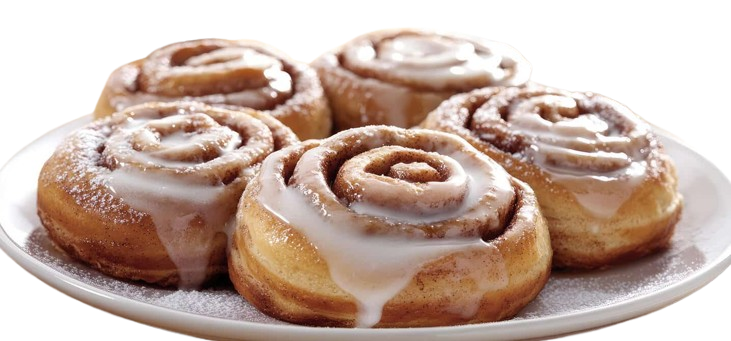
A cinnamon roll is a sweet baked dough filled with a cinnamon-sugar mixture. A small cinnamon roll (55g) contains 205 calories, a medium roll (100g) has 373 calories, and a large roll (150g) provides 560 calories. A piece of Cinnabon Classic Roll contains 880 calorie, but other bakery and retail versions vary, from a 330-calorie Pillsbury Grands! roll to a 480-calorie Starbucks roll. A homemade cinnamon roll has 415 calories.
The cinnamon roll nutrition facts reveal a food extremely dense in refined carbohydrates, fat, and sugar. A large roll (150g) provides 8g of protein, 24g of fat, and 80g of carbohydrates, which includes 43g of sugar. The preparation style significantly alters the calorie density, ranging from 330 calories per 100g for a roll with simple icing to 475 calories per 100g for a caramel pecan roll. A potential health attribute comes from the cinnamon, which contains antioxidants. A meta-analysis by Allen, R. W., et al. (2013) found that cinnamon intake was associated with a decrease in fasting plasma glucose, though the amount in a roll is small.
The pastry's global popularity as a staple in at least four distinct Northern European and American cuisines is supported by a supply chain of top cinnamon producers like Indonesia and China and major bakery consumers such as the United States. This global demand, combined with the rising costs of sugar and butter, is reflected in the price, with a single specialty roll increasing from under $3.00 in the early 2000s to over $5.00 after 2020.
Due to its composition, a cinnamon roll is not a suitable food for a weight-loss diet. The extremely high number of calories in a cinnamon roll prompts dietary guidelines from organizations like the American Heart Association to recommend limiting this type of food. One small cinnamon roll has 205 calories and requires an energy expenditure equivalent to 20 minutes of running or 26 minutes of swimming.
Cinnamon Rolls nutrition
| Stats | Weight |
|---|---|
| Carbs | 53.3 grams |
| Protein | 5.3 grams |
| Fats | 0 grams |
| Sugars | 28.7 grams |
- Large Cinnamon Rolls Calories (Nutritional Facts)
- Giant Cinnamon Rolls Calories (Nutritional Facts)
- Medium Cinnamon Rolls Calories (Nutritional Facts)
- Small Cinnamon Rolls Calories (Nutritional Facts)
- Homemade Cinnamon Rolls Calories (Nutritional Facts)
- Bakery Cinnamon Rolls Calories (Nutritional Facts)
- Raw Cinnamon Rolls Nutrition
- Sodium in Cinnamon Rolls
- Potassium in Cinnamon Rolls
- Sugar in Cinnamon Rolls
- Fiber in Cinnamon Rolls
- Protein in Cinnamon Rolls
- Carbs in Cinnamon Rolls
- Fat in Cinnamon Rolls
- Vitamins in Cinnamon Rolls
- Minerals in Cinnamon Rolls
Large Cinnamon Rolls Calories (Nutritional Facts)
A large cinnamon roll with cream cheese frosting (150g or 5.3oz) contains 560 calories, 8g of protein, 24g of fat, 80g of carbohydrates, 3g of fiber, 43g of sugar, and 850mg of sodium.
A giant cinnamon roll, such as a Cinnabon Classic Roll (251g or 8.8oz), contains 880 calories, 14g of protein, 37g of fat, 127g of carbohydrates, 2g of fiber, 58g of sugar, and 820mg of sodium.
A medium cinnamon roll with cream cheese frosting (100g or 3.5oz) provides 373 calories, 5.3g of protein, 16g of fat, 53.3g of carbohydrates, 2g of fiber, 28.7g of sugar, and 567mg of sodium.
A small cinnamon roll with cream cheese frosting (55g or 1.9oz) contains 205 calories, 2.9g of protein, 8.8g of fat, 29.3g of carbohydrates, 1.1g of fiber, 15.8g of sugar, and 312mg of sodium.
A medium homemade cinnamon roll with cream cheese frosting (110g or 3.9oz) contains 415 calories, 6g of protein, 18g of fat, 58g of carbohydrates, 2g of fiber, 25g of sugar, and 380mg of sodium.
A medium bakery cinnamon roll with icing (113g or 4oz) contains 420 calories, 7g of protein, 16g of fat, 63g of carbohydrates, 2g of fiber, 34g of sugar, and 450mg of sodium.
Cinnamon roll dough is not consumed raw due to health risks from uncooked eggs and flour. All nutritional information reflects a fully baked and frosted roll.
A large cinnamon roll (150g) contains 850mg of sodium (37% DV). A medium cinnamon roll (100g) has 567mg of sodium (25% DV). A small cinnamon roll (55g) contains 312mg of sodium (14% DV).
A large cinnamon roll (150g) contains 165mg of potassium (4% DV). A medium cinnamon roll (100g) has 110mg of potassium (2% DV). A small cinnamon roll (55g) contains 61mg of potassium (1% DV).
A large cinnamon roll (150g) contains 43g of sugar. A medium cinnamon roll (100g) has 28.7g of sugar. A small cinnamon roll (55g) contains 15.8g of sugar.
A large cinnamon roll (150g) provides 3g of dietary fiber (11% DV). A medium cinnamon roll (100g) has 2g of fiber (7% DV). A small cinnamon roll (55g) contains 1.1g of fiber (4% DV).
A large cinnamon roll (150g) provides 8g of protein (16% DV). A medium cinnamon roll (100g) has 5.3g of protein (11% DV). A small cinnamon roll (55g) contains 2.9g of protein (6% DV).
A large cinnamon roll (150g) contains 80g of carbohydrates (29% DV). A medium cinnamon roll (100g) has 53.3g of carbohydrates (19% DV). A small cinnamon roll (55g) contains 29.3g of carbohydrates (11% DV).
A large cinnamon roll (150g) contains 24g of total fat (31% DV). A medium cinnamon roll (100g) has 16g of total fat (21% DV). A small cinnamon roll (55g) contains 8.8g of total fat (11% DV).
A large cinnamon roll (150g) provides 15% DV of Vitamin A and 26% DV of Folate. A medium cinnamon roll (100g) provides 10% DV of Vitamin A and 17% DV of Folate. A small cinnamon roll (55g) provides 6% DV of Vitamin A and 9% DV of Folate.
A large cinnamon roll (150g) provides 14% DV of iron, 8% DV of calcium, and 24% DV of selenium. A medium cinnamon roll (100g) provides 9% DV of iron, 5% DV of calcium, and 16% DV of selenium. A small cinnamon roll (55g) provides 5% DV of iron, 3% DV of calcium, and 9% DV of selenium.
Get a Custom Report on Cinnamon Rolls Nutrition Data – Contact Us!
What are the Types of Cinnamon Rolls?
The types of cinnamon rolls are Classic (with Icing), Cream Cheese Frosted, Caramel Pecan Rolls, and Orange Rolls. These variations are distinguished by their toppings and fillings, which alter the flavor and nutritional profile. The following table details these common roll styles.
| Type | Description | Calories (Approximate per 100g) | Calorie Qualifications |
|---|---|---|---|
|
Classic Cinnamon Roll (with Icing)
|
A yeast-leavened dough with a cinnamon-sugar filling, topped with a simple sugar glaze. | 330 | This is the baseline version, with a high calorie count from the sugar in the filling and glaze. |
|
Cream Cheese Frosted Roll
|
A classic roll topped with a rich frosting made from cream cheese, butter, and powdered sugar. | 373 | The high fat content of the cream cheese and butter makes this version significantly higher in calories. |
|
Caramel Pecan Roll (Sticky Bun)
|
A roll baked in a pan lined with caramel and pecans, then inverted. | 475 | The dense caramel sauce and high-fat pecans make this the most calorie-dense version. |
|
Orange Roll
|
A variation where orange zest is added to the dough or filling, and the glaze is orange-flavored. | 340 | The calorie count is similar to the classic version, with the primary change being flavor. |
What are Desserts With Cinnamon Rolls?
A cinnamon roll is a self-contained breakfast item or dessert, conventionally served alone. A catalog of beverages that are frequently paired with a cinnamon roll is detailed in the table below.
| Dish Name | Calories (Estimate per serving) | Type of Dessert | Carbs (g) (Estimate) | Sugar (g) (Estimate) | Protein (g) (Estimate) | Fat (g) (Estimate) | Cuisine | Restaurants |
|---|---|---|---|---|---|---|---|---|
|
Black Coffee
|
<5 (per 8 oz cup) | Beverage | 0 | 0 | 0 | 0 | Global | Starbucks, Dunkin' |
|
Glass of Milk
|
150 (per 8 oz) | Beverage | 12 | 12 | 8 | 8 | American | Most diners |
|
Hot Tea
|
<5 (per 8 oz cup) | Beverage | 0 | 0 | 0 | 0 | English/Global | Panera Bread |
|
Orange Juice
|
110 (per 8 oz) | Beverage | 26 | 21 | 2 | 0 | American | Tropicana (retail) |
What Cuisines Do Prefer Cinnamon Rolls Most?
The cinnamon roll is a popular pastry with deep roots in Northern European and North American baking. The following chart displays the culinary traditions where the cinnamon roll is a well-known item.
| Cuisine | Dish | Types of Cinnamon Rolls Used | Calories (Estimate) | Restaurant(s) |
|---|---|---|---|---|
|
American
|
Cinnamon Roll / Bun | Large, with cream cheese frosting | 400-900 | Cinnabon, Starbucks |
|
Swedish
|
Kanelbulle | Less sweet, with pearl sugar and cardamom | 250-350 | Swedish bakeries |
|
Danish
|
Kanelsnegl ("Cinnamon Snail") | A spiral pastry, sometimes with raisins | 300-450 | Danish bakeries |
|
German
|
Zimtschnecke | Similar to the Danish version | 300-450 | German bakeries |
Which Countries Produce the Most Cinnamon Rolls?
The top producers of cinnamon, the key ingredient in cinnamon rolls, are Indonesia, China, and Vietnam. Specific global production data for finished cinnamon rolls is not tracked as a separate category. The table below shows the production quantity of cinnamon (canella) in key countries.
| Country | 2003 | 2008 | 2013 | 2018 | 2019 | 2020 | 2021 | 2022 |
|---|---|---|---|---|---|---|---|---|
| Indonesia | 35,000 | 45,000 | 75,000 | 91,000 | 92,000 | 91,200 | 91,250 | 91,300 |
| China | 25,000 | 35,000 | 60,000 | 72,000 | 72,500 | 73,000 | 73,500 | 74,000 |
| Viet Nam | 10,000 | 15,000 | 25,000 | 30,000 | 31,000 | 31,500 | 31,500 | 31,600 |
| Sri Lanka | 11,000 | 15,000 | 18,000 | 22,000 | 23,000 | 22,900 | 23,000 | 23,100 |
Which Countries Consume the Most Cinnamon Rolls?
The top consumers of bakery products, a category that includes cinnamon rolls, are the United States, the United Kingdom, and Germany. Consumption data for cinnamon rolls is best represented by import values for the broader category of pastries, cakes, and sweet biscuits. The table below shows import values for this category in key markets.
| Country | 2003 | 2008 | 2013 | 2018 | 2019 | 2020 | 2021 | 2022 |
|---|---|---|---|---|---|---|---|---|
| United States | 1,300,000 | 2,000,000 | 2,900,000 | 3,800,000 | 4,000,000 | 4,300,000 | 5,000,000 | 5,600,000 |
| United Kingdom | 1,000,000 | 1,600,000 | 2,400,000 | 3,100,000 | 3,200,000 | 3,400,000 | 3,800,000 | 4,100,000 |
| Germany | 900,000 | 1,400,000 | 2,000,000 | 2,600,000 | 2,700,000 | 2,900,000 | 3,300,000 | 3,600,000 |
| France | 700,000 | 1,100,000 | 1,600,000 | 2,100,000 | 2,200,000 | 2,300,000 | 2,600,000 | 2,900,000 |
| Canada | 600,000 | 950,000 | 1,400,000 | 1,800,000 | 1,900,000 | 2,100,000 | 2,400,000 | 2,700,000 |
How Do Prices of Cinnamon Rolls-Including Dishes Change?
The cost of a single cinnamon roll at cafes and bakeries has risen over the past ten years, a change directly caused by higher wholesale prices for ingredients and growing labor and operational costs. This upward price trend is evident on the menus of well-known food service chains.
| Restaurant | Dish | Old Price (Year) | Current Price (2024/2025) |
|---|---|---|---|
| Cinnabon | Classic Roll | $3.49 (2014) | $4.99 - $6.49 |
| Starbucks | Cinnamon Roll | $2.25 (2015) | $3.25 - $5.25 |
| Panera Bread | Cinnamon Roll | $2.99 (2016) | $4.39 - $4.99 |
| Pillsbury | Grands! Cinnamon Rolls (5-count can, retail) | $3.99 (2017) | $4.37 - $6.79 |
What is the Cinnamon Rolls Calorie for 100 Grams?
A 100g serving of a cinnamon roll with cream cheese frosting contains 373 calories.
What is the Cinnamon Rolls Calorie for 1 KG?
One kilogram (1000g) of cinnamon rolls with cream cheese frosting contains 3,730 calories.
What is the Calorie of 1 Cinnamon Rolls?
One Cinnabon Classic Roll contains 880 calories. A Starbucks Cinnamon Roll has 480 calories. A Pillsbury Grands! Cinnamon Roll with Icing contains 330 calories.
What are the Health Benefits of Cinnamon Rolls?
Any health advantages of cinnamon rolls are minimal and stem almost entirely from the cinnamon spice. An examination of these limited attributes is provided here.
- Contains Antioxidants from Cinnamon: Cinnamon is rich in polyphenols, which are powerful antioxidants that can help protect the body's cells from oxidative damage. A study by Rao, P. V., & Gan, S. H. (2014), "Cinnamon: A Multifaceted Medicinal Plant," confirms that cinnamon has high antioxidant activity due to its phenolic compounds.
- May Help Regulate Blood Sugar: Some research suggests that cinnamon may have a modest effect on improving blood sugar control. A meta-analysis by Allen, R. W., et al. (2013), "Cinnamon use in type 2 diabetes: an updated systematic review and meta-analysis," found that cinnamon intake was associated with a statistically significant decrease in fasting plasma glucose.
- Provides Manganese: Cinnamon is a source of the essential mineral manganese, which is important for bone health, metabolism, and antioxidant function. A single large cinnamon roll can provide a small amount of this nutrient.
What are the Downsides of Cinnamon Rolls?
The pastry's indulgent composition poses several major health liabilities. A breakdown of these health risks is detailed here.
- Extremely High in Calories, Sugar, and Fat: A single large cinnamon roll is exceptionally high in calories, added sugar, and saturated fat from the dough, filling, and frosting. A scientific statement from the American Heart Association by Johnson, R. K., et al. (2009), "Dietary sugars intake and cardiovascular health," recommends strict limits on added sugar, linking high consumption to an increased risk of obesity, heart disease, and metabolic syndrome. A healthier alternative is a bowl of oatmeal with a sprinkle of cinnamon. A suggested amount is to limit consumption to one small roll on a rare occasion.
- Made with Refined Carbohydrates: The dough is made from refined white flour, a simple carbohydrate that offers little nutritional value in terms of fiber or micronutrients. A review by Ludwig, D. S., et al. (2018), "Dietary carbohydrates: role of quality and quantity in chronic disease," connects diets high in refined carbohydrates to a greater risk of metabolic diseases.
Are Cinnamon Rolls Good for You?
No, cinnamon rolls are not a healthy food choice because the pastry is an ultra-processed product with an extremely high concentration of refined carbohydrates, added sugar, and saturated fat. The impact on metabolic health is negative. The rapid absorption of sugar and white flour can lead to a sharp increase in blood glucose and insulin. A meta-analysis by Livesey, G., et al. (2019), " Dietary Glycemic Index and Load and the Risk of Type 2 Diabetes: A Systematic Review and Updated Meta-Analyses of Prospective Cohort Studies," found that diets with a high glycemic load are associated with an increased risk of type 2 diabetes.
For cardiovascular health, the high content of saturated fat, particularly in versions with cream cheese frosting, can negatively impact blood lipid levels. A systematic review by Hooper, L., et al. (2020), "Reduction in saturated fat intake for cardiovascular disease," confirmed that reducing saturated fat intake leads to a reduction in cardiovascular events. For liver health, the high amount of added sugar can contribute to the development of non-alcoholic fatty liver disease. A review by Jensen, T., et al. (2018), "Fructose and sugar: A major driving force for non-alcoholic fatty liver disease," details how excess sugar consumption promotes fat accumulation in the liver.
Is It Okay to Eat Cinnamon Rolls on a Diet?
No, it is not okay to eat cinnamon rolls regularly while on a diet for weight loss. The pastry is exceptionally high in calories and low in the nutrients that help with weight management. Foods that aid in weight loss are typically high in protein and fiber, which increase satiety. A study by Leidy, H. J., et al. (2015), "The role of protein in weight loss and maintenance," concluded that higher protein intake promotes satiety and is beneficial for weight management. Another study by Howarth, N. C., et al. (2001), "Dietary fiber and weight regulation," found that higher fiber intake is associated with lower body weight. Cinnamon rolls lack both of these key nutrients. Furthermore, the high sugar content can drive cravings and overeating. A study by Lennerz, B. S., et al. (2013), "Effects of dietary glycemic index on brain regions related to reward and craving in men," showed that high-glycemic meals activated brain regions involved in reward and craving, which can lead to a cycle of overeating. A suggested consumption rate is to treat a cinnamon roll as a rare indulgence and to select the smallest available size.
How Do Calories Change According to Cinnamon Rolls Types?
The topping and filling determine the calorie count of a cinnamon roll. A caramel pecan roll has the highest calorie value at 475 calories per 100 grams, a consequence of the dense caramel sauce and high-fat pecans. A classic cinnamon roll with a simple sugar glaze contains the lowest calorie value at 330 calories per 100 grams, representing a baseline without the added fat from cream cheese or nuts. A cream cheese frosted roll falls in between, with its higher calorie count coming from the fat in the frosting.
What are the Main Dishes With Cinnamon Rolls?
A cinnamon roll is served exclusively as a breakfast food or dessert and is not paired with savory main entrees. The pastry's intensely sweet and rich character makes the baked good incompatible with lunch or dinner dishes. A cinnamon roll is conventionally eaten on its own, often accompanied by coffee or milk.
What is the Origin of Cinnamon Rolls?
The story of the cinnamon roll begins in Northern Europe, specifically in Sweden. The modern cinnamon roll, or kanelbulle, is believed to have been created in Sweden in the 1920s, following the end of World War I when baking ingredients like flour, sugar, and cinnamon became more widely available. The use of cardamom in the dough is a characteristic feature of the Swedish version. The pastry's popularity spread throughout Scandinavia, with each country developing its own variation. The American-style cinnamon roll, known for being much larger, sweeter, and often covered in a thick layer of icing or cream cheese frosting, was popularized in the latter half of the 20th century, most notably with the founding of the Cinnabon chain in 1985.
Explore More Baked Goods
Discover more Baked Goods with detailed nutrition facts, calorie counts, vitamins, minerals, and health benefits. Compare similar foods, serving sizes, macronutrients, and key nutrients to find the best option for your diet and nutrition goals.
 Bagel calories
 Baguette calories
 Biscuit calories
 Blueberry Muffins calories
 Bread calories
 Brioche Bread calories
 Bun calories
 Churros calories
 Corn Tortilla calories
 Cornbread calories
 Croissant calories
 Danish Pastry calories