Calories and Nutritions in Corn Tortilla
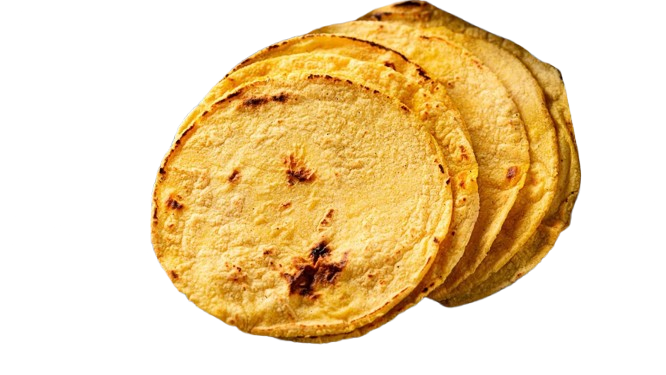
Calories in corn tortillas vary based on preparation and size. A 100 gram (3.53 ounce) serving of soft corn tortillas contains 218 calories, while the same amount of hard, fried corn tortilla shells contains 470 calories. One medium 30g (1.06 oz) soft corn tortilla has 65 calories. A large 45g (1.59 oz) soft corn tortilla has 98 calories. A small 20g (0.71 oz) soft corn tortilla has 44 calories. Hard, fried shells have more calories, a medium 30g shell has 141 calories. As a whole grain food, corn tortillas can be part of a diet associated with a lower risk of cardiovascular disease and weight gain (Ye, E. Q., et al., 2012).
The corn tortilla nutrition facts for a 100g serving of soft corn tortillas show 5.7 grams of protein (11% Daily Value), 2.8 grams of fat (4% DV), 44.7 grams of carbohydrates (16% DV), and 5.9 grams of fiber (21% DV). Key minerals include 152 milligrams of phosphorus (12% DV) and 56 milligrams of magnesium (13% DV). Sodium content is 46 milligrams (2% DV). Important vitamins include 0.2 milligrams of vitamin B6 (12% DV). Hard corn tortilla shells contain more fat at 24 grams (31% DV) and sodium at 200 milligrams (9% DV) per 100 grams.
The main types of corn tortillas are soft and hard tortillas, fried shells, available in varieties made from yellow, white, or blue corn. The United States, China, and Brazil are top producers of corn, which is the main ingredient for tortillas. Mexico and the European Union are major consumers. Corn tortillas are essential for dishes like tacos, served at restaurants like Torchy's Tacos, and enchiladas, found at establishments like El Torito. The benefits of corn tortillas stem from being a whole-grain, gluten-free food that provides fiber.
A recommended daily consumption is 2-3 medium soft corn tortillas, which provides 130 to 195 calories. Burning the 130 calories from two medium soft corn tortillas can be achieved through 13 minutes of jogging, 15 minutes of swimming, or 25 minutes of brisk walking. The specific duration and effort depend on individual factors like body weight and metabolic rate.
Corn Tortilla nutrition
| Stats | Weight |
|---|---|
| Carbs | 14 grams |
| Protein | 2 grams |
| Fats | 0 grams |
| Sugars | 0.5 grams |
- Corn Tortilla Wrap Calories (Nutritional Facts)
- Corn Tortilla Shell Calories (Nutritional Facts)
- Homemade Corn Tortilla Calories (Nutritional Facts)
- Large Corn Tortilla Calories (Nutritional Facts)
- Medium Corn Tortilla Calories (Nutritional Facts)
- Small Corn Tortilla Calories (Nutritional Facts)
- Cholesterol in Corn Tortilla
- Sodium in Corn Tortilla
- Potassium in Corn Tortilla
- Sugar in Corn Tortilla
- Fiber in Corn Tortilla
- Protein in Corn Tortilla
- Carbs in Corn Tortilla
- Fat in Corn Tortilla
- Vitamins in Corn Tortilla
- Minerals in Corn Tortilla
Corn Tortilla Wrap Calories (Nutritional Facts)
A large corn tortilla wrap (45g) contains 98 calories, 2.6g of protein, 1.3g of fat, 20.1g of carbohydrates, 2.7g of fiber, 0.4g of sugar, and 21mg of sodium. An extra-large corn tortilla wrap (65g) contains 142 calories, 3.7g of protein, 1.8g of fat, 29.1g of carbohydrates, 3.8g of fiber, 0.5g of sugar, and 30mg of sodium. A medium corn tortilla wrap (30g) contains 65 calories, 1.7g of protein, 0.8g of fat, 13.4g of carbohydrates, 1.8g of fiber, 0.2g of sugar, and 14mg of sodium. A small corn tortilla wrap weighing 20 grams contains 44 calories, 1.1 grams of protein, 0.6 grams of fat, 8.9 grams of small corn tortilla carbs, 1.2 grams of fiber, 0.2 grams of sugar, and 9 milligrams of sodium. The corn tortilla cholesterol content for any size wrap is 0 milligrams. One ounce (28.4g) of corn tortilla wrap contains 62 calories, and one gram contains 2.2 calories, a figure consistent with homemade corn tortillas calories when prepared without added fats.
One medium corn tortilla shell (30g) contains 141 calories, 1.8g of protein, 7.2g of fat, 17.4g of carbohydrates, 2.1g of fiber, 0.3g of sugar, and 60mg of sodium. A large corn tortilla shell (45g) contains 212 calories, 2.7g of protein, 10.8g of fat, 26.1g of carbohydrates, 3.2g of fiber, 0.5g of sugar, and 90mg of sodium. An extra-large corn tortilla shell (65g) contains 306 calories, 3.9g of protein, 15.6g of fat, 37.7g of carbohydrates, 4.6g of fiber, 0.7g of sugar, and 130mg of sodium. A small corn tortilla shell (20g) contains 94 calories, 1.2g of protein, 4.8g of fat, 11.6g of carbohydrates, 1.4g of fiber, 0.2g of sugar, and 40mg of sodium. One ounce (28.4g) of corn tortilla shells contains 133 calories. One gram of corn tortilla shell contains 4.7 calories.
A medium homemade corn tortilla (30g) contains 65 calories, 1.7g of protein, 0.8g of fat, 13.4g of carbohydrates, 1.8g of fiber, 0.2g of sugar, and 14mg of sodium. A large homemade corn tortilla (45g) contains 98 calories, 2.6g of protein, 1.3g of fat, 20.1g of carbohydrates, 2.7g of fiber, 0.4g of sugar, and 21mg of sodium. An extra-large homemade corn tortilla (65g) contains 142 calories, 3.7g of protein, 1.8g of fat, 29.1g of carbohydrates, 3.8g of fiber, 0.5g of sugar, and 30mg of sodium. A small homemade corn tortilla (20g) contains 44 calories, 1.1g of protein, 0.6g of fat, 8.9g of carbohydrates, 1.2g of fiber, 0.2g of sugar, and 9mg of sodium. One ounce (28.4g) of homemade corn tortillas contains 62 calories. One gram of homemade corn tortilla contains 2.2 calories.
One large soft corn tortilla (45g) contains 98 calories, 2.6g of protein, 1.3g of fat, 20.1g of carbohydrates, 2.7g of fiber, 0.4g of sugar, and 21mg of sodium. One large hard corn tortilla shell (45g) contains 212 calories, 2.7g of protein, 10.8g of fat, 26.1g of carbohydrates, 3.2g of fiber, 0.5g of sugar, and 90mg of sodium. A large homemade corn tortilla (45g) contains 98 calories, 2.6g of protein, 1.3g of fat, 20.1g of carbohydrates, 2.7g of fiber, 0.4g of sugar, and 21mg of sodium.
One medium soft corn tortilla (30g) contains 65 calories, 1.7g of protein, 0.8g of fat, 13.4g of carbohydrates, 1.8g of fiber, 0.2g of sugar, and 14mg of sodium. One medium hard corn tortilla shell (30g) contains 141 calories, 1.8g of protein, 7.2g of fat, 17.4g of carbohydrates, 2.1g of fiber, 0.3g of sugar, and 60mg of sodium. A medium homemade corn tortilla (30g) contains 65 calories, 1.7g of protein, 0.8g of fat, 13.4g of carbohydrates, 1.8g of fiber, 0.2g of sugar, and 14mg of sodium.
One small soft corn tortilla (20g) contains 44 calories, 1.1g of protein, 0.6g of fat, 8.9g of carbohydrates, 1.2g of fiber, 0.2g of sugar, and 9mg of sodium. One small hard corn tortilla shell (20g) contains 94 calories, 1.2g of protein, 4.8g of fat, 11.6g of carbohydrates, 1.4g of fiber, 0.2g of sugar, and 40mg of sodium. A small homemade corn tortilla (20g) contains 44 calories, 1.1g of protein, 0.6g of fat, 8.9g of carbohydrates, 1.2g of fiber, 0.2g of sugar, and 9mg of sodium.
A 100 gram (3.53 oz) serving of soft corn tortillas contains 0mg of cholesterol (0% DV). A small (20g), medium (30g), and large (45g) soft corn tortilla each contains 0mg of cholesterol (0% DV).
A 100 gram (3.53 oz) serving of hard corn tortilla shells contains 0mg of cholesterol (0% DV). A small (20g), medium (30g), and large (45g) hard corn tortilla shell each contains 0mg of cholesterol (0% DV).
A 100 gram (3.53 oz) serving of soft corn tortillas contains 46mg of sodium (2% DV). A large (45g) soft corn tortilla contains 21mg of sodium (1% DV). A medium (30g) soft corn tortilla contains 14mg of sodium (1% DV). A small (20g) soft corn tortilla contains 9mg of sodium (0% DV). A 100 gram (3.53 oz) serving of hard corn tortilla shells contains 200mg of sodium (9% DV). A large (45g) hard corn tortilla shell contains 90mg of sodium (4% DV). A medium (30g) hard corn tortilla shell contains 60mg of sodium (3% DV). A small (20g) hard corn tortilla shell contains 40mg of sodium (2% DV).
A 100 gram (3.53 oz) serving of soft corn tortillas contains 218mg of potassium (5% DV). A large (45g) soft corn tortilla contains 98mg of potassium (2% DV). A medium (30g) soft corn tortilla contains 65mg of potassium (1% DV). A small (20g) soft corn tortilla contains 44mg of potassium (1% DV). A 100 gram (3.53 oz) serving of hard corn tortilla shells contains 250mg of potassium (5% DV). A large (45g) hard corn tortilla shell contains 113mg of potassium (2% DV). A medium (30g) hard corn tortilla shell contains 75mg of potassium (2% DV). A small (20g) hard corn tortilla shell contains 50mg of potassium (1% DV).
A 100 gram (3.53 oz) serving of soft corn tortillas contains 0.8g of sugar. A large (45g) soft corn tortilla contains 0.4g of sugar. A medium (30g) soft corn tortilla contains 0.2g of sugar. A small (20g) soft corn tortilla contains 0.2g of sugar. A 100 gram (3.53 oz) serving of hard corn tortilla shells contains 1g of sugar. A large (45g) hard corn tortilla shell contains 0.5g of sugar. A medium (30g) hard corn tortilla shell contains 0.3g of sugar. A small (20g) hard corn tortilla shell contains 0.2g of sugar.
A 100 gram (3.53 oz) serving of soft corn tortillas contains 5.9g of fiber (21% DV). A large (45g) soft corn tortilla contains 2.7g of fiber (10% DV). A medium (30g) soft corn tortilla contains 1.8g of fiber (6% DV). A small (20g) soft corn tortilla contains 1.2g of fiber (4% DV). A 100 gram (3.53 oz) serving of hard corn tortilla shells contains 7g of fiber (25% DV). A large (45g) hard corn tortilla shell contains 3.2g of fiber (11% DV). A medium (30g) hard corn tortilla shell contains 2.1g of fiber (8% DV). A small (20g) hard corn tortilla shell contains 1.4g of fiber (5% DV).
A 100 gram (3.53 oz) serving of soft corn tortillas contains 5.7g of protein (11% DV). A large (45g) soft corn tortilla contains 2.6g of protein (5% DV). A medium (30g) soft corn tortilla contains 1.7g of protein (3% DV). A small (20g) soft corn tortilla contains 1.1g of protein (2% DV). A 100 gram (3.53 oz) serving of hard corn tortilla shells contains 6g of protein (12% DV). A large (45g) hard corn tortilla shell contains 2.7g of protein (5% DV). A medium (30g) hard corn tortilla shell contains 1.8g of protein (4% DV). A small (20g) hard corn tortilla shell contains 1.2g of protein (2% DV).
A 100 gram (3.53 oz) serving of soft corn tortillas contains 44.7g of carbohydrates (16% DV). A large (45g) soft corn tortilla contains 20.1g of carbohydrates (7% DV). A medium (30g) soft corn tortilla contains 13.4g of carbohydrates (5% DV). A small (20g) soft corn tortilla contains 8.9g of carbohydrates (3% DV). A 100 gram (3.53 oz) serving of hard corn tortilla shells contains 58g of carbohydrates (21% DV). A large (45g) hard corn tortilla shell contains 26.1g of carbohydrates (9% DV). A medium (30g) hard corn tortilla shell contains 17.4g of carbohydrates (6% DV). A small (20g) hard corn tortilla shell contains 11.6g of carbohydrates (4% DV).
A 100 gram (3.53 oz) serving of soft corn tortillas contains 2.8g of fat (4% DV). A large (45g) soft corn tortilla contains 1.3g of fat (2% DV). A medium (30g) soft corn tortilla contains 0.8g of fat (1% DV). A small (20g) soft corn tortilla contains 0.6g of fat (1% DV). A 100 gram (3.53 oz) serving of hard corn tortilla shells contains 24g of fat (31% DV). A large (45g) hard corn tortilla shell contains 10.8g of fat (14% DV). A medium (30g) hard corn tortilla shell contains 7.2g of fat (9% DV). A small (20g) hard corn tortilla shell contains 4.8g of fat (6% DV).
A 100 gram (3.53 oz) serving of soft corn tortillas contains 0.2mg of vitamin B6 (12% DV), 0.2mg of niacin (1% DV), and 18mcg of folate (4% DV). A large (45g) soft corn tortilla contains 0.09mg of vitamin B6 (5% DV). A medium (30g) soft corn tortilla contains 0.06mg of vitamin B6 (4% DV). A small (20g) soft corn tortilla contains 0.04mg of vitamin B6 (2% DV). A 100 gram (3.53 oz) serving of hard corn tortilla shells contains 1.2mg of vitamin E (8% DV) and 19.3mcg of vitamin K (16% DV). A large (45g) hard corn tortilla shell contains 0.5mg of vitamin E (4% DV) and 8.7mcg of vitamin K (7% DV). A medium (30g) hard corn tortilla shell contains 0.4mg of vitamin E (2% DV) and 5.8mcg of vitamin K (5% DV). A small (20g) hard corn tortilla shell contains 0.2mg of vitamin E (2% DV) and 3.9mcg of vitamin K (3% DV).
A 100 gram (3.53 oz) serving of soft corn tortillas contains 152mg of phosphorus (12% DV), 56mg of magnesium (13% DV), 52mg of calcium (4% DV), and 0.8mg of zinc (7% DV). A large (45g) soft corn tortilla contains 68mg of phosphorus (5% DV) and 25mg of magnesium (6% DV). A medium (30g) soft corn tortilla contains 46mg of phosphorus (4% DV) and 17mg of magnesium (4% DV). A small (20g) soft corn tortilla contains 30mg of phosphorus (2% DV) and 11mg of magnesium (3% DV). A 100 gram (3.53 oz) serving of hard corn tortilla shells contains 180mg of phosphorus (14% DV), 60mg of magnesium (14% DV), and 70mg of calcium (5% DV). A large (45g) hard corn tortilla shell contains 81mg of phosphorus (6% DV) and 27mg of magnesium (6% DV). A medium (30g) hard corn tortilla shell contains 54mg of phosphorus (4% DV) and 18mg of magnesium (4% DV). A small (20g) hard corn tortilla shell contains 36mg of phosphorus (3% DV) and 12mg of magnesium (3% DV).
Get a Custom Report on Corn Tortilla Nutrition Data – Contact Us!
What are the Types of Corn Tortillas?
The types of corn tortillas are White Corn Tortillas, Yellow Corn Tortillas, Blue Corn Tortillas, Nixtamalized Corn Tortillas, Organic Corn Tortillas, and Non-GMO Corn Tortillas. The table below details the common varieties and the characteristics.
| Type | Description | Calories (Approximate per 26g tortilla) | Calorie Qualifications |
|---|---|---|---|
|
White Corn Tortillas
|
Made from white corn masa. These have a soft texture and a mild, slightly sweet flavor. | 45-57 | These are a standard and widely available option. Calories can vary based on brand and thickness. |
|
Yellow Corn Tortillas
|
Made from yellow corn masa. These have a slightly more robust corn flavor and a firmer texture compared to white corn tortillas. | 50-60 | Yellow corn tortillas contain beta-carotene, the precursor to vitamin A, which gives the tortillas a yellow color. |
|
Blue Corn Tortillas
|
Made from blue corn masa, giving them a distinctive blue-purple hue. These have a nuttier, earthier flavor. | 50-60 | Blue corn tortillas are higher in anthocyanins, a type of antioxidant. |
|
Nixtamalized Corn Tortillas
|
Made from corn that has undergone the traditional process of nixtamalization (soaking in an alkaline solution). This process enhances flavor and nutrition. | 45-60 | The nixtamalization process makes nutrients like niacin and calcium more bioavailable. Most authentic corn tortillas are nixtamalized. |
|
Organic Corn Tortillas
|
Made from certified organic corn, grown without synthetic pesticides or fertilizers. | 50-60 | The calorie count is similar to conventional tortillas, but this type appeals to those seeking to avoid pesticides. |
|
Non-GMO Corn Tortillas
|
Made from corn that has not been genetically modified. | 50-60 | Similar in calories to other types, this is a preference for consumers avoiding genetically modified organisms. |
What are the Desserts with Corn Tortillas?
Desserts using corn tortillas are less common than savory applications but offer a unique texture and flavor, appearing in traditional and modern recipes. The table below details some dessert preparations involving corn tortillas.
| Dish Name | Calories (Estimate per serving) | Type of Corn Tortilla Used | Carbs (g) (Estimate) | Sugar (g) (Estimate) | Protein (g) (Estimate) | Fat (g) (Estimate) | Cuisine | Restaurants |
|---|---|---|---|---|---|---|---|---|
|
Buñuelos (Tortilla Style)
|
250-400 | Thin White or Yellow Corn Tortillas | 30-50 | 15-25 | 3-5 | 12-20 | Mexican, Tex-Mex | Mi Tierra Cafe & Bakery (San Antonio, TX), La Monarca Bakery (Los Angeles, CA) |
|
Churro Chips with Chocolate Sauce
|
350-550 | White or Yellow Corn Tortillas | 40-60 | 20-35 | 4-6 | 18-30 | Modern American, Tex-Mex | Chuy's (restaurant chain), Mad Mex (restaurant chain) |
|
Sopapilla-Style Tortilla Triangles
|
300-450 | White or Yellow Corn Tortillas | 35-55 | 18-30 | 3-5 | 15-25 | Southwestern American | On the Border Mexican Grill & Cantina (restaurant chain) |
|
Sweet Tortilla Roll-ups (Crispy Taquitos)
|
200-350 | White Corn Tortillas | 25-40 | 15-25 | 4-7 | 8-15 | Fusion, Modern American | Found on creative menus at restaurants like Bodega Taqueria y Tequila (multiple locations) as seasonal items. |
What are the Main Dishes with Corn Tortillas?
Corn tortillas are a foundational component of numerous main dishes, especially within Mexican and Central American cuisines. The table below details staple main dishes that use corn tortillas.
| Dish Name | Calories (Estimate per serving) | Type of Corn Tortilla Used | Carbs (g) (Estimate) | Sugar (g) (Estimate) | Protein (g) (Estimate) | Fat (g) (Estimate) | Cuisine | Restaurants |
|---|---|---|---|---|---|---|---|---|
|
Tacos (Street Style)
|
150-250 (per taco) | Small White or Yellow Corn Tortillas | 15-25 | 1-3 | 10-20 | 7-15 | Mexican | Torchy's Tacos (restaurant chain), Guisados (Los Angeles, CA) |
|
Enchiladas
|
400-700 | Yellow or White Corn Tortillas | 30-50 | 3-8 | 20-35 | 20-40 | Mexican, Tex-Mex | El Torito (restaurant chain), The Original Ninfa's (Houston, TX), Garcia's Mexican Restaurant (Phoenix, AZ) |
|
Chilaquiles
|
450-800 | Stale Yellow or White Corn Tortillas (cut and fried) | 40-70 | 2-6 | 15-25 | 25-45 | Mexican | La Casita Mexicana (Bell, CA), Sqirl (Los Angeles, CA) |
|
Tostadas
|
300-600 | Flat, Fried Yellow or White Corn Tortillas | 25-45 | 2-5 | 15-30 | 15-30 | Mexican, Southwestern | Tostadas (Las Vegas, NV), Rubio's Coastal Grill (restaurant chain) |
|
Quesadillas (Traditional Style)
|
250-450 | White or Yellow Corn Tortillas | 20-35 | 1-3 | 10-20 | 12-25 | Mexican | Oyamel Cocina Mexicana (Washington, D.C.), Red Iguana (Salt Lake City, UT) |
|
Flautas/Taquitos
|
350-600 | White or Yellow Corn Tortillas | 30-50 | 1-4 | 15-25 | 18-30 | Mexican, Tex-Mex | El Pollo Loco (restaurant chain), Cielito Lindo (Los Angeles, CA) |
What Cuisines Prefer Corn Tortillas Most?
Corn tortillas are indispensable in many Latin American culinary traditions, particularly in Mexico where the food originated. The table below details cuisines where the corn tortilla's role is foundational.
| Cuisine | Dish | Types of Corn Tortillas Used | Calories (Estimate per serving) | Restaurant(s) |
|---|---|---|---|---|
|
Mexican
|
Enchiladas Suizas | White or Yellow Corn Tortillas | 400-700 | Oyamel Cocina Mexicana (Washington, D.C.), La Fonda on the Plaza (Santa Fe, NM) |
|
Tex-Mex
|
Crispy Beef Tacos | Yellow Corn Tortillas (fried into a hard shell) | 350-550 (for two) | Matt's El Rancho (Austin, TX), The Original Ninfa's (Houston, TX) |
|
Southwestern American
|
Blue Corn Stacked Enchiladas | Blue Corn Tortillas | 400-700 | The Shed (Santa Fe, NM), El Charro Café (Tucson, AZ) |
|
Central American (Guatemalan)
|
Tacos Guatemaltecos | White or Yellow Corn Tortillas (rolled and fried) | 300-500 | Amalia's Restaurant (Los Angeles, CA), El Quetzal (San Francisco, CA) |
Which Countries Produce the Most Corn Tortillas?
The top producers of corn (maize), which is the main component of corn tortillas, are the United States, China, and Brazil. These countries have the capacity for large-scale production of corn-based products, including tortillas and corn masa flour for domestic use and export. The table below shows the production quantity of maize for these leading countries from 2003 to 2022.
| Country | 2003 | 2004 | 2005 | 2006 | 2007 | 2008 | 2009 | 2010 | 2011 | 2012 | 2013 | 2014 | 2015 | 2016 | 2017 | 2018 | 2019 | 2020 | 2021 | 2022 |
|---|---|---|---|---|---|---|---|---|---|---|---|---|---|---|---|---|---|---|---|---|
| USA | 256,904,740 | 299,629,090 | 282,263,300 | 267,527,410 | 331,189,130 | 307,520,310 | 332,548,930 | 316,165,000 | 313,924,940 | 273,838,490 | 353,699,030 | 361,091,140 | 345,487,000 | 384,777,950 | 370,962,050 | 364,288,570 | 345,998,950 | 360,251,740 | 383,942,680 | 348,753,000 |
| China | 115,829,903 | 130,277,502 | 139,499,353 | 151,607,000 | 152,300,000 | 166,000,000 | 164,107,316 | 177,540,000 | 208,126,000 | 218,500,000 | 215,670,000 | 224,580,000 | 224,630,000 | 219,550,000 | 259,070,000 | 257,173,900 | 260,770,000 | 260,670,000 | 272,551,900 | 277,200,000 |
| Brazil | 47,481,254 | 41,751,211 | 34,859,571 | 41,293,980 | 51,588,672 | 59,030,234 | 51,232,447 | 56,065,357 | 57,480,419 | 71,291,120 | 80,278,920 | 79,878,000 | 85,286,000 | 64,142,000 | 97,721,000 | 82,288,290 | 101,139,300 | 87,070,000 | 116,000,000 | 125,000,000 |
| Mexico | 19,419,200 | 20,601,300 | 20,789,900 | 21,800,000 | 23,273,254 | 24,200,000 | 20,143,100 | 23,301,600 | 19,625,100 | 22,069,400 | 22,663,953 | 23,273,254 | 24,693,514 | 28,251,469 | 27,698,000 | 27,169,977 | 27,227,115 | 24,783,000 | 27,424,520 | 27,600,000 |
Which Countries Consume the Most Corn Tortillas?
The top consumers of corn (maize), which is the main component of corn tortillas, are Mexico, Japan, and the European Union. High import volumes of corn often correlate with high consumption of corn-based products. Mexico's status reflects the cultural importance of corn tortillas as a dietary staple. The table below shows the import quantity of maize for these top consuming regions from 2003 to 2022.
| Country/Region | 2003 | 2004 | 2005 | 2006 | 2007 | 2008 | 2009 | 2010 | 2011 | 2012 | 2013 | 2014 | 2015 | 2016 | 2017 | 2018 | 2019 | 2020 | 2021 | 2022 |
|---|---|---|---|---|---|---|---|---|---|---|---|---|---|---|---|---|---|---|---|---|
| Mexico | 5,992,110 | 5,501,470 | 5,616,140 | 8,026,100 | 9,909,690 | 7,657,320 | 9,141,600 | 8,432,670 | 10,793,700 | 11,623,800 | 10,230,100 | 11,260,300 | 13,015,200 | 14,642,100 | 16,913,500 | 17,043,900 | 16,846,200 | 16,000,000 | 17,500,000 | 18,000,000 |
| Japan | 16,423,500 | 16,151,900 | 16,334,800 | 16,642,100 | 16,211,000 | 15,310,400 | 15,998,200 | 15,398,500 | 14,841,900 | 14,561,400 | 14,978,300 | 15,011,200 | 14,874,600 | 15,221,000 | 15,773,000 | 15,856,100 | 16,032,000 | 15,700,000 | 15,800,000 | 15,300,000 |
| European Union (27) | 3,137,890 | 4,921,150 | 4,289,310 | 4,832,900 | 12,987,600 | 10,112,300 | 4,567,890 | 5,123,450 | 7,890,120 | 11,234,500 | 14,567,800 | 12,345,600 | 13,456,700 | 15,678,900 | 18,901,200 | 22,345,600 | 20,123,400 | 19,500,000 | 18,700,000 | 24,500,000 |
| Egypt | 4,501,230 | 4,890,120 | 5,123,450 | 5,456,780 | 5,890,120 | 6,123,450 | 6,456,780 | 6,890,120 | 7,123,450 | 7,456,780 | 7,890,120 | 8,123,450 | 8,456,780 | 8,890,120 | 9,123,450 | 9,456,780 | 9,890,120 | 10,200,000 | 9,500,000 | 8,700,000 |
| Vietnam | 234,567 | 345,678 | 456,789 | 567,890 | 789,012 | 1,234,560 | 1,567,890 | 2,345,670 | 3,456,780 | 4,567,890 | 5,678,900 | 6,789,010 | 7,890,120 | 9,012,340 | 10,123,450 | 11,234,560 | 11,500,000 | 10,500,000 | 9,800,000 | 10,100,000 |
How Do Prices of Corn Tortilla-including Dishes Change?
The menu prices of dishes that include corn tortillas, such as tacos and enchiladas, have risen over the past decade. This change reflects increases in the costs of all ingredients, labor, and restaurant overhead, not just the price of tortillas. Restaurants like Chipotle and El Torito have adjusted menu prices to account for these broader economic factors, as shown in the following table:
| Restaurant | Dish | Old Price | Current Price (2024/2025) |
|---|---|---|---|
| Chipotle Mexican Grill | Steak Tacos (3) | $6.95 (2014) | $10.80 - $11.10 |
| El Torito | Cheese Enchiladas | $10.99 (2013) | $15.25 - $17.99 |
| On the Border | Classic Chicken Tacos | $9.79 (2012) | $10.99 - $14.29 |
| Torchy's Tacos | Trailer Park Taco | $3.75 (2015) | $5.75 - $10.50 |
| Rubio's Coastal Grill | The Original Fish Taco | $2.99 (2011) | $3.79 - $6.29 |
What is the Corn Tortilla Calorie for 100 Grams?
A 100 gram serving of soft corn tortillas contains 218 calories. A 100 gram serving of hard, fried corn tortilla shells contains 470 calories. A 100 gram serving of homemade corn tortillas contains 218 calories.
What is the Corn Tortilla Calorie for 1 KG?
One kilogram (1000g) of soft corn tortillas contains 2180 calories. One kilogram (1000g) of hard, fried corn tortilla shells contains 4700 calories. One kilogram (1000g) of homemade corn tortillas contains 2180 calories.
What is the Calorie of 1 Corn Tortilla?
One medium (30g) soft corn tortilla contains 65 calories. One medium (30g) hard, fried corn tortilla shell contains 141 calories. One medium (30g) homemade corn tortilla contains 65 calories.
What is the Corn Tortilla Calorie per Slice?
One medium (30g) soft corn tortilla contains 65 calories. One medium (30g) hard, fried corn tortilla shell contains 141 calories. One medium (30g) homemade corn tortilla contains 65 calories.
What are the Health Benefits of Corn Tortillas?
Corn tortillas offer several health advantages, stemming from a whole-grain composition and the traditional preparation process called nixtamalization. The table below details some of the key health advantages of consuming corn tortillas.
- Source of Whole Grains and Fiber. Corn tortillas are made from whole-grain corn, making them a good source of dietary fiber. Fiber is essential for digestive health, aiding in regular bowel movements and feeding beneficial gut bacteria. The fiber and resistant starch in corn increase satiety by slowing digestion, which can help in managing appetite (Gunnars, K., 2024, What Is Resistant Starch?).
- Lower Glycemic Index. Compared to flour tortillas, corn tortillas possess a lower glycemic index. This means the food causes a slower, more gradual rise in blood sugar levels, which is beneficial for blood sugar management. The fiber content in corn tortillas leads to this slower digestion and absorption of carbohydrates (Mendoza, M., 2024, Are Corn Tortillas Bad for You?).
- Rich in Nutrients. The process of nixtamalization, where corn is soaked in an alkaline solution, enhances the nutritional profile. This process increases the bioavailability of niacin (vitamin B3), calcium, and protein. Tortillas made from nixtamalized corn flours are rich in zinc and contain more B vitamins (B1, B2, and B3) than tortillas from untreated corn (TecScience, 2024, Are corn tortillas healthy?).
- Gluten-Free. Corn tortillas are naturally gluten-free, making them a suitable option for individuals with celiac disease or gluten sensitivity (Celiac Disease Foundation, n.d., What is Celiac Disease?).
- Source of Antioxidants. Corn tortillas, especially those made from blue or other pigmented corn varieties, contain antioxidants like carotenoids and polyphenols. Handmade blue corn tortillas have a higher content of free phenolics and greater antioxidant capacity compared to commercially produced white corn tortillas (López-Martínez, L. X., et al., 2009, Antioxidant activity, phenolic compounds and anthocyanins content of artisan and commercial corn tortillas).
What are the Downsides of Corn Tortillas?
Corn tortillas are a healthy option for many, yet some potential downsides exist, concerning certain preparation methods and individual health conditions. The table below shows some of these disadvantages.
- Presence of Antinutrients. Corn contains phytic acid, an antinutrient that can bind to minerals like iron and zinc, potentially reducing absorption. The absorption of zinc from oysters was impaired when consumed with corn tortillas; however, the nixtamalization process does help to reduce the phytic acid content (Solomons, N. W., et al., 1979, Studies on the bioavailability of zinc in man. II. Absorption of zinc from organic and inorganic sources).
- High Sodium Content. Some commercially produced versions can have higher amounts of sodium added as a preservative, unlike traditionally made corn tortillas which are low in sodium. Bread and wheat tortillas have almost three times more sodium than corn tortillas, but sodium is still a factor to be mindful of in processed versions (Denova-Gutiérrez, E., et al., 2018, Bread and Tortilla Consumption and Hypertension in Mexican Women).
- Lower in Certain Nutrients Compared to Fortified Flour Tortillas. Many commercially available corn tortillas are not fortified with folic acid, a crucial B vitamin, although nixtamalization enhances some nutrients. A very low percentage of corn masa flour and corn tortilla products in the U.S. are fortified with folic acid, in contrast to enriched wheat flour products (Pfeiffer, C. M., et al., 2013, Folic acid fortification of corn masa flour: a feasibility study).
- High in Calories and Fat Depending on Preparation. The way corn tortillas are prepared and served can alter the nutritional value. Frying tortillas to make chips or tostadas adds a substantial amount of fat and calories (U.S. Department of Agriculture, FoodData Central, Tortilla chips, plain, salted).
Are Corn Tortillas Good for You?
Yes, corn tortillas are a good food choice because they are a source of whole grains, fiber, and essential nutrients, and are naturally low in fat and gluten-free. The health benefits of corn tortillas are closely linked to the traditional nixtamalization process, which enhances nutritional value. For heart health, the fiber in corn tortillas can help lower cholesterol levels, and a lower sodium content compared to other processed breads is beneficial for maintaining healthy blood pressure. Diets rich in whole grains, like those found in corn tortillas, are associated with a reduced risk of cardiovascular disease (Ye, E. Q., et al., 2012, Greater Whole-Grain Intake Is Associated with Lower Risk of Type 2 Diabetes, Cardiovascular Disease, and Weight Gain). Regarding digestive health, the dietary fiber in corn tortillas promotes regular bowel movements and supports a healthy gut microbiome by acting as a prebiotic (Carlson, J. L., et al., 2018, The Health Effects of Dietary Fiber: A Review). From a cognitive perspective, corn tortillas provide magnesium, a mineral that plays a role in brain function. The B vitamins made more available through nixtamalization, such as niacin, are also crucial for overall neurological health (Morris, M. C., et al., 2004, Dietary niacin and the risk of incident Alzheimer's disease and of cognitive decline).
Does Eating Corn Tortillas Help with Weight Loss?
Yes, eating corn tortillas can help with weight loss when consumed as part of a balanced diet. Corn tortillas are a good source of dietary fiber and resistant starch, which can promote feelings of fullness and help control appetite. The fiber in corn slows down digestion, leading to a more gradual release of energy and helping to prevent overeating. The resistant starch in corn is not fully digested in the small intestine and instead ferments in the large intestine, a process that can boost healthy gut bacteria and aid in weight management (Birt, D. F., et al., 2013, Resistant Starch: Promise for Improving Human Health).
Compared to more refined carbohydrate sources like white bread, corn tortillas are lower in calories and higher in nutrients. Including whole grains like corn tortillas as part of a healthy eating plan is a recommended strategy for weight management (Barnard, N. D., et al., 2015, A systematic review and meta-analysis of changes in body weight in clinical trials of vegetarian diets). For individuals looking to lose weight, a suggested consumption rate is 2-3 small corn tortillas per meal, focusing on healthy preparation methods like steaming or lightly toasting rather than frying. A person should also pair the tortillas with lean proteins and plenty of vegetables to create a balanced and satisfying meal.
How Does Calorie Change According to Corn Tortilla Types?
The calorie content of corn tortillas is quite similar across the different types, with variations due to the size and thickness of the tortilla rather than the color of the corn. A standard small corn tortilla weighing around 26 grams contains between 45 and 60 calories. White, yellow, and blue corn tortillas all fall within this calorie range. For instance, some brands of white corn tortillas have around 45 calories per tortilla, whereas yellow and blue corn varieties might be slightly higher, closer to 50 or 60 calories, but this is not a large difference. The lowest calorie options are the smaller, thinner "street taco" style tortillas. The highest calorie corn tortillas would be larger, thicker versions, or those that have been fried to make tostadas or tortilla chips, a preparation that can increase the calorie and fat content. The preparation method and portion size have a much greater impact on the final calorie count of a meal than the specific type of corn tortilla chosen.
What are the Healthiest Recipes You Can Make with Corn Tortillas?
The healthiest recipes with corn tortillas maximize whole-food ingredients and use cooking methods that limit added fats and sodium. These recipes take advantage of the nutritional benefits of nixtamalized corn, a whole grain. Using corn tortillas can make recipes healthier than using refined flour tortillas. Corn tortillas are a whole-grain food, providing more fiber and micronutrients. Whole-grain consumption is linked to better health outcomes (McKeown, N. M., et al., 2010, Whole-grain intake and cereal fiber are associated with lower abdominal adiposity in older adults). Corn tortillas are also lower in calories, fat, and sodium compared to same-size flour tortillas.
Here are five of the healthiest recipes you can make with corn tortillas:
- Baked Tostadas with Black Beans and Avocado: This recipe involves baking corn tortillas until crisp instead of frying, creating a low-fat base. Topping the tostada with fiber-rich black beans, healthy fats from avocado, and fresh salsa creates a balanced meal. The combination of beans and corn provides a complete protein. Avocado consumption supports cardiovascular health (Wang, L., et al., 2015, Effect of a moderate fat diet with and without avocados on lipoprotein particle number, size and subclasses in overweight and obese adults).
- Fish Tacos with Cabbage Slaw: Using grilled or baked fish like cod or tilapia provides lean protein and omega-3 fatty acids. A fresh cabbage slaw dressed with lime juice adds vitamins and crunch without heavy sauces. Corn tortillas provide the whole-grain component. Regular fish consumption is recommended for heart health benefits (Mozaffarian, D., & Rimm, E. B., 2006, Fish intake, contaminants, and human health: evaluating the risks and the benefits).
- Vegetable and Chicken Enchiladas with Red Chile Sauce: This healthier take on enchiladas uses steamed corn tortillas filled with lean shredded chicken and plenty of vegetables like spinach, zucchini, and onions. A homemade red chile sauce, made from dried chiles rather than canned cream-based sauces, keeps sodium and fat low. Chile peppers contain capsaicin, which has antioxidant properties (Srinivasan, K., 2016, Biological Activities of Red Pepper (Capsicum annuum) and Its Pungent Principle Capsaicin: A Review).
- Migas with Egg Whites and Vegetables: Migas is a traditional breakfast dish. A healthy version involves scrambling egg whites with torn pieces of corn tortilla and a large amount of vegetables like bell peppers, onions, and tomatoes. This preparation creates a high-protein, high-fiber meal. High-protein breakfasts can improve appetite control (Leidy, H. J., et al., 2011, Beneficial effects of a higher-protein breakfast on the appetitive, hormonal, and neural signals controlling energy intake regulation in overweight/obese, 'breakfast-skipping,' late-adolescent girls).
- Chilaquiles Verdes: To make chilaquiles healthier, bake the tortilla pieces instead of frying them. The dish is then tossed in a homemade tomatillo-based salsa verde and topped with a small amount of queso fresco, a dollop of Greek yogurt (instead of sour cream), and plenty of fresh cilantro and onion. This method drastically reduces the fat content while retaining flavor. Tomatillos are a good source of vitamin C and antioxidants (González-Mendoza, D., et al., 2013, Antioxidant capacity and chemical composition of tomatillo (Physalis ixocarpa Brot. var. Rendidora)).
What is the Origin of the Corn Tortilla?
The corn tortilla originates in Mesoamerica, with evidence suggesting a creation dating back as far as 10,000 B.C. Corn, or maize, was a sacred and foundational crop for ancient civilizations like the Olmec, Maya, and Aztec. The invention of the tortilla was a culinary and nutritional breakthrough, made possible by a process called nixtamalization. This ancient technique involves soaking and cooking dried maize kernels in an alkaline solution, usually water with slaked lime (calcium hydroxide) or wood ash. This process softens the outer hull of the corn, making the kernels easier to grind into the dough known as masa. More importantly, nixtamalization unlocks key nutrients, increasing the bioavailability of niacin (vitamin B3) and calcium, and improving the balance of amino acids.
This nutritional enhancement proved crucial in preventing pellagra, a deficiency disease, among populations that relied heavily on corn. The resulting masa was then flattened by hand into thin discs and cooked on a hot clay griddle called a comal. The simple, versatile flatbread became the cornerstone of the regional diet, serving as an edible utensil and the base for countless dishes. The taco, for example, is believed to have originated with Mexican silver miners who needed a convenient, portable meal. Enchiladas evolved from the simple practice of dipping a tortilla into a chile sauce. The corn tortilla remains a vital cultural and culinary symbol throughout Mexico and Central America.
Explore More Baked Goods
Discover more Baked Goods with detailed nutrition facts, calorie counts, vitamins, minerals, and health benefits. Compare similar foods, serving sizes, macronutrients, and key nutrients to find the best option for your diet and nutrition goals.
 Bagel calories
 Baguette calories
 Biscuit calories
 Blueberry Muffins calories
 Bread calories
 Brioche Bread calories
 Bun calories
 Churros calories
 Cinnamon Rolls calories
 Cornbread calories
 Croissant calories
 Danish Pastry calories