Calories and Nutritions in Churros
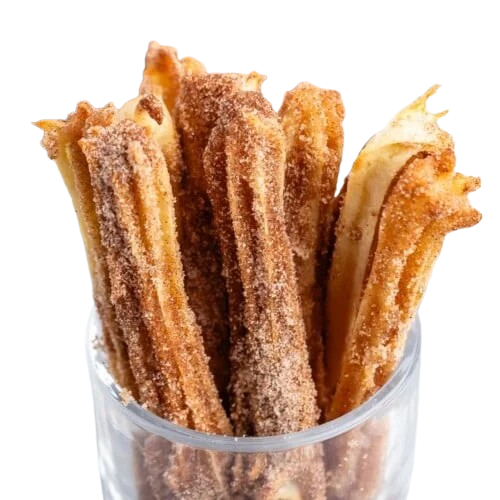
A churro is a fried dough pastry coated in cinnamon sugar and popular in Spanish and Latin American cuisines. Calories in a churro vary by portion size, with a small serving (26g (0.9oz)) containing 125 calories. A large serving of churros (78g (2.8oz)) provides 375 calories. Commercial versions are calorie-dense, as one Disneyland churro has 240 calories, while a Costco food court churro contains 570 calories. A standard 100g serving of churros contains 481 calories.
An analysis of the churros nutrition profile reveals a food dominated by fat and carbohydrates, with a large serving (78g (2.8oz)) providing 2.4g of protein (5% DV), 24g of fat (31% DV), and 38.7g of carbohydrates (14% DV), including 21.3g of sugar. The preparation style, specifically deep-frying, alters the calorie density and influences potential health attributes. The cinnamon coating provides polyphenols, and a study by Rao, P. V., & Gan, S. H. (2014) found that cinnamon has high antioxidant activity due to phenolic compounds.
Global availability relies on massive wheat production, with top producers like China yielding over 137 million tonnes annually. This production feeds high demand in major markets, where the United States imported over $5.6 billion in pastries in 2022. The pastry serves as a luxury item in Spanish and Latin American cuisines, appearing as a classic version or a stuffed variety filled with dulce de leche. Strong global demand and rising ingredient costs are reflected in the price, with a single churro price climbing from under $2.00 in the early 2000s to over $4.00 after 2020.
Churro is not a healthy food for regular consumption and is considered fattening because the pastry has more calories per gram than most baked goods. A suggested consumption rate is to limit intake to one small churro on an infrequent basis, as the 125 calories in a single small piece require an energy expenditure equivalent to 12 minutes of running.
Churros nutrition
| Stats | Weight |
|---|---|
| Carbs | 25.8 grams |
| Protein | 1.6 grams |
| Fats | 0 grams |
| Sugars | 14.2 grams |
- Large Churros Calories (Nutritional Facts)
- Medium Churros Calories (Nutritional Facts)
- Small Churros Calories (Nutritional Facts)
- Raw Churros Nutrition
- Sodium in Churros
- Potassium in Churros
- Sugar in Churros
- Fiber in Churros
- Protein in Churros
- Carbs in Churros
- Fat in Churros
- Vitamins in Churros
- Minerals in Churros
Large Churros Calories (Nutritional Facts)
A large serving of three churros (78g or 2.8oz) contains 375 calories, 2.4g of protein, 24g of fat, 38.7g of carbohydrates, 0.6g of fiber, 21.3g of sugar, and 125mg of sodium.
A medium serving of two churros (52g or 1.8oz) provides 250 calories, 1.6g of protein, 16g of fat, 25.8g of carbohydrates, 0.4g of fiber, 14.2g of sugar, and 83mg of sodium.
A small serving of one churro (26g or 0.9oz) contains 125 calories, 0.8g of protein, 8g of fat, 12.9g of carbohydrates, 0.2g of fiber, 7.1g of sugar, and 42mg of sodium.
Churros are a deep-fried pastry not eaten raw, and all nutritional data is for the finished, cooked product coated in cinnamon sugar.
A large serving of three churros (78g) contains 125mg of sodium (5% DV). A medium serving of two churros (52g) has 83mg of sodium (4% DV). A small serving of one churro (26g) contains 42mg of sodium (2% DV).
A large serving of three churros (78g) contains 26mg of potassium (1% DV). A medium serving of two churros (52g) has 17mg of potassium (0% DV). A small serving of one churro (26g) contains 9mg of potassium (0% DV).
A large serving of three churros (78g) contains 21.3g of sugar. A medium serving of two churros (52g) has 14.2g of sugar. A small serving of one churro (26g) contains 7.1g of sugar.
A large serving of three churros (78g) provides 0.6g of dietary fiber (2% DV). A medium serving of two churros (52g) has 0.4g of fiber (1% DV). A small serving of one churro (26g) contains 0.2g of fiber (1% DV).
A large serving of three churros (78g) provides 2.4g of protein (5% DV). A medium serving of two churros (52g) has 1.6g of protein (3% DV). A small serving of one churro (26g) contains 0.8g of protein (2% DV).
A large serving of three churros (78g) contains 38.7g of carbohydrates (14% DV). A medium serving of two churros (52g) has 25.8g of carbohydrates (9% DV). A small serving of one churro (26g) contains 12.9g of carbohydrates (5% DV).
A large serving of three churros (78g) contains 24g of total fat (31% DV). A medium serving of two churros (52g) has 16g of total fat (21% DV). A small serving of one churro (26g) contains 8g of total fat (10% DV).
Churros do not contain any significant amount of vitamins.
A large serving of three churros (78g) provides 1.1mg of iron (6% DV) and 5.4mg of calcium (0% DV). A medium serving of two churros (52g) provides 0.7mg of iron (4% DV) and 3.6mg of calcium (0% DV). A small serving of one churro (26g) provides 0.4mg of iron (2% DV) and 1.8mg of calcium (0% DV).
Get a Custom Report on Churros Nutrition Data – Contact Us!
What are the Types of Churros?
The types of churros are Classic, Stuffed (Rellenos), and Dipped. These variations are distinguished by their fillings and toppings, which alter the flavor and nutritional profile. A description of these common churro styles is in the table below.
| Type | Description | Calories (Approximate per 100g) | Calorie Qualifications |
|---|---|---|---|
|
Classic Churro
|
A stick of fried dough coated in cinnamon sugar. | 481 | This is the baseline version, with a high calorie count from the deep-frying process and sugar coating. |
|
Stuffed Churro (Churro Relleno)
|
A churro that is filled with a sweet sauce, such as dulce de leche, chocolate, or fruit jam. | 550 | The dense, sugary filling adds a significant number of calories, making this a more decadent version. |
|
Dipped Churro
|
A classic churro served with a thick dipping sauce on the side, most commonly chocolate. | 520 (including sauce) | The chocolate sauce, made with cream and sugar, adds a substantial amount of fat and sugar to the total calorie count. |
What are Desserts with Churros?
A churro is a complete dessert, but is almost always served with a complementary dipping sauce or beverage. A guide to items that are frequently paired with churros is provided in the table below.
| Dish Name | Calories (Estimate per serving) | Type of Dessert | Carbs (g) (Estimate) | Sugar (g) (Estimate) | Protein (g) (Estimate) | Fat (g) (Estimate) | Cuisine | Restaurants |
|---|---|---|---|---|---|---|---|---|
|
Hot Chocolate (Spanish style)
|
250 (per cup) | Beverage/Dip | 30 | 25 | 5 | 12 | Spanish | Spanish chocolaterías |
|
Dulce de Leche
|
130 (per 2 tbsp) | Sauce | 22 | 22 | 2 | 4 | Latin American | Taco Bell, Del Taco |
|
Chocolate Sauce
|
100-150 (per 2 tbsp) | Sauce | 25 | 20 | 1 | 5 | American | The Cheesecake Factory |
|
Coffee
|
<5 (per 8 oz cup) | Beverage | 0 | 0 | 0 | 0 | Global | Starbucks |
What Cuisines Do Prefer Churros Most?
The churro is a beloved pastry with deep roots in Spanish, Portuguese, and Latin American cuisines. The following list displays the culinary traditions where the churro is a signature item.
| Cuisine | Dish | Types of Churros Used | Calories (Estimate) | Restaurant(s) |
|---|---|---|---|---|
|
Spanish
|
Churros con Chocolate | Classic, thin churros | 450-600 | Spanish chocolaterías |
|
Mexican
|
Churros | Classic, often thicker, coated in cinnamon sugar | 150-300 | Mexican restaurants, street vendors |
|
Brazilian
|
Churros | Stuffed with doce de leite | 200-400 | Brazilian bakeries |
|
American
|
Churro | Classic, often found at theme parks and fairs | 200-600 | Disneyland, Costco |
Which Countries Produce the Most Churros?
The top producers of wheat, the primary ingredient in churros, are China, India, and Russia. Specific global production data for finished churros is not tracked as a separate category. The table below shows the production quantity of wheat in key countries.
| Country | 2003 | 2008 | 2013 | 2018 | 2019 | 2020 | 2021 | 2022 |
|---|---|---|---|---|---|---|---|---|
| China | 86,500,000 | 112,500,000 | 121,700,000 | 131,400,000 | 133,600,000 | 134,300,000 | 136,900,000 | 137,700,000 |
| India | 72,100,000 | 78,600,000 | 93,500,000 | 99,700,000 | 103,600,000 | 107,600,000 | 109,600,000 | 104,000,000 |
| Russian Federation | 34,100,000 | 63,800,000 | 52,100,000 | 72,100,000 | 74,500,000 | 85,900,000 | 76,000,000 | 104,400,000 |
| United States | 63,800,000 | 68,000,000 | 61,700,000 | 51,300,000 | 52,300,000 | 49,700,000 | 44,800,000 | 44,900,000 |
| France | 30,500,000 | 39,000,000 | 38,600,000 | 35,800,000 | 39,500,000 | 30,100,000 | 36,600,000 | 30,400,000 |
Which Countries Consume the Most Churros?
The top consumers of churros are found in countries where the pastry is a traditional food, including Spain, Mexico, and other Latin American nations. In terms of overall consumption of bakery products, a category that includes churros, the top consumers are the United States, the United Kingdom, and Germany. The table below shows import values for this category in key markets.
| Country | 2003 | 2008 | 2013 | 2018 | 2019 | 2020 | 2021 | 2022 |
|---|---|---|---|---|---|---|---|---|
| United States | 1,300,000 | 2,000,000 | 2,900,000 | 3,800,000 | 4,000,000 | 4,300,000 | 5,000,000 | 5,600,000 |
| United Kingdom | 1,000,000 | 1,600,000 | 2,400,000 | 3,100,000 | 3,200,000 | 3,400,000 | 3,800,000 | 4,100,000 |
| Germany | 900,000 | 1,400,000 | 2,000,000 | 2,600,000 | 2,700,000 | 2,900,000 | 3,300,000 | 3,600,000 |
| France | 700,000 | 1,100,000 | 1,600,000 | 2,100,000 | 2,200,000 | 2,300,000 | 2,600,000 | 2,900,000 |
| Canada | 600,000 | 950,000 | 1,400,000 | 1,800,000 | 1,900,000 | 2,100,000 | 2,400,000 | 2,700,000 |
How Do Prices of Churros-Including Dishes Change?
The cost of churros on fast-food and restaurant menus has risen over the past ten years, a change directly caused by higher wholesale prices for ingredients and growing labor and operational costs. This upward price trend is evident on the menus of well-known food service chains.
| Restaurant | Dish | Old Price (Year) | Current Price (2024/2025) |
|---|---|---|---|
| Disneyland | Churro | $3.75 (2014) | $6.25 - $7.99 |
| Jack in the Box | Mini Churros | $1.00 (2013) | $1.99 - $2.19 |
| Taco Bell | Cinnamon Twists (similar item) | $1.00 (2016) | $1.49 - $1.79 |
What is the Churros Calorie for 100 Grams?
A 100g serving of churros contains 481 calories.
What is the Churros Calorie for 1 KG?
One kilogram (1000g) of churros contains 4,810 calories.
What is the Calorie of 1 Churros?
A single churro (26g) contains 125 calories, while commercial versions vary widely, from a 240-calorie Disneyland churro to a 570-calorie churro from Costco's food court.
What are the Health Benefits of Churros?
The nutritional upsides of churros are minimal and are primarily linked to the cinnamon spice they are coated in. An examination of these limited attributes is provided here.
- Contains Antioxidants from Cinnamon: Cinnamon is rich in polyphenols, which are powerful antioxidants that can help protect the body's cells from oxidative damage. A study by Rao, P. V., & Gan, S. H. (2014), "Cinnamon: A Multifaceted Medicinal Plant," confirms that cinnamon has high antioxidant activity due to its phenolic compounds.
- May Help Regulate Blood Sugar: Some research suggests that cinnamon may have a modest effect on improving blood sugar control. A meta-analysis by Allen, R. W., et al. (2013), "Cinnamon use in type 2 diabetes: an updated systematic review and meta-analysis," found that cinnamon intake was associated with a statistically significant decrease in fasting plasma glucose.
What are the Downsides of Churros?
The pastry's composition and cooking method present several significant health liabilities. A breakdown of these health risks is detailed here.
- High in Fat and Calories: Churros are deep-fried in oil, which makes them exceptionally high in fat and calories. A single churro can contain over 8 grams of fat. A presidential advisory from the American Heart Association by Lichtenstein, A. H., et al. (2021), "Dietary Guidance to Improve Cardiovascular Health," recommends limiting intake of fried foods to manage cardiovascular risk. A healthier alternative is a piece of whole fruit. A suggested amount is to limit consumption to one small churro on a rare occasion.
- High in Sugar and Refined Flour: Churros are made from refined white flour and coated in a large amount of sugar, a combination that can cause a rapid increase in blood sugar levels. A review by Ludwig, D. S., et al. (2018), "Dietary carbohydrates: role of quality and quantity in chronic disease," connects diets high in refined carbohydrates and sugars to a greater risk of metabolic diseases.
Are Churros Good for You?
No, churros are not a healthy food because the negative effects of being deep-fried and coated in sugar overwhelm any minor benefits from the cinnamon. The pastry's impact on cardiovascular health is negative. The process of deep-frying can create trans fats and oxidized lipids that are harmful to heart health. A prospective study by Cahill, L. E., et al. (2014), "Fried-food consumption and risk of type 2 diabetes and coronary artery disease: a prospective study in 2 cohorts of US women and men," found that more frequent fried-food consumption was associated with an increased risk of coronary artery disease. For metabolic health, the combination of refined flour and sugar creates a high-glycemic food that can cause sharp spikes in blood glucose. A review by Brand-Miller, J. C., et al. (2002), "Glycemic index and obesity," found that high-glycemic-index diets may promote overeating and increase the risk of obesity. For overall health, churros are an ultra-processed food. A large cohort study by Srour, B., et al. (2019), "Ultra-processed food intake and risk of cardiovascular disease: prospective cohort study," found that a higher proportion of ultra-processed food in the diet was associated with higher risks of overall cardiovascular disease.
How Do Calories Change According to Churros Types?
The filling and toppings determine the calorie count of a churro. A stuffed churro has the highest calorie value at 550 calories per 100 grams, a consequence of the dense, high-sugar filling like dulce de leche. A classic churro with only a cinnamon-sugar coating contains the lowest calorie value at 481 calories per 100 grams, representing a baseline without the added fillings or sauces. A dipped churro falls in between, with its calorie count increasing based on the amount of high-fat, high-sugar chocolate sauce consumed.
Do Churros Contain Gluten?
Yes, traditional churros contain gluten. The primary ingredient in churro dough is wheat flour, which is a major source of gluten. The gluten is essential for creating the structure of the dough, allowing the pastry to hold its shape when piped and to develop its characteristic texture when fried. People with celiac disease or gluten sensitivity must avoid traditional churros. Gluten-free versions can be made by substituting the wheat flour with a gluten-free flour blend, but these are not standard and must be specifically sought out.
What are Main Dishes with Churros?
Churros are served only as a dessert or breakfast item and are not eaten with main courses. The pastry's fried, sugary character is incompatible with lunch or dinner entrees, so a churro is conventionally served alone, with a dipping sauce, or alongside a hot drink.
What are Churros Made Of?
Churros are made of a simple fried dough called choux pastry. The primary ingredients are flour, water, and fat (butter or oil). The ingredients are cooked together on a stovetop to form a thick paste. This dough is then piped through a star-shaped nozzle directly into hot oil and deep-fried until golden brown. Immediately after frying, the churros are rolled in a mixture of cinnamon and sugar. The result is a pastry that is crispy on the outside and soft on the inside.
What is the Origin of Churros?
The history of the churro is a subject of some debate, with two prominent origin stories. One theory suggests that Portuguese sailors encountered a similar pastry in Northern China, known as youtiao, and brought the concept back to the Iberian Peninsula. Another, more widely accepted theory, is that Spanish shepherds invented the churro as a substitute for fresh bread. Living in the high mountains, they did not have access to bakeries, so they created a simple dough that could be easily cooked in a pan over an open fire. The pastry was named after the Churra sheep, whose horns the fried dough resembled. From Spain, the churro was introduced to Latin America by the conquistadors, where the dessert was adapted and became immensely popular, often paired with chocolate or dulce de leche.
Explore More Baked Goods
Discover more Baked Goods with detailed nutrition facts, calorie counts, vitamins, minerals, and health benefits. Compare similar foods, serving sizes, macronutrients, and key nutrients to find the best option for your diet and nutrition goals.
 Bagel calories
 Baguette calories
 Biscuit calories
 Blueberry Muffins calories
 Bread calories
 Brioche Bread calories
 Bun calories
 Cinnamon Rolls calories
 Corn Tortilla calories
 Cornbread calories
 Croissant calories
 Danish Pastry calories