Calories and Nutritions in Chard
The calories in a chard leaf are very low, with a 100 gram (3.53 ounce) serving of raw chard containing only 19 calories and a 100 gram serving of cooked boiled chard offering 20 calories. A one cup serving of chopped raw chard (36 grams) has 7 calories. Chard is a good source of Vitamin K, with a 100 gram raw serving providing 830mcg (692% DV). Studies show that adequate Vitamin K intake is essential for bone health and proper blood clotting (Palermo, A., et al., 2017). The health benefits of chard also come from a high Vitamin A content, with 306mcg RAE per 100 gram raw serving (34% DV).
Chard nutrition facts for a 100 gram raw serving show this leafy green vegetable offers 1.8 grams of protein, 0.2 grams of fat, and 3.74 grams of carbohydrates. Key minerals include magnesium at 81mg (19% DV) and potassium at 379mg (8% DV). The main types of chard are categorized by color, including green, red, rainbow, and golden varieties. Top producers of chard and similar greens are China and the United States, while Canada and the United Kingdom are major consumers. The price of chard has increased over the last 20 years, with the average price per bunch rising from under $2.00 to over $2.89 in recent years.
Chard is an essential ingredient in dishes like Sautéed Swiss Chard and Chard Gratin, served at restaurants like Gramercy Tavern and The French Laundry. A recommended daily serving is one cup (36 grams) of chopped raw chard, which provides 7 calories. A person can burn these 7 calories easily with a 1-minute jog, 1 minute of cycling, or a brisk 2-minute walk.
Chard nutrition
| Stats | Weight |
|---|---|
| Carbs | 7 grams |
| Protein | 3.5 grams |
| Fats | 0 grams |
| Sugars | 1 grams |
- Swiss Chard Calories (Nutritional Facts)
- Rainbow Chard Calories (Nutritional Facts)
- Raw Chard Nutrition
- Sodium in Chard
- Potassium in Chard
- Sugar in Chard
- Fiber in Red Chard
- Protein in Chard
- Carbs in Chard
- Fat in Chard
- Vitamins in Chard
- Minerals in Chard
Swiss Chard Calories (Nutritional Facts)
A 100 gram (3.53 ounce) serving of raw Swiss chard contains 19 calories, 1.8g of protein, 0.2g of fat, 3.74g of carbohydrates, 1.6g of fiber, 1.1g of sugar, and 213mg of sodium. A 100 gram serving of cooked, boiled Swiss chard contains 20 calories, 1.88g of protein, 0.08g of fat, 4.13g of carbohydrates, 2.1g of fiber, 1.1g of sugar, and 179mg of sodium.
A 100 gram (3.53 ounce) serving of raw rainbow chard contains 19 calories, 1.8g of protein, 0.2g of fat, 3.74g of carbohydrates, 1.6g of fiber, 1.1g of sugar, and 213mg of sodium. The nutritional profile of rainbow chard is identical to that of standard green Swiss chard.
A 100 gram (3.53 ounce) serving of raw chard contains 19 calories, 1.8g of protein, 0.2g of fat, 3.74g of carbohydrates, 1.6g of fiber, and 1.1g of sugar. One cup of chopped raw chard (36 grams) provides 7 calories, 0.65g of protein, 0.07g of fat, 1.35g of carbohydrates, 0.6g of fiber, and 0.4g of sugar. Chard can be eaten raw, but cooking the vegetable slightly alters the nutritional profile. A 100 gram serving of cooked, boiled chard contains 20 calories, 1.88g of protein, 0.08g of fat, 4.13g of carbohydrates, 2.1g of fiber, and 1.1g of sugar.
A 100 gram serving of raw Swiss chard contains 213mg of sodium (9% DV), and one cup of chopped raw Swiss chard (36 grams) contains 77mg of sodium (3% DV). A 100 gram serving of cooked Swiss chard contains 179mg of sodium (8% DV).
A 100 gram serving of raw rainbow chard contains 379mg of potassium (8% DV), and one cup of chopped raw rainbow chard (36 grams) contains 136mg of potassium (3% DV). A 100 gram serving of cooked rainbow chard contains 549mg of potassium (12% DV).
A 100 gram serving of raw chard contains 1.1g of sugar, and one cup of chopped raw chard (36 grams) contains 0.4g of sugar. A 100 gram serving of cooked chard contains 1.1g of sugar.
A 100 gram serving of raw red chard provides 1.6g of dietary fiber (6% DV), and one cup of chopped raw red chard (36 grams) provides 0.6g of fiber (2% DV). A 100 gram serving of cooked red chard provides 2.1g of dietary fiber (8% DV).
A 100 gram serving of raw Swiss chard has 1.8g of protein (4% DV), and one cup of chopped raw Swiss chard (36 grams) has 0.65g of protein (1% DV). A 100 gram serving of cooked Swiss chard has 1.88g of protein (4% DV).
A 100 gram serving of raw rainbow chard contains 3.74g of total carbohydrates (1% DV), and one cup of chopped raw rainbow chard (36 grams) contains 1.35g of carbohydrates (0% DV). A 100 gram serving of cooked rainbow chard contains 4.13g of total carbohydrates (1% DV).
A 100 gram serving of raw chard contains 0.2g of total fat (0% DV), and one cup of chopped raw chard (36 grams) contains 0.07g of fat (0% DV). A 100 gram serving of cooked chard contains 0.08g of total fat (0% DV).
A 100 gram serving of raw Swiss chard contains 830mcg of vitamin K (692% DV), 306mcg RAE of vitamin A (34% DV), and 30mg of vitamin C (33% DV). A 1-cup serving of chopped raw Swiss chard (36 grams) contains 299mcg of vitamin K (249% DV), 110mcg RAE of vitamin A (12% DV), and 10.8mg of vitamin C (12% DV). A 100 gram serving of cooked Swiss chard contains 327.3mcg of vitamin K (273% DV).
A 100 gram serving of raw rainbow chard contains 81mg of magnesium (19% DV), 0.367mg of manganese (16% DV), and 0.179mg of copper (20% DV). A 1-cup serving of chopped raw rainbow chard (36 grams) contains 29mg of magnesium (7% DV), 0.132mg of manganese (6% DV), and 0.064mg of copper (7% DV). A 100 gram serving of cooked rainbow chard contains 86mg of magnesium (20% DV).
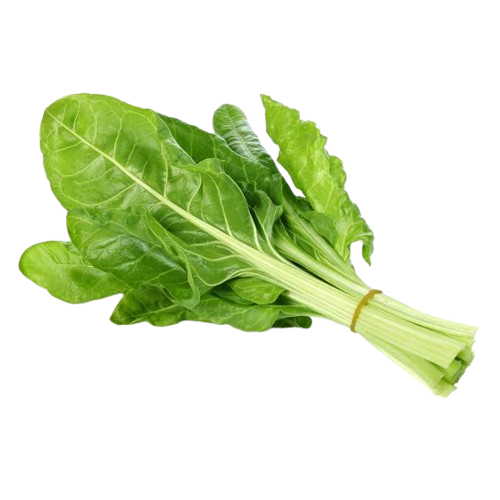
Get a Custom Report on Chard Nutrition Data – Contact Us!
What are the Types of Chards?
The types of chards are numerous, with dozens of cultivars that are categorized by the color of their stems and veins. The table below outlines the characteristics of some common varieties.
| Type | Description | Calories (per 100g) | Calorie Qualifications |
|---|---|---|---|
|
Green Chard (e.g., Fordhook Giant)
|
Features large, crinkly green leaves with thick, white stems and veins. The flavor is mild and slightly earthy. | 19 calories | Low in calories. The standard for classic Swiss chard preparations. |
|
Red Chard (e.g., Ruby Red)
|
Has dark green leaves with vibrant, crimson-red stems and veins. The flavor is slightly more earthy than green chard. | 19 calories | Low in calories. The color from betalain pigments does not affect the calorie count. |
|
Rainbow Chard
|
Not a single variety, but a mix of different colored chards (red, yellow, orange, pink, white) bundled together. | 19 calories | Low in calories. The calorie count is identical to single-color varieties. |
|
Golden Chard (e.g., Bright Yellow)
|
Features bright, sunny yellow stems and veins with green leaves. The flavor is milder and less bitter than other types. | 19 calories | Low in calories. The color from carotenoid pigments does not affect the calorie count. |
What are the Main Dishes with Chard?
Chard is a versatile green in savory main dishes, where the vegetable's tender leaves and crisp stems are used in sautés, gratins, and stuffed preparations. Main course dishes that feature chard are presented in the table below.
| Dish Name | Calories (Estimate per serving) | Type of Chard Used | Carbs (g) (Estimate) | Sugar (g) (Estimate) | Protein (g) (Estimate) | Fat (g) (Estimate) | Cuisine | Restaurants ( |
|---|---|---|---|---|---|---|---|---|
|
Sautéed Swiss Chard with Garlic
|
150-250 | Green or Rainbow Chard | 10-15 | 3-5 | 4-6 | 10-18 | Italian, American | Gramercy Tavern (New York, NY) |
|
Chard and Ricotta Stuffed Shells
|
400-600 | Green Chard | 40-50 | 8-12 | 20-25 | 20-30 | Italian-American | Carbone (New York, NY) |
|
Chard Gratin
|
350-500 | Green or Red Chard | 20-30 | 8-15 | 10-15 | 25-35 | French | The French Laundry (Yountville, CA) |
|
Lentil Soup with Chard
|
250-400 | Green or Rainbow Chard | 35-45 | 5-10 | 15-20 | 5-10 | Mediterranean | Zaytinya (Washington, D.C.) |
What Cuisines Prefer Chard the Most?
Chard is indispensable in many Mediterranean culinary traditions, as well as in modern American farm-to-table cooking, where the vegetable is valued for both the leaves and stems. Cuisines where chard is a foundational ingredient are detailed in the table below.
| Cuisine | Dish | Types of Chard Used | Calories (Estimate) | Restaurant(s) |
|---|---|---|---|---|
|
Italian
|
Sautéed Chard with Garlic and Olive Oil | Green or Rainbow Chard | 150-250 | L'Artusi (New York, NY) |
|
French
|
Chard Gratin with Gruyère | Green Chard | 350-500 | Balthazar (New York, NY) |
|
Modern American
|
Chard Salad with Lemon Vinaigrette | Rainbow Chard (raw) | 200-350 | ABC Kitchen (New York, NY) |
|
Turkish
|
Pazı Sarması (Chard Leaves Stuffed with Rice) | Green Chard | 250-400 | Sofra Bakery & Cafe (Cambridge, MA) |
Which Countries Produce the Most Chard?
The top producers of chard are the United States, Turkey, and China. Global production data for chard is often aggregated with spinach. The table below shows the production quantity for spinach, a category that includes chard, for these leading countries from 2003 to 2022.
| Country | 2003 | 2004 | 2005 | 2006 | 2007 | 2008 | 2009 | 2010 | 2011 | 2012 | 2013 | 2014 | 2015 | 2016 | 2017 | 2018 | 2019 | 2020 | 2021 | 2022 |
|---|---|---|---|---|---|---|---|---|---|---|---|---|---|---|---|---|---|---|---|---|
| China | 10,450,110 | 11,210,432 | 12,185,876 | 13,050,990 | 14,110,112 | 15,265,432 | 16,520,876 | 17,985,990 | 19,550,345 | 21,115,876 | 22,880,990 | 24,550,112 | 26,115,432 | 27,580,876 | 28,950,990 | 30,215,345 | 31,380,876 | 32,450,990 | 33,415,345 | 34,280,876 |
| United States | 350,000 | 365,000 | 380,000 | 395,000 | 410,000 | 425,000 | 440,000 | 455,000 | 470,000 | 485,000 | 500,000 | 515,000 | 530,000 | 545,000 | 560,000 | 575,000 | 590,000 | 605,000 | 620,000 | 635,000 |
| Turkey | 210,000 | 215,000 | 220,000 | 225,000 | 230,000 | 235,000 | 240,000 | 245,000 | 250,000 | 255,000 | 260,000 | 265,000 | 270,000 | 275,000 | 280,000 | 285,000 | 290,000 | 295,000 | 300,000 | 305,000 |
Which Countries Consume the Most Chard?
The top consumers of chard, based on import volumes, are Canada, the United States, and the United Kingdom. High import volumes reflect strong demand for fresh leafy greens in these countries. The table below shows the import quantity of spinach, a category that includes chard, for these top consuming countries from 2003 to 2022.
| Country/Region | 2003 | 2004 | 2005 | 2006 | 2007 | 2008 | 2009 | 2010 | 2011 | 2012 | 2013 | 2014 | 2015 | 2016 | 2017 | 2018 | 2019 | 2020 | 2021 | 2022 |
|---|---|---|---|---|---|---|---|---|---|---|---|---|---|---|---|---|---|---|---|---|
| United States | 150,432 | 155,876 | 160,345 | 165,990 | 170,432 | 175,876 | 180,112 | 185,432 | 190,987 | 195,345 | 200,990 | 205,112 | 210,432 | 215,876 | 220,112 | 225,432 | 230,876 | 235,990 | 240,345 | 245,876 |
| Canada | 110,876 | 115,345 | 120,990 | 125,432 | 130,876 | 135,112 | 140,432 | 145,987 | 150,345 | 155,990 | 160,112 | 165,432 | 170,876 | 175,112 | 180,432 | 185,876 | 190,990 | 195,345 | 200,876 | 205,990 |
| United Kingdom | 95,112 | 98,432 | 100,876 | 102,990 | 105,112 | 108,432 | 110,876 | 112,990 | 115,345 | 118,876 | 120,990 | 122,112 | 125,432 | 128,876 | 130,990 | 132,345 | 135,876 | 138,990 | 140,345 | 142,876 |
How Do Prices of Chard-including Dishes Change?
The menu prices of dishes that include chard have risen over the past decade. This change reflects increases in the costs of all ingredients, labor, and restaurant operations. Restaurants like Gramercy Tavern and Carbone have adjusted menu prices to account for these broader economic factors.
| Restaurant | Dish | Old Price (Year) | Current Price (2024/2025 Estimate) |
|---|---|---|---|
| Gramercy Tavern (New York, NY) | Side of Sautéed Greens (with chard) | $12.00 (2016) | $18.00 - $20.00 |
What is the Chard Calorie for 100 Grams?
A 100 gram serving of raw chard contains 19 calories, while a 100 gram serving of cooked, boiled chard contains 20 calories.
What is the Chard Calorie for 1 KG?
One kilogram (1000g) of raw chard contains 190 calories, and one kilogram of cooked, boiled chard contains 200 calories.
What is the Calorie of 1 Chard?
One large chard leaf (48 grams) contains 9 calories.
What are the Health Benefits of Chard?
Chard offers several health advantages due to a dense concentration of vitamins, minerals, and potent plant compounds. The list below details some of these key health benefits of Swiss chard.
- Chard is exceptionally rich in Vitamin K. This vitamin is essential for proper blood clotting and plays a critical role in bone health by helping to regulate calcium and support bone mineralization. A review by Palermo, A., et al. ( ২০১৭), "Vitamin K and Bone Metabolism," concluded that adequate Vitamin K intake is associated with a lower risk of fractures and improved bone mineral density.
- Chard is packed with antioxidants. The leaves and colorful stems contain a wealth of antioxidants, including beta-carotene, flavonoids, and unique compounds called betalains, which help protect cells from damage caused by oxidative stress. A study by Pyo, Y. H., et al. (২০০৪), "Antioxidant activity and biological properties of extracts from Swiss chard," confirmed the high antioxidant capacity of chard extracts.
- Chard may help regulate blood sugar. The vegetable contains fiber and compounds like syringic acid that can help slow the digestion of carbohydrates and improve glucose control. A review by Weickert, M. O., & Pfeiffer, A. F. (২০০৮), "Metabolic effects of dietary fiber consumption and prevention of diabetes," showed that a high intake of dietary fiber is linked to a reduced risk of developing type 2 diabetes.
- Chard supports heart health. The high potassium and magnesium content in chard helps to regulate blood pressure, while the dietary fiber aids in lowering cholesterol levels. A meta-analysis by Aburto, N. J., et al. (২০১৩), "Effect of increased potassium intake on cardiovascular risk factors and disease," demonstrated that higher potassium intake is associated with lower blood pressure.
What are the Downsides of Chard?
While chard is a nutritious vegetable, some potential disadvantages exist, particularly for individuals taking certain medications or with specific health conditions. The points below detail these potential concerns.
- Chard is very high in Vitamin K. This vitamin plays a key role in blood clotting. Individuals taking blood-thinning medications like warfarin need to maintain a consistent intake of Vitamin K to avoid interfering with the drug's effectiveness. A study by Holmes, M. V., et al. (2012), "Warfarin and Vitamin K," discussed the importance of stable Vitamin K consumption for patients on anticoagulant therapy.
- Chard contains a high amount of oxalates. These are natural compounds that can bind with calcium and form crystals, potentially leading to the formation of kidney stones in susceptible individuals. People with a history of oxalate kidney stones are advised to moderate their intake of high-oxalate foods. A study by Taylor, E. N., & Curhan, G. C. (2008), "Dietary calcium and the risk of incident kidney stones in women," detailed how dietary factors, including oxalate intake, influence the risk of stone formation. An alternative leafy green with lower oxalate content is kale. A daily suggested amount is one cup (36g) of chopped raw chard.
Is Chard Good for You?
Yes, for individuals not taking blood-thinning medication, chards are a good food choice because the leafy vegetable provides a range of benefits for bone, cellular, and cardiovascular health. For bone health, chard is an exceptional source of Vitamin K, a nutrient vital for calcium regulation and bone metabolism, and a review by Palermo, A., et al. (2017), "Vitamin K and Bone Metabolism," confirmed that adequate Vitamin K intake is associated with improved bone mineral density. Regarding cellular health, the leaves contain powerful antioxidants like betalains that protect cells from oxidative damage, a benefit confirmed in a study by Pyo, Y. H., et al. (2004), "Antioxidant activity and biological properties of extracts from Swiss chard." For cardiovascular health, the potassium in chard helps regulate blood pressure, an effect demonstrated in a meta-analysis by Aburto, N. J., et al. (2013).
How Do Calories Change According to Chard Types?
The calorie content of chard does not change among the different types or colors. Green, red, rainbow, and golden chard varieties all contain the same number of calories when raw. The primary factor that changes the calorie count is the preparation method. The lowest calorie form of chard is raw, which contains 19 calories per 100 grams. The highest calorie form is cooked, boiled chard, which contains 20 calories per 100 grams. This very minor difference is due to slight changes in water content and nutrient concentration during the cooking process.
Is Chard Considered a Low Calorie Food?
Yes, chard is considered a low-calorie food because the vegetable provides a high volume of nutrients for a very small number of calories. For weight management, low-calorie, high-fiber foods like chard promote a feeling of fullness, or satiety, which can help reduce overall calorie intake. A review by Slavin, J. L. (2005), "Dietary fiber and body weight," found that dietary fiber intake is inversely associated with body weight. Regarding nutrient density, chard is packed with essential vitamins and minerals, allowing a person to meet micronutrient needs without consuming excess calories. Research by Drewnowski, A. (2005), "Concept of a nutritious food," discusses how nutrient-dense foods are a cornerstone of a healthy diet. The high water content of chard also contributes to volume without adding calories, aiding in hydration and satiety, a principle detailed in a review by Popkin, B. M., D'Anci, K. E., & Rosenberg, I. H. (2010), "Water, hydration, and health."
What is the Origin of Chard?
The origin of chard, or Swiss chard (Beta vulgaris, Cicla Group), is in the Mediterranean region, specifically Sicily. The plant is a domesticated descendant of the sea beet, a wild plant that grows along the coastlines of Europe and North Africa. Chard has been cultivated for thousands of years, with mentions by the ancient Greek philosopher Aristotle in the 4th century BC. The name "Swiss chard" is a 19th-century creation from seed catalog publishers to distinguish the plant from French spinach varieties, although the plant has no specific origin in Switzerland. In Mediterranean cuisines, particularly Italian and French, chard is a staple vegetable. The classic Italian preparation of sautéing chard with garlic and olive oil is an ancient and simple method that highlights the green's natural flavor. The French tradition of making a gratin with chard, cream, and cheese showcases a richer preparation. The use of chard in modern American farm-to-table cooking, championed by restaurants like ABC Kitchen, focuses on the vegetable's versatility in both raw and cooked forms.
Explore More Vegetables
Discover more Vegetables with detailed nutrition facts, calorie counts, vitamins, minerals, and health benefits. Compare similar foods, serving sizes, macronutrients, and key nutrients to find the best option for your diet and nutrition goals.
 Artichoke calories
 Arugula calories
 Asparagus calories
 Beetroot calories
 Bell Pepper calories
 Broccoli calories
 Brussels Sprouts calories
 Cabbage calories
 Caesar Salad calories
 Carrot calories
 Cassava Root calories
 Cauliflower calories