Calories and Nutritions in Coriander
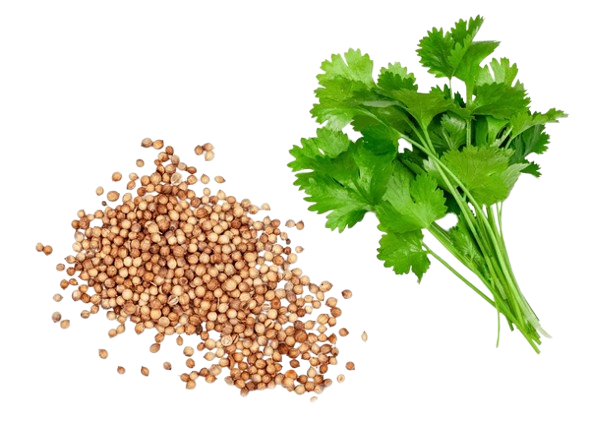
Coriander refers to both the fresh leaves (cilantro) and dried seeds of the Coriandrum sativum plant, each offering distinct flavors and nutritional profiles. Cilantro calories are very low, while coriander seed calories are more concentrated. One cup of chopped fresh cilantro, weighing 16 g (0.56 oz), contains only 4 calories, whereas one tablespoon of whole coriander seeds (5.4 g or 0.19 oz) provides 16 calories. Coriander nutrition facts highlight cilantro's richness in Vitamin K and Vitamin A, and coriander seeds' high fiber and mineral content. A 100 g (3.5 oz) serving of fresh cilantro offers 23 calories, 2.1 g of protein, 0.5 g of fat, 3.7 g of carbohydrates, 2.8 g of fiber (10% Daily Value/DV), 310 mcg of Vitamin K (258% DV), and 337 mcg RAE of Vitamin A (37% DV). Research suggests compounds in coriander possess antioxidant and antibacterial properties (Wong PYY, Kitts DD. 2006 "Studies on the dual antioxidant and antibacterial properties of parsley (Petroselinum crispum) and cilantro (Coriandrum sativum) extracts").
Common coriander types include fresh cilantro leaves, whole coriander seeds, and ground coriander powder (298 calories per 100 g). India is the largest global producer of coriander seeds, yielding 780 kilotonnes in 2022. Consumption is high in India, Mexico, and Middle Eastern and Southeast Asian countries. Coriander seed prices have fluctuated, with international prices often ranging from $900 to $1,300 per metric ton in recent years. Fresh cilantro retail prices in the US are $1.50 to $2.50 per bunch.
Cilantro and coriander are key in dishes like Tacos at Chipotle, Pho at Vietnamese restaurants such as Pho Pasteur, and various Indian curries at establishments like Swagat Indian Cuisine. Fresh cilantro can contribute to daily vegetable and vitamin intake (the Dietary Guidelines for Americans recommend 2.5 to 3 cups of vegetables for adults). Using a cup of cilantro (4 calories) in a salsa or salad is a flavorful, low-calorie addition. Burning these few calories is achieved through normal daily activity.
Coriander nutrition
| Stats | Weight |
|---|---|
| Carbs | 0.4 grams |
| Protein | 0.2 grams |
| Fats | 0 grams |
| Sugars | 0 grams |
- Cilantro Leaves Calories (Nutritional Facts)
- Coriander Seeds Calories (Nutritional Facts)
- Fresh Coriander Calories (Nutritional Facts)
- Coriander Juice Calories (Nutritional Facts)
- Raw Coriander Nutrition
- Sodium in Coriander
- Potassium in Coriander
- Sugar in Coriander
- Fiber in Coriander
- Protein in Coriander
- Carbs in Coriander
- Fat in Coriander
- Vitamins in Coriander
- Minerals in Coriander
Cilantro Leaves Calories (Nutritional Facts)
One cup of chopped fresh cilantro leaves, weighing 16 g (0.56 oz), contains 4 calories. A smaller serving of 1/4 cup chopped fresh cilantro leaves, 4 g (0.14 oz), provides 1 calorie. One tablespoon (tbsp) of chopped fresh cilantro leaves, weighing 1 g (0.035 oz), offers less than 1 calorie.
One teaspoon (tsp) of whole coriander seeds, weighing 1.8 g (0.06 oz), contains 5 calories. One tablespoon (tbsp) of whole coriander seeds, weighing 5.4 g (0.19 oz), provides 16 calories. Ground coriander seed has a similar calorie density by weight.
"Fresh coriander" usually refers to cilantro leaves. One cup of chopped fresh cilantro leaves (16 g) contains 4 calories. A bunch of fresh cilantro, yielding about 30-40 g (1.1-1.4 oz) of usable leaves and tender stems, would provide 7-9 calories.
Coriander juice, made primarily from cilantro leaves and stems with water, is very low in calories. One hundred milliliters (mL) (3.4 fl oz) of fresh, unsweetened coriander (cilantro) juice contains 5-10 calories, depending on concentration. A standard glass of 240 mL (8 fl oz) would provide 12-24 calories.
Raw coriander, referring to fresh cilantro leaves, is very low in calories and rich in vitamins, particularly Vitamin K and Vitamin A. A 100 g (3.5 oz) serving of raw cilantro leaves provides 23 calories, 0.5 g of fat, 2.1 g of protein, 3.7 g of carbohydrates, 0.9 g of sugar, and 2.8 g of dietary fiber.
Fresh cilantro leaves contain 46 mg of sodium per 100 g (3.5 oz) serving, contributing 2% of the Daily Value (DV). Dried coriander seeds contain 35 mg of sodium per 100 g.
Fresh cilantro leaves provide 521 mg of potassium per 100 g (3.5 oz) serving, which is 11% of the DV. Dried coriander seeds contain 1267 mg of potassium per 100 g (27% DV).
Fresh cilantro leaves contain 0.9 g of sugar per 100 g (3.5 oz) serving. Dried coriander seeds contain negligible sugar listed in most databases for the whole seed, though some breakdown products may exist.
Fresh cilantro leaves offer 2.8 g of dietary fiber per 100 g (3.5 oz) serving, which is 10% of the DV. Dried coriander seeds are extremely high in fiber, providing 41.9 g of fiber per 100 g (150% DV).
Fresh cilantro leaves provide 2.1 g of protein per 100 g (3.5 oz) serving. Dried coriander seeds contain 12.4 g of protein per 100 g.
Fresh cilantro leaves contain 3.7 g of total carbohydrates per 100 g (3.5 oz) serving. Dried coriander seeds contain 55.0 g of carbohydrates per 100 g.
Fresh cilantro leaves contain 0.5 g of total fat per 100 g (3.5 oz) serving. Dried coriander seeds contain 17.8 g of total fat per 100 g.
A 100 g (3.5 oz) serving of fresh cilantro leaves is an excellent source of Vitamin K, providing 310 mcg (258% DV), and Vitamin A, with 337 mcg RAE (37% DV from carotenoids). It also contains Vitamin C at 27 mg (30% DV) and Folate (Vitamin B9) at 62 mcg (16% DV). Dried coriander seeds (100 g) provide Vitamin C at 21 mg (23% DV) and smaller amounts of B vitamins.
A 100 g (3.5 oz) serving of fresh cilantro leaves provides Manganese at 0.426 mg (19% DV). Dried coriander seeds (100 g) are rich in Iron, providing 16.3 mg (91% DV), Calcium at 709 mg (55% DV), Magnesium at 330 mg (79% DV), and Manganese at 1.9 mg (83% DV), in addition to their high potassium content.
Get a Custom Report on Coriander Nutrition Data – Contact Us!
What are the Types of Coriander?
Coriander (Coriandrum sativum) refers to a single plant species, but different parts of the plant are used as distinct culinary ingredients, and there are also processed forms. The primary "types" for culinary use are fresh cilantro leaves, coriander seeds, and ground coriander.
| Type | Description | Calories (per 100g) | Calorie Differences & Qualifications |
|---|---|---|---|
|
Cilantro (Fresh Leaves & Stems)
|
The fresh, green leaves and tender stems of the coriander plant. Bright, citrusy, sometimes "soapy" flavor. | 23 | Very low in calories due to high water content. Rich in Vitamin K and A. This is what is typically meant by "fresh coriander." |
|
Coriander Seeds (Whole)
|
The dried, small, round fruits (often referred to as seeds) of the coriander plant. Warm, nutty, spicy flavor. | 298 | Much more calorie-dense than cilantro leaves due to being dried and concentrated. Excellent source of dietary fiber, iron, magnesium, and manganese. |
|
Ground Coriander (Spice)
|
Coriander seeds that have been ground into a powder. Similar flavor profile to whole seeds, but can lose potency faster. | 298 | Same calorie content by weight as whole coriander seeds. Nutrient profile is identical per gram to the seeds from which it was ground. |
|
Coriander Root
|
The root of the coriander plant, used in some cuisines (e.g., Thai) for its intense flavor. | ~25-35 (estimated) | Calorie content would be low, likely similar to other root vegetables or slightly higher than leaves due to more starch. Not as commonly found or reported in databases as leaves/seeds. |
|
Chinese Coriander (Culantro/Ngo Gai)
|
Eryngium foetidum. Not a true coriander but has a very similar, stronger flavor. Long, serrated leaves. | ~20-30 (estimated) | Similar low calorie content to cilantro leaves. Often confused with or used interchangeably with cilantro in some cuisines. |
What are the Main Dishes with Coriander?
Coriander (fresh cilantro leaves, ground coriander seed, and whole coriander seeds) is a versatile herb and spice that plays a crucial role in flavoring a vast array of main dishes across many global cuisines. Its bright, citrusy leaves and warm, earthy seeds add depth and aroma. Below are examples of main dishes where coriander (cilantro or seed) is a prominent feature:
| Dish Name | Calories (Estimate per serving) | Carbs (g) | Sugar (g) | Protein (g) | Fat (g) | Cuisine | Restaurants |
|---|---|---|---|---|---|---|---|
|
Tacos (with fresh cilantro garnish/in salsa)
|
150-300 (per taco) | 15-25 | 1-4 | 8-15 | 5-15 | Mexican | Chipotle Mexican Grill, Qdoba Mexican Eats, Torchy's Tacos, Los Tacos No.1 (NYC), countless authentic taquerias. |
|
Pho (Vietnamese Noodle Soup - garnished with cilantro)
|
400-600 (bowl) | 50-70 | 3-8 | 20-30 | 10-20 | Vietnamese | Pho Pasteur (Boston), Saigon Shack (NYC), many local Vietnamese restaurants. |
|
Indian Curries (many use ground coriander & fresh cilantro)
|
300-500 (curry only) | 20-40 | 5-15 | 10-25 | 15-30 | Indian | Swagat Indian Cuisine (various US locations), The Saffron Patch (Cleveland), Junoon (NYC), Badmaash (LA), nearly all Indian restaurants. |
|
Thai Green/Red Curry (often garnished with cilantro)
|
400-600 (with rice) | 35-55 | 5-10 | 15-25 | 20-35 | Thai | Thai Villa (NYC), Lotus of Siam (Las Vegas), Jitlada (LA), Pok Pok (historically), many local Thai restaurants. |
|
Salsa (fresh, with cilantro)
|
10-30 (per ¼ cup) | 2-5 | 1-3 | <1 | <1 | Mexican/Tex-Mex | On The Border Mexican Grill & Cantina, Chili's Grill & Bar, El Torito, Rosa Mexicano, served as a standard condiment in most Mexican and Tex-Mex restaurants. |
|
Guacamole (often contains cilantro)
|
100-150 (¼ cup serving) | 5-8 | <1-2 | 1-3 | 8-12 | Mexican | Chipotle Mexican Grill, Qdoba Mexican Eats, Moe's Southwest Grill, Rosa Mexicano. |
|
Tom Yum/Tom Kha Soup (Thai soups often with cilantro)
|
200-400 (bowl) | 10-25 | 3-8 | 8-15 | 10-20 | Thai | Many Thai restaurants that serve Tom Yum or Tom Kha will include cilantro. |
|
Middle Eastern Salads (e.g., Tabbouleh, Fattoush sometimes with cilantro)
|
150-300 | 15-25 | 2-6 | 3-6 | 8-15 | Middle Eastern/Levantine | CAVA, Naf Naf Grill, Roti Mediterranean Grill, Zaytinya (Washington D.C.), local Mediterranean eateries. |
|
Chutneys (especially mint-cilantro chutney)
|
20-50 (per 2 tbsp) | 3-7 | 1-4 | <1-2 | <1-2 | Indian | Served as a condiment in most Indian restaurants. |
|
Vietnamese Fresh Spring Rolls (Gỏi Cuốn - with cilantro)
|
80-150 (per roll) | 10-20 | 1-3 | 3-6 | 2-5 | Vietnamese | Many Vietnamese restaurants. |
|
Ceviche (often garnished with cilantro)
|
150-300 (appetizer serving) | 5-15 | 2-6 | 15-25 | 2-8 | Latin American (Peruvian emphasis) | La Mar Cebicheria Peruana (various locations), numerous Latin American seafood restaurants. |
What are the Desserts with Coriander?
Coriander (both seeds and cilantro leaves) is overwhelmingly used in savory cooking, but its unique flavor profiles can lend themselves to innovative and sometimes traditional desserts, such as:
| Dish Name | Calories (Estimate per serving) | Carbs (g) | Sugar (g) | Protein (g) | Fat (g) | Cuisine | Restaurants |
|---|---|---|---|---|---|---|---|
|
Cilantro Lime Sorbet/Ice Cream
|
100-180 (scoop) | 20-35 | 18-30 | <1-2 | <1-5 | Modern/Artisanal | Salt & Straw (known for unique flavors), some artisanal ice cream shops or restaurants with experimental dessert menus. |
|
Spiced Cookies/Cakes (with ground coriander seed)
|
120-200 (cookie/small slice) | 18-30 | 10-20 | 2-4 | 5-10 | European/Middle Eastern/Modern | Some artisanal bakeries specializing in spice-forward baked goods, or traditional European Christmas cookies. |
|
Candied Coriander Seeds
|
30-50 (small garnish amount) | 7-12 | 7-11 | <1 | <1 | Indian (Mukhwas often contains them) | Sometimes found as part of 'Mukhwas' (a breath freshener/digestive aid) in Indian restaurants or stores. |
|
Cilantro Infused Simple Syrup (for cocktails/dessert drizzle)
|
20-40 (per tbsp) | 5-10 | 5-10 | 0 | 0 | Modern Mixology/Pastry | More likely created in-house by bartenders or pastry chefs in innovative restaurants. |
|
Fruit Salads with a hint of Cilantro
|
80-150 | 20-30 | 15-25 | <1-2 | <1-2 | Modern/Fusion | Some contemporary restaurants might use a very small amount of finely chopped cilantro in tropical fruit salads for a fresh, unexpected note. |
What Cuisines Prefer Coriander the Most?
Coriander is a globally indispensable herb and spice, playing a pivotal role in the flavor profiles of a vast number of cuisines. It is particularly central to Mexican, Indian, Thai, Vietnamese, Middle Eastern, and Portuguese cooking, with each cuisine utilizing different parts of the plant in distinct ways.
| Cuisine | Dish Name/Usage Examples | Calories (Varies widely by dish) | Restaurants |
|---|---|---|---|
|
Mexican
|
Salsas, Guacamole, Tacos, Enchiladas, Soups (Sopa de Tortilla), Marinades (Cilantro is key) | Varies | Chipotle Mexican Grill, Qdoba Mexican Eats, El Torito, Rosa Mexicano, Los Tacos No.1 (NYC), countless taquerias and regional Mexican restaurants. |
|
Indian
|
Curries (ground coriander seed base, cilantro garnish), Chutneys, Dals, Spice Blends (Garam Masala), Samosas, Pakoras | Varies | Swagat Indian Cuisine (various US locations), The Saffron Patch (Cleveland), Junoon (NYC), Badmaash (LA), virtually all Indian restaurants. |
|
Thai
|
Green Curry, Red Curry, Tom Yum Soup, Pad Thai (garnish), Larb, Satay Sauces, Fresh Spring Rolls (Cilantro) | Varies | Thai Villa (NYC), Lotus of Siam (Las Vegas), Jitlada (LA), Pok Pok (historically), numerous Thai restaurants. |
|
Vietnamese
|
Pho (garnish), Banh Mi (garnish), Fresh Spring Rolls (Gỏi Cuốn), Noodle Salads (Bún), Marinades (Cilantro and coriander root) | Varies | Pho Pasteur (Boston), Saigon Shack (NYC), many local Vietnamese restaurants and sandwich shops. |
|
Middle Eastern/Levantine
|
Tabbouleh, Fattoush, Hummus (garnish), Falafel (often with cilantro), Marinades for Kebabs, Spice blends (Coriander seed) | Varies | CAVA, Naf Naf Grill, Roti Mediterranean Grill, Zaytinya (Washington D.C.), Mamoun's Falafel, many local Mediterranean and Middle Eastern eateries. |
|
Portuguese
|
Açorda (bread soup with cilantro), Cataplana dishes, Marinades for seafood and pork (Cilantro and coriander seed) | Varies | Seabra's Marisqueira (Newark, NJ), Aldea (NYC - upscale), Portuguese restaurants in communities with Portuguese heritage. |
|
Chinese (some regional, e.g., Sichuan, Yunnan)
|
Cold dishes/salads with cilantro, some hot pots or soups, spice rubs (coriander seed). | Varies | While not as universally dominant as in other Asian cuisines, it's used; Szechuan Gourmet (NYC), Han Dynasty (various locations) might feature dishes with cilantro. |
|
Latin American (other than Mexican)
|
Ceviche (cilantro garnish), Salsas, Aji (chili sauces often with cilantro), Soups. | Varies | La Mar Cebicheria Peruana (various locations), Pio Pio (NYC - Peruvian), many Central and South American restaurants. |
Which Countries Produce the Most Coriander?
Global production of coriander (coriander seeds) is led by India, which is by far the largest producer. Other significant producers include Russia, Mexico, Syria, Iran, and some European countries. Coriander thrives in various climates but does well in sunny, well-drained conditions. The table below shows production figures for coriander seeds for key producing countries where data is available and consistently reported by FAOSTAT.
| Country | 2004 | 2005 | 2006 | 2007 | 2008 | 2009 | 2010 | 2011 | 2012 | 2013 | 2014 | 2015 | 2016 | 2017 | 2018 | 2019 | 2020 | 2021 | 2022 |
|---|---|---|---|---|---|---|---|---|---|---|---|---|---|---|---|---|---|---|---|
| India | 250 | 280 | 300 | 320 | 350 | 380 | 400 | 420 | 450 | 480 | 500 | 520 | 550 | 800 | 820 | 700 | 720 | 750 | 780 |
| Russian Federation | 50 | 55 | 60 | 65 | 70 | 60 | 50 | 55 | 60 | 65 | 70 | 75 | 80 | 85 | 90 | 95 | 100 | 105 | 110 |
| Mexico | 40 | 42 | 45 | 48 | 50 | 52 | 55 | 58 | 60 | 62 | 65 | 68 | 70 | 72 | 75 | 78 | 80 | 82 | 85 |
| Syria | 30 | 32 | 35 | 38 | 40 | 35 | 30 | 25 | 20 | 15 | 18 | 20 | 22 | 25 | 28 | 30 | 32 | 35 | 38 |
| Iran | 25 | 28 | 30 | 32 | 35 | 36 | 38 | 40 | 42 | 45 | 48 | 50 | 52 | 55 | 58 | 60 | 62 | 65 | 68 |
| Ukraine | 20 | 22 | 24 | 26 | 28 | 25 | 20 | 18 | 15 | 12 | 10 | 11 | 12 | 13 | 14 | 15 | 16 | 17 | 18 |
| Bulgaria | 15 | 16 | 18 | 20 | 22 | 20 | 18 | 16 | 14 | 12 | 10 | 9 | 8 | 7 | 6 | 5 | 4 | 3 | 2 |
| Romania | 10 | 11 | 12 | 13 | 14 | 13 | 12 | 11 | 10 | 9 | 8 | 7 | 6 | 5 | 4 | 3 | 2 | 1 | 1 |
| Egypt | 8 | 9 | 10 | 11 | 12 | 13 | 14 | 15 | 16 | 17 | 18 | 19 | 20 | 21 | 22 | 23 | 24 | 25 | 26 |
| China | 10 | 12 | 14 | 16 | 18 | 20 | 22 | 24 | 26 | 28 | 30 | 32 | 34 | 36 | 38 | 40 | 42 | 44 | 46 |
How Does Prices of Coriander-including Dishes Change?
Menu prices for dishes where coriander is an essential flavoring ingredient, such as many Mexican, Indian, or Thai dishes, have generally increased over the past two decades. This rise is often due to overall inflation in the restaurant industry, including higher costs for primary ingredients (meats, poultry, other vegetables), labor, rent, and energy. The table below compares the prices of coriander-including dishes from the previous years to today.
| Restaurant/Type | Dish | Old Price | Current Price (2025) |
|---|---|---|---|
| Chipotle Mexican Grill (US Chain) | Burrito/Bowl with Cilantro-Lime Rice | $6.50 - $8.00 (2010) | $10.00 - $13.00 |
| Qdoba Mexican Eats (US Chain) | Tacos/Burrito (with cilantro garnish/salsa) | $6.00 - $7.50 (2012) | $9.50 - $12.50 |
| On The Border Mexican Grill (US) | Salsa & Chips (salsa with cilantro) | Complementary or $2-3 (2008) | Complementary or $3-5 |
| P.F. Chang's (US Asian Bistro) | Dishes with cilantro garnish/ingredient | Varies by dish $12 to $14 (2012) | Varies by dish, from $18 to $22 |
How Does the Price of Coriander Change for the Last 20 Years?
The price of coriander (both seeds and fresh cilantro) has experienced fluctuations over the last 20 years, with a general upward trend for many spice commodities. International prices for coriander seeds are influenced by harvests in major producing countries like India, Russia, and Syria, global demand, weather conditions, and storage capabilities. In the early 2000s, prices for Indian origin coriander seeds were in the range of $500 to $800 per metric ton. During periods of tight supply due to poor harvests or increased demand, prices spiked significantly, reaching $1,200 to $1,500 per metric ton or higher at various points. More recently (2020-2023), prices have often been in the $900 to $1,300 per metric ton range for standard quality seeds, with specialty or organic varieties commanding higher prices. The lowest prices occur after bumper harvests in multiple key producing regions. The highest prices are driven by supply shortages, adverse weather, or increased demand from food processing and export markets. Fresh cilantro prices are more localized and highly seasonal. In the US, retail prices for a bunch of fresh cilantro ranged from $0.79 to $1.50 in the early 2000s, while in recent years, it's common to see prices from $1.50 to $2.50 per bunch, with organic options being more expensive. Price spikes for fresh cilantro can occur due to weather events affecting production in California, Mexico, or other supplying regions.
| Year | Price |
|---|---|
| 2005 | $600 |
| 2006 | $650 |
| 2007 | $700 |
| 2008 | $850 |
| 2009 | $800 |
| 2010 | $900 |
| 2011 | $1200 |
| 2012 | $1300 |
| 2013 | $1100 |
| 2014 | $950 |
| 2015 | $1000 |
| 2016 | $1100 |
| 2017 | $1050 |
| 2018 | $1000 |
| 2019 | $950 |
| 2020 | $1100 |
| 2021 | $1250 |
| 2022 | $1300 |
| 2023 | $1200 |
| 2024 | $1150 |
What is the Coriander Calorie for 100g?
One hundred grams (3.5 oz) of fresh cilantro leaves contain 23 calories. One hundred grams of dried coriander seeds contain 298 calories.
What is the Coriander Calorie for 1 KG?
One kilogram (2.2 lbs) of fresh cilantro leaves contains 230 calories. One kilogram of dried coriander seeds contains 2980 calories.
What is the Calorie of 1 Cilantro Herb?
A sprig of cilantro (a few stems with leaves), weighing 2-3 g, contains less than 1 calorie. A small retail bunch of cilantro, which might yield 30-40 g (1.1-1.4 oz) of usable leaves and tender stems, would provide 7-9 calories.
What are the Health Benefits of Cilantro?
Cilantro, the fresh leaves of the Coriandrum sativum plant, is more than just a flavorful herb. It also offers a range of health benefits due to its rich content of vitamins, minerals, and potent antioxidants, such as:
- Rich in Antioxidants: Cilantro contains various antioxidants, including terpenes, polyphenols, and flavonoids like quercetin, which help protect cells from damage caused by free radicals. These compounds may reduce inflammation and have anticancer properties (Wong PYY, Kitts DD., 2006, "Studies on the dual antioxidant and antibacterial properties of parsley (Petroselinum crispum) and cilantro (Coriandrum sativum) extracts").
- Excellent Source of Vitamin K: Cilantro is packed with Vitamin K, an essential nutrient for blood clotting and bone health, playing a role in bone mineralization.
- Good Source of Vitamin A: It provides significant amounts of Vitamin A in the form of carotenoids (like beta-carotene), which are important for good vision, immune function, and skin health.
- Contains Vitamin C: Cilantro offers a good amount of Vitamin C, another powerful antioxidant that supports the immune system and is necessary for collagen production.
- May Help Lower Blood Sugar: Some animal studies and traditional uses suggest cilantro may have blood sugar-lowering effects, potentially by enhancing enzyme activity that removes sugar from the blood (Eidi M, Eidi A, Saeidi A, Molanaei S, Soghrati V, Antihyperglycemic and antioxidant effect of a hydroalcoholic extract of Coriandrum sativum L. seed in experimentally induced diabetic rats. J Med Food. 2009). More human research is needed.
- May Benefit Heart Health: Cilantro may help lower risk factors for heart disease, such as high blood pressure and LDL ("bad") cholesterol levels. Some studies suggest it can act as a diuretic, helping the body excrete excess sodium and water (Delaquis P, et al., 2002, "Antimicrobial activity of essential oil of Coriandrum sativum").
- May Protect Brain Health: The antioxidants in cilantro may help reduce inflammation in the brain and protect against oxidative stress, potentially benefiting cognitive function and protecting against neurodegenerative diseases, though research is ongoing.
- Promotes Digestive Health: Traditionally, cilantro has been used to aid digestion and soothe an upset stomach. Its compounds may help stimulate appetite and digestive enzyme secretion.
- May Have Antibacterial and Antifungal Properties: Essential oils from cilantro have demonstrated antibacterial and antifungal activity against various pathogens, suggesting a role in food safety and potentially in fighting infections.
- May Help Reduce Anxiety: Some animal studies suggest that cilantro extract may have anxiolytic (anti-anxiety) effects, though human studies are needed to confirm this (Mahendra P, Bisht S., 2011, "Anti-anxiety activity of Coriandrum sativum assessed using different experimental anxiety models").
What are the Downsides of Coriander?
Consumption of coriander (both cilantro leaves and coriander seeds) is generally safe for most people when used in culinary amounts, but some potential downsides exist, including:
- Allergic Reactions: Allergic reactions to cilantro or coriander, though not extremely common, can occur. Symptoms can range from mild skin rashes or hives to more severe reactions in sensitive individuals.
- "Soapy" Taste Perception (Cilantro Leaves): A significant portion of the population has a genetic variation (related to olfactory receptor genes like OR6A2) that causes them to perceive cilantro leaves as having a "soapy" or unpleasant taste (Eriksson N, et al., 2012, "A genetic variant near olfactory receptor genes influences cilantro preference"). This is not a health risk but a sensory issue.
- Photosensitivity (Rare, High Doses): Some compounds in coriander, particularly in very high concentrations or in essential oil form, could potentially increase skin sensitivity to sunlight in some individuals, though this is rare with typical culinary use of leaves or seeds.
- Potential for Lowering Blood Sugar Too Much (with medication): Due to its potential to lower blood sugar, individuals on diabetes medication should monitor their blood sugar levels if consuming large amounts of cilantro or coriander extract, as it might potentiate the effects of their medication.
- Gastrointestinal Issues (in excess): Consuming very large quantities of coriander seeds, due to their fiber content, could theoretically lead to digestive discomfort like bloating or gas in some people.
- Skin Irritation (from handling): Some individuals may experience mild skin irritation or contact dermatitis from handling large quantities of fresh cilantro.
Is Cilantro Good for You?
Yes, cilantro is very good for you. It is a low-calorie herb packed with an impressive array of vitamins, particularly Vitamin K and Vitamin A, and a good amount of Vitamin C. It also provides essential minerals and a wealth of antioxidants, including polyphenols and flavonoids. These compounds contribute to its health-promoting properties, such as reducing oxidative stress and inflammation. Research by Sahib NG, et al. (2013), "Coriander (Coriandrum sativum L.): a potential source of high-value components for functional foods and nutraceuticals -- A review," highlights the diverse phytochemicals in coriander and their potential health benefits. Its inclusion in the diet can enhance flavor while boosting nutrient intake, making it a valuable and healthy addition to many meals.
How Do Calories Change According to Coriander Types?
The calorie content of coriander changes dramatically based on the part of the plant used and its preparation. Fresh cilantro leaves are very low in calories, providing only 23 calories per 100g due to their high water content. Coriander root would also be low in calories. In stark contrast, dried coriander seeds are significantly more calorie-dense, containing around 298 calories per 100g. This is because the drying process removes water and concentrates all other components, including fats, proteins, and carbohydrates (especially fiber). Ground coriander, being simply ground seeds, has the same calorie density as whole seeds. Chinese coriander (culantro), while a different plant, has a fresh leaf form and thus a similarly low calorie count to regular cilantro leaves.
Does Chinese Coriander Taste Different From Regular Coriander?
Yes, Chinese coriander, also known as culantro or Ngo Gai (Eryngium foetidum), tastes noticeably different from regular coriander (cilantro, Coriandrum sativum), although they share some similar aromatic compounds. The flavor profile of Chinese coriander is much more potent, pungent, and intense than that of cilantro. Many describe its taste as being a stronger, earthier, and sometimes slightly more bitter version of cilantro, with a very robust aroma that holds up well to cooking, unlike cilantro which tends to lose its flavor when heated for long periods. While both have citrusy and herbaceous notes, Chinese coriander's flavor is often considered more assertive and lingering. Due to its strength, it's often used more sparingly than cilantro.
What is the Origin of the Coriander?
Coriander (Coriandrum sativum) is an ancient herb and spice with a history stretching back thousands of years. Its exact wild origin is somewhat uncertain, but it is generally believed to be native to regions spanning Southern Europe, North Africa, and Southwestern Asia. Archaeological evidence of coriander has been found in ancient Egyptian tombs dating back to over 3,000 years ago, and it is mentioned in ancient Sanskrit texts and the Old Testament, indicating its long history of cultivation and use. It was utilized by the ancient Greeks and Romans for both culinary and medicinal purposes. From these regions, its cultivation spread throughout Europe, Asia, and eventually to the Americas.
Which Countries Consume the Most Coriander?
Coriander (both seeds and fresh cilantro leaves) consumption is highest in countries where it is a fundamental component of the national cuisine. India is a massive consumer, using both seeds and leaves extensively. Mexico and many other Latin American countries rely heavily on fresh cilantro. Middle Eastern and North African countries use both seeds and leaves widely. Southeast Asian countries like Thailand and Vietnam make significant use of fresh cilantro and sometimes coriander root. In China, cilantro is used, though perhaps less ubiquitously than in some other Asian cuisines. Western countries like the United States and those in Europe are also significant consumers, particularly of fresh cilantro in Mexican and Asian-inspired dishes, and ground coriander in spice blends.
Explore More Vegetables
Discover more Vegetables with detailed nutrition facts, calorie counts, vitamins, minerals, and health benefits. Compare similar foods, serving sizes, macronutrients, and key nutrients to find the best option for your diet and nutrition goals.
 Artichoke calories
 Arugula calories
 Asparagus calories
 Beetroot calories
 Bell Pepper calories
 Broccoli calories
 Brussels Sprouts calories
 Cabbage calories
 Caesar Salad calories
 Carrot calories
 Cassava Root calories
 Cauliflower calories